survivors

Survivors are ‘nervous and sceptical’ about partial Epstein file release

Watch: Images, cassettes and high-profile figures – What’s in the latest Epstein files?

The release of thousands of pages of documents related to the late sex offender Jeffrey Epstein’s abuse by the US department of justice (DOJ) has left some who were anxiously awaiting the files disappointed.

By law, the DOJ had to make all materials public by the end of Friday. But only some have been released, many with numerous redactions.

The lawmakers who pushed for these documents to see the light of day have described the DOJ’s efforts as insincere, and some legal experts say that the redactions may only fuel ongoing conspiracy theories.

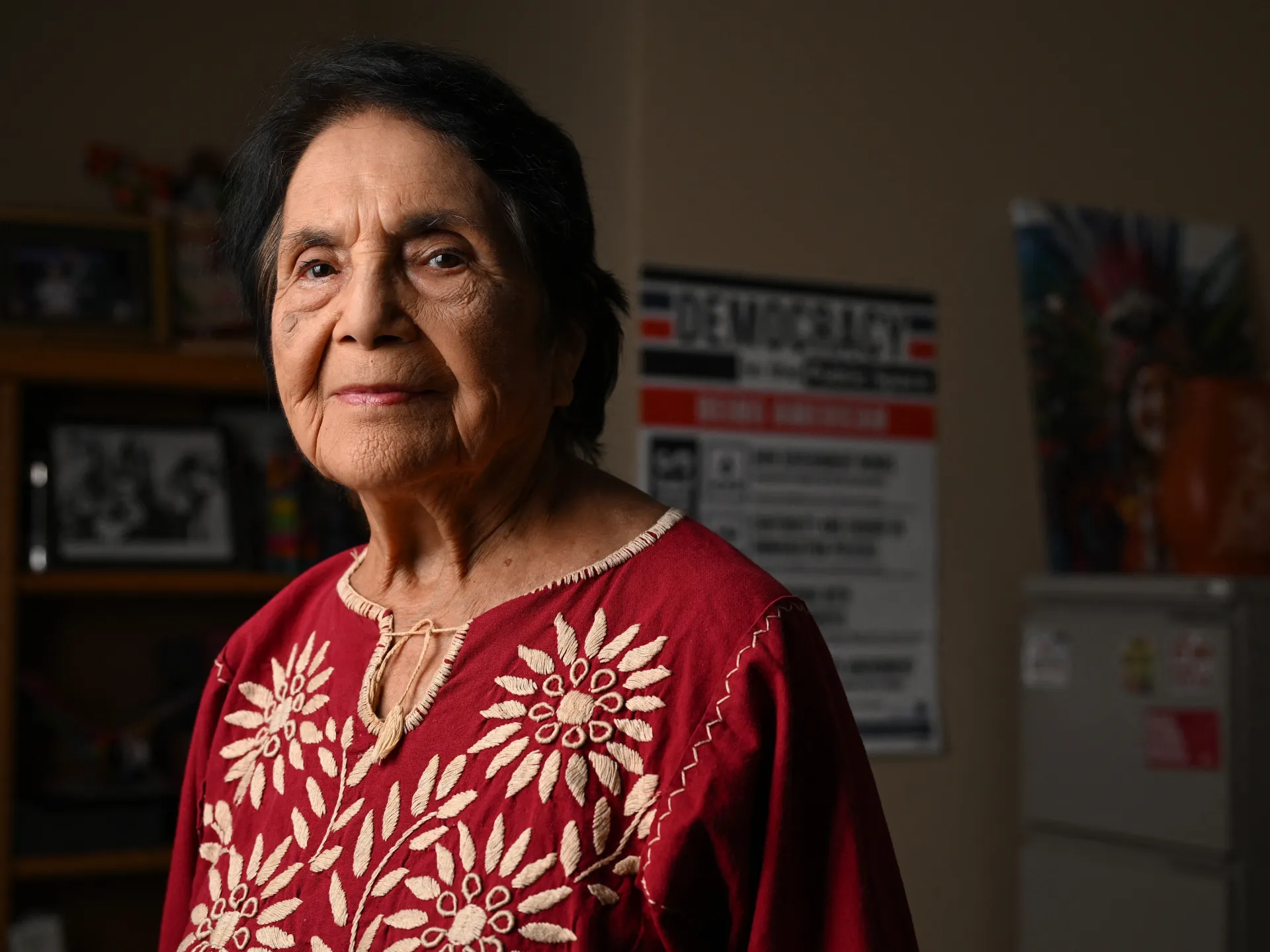
“We just want all of the evidence of these crimes out there,” Epstein survivor Liz Stein told the BBC.

Ms Stein told Radio 4’s Today programme that she thought the justice department was “really brazenly going against the Epstein Files Transparency Act” – the law that requires all the documents to be released.

Survivors are really worried about the possibility of a “slow roll-out of incomplete information without any context”, she noted.

Marina Lacerda, who was 14 when she was abused by Epstein, also told the BBC some of the survivors were “still nervous and sceptical about how they are going to release the rest of the files”.

“We are very worried that it will still be redacted in the same way that it was today.

“We are a little disappointed that they’re now still lingering on and distracting us with other things.”

US Department of Justice Epstein poses with Michael Jackson US Department of Justice

Epstein poses with Michael Jackson

Among the latest released information is a photo of Epstein now jailed confidante Ghislaine Maxwell outside Downing Street – the UK prime minister’s office and residence – a document that claims Epstein introduced a 14-year-old girl to US President Donald Trump at Mar-a-Lago, and multiple images of former President Bill Clinton.

Other released photos show the interiors of Epstein’s homes, his overseas travels, as well as celebrities, including Andrew Mountbatten-Windsor, Mick Jagger, Michael Jackson, Diana Ross and Peter Mandelson – former UK Labour Party politician and ambassador to the US.

Being named or pictured in the files is not an indication of wrongdoing. Many of those identified in the files or in previous releases related to Epstein have denied any wrongdoing.

Trump has consistently denied any wrongdoing in relation to Epstein and has not been accused of any crimes by Epstein’s victims. Clinton has never been accused of wrongdoing by survivors of Epstein’s abuse, and has denied knowledge of his sex offending.

At least 15 of the released files were no longer available on the DOJ website on Saturday.

One of the missing files showed a mass of framed photos on a desk, according to CBS, the BBC’s media partner in the US. The photos showed Bill Clinton, and another was of the Pope. In an open drawer, there was a photo of Trump, Epstein, and Maxwell.

Other missing files included photos of a room with what appeared to be a massage table and nude photos and nude paintings.

It was not clear why the files were no longer available.

In a post on X on Saturday night, the DOJ wrote: “Photos and other materials will continue being reviewed and redacted consistent with the law in an abundance of caution as we receive additional information.”

The BBC has asked the DOJ for comment.

Deputy US Attorney General Todd Blanche said on Friday – the day the materials were released – that the department had identified more than 1,200 Epstein victims or their relatives, and withheld material that could identify them.

But many of the documents are also heavily redacted.

The DOJ said it would comply with the congressional request to release documents, with some stipulations.

It redacted personally identifiable information about Epstein’s victims, materials depicting child sexual abuse, materials depicting physical abuse, any records that “would jeopardise an active federal investigation” or any classified documents that must stay secret to protect “national defence or foreign policy”.

The DOJ said it was “not redacting the names of any politicians”, and added a quote they attributed to Blanche, saying: “The only redactions being applied to the documents are those required by law – full stop.

“Consistent with the statute and applicable laws, we are not redacting the names of individuals or politicians unless they are a victim.”

John Day, a criminal defence attorney, told the BBC he was surprised by the amount of information that was redacted.

“This is just going to feed the fire if you are a conspiracy theorist,” he said. “I don’t think anyone anticipated there would be this many redactions. It certainly raises questions about how faithfully the DOJ is following the law.”

Mr Day also noted that the justice department is required to provide a log of what was being redacted to Congress within 15 days of the files’ release.

“Until you know what’s being redacted you don’t know what’s being withheld,” he said.

In a letter to the judges overseeing the Epstein and Maxwell cases, US attorney for the Southern District of New York Jay Clayton, said: “Victim privacy interests counsel in favour of redacting the faces of women in photographs with Epstein even where not all the women are known to be victims because it is not practicable for the department to identify every person in a photo.”

Clayton added that “this approach to photographs could be viewed by some as an over-redaction” – but that “the department believes it should, in the compressed time frame, err on the side of redacting to protect victims.”

Reuters Liz Stein, who was a victim of late financier Jeffrey Epstein, speaks on the day of a rally in support of Epstein's victims, on Capitol Hill in Washington, DC, in September 2025. Liz is wearing a pink suir and standing in front of a podium with the word stand with survivors on a sign. Reuters

Epstein survivor Liz Stein has called for all of the files to be released

Baroness Helena Kennedy, a human rights lawyer and Labour peer in the House of Lords in the UK, said she was told the redactions in the documents were there to protect the victims.

“Authorities always have a worry” about “exposing people to yet further denigration in the public mind”, she told the BBC’s Today programme.

Many Epstein survivors seem “very keen” to have the material exposed, she said, but added that they “might not be so keen if they knew exactly what was in there”.

Democrat Congressman Ro Khanna, who led the charge along with Republican Congressman Thomas Massie to release the files, said the release was “incomplete” and added that he is looking at options like impeachment, contempt or referral to prosecution.

“Our law requires them to explain redactions,” Khanna said. “There is not a single explanation.”

Massie seconded Khanna’s statement and posted on social media that Attorney General Pam Bondi and other justice department officials could be prosecuted by future justice departments for not complying with the document requirements.

He said the document release “grossly fails to comply with both the spirit and the letter of the law” of the Epstein Files Transparency Act.

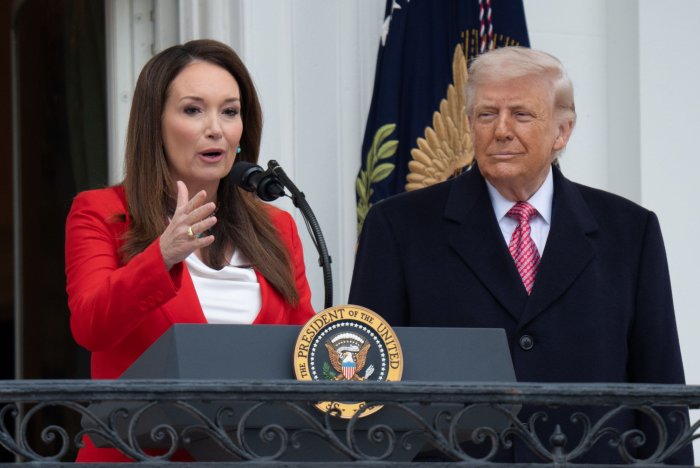
After the release, the White House called the Trump Administration the most “transparent in history”, adding that it has “done more for the victims than Democrats ever have”.

Blanche was asked in an interview with ABC News whether all documents mentioning Trump in the so-called Epstein files will be released in the coming weeks.

“Assuming it’s consistent with the law, yes,” Blanche said. “So there’s no effort to hold anything back because there’s the name Donald J Trump or anybody else’s name, Bill Clinton’s name, Reid Hoffman’s name.

“There’s no effort to hold back or not hold back because of that.

“We’re not redacting the names of famous men and women that are associated with Epstein.”

Additional reporting by Jaroslav Lukiv

Source link

Eaton fire survivors ask Edison for emergency housing relief

A coalition of Eaton fire survivors and community groups called on Southern California Edison on Tuesday to provide immediate housing assistance to the thousands of people who lost their homes in the Jan. 7 wildfire.

The coalition says an increasing number of Altadena residents are running out of insurance coverage that had been paying for their housing since they were displaced by the fire. Thousands of other residents had no insurance.

“When a company’s fire destroys or contaminates homes, that company has a responsibility to keep families housed until they can get back home,” said Joy Chen, executive director of the Eaton Fire Survivors Network, one of the coalition members asking Edison for emergency assistance of up to $200,000 for each family.

At the coalition’s press conference, Altadena residents spoke of trying to find a place to live after the Jan. 7 fire that killed at least 19 people and destroyed more than 9,000 homes, apartments and other structures. Thousands of other homes were damaged by smoke and ash.

A man in a baseball cap stands in front of a lectern with a woman.

Gabriel Gonzalez, center, an Eaton Fire survivor, shown with Joy Chen, Executive Director of the Eaton Fire Survivors Network (EFSN), left, and other survivors at a press conference in Altadena. They urged Southern California Edison to provide urgent housing relief to keep Eaton Fire families housed this winter.

(Gary Coronado/For The Times)

Gabriel Gonzalez said he had been living in his car for most of the last year.

Before the fire, Gonzalez had a successful plumbing company with six employees, he said. He had moved into an apartment in Altadena just a month before the fire and lost $80,000 worth of tools when the building was destroyed.

His insurance did not cover the loss, Gonzalez said, and he lost his business.

Edison is now offering to directly pay fire victims for their losses if they give up their right to file a lawsuit against the utility.

But members of the coalition say Edison’s program is forcing victims who are most desperate for financial support to give up their legal right to fair compensation.

A man speaks holding a folder.

Andrew Wessels, Strategy Director for the Eaton Fire Survivors Network, speaks about Edison’s Wildfire Recovery Compensation Plan (WRCP).

(Gary Coronado/For The Times)

“If families are pushed to give up what they are owed just to survive, the recovery will never have the funds required to rebuild homes, restore livelihoods or stabilize the community,” said Andrew Wessels. He said he and his family had lived in 12 different places since the fire left ash contaminated with lead on and in their home.

In an interview Tuesday, Pedro Pizarro, chief executive of Edison International, the utility’s parent company, said the company would not provide money to victims without them agreeing to drop any litigation against the company for the fire.

“I can’t even pretend to understand the challenges victims are going through,” Pizarro said.

He said the company created its Wildfire Recovery Compensation Program to get money to victims much faster than if they filed a lawsuit and waited for a settlement.

“We want to help the community rebuild as quickly as possible,” he said.

Pizarro said Edison made its first payment to a victim within 45 days of the compensation program launching on Oct. 29. So far, he said, the company has received more than 1,500 claims.

Edison created the compensation program even though the official investigation into the cause of the fire hasn’t been released.

The company has said a leading theory is that its century-old transmission line in Eaton Canyon, which it last used in 1971, briefly became energized from the live lines running parallel to it, sparking the fire.

The program offers to reimburse victims for their losses and provides additional sums for pain and suffering. It also gives victims a bonus for agreeing to settle their claim outside of court.

Pizarro said the program is voluntary and if victims don’t like the offer they receive from Edison, they can continue their claims in court.

Edison has told its investors that it believes it will be reimbursed for all of its payments to victims and lawsuit settlements by $1 billion in customer-paid insurance and a $21 billion state wildfire fund.

Zaire Calvin, of Altadena, a survivor who has lost his home and other properties, speaks.

Zaire Calvin, of Altadena, a survivor who has lost his home and other properties, speaks.

(Gary Coronado/For The Times)

Gov. Gavin Newsom and lawmakers created the wildfire fund in 2019 to protect utilities from bankruptcy if their electric wires cause a disastrous wildfire.

State officials say the fund could be wiped out by Eaton fire damages. While the first $21 billion was contributed half by customers of the state’s three biggest for-profit utilities and half by the companies’ shareholders, any additional damage claims from the Jan. 7 fire will be paid by Edison customers, according to legislation passed in September.

Some Altadena residents say Edison’s compensation program doesn’t pay them fully for their losses.

Damon Blount said that he and his wife had just renovated their home before it was destroyed in the fire. They don’t believe Edison’s offer would be enough to cover that work.

Blount said he “felt betrayed” by the utility.

“They literally took everything away from us,” Blount said. “Do the right thing, Edison. We want to be home.”

At the press conference, fire victims pointed out that Edison reported nearly $1.3 billion in profits last year, up from $1.2 billion in 2023.

Last week, Edison International said it was increasing the dividend it pays to its shareholders by 6% because of its strong financial performance.

“Their stock is rising,” said Zaire Calvin, one of the Altadena residents calling on Edison for emergency relief. Calvin lost his home and his sister died in the fire. “They will not pay a penny when this is over.”

Source link