surrender

Carlos Mendoza Potellá: ‘The Hydrocarbon Law Reform Is a Surrender of Venezuelan Sovereignty’

Mendoza Potellá situates the recent oil reform in the historical context of foreign influence over Venezuela’s energy sector. (Venezuelanalysis)

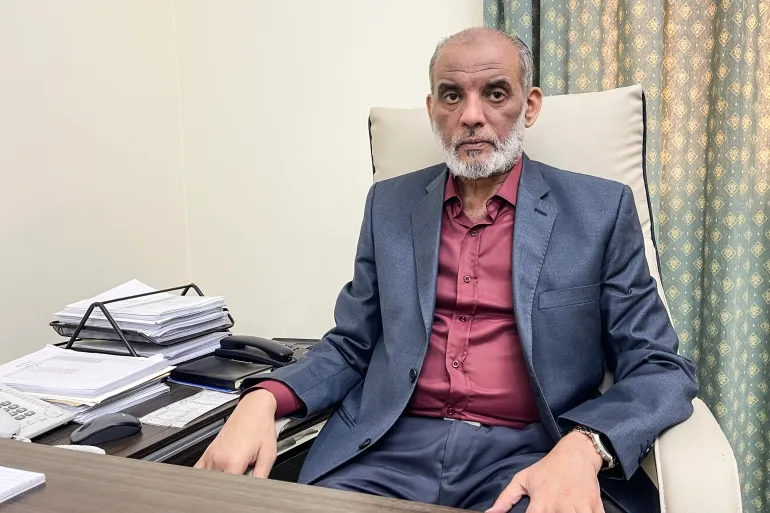
Carlos Mendoza Potellá is an economist and university professor with vast experience and expertise regarding the Venezuelan oil industry. In this exclusive interview with Venezuelanalysis, Mendoza Potellá offers his analysis on the recent reform of the Hydrocarbon Law, the longstanding influence of Western conglomerates over Venezuela’s energy sector, and the struggle for sovereignty.

In late January, the Venezuelan National Assembly approved a reform of the Hydrocarbon Law. What are your views on the new law?

In broad terms, it is the relinquishing of our condition as a sovereign nation, plain and simple. We are not a nation anymore. We are a territory with some delegate administrators implementing decisions made abroad. Who decides? Emperor Trump, who has his proconsul Marco Rubio.

The approved law meets the maximum demands that the Venezuelan right and the oil conglomerates have been making for at least the last 25 years. The 2002 coup against Chávez was to impose something like this, the return to the old concession model. It is the fulfillment of all the dreams of the old “meritocratic” leadership of [state oil company PDVSA], the people who did everything to minimize the fiscal contributions to the country, whether that meant buying 37 refineries abroad or other disasters that wrecked the country.

The reform is a victory for international oil capital, alongside a discourse that hands over the destiny of the industry to major corporations and diminishes national participation as some unproductive “rentierism.”

The Venezuelan oil industry has gone through various stages, with varying degrees of influence from major transnational corporations, whether that is the period prior to the formal nationalization in 1976 or the Oil Liberalization (Apertura Petrolera) of the 1990s. How do we situate the new law within that context?

I believe this is a step backward beyond the apertura or the pre-nationalization period –perhaps it’s a return to 1832! In 1829, Simón Bolívar issued a decree transferring the Spanish crown’s mining rights to Gran Colombia. This, in turn, was based on old medieval law, essentially establishing that mines were the property of the sovereign, the king. In fact, that is where the term “royalty” comes from –as a tribute to the king. And in 1832, when Venezuela separated from Gran Colombia, that decree ratified the nation’s ownership of its mines. 

Obviously, oil didn’t emerge until 30 or 40 years later, but by 1866 concessions were already being granted. For a time, people spoke of “material that comes from the subsoil,” even though everyone already knew it was oil.

Our first boom was with asphalt. In 1883, Guzmán Blanco granted the Lago Guanoco concession to his buddy Horacio Hamilton, who later transferred it to the New York & Bermúdez Company, a subsidiary of the US firm General Asphalt. The asphalt boom lasted 50 years, and with it, streets and highways were built all over the United States.

But the example of New York & Bermúdez is significant because when Cipriano Castro came to power in 1899, he found out that the company had not paid taxes and attempted to collect them. What did the corporation do? It financed the so-called Revolución Libertadora led by Manuel Antonio Matos, a banker from La Victoria, which was ultimately defeated after two bloody battles. It was the first instance of foreign hydrocarbon interests seeking to control national politics. And it was always linked to the United States.

In the 1920s, then-dictator Juan Vicente Gómez tasked his minister, Gumersindo Torres, with drafting a hydrocarbons law, but the foreign companies did not like it. And Gómez told them, “Well, then, write the law yourselves!” Later, in 1936, the López Contreras administration drafted a very good law, but since it wasn’t retroactive, the companies did not mind because they already had their concessions granted.

Lake Maracaibo was one of the main hubs of the Venezuelan oil industry in the 20th century. (Archivo Fotografía Urbana)

When do we start seeing the first steps toward Venezuelan oil nationalism?

It was precisely in 1941 that Medina Angarita took office and commissioned a massive dossier on all the concessions in the country, informing the US government that Venezuela was aware of the importance of its oil. This was during World War II, and the oil companies were haunted by the specter of the 1938 Mexican nationalization under the government of Lázaro Cárdenas.

What was [Franklin D.] Roosevelt’s response? He sent a delegation from the State Department, not to intercede on behalf of the oil companies, but to convince them to accept Medina’s reform, because Venezuelan oil was vital to the war effort. The law passed in 1943 was quite progressive. Its first article stated that hydrocarbons are a matter of national public interest, and as such, concessions were granted for a maximum term of 40 years. Eighty percent of the concessions were granted at that time, to expire in 1983.

Venezuelan production grew through the 1970s, but as the end of the concessions approached, the transnational corporations began implementing policies to somewhat ease the hostility toward foreign investment.

Thus, a policy of “Venezuelanization” of the industry’s management was put into effect. That is why, when the so-called nationalization took place (1976), companies such as Shell and Creole, a subsidiary of Standard Oil-Exxon, had Venezuelans serving as president or vice president. These executives later assumed leadership of the newly created national companies. Their passports were Venezuelan, but their hearts belonged to foreign corporations!

Historically, how was the relationship between foreign corporations and Venezuelan authorities? And how did they respond to the 1976 nationalization?

The corporations grew accustomed to the idea of an industry tailored to their interests. I mentioned how they were the ones who drafted the first Hydrocarbons Law. Oversight bodies, such as the Technical Office of Hydrocarbons, were constantly undermined in their efforts to regulate oil activities. And so the companies could extract oil without paying royalties, violate technical standards for field exploitation, or export gasoline instead of fuel oil.

The 1970s were a turbulent time for the oil sector, marked by geopolitical tensions and the 1973 crisis in the Arab countries. In 1973, James Akins, the Nixon administration’s Director of Energy at the State Department, wrote an article in Foreign Affairs titled “The Oil Crisis; This Time the Wolf Is Here.” He argued that Venezuela could be key to reducing dependence on the Middle East, and that in the face of growing oil nationalism, it was necessary to cede some ground and consider other models of participation, while maintaining control over critical areas such as refining and commercialization.

Put differently, it was possible to offer some token concessions to the nationalist aspirations of oil-producing countries like Venezuela. And that rhetoric spread to the transnational corporations. The president of Shell said at the time, “Venezuela is going to have to take action regarding its oil industry,” while the head of Creole spoke of “the Venezuelans’ oil”!

There were growing signs of how the nationalization would take shape and how the transnationals were restructuring. A good example is the Venezuelan Petroleum Corporation (CVP), created in 1960. Juan Pablo Pérez Alfonzo, whom I consider a visionary and a deeply nationalist figure, had conceived it as a company that would develop until the time came for the state to take over production. But the governments did not let it grow; they did not assign concessions it was entitled to, and by the time of nationalization, the CVP was simply one more operator among 13 or 14. 

In contrast, [Petróleos de Venezuela, SA] PDVSA, created with the nationalization, did have a very clear vision from the start. I remember hearing senior PDVSA executives talking among themselves, discussing how one came from the “Exxon culture,” which was more vertical, and the other from the “Shell culture,” which was more horizontal. And these were the managers! They were the leaders of the Venezuelan oil industry, which had very little “Venezuelan” about it. What we are seeing now is the reconstitution of all these things.

Mendoza Potellá has long criticized “grandiose” plans surrounding the Orinoco Oil Belt. (El Universal)

Circling back to the current reform, we have seen that sovereignty is a central issue. How is it affected on different fronts?

For me, a fundamental issue is the return of concessions. Because that means going back decades, handing control back to transnational conglomerates. With taxes and royalties, the problem is not whether the rate is 30% or 15%; that flexibility existed in the past. But now it is the transnational corporations that tell the government what their operating costs are and how much goes to the Venezuelan state. There is no oversight body to verify this; instead, the company says, “I need you to lower royalties to this level” for the project to be profitable.

The return of international arbitration is also a brutal setback, because it means that disputes are not settled in Venezuelan courts, but in other bodies that have a history of defending corporate interests. There is no role left for the Public Solicitor’s Office (Procuradoría General), which is essentially the nation’s attorney. 

For months we were told we were ready to confront imperialism, but the truth is that everything is being imposed on us. Even the National Assembly is castrating itself. It has enacted a law stating that oil projects no longer require the parliament’s approval; they need only be notified. And on top of all that, there is also the constitutional issue. The reform conflicts with Articles 1, 12, 150, 151, and several others of the Constitution. But this is not merely a constitutional violation; it is a total surrender. A surrender of sovereignty that calls into question our status as a republic.

One of the issues under debate is the distinction between a country that owns oil and a country that produces oil. How should we understand the difference?

Of course, that’s fundamental. A country that owns oil simply collects royalties, and it does so according to its political capabilities. At the moment, Venezuela’s capabilities are limited, because the military cannot confront the enemy, and allies like Russia and China have not shown themselves willing to take any risks. So, there is little room to impose conditions on the US.

But this is a country that has grown used to the multinational corporations having free rein over its oil sector. Unfortunately, there are many people, within the industry itself, who believe that “the foreign conglomerates developed this and therefore have a right to these privileges.” Curiously, that is the same rhetoric Trump uses! 

This struggle for sovereignty is fundamental in oil-producing countries. We have seen this with the countries of the Middle East, which try to assert themselves but remain highly dependent on the United States. Obviously, they have the advantage of not being as close as we are. But in my opinion, historically we have lacked nationalism on this issue.

Trump Energy Secretary Chris Wright recently toured Chevron’s facilities in Venezuela alongside Acting President Delcy Rodríguez. (EFE)

One of the arguments in favor of reforming the Hydrocarbon Law was the need to attract investment to so-called “green fields,” on the grounds that when the previous law was passed in 2001, there were many mature fields ready for development and this is no longer the case. However, major corporations have not shown much enthusiasm. What is your reading on this?

Those are fantasies about oilfields that have always been unviable; it is the obsession with the Orinoco Oil Belt. Humberto Calderón Berti, minister of mines in the 1980s and a major proponent of PDVSA’s internationalization, was already talking about green fields back then. By the way, Calderón Berti is now talking about the possibility of fracking in Lake Maracaibo, which would make the lake’s environmental disaster even worse.

The idea that an avalanche of investment is coming is an illusion, and the oil companies themselves know it. Trump talks about investments of $100 billion, but transnational corporations like ExxonMobil use the word “uninvestable.” With market volatility, no one is thinking about investing in oil with extremely high production costs. There is a study that concludes that increasing production to 2.6 million barrels per day based on the Orinoco Belt would require US $90 billion in investments and $122 billion in operating expenses over the next 10 years to drill 13,000 new wells! In other words, it is completely unfeasible.

On top of that, OPEC’s forecasts for oil demand over the coming decades aren’t particularly ambitious. (1)

So who stands to benefit from this new landscape? On the one hand, small “rogue” companies that can take on a well here and there. But above all, the conglomerates that are already here, like Chevron, which know the lay of the land and can expand their operations or make their current operations more profitable. The same goes for Eni and Repsol, which have some crown jewels, like the offshore Perla natural gas field. The corporations that come will be betting mostly on conventional fields, not the Orinoco Belt.

It is very commonplace to hear about US refineries in the Gulf of Mexico that are built to receive Venezuelan crude. That is true, but it is not oil from the Orinoco Belt! It is oil from the Oriente (East) and Occidente (West) oil-producing regions.

Let us stay for a moment on the Orinoco Oil Belt, since that is where the talk of the “largest oil reserves on the planet” centers, as well as the prospects for a massive increase in production. What are the myths and realities surrounding these deposits?

The Orinoco Belt is a geological miracle. Eighty million years ago, 10–15 percent of all life that existed on the planet was fossilized north of the Orinoco River. It is something to cry out to the heavens. But that is not exploitable oil. It is extra-heavy crude, a sticky mess that needs to be upgraded. First it must be converted into liquid petroleum so it can flow through pipelines, and then taken to be refined and turned into gasoline. 

In the 1970s, the United States saw the energy crisis coming and asked, “When conventional oil runs out, where can we find oil around the world?” In three places: the Soviet Union, Canada, and Venezuela. And where in Venezuela? In the Orinoco Oil Belt. Pérez Alfonzo spoke of the belt as “something for the future,” but the United States wanted to accelerate exploitation and sent a delegation in 1971 to convince President Rafael Caldera to begin the process. In fact, the name was changed from “Tar Belt” to “Oil Belt” to make it more attractive.

The US Geological Survey estimates that there are 513 billion barrels of “technically recoverable” oil. But that is absurd, because there is no capacity. What makes a reserve recoverable has to do with economic ability, the market, and the available technology. Nevertheless, the Orinoco Belt has been at the center of grandiose projections over the past few decades, alongside the highly lucrative business of certifying reserves.

Former President Hugo Chávez imposed the state’s sovereignty over the oil industry in the 2000s. (Archive)

The oil reform took place in a specific context, following years of economic sanctions that have left PDVSA in a very difficult situation. What would be an alternative path? How can the industry recover without surrendering sovereignty?

There are no magic solutions, obviously. We are facing imperialism in the Trump era; we see all its destructive potential. It is a phase where the US, paradoxically, recognizes its weakness and is entrenching itself in its “backyard.” But we must be aware that the industry’s current course is one of total capitulation.

Whether we can recover, whether it is possible or not, we must think about it rigorously, in a sovereign manner. And above all, we must have a serious plan; we cannot be dreaming of 5 or 6 million barrels a day.

There are 17,000 conventional oil wells, with the capacity to produce, abandoned around the country. Of the 35,000 wells in Venezuela, only half are currently producing. The others require investment, though not particularly large ones. And what kind of oil will these wells produce? Crude grades ranging from 20 to 30 degrees. But we need a plan, to examine wells one by one. These are wells that will produce 20, 50, or 100 barrels a day, but it is light and medium crude—the “classic” Venezuelan oil.

So, from a nationalist perspective, what does the future hold for Venezuela’s oil industry? 

The future is to build a post-oil Venezuela. This was already being discussed by theorists such as Francisco Mieres and Pérez Alfonzo in the 1970s. Then, in recent years, many began talking about a post-oil or post-rentier country, but mostly to cover up their incompetence and inability to maintain production levels.

There is no magic solution, and the oil industry will have to play an important role. But the current situation is dire. We are in a new phase of absolute political dependence. It’s not just about oil, or that the US controls revenues, imposes concessions, and so on. It is that the country has lost the ability to make its own decisions.

There are also expectations of the people, who to a large extent have become accustomed to the idea that their oil will last forever. That creates the illusion that things can improve very quickly. The path will be slow, but it has to start with regaining sovereignty.

Note

(1) The interview was conducted before the launch of the US-Israeli war against Iran.

Source link

Trump Demands “Unconditional Surrender,” Iran Says Bring On The Ground Invasion (Updated)

U.S. President Donald Trump says there “will be no deal” with Iran unless it surrenders unconditionally, a day after Iran’s Foreign Minister said the country was prepared to stand up to a ground invasion. Trump has also said that any new leadership of the country would have to be “acceptable” to the United States. This follows what has now been seven days of heavy U.S.-Israeli bombardment, including a new major wave of strikes by Israel targeting Iranian leadership in Tehran overnight.

You can catch up with our past coverage of ongoing operations against Iran here. Latest updates on the war are down the page of this article.

Trump’s statement was made via a post on his Truth Social social media network.

“There will be no deal with Iran except UNCONDITIONAL SURRENDER!,” he wrote. “After that, and the selection of a GREAT & ACCEPTABLE Leader(s), we, and many of our wonderful and very brave allies and partners, will work tirelessly to bring Iran back from the brink of destruction, making it economically bigger, better, and stronger than ever before. IRAN WILL HAVE A GREAT FUTURE. “MAKE IRAN GREAT AGAIN (MIGA!).”

BREAKING: Trump on Iran:

There will be no deal with Iran except UNCONDITIONAL SURRENDER!

After that, and the selection of a GREAT & ACCEPTABLE Leader(s), we, and many of our wonderful and very brave allies and partners, will work tirelessly to bring Iran back from the brink of… pic.twitter.com/6Q6TqyHTbt

— Clash Report (@clashreport) March 6, 2026

Trump has increasingly talked about changing the regime in Tehran in recent days, and his desire to be personally involved in that process. This comes despite pushback from other U.S. officials about regime change being an explicit goal of what has been dubbed Operation Epic Fury.

“We want to go in and clean out everything,” Trump told NBC News in a phone call on Thursday. “We don’t want someone who would rebuild over a 10-year period.”

“We want them to have a good leader,” the president added. “We have some people who I think would do a good job.” 

Trump declined to offer any names, but said he was taking steps to make sure the people on his list make it through the war alive.

EXCLUSIVE: Trump says he wants Iran’s leadership structure gone and wants to ensure his own list of possible leaders survive the war. https://t.co/KRwAmgz2tN

— NBC News (@NBCNews) March 6, 2026

Trump acknowledged that Khamenei’s son, Mojtaba Khamenei, is the most likely successor, but finds that outcome unacceptable and insists he play a role in determining Iran’s next leader, Axios reported.

“They are wasting their time. Khamenei’s son is a lightweight,” Trump told Axios. “I have to be involved in the appointment, like with Delcy in Venezuela.”

Trump was referring to the Venezuelan Vice President Delcy Rodriguez, who took over after the capture of dictator Nicolas Maduro in a dramatic U.S. operation in January.

🚨 EXCLUSIVE: Trump says he must be involved in picking Iran’s next leader.

He said that Mojtaba Khamenei, son of assassinated supreme leader Ali Khamenei, is the most likely successor — and finds that unacceptable.https://t.co/73b4PVOLW2

— Axios (@axios) March 5, 2026

Trump had also called for Iran’s unconditional surrender during the 12 Day War between Israel and Iran last year, before helping broker a ceasefire agreement between the parties.

The last time Trump demanded Iran’s “unconditional surrender” was during the 12-Day Israel–Iran war (June 13–24, 2025).

Trump twice demanded Iran’s “unconditional surrender” back then.

The conflict ended with a U.S.-brokered ceasefire as Washington increased pressure and… https://t.co/Dr3ljXiPQD pic.twitter.com/awcFeHiAEE

— Clash Report (@clashreport) March 6, 2026

Before Trump made his unconditional surrender demand, U.S. Navy Adm. Brad Cooper, commander of U.S. Central Command (CENTCOM), laid out how destructive Epic Fury has been to Iran’s military.

“Over the last 24 hours of the operation, compared to where we were at the start, ballistic missile attacks have decreased by 90%, drone attacks have decreased by 83% since day one,” he told reporters, including from The War Zone, during a press conference at CENTCOM headquarters in Tampa, Florida, on Thursday evening. Cooper added that these attacks have also wiped out a large chunk of Iran’s Navy, destroying 20 ships so far.

U.S. Admiral Brad Cooper gives update on Iran: “We are now starting our sixth day of a historic mission to eliminate Iran’s ability to threaten America. The president and Secretary Hegseth have been crystal clear in their expectations and we are at a high level of execution.” pic.twitter.com/Acr4WpQJpc

— CSPAN (@cspan) March 5, 2026

Overnight, the Israeli Defense Forces (IDF) said it carried out a massive 50-jet raid on Tehran, targeting an underground bunker complex intended for use by Supreme Leader Ali Khamenei and other top leaders. Khamenei was killed elsewhere in the opening phase of what the IDF called Operation Roaring Lion.

The bunker “spanned multiple streets in the heart of Tehran and contained numerous entrances and meeting rooms” for senior Iranian leaders, the IDF explained. It was intended to be used by Khamenei as “a secure emergency command center,” but after his death, “the compound continued to be used by senior Iranian regime officials,” the IDF claimed.

הבונקר התת-קרקעי, נבנה מתחת למתחם והיה נכס חירום מאובטח לניהול הלחימה על ידי המנהיג, שחוסל טרם הספיק להשתמש בו במבצע ‘שאגת הארי’. לאחר חיסול ח’אמנהאי, המתחם המשיך לשמש את בכירי המשטר האיראני.

לאורך שנים, המשטר השקיע את מאמציו להקמת המתחם התת-קרקעי, במטרה לבסס עבורו מקום לקידום… pic.twitter.com/LlPmHSFlR7

— Israeli Air Force (@IAFsite) March 6, 2026

The “senior commander” targeted by these Israeli air strikes was Asghar Hijazi, Times of Israel military correspondent Emanuel “Mannie” Fabian reported on X, citing Israeli defense sources.

“Hijazi is said to be the acting head of the supreme leader’s office, following the killing of Ali Khamenei,” Fabian added.

The “senior Iranian commander” targeted in an Israeli airstrike in Tehran a short while ago is Asghar Hijazi, according to Israeli defense sources.

Hijazi is said to be the acting head of the supreme leader’s office, following the killing of Ali Khamenei. https://t.co/7T58UKmkLp

— Emanuel (Mannie) Fabian (@manniefabian) March 6, 2026

Videos emerging from Tehran showed multiple explosions and ensuing fireballs rising in the distance. Local residents described the attack as “the worst, strongest, and most horrifying ever.”

For their part, Iranian officials have been publicly rejecting the possibility of new talks and/or a ceasefire with the United States and Israel amid the ongoing conflict. Iran’s Foreign Minister Sayed Abbas Araghchi also said yesterday that his country was prepared for a ground invasion.

“Relying on its defensive capabilities and the support of the Iranian nation, the Islamic Republic defends the country’s national sovereignty and territorial integrity within the framework of its inherent right to legitimate self-defense and will respond decisively to any aggressive act,” Araghchi told his Cuban counterpart today.

Significant pressure is clearly being put on the regime in Tehran to capitulate, at least to some degree. Top Iranian leadership figures are being actively targeted, as are individuals who could step in to fill the resulting voids. What the U.S. government, as well as its Israeli allies, may actually be willing to accept in order to bring the conflict to an end remains to be seen.

We have concluded our rolling coverage in this piece.

UPDATE: 5:33 PM EST –

After a meeting with major defense contractors called as the U.S. continues to burn through munitions during Epic Fury, Trump said they were boosting weapons production.

“They have agreed to quadruple Production of the ‘Exquisite Class’ Weaponry in that we want to reach, as rapidly as possible, the highest levels of quantity,” the president proclaimed. “Expansion began three months prior to the meeting, and Plants and Production of many of these Weapons are already under way.”

In his post, Trump again asserted that there is “a virtually unlimited supply of Medium and Upper Medium Grade Munitions, which we are using, as an example, in Iran, and recently used in Venezuela. Regardless, however, we have also increased Orders at these levels.”

Air Force Chief of Staff Gen. Ken Wilsbach posted a message on X praising airmen for their efforts during Epic Fury.

U.S. Treasury Secretary Scott Bessent said “tonight will be our biggest bombing campaign” against Iran.

“We will do the most damage to the Iranian missile launchers and the factories that built them.”

INTERESTING: U.S. Treasury Secretary Scott Bessent on Iran:

Tonight will be our biggest bombing campaign.

We will do the most damage to the Iranian missile launchers and the factories that build the missiles. pic.twitter.com/zCYvaytdeC

— Clash Report (@clashreport) March 6, 2026

UPDATE: 4:31 PM EST –

Videos have emerged on social media claiming to show attacks across Iraq.

Some purport to show an attack on Camp Victory, a facility housing U.S. forces near Baghdad’s international airport. You can see explosions followed by fireballs and smoke in the video. It is not clear who is attacking.

🇮🇶🇮🇷🇺🇲‼️ FEROZ BOMBARDEO IRANÍ: REPORTAN QUE LA BASE CAMPO VICTORIA (EEUU) EN BAGHDAD ESTARÍA EN LLAMAS POR ATAQUE CON 2 MISILES Y DRONES pic.twitter.com/a7VAMWrBpv

— (FRAPP) ANTIFASCISTA #AntiKast #OrgullosoDel42% (@Informa3Chile) March 6, 2026

Another video shows a claimed strike by U.S. helicopters on an Iranian-backed militia group in Mosul. We cannot independently confirm any of these claims and have reached out to CENTCOM for more information.

US helicopters struck at least twice a Kataeb Seyyed a-Shuhadaa’ HQ in al-Rashidiya, Mosul, tonight. KSS is an Iranian-backed militia that has carried out attacks against Iraqi Kurdistan & US interests in Iraq under the facade group Awliyaa’ a-Damm. pic.twitter.com/JdG9u5nqWt

— Elizabeth Tsurkov (@LizHurra) March 6, 2026

There is also a video claiming to depict an Iranian drone strike on energy facilities in Basra.

Iranian drone strikes hit energy infrastructure in Burjesia/Basra, including a Baker Hughes facility, the Rumaila oil field, and Basra airport. pic.twitter.com/CeeHpKKFSk

— Clash Report (@clashreport) March 6, 2026

The IRGC offered a threatening response to Trump’s order to have U.S. Navy vessels escort commercial ships through the Strait of Hormuz. Iran has previously claimed it had shut down the Strait, and the IRGC said it welcomes these escorts, with a reference to the American supertanker Bridgeton, which hit a mine in the Persian Gulf while being escorted by U.S. Navy warships in 1987. That incident took place in the so-called “Tanker War” that took place during the Iran-Iraq War.

IRGC Spox:

Iran strongly welcomes US’ willingness to escort oil tankers and the claim of the presence of US forces for passage through the Strait of Hormuz, and in fact, the IRGC is waiting for their presence.

IRGC says it recommends that before making any decision, the… pic.twitter.com/sPTYBdDTKQ

— Arya – آریا (@AryJeay) March 6, 2026

Amid all the turmoil, the French aircraft carrier Charles de Gaulle has passed through the Strait of Gibraltar and is now in the Mediterranean.

France’s aircraft carrier Charles de Gaulle has passed through Gibraltar into the Mediterranean Sea and is moving toward the Middle East. pic.twitter.com/TCK9Wuv5i6

— Defense Intelligence (@DI313_) March 6, 2026

UPDATE: 3:32 PM EST –

CENTCOM released its latest Epic Fury graphic update showing targets hit and assets deployed. So far, more than 3,000 targets have been hit, including 43 Iranian ships that have been destroyed or damaged, according to the command.

(CENTCOM)

The aircraft carrier USS Gerald R. Ford has transited the Suez Canal and is now in the Red Sea, according to the Navy. Images posted on the Pentagon’s video and image distribution site show the carrier and one of its escorts, the Arleigh Burke class guided missile destroyer USS Bainbridge in the canal.

The world’s largest aircraft carrier, USS Gerald R. Ford (CVN 78), transits the Suez Canal, March 5, 2026. (U.S. Navy photo)
The world’s largest aircraft carrier, USS Gerald R. Ford (CVN 78), transits the Suez Canal, March 5, 2026. (U.S. Navy photo) U.S. Central Command Public Affa
Arleigh Burke-class guided-missile destroyer USS Bainbridge (DDG 96) transits the Suez Canal, March 5, 2026. (U.S. Navy photo)
Arleigh Burke class guided-missile destroyer USS Bainbridge (DDG 96) transits the Suez Canal, March 5, 2026. (U.S. Navy photo) U.S. Central Command Public Affa

A Chinese satellite image emerged of the Ford and two of its escorts crossing through the canal. This move makes sense considering that the ballistic missile threat against Israel that the carrier strike group was helping defend against has diminished. Being in the Red Sea would provide assets needed to defend against any attacks from the Houthis of Yemen should that Iranian proxy decide to get into the fight.

The Pentagon also released photos of B-52 Stratofortress bombers that took part in Epic Fury.

Aircrew members board a B-52H Stratofortress prior to taking off in support of Operation Epic Fury, March 4, 2026. (U.S. Air Force photo)
Aircrew members board a B-52H Stratofortress prior to taking off in support of Operation Epic Fury, March 4, 2026. (U.S. Air Force photo) U.S. Central Command Public Affa

There are claims that Iran struck a Patriot air defense site in the UAE, however we cannot confirm this. We reached out to CENTCOM for more details.

UPDATE: 2:18 PM EST –

Israel estimates that “Azerbaijan will soon attack Iran,” Israel’s Kan News reported

“There may be other countries to join action against Iran and its interests in the region,” the outlet noted.

These claims come days after Azerbaijani officials vowed they would retaliate for an Iranian drone strike on their territory that wounded four people.

We cannot confirm that, however, video emerged earlier today showing Azerbaijani military equipment being moved closer to that nation’s border with Iraq.

The U.K. Defense Ministry (MoD) issued its latest update on operations in the Middle East.

Iran’s intelligence ministry said on Thursday that “separatist terrorist groups” planned to enter the country from its western borders and carry out attacks in urban and border areas, taking advantage of wartime conditions, Iran International reported. “A joint preemptive operation by the intelligence ministry and the Islamic Revolutionary Guard Corps destroyed a significant portion of the groups’ positions and capabilities and inflicted heavy losses,” the ministry said in a statement.

UPDATE 1:07 PM EST –

White House Press Secretary Karoline Leavitt offered an explanation of what Trump means by his unconditional surrender demand on Iran.

“When Trump, as Commander in Chief, determines that Iran no longer poses a threat to the US and the goals of Operation Epic Fury have been fully realized, then Iran will essentially be in a place of unconditional surrender, whether they say it themselves or not,” she explained.

Karoline Leavitt on Iran:

When Trump, as Commander in Chief, determines that Iran no longer poses a threat to the US and the goals of Operation Epic Fury have been fully realized, then Iran will essentially be in a place of unconditional surrender, whether they say it themselves… pic.twitter.com/RMQpAJxx4E

— Clash Report (@clashreport) March 6, 2026

The Army in recent days abruptly canceled a major training exercise for the headquarters element of the 82nd Airborne Division at Fort Bragg, North Carolina, according to The Washington Post. 

“This is fueling speculation within the Defense Department that soldiers specializing in ground combat and a range of other missions may be sent to the Middle East as the conflict with Iran widens,” the publication posited.

SCOOP: The Army in recent days canceled a training exercise for the headquarters element of the 82nd Airborne Division, fueling speculation among soldiers that they may be called upon for a still undefined mission as the war with Iran widens.

— Dan Lamothe (@DanLamothe) March 6, 2026

Ukraine is in talks with the U.S. and Gulf allies about replicating Kyiv’s acoustic detection network to counter Iranian attack drones, Financial Times is reporting, citing people familiar with the matter. Consisting of thousands of acoustic sensors across Ukraine, this system helps detect and track incoming Russian kamikaze drones, alert traditional air defenses in advance, and also dispatch ad hoc drone hunting teams to shoot them down.

In 2024, we reported that the U.S. Army was considering acquiring this system.

New: Ukraine is in talks with the US and several Gulf states about replicating Kyiv’s acoustic detection network to counter Iranian attack drones, according to people familiar with the matter.
w/ @fabrice_deprez https://t.co/ME2ErGPq8X

— Christopher Miller (@ChristopherJM) March 6, 2026

Air Force Gen. Dan Caine, chairman of the Joint Chiefs of Staff, posted a message on X honoring six soldiers killed in Kuwait by an Iranian drone on March 1.

“It is with profound sadness that we mourn the loss of six American heroes from the 103rd Sustainment Command U.S. Army Reserves out of Des Moines, Iowa,” Caine noted. “Major Jeffrey R. O’Brien, Captain Cody A. Khork, Chief Warrant Officer 3 Robert M. Marzan, Sergeant First Class Nicole M. Amor, Sergeant First Class Noah L. Tietjens, and Sergeant Declan J. Coady.”

A message from the Chairman of the Joint Chiefs of Staff Gen. Dan Caine:

It is with profound sadness that we mourn the loss of six American heroes from the 103rd Sustainment Command U.S. Army Reserves out of Des Moines, Iowa: Major Jeffrey R. O’Brien, Captain Cody A. Khork,…

— The Joint Staff 🇺🇸 (@thejointstaff) March 6, 2026

Secretary of State Marco Rubio told Arab foreign ministers in a series of phone calls Thursday that the war is expected to last several more weeks, Axios is reporting, citing “sources with direct knowledge of the conversations.”

Rubio said the current military focus is on Iran’s missile launchers, stockpiles and factories, the outlet reported, adding that the secretary “told the ministers the U.S. goal is not regime change — while simultaneously making clear Washington wants different people running the country.”

U.S. Secretary of State Marco Rubio told Arab foreign ministers in calls Thursday that the war with Iran is expected to last several more weeks, according to sources familiar with the conversations. Rubio said the current military focus is on Iran’s missile launchers, stockpiles…

— Faytuks Network (@FaytuksNetwork) March 6, 2026

At least one B-1B Lancer bomber landed at RAF Fairford in the U.K. today. This is part of an ongoing buildup of U.S. forces as Epic Fury drags on.

UPDATE: 12:58 PM EST –

“The Iranian terrorist regime has attacked 12 different countries and continues to deliberately target civilians through the Middle East,” CENTCOM commander Adm. Brad Cooper has said in a new statement. “Last night, Iranian forces fired seven attack drones at civilian, residential neighborhoods in Bahrain. This is unacceptable and will not go unanswered. We will continue work with regional partners to address this threat to innocent people across the region.”

There are as-yet unconfirmed reports that U.S. B-1 bombers are headed to RAF Fairford in the United Kingdom, and that they will begin flying strikes on Iran from that base. In a press conference late yesterday, Secretary Pete Hegseth and Adm. Cooper both talked about the continued flow of U.S. forces, including bombers, to support Operation Epic Fury.

USAF B-1B bombers from Dyess AFB are expected to deploy to RAF Fairford in the near term.

Their arrival would significantly increase the tempo of long-range strike operations against targets in Iran. The B-1B carries one of the largest conventional payloads in the U.S. arsenal,…

— GMI (@Global_Mil_Info) March 6, 2026

Restricted airspace around RAF Fairford for the next month (at least) shows the USAF will be deploying bombers to the airfield shortly. Note: NOTAMs are on the www. Credit JS below. https://t.co/i0qiHSGs0m

— Saint1 (@Saint1Mil) March 6, 2026

French authorities have denied that U.S. aircraft are using bases in the country to support operations over Iran, but are instead operating from them to aid in “the defense of our partners in the region.”

✖️No U.S. assets deployed on French bases in the Middle East.

✔️Yes: U.S. assets accepted on Istres Airbase (France) as part of a routine NATO procedure. They are not involved in U.S. operations in Iran but strictly supporting the defense of our partners in the region. https://t.co/NcZ1TyWc8z

— French Response (@FrenchResponse) March 6, 2026

It has now been reported that the U.S. Navy submarine that torpedoed the Iranian frigate IRIS Dena in the Indian Ocean was the Los Angeles class USS Charlotte. Separately, another Iranian ship has now sought refuge in India. This is in addition to the IRIS Bushehr, which is now impounded in Sri Lanka.

7th Fleet Los Angeles-class fast-attack sub USS Charlotte (SSN 766) fired the single Mk 48 torpedo that sunk Iranian frigate IRIS Dena (75), @JimLaPorta reports.

One of 30+ Iranian vessels destroyed this week and the first enemy ship sunk by a U.S. sub since WW2. Periscope view: pic.twitter.com/gAGc9I7BjY

— Ian Ellis (@ianellisjones) March 6, 2026

BREAKING: Iranian Navy warship IRIS Lavan docked in Kochi with its 183 member crew on March 4, the same day that IRIS Dena was torpedoed. The ship had requested accommodation on Feb 28 and received permission on March 1. The crew is being accommodated in Indian Navy facilities. pic.twitter.com/yLVwPvu54L

— Shiv Aroor (@ShivAroor) March 6, 2026

Breaking

First pictures of Iran vessel IRINS Bushehr.

The vessel requested entry into Sri Lankan waters on March 4 citing mechanical issues, hours after U.S. forces sank companion vessel IRIS Dena off Galle, killing almost 100 Iran sailors https://t.co/T1wF2qvz2I pic.twitter.com/13ljHDPTn7

— Sidhant Sibal (@sidhant) March 6, 2026

The satellite image below is said to show the aftermath of an attack on an Iranian underground ballistic missile facility.

The video below is said to show an Iranian ballistic missile attack on Prince Sultan Air Base in Saudi Arabia, though it is currently unconfirmed.

Video footage purported to show an Iranian ballistic missile strike on Prince Sultan Air Base in Al-Kharj, Saudi Arabia, with the missile impacting very close to several U.S. servicemembers, thankfully said to have resulted in only minor injuries to personnel at Prince Sultan. pic.twitter.com/Nlju8TCZ22

— OSINTdefender (@sentdefender) March 6, 2026

Pictures and videos showing Iranian ballistic missiles with cluster munition payloads being employed continue to appear online. Images of the submunitions themselves have also now been emerging following the use of these missiles.

The Ministry of Defense of the United Arab Emirates (UAE) says the country’s forces intercepted another nine ballistic missiles and 109 drones fired by Iran today. UAE authorities say they have now intercepted 190 ballistic missiles, eight cruise missiles, and 1,110 drones since the conflict began.

UAE air defences intercept 9 ballistic missiles, 109 drones

The UAE Ministry of Defence announced that the country’s air defence systems detected 9 ballistic missiles today (6th March 2026), all of which were intercepted and destroyed.

The ministry also reported the detection… pic.twitter.com/E9WHz7AEpC

— وزارة الدفاع |MOD UAE (@modgovae) March 6, 2026

MS NOW‘s “Morning Joe” is reporting that authorities in the UAE have now frozen billions of dollars in Iranian assets held in the country.

BREAKING NEWS: #morningjoe has learned that the UAE has frozen billions of dollars in Iranian assets. The move will likely have crippling effects on an already weakened Iranian economy. https://t.co/Da41RisQqY

— Joe Scarborough (@ScarboroughNow) March 6, 2026

What is said to be the first U.S. State Department-facilitated evacuation flight from Israel has arrived in Greece, according to JewishInsider.

New from me: The first State Department evacuation flight from Israel landed in Athens on Friday afternoon, where its passengers were greeted on the tarmac by U.S. Ambassador to Greece Kim Guilfoyle.https://t.co/ICBx7NpaHH

— Haley Cohen (@HaleyCohen19) March 6, 2026

UPDATE: 12:10 PM EST –

U.S. Central Command (CENTCOM) has now released a video showing a strike on the Iranian ‘drone carrier’ Shahid Bagheri, an unusual ship you can read more about here. At a press conference late yesterday, U.S. Navy Adm. Brad Cooper, head of CENTCOM, said an unnamed “Iranian drone carrier ship, roughly the size of a World War II aircraft carrier” had been targeted in “just the last few hours.” In a post on X on March 2 denying claims of an attack on a U.S. carrier, CENTCOM said “the only carrier that has been hit is the Shahid Bagheri.” It remains unclear whether the Shahid Bagheri was struck multiple times.

U.S. forces aren’t holding back on the mission to sink the entire Iranian Navy. Today, an Iranian drone carrier, roughly the size of a WWII aircraft carrier, was struck and is now on fire. pic.twitter.com/WyA4fniZck

— U.S. Central Command (@CENTCOM) March 6, 2026

A video clip, taken from the shore, has now also emerged that is said to show the Shahid Bagheri on fire following a strike. The U.S. military has made clear that the destruction of Iran’s naval capabilities is a core objective of Operation Epic Fury.

U.S. Central Command continues to release other footage from ongoing strikes on targets in Iran.

Iranian targets are being decimated by U.S. forces, paving the way for continued delivery of overwhelming American military firepower. pic.twitter.com/wQUER9cXWw

— U.S. Central Command (@CENTCOM) March 6, 2026

Satellite imagery shows runways have cratered at Iran’s Hamadan and Dezful Air Bases in the course of ongoing U.S.-Israeli strikes.

The runways and taxiways at Hamadan Airbase were bombed on March 4. The airbase is probably out of service until they are repaired.

Thanks to our friends @planet for the imagery! pic.twitter.com/ZdoCQUthTQ

— Michael Duitsman (@DuitsmanMS) March 6, 2026

Online flight tracking software indicates that additional U.S. Air Force aerial refueling tankers have deployed to Ben Gurion Airport in Israel. U.S. officials have now repeatedly said that additional forces are still heading to the region. A U.S. tanker force had already been positioned at Ben Gurion in the lead-up to the current conflict.

More Tankers on the way! #FreeIran
— Operation EPIC FURY / ROARING LION —

At least 6 more tanker aircraft have left the US heading towards the Middle East overnight, comprising:

KC-135R “RCH240” 63-8043 #AE05AD
KC-135R “RCH169” 63-8017 #AE07C1
KC-135R “RCH177” 57-2599… pic.twitter.com/temJeBJ1l5

— DefenceGeek 🇬🇧 (@DefenceGeek) March 6, 2026

✈️⛽️ Additional USAF Tankers (6) heading to Ben Gurion airport/airbase, Tel Aviv.

There were around 30 of them already parked there yesterday. Their role is to refuel different fighter jets in the region attacking Iran. pic.twitter.com/YJ6yBr6mRJ

— MenchOsint (@MenchOsint) March 6, 2026

The Israel Defense Forces have shared a video taken in the cockpit of a fighter flying over Iran.

The Israeli Air Force publishes footage from the cockpit of IAF fighter jets flying over Iran.

“We continue to fight, as required around the clock, and feel your support all the time. We wish you, Israeli citizens, a safe and quiet Shabbat,” a pilot is heard saying in a… pic.twitter.com/cvljwuAJ02

— Emanuel (Mannie) Fabian (@manniefabian) March 6, 2026

Deputy Prime Minister of the United Kingdom David Lammy has said the country would be within its rights to take “defensive action” in response to Iranian threats, including taking “down sites [Iran] that are anticipating attacking our people.” There are no indications that British forces have struck targets in Iran yet.

Publicly available data continues to show a decline in the number of Iranian ballistic missiles and drones launched in retaliatory attacks over the course of the conflict so far.

Day 8 👇

Iran Missile launches during the first 8 days of conflict:

🚀 Ballistic Missiles:
🔴 Day 1 — 350
🔴 Day 2 — 175
🔴 Day 3 — 120
🔴 Day 4 — 50
🔴 Day 5 — 40
🔴 Day 6 — 32
🔴 Day 7 — 28
🔴 Day 8 — 15

🛸 Drone Swarms:
🟢 Day 1 — 294
🟢 Day 2 — 541
🟢 Day 3 — 200
🟢 Day 4… pic.twitter.com/SmSk8dWkWL

— World Insights (@World_Insights1) March 6, 2026

CBS News has reported that quadcopter-type drones may have conducted surveillance of U.S. facilities in Kuwait ahead of an attack that killed six American servicemembers.

Iranian intelligence utilized various means to track service members after they left the base.

➡️ In anticipation of the offensive and expected retaliation to include strikes on Camp Arifjan, the Tactical Ops Center (TOC) was moved to the same facility at the port used during… https://t.co/R8VcPGIESm

— TheIntelFrog (@TheIntelFrog) March 6, 2026

Qatari authorities say an Iranian attack struck facilities housing its naval personnel in Bahrain.

Qatar Condemns Iranian Attack on Buildings in Bahrain Housing Qatari Amiri Naval Forces Personnel

Doha | March 06, 2026

The State of Qatar condemns, in the strongest terms, the Iranian attack that targeted buildings in various areas of the sisterly Kingdom of Bahrain housing… pic.twitter.com/9Zd8lihCEi

— Ministry of Foreign Affairs – Qatar (@MofaQatar_EN) March 6, 2026

The Washington Post has reported that Russia may be providing Iran with information to help with targeting American forces in the Middle East, citing unnamed officials.

Exclusive: Russia is providing Iran with targeting information to attack American forces in the Middle East, the first indication that another major U.S. adversary is participating — even indirectly — in the war. https://t.co/SfBeKxq7zC

— The Washington Post (@washingtonpost) March 6, 2026

The video below is said to show the remains of an Iranian ballistic missile and its transporter-erector-launcher inside a structure following a strike.

A ballistic missile launcher concealed inside a hay storage site was struck today by U.S. and Israeli aircraft.

The boy who filmed the aftermath wrote: “It doesn’t matter where the launchers are, the Americans and Israelis will find them and target them heavily. Kudos to them.” pic.twitter.com/swI0PvEH6a

— Open Source Intel (@Osint613) March 6, 2026

The videos below are said to show strikes on targets in the Iranian city of Ilam.

The satellite imagery below is said to show the aftermath of Iranian attacks earlier this week on facilities in Fujairah in the United Arab Emirates (UAE).

🇦🇪 Satellite images of oil facilities in Fujairah, UAE.

❗️UAE is considering freezing billions of dollars in Iranian assets held in the country and possibly seizing Iranian ships, – WSJ

🇶🇦 Qatar says the ongoing war could force Gulf countries to stop energy exports if it… pic.twitter.com/K5U49eikL0

— MAKS 25 🇺🇦👀 (@Maks_NAFO_FELLA) March 6, 2026

South Korea’s Chosun newspaper has reported that 1,000 guidance kits for Paveway-series laser-guided bombs were moved from storage at Osan Air Base in December, possibly in support of preparation for Operation Epic Fury. However, the sourcing for the story is unclear, and it says that officials in the country have declined to comment.

The U.S. moved 1,000+ Paveway guided-bomb kits from Osan Air Base to the U.S. in Dec 2025, possibly later used in strikes on Iran.

Seoul says the transfer happened without prior consultation.

Source: Chosun pic.twitter.com/s4GvYprgmn

— Clash Report (@clashreport) March 6, 2026

South Korean media outlets are also reporting that the Cheongung-II surface-to-air missile system, which is in service in the UAE, has made its combat debut, citing members of the country’s National Assembly and unnamed military officials.

S Korea’s Cheong-Gung air defense system in service since 2015.

It made its combat debut with UAE air defense forces, successfully intercepting several Iranian ballistic missiles on 3 March 2026. pic.twitter.com/OT3Pzj1UVk

— Christopher Wipper (@SGTWipper1Each) March 5, 2026

Pro-Iranian Iraqi militants claim to have launched kamikaze drones aimed at Jordanian military bases.

#USA / #Iraq / #Jordan 🇺🇸🇮🇶🇯🇴: Iraqi group “Rijal Al-Bas Al-Shadid” (Men of Great Strength) carried out attacks on Jordanian military bases.

Group seemingly launched several #Iran-made 🇮🇷 X-Tail “Shahed-101” Kamikaze Drones (OWA-UAVs) towards Jordan. pic.twitter.com/QT2ERJ7IJL

— War Noir (@war_noir) March 6, 2026

There are reports that ships continue to come under attack in and around the Strait of Hormuz. Maritime traffic through this highly strategic waterway continues to be at a virtual standstill due to the ongoing conflict.

While MOST vessels are waiting out the situation at the Strait of Hormuz, the Cook Islands flagged bitumen tanker PUSHPAK just sailed right through with AIS active. pic.twitter.com/FHiP76R8E9

— TheIntelFrog (@TheIntelFrog) March 5, 2026

Qatari Energy Minister Saad Sherida Al Kaabi has warned that all Gulf energy producers could halt production “within weeks and drive oil to $150 a barrel” if the ongoing conflict continues unabated in an interview with the Financial Times newspaper. Some oil fields are already cutting back production as available storage capacity in the country fills up as exports slow, according to The Wall Street Journal.

“Qatar expects all Gulf energy producers to shut ​down exports within weeks and drive ‌oil to $150 a barrel, the country’s Energy Minister Saad al-Kaabi told the Financial Times in an ​interview published on Friday.
“Everybody that has ​not called for force majeure we expect…

— Amena Bakr (@Amena__Bakr) March 6, 2026

Kuwait has begun cutting oil output at some fields after storage tanks filled up due to disruptions to exports through the Strait of Hormuz.

The country may soon reduce production further to levels needed only for domestic use.

Source: WSJ pic.twitter.com/iFDm3bQpCE

— Clash Report (@clashreport) March 6, 2026

The U.S. government is reportedly easing sanctions on Russian oil exports to India amid disruption in global markets as a result of ongoing operations against Iran, the Financial Times has also reported.

The US is temporarily easing sanctions on Russian oil sales to India to address supply shortages and reduce the impact of the surge in prices in the wake of US and Israeli attacks on Iran. The decision to ease sanctions represents a major shift in policy:https://t.co/v5X5lhptE4

— max seddon (@maxseddon) March 6, 2026

The U.S. Embassy in Baghdad has issued a new alert saying U.S. nationals are “strongly encouraged to depart as soon as they are safely able to do so” and advising them to use overland routes given regional airspace closures. The Embassy has suspended regular consular services.

Security Alert – U.S. Embassy Baghdad, Iraq – March 6, 2026 – Update 1
Location: Iraq
Event
The U.S. government cares about your safety and will continue to share information you need to make informed decisions about your security. The U.S. government is assessing all options to… pic.twitter.com/MbEhCFSmGj

— U.S. Embassy Baghdad (@USEmbBaghdad) March 6, 2026

The Japan Self-Defense Forces will deploy a transport aircraft to the Republic of Maldives in the Indian Ocean as part of an effort to aid Japanese nationals in departing the Middle East.

“The Ministry of Foreign Affairs has reported that, with regard to supporting the departure of Japanese nationals, transportation for those staying in Kuwait, Bahrain, Qatar, and the United Arab Emirates will be carried out sequentially starting as early as tomorrow onward. In light of this, the Ministry of Defense is proceeding with preparations for the Self-Defense Forces as a precaution, in preparation for unforeseen circumstances such as the inability to operate civilian charter flights,” Japanese Defense Minister Shinjiro Koizumi wrote on X, according to a machine translation of the post below. “The one Air Self-Defense Force transport aircraft moving to and positioning in the Republic of Maldives will be operated by pilots, maintenance personnel, and others from the Air Support Command (the Air Self-Defense Force unit that conducts air transport of supplies and air traffic control), with medical officers also on board.”

中東情勢が緊迫の度合いを高めている中、本日(6日)、外務大臣から私宛に自衛隊法84条の4に基づく邦人輸送のための準備行為依頼がありました。これを受け、私から統合作戦司令官に対し、自衛隊の輸送機をモルディブ共和国まで移動・待機させることを命じました。… https://t.co/bxmFSbbR47

— 小泉進次郎 (@shinjirokoiz) March 6, 2026

Sri Lankan authorities have released a video showing Iranian sailors from the frigate IRIS Dena being rescued after it was torpedoed by a U.S. submarine in the Indian Ocean earlier this week.

New video released by the Sri Lankan navy shows Iranian sailors being rescued after a US submarine attack sank their ship in international waters. pic.twitter.com/LnbsLxlMWB

— Al Jazeera English (@AJEnglish) March 6, 2026

Reuters has reported that U.S. officials are increasingly of the view that American forces were responsible for a strike on a primary school for girls in Mindab, Iran, but that the investigation is ongoing. Iranian officials have said that 150 students died as a result. The school directly abuts an Islamic Revolutionary Guard Corps (IRGC) facility in Mindab, which is believed to have been the target of the strike.

The girls’ school in Minab, in southern Iran, was hit on Saturday during the first day of U.S. and Israeli attacks on the country. Iran’s ambassador to the U.N. in Geneva, Ali Bahreini, said the strike killed 150 students. Reuters could not independently confirm the death toll.

— Idrees Ali (@idreesali114) March 6, 2026

At a presser Wed morning, SecDef Pete Hegseth said that the U.S. investigating. “”All I know, all I can say, is that we’re investigating that,” Hegseth said. “We, of course, never target civilian targets.”

The Pentagon has not yet responded to an additional request for comment.

— Geoff Brumfiel (@gbrumfiel) March 4, 2026

Contact the author: howard@thewarzone.com

Howard is a Senior Staff Writer for The War Zone, and a former Senior Managing Editor for Military Times. Prior to this, he covered military affairs for the Tampa Bay Times as a Senior Writer. Howard’s work has appeared in various publications including Yahoo News, RealClearDefense, and Air Force Times.


Joseph has been a member of The War Zone team since early 2017. Prior to that, he was an Associate Editor at War Is Boring, and his byline has appeared in other publications, including Small Arms Review, Small Arms Defense Journal, Reuters, We Are the Mighty, and Task & Purpose.


Source link