surgeon

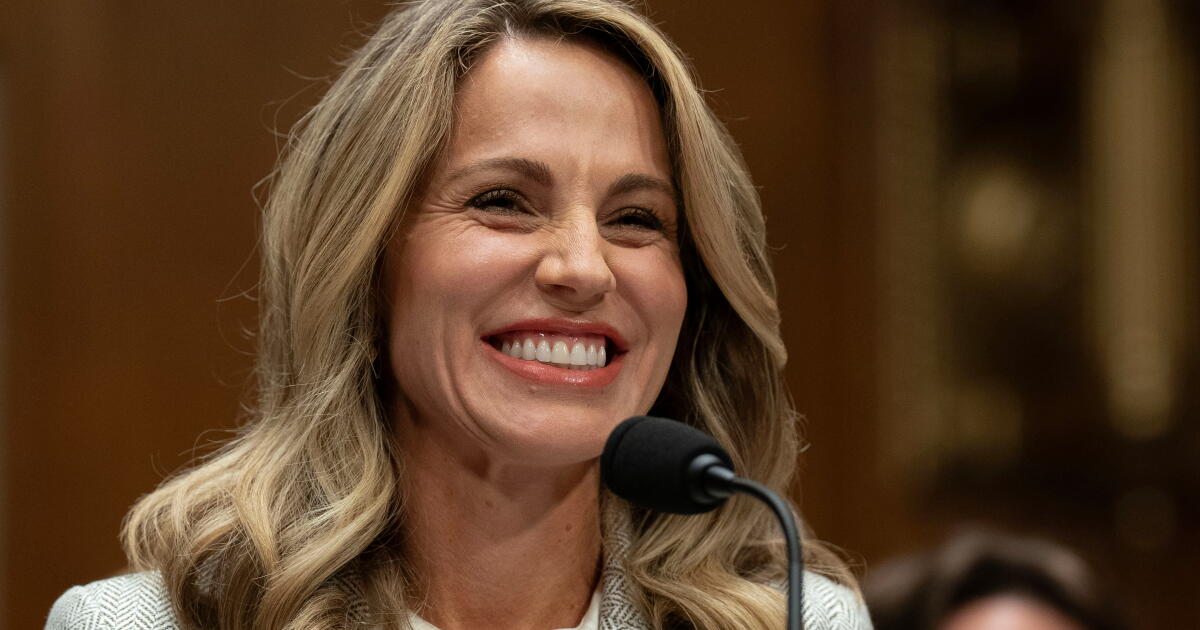
Trump nominates Erica Schwartz, former deputy surgeon general, to serve as CDC director

President Trump on Thursday nominated Erica Schwartz, a former deputy surgeon general, to be the next director of the Centers for Disease Control and Prevention.

In a social media post, Trump described Schwartz as “incredibly talented” and said, “She is a STAR!”

The Atlanta-based CDC, which is charged with protecting Americans from preventable health threats, has been in turmoil since Trump returned to office more than a year ago, with a succession of mostly temporary leaders.

The agency is overseen by Health Secretary Robert F. Kennedy Jr., who had promised not to change the nation’s vaccination schedule. But shortly after taking office, Kennedy said he was going to investigate the childhood vaccine schedule and went on to attempt a substantial rewrite of vaccine recommendations for kids. Some of those efforts were put on hold recently by a federal judge.

The administration’s first pick to run the CDC was former Florida congressman Dr. David Weldon, but his March 2025 Senate confirmation hearing was canceled an hour before it was to begin. Weldon said at the time that he’d been told not enough senators were willing to vote for him.

The White House then moved on to Susan Monarez, who had been serving as the CDC’s acting director. Monarez was confirmed by the Senate, but she was ousted in less than a month. Trump administration officials said she wasn’t aligned with their agenda so they terminated her.

Several key CDC scientific leaders resigned in protest, saying Monarez’s dismissal dashed their hopes that a CDC director would be able to guard against political meddling in the agency’s scientific research and health recommendations.

Since then, there’s been a revolving door in agency leadership, with the short-term role of acting director being passed from one Washington-based Health and Human Services official to another. National Institutes of Health Director Jay Bhattacharya has been overseeing the CDC the past several weeks.

During a House Appropriations Committee hearing Thursday, Kennedy said the new CDC team was “extraordinary.”

“I think this new team is really going to be able to revolutionize CDC and get it back on track,” he said.

Schwartz holds multiple academic credentials, including both medical and law degrees. Her career has largely been spent in military uniform, including in a leadership position at the U.S. Coast Guard where she oversaw the organization’s system of 41 clinics and 150 sick bays.

She later served as deputy surgeon general, where she helped lead uniformed medical and health professionals posted at the CDC and government health agencies that serve the general public.

Schwartz could not be reached for comment.

Trump also announced the appointment of Sean Slovenski, a former Walmart executive, as CDC deputy director and chief operating officer. Dr. Jennifer Shuford, Texas health commissioner, was named the CDC’s deputy director and chief medical officer. And Dr. Sara Brenner, a former Food and Drug Administration administrator, was designated as a senior counselor for public health to Kennedy.

In a social media post Thursday, Kennedy congratulated Schwartz and the other appointees and said he looks “forward to working together to restore trust, accountability, and scientific integrity” at the CDC.

But Aaron Siri, a lawyer and ally of Kennedy in attacking vaccines and pharmaceutical companies, criticized Schwartz’s selection. In a social media post, Siri lambasted Schwartz’s past promotion of vaccinations and said “she lacks the basic ethics and morals to lead the CDC.”

Schwartz’s nomination comes as Dr. Casey Means, Trump’s pick for another key health-related role, U.S. surgeon general, has had difficulty getting confirmed.

Means’ languishing nomination after appearing for a confirmation hearing in February reflects the skepticism that lawmakers of both parties have expressed toward the direction in which Kennedy has taken his department.

Stobbe writes for the Associated Press. AP writer Ali Swenson contributed to this report.

Source link

Means’ surgeon general nomination is stalled as senators question her experience and vaccine stance

Wellness influencer Dr. Casey Means’ nomination to be U.S. surgeon general is stalled a month after senators of both major political parties grilled her on vaccines and other health topics during a tense confirmation hearing, deepening doubts about her ability to secure the votes she needs for the role.

The nomination has languished despite ongoing efforts from the White House and Make America Healthy Again activists, revealing how intractable rifts over health policy can be even when Congress has shown deference to President Trump. It’s become the latest snag in Health Secretary Robert F. Kennedy Jr.’s agenda after two legal setbacks last week.

Means, a 38-year-old Stanford-educated physician who became disillusioned with traditional medicine and did not finish her surgical residency program, has faced scrutiny for her lack of experience and potential conflicts. Another sticking point has been her close alignment with Kennedy, whose efforts to dramatically pull back vaccine recommendations have been slammed by lawmakers and medical groups.

To advance to a full Senate vote, Means likely needs every Republican on the Senate Health, Education, Labor and Pensions Committee to support her nomination. But after last month’s hearing, two of them — Sens. Lisa Murkowski of Alaska and Susan Collins of Maine — told reporters they still had questions for her.

Murkowski told reporters Tuesday that “I’m just in the same spot” when it comes to those hesitations. Collins and Republican committee chairman Sen. Bill Cassidy, a physician from Louisiana who interrogated Means about vaccines during the hearing, didn’t respond to multiple inquiries about the delay.

White House spokesman Kush Desai said in a statement that the Trump administration has been having “productive conversations with the Senate” to advance Means. He added that her “elite academic credentials, research background and advocacy on America’s chronic disease epidemic will make her a critical asset for President Trump’s push to Make America Healthy Again.”

Kennedy spokesman Andrew Nixon reinforced the Republican administration’s support for Means and praised her message calling for healthier lifestyle choices rather than “sick care.”

Contentious hearing set the stage for a tough path to confirmation

Means promotes ideas popular with the MAHA movement, including that Americans are overmedicalized and that diet and lifestyle changes should be at the center of efforts to end widespread chronic disease.

But she’s been criticized for having an inactive medical license, for sometimes failing to disclose financial relationships with brands she promotes and for some of her past health-related comments.

Senators asked her during her hearing about how she would speak to the public about vaccines.

Murkowski and Cassidy pressed Means about her past doubts about the birth dose of the hepatitis B vaccine, which the U.S. Centers for Disease Control and Prevention stopped recommending for all children late last year in a move later temporarily blocked by a federal judge. Means called the hepatitis B vaccine important and lifesaving but said parents should make their own decisions with their doctors.

Cassidy also asked Means whether she would advise Americans to vaccinate against the flu and measles amid outbreaks across the country. She didn’t make that commitment, instead emphasizing the importance of informed consent.

Collins asked Means about her past advocacy for the therapeutic use of psychedelic mushrooms. Means, who has spoken positively of her own experience with the drugs, said she wouldn’t recommend psychedelics for the American public.

Kennedy’s supporters put pressure on hesitant senators

Once it appeared Murkowski and Collins were undecided, MAHA activists orchestrated a push to support Means’ bid by surging phone calls to the two senators.

“Please call both of them. Call them time after time. Get your friends to call them,” Tony Lyons, head of the Kennedy-aligned group MAHA Action, told supporters earlier this month.

Others have loudly opposed Means’ nomination. Dr. Jerome Adams, Trump’s first-term surgeon general, has repeatedly called her unqualified for her lack of an active medical license. He said in an interview that Republicans in Congress and in the Trump administration have told him they disapprove of the pick but see it as Kennedy’s choice.

“What I keep hearing from folks is, ‘This is what Bobby wants,’” he said.

While surgeons general aren’t mandated by law to have an active medical license, they are required to be part of the U.S. Public Health Service Commissioned Corps, a group of health professionals that says members should have up-to-date licenses.

Means said during her confirmation hearing that she had voluntarily made her Oregon medical license inactive, and that Adm. Brian Christine, who runs the Commissioned Corps, had testified that she was eligible to serve.

Even if Means advances out of committee, she might have difficulty securing confirmation by the full 100-member Senate. Republican Sen. Thom Tillis of North Carolina, who isn’t seeking another term, told the Associated Press that he’s leaning against voting for Means.

“Her resume already puts me on alert — and then I don’t think she did herself any favors in the hearing,” Tillis said.

Means’ confirmation delay is unusually long

At nearly 300 days since her nomination in May, Means’ confirmation process has taken almost twice as long as the average presidential pick in Trump’s second term, according to data from the nonprofit Partnership for Public Service. The group found that in the first 400 days, the average time between nomination and confirmation for Trump’s nominees was 157 days.

Sometimes the process has gone far more quickly. Markwayne Mullin, the new Department of Homeland Security secretary sworn in Tuesday, had his confirmation hearing, floor vote and swearing-in all within a weeklong period.

One reason for Means’ drawn-out nomination is the birth of her son, which happened last October on the day of her initially scheduled confirmation hearing.

But Chris Piper, manager of public policy and stakeholder engagement at the Partnership for Public Service, said the length of time that has passed since Means’ rescheduled confirmation hearing also is unusual. He said candidates are often voted out of committee within a week of their hearing.

“A monthlong delay following a hearing is atypical for most nominations, particularly at this level of position,” he said.

Swenson writes for the Associated Press. AP writers Joey Cappelletti and Stephen Groves in Washington contributed to this report.

Source link