Biden supports the COVID hate crime bill: What would it do?
WASHINGTON — Less than a week before eight people — including six Asian women — were killed in the Atlanta-area shootings congressional Democrats introduced legislation that would bolster the Department of Justice’s ability to address COVID-19 hate crimes.
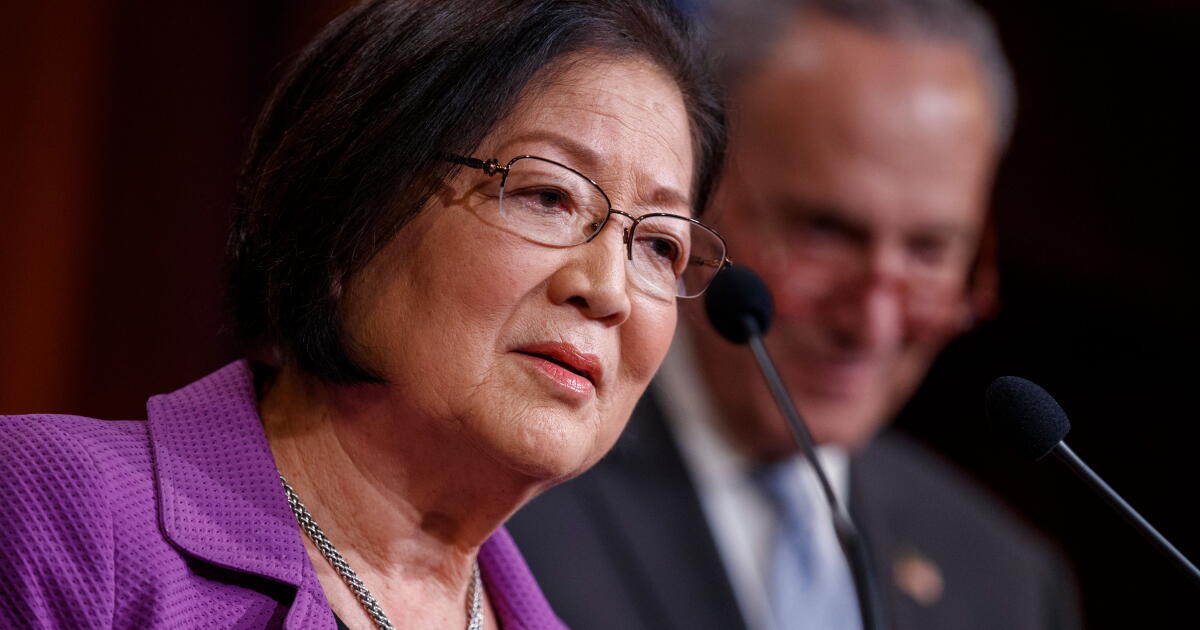
The bill, introduced by U.S. Rep. Grace Meng (D-N.Y.) and Sen. Mazie Hirono (D-Hawaii), has been co-sponsored by more than 60 lawmakers and on Friday was endorsed by President Biden, who condemned the “ongoing crisis of gender-based and anti-Asian violence” and urged Congress to “swiftly pass the COVID-19 Hate Crimes Act.”
“It’s time for Congress to codify and expand upon these actions — because every person in our nation deserves to live their lives with safety, dignity and respect,” Biden said.
The bill would require at least one Department of Justice employee to facilitate fast reviews of federal, state and local COVID-19 hate crimes for at least a year, according to a draft provided by a Hirono spokeswoman.
It would also require the department to issue guidance to state and local law enforcement agencies on how to establish an online hate crime reporting system in multiple languages.
The system would “allow more victims to come forward,” A.B. Cruz III, president of the National Asian Pacific American Bar Assn., said in a statement.
The bill would also require Atty. Gen. Merrick Garland and Health and Human Services Secretary Xavier Becerra to work with the COVID–19 Health Equity Task Force and advocates to give guidance on how to discuss the pandemic without using incendiary language.
The bill would not drastically change the legal landscape as it relates to hate crimes but would spotlight how it intersects with COVID-19, said Anthony Michael Kreis, a law professor at Georgia State University College of Law.
Since virus-fueled lockdowns went into effect last March, thousands of Asian Americans have reported having faced racist verbal and physical attacks or have been shunned by others, according to a report by Stop AAPI Hate. The group, whose acronym stands for Asian American and Pacific Islander, received reports of 3,795 incidents over the last year, with 68.1% involving verbal harassment and 11.1% involving physical assaults.
Among the incidents, Asian Americans reported being punched while riding the subway in Washington, taunted with racial slurs in New York and coughed on while being blamed for the novel coronavirus in Dallas.
Then-President Trump last year said little to discourage the attacks but often used racist language to describe the deadly virus, calling it “kung flu” and the “China virus,” even after being warned that his rhetoric was incendiary. Meng said many Republican lawmakers “trafficked racist, bigoted terms to describe COVID-19.”
“In doing so, their language stoked people’s fears and created an atmosphere of intolerance and violence, which persists even today,” Meng said.
The bill would define COVID-19 hate crimes as violent offenses motivated by the real or perceived relationship to the spread of the coronavirus and the real or perceived background of a person, including their ethnicity and national origin.
Kreis said it’s unclear how adding a COVID-19 distinction to a federal hate crime would benefit existing law. The law, in practice, draws connections between current events and discrimination. For example, the law can already be used to prosecute crimes against LGBTQ people whose attackers express anti-HIV/AIDS sentiments, he said.
Kreis said that though anti-Asian slurs are seen as an expression of hate by the American public and, by extension, juries, anti-Asian imagery is not as noticeable in American society. This often requires prosecutors to handhold juries to connect the dots to understand what hate crimes against Asian Americans look like, he said.
“We need a lot more cultural competency in the ways in which anti-Asian stereotypes can manifest,” Kreis said. “That’s a hard endeavor we as a society need to tackle.”
Times staff writer Chris Megerian contributed to this report.