ALL planes leaving Gatwick Airport have been grounded causing chaos for passengers.
A Boeing 787 aircraft was reportedly stuck on the runway and the technical issue is currently being investigated, it is understood.
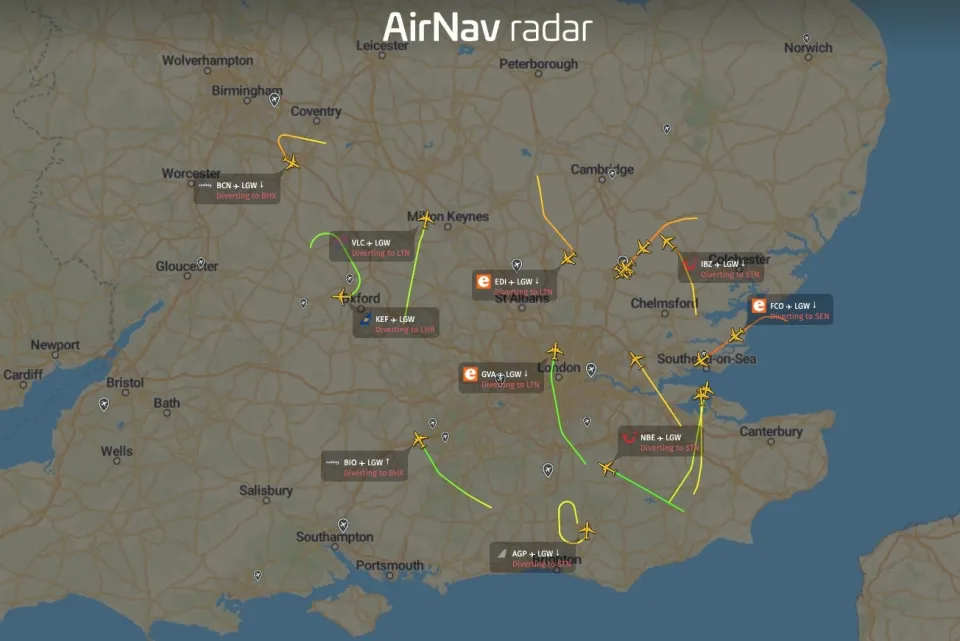
Flights to London Gatwick have been delayed or diverted, according to airplane tracking sitesCredit: AirNav radarGatwick said the runway was closed due to a ‘technical issue’Credit: Alamy
Staff worked to resume flights as quickly as possible after the runway closed at 1.40pm today.
A London Gatwick spokesperson said: “Due to a technical issue with a departing aircraft, our runway is currently closed.
Sign up for the Travel newsletter
Thank you!
“Our teams are working to move the aircraft and resume operations as quickly as possible. As always, safety and security is our number one priority.”
Airport officials have informed customers to still travel to the airport on time for their flights.
The Sun understands the plane was a flight to New York which was due to take off just after 1pm.
It appeared to be on the runway surrounded by several fire engines but has now been cleared.
One passenger returning from the Isle of Man said on X: “I’m stuck on a plane returning from the IOM to Gatwick after jawbone surgery yesterday.. exhausted.
“The plane has diverted to Luton…I’d rather get out and catch a train back to London!”
The grounded plane caused chaos with many EasyJet flights being reportedly sent to other airports.
Another added: “Gatwick Airport any idea what is happening? I am stuck on your runway with no information.”
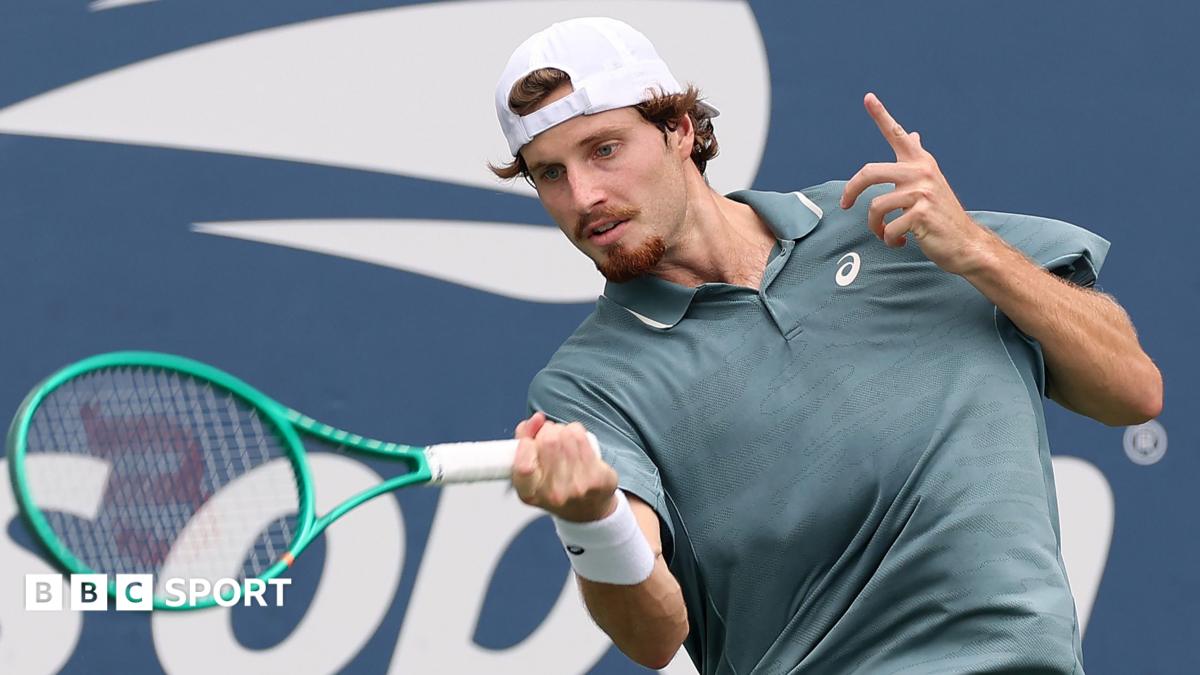
British qualifier Toby Samuel broke more new ground with a dominant victory over Tomas Machac on his US Open main-draw debut.
The 23-year-old came from a set down in each of his three qualifying matches in New York this week to guarantee a third Grand Slam appearance of the year.
However, he had no such issues against former world number 20 Machac, wrapping up a 6-2 6-3 6-2 victory in just over 90 minutes to register his first win at a Grand Slam.
“It means everything to me. It’s what I dreamt of as a kid watching these big tournaments,” Samuel told BBC Radio 5 Live.
“Being able to win my first Grand Slam match is unbelievable.”
Just two years ago, Samuel fell to almost 2,000th in the world rankings as bone bruising in his right arm ruled him out of much of the 2024 season.
He now sits inside the top 100 in the live ATP rankings, along with earning $140,000 (£103,000) in prize money in the biggest payday of his career so far.
Samuel won 36 of 39 matches on the ATP Challenger Tour to return to the top 300 last year, but has reached new heights in 2026.
The Winchester native came through qualifying to make his Grand Slam debut at the French Open, having never previously contested a single match on the ATP Tour.
He continued that momentum with a run to the semi-finals at Eastbourne, a Wimbledon wildcard, and a third Challenger crown of the year on Winnipeg’s hard courts.
Samuel’s new ranking would secure automatic qualification for next January’s Australian Open, completing the set of major appearances a year after making his top-250 debut.
He is joined in the second round in New York by compatriot Katie Boulter, who battled past American wildcard Carol Young Suh Lee 6-4 3-6 6-0.
Those who were at Dodger Stadium on a gorgeous Friday night seemed to be in for an all-nighter.
They have Tommy Edman to thank for getting home a bit earlier.
With two outs in the 10th, Kiké Hernández on third and Kyle Tucker on first, the second baseman hit a walk-off single against Pittsburgh Pirates reliever Gregory Soto, earning the Dodgers a 5-4 win.
“Yeah, it feels great,” Edman said. “We’ve kind of been struggling a little bit in those clutch situations, myself included, so it felt really good to come through.”
Edman entered the at-bat 0 for 3 and was seemingly on the verge of keeping the 200-minute game alive in an unfavorable way.
Soto, however, threw the same low-middle sweeper that Edman fouled off one pitch earlier, and the second baseman jumped on it the second time around, propelling the Dodgers (78-51) to four consecutive wins for the first time since late July.
“That’s something I really try to take pride in — leaving past at-bats behind me — and I think I’ve done a good job of that this year,” Edman said. “I think that’s something we do really well overall as a group, and that leads to coming through in big situations like that, putting past at-bats behind you.
“One of the best feelings after grinding for 10 innings,” he added. “We had a bunch of pitchers do a really good job today.”
However, the victory was tempered by the loss of center fielder Andy Pages, who was struck in the left hand with a Bubba Chandler pitch in the third inning. Manager Dave Roberts said X-rays showed a fracture and Pages is expected to be out at least four weeks.
The right-hander brought the urgency to the mound that the Dodgers were missing during an abysmal 5-11 stretch that ended with a sweep against the Colorado Rockies this week.
“I personally felt like today’s game is very important,” Yamamoto said. “We’re gonna have [Tarik] Skubal starting [Saturday], and I just wanted to maintain the momentum, which started in Colorado.”
Yamamoto surrendered two runs — both via singles from Pirates designated hitter Nick Gonzales — on five hits over 6⅓ innings, striking out nine and walking one.
“My stuff was pretty good today,” Yamamoto said. “I was feeling pretty good out there. So even after letting runners on the bases, I just tried to focus and then take it one hitter at a time.”
Chandler, meanwhile, exited after four innings. Max Muncy hit a two-run homer in the first, and Mookie Betts contributed a two-run single in the third.
The Dodgers, with a 4-2 lead, cruised into the eighth. But Kyle Hurt gave up a tying two-run homer to Oneil Cruz.
Dodgers pitcher Yoshinobu Yamamoto delivers against the Pittsburgh Pirates in the second inning Friday night.
(Gina Ferazzi / Los Angeles Times)
Matters looked grim for the Dodgers in the 10th when Evan Phillips found himself in a one-out, bases-loaded jam.
All was well, though, once Phillips got Henry Davis to ground into an inning-ending, 6-4-3 double play.
“That was great,” Roberts said of Phillips. “I know that he’s trying to kind of build as we’re going through this, and [it] hasn’t been smooth sailing for him and the success that he’s used to. But this is a big one. Big confidence builder for him … to strand those two runners was a big outing for him.”
Edman took care of the rest.
And for maybe the first time in weeks, the Dodgers appear to be inching back to their champion ways.
“I think our guys are kind of reinterested, you know, collectively,” Roberts said before the game. “So, that’s a good thing.”
Andy Pages sustains hand fracture
Dodgers center fielder Andy Pages gets hit by a pitch during the third inning against the Pirates on Friday night.
(Gina Ferazzi / Los Angeles Times)
Roberts said Pages sustained a fracture on the back of his left hand when he was hit by the 100-mph pitch It’s unclear if he will need surgery.
“Well, it’s just really unfortunate, obviously,” Roberts said. “It’s not season-ending. … So, I would expect him back, knowing him, on the earlier side. … I feel for him because he’s having such a good year.”
Roberts said Edman is an option to fill in for Pages in center field.
In a more positive development, Will Smith faced live pitching for the first time since June, and Roberts said that the plan is to activate the catcher during the first week of September.
“Today was a good day for Will,” Roberts said. “Taking at-bats. He’ll catch a couple bullpens today. He’ll do a couple more lives. … He still needs to get his legs back under him before we feel confident that he can take down a major league game and feel good coming out of it.”
Roberts added that Smith is “gonna play in the postseason” and that there is enough time for him to reach 100% strength.
Tyler Glasnow will likely be activated during the Dodgers’ upcoming trip to Atlanta.
“I just saw him. He had a great outing — his last rehab outing,” Roberts said. “I’m not sure which day we’re gonna pencil him in against the Braves, but if all of the things check out, it’ll be that [series].”
Ohtani will return to the mound at some point this season.
“It’s gonna happen,” Roberts said. “[Ohtani] threw another bullpen. … I think that there’s going to be a live or two, and then he’ll be on the mound. I just don’t know when we’re going to do that with the scheduling.”
Dalton Rushing is “pain-free” and close to facing live pitching, according to Roberts, but the catcher is “unlikely” to return to catching this season.
“I hope I’m wrong,” Roberts said. “But he’s determined to go through the process, the progression, the build-up and get back. And we’ll see where we’re at.”
Roberts didn’t rule out the possibility of Rushing being activated as a designated hitter down the line.
The Dodgers just can’t have some peace and calm, can they? Now, an owner is getting in on the fun with some controversy.
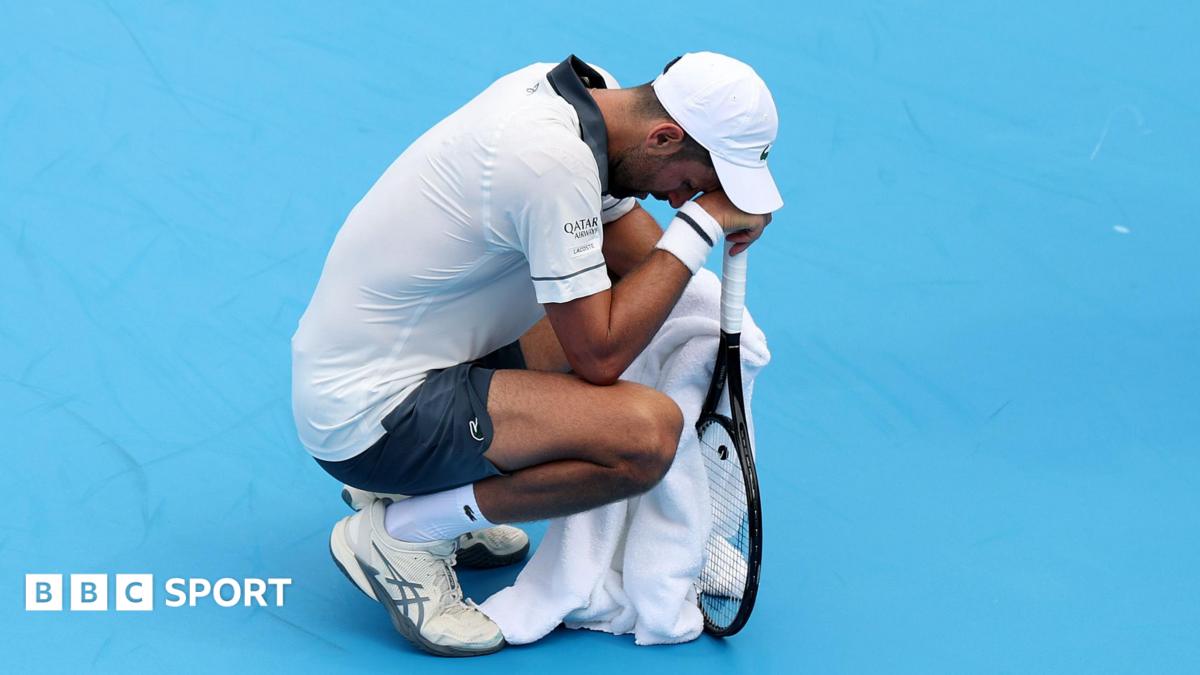
Novak Djokovic struggled with the heat and humidity as he fell to a shock defeat by Argentina’s Thiago Tirante in the second round of the Cincinnati Open.
The 24-time Grand Slam champion dropped onto his hands and knees and took a medical timeout during the second set before eventually losing 2-6 6-4 6-4 to the South American, who is ranked 50th in the world.
Djokovic, 39, the world number five, was making his first appearance since losing to Jannik Sinner in the semi-finals at Wimbledon in July.
The Serbian had never failed to reach at least the last 32 of the tournament in Ohio since making his debut in it in 2005.
However, despite claiming the first set, Djokovic toiled badly after winning an 18-minute third game in the second set and appeared to vomit twice.
A physio and a doctor both provided on-court assistance and both players returned to the dressing rooms after the second set.
However, when play resumed Djokovic dropped serve in the ninth game of the third set and Tirante was able see out the match.
“This is the best win of my career,” said the Argentine.
“I managed the nerves of playing a legend like Novak. It was all so much pressure.”
Former France and Manchester United star Paul Pogba suffers latest injury setback, sparking rumours about his future with Monaco.
Published On 12 Aug 202612 Aug 2026
Paul Pogba’s future with Monaco could be in doubt after he suffered another injury setback.
The former Manchester United and Juventus midfielder suffered a new injury to his left thigh on Tuesday during the first day of Monaco’s training camp in England.
Recommended Stories
list of 4 itemsend of list
The 2018 French World Cup winner suffered the injury as the Ligue 1 club trained at the English national football centre at St George’s Park after beating Liverpool in a friendly on Sunday.
The 33-year-old midfielder was only returning to group training after a long spell of right-knee problems.
Pogba has played only one half of football for Monaco in this preseason.
According to several sources close to the matter, the new injury shows Pogba is some way off the level of fitness required to begin the French league season.
There has been widespread speculation that Monaco have begun talks with Pogba’s representatives about buying the player out of the remainder of his contract, which is set to expire at the end of the new season.
Paul Pogba was part of the France team that won the FIFA World Cup in Russia in 2018 [Darren Staples/AFP]
After serving 18 months of a four-year ban for doping, Pogba played just six Ligue 1 matches for Monaco last season, totalling 115 minutes on the pitch.
Pogba started his career with United in the English Premier League before the manager at the time, Sir Alex Ferguson, released the midfielder on a free transfer in 2012 after a dispute with the player’s agent.
Juventus stepped in for the then 19-year-old, and he won four consecutive Serie A titles with them and reached the Champions League final before re-joining United in 2016 for a world record transfer fee at the time of $120.2m.
He returned to Juventus on another free transfer in 2022 before his release in 2024, during his ban. Monaco stepped in to hand the Seine-et-Marne-born player his first taste of senior football in his home country in 2025.
Pogba’s last appearance for France came in 2022, in a 5-0 victory over South Africa in an international friendly. It was the last of his 91 caps, during which he scored 11 goals for the team.
His World Cup-winning moment came with France when they defeated Croatia 4-2 in the final of the Russia 2018 tournament, with Pogba scoring his side’s third goal.
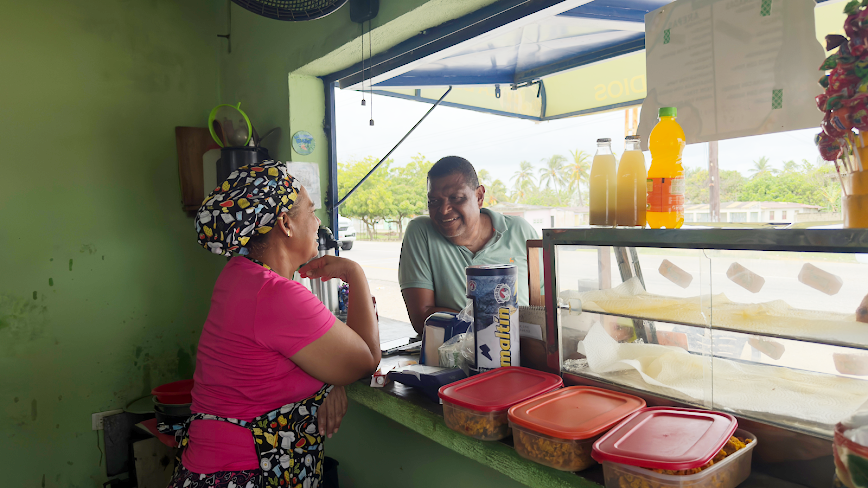
In Boca de Aroa, a village on the coast of Yaracuy state, Yaritza and her husband Fernando await the arrival of tourists who, for the past twelve years, have stopped for breakfast at their food stand “La Bendición de Dios”. This business has been the family’s main source of income. However, after the earthquakes of June 24, almost no vehicles are going through the road to the beaches.
Fernando says that traffic decreased significantly after the earthquakes. The epicenter of the first quake was very close to them, to the south, and some houses in the area were damaged. “Before the earthquake, the flow of travelers was considerably high, but our sales are now only 25% of what they used to be. Now we live on daily earnings. What we earn each day, we use to buy what we need.”
Yaritza and Fernando try to navigate the crisis with the best mood possible
Fernando and Yaritza are not alone. In Boca de Aroa, as in other coastal communities near Morrocoy National Park, a large part of the economy depends on the constant flow of visitors from different parts of the country. To reach its keys and beaches from Valencia, many travelers take Troncal 3, the road that runs through Boca de Aroa before reaching the most popular beaches. After the earthquakes, the road shows evident damage: several sections remained closed, and traffic had to be diverted along alternative routes, further hindering access to the region. Buses that once arrived full of travelers now carry only a handful of passengers, mostly locals who get off one by one as soon as they recognize their usual stops.
Along this route, tourists sustain an economic chain of restaurants, small businesses, and people who work in the sea. Local fishermen find their main customers in hotels, inns, and restaurants, while others depend directly on tourism, relying on the sale of food, coconut products, fish and shellfish to make a living.
Tulio, owner of La Negra, a family restaurant specializing in seafood supplied by local fishermen, says the drop in tourism has hit both the business and its employees hard. “We couldn’t open the restaurant for three weeks after the earthquake. There’s no tourism, and people aren’t coming to town anymore,” says Tulio, sitting at one of the tables. “My employees keep coming to work because I want to help them financially, but this situation is really difficult.”
Tulio has his restaurant ready for the moment the customers are back
There was a reason for the lack of customers. Structural damage to the bridge leading to Punta Brava Beach, within Morrocoy National Park, forced the closure of this land access for weeks. The bridge reopened to light vehicles on July 25, yet the flow of visitors remained far below normal levels. Tourists could still board boats from the Tucacas pier to reach the keys, but the weeks-long closure disrupted the economic chain that sustained Boca de Aroa and Tucacas.
The day before authorities allowed light vehicles to pass again, local beach workers protested on that same road, demanding the lifting of the measures that prevented access to the coast.
The Food and Agriculture Organization of the United Nations (FAO) warns that small-scale fishing communities are among the most vulnerable to crises and natural disasters in Latin America and the Caribbean, due to their dependence on daily income and their limited capacity to absorb prolonged disruptions to their economic activity.
The Tierra Viva Foundation, a non-governmental organization dedicated to sustainable development, environmental conservation, and the strengthening of local communities, has been working for several years with coastal communities through its Costa Viva project. This sustained presence in the territory has allowed the organization to gain firsthand knowledge of the economic and social conditions that make these populations especially vulnerable to natural disasters. Just two weeks before the emergency, on June 9, the foundation announced a fundraising campaign—which had to be suspended after the earthquakes—to provide residents of the country’s main coastal communities with work tools and vocational training to strengthen their livelihoods. The initiative responded to a situation of vulnerability that these populations already faced before the earthquake.
This is also the conclusion of Alejandro Luy, the organization’s general manager. “Venezuela is going through a complex humanitarian situation, and the earthquake aggravated it by leaving people homeless, and the contraction of tourism in the area generated unemployment,” he says. “To support their activities, we implemented training programs to help improve the services many of them offer during 2025. If tourism decreases in these areas, their livelihoods are affected.”
But the vulnerability of these communities isn’t measured solely in economic figures. It’s also present in the stories of those who saw how the earthquake disrupted a way of life built over generations.
Jesús belongs to a family that has been connected to the sea for decades. For more than 60 years, his family has lived off fishing in Boca de Aroa, a way of life that Jesús continued and that for years allowed him to sell the fish he caught. For his family, this has been the most difficult situation caused by a natural disaster.
“In 2022, the Aroa River rose and overflowed, flooding the entire Cayumar sector and the dock area where we boarded boats to go fishing, but the flooding only lasted a couple of days. But because of the earthquakes, we haven’t sold anything we catch from the sea for several weeks.”
On June 24, Jesús had decided to return home earlier than usual. At 11 a.m., he left the sea and returned to land. Hours later, his father advised him not to go fishing again, just a couple of minutes before the earthquakes.
“I went out to buy a Coca-Cola, and on my way back home, the shaking started. My wife was at home with my parents. They managed to get out when the wall of the garage collapsed,” he recalls.
The destroyed space wasn’t just part of the family home. It was also a workplace. There, his father prepared the fishing nets, and his mother prepared the food she sold to the community members and, on weekends, to the tourists who came to the area.
“We want to rebuild our garage because my dad uses it to prepare the nets.” “My mom sells food to people in the community, but on weekends she sells to tourists,” Jesús explains.
Now he’s trying to turn the loss into an opportunity. While he waits for the debris to be removed from his mother’s porch, he started planting coconuts with the idea of selling them to visitors who return to Boca de Aroa and creating a small commercial area there, but it won’t be until five years from now that he’ll see the fruits of the barely sprouted coconut trees.
The damage in Jesus’s property
His story reflects a reality that is repeated in small-scale fishing communities around the world. According to the Food and Agriculture Organization of the United Nations (FAO), this sector represents about 40% of the world’s fish catches and supports approximately 90% of fishery workers. However, those who depend on this activity often have limited capacity to absorb prolonged interruptions in their income, due to their reliance on daily work and local markets.
In Boca de Aroa, that phrase sums up the uncertainty of a community that for years lived at the pace of those who arrived seeking the sea. The absence of tourists not only left empty tables in restaurants and fewer customers for the fishermen; it also disrupted an economy built around small commercial exchanges with visitors, which sustained hundreds of families in Falcón state.
The most significant damage in the cluster of coastal towns within the country occurred in Tucacas and Boca de Aroa, unlike other tourist areas. The condition of the roads leading to these towns, along with the preventative closure of the region’s most important national park, were the main causes of the economic slowdown in these villages.
Just a few streets away from where Jesús planted the first coconuts, traces of what happened that June morning remain. Some houses are damaged, and families who lost their homes continue to wait for a solution while living in tents set up near their land.
Some houses are so damaged that their inhabitants must stay in tents
The recovery of these fishing villages will not depend solely on removing the debris or repairing the access roads. It will also depend on those who live there being able to reconnect with an activity that for generations defined their relationship with the sea: the possibility of working, selling and supporting oneself on a coast where, after the earthquake, many are still waiting for people to return.
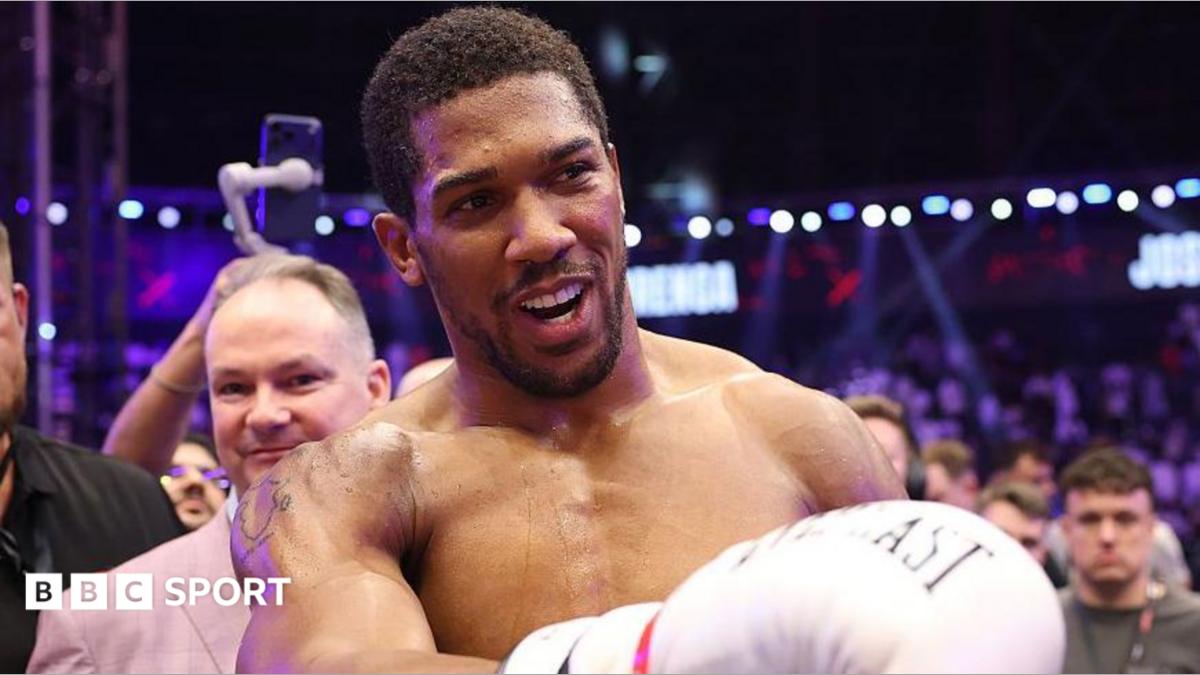
Anthony Joshua suffered two knockdowns – the first happening after just 20 seconds – before recovering to dramatically stop Kristian Prenga in the second round of his comeback fight in Jeddah, Saudi Arabia.
The British heavyweight was fighting for the first time since surviving the December car crash in Nigeria that claimed the lives of his close friends Sina Ghami and Latif ‘Latz’ Ayodele.
He was sensationally rocked by a huge uppercut from underdog Prenga in the opening round, and then hit the canvas again later in the round.
At that point he looked on the verge of one of the biggest shock defeats in heavyweight history, with the long-awaited Tyson Fury fight hanging by a thread.
But Joshua produced one of the greatest escapes of his career, and now that fight is on.
He unleashed his right hand in the second round, with the final shot sending Albanian Prenga crashing down and forcing the referee to halt the contest.
“It’s more than punch power. That was spirit, that was Latz, that was Sina, that was the families. It hurts to even talk about it. It has been tough,” Joshua, 36, said.
He choked up and stepped away from the microphone, before adding: “It’s my brothers. I don’t want to talk about it.”
There had been speculation fellow Briton Fury might make a appearance despite insisting he would not attend.
But the master of mind games stayed true to his word, with Fury nowhere to be seen barely 24 hours on from his own warm-up win over Mariusz Wach in Thailand.
“I respect everything he has done and everything that he has achieved, but as a fighting person, we’re here now. I hope the fans will be in for a lovely treat,” Joshua said about the prospect of fighting Fury.
Contracts have been signed, but the venue and date for a fight more than a decade in the making are still unknown.
This chaotic night, however, belonged to Joshua in a victory forged through adversity during the most difficult months of his life.
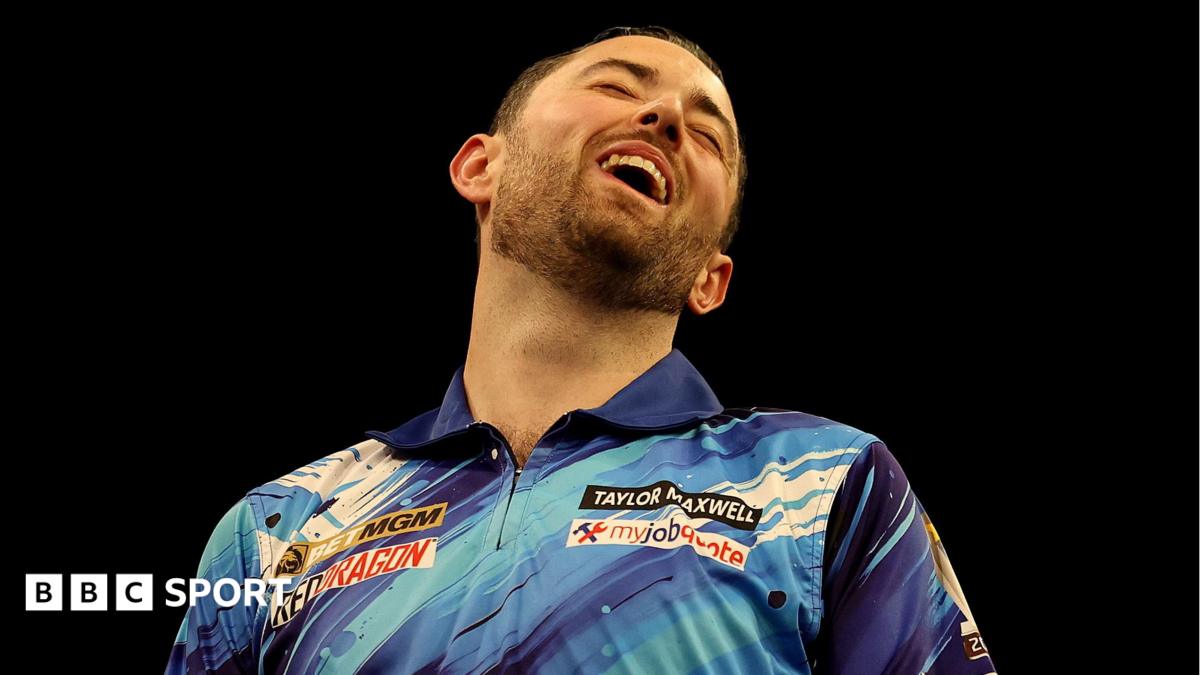
World number two Luke Humphries is out of the World Matchplay after a shock first-round loss to Scotland’s Cameron Menzies.
The former world champion was punished for some poor finishing and lost his first six legs with the darts before finally holding throw.
Humphries threatened to stage a dramatic comeback, winning four legs on the spin to get back to 8-7 but Menzies sealed a stunning 10-7 victory in style by reeling in the ‘big fish’ – a maximum 170 checkout.
The result will come as a huge disappointment to Humphries after he had shown signs of returning to top form – beating Luke Littler to win the US Darts Masters in June – in the past couple of months after a slow start to the year.
But for Menzies, ranked 27th in the world, it is a momentous victory and one he says he “will take to his grave” as he becomes just the second unseeded player to advance at this year’s tournament.
The Scot will now face 15th seed Ross Smith in the second round on Wednesday after the Englishman’s 10-6 win over Netherlands’ Kevin Doets.
Both players averaged over 100 and managed over 50% on the doubles in a high-quality match but Smith hit when it mattered most to progress.
Meanwhile, Gerwyn Price survived a scare before overcoming Germany’s Martin Schindler 11-9.
The Welshman admitted it was “probably one I should’ve lost” after falling 4-0 and 6-2 behind.
Even after fighting back to take his first lead at 9-8, Price was made to work to finish it off as Schindler hit a 121 checkout to break back before the seventh seed eventually sealed the win in the 20th leg.
LISA Faulkner and John Torode have been dealt another blow following her breast cancer diagnosis earlier this week.
The TV couple have reportedly learned that their cookery show, John & Lisa’s Weekend Kitchen, has been shelved after ten series.
Sign up for the Showbiz newsletter
Thank you!
Lisa and John’s Weekend Kitchen has reportedly been shelved after ten series on ITVCredit: PAThe couple have become familiar faces on ITV thanks to their long-running cookery seriesCredit: Shutterstock Editorial
Amid ongoing budget cuts at ITV, the show is notably absent from upcoming schedules.
According to The Mirror, the couple remain hopeful that the popular cookery programme could return to the channel at a later date.
An insider told the publication: “John remains a regular contributor to This Morning, where he has been fully supported by everyone, including hosts Ben Shephard and Cat Deeley.
“The truth is there are no current plans for series 11 of Weekend Kitchen but no final decision has yet been made over whether it will return in the future.
The couple have fronted their popular weekend cookery show together for ten seriesCredit: PAThe latest blow comes after Lisa revealed she had been diagnosed with breast cancerCredit: Instagram
“And John is very much a part of the ITV family through his role as a regular chef on This Morning.”
ITV confirmed that no final decisions have been made yet regarding the future of the show.
The news comes after John suffered a major career setback last year when he left MasterChef.
An inquiry, ordered by MasterChef’s production company, upheld a claim that the chef had used an “extremely offensive racist term”, which he said he had “no recollection of”, and he subsequently departed the show.
His wife Lisa announced her shock cancer diagnosis on Thursday, revealing that she had already undergone surgery and was awaiting a course of radiotherapy.
Lisa is best known for her acting roles in shows including Holby City and EastEnders, and in recent years has carved out a successful career as a TV chef.
She won Celebrity MasterChef in 2010 before going on to front John & Lisa’s Weekend Kitchen alongside her husband.
BROOKS Nader almost suffered an awkward wardrobe malfunction in her latest sizzling snaps.
The Baywatch beauty nearly spilled out of a plunging top in photos shared on her Instagram stories this week.
Sign up for the Showbiz newsletter
Thank you!
Brooks Nader has stunned in a sexy plunging topCredit: InstagramThe gaping garment looked amazing as the blonde bombshell posed on a boatCredit: Instagram
The stunning actress, who will be taking on the role of Selene in the upcoming Baywatch reboot, looked beautiful as she rocked a black plunging halter-neck style top.
The top had gaping arm holes and it appeared that Brooks ditched her bra for the occasion.
She could have suffered a wardrobe blunder due to the daring nature of the garment.
She later rocked a strapless red bathing suit, which again could have risked a major malfunction because it was held up by luck alone.
The red garment was very renunciant of what she’ll be donning when starring in Baywatch.
She has already been hailed as the ‘next Pamela Anderson‘ as she prepares to slip into the iconic red bathing suit on the small screen.
Brooks’ sizzling snaps come just mere weeks after it was revealed that a Brit broadcasting company has bought the reboot of Baywatch to air in the UK.
The show stars Brooks and several TikTok stars, as well as returning Baywatch icons such as Erika Eleniak.
She held her top together while posingCredit: InstagramShe ditched a bra to wear the sexy garmentCredit: InstagramBrooks then rocked a strapless red bathing suitCredit: TikTokShe channelled Pamela Anderson for the sizzling lookCredit: TikTok
The all-new Baywatch series is co-produced by Fremantle and Fox and is due for release later this year in the US, with it now set to grace UK screens via Sky.
The broadcasting giant has taken exclusive UK and Ireland rights to the upcoming series.
Lucy Criddle at Sky has spoken of the move, saying: “Baywatch is one of the most iconic television franchises of all time, and this bold new reimagining will deliver the sun, sea and high-stakes drama audiences know and love, while introducing a dynamic new cast for a new generation of fans.
“We’re thrilled to partner with Fremantle and couldn’t be more excited to bring the series exclusively to Sky audiences across the UK and Ireland.”
12 brand new episodes will soon air, with viewers likely to be glued to the screen as the lifeguards go about their duties in their iconic red swimsuits.
The all‑new cast of lifeguards will see Stephen Amell in the lead role of Hobie Buchannon, alongside Jessica Belkin as Charlie Vale, Shay Mitchell as Trina, and Hassie Harrison as Nat.
Thaddeus LaGrone will play Brad and Noah Beck will be at the helm of Luke.
In recurring roles, David Chokachi reprises his original role as Cody Madison, while Livvy Dunne portrays Grace.
Erika Eleniak will also reprise her original role as Shauni McClain as a guest star.
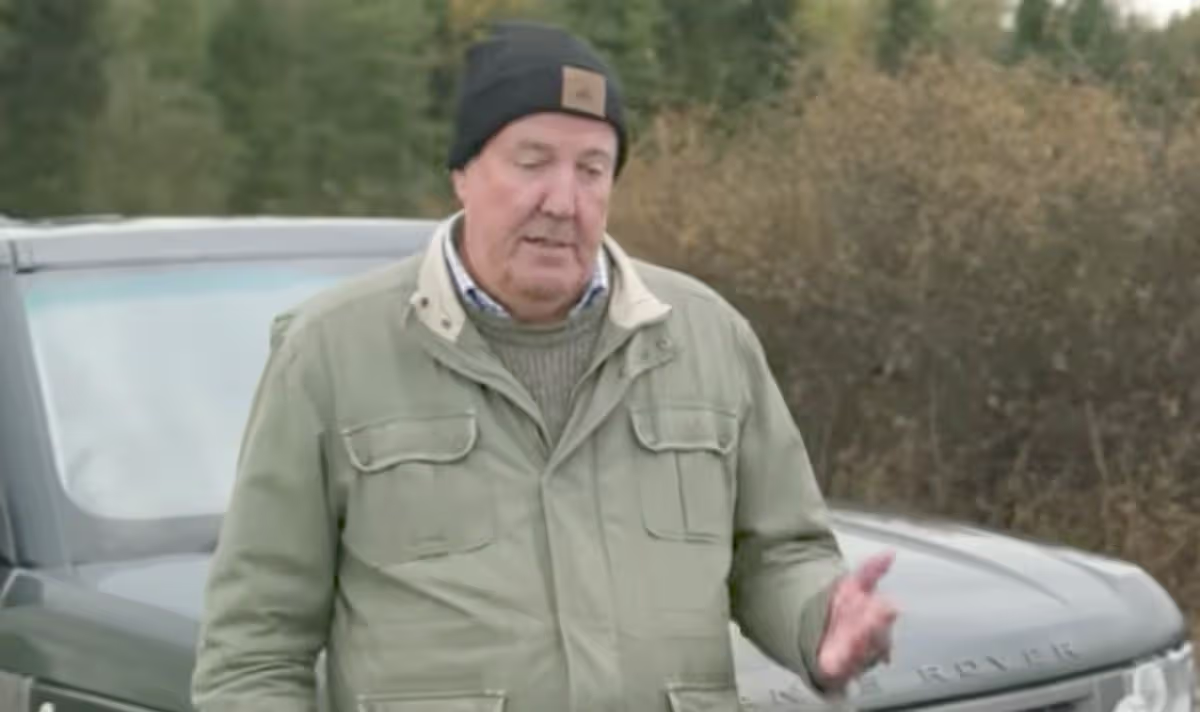
Former Top Gear host Jeremy Clarkson headed to the auction house on the Prime Video series
Jeremy Clarkson’s net worth after farm show proves massive success BigCityLife
Jeremy Clarkson and Kaleb Cooper bid farewell to an iconic member of Diddly Squat Farm.
Season five of Clarkson’s Farm saw Jeremy selling off the fan-favourite Lambo tractor after it wasn’t getting much use, following his purchase of the AgBot in the new series.
The AgBot, a fully autonomous, driverless tractor, was busy ploughing the fields of Diddly Squat Farm and sowing seeds.
Jeremy and Kaleb could monitor the tractor’s progress on their computer while they got on with other things on the farm, which meant the 2016 Deutz-Fahr tractor wasn’t getting much use.
The veteran broadcaster decided to sell it off, explaining in voiceover: “”The green Lambo hadn’t turned a wheel in weeks, so I decided to sell it, which meant getting it valued by an agricultural auctioneer.”
The valuation on the prized piece of agricultural kit from Oliver Godfrey left Jeremy somewhat surprised and dismayed.
Oliver responded: “It’s not the easiest thing to sell in the world, I’ll be honest, but I would look somewhere in the region of between £50,000 and £60,000.”
Jeremy revealed that the valuation was “quite a lot less” than he’d initially paid for it when he bought it for £80,000.
On the day of the auction, Jeremy didn’t appear too hopeful about his Lambo’s prospects and said: “Here it is. There’s going to be a frenzy of bidding…”
However, the bidding did start to pick up as people put in their offers for the green tractor that Jeremy had customised and adorned with Lamborghini badges.
As the offers went up, Jeremy remarked: “We are actually getting closer to the £80,000 that I had paid for it.”
Despite the valuation, both Jeremy and Kaleb were left astonished and rather relieved when the Lambo ended up getting snapped up for the sum of £70,500.
Get 30 days of Prime Video totally free
This article contains affiliate links, we will receive a commission on any sales we generate from it. Learn more
TV lovers can get 30 days’ free access to binge great shows like Clarkson’s Farm by signing up to Amazon Prime. Just remember to cancel at the end and you won’t be charged.
Once the hammer went down, Jeremy said: “Well, it was a financial hit, but it wasn’t a financial kick in the nuts.”
The auction comes ahead of tomorrow’s Clarkson’s Farm season five finale, when audiences will get the final two episodes titled Sickening and Reaping – referring to the TB outbreak and the harvest at Diddly Squat.
Clarkson’s Farm season 5 concludes tomorrow on Prime Video