sues

DOJ sues 4 more states over noncitizen tuition benefit laws

The Justice Department under Attorney General Todd Blanche announced four additional lawsuits were filed Thursday asking the courts to enjoin Arizona, New Mexico, Oregon and Washington from enforcing laws that require secondary learning institutions to offer in-state tuition benefits to certain noncitizens. Photo by Daniel Heuer/UPI | License Photo

Aug. 28 (UPI) — The Justice Department is suing four more states over offering in-state tuition benefits to qualifying undocumented students, for a total of 21 lawsuits filed against so-called Dream Acts amid the Trump administration’s anti-immigration push.

The lawsuits against Arizona, New Mexico, Oregon and Washington — all Democratic-led — were individually filed Thursday, alleging their laws providing undocumented students with in-state tuition and financial assistance unconstitutionally discriminate against out-of-state U.S. citizens to whom such benefits are not offered.

“By granting illegal aliens in-state tuition, Washington, Oregon, New Mexico and Arizona are pushing citizens to the side and ignoring federal law. No more,” Associate Attorney General Stanley Woodward Jr. said in a statement.

“Our efforts will not cease until President Trump’s promise is fulfilled: illegal aliens will not receive benefits denied to American citizens.”

The Trump administration is asking the courts to enjoin the states from enforcing their so-called Dream Acts that require colleges and universities to offer the in-state benefits to certain noncitizen students. The lawsuits argue the laws conflict with a 1996 federal statute that bars states from offering in-state tuition to people not lawfully present in the United States unless a citizen of the United States is eligible for the same benefit without regard to whether they are a resident of the school’s state.

Washington Gov. Bob Ferguson said he plans to fight the lawsuit.

“Washington State won’t be bullied into changing how we provide opportunities for young people in our state,” he said in a statement.

“We’ll see them in court, and we expect to win.”

The Justice Department has been targeting these laws following an April 2025 Trump-signed executive order that directed the attorney general to identify and stop enforcement of policies that favor “aliens over any groups of American citizens,” specifically highlighting Dream Act laws.

Proponents of these laws argue that they put postsecondary education within reach of those who otherwise would never have the opportunity to attend university, while reducing high school dropout rates as well as raising student incomes and tax contributions.

Of the 21 lawsuits, five states have been enjoined from enforcing their laws, while the other lawsuits continue to be litigated.

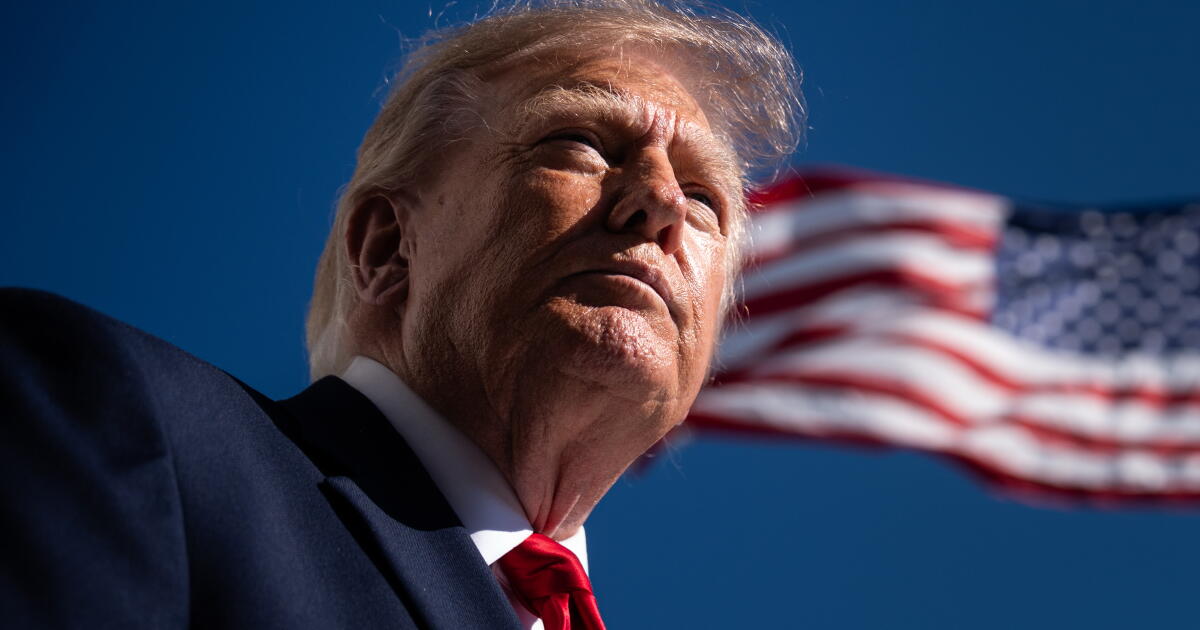
President Donald Trump looks on as Secretary of Education Linda McMahon speaks during a back-to school event in the Rose Garden of the White House on Monday. The event focused on education and the Trump administration’s education policies. Photo by Will Oliver/UPI | License Photo

Source link

New York mayor Mamdani sues to block $10,000 teaching aide bonuses | Politics News

New York City, United States – Mayor Zohran Mamdani is challenging a new law that would give New York City’s teaching aides a one-time $10,000 bonus, arguing it goes against the city’s collective bargaining laws.

On Wednesday, the bill, which was passed by New York City’s City Council, automatically became law because the mayor had opted not to veto it. Instead, Mamdani filed a lawsuit to block it because the City Council had enough votes to override his veto.

Recommended Stories

list of 4 itemsend of list

The bill, called the Respect Check Act, was backed by the United Federation of Teachers (UFT), a labour union representing teachers across New York City’s public school system and was championed by City Council Speaker Julie Menin, who has often clashed with the mayor.

Teaching assistants are among the lowest-paid workers in the city’s school system, according to a statement released by Menin’s office on Wednesday. Their pay is as low as $32,000. According to MIT’s living wage calculator, the living wage in New York City is $79,469 for Manhattan, $67,558 for Brooklyn, $73,258 for Queens, $67,974 in Staten Island, and $60,341 for the Bronx.

When the bill passed in July, Mamdani argued that the law directly violated a state law called the Taylor Law, a nearly 60-year-old law that gives public sector workers the right to organise. The UFT, which endorsed Mamdani in July 2025 ahead of the city’s election, pushed back on the mayor’s claims. The group argued the City Council did not undermine collective bargaining.

“The City Council would not have introduced – let alone passed – this bill if it were illegal, and we would not have supported a bill that threatened our collective bargaining rights,” Michael Mulgrew, president of the UFT, said in a statement provided to Al Jazeera.

“This moment is an opportunity for Mayor Mamdani to create a new, fairer system and build the kind of city he said he wanted to lead. This administration must keep its promises, and we won’t stop until it does.”

The City Council crafted the law to avoid violating New York’s Taylor Law, a UFT representative told Al Jazeera.

Under a 2023 state appeals court ruling, additional payments to public employees are mandated to be independent of a worker’s regular salary and cannot be tied to collective bargaining, they argue.

“The Court of Appeals has found that the Taylor Law does not prevent a municipality from unilaterally providing an economic benefit,” Beth Norton, general counsel for the UFT, said in testimony in front of the City Council in 2025, provided to Al Jazeera.

Pushing back

New York City Hall sees it differently.

“Council labels these ‘stabilisation’ payments; they effectively function as stipends or salary bonuses and, regardless of terminology, are an additional form of compensation and, as such, a mandatory subject of bargaining,” the 18-page filing obtained by Al Jazeera said.

“I think the mayor is right that this sets a bad precedent,” Adin Lenchner, founder of the New York-based political consultancy Carroll Street Campaigns, told Al Jazeera.

“Him and his team are either posturing, negotiating, or using this as a moment to negotiate toward some other kind of deal. I think everyone would agree that, substantively and philosophically, this is aligned with the mayor’s public policy approach and his vision for the city,” Lenchner added.

“So, if I had to guess, this is, on the one hand, about not wanting to establish a bad precedent and, on the other hand, a step toward a longer-term negotiation.”

Citizens Budget Commission (CBC), a nonpartisan think tank, urged the mayor in July to veto the bill, arguing that City Council should not make this decision. It says the now-law would add $325m in city spending.

“The City should continue to determine employee compensation at the bargaining table, not the legislative chamber,” vice president for research at CBC, Ana Champeny, said in a press release in mid-July.

Mamdani echoed that sentiment when he was asked about the law earlier this month.

“Conversations around compensation are better left at the bargaining table,” Mamdani said in a news conference on August 6.

However, the mayor voiced support on the campaign trail for legislation that would provide support payments to these paraprofessionals. That legislation supported recurring payments, not a one-time payment.

“The version he supported last fall made the payment recurring; what passed last month only guarantees it for one year. That’s the line between then and now, so not much of a flip-flop,” Lenchner added.

“We will not allow the political process to replace the collective bargaining table. The City is filing a lawsuit to protect the right of every union to negotiate on behalf of its members, to fight for the workplace they deserve and ensure that workers – not politicians – determine their own futures,” Matt Rauschenbach, a spokesperson for the mayor, said in a statement provided to Al Jazeera.

“We will work towards a quick resolution that respects workers, protects the City’s finances, and ensures that the Council does not interfere with collective bargaining in the future.”

Rauschenbach declined to provide further comment.

Source link

Minnesota official sues Texas governor to force ICE agent’s extradition | Migration News

State Attorney General Keith Ellison has called for the transfer of an ICE agent accused of lying about a nonfatal shooting.

Minnesota’s attorney general is suing the governor of Texas to force the extradition of a federal agent charged with shooting and wounding a man during President Donald Trump’s immigration crackdown in Minneapolis.

In a lawsuit filed on Tuesday, Minnesota Attorney General Keith Ellison argued that Texas Governor Greg Abbott has refused to fulfil his “mandatory” obligation to transfer Immigration and Customs Enforcement (ICE) agent Christian Castro, so that he may stand trial.

Recommended Stories

list of 4 itemsend of list

“Governor Abbott has withheld the warrant and held up Castro’s extradition for nearly three months,” Ellison told reporters on Tuesday. “He has no discretion to decline to do so.”

Ellison also asked the US district court in southern Texas to bar Cameron County Sheriff Manuel Trevino from allowing Castro’s release from jail.

Castro’s case has become part of a national debate over transparency and excessive violence during Trump’s mass deportation campaign.

The agent was involved in the January 14 shooting of Julio Cesar Sosa-Celis, a Venezuelan man living in Minnesota. Officials allege that Castro fired a gun into Sosa-Celis’s front door, striking him in the leg.

Initially, the Trump administration said the agents had fired in self-defence, accusing Sosa-Celis and two other people of attacking officers with a broom and a snow shovel during an immigration enforcement operation.

Then-Homeland Security Secretary Kristi Noem went so far as to call the incident the “attempted murder” of an ICE agent.

But video emerged contradicting the ICE agents’ testimony, and in February, federal prosecutors dropped the charges they had filed against Sosa-Celis and his housemate, Alfredo Aljorna.

In a statement that month, ICE’s then-Acting Director Todd Lyons confirmed that Castro and a second ICE agent appeared to have lied about the incident. The two officers were subsequently placed on administrative leave.

“A joint review by ICE and the Department of Justice (DOJ) of video evidence has revealed that sworn testimony provided by two separate officers appears to have made untruthful statements,” Lyons said in a statement at the time.

In May, the Hennepin County Attorney’s Office charged Castro with four counts of second-degree assault and one count of falsely reporting a crime.

“Mr Castro is an ICE agent. But his federal badge does not make him immune from state charges for his criminal conduct in Minnesota,” Hennepin County Attorney Mary Moriarty said in a statement.

Castro was arrested on May 29 in Texas, and he has remained in detention since.

But Ellison has expressed concern that Texas officials – including Abbott, an ally of President Trump – could seek Castro’s release rather than have him face trial.

The Minnesota attorney general described Castro as a flight risk, likely to flee across the US border to Mexico.

“We know that [Castro] has some connections to Mexico, and we know that he has some thought of at some point going to Mexico,” Ellison said. “So, we do believe he’s a risk.”

Abbott’s office told The Associated Press in a statement that it would not comment on “pending extradition matters”.

Under Texas law, Ellison said the 52-year-old Castro could be released from custody as soon as next week – 90 days after he was detained – if Abbott does not agree to his extradition.

The Sosa-Celis shooting was one of several cases this year that prompted questions about the use of deadly force during immigration proceedings.

The Minneapolis area was the subject of one of Trump’s most intense immigration enforcement campaigns, dubbed Operation Metro Surge.

Lasting from December to February, Operation Metro Surge saw what critics considered to be escalating tactics from immigration officials, including warrantless house searches.

Two US citizens, Renee Good and Alex Pretty, were killed by agents during protests against the operation.

Source link

Coalition sues to challenge rule limiting U.S. stays by international students

Aug. 18 (UPI) — A group of university organizations and labor unions filed a federal lawsuit Tuesday challenging a new government rule that limits the time international students can spend in the United States.

The U.S. Department of Homeland Security announced the final rule last month, ending the previous “duration of status” policy for international students.

Under that rule, the United States admitted students with F-1 and J-1 visas for the duration of their status: That is, they entered to pursue a course of study and remained until they earned their chosen degree or degrees.

Students needed to maintain a required course load and comply with the general conditions of their immigration status. There are about 1.5 million students with F-1 and J-1 visas in the United States.

Under the changed policy, international students are capped at four-year stays unless they undergo a federal review to be considered for an extension. Such reviews are to include submitting biometric information and undergoing security, identity and fraud screening.

In announcing the final rule, Homeland Security Secretary Markwayne Mullin said the duration of status policy “undermined national security” and that the new rule restores the U.S. ability to “properly screen and manage those who remain in our country.”

The group filing the lawsuit Tuesday asked for a preliminary injunction stopping the new rule before it is implemented. The Presidents’ Alliance on Higher Education and Immigration (one of the parties to the lawsuit) said the Department of Homeland Security did not adequately justify or assess the rule, address public comments on it or consider better alternatives.

“These changes will create significant uncertainty and administrative burdens for international students and exchange visitors and the institutions that support them,” the Alliance said in a statement. “They will also interfere with academic decision-making, disrupt students’ educational and professional plans and undermine the ability of U.S. colleges and universities to attract and retain global talent.”

Randi Weingarten, president of the American Federation of Teachers, also a party to the lawsuit, said the new rule shows that the United States is “once again breaking the law for its own political purposes and, in doing so, is hurting Americans and American enterprise.”

“And it’s using international students — who we’ve welcomed here to help us — as its pawns,” Weingarten said. “American is a leader in cutting-edge research because generations of scientists from every corner of the globe have been free to pursue difficult questions, challenge conventional wisdom, collaborate openly and publish their findings — without political interference.”

The new rule also requires journalists with I visas to renew their status every 240 days. Jon Schleuss — the president of the NewsGuild-CWA, also a party to the lawsuit — said those visas support the important work of international journalists in the United States.

“Our First Amendment makes it clear that the United States is supposed to be a champion of a free press, not an opponent,” Schleuss said. “These rule changes are just another attempt by this administration to chill reporting done by talented journalists.”

President Donald Trump hosts lifeguard Ryder Williams in the Oval Office of the White House on Monday. Photo by Samuel Corum/UPI | License Photo

Source link

Minnesota attorney general sues Texas governor to compel extradition of ICE agent for trial

Minnesota Atty. Gen. Keith Ellison sued Texas Gov. Greg Abbott on Tuesday, seeking to compel the extradition of an Immigration and Customs Enforcement agent to stand trial for assault and falsely reporting a crime in the wounding of a man during the agency’s crackdown in Minneapolis.

Ellison said he would request a temporary restraining order barring the Cameron County Sheriff’s Office in Texas from releasing ICE agent Christian Castro and requiring Abbott to sign the extradition warrant allowing Minnesota law enforcement agents to take custody of him.

Castro was arrested 11 days after Minneapolis prosecutors charged him with assault and falsely reporting a crime in the Jan. 14 nonfatal shooting of Julio Cesar Sosa-Celis. The criminal complaint alleges that Castro fired a gun at the front door of a home in Minneapolis, striking a victim in the leg before lodging in a child’s bedroom wall, and then knowingly provided false information to an officer about it.

Ellison said at a news conference that unless he’s extradited, Castro faces release from jail next week — 90 days since he was detained — under Texas law, and could flee the U.S. from the border town where he’s being held.

“Christian Castro has been charged with breaking the law in Minnesota,” Ellison said. “He must face justice in Minnesota. Gov. Abbott should have granted Gov. Walz’s extradition request long ago and is required to do so now.”

“Christian Castro is not above the law and Greg Abbott isn’t either,” Ellison added.

Hennepin County Attorney Mary Moriarty said the legal action taken Tuesday to compel Castro’s extradition “should be a completely unnecessary lawsuit.” Officials at the jail and local prosecutors in Texas have been “very cooperative,” she said — “it is not supposed to be controversial.”

She said that since Castro’s arrest, Texas has extradited three unrelated criminal defendants without incident to Minnesota at the request of state authorities.

Gov. Abbott has received communication with us on an ongoing basis, including recently,” Ellison said. “We have to take the position that they are refusing to honor the extradition request.”

Vancleave writes for the Associated Press.

Source link

Disney sues US regulator, claiming political retaliation over ABC stations | Media News

FCC faces scrutiny as Disney claims licence renewal order is tied to political motives against ABC’s coverage.

Disney has filed a lawsuit against the Federal Communications Commission (FCC) amid efforts to stop an early licence review for eight ABC-owned and -operated stations around the United States.

In the lawsuit filed in a federal court in Washington, DC, the media giant alleged the early renewal is an effort by the administration of US President Donald Trump to intimidate the company after infuriating the president.

Recommended Stories

list of 4 itemsend of list

In April, the FCC ordered the network’s stations, which include its affiliates in New York and Los Angeles, to file their licence renewals ahead of schedule despite the fact that for six of its stations, the current term isn’t even halfway finished. The station with the closest deadline is WTVD in Durham, North Carolina, but that is not until December 2028. The network says the move is part of a political “retaliatory campaign”.

“Again and again, the Administration has attacked ABC’s speech – the stories its journalists report and the viewpoints its network programs air. Over time, those attacks have escalated into express demands that ABC be stripped of its broadcast licenses because of its speech,” the 46-page complaint said.

The suit presented a wave of Truth Social posts that the president posted in 2025 threatening the network, among them one saying that the network “should lose their Licences for their unfair coverage of Republicans and/or Conservatives”.

The FCC said the April licence renewal call was a result of diversity, equity and inclusion practices at ABC’s parent company, Disney, and an investigation into the ABC network’s talk show programme The View.

In March, FCC Chairman Brendan Carr threatened broadcasters, saying stations airing “fake news” could lose their licences amid Trump’s frustration with coverage of the US-Israel war on Iran.

Not long after, Trump demanded that ABC fire late-night host Jimmy Kimmel over comments he made before the White House correspondents dinner shooting in which he called first lady Melania Trump an “expectant widow”. Trump responded to them after the shooting, characterising them “a call to violence”.

Free speech advocates have praised ABC for the lawsuit.

“It’s about time for someone to take Brendan Carr and his FCC to court over their endless campaign of intimidation and retaliation against journalism that displeases Carr’s thin-skinned boss,” Seth Stern, director of advocacy at the Freedom of the Press Foundation, told Al Jazeera.

“No matter what pretexts he asserts, Carr’s modus operandi is clear: to serve as Trump’s censorship tsar and abuse his office to repeatedly and exclusively target Trump’s perceived adversaries in the media, whether through sham proceedings or threatening letters and X posts.”

The network called for a “speedy hearing” in the complaint as well as a temporary restraining order.

News of the lawsuit sent Disney’s stock surging in morning trading by 1.1 percent.

Source link

ABC sues FCC, alleging Trump-fueled retaliation in TV license fight

The Disney-owned network said the agency’s action is an attempt to stifle free speech.

ABC went to court Tuesday in an attempt to halt the Federal Communications Commission’s early review of its TV licenses, claiming the move is an attack on the broadcast outlet’s right to free speech.

The Disney-owned network asked a U.S. District Court to issue a temporary restraining order to stop the FCC’s action. The agency says it is investigating ABC stations over whether the company’s diversity and inclusion policies are in violation of federal anti-discrimination laws.

But the suit alleges that the FCC is retaliating against ABC due to President Trump’s dissatisfaction with the network’s coverage of his administration. Trump has frequently threatened to have TV station licenses pulled when he believes he is treated unfairly on news and talk programs.

In late December, Trump posted on X that “If Network NEWSCASTS, and their Late Night Shows are almost 100% negative to President Donald J. Trump, MAGA, and the Republican Party, shouldn’t their very valuable Broadcast Licenses be terminated? I say YES!”

The suit claims the FCC “has not been shy about openly coercing ABC into changing its programming,” citing comments made last fall by FCC Chairman Brendan Carr about late-night host Jimmy Kimmel’s remarks about the president.

“We can do this the easy way or the hard way,” Carr said. “These companies can find ways….to take action…on Kimmel or there is going to be additional work for the FCC.”

Shortly after Carr made those remarks, two large TV station ownership groups had their ABC affiliates pull Kimmel off the air for a week after conservative blowback over the host’s comments regarding the shooting death of right-wing activist Charlie Kirk.

The licenses for eight ABC-owned TV stations, including KABC in Los Angeles, were originally scheduled for renewal between 2028 and 2031. The suit said the current review is “extraordinarily early” and “that timing underscores the Commission’s true purpose: coercing and retaliating against a network that refuses to bow to the Administration’s demands.”

Trump recently called for ABC’s TV licenses to be revoked after the network did not carry his July 16 prime-time Oval Office address on election fraud. Carr said the network’s decision would be taken under consideration in the license review process.

Broadcast outlets have long had the option to determine whether to carry a presidential address. ABC presented Trump’s speech on its news streaming platform, as did NBC.

Carr has also questioned whether “The View” should be classified as a news program, which is exempt from the equal-time rule for political candidates who appear as guests.

ABC has asked the FCC to rule on the status of “The View,” which received an exemption from the rarely enforced equal time provision in 2002.

ABC has maintained that “The View” books politicians based on newsworthiness and not partisanship.

Source link

Revenge of the Nerds star Robert Carradine estate sues UCLA over death

The family of actor Robert Carradine filed a lawsuit against the governing body of UCLA, saying that the “Revenge of the Nerds” star’s death by suicide in February at a university-affiliated psychiatric facility was preventable.

In a legal complaint filed Aug. 7 with Los Angeles County Superior Court, the children of Carradine allege that the psychiatric care team at the UCLA health facility was reckless in its care and committed elder abuse and neglect.

Carradine, 71, had checked into the facility shortly before his death.

The 27-page suit names the UC regents as defendants, along with physicians, nurses, clinical care partners and other officials who are identified as “Does 1-100.” Plaintiffs in the suit include Carradine’s estate and his surviving children.

“He asked for help. He recognized that he was a danger to himself and voluntarily walked into a psychiatric hospital to be kept safe,” the family claimed in the suit reviewed by The Times. “He knew he was not safe to be left alone.”

Suicide prevention and crisis counseling resources

If you or someone you know is struggling with suicidal thoughts, seek help from a professional or call 988. The nationwide three-digit mental health crisis hotline will connect callers with trained mental health counselors. Or text “HOME” to 741741 in the U.S. and Canada to reach the Crisis Text Line.

Carradine had bipolar disorder, and the lawsuit says that he had admitted that he had “suicidal thoughts” when he checked into UCLA Resnick Neuropsychiatric Hospital in Westwood.

“Instead of walking into a safe environment, [Carradine] walked into a locked facility that broke a cardinal rule for a hospitalized psychiatric patient with active suicidal thoughts and a history of suicide attempts,” the lawsuit says. “UCLA let him walk into a locked psychiatric unit with a belt.”

The family also said hospital staff left him in a room with a table that had not been removed from his unit before being placed there, according to the lawsuit. He died about 19 hours after checking into the facility, the lawsuit says.

“None of this happened because UCLA lacked the knowledge, the policies or the means,” the civil complaint says. “It happened because UCLA took shortcuts with two safeguards that were meant to protect Robert’s life. UCLA gave Robert the means to hurt himself and then no one watched over him or checked on him for long periods of time despite orders to watch him every 15 minutes.”

The lawsuit says that UCLA staff was distracted during Carradine’s observation intake and that they falsified their records to reflect proper care.

The Times has reached out to the UC regents and UCLA Health for comment.

The youngest son of prolific character actor John Carradine, Robert Carradine was born on March 24, 1954, in Los Angeles. Known for both his film and television work, Carradine made his debut in a 1971 episode of the long-running western “Bonanza.” His first film appearance was in the 1972 John Wayne western “The Cowboys.”

During his 50-year Hollywood career, he appeared alongside his brother David in a 1972 episode of “Kung Fu” and the 1973 Martin Scorsese film “Mean Streets.” Alongside his brothers David and Keith, Robert joined other sets of acting siblings to portray sets of real-life siblings in the 1980 western “The Long Riders.” Carradine also landed roles in Hal Ashby’s 1978 Vietnam War drama “Coming Home” and Samuel Fuller’s 1980 World War II epic “The Big Red One.”

“It is with profound sadness that we must share that our beloved father, grandfather, uncle, and brother Robert Carradine has passed away,” the Carradine family said in a statement following the actor’s death. “In a world that can feel so dark, Bobby was always a beacon [of] light to everyone around him. We are bereft at the loss of this beautiful soul and want to acknowledge Bobby’s … nearly two-decade battle with Bipolar Disorder.

“We hope his journey can shine a light and encourage addressing the stigma that attaches to mental illness. At this time, we ask for the privacy to grieve this unfathomable loss. With gratitude for your understanding and compassion.”

In the 2000s, Carradine charmed a new generation of fans as lovable TV dad Sam in “Lizzie McGuire.”

“There was so much warmth in the McGuire family, and I always felt so cared for by my on-screen parents,” the show’s star, Hilary Duff, wrote in her Instagram tribute to her on-screen dad. “I’ll be forever grateful for that. I’m deeply sad to learn Bobby was suffering. My heart aches for him, his family, and everyone who loved him.”

Carradine’s family and estate are seeking unspecified general and wrongful-death damages and compensation for medical expenses incurred during his hospitalization.


Source link

California sues Trump to block latest tariffs, sharing of needy families’ data with ICE

California filed two lawsuits against the Trump administration Monday — one to block President Trump’s latest round of tariffs on international trading partners, the other to block his administration from sharing needy families’ personal data with immigration officials.

California Atty. Gen. Rob Bonta, whose office brought the lawsuits alongside other Democratically led states, said they were both intended to rein in a lawless president pushing policies that threaten American families already struggling to afford basic necessities.

Bonta said the new tariffs are part of a “failed and illegal economic policy” that has previously been blocked in court. He alleged that the proposed data sharing was part of a broader and illegal “mass surveillance effort” by the Trump administration to target its political opponents.

The White House did not immediately respond to requests for comment on the two lawsuits. But it has previously defended both tariffs and data-sharing policies as part of Trump’s “America first” agenda to improve the economic standing of American families.

Trump has defended his tariffs, and a previous set that was ruled illegal by the U.S. Supreme Court, as necessary to fix years of unfair trading practices in which international partners took advantage of the U.S. However, many economists have determined that the cost of the tariffs are being passed on to U.S. consumers and contributing to the persistent inflation causing economic pain nationwide.

Trump, the White House and top officials in his administration have also defended the sharing of personal data among U.S. agencies, and from individual states to the federal government, as a commonsense way to reduce waste and fraud and to identify and remove people who are in the country illegally and consuming benefits intended for American families.

The administration has previously sought the personal data of Medicaid recipients, SNAP food assistance recipients, immigrants who have filed taxes with the Internal Revenue Service and registered voters in states across the country. All of those demands have also been challenged in court, with varying degrees of success.

Bonta’s office has now filed 82 lawsuits against the current Trump administration.

Tariff lawsuit

Trump’s latest tariffs, levies of between 10% and 12.5%, took effect late last month and apply to more than 80 countries, including some of the closest U.S. allies and largest trading partners such as Canada, Mexico and the European Union. They followed a Trump administration announcement of new 50% tariffs on many Canadian products, set to go into effect this month.

“Tariffs are taxes, and the American people cannot and should not shoulder the extra costs that come from the president’s failed and illegal economic policy — no matter how much the president wants them to,” Bonta said in announcing the lawsuit in the U.S. Court of International Trade.

Two previous attempts by the Trump administration to unilaterally levy tariffs on trading partners were rejected by the courts in the face of similar legal challenges by California and other states. In February, the Supreme Court rejected a sweeping slate of tariffs Trump had imposed on an emergency basis. In May, the Court of International Trade turned back another set.

The Trump administration has said the president’s latest tariffs are authorized by a separate law not considered in the previous litigation — one related to combating forced labor in global trade.

The states’ lawsuit argued that the reliance on labor law was simply a “guise” used by Trump to impose new tariffs, and that “there is no rational fit between the purported problem of forced labor in international supply chains and the blanket global tariffs” imposed.

Bonta brought the case alongside the attorneys general or governors of 24 other states.

Data-sharing lawsuit

California joined a similar coalition of Democrat-led states to file a lawsuit challenging the sharing of needy families’ data, in federal court in Washington, D.C.

The lawsuit challenges a notice the Trump administration issued last month announcing the Administration of Children and Families would begin sharing the personal information of recipients in the federal Temporary Assistance for Needy Families program to outside agencies — including with the U.S. Department of Homeland Security, which houses Immigration and Customs Enforcement and other immigration enforcement units.

A spokesperson for the Administration for Children and Families said it does not comment on ongoing litigation.

The program provides $16 billion in grants annually to the states, which use it to provide cash assistance to low-income families. Some 350,000 families in California receive support through the program each month, Bonta’s office said.

Bonta said the sharing of program data with Homeland Security would be a clear violation of the law establishing the fund.

“The Trump Administration is exploiting a program designed to ensure children do not go hungry and to help needy families get back on their feet in order to fuel its mass surveillance effort. It’s cruel, unnecessary, and illegal,” Bonta said in a statement.

During a morning news conference, Bonta said one of his concerns is that immigration officials will use data to target the undocumented parents of U.S. citizen children who are legitimately receiving assistance through the program.

“They’re seeking Social Security information, marital status, income information,” he said. “We think that they might be interested in that information to potentially target parents.”

He said he also believes the data sharing is part of a much broader effort by the Trump administration to gather up as much data as possible in order to target individuals who do not conform with the administration’s political agenda, including on immigration policy and on issues such as abortion and gender-affirming care.

“While the Trump Administration continues to break the law in order to amass an ever-greater trove of people’s personal information, we’ll continue stepping in to protect the privacy of our people,” Bonta said.

The lawsuit is just the latest in a much broader legal war over the Trump administration’s drive to force all kinds of federal and state social services and financial programs to share the personal data of benefit recipients and other program users.

California is fighting alongside other states in court to block the U.S. Department of Health and Human Services from sharing personal data of Medicaid recipients with Homeland Security, though some of that data have already been shared.

California is also fighting alongside other states in court to block the U.S. Department of Agriculture’s demand that states turn over the personal data of millions of Supplemental Nutrition Assistance Program, or SNAP, recipients. The demand came with a threat from USDA that it would cut off funding to states that don’t comply. Courts have blocked the suspension of funds, but some data have been shared.

Immigrant rights groups, including Los Angeles-based Inclusive Action for the City, are also suing to block a Trump administration plan to share IRS taxpayer data with Homeland Security. The Trump administration has said the data sharing would be used to target only criminals, but immigrant rights advocates have denounced it as an attempt to do just the opposite — to target immigrants who have been in the country and paid taxes for years.

Source link

Producer sues Netflix over lost unreleased Nicolas Cage movie

A producer sued Netflix on Wednesday, alleging the streamer lost an unreleased copy of a new Nicolas Cage movie and seeking damages of at least $105 million.

Producer Simon Afram invested more than $45 million of his own money making “Fortitude,” a film that takes place during World War II and features actors including Cage, Sir Ben Kingsley and Ron Perlman, according to the lawsuit. The movie, described as “Ocean’s Eleven” meets “Inglourious Basterds,” is based on Operation Fortitude, an effort during World War II in which double agents set a trap for Adolf Hitler and his armies. The movie has not yet been released and is seeking buyers.

“Fortitude” had its own mystery last month when the drive that once held the movie went missing.

On June 15, Daniel Haido, an associate producer of “Fortitude,” dropped off an unencrypted copy of the movie for Netflix to view and instructed the staff to delete the files after the screening. Haido also told Netflix to notify him when the drive was ready for pick up, but Netflix was unresponsive to several efforts to pick up the drive, the lawsuit said. On June 25, Netflix notified Haido that the drive had been stolen.

“Unfortunately, someone stole a good amount of drives from our office desks this past week,” Sean Berney, a director for original film at Netflix, wrote in a June 25 email, according to the lawsuit. “We’ve been working through this with our security teams to no luck.”

Berney in his email offered to reimburse Afram’s company for the missing drive or create a new digital cinema package, according to the lawsuit.

But Afram in his lawsuit said the damage was much greater than that. He is seeking economic damages of at least $105 million, along with other costs.

“By losing control of the Film, Netflix destroyed that exclusivity and materially, if not completely, impaired the Film’s marketability,” his lawsuit said. “It is not fathomable that a sophisticated buyer would invest tens of millions of dollars to acquire the Film — and tens of millions more to market it — while facing the constant risk that it could appear online to be viewed widely for free at any time.”

Netflix in a statement said it is conducting an investigation and is offering to monitor piracy sites for any unauthorized distribution or sale of the film. The streamer accused Afram’s law firm of “hostile attempts to extort money from Netflix over this situation — including immediately demanding $165 million for the film rather than work with us in good faith.”

“Netflix disputes any claim that it bears the risk of loss for a film delivered without the proper industry-standard safeguards,” the company said in a statement. “While we do not own the rights to ‘Fortitude,’ we take content security seriously and have taken extra measures to support the filmmaker and his team.”

Akerman LLP, one of the firms representing Afram in his lawsuit, declined to comment, citing pending litigation. Johnson & Johnson LLP did not immediately return a request for comment.

Regarding Netflix’s statement, a spokesman for Afram said, “Our lawsuit speaks for itself.”

Source link

Donor Brian Kennedy sues USC over practice field naming rights

The L.A. billboard magnate whose name hung over the entrance to USC’s practice football field for a quarter century is suing the school for building a new, $200 million facility over top of it.

Brian Kennedy, a former whose company Regency Outdoor Advertising owns billboards all over Los Angeles, claims in the lawsuit that USC breached its contract by demolishing the practice field to build the Bloom Football Performance Center, which is set to open early next month. The arrival of the state-of-the-art facility and erasure of a field that featured the name of Kennedy and one other donor, according to a complaint obtained by The Times, has caused him “reputational harm,” “embarrassment” and “humiliation.”

“For more than two decades,” the complaint states, “the Field stood as a visible acknowledgment of [Kennedy’s] extraordinary contributions to [USC] and the lasting relationship between [Kennedy] and the University.”

Kennedy was one of USC’s most visible and vocal boosters during its glory years under football coach Pete Carroll. In recent years, Kennedy had also used his billboards to demand the return of former USC running back Reggie Bush’s Heisman Trophy.

But his relationship as a big-time donor to Trojan athletics really began in 1998, when USC was desperate to build a new practice field for new football coach Paul Hackett.

Kennedy told The Times in 2023 that the school came to him after it had trouble finding another wealthy booster to foot the bill. To that point, he’d only made smaller contributions, primarily to the club hockey and golf teams. But eventually, the school convinced Kennedy to fork over $400,000 for the field, under the condition, he said, that he control all aspects of the construction. He also later paid to add turf and an electronic scoreboard to the field.

He also later paid to add turf and an electronic scoreboard to the field.

Kennedy and USC officially entered into an agreement to construct the field in April 1998. According to the complaint, the original agreement to name the field “and any expansion of it” after Kennedy was intended to remain in effect “for the life of the field.”

The original agreement, according to Kennedy, was for the terms of the agreement to remain “for a period of 50 years.” But that language, the complaint notes, was struck from the agreement before the final agreement was drafted a week later.

How the “life” of Howard Jones and Brian Kennedy Field is defined will be especially important to the case. USC has made changes to the practice field and reconfigured it since its original construction. A person familiar with the school’s thinking but not authorized to speak publicly told The Times that the school plans to argue the field had outlived its usefulness.

USC defensive coordinator Gary Patterson directs players during a practice at Howard Jones and Brian Kennedy Field.

USC defensive coordinator Gary Patterson directs players during a practice at Howard Jones and Brian Kennedy Field on March 10.

(Robert Gauthier/Los Angeles Times)

Kennedy did meet with USC officials at one point to try to find a “a mutually acceptable means of preserving and honoring the recognition previously afforded and promised to [him].” But he ultimately felt that USC wasn’t offering “comparable recognition” to his original investment in building a field he saw as part of his legacy.

Now, he’s suing USC for promissory estoppel, fraud, breach of the covenant of good faith and fair dealing and negligent misrepresentation. Kennedy says in the filing that righting the wrong would mean “enforcement of USC’s promises” as well as “appropriate relief for the plaintiff.”

Even with the new facility opening, the plan at USC, according to a person familiar with the situation, had been to keep the west entrance to the practice field which bears Kennedy’s name, known as Goux’s Gate, untouched. The school also plans to add a plaque to the facility that denotes that it stands on the ground where Brian Kennedy Field once stood.

That wasn’t enough for Kennedy, who says the school has acted “willful, malicious, oppressive, fraudulent” and “despicable” as it planned its facility improvements.

During interviews with The Times in 2023 and 2024, Kennedy expressed a deep love and affection for his alma mater. But for more than a decade, his relationship with USC has been complicated, to say the least.

It first soured over a decade ago, during the tenure of athletic director Pat Haden. Where Kennedy was close to his predecessor, Mike Garrett, he did not get along with Haden. Kennedy was a major proponent of former Trojan assistant Ed Orgeron, who led USC on a magical, late-season run as interim coach in 2013 — and who was infamously passed over for the job in favor of Steve Sarkisian.

Kennedy told The Times he also clashed with Haden’s successor, Lynn Swann, over pledged funding for the Galen Center.

His complaint states that Kennedy, in total, has contributed over $4 million to USC.

Former USC athletic director Mike Bohn made inroads with Kennedy, meeting with him for lunch multiple times. But Kennedy told The Times he felt the same effort hadn’t been made by Bohn’s successor, Jennifer Cohen.

The practice field naming rights proved to be the last straw in what was already a fraught relationship with USC.

Source link

Malcolm-Jamal Warner’s wife Tenisha Warner sues his mother

Malcolm-Jamal Warner‘s widow and his mother are on opposing sides of a legal battle over $1.2 million, a year after “The Cosby Show” star died suddenly at age 54.

Tenisha Warner, the actor’s wife and mother to his daughter, on Monday filed a civil complaint against her mother-in-law alleging breach of contract. The complaint, filed in DeKalb County Superior Court in Georgia, alleges that Pamela Warner — trustee of the Warner Family Trust — owes her daughter-in-law an approximate total of $1,276,042.46 stemming from the spouses’ premarital agreement and the actor’s other alleged financial obligations to his wife, according to legal documents reviewed by The Times.

Malcolm-Jamal Warner, the Emmy-nominated actor who starred as Theo Huxtable for eight seasons on “The Cosby Show,” died on July 20, 2025, in an accidental drowning while on vacation at Playa Grande, Cahuita, Limón. He married Tenisha in May 2022.

According to her complaint, Tenisha and Malcolm-Jamal Warner’s premarital agreement stated that the actor should purchase and maintain a term life insurance policy of $1 million with his wife as the sole beneficiary. Malcolm-Jamal also agreed in their prenup to maintain and contribute the maximum annual amount to a Roth IRA account for his wife, a financial obligation worth $30,500, according to court documents. Tenisha also claims Malcolm-Jamal agreed to pay her $16,000 a year for each wedding anniversary and a monthly salary of $5,500 “for her service as his Chief of Staff.” The complaint includes a copy of the premarital agreement.

In a statement shared with The Times on Wednesday, Tenisha said she has attempted to privately settle Malcolm-Jamal’s “complicated estate and honor his last wishes” and that the actor “had every intention to provide for our nine-year-old daughter and me.” Tenisha also said her late husband intended to finalize a new estate plan — “the stale plan created [was] in 1996 when he was 26 years old” — but was unable to do so before his death.

“I have been struggling to care for our daughter as a single mom and now as her sole provider. Legally, I had no choice but to take action to protect our rights before any potential statute of limitations expired,” she continued. “We thank you for your support, love, and understanding as we work through this painful process while honoring Malcolm’s life on the first anniversary of his death.”

According to the complaint, Malcolm-Jamal died “without having satisfied his obligations” to his wife and Tenisha has not received payments related to her agreements with the actor. “The full amount of the obligations described herein remains due,” the complaint said.

Tenisha’s complaint also seeks a declaration confirming the validity of her premarital agreement.

Pamela Warner commemorated the anniversary of her son’s death on Tuesday, sharing photos from their past on the Instagram page dedicated to her son’s memory. In between photos from Malcolm-Jamal’s childhood, Pamela included a lengthy statement about moving forward amid a year of “pain, hurt, loss and emotional de-stabilization.” Her statement talks about purpose, healing and a journey to “be better, improve and transform our spiritual selves.”

“During my year long journey, I have discovered how cruel, evil and greedy a human can be,” she wrote, seemingly alluding to the legal battle but not naming her daughter-in-law. “I have also discovered the depth of love, care, concern and support that humans are capable of. All of which I have been the recipient of. The good, the bad, and the ugly. These are the lessons that I apparently will need as I continue my journey.”


Source link

WGA sues Paramount, claiming Warner Bros. acquisition would take away jobs

The Writers Guild of America sued Paramount on Tuesday, alleging that the company’s planned $111-billion acquisition of Warner Bros. Discovery violates federal antitrust law.
The union said that with fewer competitors, the merged Paramount-Warner Bros. Discovery business would be able to lower costs by reducing writers’ wages and work.

“Writers will be paid less and have fewer employment opportunities,” the WGA said in its lawsuit.

The move comes a day after California Atty. Gen. Rob Bonta led a coalition of 12 Democratic state attorneys general who filed a federal lawsuit to block Paramount Skydance’s $111-billion merger with Warner Bros. Discovery.

Bonta has separately asked a judge in San Francisco for a temporary restraining order to hold up the deal while his case is pending in court.

“We feel we have a very strong case,” Bonta said Tuesday during a town hall meeting. “This proposed merger will raise prices. It will lower quality. It will reduce output. It will hurt the American people, and it’ll hurt the the economy and competition.”

The writers guild’s missive creates a second line of attack against tech scion David Ellison’s industry-reshaping deal.

Ellison’s proposed merger has been moving closer to the finish line after securing approvals from the U.S. Justice Department and numerous other foreign governments. President Trump, an ally of Ellison’s billionaire father Larry Ellison, favors the deal.

David Ellison wants to close the deal by September to avoid a higher payout to Warner Bros. Discovery shareholders.

A Paramount spokeswoman said the company is reviewing the lawsuit.

The proposed merger has sparked fears in Hollywood that it would bring thousands of job losses — similar to past consolidations, including Walt Disney Co.’s 2019 takeover of Fox entertainment properties.

“The Writers Guild of America will not stand idly by as Paramount attempts to violate our country’s antitrust laws and deepen the contraction entertainment workers already feel,” said Writers Guild of America East President Tom Fontana in a statement. “This proposed combined entity would be the largest employer of writers, with tremendous power to suppress our wages, eliminate opportunities for emerging writers, cut jobs across the industry, and produce less programming, affecting the range of storytelling. This merger is not inevitable and we are fighting to stop it.”

Source link

Apple sues OpenAI, alleges theft of ‘trade secrets’

July 10 (UPI) — Apple on Friday filed a lawsuit against OpenAI and former Apple employees that work their for stealing confidential product information for the artificial intelligence company’s use.

The lawsuit specifically names two former Apple employees who allegedly handed over information to OpenAI when they joined the company that related to products they worked on at their former employer, The Hill reported.

In its filing, Apple said that OpenAI has been telling employees it hires away from the company to bring design information, prototypes and other information on how it makes its products.

There are, reportedly, more than 400 former Apple employees working for OpenAI, in addition to the company’s partnership with former Apple design chief Jony Ive’s io and his effort to lead the AI company’s hardware development.

“At Apple, our teams are constantly developing breakthrough technologies to create the best products and services in the world, and protecting their work and intellectual property is something we take very seriously,” an Apple spokesperson told 9to5Mac.

“Recently, significant evidence has emerged suggesting individuals employed by OpenAI wrongfully took Apple’s secret and confidential information regarding our unreleased technologies, process and products,” the spokesperson said.

Apple alleged its former vice president of product design, Tang Tan, has told Apple employees that he is interviewing for roles at OpenAI that they should bring things from Apple headquarters for “show and tell” sessions.

OpenAI denied the allegations in a statement, saying that the company remains “focused on building innovative technology that empowers people” and has “no interest in other companies’ trade secrets.”

Olympic canoeist David Hearn departs the Moultrie Courthouse after pleading not guilty to damaging the Lincoln Memorial Reflecting Pool on Thursday. Hearn was indicted on July 2 on one count of destruction of property of more than $1,000 for allegedly damaging the Reflecting Pool, carrying a maximum penalty of 10 years in prison if convicted. Photo by Bonnie Cash/UPI | License Photo

Source link

Trump administration sues Maryland over sanctuary policies

July 10 (UPI) — The Justice Department filed a lawsuit against Maryland on Thursday challenging the state’s laws that limit local law enforcement’s cooperation with immigration agents, the latest legal salvo in the Trump administration’s crackdown on immigration.

Federal lawyers with the Justice Department’s Civil Division have filed about 20 lawsuits against so-called sanctuary policies that the Trump administration argues violate the Constitution’s Supremacy Clause, under which federal law supersedes state policies.

“Federal immigration officers merely enforce the laws that our nation’s elected representatives in Congress passed, reflecting the will of ‘We the People,'” Associate Attorney General Stanley Woodward said in a statement.

“When sanctuary jurisdictions enact laws to shield illegal aliens from federal law enforcement, it is not merely federal law that is violated, but the voices of everyday American voters silenced.”

The Community Trust Act, passed by Maryland’s General Assembly, took effect immediately on May 31, 2026, limiting local cooperation with federal immigration authorities amid the Trump administration’s aggressive crackdown.

Opponents criticize the law as permitting the harboring of undocumented migrants, while advocates argue such policies are needed to create safe communities by reducing barriers that hinder immigrants from communicating with law enforcement.

In the lawsuit, the Justice Department argues that by enforcing the Community Trust Act, Maryland was unlawfully interfering with the federal government’s enforcement of federal law, in violation of the Supremacy Clause.

“Maryland has no lawful interest in assisting removable aliens to evade federal law enforcement. The state’s prohibitions on cooperation with federal immigration agencies have endangered public safety, resulting in criminals being released into Maryland rather than turned over to immigration authorities for removal from the United States, as required by Congress,” the federal lawyers said in the complaint.

“The challenged laws are not a mere passive effort to avoid providing state or local resources to federal officials but rather are an active and deliberate effort to obstruct federal immigration enforcement.”

The Maryland Freedom Caucus, a group of Republican state delegates, celebrated the lawsuit’s announcement in a Thursday statement, saying it is challenging “Maryland’s dangerous penchant for favoring noncitizens over lawful Marylanders.”

From targeting sanctuary laws to seeking to end humanitarian protections for migrants from crisis-hit countries, the Trump administration has sought to remove obstacles to its mass deportation campaign, drawing staunch opposition from civil and human rights advocates.

Under a Trump executive order, the Justice Department has identified dozens of states, counties and cities, mostly Democratic-led, that have sanctuary laws.

Olympic canoeist David Hearn departs the Moultrie Courthouse after pleading not guilty to damaging the Lincoln Memorial Reflecting Pool on Thursday. Hearn was indicted on July 2 on one count of destruction of property of more than $1,000 for allegedly damaging the Reflecting Pool, carrying a maximum penalty of 10 years in prison if convicted. Photo by Bonnie Cash/UPI | License Photo

Source link

New York resident sues ICE after it warns him over critical email sent to its former head

An upstate New York resident sued U.S. Immigration and Customs Enforcement for sending federal officers to his house with a warning over an email he sent to the agency’s one-time head.

David Streever, who is a U.S. citizen, was on a trip to Finland when two officers showed up to his Rochester home in June and presented his wife with a warning notice informing him that the email he sent months earlier was considered a threat, his attorneys said. Streever sent the email in January to Todd Lyons, then the acting director of ICE, after an immigration officer fatally shot Minneapolis resident Renee Good during an anti-ICE demonstration.

Streever’s email called Lyons “a monstrous human being” who “will never know peace.” In a lawsuit filed Monday in Washington, he said the agency violated his 1st Amendment rights.

Streever is one of at least two residents of upstate New York who was served with a federal warning in June in the wake of criticizing ICE online. The Philadelphia-based Foundation for Individual Rights and Expression is representing Streever, and said it filed the lawsuit because Streever’s right to free expression was violated.

“This is very clearly within the protection of the 1st Amendment,” said Adam Steinbaugh, an attorney with the foundation. “It was in the context of political speech.”

Representatives for ICE previously declined to comment on the warning to Streever, citing an ongoing investigation, and the agency did not immediately comment Monday. The suit also names Homeland Security Secretary Markwayne Mullin, whose office also did not immediately comment.

“ICE investigates all credible threats towards its employees and officers, including threats to the ICE Director,” the agency said in a statement last week.

The entirety of the three-paragraph email, which carried the subject line “What’s next,” and referenced a leader in Nazi Germany:

“You are a monstrous human being and will go down in history as America’s Reinhard Heydrich, the butcher.

“The way you are protecting the obvious execution in Minnesota, even as we see the videos, will lead to your downfall. Even Trump will turn on you before the end, and you will be a sad, despised man who eats himself alive with shame at your own pathetic weakness.

“You will never know peace. You will seek to lose yourself, to escape the burden of knowing the truth about yourself. But wherever you go, you will find yourself. You will torment yourself until your last day on Earth.”

Federal agents also attempted to confront Streever at a hotel in New York City when he returned from Finland, but they were turned away by hotel staff, Steinbaugh said.

Federal officials went to Streever’s house the same week that officials visited Paigelynne Gonyea, a poll worker, at a voting location during New York’s primaries to confront her about a social media post.

Gonyea believes the warning stemmed from writing “I think today is a great day for Jonathan to be indicted,” in a post with a picture of Jonathan Ross, the ICE officer who shot and killed Good. She posted it in January, after Ross had already been identified by the news media.

Lauren Bis, a spokesperson for the U.S. Department of Homeland Security, shared an image of a different social media post from Gonyea in which she said Gonyea shared Ross’ address. Part of that post was redacted.

Bis said in a statement in June that Gonyea “committed a federal crime by posting the address of an ICE law enforcement officer online” and “if you doxx our officers, we will investigate you, and you will be brought to justice.”

A representative for the New York Attorney General’s Office has said the office is aware of the two residents’ contact with federal agents. The representative has said the office has been reviewing the interaction between Gonyea and federal agents that took place at the polls.

Whittle writes for the Associated Press.

Source link

Former CIA director Brennan sues Trump administration to protect records

John Brennan, former director of the Central Intelligence Agency, testifies in 2017 on Russian meddling in the 2016 U.S. presidential election during a House Intelligence Committee hearing on Capitol Hill in Washington, D.C. Brennan is suing the Trump administration, asking a judge to preserve all records of a Department of Justice investigation against him. File Photo by Kevin Dietsch/UPI | License Photo

July 1 (UPI) — John Brennan, former director of the CIA and a longtime foe of the Trump administration, filed a lawsuit Wednesday asking a federal court to preserve all records related to the administration’s investigation of him.

The Justice Department has been eyeing Brennan for months, with lawyers interviewing former intelligence officials and issuing subpoenas as part of a conspiracy investigation, The Washington Post reported.

Justice Department officials have alleged that Brennan and others violated President Donald Trump‘s civil rights in a conspiracy back to the Obama administration that included efforts to prosecute Trump and investigate his ties to Russia, The Post said. Rep. Jim Jordan, R-Ohio, also referred Brennan to the Justice Department, alleging that he lied during testimony to Congress.

Brennan’s attorneys requested that a judge order the administration to preserve any internal records and communications from the investigation.

The records could be used as part of defense arguments that the investigation and any prosecution are part of Trump’s attempt to vindictively punish Brennan, the attorneys said, citing an administration policy “of using criminal process and prosecution to punish the president’s perceived adversaries,” The Post said.

“Administration officials from the acting attorney general to the FBI director and the counselor overseeing the Brennan investigations have been publicly declaring Director Brennan a criminal, not only before securing a conviction in court but even before a full investigation and indictment,” the lawyers wrote, CNN reported.

“And, certain officials in the Department of Justice are engaging in demonstrably irregular prosecutorial activity in order to gin up a case that will satisfy the president’s direction,” they wrote.

Brennan has also said the court should preserve any records that could be used in any broader “grand conspiracy” investigation by the Justice Department. He has denied any wrongdoing. The lawsuit names Trump, acting Attorney General Todd Blanche, FBI Director Kash Patel and prosecutors in Florida overseeing the investigation.

Source link

Trump administration sues California over ‘Glock ban’ law

California’s effort to restrict sales of handguns that can be converted into fully-automatic machine guns drew an immediate federal challenge Wednesday, with the Trump administration suing the state over its new “Glock ban” law just hours after it took effect.

The U.S. Department of Justice is seeking a court order to block the controversial state law that limits where most Glock and Glock-style pistols can be sold. The lawsuit, filed in U.S. District Court for the Central District of California, also aims to invalidate key parts of the state’s handgun roster — a list that dictates the types of firearms that Californians may legally purchase. In a statement Wednesday, acting Atty. Gen. Todd Blanche said that both policies “trample” the rights of law-abiding Californians.

“The Second Amendment is a sacred right belonging to all Americans, even those in California,” Blanche said. “California cannot ban the most popular type of handgun in America.”

California’s Assembly Bill 1127 does not explicitly name the Glock brand, but instead targets any handgun with a specific mechanism that can easily be converted by a black market device. These simple “Glock switches” convert semiautomatic handguns into a weapon capable of firing 20 rounds per second with a single squeeze of the trigger.

Advances in 3D printing have made the conversion devices widely available and cheap to produce. Federal authorities reported recovering 11,088 of them from crime scenes between 2019 and 2023. Switches have been used in several mass shootings, including one in Sacramento that resulted in six deaths and 12 injuries in 2022.

The new law does not prohibit the possession of affected handguns already owned by Californians, and includes exemptions for gun dealers, as well as law enforcement and military agencies.

Gov. Gavin Newsom signed the bill in October, and has maintained that firearm laws are responsible for California’s declining crime rates and gun deaths.

“The Trump administration is once again trying to dismantle California’s commonsense gun safety laws,” Diana Crofts-Pelayo, a spokesperson for the governor, said in a statement. “Our response is simple — these laws save lives.”

The federal government argues in its complaint that California can’t ban legal semiautomatic handguns simply because they could be illegally altered, adding that state and federal law already prohibit such pistol converters. The U.S. compared California’s approach to banning ordinary shotguns because they can be illegally shortened.

The lawsuit also challenges California’s decades-old handgun roster, which requires new handgun models to pass certain safety tests before they can be approved for retail sale. A federal judge tentatively blocked portions of the roster requirements in a separate 2023 case, which is being appealed before the 9th Circuit. That lawsuit was filed by the California Rifle & Pistol Assn. and other gun rights supporters following a landmark 2022 decision by the U.S. Supreme Court that set new standards for evaluating firearm restrictions.

Under those new guidelines, the Trump administration wants a judge to find that California’s gun restrictions violate the 2nd Amendment, and is seeking an order to bar the state from enforcing them.

The Trump administration is relying on a federal civil rights law typically used against police departments accused of repeated constitutional violations, arguing that California Atty. Gen. Rob Bonta and state Justice Department agents qualify as peace officers and therefore violate gun owners’ rights whenever they enforce handgun restrictions.

Bonta, who is named in the suit, has a winning court record over the Trump administration, and has secured at least 12 final court rulings and more than 35 preliminary injunctions or emergency orders.

“We won’t be intimidated by another politically motivated lawsuit,” said Crofts-Pelayo, Newsom’s spokesperson. “We’ll continue defending the laws that protect Californians and keep dangerous weapons off our streets.”

Source link

DOJ sues egg companies for alleged price manipulation

June 30 (UPI) — The Department of Justice and 17 state attorneys general filed suit against five egg producers for alleged “unlawful coordinated manipulation of egg prices,” a press release said Tuesday.

The department’s Antitrust Division filed suit against Cal-Maine Foods, Hickman’s Egg Ranch, Centrum Valley Holdings, Versova Holdings and Versova Management Cooperative for unlawful coordinated manipulation of egg prices, the release said.

The department also “filed proposed settlements that will, if approved by the court, prevent these companies from engaging in such coordinated manipulation in the future.”

“No product more quintessentially represents affordability than the price Americans pay for eggs,” Associate Attorney General Stanley Woodward said in a statement. “These actions prove this department’s continued commitment to protecting competition and providing real relief for everyday Americans’ pocketbooks.”

Filed in the U.S. District Court for the Northern District of Iowa, the complaint alleges that Cal-Maine, Hickman’s and Versova coordinated to artificially inflate the daily quotations of Urner Barry Publications, a market reporting company whose publications affect prices that grocery stores, restaurants and others pay for eggs nationwide, the release said.

The complaint also alleges that egg price quotations dropped significantly from their peak after the companies learned of the department’s investigation and were told to save documents in March 2025, the release said.

The attorneys general of Arizona, California, Colorado, Connecticut, Florida, Hawaii, Iowa, Maryland, Minnesota, New York, North Carolina, Ohio, Pennsylvania, Texas, Utah, Vermont and Wisconsin joined the complaint and proposed settlements.

Troops in landing craft approach Omaha Beach on D-Day in Normandy, France, on June 6, 1944. D-Day was the largest seaborne invasion in history and turned the tide of World War II. Photo by UPI | License Photo

Source link

DOJ sues Massachusetts, Rhode Island to end in-state tuition for noncitizens

June 30 (UPI) — The Trump administration has filed lawsuits challenging Massachusetts and Rhode Island laws that offer in-state tuition benefits to certain undocumented immigrants, alleging they unlawfully discriminate against U.S. citizens.

The lawsuits announced Monday are the latest the Justice Department has filed against state laws that offer in-state rates, financial aid or scholarships to certain undocumented immigrants who meet state residency or education requirements, which generally consist of living in the state for a number of years and attending high school there.

Justice Department lawyers allege these laws are illegal because they offer noncitizens benefits denied to U.S. citizens from other states.

“The Department of Justice is committed to fulfilling President Trump’s promise that illegal aliens will not receive taxpayer benefits or preferential treatment over America’s own citizens,” Associate Attorney General Stanley Woodward said in a statement.

“As our nation marks 250 years of freedom, we will continue to challenge state laws that place aliens over citizens in clear defiance of Congress’ commands.”

Massachusetts has extended eligibility for in-state tuition benefits, financial aid and scholarships at Massachusetts state schools to qualifying undocumented immigrants since 2023, while Rhode Island has allowed qualifying undocumented immigrants to pay in-state tuition costs going back to 2011. Rhode Island then codified this law in 2021.

The lawsuits filed Monday ask the courts to enjoin enforcement of these laws, saying they violate a federal statute, enacted in 1996, that specifically bans offering in-state tuition to any noncitizen “unless a citizen or national of the United States is eligible for such a benefit … without regard to whether the citizen or national is such a resident.”

Proponents of these laws, sometimes referred to as Dream Act laws, argue that without offering in-state tuition rates, post-secondary education will be kept out of reach for undocumented immigrants living in the United States, while such laws can reduce high school dropout rates as well as raise student incomes and tax contributions, among other economic benefits.

The Trump administration has been targeting these laws as part of President Donald Trump‘s aggressive immigration policy that has seen mass roundups and deportations of noncitizens.

In April 2025, Trump signed an executive order directing the attorney general to identify and stop the enforcement of state laws and policies “favoring aliens over any groups of American citizens,” specifically highlighting laws that “provide in-state higher education tuition to aliens but not to out-of-state American citizens.”

Since then, federal prosecutors have challenged laws in 12 states. Four lawsuits, against Texas, Kentucky, Oklahoma and Nebraska, have resulted in orders permanently enjoining the states’ in-state tuition laws, while Kansas last week joined the Justice Department in seeking a proposed consent decree that must be approved by the court.

The remaining challenges are pending against Illinois, Minnesota, Virginia, California, New Jersey, Massachusetts and Rhode Island, all Democratic-led states.

According to the Higher Ed Immigration Portal, about 20 states and Washington, D.C., provide in-state tuition to undocumented students, while 18 and the nation’s capital also provide state financial aid.

Source link

L.A. homeless agency sues Trump administration to stop cutoff of federal funds

The embattled Los Angeles Homeless Services Authority sued the Trump administration on Monday to stop it from depriving the region of hundreds of millions of dollars in funding, saying the effort is unwarranted and violates federal laws.

The authority, better known as LAHSA, said in its Monday filing that cutting off the funds would put more than 11,000 people — 1,900 of them children — at risk of losing housing or other services.

LAHSA, a joint city-county agency overseen by political appointees, is seeking a temporary restraining order to bar the federal Housing and Urban Development Department from suspending the funds.

“The people who will be harmed by this decision are not bureaucrats,” said Gita O’Neill, LAHSA’s interim chief executive officer, in a statement Monday. “They are families, veterans, seniors, and formerly homeless Angelenos who rely on these resources to remain housed.”

The filing in federal court comes nearly three weeks after HUD officials said they were suspending LAHSA from applying for or receiving federal funds, citing financial mismanagement, fraud and a lack of safeguards to prevent conflicts of interest.

In its 46-page lawsuit, LAHSA pushed back on HUD’s allegations, saying they were not supported by the evidence. Lawyers for LAHSA portrayed HUD’s actions as part of a larger political agenda — elimination of the federally approved “Continuum of Care” system, which makes LAHSA the overarching applicant for most federal homelessness funding across Los Angeles County.

The Trump administration “has made clear it wants to scrap the program entirely in favor of a homelessness policy favoring criminal enforcement, drug treatment, institutionalization and civil commitment of the mentally ill,” the lawsuit states.

HUD officials have said they are barring LAHSA from applying for funds on behalf of the Continuum of Care, which covers 85 cities, including Los Angeles. LAHSA secured $220 million in federal funds for various agencies in 2024 and $944 million since 2021, according to the June 11 letter from HUD Deputy Secretary Andrew D. Hughes.

HUD did not immediately respond to a request for comment. In the letter, Hughes said his agency had received information that LAHSA “may have committed violations of federal law” while carrying out its obligations as part of its HUD grant agreements.

“HUD has evidence that LAHSA’s repeated false statements and its irresponsible actions and failures, including its lack of financial management, internal controls, and safeguards against conflicts of interest, pose a threat to HUD, the public, and those living on the streets of Los Angeles,” he wrote.

In the letter, Hughes said that HUD’s inspector general had opened an investigation. Depending on the outcome, the money could be restored or LAHSA could be permanently barred from receiving funds.

LAHSA, in its lawsuit, said HUD has not provided any investigative findings to show violations of the funding agreements. Instead, agency lawyers said, federal officials relied on “a mash-up of old news articles, comments from public officials taken out of context, and findings from routine public audits that included recommendations that were all appropriately actioned.”

Lawyers for LAHSA contend that HUD’s actions violate the U.S. Constitution and override the dictates of Congress, which established many of the processes for distributing federal homeless funds.

The vast majority of the federal funds secured by LAHSA as a grant applicant goes toward permanent housing, agency officials said.

LAHSA, created in 1993, is overseen by a 10-member commission, half from the city and half from the county. Among those commissioners is L.A. Mayor Karen Bass, who has made homelessness a central part of her agenda. Each of the five county supervisors has an appointee.

At stake in the battle between HUD and LAHSA is an array of services affecting some of the region’s most vulnerable residents.

LAHSA oversees the Homeless Management Information System, the federally-mandated software that tracks homeless people across the county. It has 8,000 individual users and is used by more than 300 agencies, according to the lawsuit.

HUD’s plan to suspend the funding would prevent LAHSA from using the system to match Angelenos — those on the street and in shelters — with housing and services, the lawsuit said.

LAHSA also oversees the annual “point in time” homelessness count across the county. Agency officials have pointed to the results from those counts as evidence that they have been making steady headway, with homelessness decreasing 4.3% countywide and 5.5% within Los Angeles between 2023 and 2025.

Unsheltered homelessness, which tallies the people living outside or in their vehicles, fell by a larger margin, declining 14% across the county and 17.5% within L.A. during that period.

Despite those numbers, LAHSA’s reputation has been battered by some highly critical assessments.

Last year, a global consulting firm retained as part of a federal lawsuit over the city of L.A.’s response to homelessness found that homeless services provided by LAHSA and the city lacked adequate financial controls, leaving the system vulnerable to waste and fraud.

Several months earlier, county auditors identified lax accounting procedures that resulted in LAHSA’s failure to pay its contractors on time. Even after that report was issued, nonprofit groups with LAHSA contracts continued to report that payments were behind schedule.

Last year, the county Board of Supervisors reached a breaking point, pulling more than $300 million — the vast majority of its funds — out of LAHSA and creating its own homelessness department. City officials have been weighing a similar move in recent months.

Source link