Sudan Unrest

Arab News | World Food Programme’s funding for Sudan plummets

KHARTOUM: The World Food Programme’s funding for Sudan — the world’s largest hunger crisis — has fallen by about ​half this year, its acting head told Reuters, as war drives more people into hunger while the regional crisis raises prices and aid budgets plummet. 

Speaking from the Darfur region after a trip across the country, acting Executive Director Carl Skau said that while access had represented humanitarians’ largest obstacle in the past, now “we have (a) presence that we are not fully utilising because of the lack of funding.” 

The gap to sustain current operations was just short of $300 million, he said. 

This year, we’re about half what we were in terms of funding last year, says Carl Skau, Acting executive director of The World Food Programme

“This year, we’re about half what we were in terms of funding last year,” Skau said. Last year, the agency received $645 million, but almost three-quarters into this year funding is only ‌at $206 million. 

The war ‌between Sudan’s army and the paramilitary Rapid Support Forces has devastated ​wide ‌swathes ⁠of the ​country, displacing ⁠up to 14 million people, ruining harvests and decimating the economy. 

Almost 20 million people face hunger in Sudan, but budget cuts have forced the agency to focus efforts on the 5 million most in need, of whom it has recently scaled up to reach 4 million people. 

Even then, the organization, the UN’s largest by budget, is forced to make difficult decisions. 

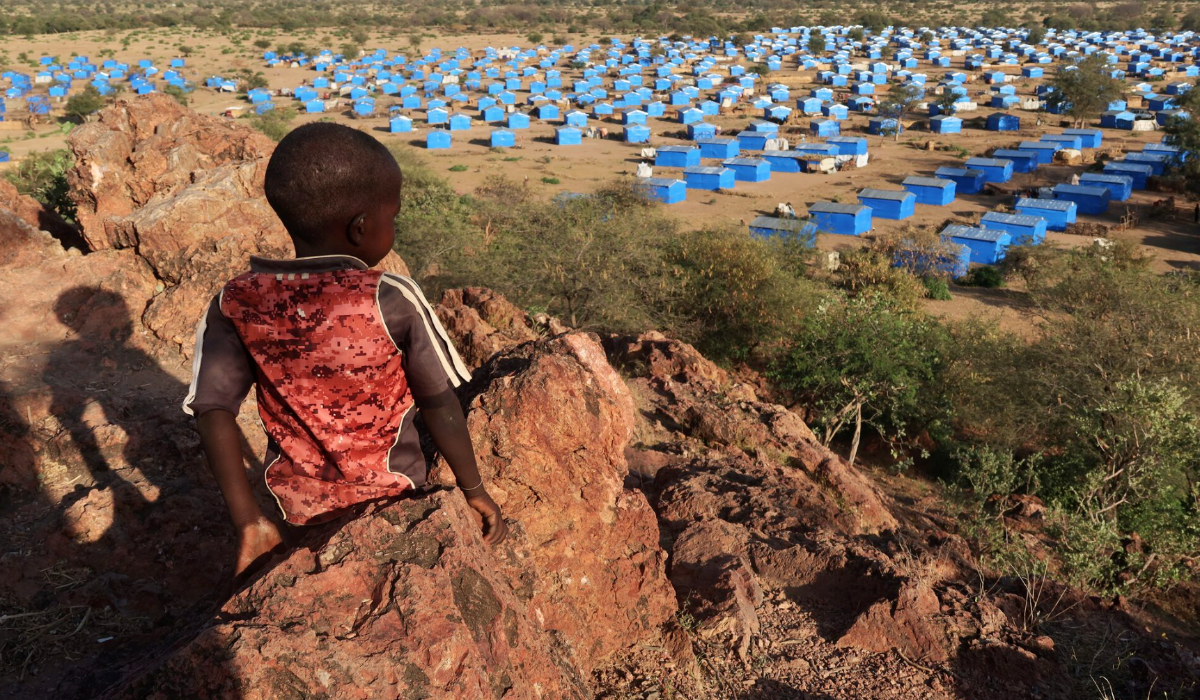
In Tawila, North Darfur, the makeshift home to about 1 million people, the agency is able to reach everyone monthly but with only a half ration that covers two weeks’ food, Skau said. 

“It’s not ⁠clear how they really are surviving the other two weeks,” he said. 

In El-Obeid, the central Sudanese city where about 1 million and counting ‌have sought refuge since the start of the war in April ​2023, the agency is only able to provide help ‌to those who arrived in the past several months. 

“We are providing, but less and less. A year ‌ago it was better because of resources,” Skau said. 

agency recently began providing aid in the city of Al-Fashir, once home to 1 million people, where an RSF attack last year, “bore the hallmarks of genocide,” according to investigators. Skau said, “there is little sign of life having returned.”

His organization is not the only one struggling as major donors reduce aid. The ‌International Organization for Migration said on Monday that emergency relief supplies for hundreds of thousands of people displaced by the war could run out within weeks ⁠unless donors step in ⁠with urgent funding. 

The UN agency said supplies of shelter materials, sanitation items and emergency household goods are expected to run out by the end of September. The aid system itself can only keep functioning until December without more money. 

Aid groups like IOM are struggling with funding shortfalls after the Trump administration — the US was previously the world’s biggest aid donor — cut billions of dollars in foreign assistanceto UN agencies and charities over the past year. Other major donor countries have also cut aid budgets, citing tight finances and higher defense spending. 

“We simply can’t turn our back on the people of Sudan,” IOM Director General Amy Pope said in a statement, adding: “The entire humanitarian system could collapse within weeks if we don’t act now.” 

IOM says 8.6 million people remain displaced within Sudan, while another 4.9 million have returned to their homes. The agency says it ​needs $15 million to keep the aid pipeline running ​for the rest of the year, supporting about 305,000 people. Without it, more than 100 humanitarian organizations would struggle to quickly deliver lifesaving aid. 
Source link

Arab News | UN envoy joins ‘Quintet’ representatives for talks in Khartoum to push Sudan peace process

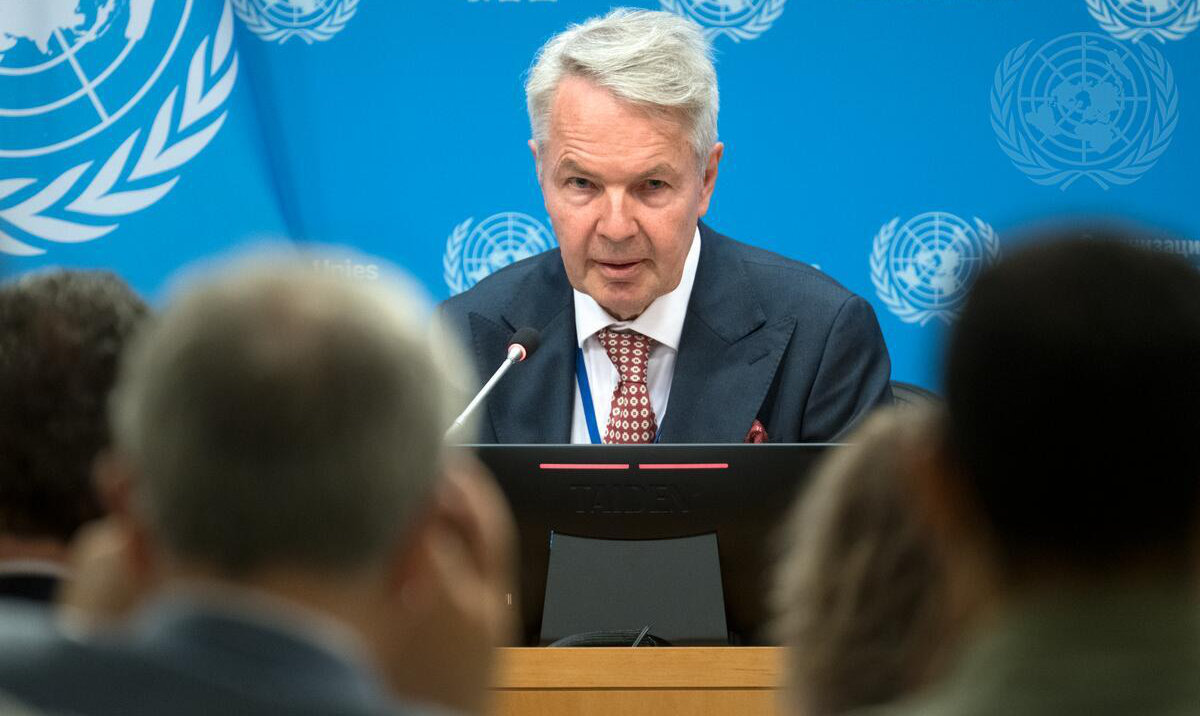
NEW YORK CITY: The UN secretary-general’s personal envoy for Sudan, Pekka Haavisto, joined fellow “Quintet” mediators in Khartoum on Tuesday for a round of talks aimed at reviving an inclusive political process that can end the conflict in Sudan, the UN said.

The Quintet group — comprising the African Union, the Intergovernmental Authority on Development, the League of Arab States, the EU and the UN — held what Stephane Dujarric, spokesperson for UN Secretary-General Antonio Guterres, described as a “good offices mission” to hear an assessment by Sudanese stakeholders of the political and security situation in the country, and to share reflections on efforts to advance peace.

The envoys met at the Sudanese Foreign Ministry before engaging with representatives of UN agencies, Dujarric told reporters in New York. Next, they will meet Sudanese political and civilian representatives, followed by further engagements, he said.

Sudan has been locked in a civil war between the Sudanese Armed Forces and rival paramilitary faction the Rapid Support Forces since April 2023.

Haavisto arrived in Khartoum on Friday and held a series of meetings with the chairman of Sudan’s Transitional Sovereignty Council, the prime minister, the foreign minister and senior government officials, as well as other political leaders and representatives of civil society, Dujarric said.

Haavisto’s talks over the weekend focused on “practical measures to advance deescalation and the protection of civilians,” Dujarric added. He also raised the issue of the release and exchange of detainees, and stressed the importance of a single national examination process for all Sudanese schoolchildren.

Haavisto called for an inclusive political process alongside concrete steps to reduce violence in the country, insisting that a negotiated settlement remained “the only viable path” toward a comprehensive ceasefire agreement and a sustainable end to the conflict.

The envoy is expected to remain in Sudan until the end of this week.


Source link

Arab News | Sudan’s war-driven blackouts push residents toward solar power but high costs shut many out

OMDURMAN: For almost a year, Randa al-Mansour, a 31-year-old Sudanese housewife, has relied on solar energy panels installed on the rooftop of her building to survive the recurrent blackouts triggered by the war-torn country’s deteriorating electricity grid.

“We are suffering big time,” said al-Mansour, who lives with her three children in Omdurman, just outside the capital of Khartoum.

“When kids arrive at school in the morning, they find no electricity there, so they are forced to head back home, where there is none either. It is very hard for them to study under such a high temperature.”

The Sudanese military and the paramilitary Rapid Support Forces have been fighting since April 2023, killing at least 59,000 people, though aid groups say the number could be higher, and displacing some 13 million.

The conflict also has strained an already weak power infrastructure, forcing many Sudanese to seek alternative energy sources, especially during scorching summer heat. The United Nations Development Program has estimated the damage inflicted on the electricity grid at $3 billion.

“We resorted to solar energy as a way of adapting to this situation. However, not everyone in Sudan can afford this solution,” said al-Mansour, who supports her family with remittances from her husband working in Saudi Arabia.

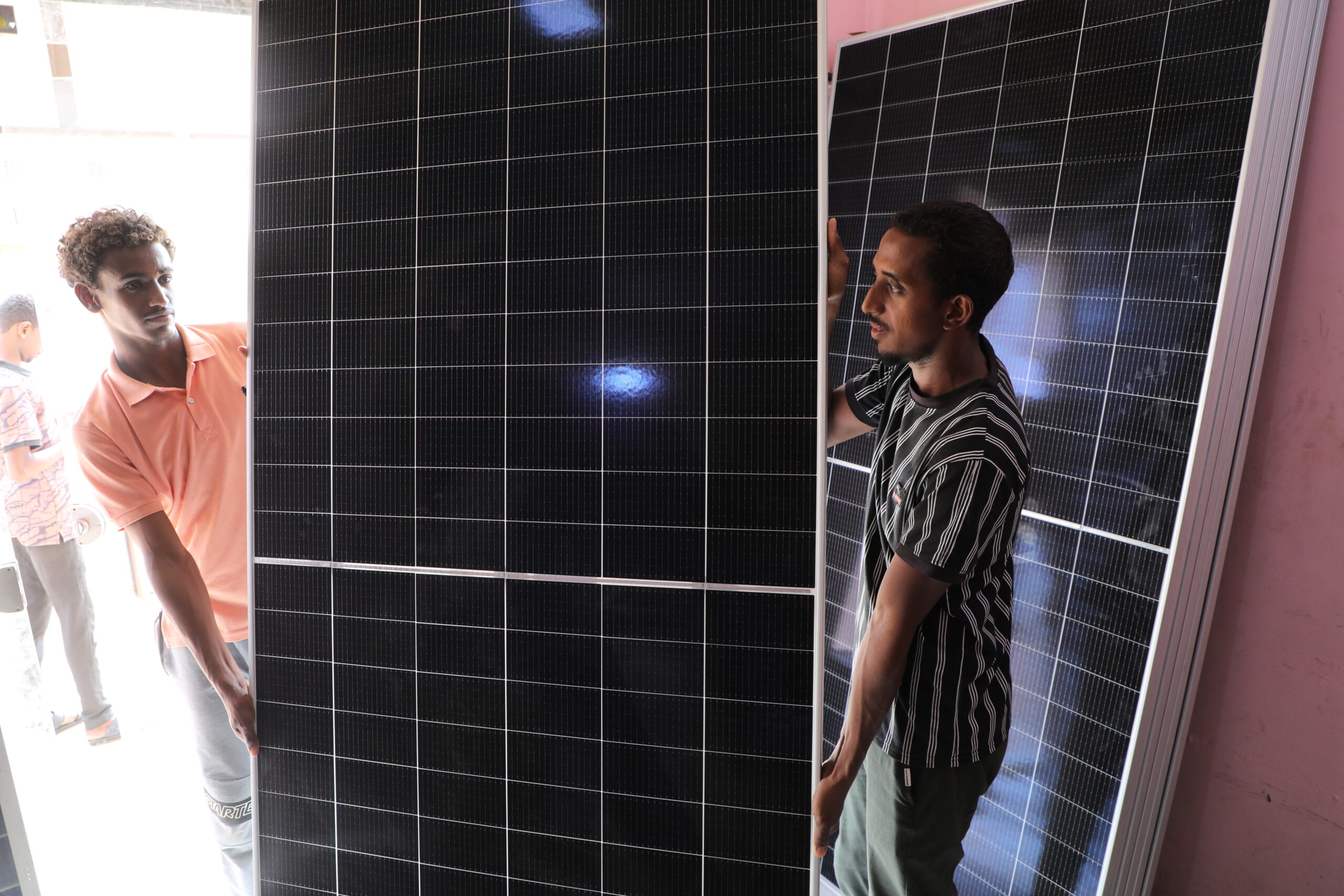
In recent months, billboards advertising solar panels, batteries, and inverters have expanded in the capital as more Sudanese consider transitioning to solar energy.

“For a low-income family, installing a solar panel system is a huge sacrifice but an inevitable choice,” said Mohey Eddin Abu-Bark, owner of a solar systems business in Khartoum, adding that a typical household 10-kilowatt solar system costs nearly $5,000.

Manahel Madany, a 43-year-old diabetic civil servant, cannot afford the transition, despite needing steady electricity for her fridge for her insulin.

“Every three to four days, I am forced to throw away all my insulin stock after it goes bad due to heat and power outages,” said Madany.

She lives in a two-bedroom house with her mother and sister in Omdurman, and like many Sudanese, the three are forced to sleep in their house courtyard to escape the searing heat indoors.

“Not all pharmacies can afford to install solar panels for medical storage, and that’s why most medications have become unavailable,” Madany said.

The Sudan Doctors’ Network, which tracks violence across the country, warned that the continued electricity cuts could impact patients in hospitals, especially kidney patients who need constant care.

At least 30% of Sudan’s population has no access to electricity, with rural areas bearing the brunt, according to the World Bank. Conditions in grid-connected urban centers have also deteriorated, with power outages reaching up to 16 hours in many parts of the country in recent months, according to two electricity department officials who spoke to The Associated Press.

Electricity production has dropped from 4,400 megawatts before the war to 1,100 megawatts as many power plants were hit by drones launched by the RSF, while nearly half of Sudan’s best electricity engineers and technicians have also left the country since 2023, the officials said, citing a survey by a local labor union.

The two spoke on condition of anonymity because they were not authorized to brief the media.

Sudan has limitless potential to generate solar energy given the long hours of sunshine that often exceed 4,000 hours per year, according to the U.N. However, the high upfront cost of imported solar energy systems and a depreciating local currency derail the transition to clean energy.

Source link