Iran government sells subsidised meat for Eid al-Adha under blockade | US-Israel war on Iran News
Eid al-Adha, one of the most important dates in the Islamic calendar, comes at a critical time for Iranians this year.
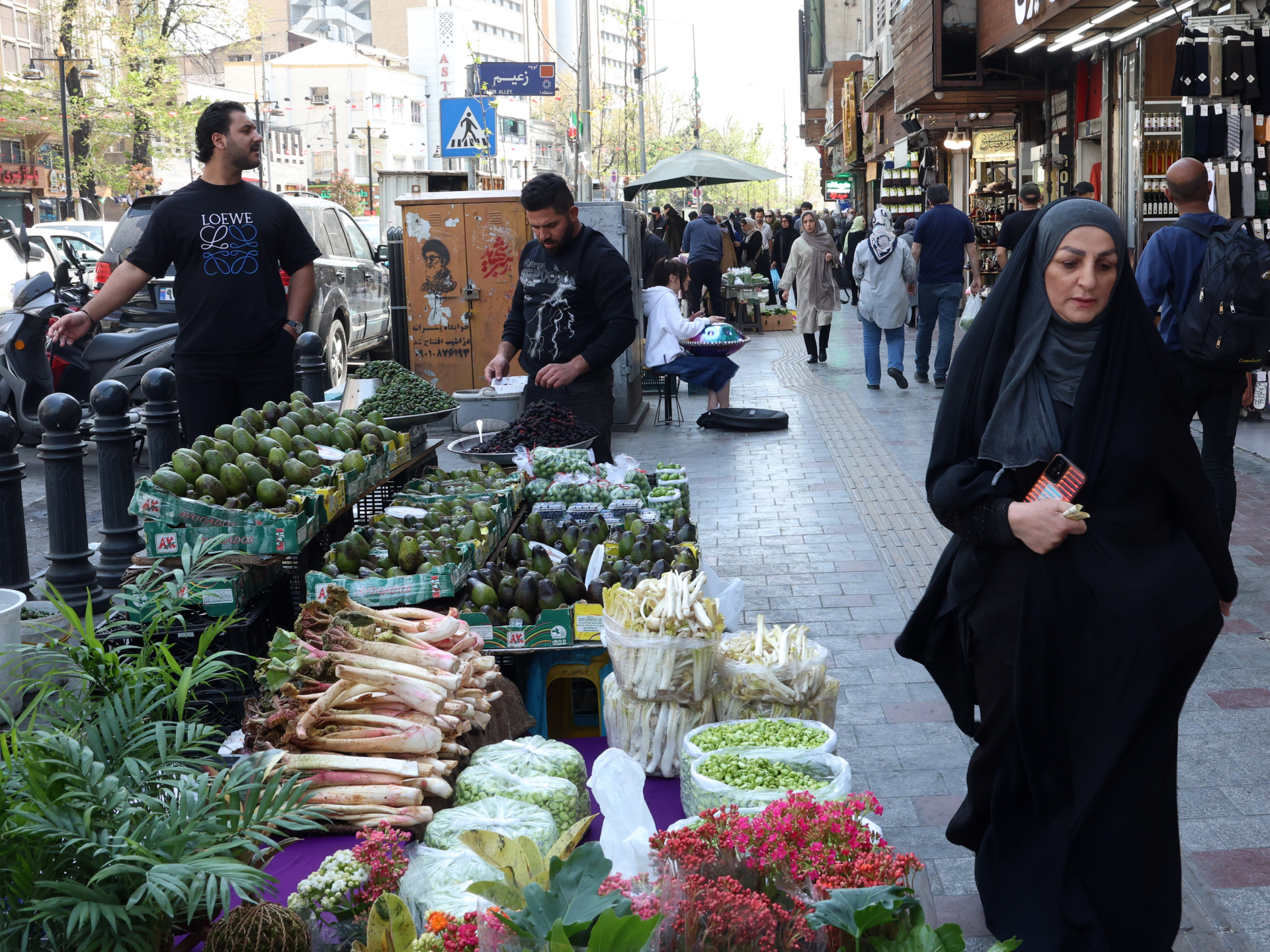
Meat from sacrificed animals is often eaten at Iranian tables, but a blockade on Iranian ports and sanctions by the US has led to escalating costs across the country.
Unlike Nowruz, the Persian New Year, Eid al-Adha is not as widely celebrated in Iran, but mosques and other institutions still observe the ritual of animal sacrifice, known as qurbani, through authorised livestock and slaughter centres.
Here, animals are sacrificed according to Islamic law in a hygienic environment. But another goal of the network is to control runaway inflation by offering meat at lower prices than market rates.
Meat substitutes
A Tehran municipality body announced on Tuesday that each kilogramme of sacrificial meat would be sold at 7.4 million rials ($4.30) at designated shops.
The price for a similar cut on the market can be more than three times that, depending on its quality and the location of the butchers. The minimum wage is currently less than $100 per month in Iran.
“I usually buy meat for a stew or a few dishes around every three weeks; for some families in the neighbourhood, it has become a sort of luxury,” said a middle-aged woman, who lives with her husband and son in Tehran.
She told Al Jazeera that chicken, eggs and legumes have become replacements for red meat, but the costs of these staples have significantly increased, too.
Masoud Rasouli, a meat-packing industry representative, told the state-linked Mehr news agency earlier this week that demand for red meat has decreased by 50 percent compared with last year.
He said some meat was imported to counter any effects of the US blockade, but local demand is currently so low that “existing livestock population is enough for all the needs of the market”.
Data released by the state-linked Iranian Labour News Agency this week showed that the current cheapest government-announced price for one kilogramme of meat during Eid is equal to the price of a 50kg live sheep 10 years ago.
According to the Statistical Center of Iran, year-on-year inflation stood at more than 73 percent in the first month of the Persian calendar year that ended in late April.
Iranian rice was up by 173 percent and chicken by 191 percent in that month compared with a year before, while liquid cooking oil more than quadrupled. Figures for the next month are expected to be worse.
Controlling inflation
Price-control measures – which have been implemented by authorities to fight a decade of rampant inflation – have been unable to adequately compensate for the ever-decreasing purchasing power of Iranian households living under local mismanagement and US sanctions – and now war and a blockade.
A young man working at a butcher shop in southwestern Tehran said they have had to increase prices several times over recent months after suppliers announced hikes.
“Our sales were a bit higher today because of the Eid, but we see even our most frequent customers far less these days. Most of the conversations with the customers are about the prices,” he told Al Jazeera.
Iran and the US have been holding negotiations through regional mediators to potentially end the war. But amid exchanges of fire and inflexibility over demands, no breakthrough has emerged even as both sides say a memorandum of understanding has mostly been negotiated.
Religious messaging
Beyond greetings and congratulatory phone calls with regional peers, Iranian authorities also used the Muslim festival this year to issue political messages.
On Wednesday morning in the capital, the authorities organised a large prayer to mark Eid at the University of Tehran, which was led by ultraconservative Ayatollah Ahmad Khatami.
He said that “submitting to humiliation” is an example of “evil” and the height of vice, at a time when he believes the other side, the US, seeks a surrender from Iran.
“Your enemies, the Iranian nation’s enemies, and this mad enemy sitting in the Black House – which is wrongly referred to as the White House – want your humiliation. But this madman will take that wish to his grave,” he said about US President Donald Trump.
Khatami, a member of the powerful Guardian Council and the clerical Assembly of Experts, also praised the supporters of the government who have taken to the streets every night for almost three months and said this “unprecedented” phenomenon would be repeated on the nights of Eid al-Adha.
President Masoud Pezeshkian had a relatively softer approach, but his comments were still laden with religious symbolism.
“In today’s turbulent world, where the fire of tyranny, occupation, and the arrogance of the hegemonic powers burns bright, Eid al-Adha conveys the message of dignity, liberty, and fearlessness in the face of the pharaohs of our time,” he said.
Foreign Minister Abbas Araghchi said in a message on Wednesday that he hoped for harmony in the Muslim world, amid this difficult time for the region.
“We pray that, by the auspiciousness and blessing of this great Eid, we will witness the deepening and strengthening of Islamic solidarity for cooperation and mutual assistance in confronting war, discrimination and occupation, especially in the West Asia region, and that our world will return to the path of reviving peace and justice,” he said.