THE UK is home to some of the world’s most stunning coastlines, but a stay at a “big name” resort can end up costing you more than a week in the Med.
Not to worry, we’ve unearthed the seaside spots which offer an unforgettable staycation without spending a fortune.
With a golden sandy beach backed by a traditional seaside promenade the town of Cleethorpes is a great holiday destinationCredit: Nelincs.gov.uk/The Cleethorpes Coast Light Railway offers two-mile trips along the coast in a steam or diesel locomotiveCredit: Cleethorpes coast light railway
Follow The Sun’s award-winning travel team on Instagram and Tiktok for top holiday tips and inspiration
Whether you’re after a classic bucket-and-spade stay with a nostalgic promenade, or looking for those off the beaten path hiking spots, we’ve got you covered.
Best of all, we’ve found 2026 staycation deals starting from as little as £49 – meaning your next seaside escape could cost less than going out for dinner.
Cleethorpes, Lincolnshire
Often overshadowed by Skegness, Cleethorpes is an underrated seaside town on the east Lincolnshire coast.
This family-friendly resort town boasts miles of unspoilt soft sands, with a traditional pier and promenade.
In the central promenade area you’ll find an abundance of activities such as bowling, crazy golf and seaside amusements.
The Lollipop Land Train is a big hit with kids, taking you on a scenic ride along the seafront for just £2 each way – plus kids come away with a lollipop!
You’ll also find the 19th-century Ross Castle, as well as the Cleethorpes Coast Light Railway, which offers two-mile trips along the coast in a steam or diesel locomotive, costing £5.75 per adult or £5.25 per child for a return.
That’s not all – a full day can easily be spent at the Light Railway as the site also hosts a tearoom, crazy golf course and toy shop.
Plus halfway along the line you’ll find Lakeside, where a vintage railway building has been transformed into a miniature pub called The Signal Box Inn, often hailed as the smallest pub on the planet.
When you want to explore a little further, a 10-minute drive takes you to Grimsby, home to the award-winning attraction the Fishing Heritage Centre. Here you’ll be transported back to a 1950’s fishing port, and visit the famous trawler Ross Tiger.
Haven Cleethorpes Beach is a mega holiday park with its own on-site Wetherspoons, as well as a massive, action-packed Adventure Village.
You can book a four-night stay at Cleethorpes Beach in a four-bed saver caravan from just £49 with a Haven Hideaway deal.
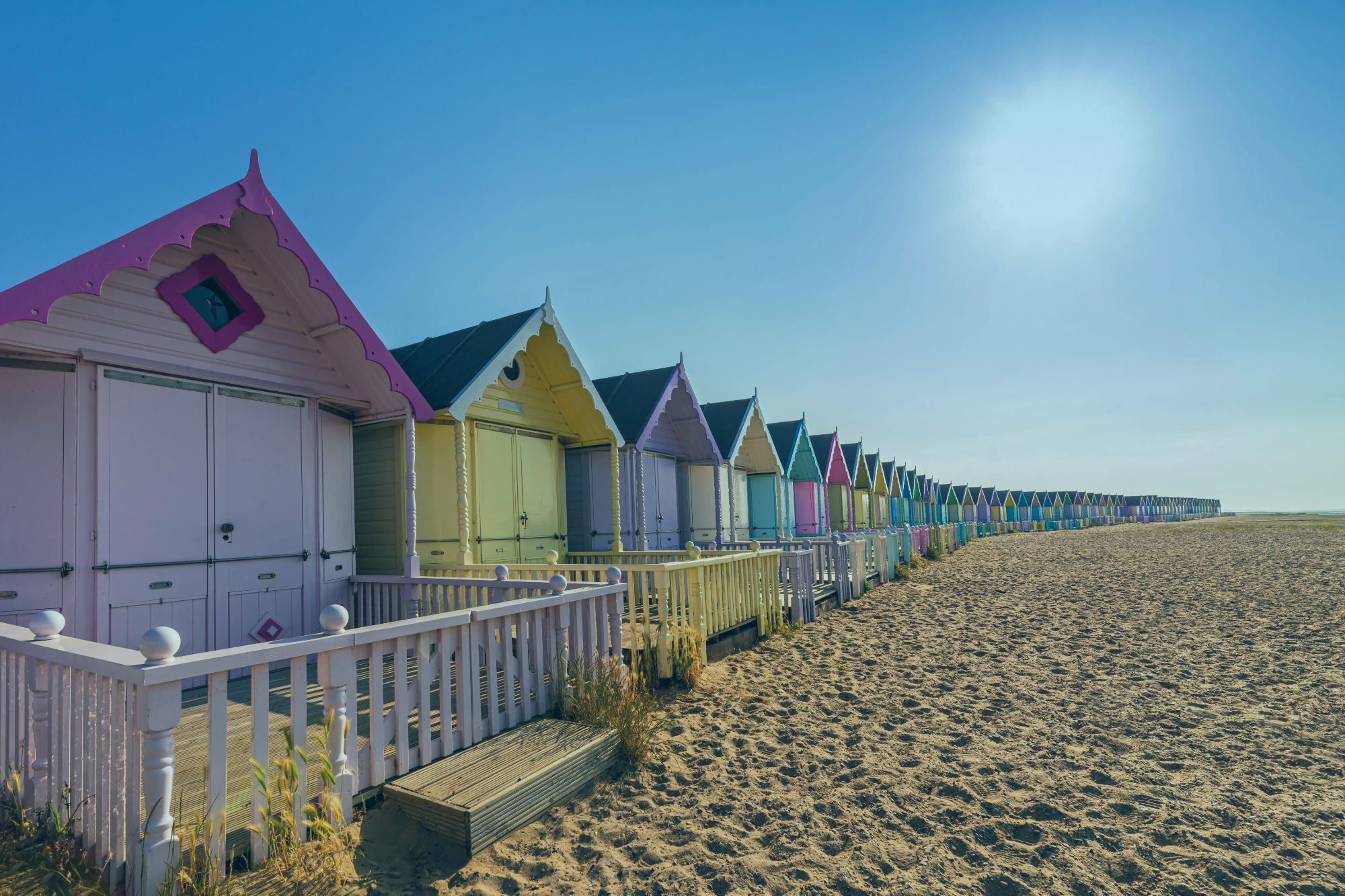
West Mersea Beach is lined by quirky pastel beach huts in Mersea Island, EssexCredit: AlamyCudmore Grove Country Park has a wooden play area and plenty of trails for dog walksCredit: Visit Essex
Mersea Island, Essex
Mersea Island is a seaside gem accessible via a causeway that disappears under the tide twice a day, with stunning landscapes and a laid-back vibe that feels worlds away from the flashy piers of Southend.
The island is known for its unique beaches, marshland wildlife and delicious oysters.
West Mersea Beach is an old-fashioned spot backed by pastel-coloured beach huts, whilst Monkey Beach is a lesser-known spot likely named after the monkey steps leading down to its shores.
You can spend a free afternoon crabbing off the West Mersea pontoon, or exploring the Cudmore Grove Country Park, a Green Flag spot with a wooden play area and pretty meadows made for dog walks.
A 20-minute drive (at low tide) takes you to Colchester, Britain’s oldest recorded town, where you can visit its impressive castle or take a Roman and Medieval walking tour (£9 per adult and kids go free).
Coopers Beach Holiday Park offers direct beach access, plenty of sports courts and outdoor activities, and family restaurants with sea views.
Parkdean Resorts offer a four-night stay in a Bronze caravan which sleeps six from £99.
Pretty Pwllheli sits on the Lleyn Peninsula on the coast of North WalesCredit: GettyThe beaches of Pwllheli tend to be quieter than its upmarket neighbour AbersochCredit: Getty
Pwllheli, North Wales
While the holiday crowds flocks to nearby Abersoch, savvy travellers head to the bustling market town of Pwllheli to enjoy the same stunning shores for a fraction of the cost.
The town’s two massive beaches are perfect for bucket-and-spade days as a family, plus the nearby Plas Heli sailing centre offer sailing, kayaking and stand up paddle-boarding lessons.
It’s also a brilliant base for exploring the rest of the Llŷn Peninsula. For a historical afternoon out, an 18-minute drive leads to Criccieth Castle, where 13th-century ruins overlook Cardigan Bay.
Or to soak up the sights by foot, you can walk the coastal path to reach the art galleries and sheltered bay of Llanbedrog.
Plus if you’re really up for a hiking challenge, Snowdonia is only a 30-minute drive away.
With an indoor pool and water park, lazy river, four-lane waterslide and its own lake for pedalo hire, Hafan y Mor is the place to stay in Pwllheli.
You can book a four-night stay in a two-bed apartment at Hafan y Mor from just £79.
Filey has a beach that stretches for five miles and a rocky peninsula with plenty of wildlifeCredit: GettyWalk along the beach to the cliffs of Filey Brigg for some of the best sea viewsCredit: Getty
Filey, North Yorkshire
Sat between Scarborough and Bridlington, Filey is a charming seaside town where visiting feels like stepping back in time.
There’s a five-mile stretch of golden sands, perfect for setting up a spot to play beach games and build sandcastles.
You can spend a totally free afternoon exploring the dramatic Filey Brigg – a mile-long rocky peninsula built for birdwatching and spectacular sea views.
Or wander through the peaceful Glen Gardens, where you can visit the open air boating lake, burn off energy in the play park or set up a picnic on its scenic grounds.
When you fancy a change of pace, an 18-minute drive takes you to Scarborough, where you can enjoy a classic day out of spending loose change in the arcades or tackling the rides of Luna Park.
If you travel 22 minutes in the opposite direction it will take you to Bridlington, where Brid Spa hosts fantastic, family-friendly theatre productions. Head up further along the coast to Bempton Cliffs to spot adorable puffins.
Plus, Filey is significantly easier on the pocket than its busier neighbours, with top-tier holiday parks for affordable prices.
Hoseasons offer a 7-night stay in a two-bedroom saver caravan for just £125 at Blue Dolphin holiday park.
Bembridge on the Isle of Wight is one of the UK’s largest villagesCredit: GettyBembridge is also home to the last remaining windmill in the Isle of WightCredit: Alamy
Bembridge, Isle of Wight
If you want an Isle of Wight trip that feels more like a relaxing private getaway than a tourist trap, Bembridge is the place.
Skip the business of Sandown and head to this sprawling coastal gem. As one of England‘s largest villages, everything here is spaced out and relaxed, with plenty of room to wander without pushing through crowds.
You can spend a free morning visiting the historic Bembridge Windmill -the only windmill left on the island, dating back to 1700.
Or wander the dramatic 200-metre seaside pier, where the Lifeboat Station sits perched at the end overlooking the water.
When you want to explore further, less than 30 minutes’ drive south lands you in the trendy, hilly streets of Ventnor.
Charles Dickens once described the town as “The prettiest place I ever saw in my life, at home or abroad”, and it’s clear to see why. This artsy town has colourful buildings, beautiful botanical gardens and pebbled shores that zig-zag down to the seafront.
Or you could drive 10 minutes to Culver Down, for impressive chalk cliffs that offer a panoramic view of the English Channel.
Hoseasons offer a four-night stay in a two-bedroom chalet at the perfectly-positioned Whitecliff Bay Holiday Park from £84.
Morecambe is close to busy Blackpool, but it has plenty of its own family attractionsCredit: GettyVisit nearby Lancaster Castle on a trip to Morecambe, just 15 minutes’ drive awayCredit: Alamy
Morecambe, Lancashire
With the bustle of Blackpool nearby, Morecambe offers a more relaxed, retro feel with five miles of promenade to stroll.
Kids will love Happy Mount Park, home to a soft play, adventure golf, a massive splash park, tennis courts and more – perfect for a family day out no matter the weather.
For something more unique, head to the Stone Jetty to find the Tern Project: an interactive art trail with bird-themed pavement games, mazes, and puzzles along the way.
If you’re feeling adventurous, you can join a guided group (from £15) to trek across the famous sands of the Cross Bay Walks at low tide – just don’t try it alone!
Lancaster is a 15-minute drive away, where you can explore its hilltop medieval castle, while you can reach Blackpool for an exciting day out in 45 minutes.
Whether you explore the thrills of Blackpool Pleasure Beach, or explore Madame Tussauds or the Blackpool Dungeons within the tower, you’re sure to have an action-packed day out – with a quieter change of scenery to return home to.
Parkdean Resorts offer a two-night stay in a two-bedroom silver caravan at Morecambe’s Ocean Edge from £99.
Wemyss Bay Station was rated 5 stars in Britain’s 100 Best Railway StationsCredit: AlamyCatch the Victorian ferry from Weymss Bay over to Rothesay on the Island of ButeCredit: Getty
Wemyss Bay, Scotland
While most tourists charge straight past to the inner isles, the charming village of Wemyss Bay is the perfect place to enjoy the dramatic Firth of Clyde landscapes.
To soak up the best of the local scenery, wander the coastal paths that look out over the isle of Bute. Walk down to the rocky shoreline at low tide to go beachcombing for sea glass – Wemyss Bay is a prime spot.
Or head to Kelly Burn to see the pretty woodland stream that marks the border between Renfrewshire and Ayrshire, leading you through lush greenery to hidden waterfalls.
Wemyss Bay Woods is also fantastic for nature walks, with a network of forest trails with mountain views.
Train enthusiasts will love visiting the award-winning Wemyss Bay Station, regularly hailed as one of the most beautiful railway stations in the UK thanks to its stunning glass canopy.
To explore further afield, you can hop on a ferry over to Rothesay to visit its castle and explore the isle (£8.70 adult return, kids £4.40).
And for the ideal indoor family attraction, 15 minutes by car or bus will take you to the traditional seaside town of Largs to visit the Vikingar! museum.
This interactive centre has a replica 8th century Viking house, character storytelling, an indoor swimming pool and more. Tickets cost £9.20 per adult and £6.30 per child.
The clifftop Wemyss Bay Holiday Park offers an affordable place to stay with striking views of the mountains across the water.
Hoseasons offer a four-night stay in a two-bedroom Bronze caravan from £99.
Thornwick Bay Holiday Village is perfectly located for beach access in FlamboroughCredit: GettyThe sea arch at Flamborough Head on the Yorkshire Coast is known as the Drinking DinosaurCredit: Alamy
Flamborough, East Yorkshire
Flamborough is one of East Yorkshire’s most picturesque seaside spots, with some of the UK’s most spectacular coastal walks and views.
Head to this rugged peninsula to explore North Landing – a sheltered cove dotted with traditional fishing boats, where you can explore its caves for free.
Flamborough is also home to the Living Seas Centre, which puts on family-friendly events such as fossil hunts, boat trips and rockpool safaris.
You can also drive just six minutes to Sewerby Hall and Gardens, with woodland walks and beautiful walled and rose gardens. Entering the hall to see its stately rooms costs £4.50 per adult and £3.50 per child.
Head up to Thornwick Bay to find crystal clear waters protected by chalk cliffs, which open up dozens of fascinating rockpools at low tide.
But don’t just stick to the main beaches – head to Selwicks Bay at low tide to see the “Drinking Dinosaur” rock formation – a massive natural arch that’s the perfect backdrop for a family photo to remember your holiday.
Thornwick Bay Holiday Village is an unbeatable budget base, with activities ranging from water sports at the Boathouse to indoor arts and crafts at the Activity Barn.
Hoseasons offer a four-night stay in a two-bedroom saver caravan from £69.
You can reach Great Yarmouth from Hopton in just 15 minutes to visit popular Britannia PierCredit: AlamyHaven’s Hopton Holiday Village provides direct access to the beaches of Hopton-on-SeaCredit: Haven
Hopton-on-Sea, Norfolk
If you want the golden sands of the Norfolk coast without the price tag of the posh towns like Burnham Market or Holkham, Hopton-on-Sea is your best bet.
Perched on the border between Norfolk and Suffolk, this quiet village has a pristine beach that’s far less crowded than its noisy neighbours.
Here you’re perfectly placed between two major seaside resorts: Lowestoft and Great Yarmouth.
A 15-minute drive north takes you to Yarmouth for some old-school pier fun and theme park Pleasure Beach, whilst the same time driving south lands you in Lowestoft, with its award-winning Blue Flag beaches.
Plus Hopton itself is a beautiful village worth exploring. Take a walk along its scenic grass-topped cliffs, or wander down to the water for a quiet spot to sunbathe.
Hopton Holiday Village is a bargain holiday park with direct beach access, and you can have a four-night break for less than the cost of one night in a seaside hotel.
Haven offer a four-night stay in a bronze caravan sleeping up to six at Hopton Holiday Village from £89.
MODEL Brooks Nader is set to make waves in the wake of Pamela Anderson in the latest Baywatch reboot.
The 29-year-old star and her predecessor, 58, were both on the red carpet at the Fashion Trust US Awards in LA on Tuesday.
Sign up for the Showbiz newsletter
Thank you!
Brooks Nader poses at the Fashion Trust US Awards in LACredit: GettyBrooks has been cast in the new Baywatch movieCredit: GettyOriginal Baywatch star Pamela Anderson also walked the red carpetCredit: AP
Pam, 58, played lifeguard CJ Parker in the original Baywatch in the 90s.
Brooks is set to follow in her footsteps having been cast as lifeguard Selene in the reboot, out this year.
The model got her big break when she won the 2019 Sports Illustrated Swimsuit Issue’s nationwide casting call and went on to model for the brand.
Brooks was previously married to advertising exec Billy Haire, who she dated for four years.
They split in 2024 and she went on to have short-lived relationships with former Strictly Come Dancing star Gleb Savchenko and Greek Prince Constantine-Alexios.
Addressing the rumours, she said: “I would just say a lady never kisses and tells, especially twice.
“Dating is such a loose term these days… My only thing is, guys do it all the time, so why can’t I do it?”
Brooks has been cast as lifeguard Selene in the rebootCredit: TheImageDirect.comPamela played lifeguard CJ Parker in the original Baywatch in the 90sCredit: Kobal Collection – Check Copyright Holder
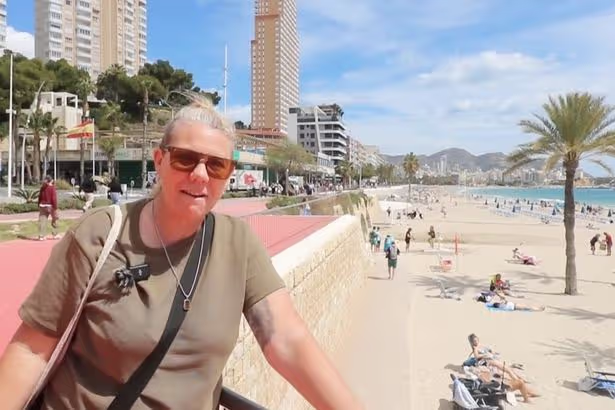
An expat who has spent the last 20 years of her life living in Benidorm has opened up about the ‘completely different’ side to the popular holiday resort that ‘flies under the radar’ with Brits
TAMWORTH may not be top of many tourists’ to-do lists, but it boasts the best boozer, a kids-go-free castle and even a chance to ski on real snow, all within staggering distance of each other.
I’m lucky that this Midlands marvel is only half an hour from me, so I headed over to check out all the things that make the town a perfect day trip destination this year.
Sign up for the Travel newsletter
Thank you!
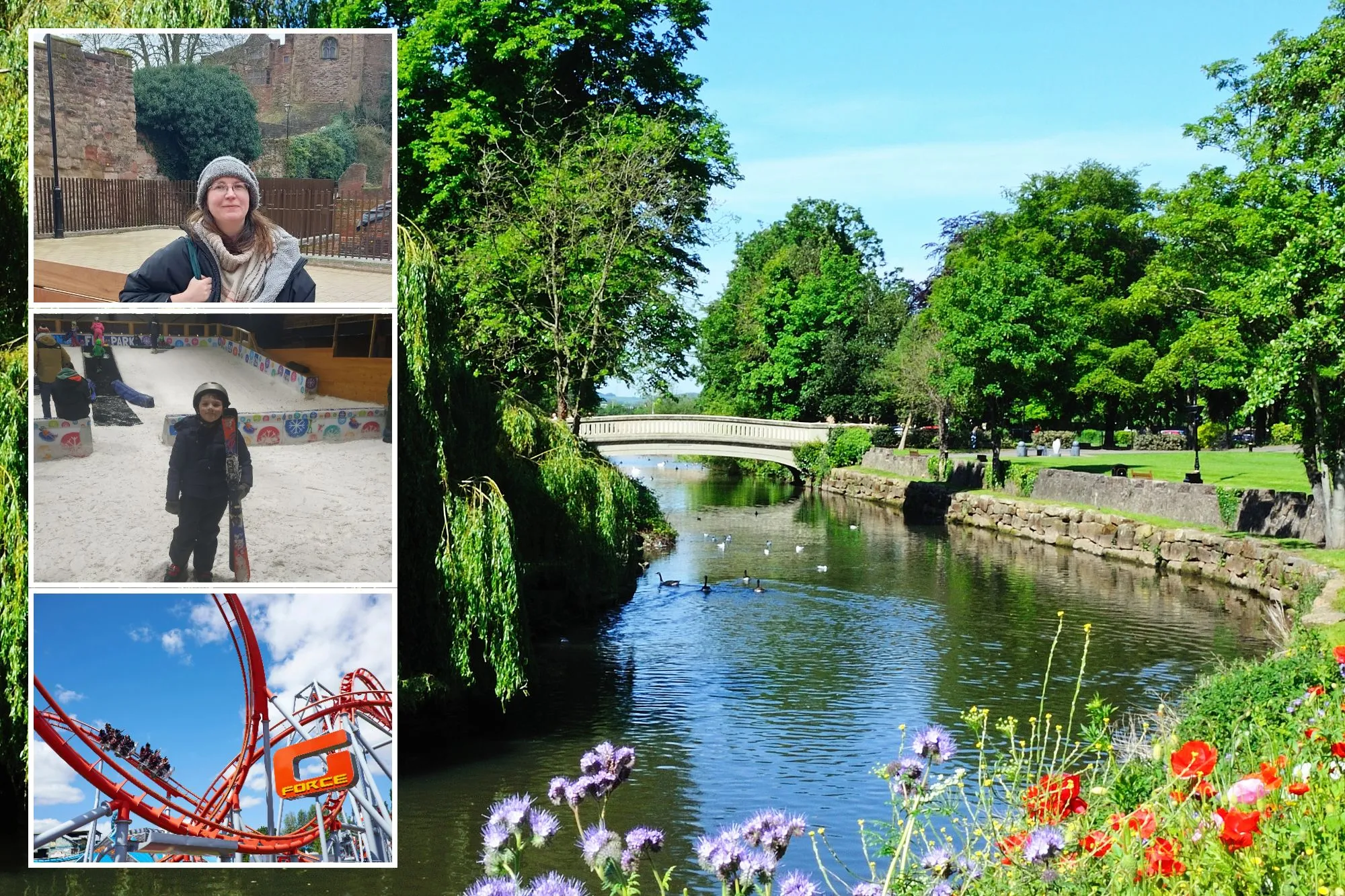
Travel writer Catherine Lofthouse Tamwork, which features Britain’s best boozer, a kids-go-free castle and even a chance to ski on real snow, all within staggering distance of each otherCredit: Catherine LofthousePoppies and thistles on the River Anker riverbank in Tamworth, StaffordshireCredit: Getty
It’s been ages since I last visited Tamworth Castle, a landmark feature in the centre of town, still standing tall on its original motte.
It’s just announced that it’s the latest visitor attraction to join the Blue Peter scheme, which means that kids who’ve earned a badge from the beloved TV show can get in free.
We were absolutely amazed by all the different eras of history showcased at the castle, a fascinating snapshot of its own journey through time.
What I really loved though was the recreated Saxon mead hall with fount-of-knowledge volunteer guide Ralph on hand to bring history to life and chat to us about the Staffordshire Hoard, a huge stash of Saxon riches discovered by a metal detectorist on a farmer’s field in 2009.
The hoard was split between three Midlands museums and Tamworth makes the most of the sparkling specimens it received in its Battle and Tribute exhibition.
We love a castle and have visited many of the biggest and best, like Warwick and Windsor, but Tamworth gives them a run for their money in terms of immersive experiences for children and offering up history in easy-to-understand bite-size chunks.
One thing that Tamworth really has going for it is the greenery of the Castle Grounds right in its centre.
This open-to-all public space has a fab castle-themed playground, a skate park, tennis courts and a cafe.
It is bordered by indoor attractions like Namco Funscape, which includes bowling, softplay and adventure golf, and the SnowDome, where visitors can ski, skate, climb and swim.
My boys love taking to the slopes and a firm family favourite here is the snow fun park, where you can play in the white stuff all year round.
The pool offers flumes and floats sessions for families.
A summer view of Tamworth castle and gardensCredit: AlamyThe Tamworth Tap in Staffordshire, run by George Greenaway, which was voted one of the best pubs in BritainCredit: Paul Tonge
If you have a Blue Light Card, you can often get money off and it’s always worth checking out the deals section of the SnowDome website, as you can bag a bargain at quieter times of the year.
We rounded up our visit with a trip to the Tamworth Tap, which has just been named pub of the year by the Campaign for Real Ale (CAMRA) for the third time.
It’s the first pub to win this award three times, so it was no surprise to find it already bustling with barely a table to spare within half an hour of its opening on a Friday afternoon.
You won’t be able to bring the kids in here, as it’s over-18s only, but if you’re visiting with older kids who are happy to enjoy the skate park, which is only a two-minute walk away, you can sneak in for a cheeky pint and a portion of £4 frickles – pickles fried in breadcrumbs.
If you’re here in the warmer months, the pub’s beer garden certainly has one of the best views in the town, overlooked by its castle neighbour.
April is a great time to visit the town, with a dragon egg hunt around the castle over the school holidays and then a free medieval festival to mark St George’s Day in the park on April 18, with jousting, archery, games and fairground rides.
Just outside Tamworth, there’s plenty of family-friendly visitor attractions a short drive away where you can easily while away a day if you’re making a weekend of it.
As well as visiting the animals, Twycross also has the Gruffalo Discovery Land, which is great for little ones, while both Drayton Manor and Statfold are perfect for train fans and anyone who loves fairground and theme park rides.
Drayton, which hosts Thomas Land, has just celebrated its 75th anniversary by installing a lake lights show, while Statfold recently opened the National Fairground Museum, so visitors can now enjoy vintage fairground rides as well as steam and diesel trains.
With a hoard of hidden gems of its own, this Staffordshire treasure has a wealth of wonders just waiting to be discovered.
Catherine’s son at Tamworth SnowDome, where visitors can ski, skate, climb and swimCredit: Catherine LofthouseEThe G Force Rollercoaster within Drayton Manor Theme Park near TamworthCredit: Alamy
The iconic Dorset beach featured in one of the most emotional scenes in Ryan Gosling’s new film, and fans are now visiting the picturesque Jurassic Coast location for spring walks
Alice Sjoberg Social News Reporter
14:31, 05 Apr 2026
The beach was used to film an important scene in Project Hail Mary, starring Ryan Gosling (stock image)(Image: Getty Images)
There’s always a thrill when you recognise a familiar location in a film or TV programme, whether it’s a documentary or the backdrop for a fictional tale. While the UK serves as a popular setting for numerous blockbuster films and television series, one of this year’s biggest cinema releases actually filmed one of its most memorable scenes in the UK – and it’s accessible to visit right now as a stunning walking destination.
That’s precisely what one London-based couple decided to do, bringing their dog, Presto, along to the Jurassic Coast near Lulworth in Dorset to see the Project Hail Mary filming location after recently watching the film at the cinema.
“Cried at the cinema at this beach so we went in real life,” they captioned their video, before sharing footage from their day trip adventure.
Content cannot be displayed without consent
Without giving away any spoilers, the beach serves as a significant location for one of the film’s characters, with several of the more poignant scenes captured here, making it particularly meaningful for fans to experience. That said, the breathtaking views alone make the journey worthwhile.
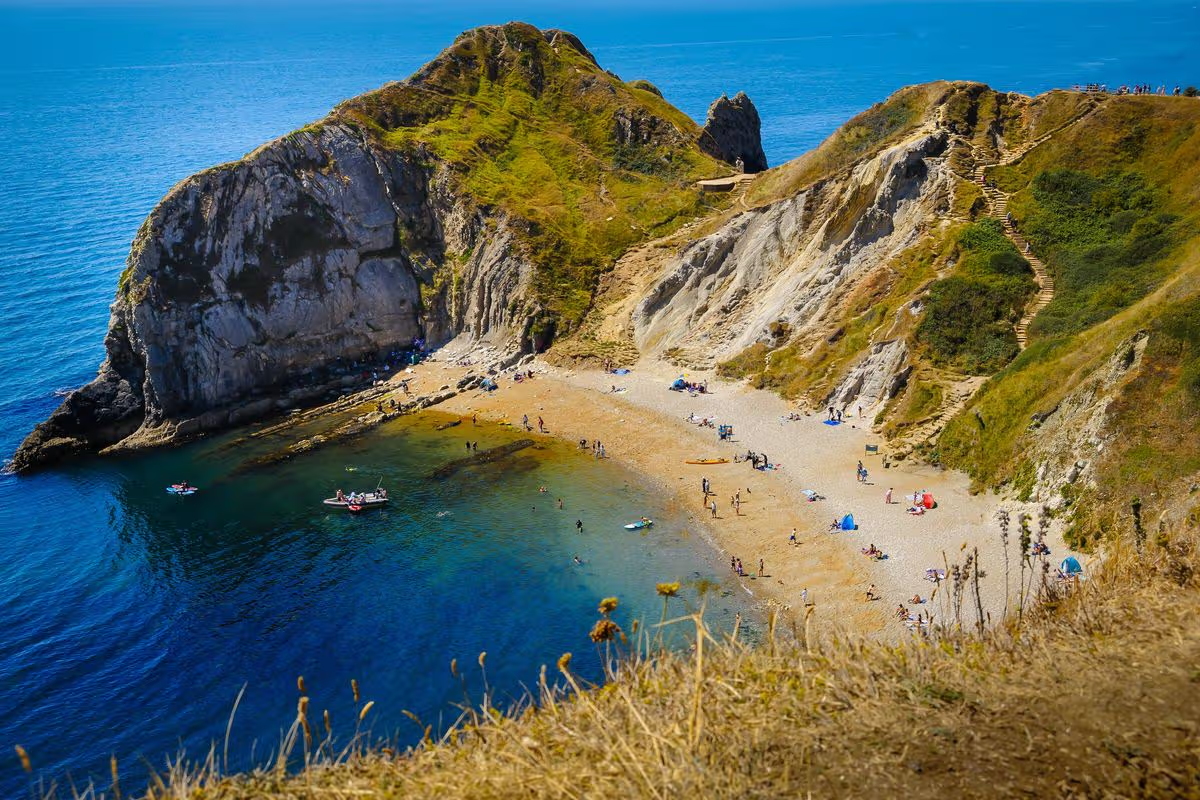
Durdle Door stands as one of Dorset’s most photographed and iconic landmarks. Situated on the Lulworth Estate in south Dorset, it forms part of the stunning Jurassic Coast.
The coastline holds such exceptional geological significance on the world stage that UNESCO designated it as England’s first natural World Heritage Site in 2001, placing it alongside iconic natural treasures such as America’s Grand Canyon and Australia’s Great Barrier Reef.
The stunning natural limestone arch was created when powerful waves eroded the rock and carved a hole through its centre. The name Durdle comes from the old English word ‘thirl’, meaning to pierce, bore or drill.
The film also features the neighbouring Man O’ War Beach, which visitors can normally reach via a footpath. However, the pair revealed that during their late March visit, storm damage had swept away the steps leading down to this beach, rendering it currently inaccessible.
Still, they weren’t bothered, as they were able to take in the spectacular views from the clifftops overlooking the beach.
How do you get to the Jurassic Coast? If you’re travelling by car, you can park at the sizeable car park reached through Durdle Door Holiday Park. From there, it’s a 15-minute walk down a steep path to the steps above the beach.
For those without a car, the iconic landmark is also reachable by bus, with a brief journey from Wool in Dorset taking you straight to the beaches.
The London pair weren’t alone in their admiration for the landmark, as numerous others quickly flooded the comment section to share their own visits.
“Went back in 2022 and loved it, need to go back again now that I saw it in the film,” one person wrote. Someone else added: “I wish I hadn’t seen that this was in the movie before we saw it but it was special seeing it with my boys who I took there in 2022.”
Molly-Mae Hague and Tommy Fury with their daughter BambiCredit: InstagramMolly showed off their bedroom transformationCredit: Instagram/MollyMaisonThe couple opted for a more metallic and charcoal colour paletteCredit: Instagram/MollyMaison
Since then Molly-Mae has completely renovated the home, including redoing the master bedroom.
The TV star took to her dedicated remodelling Instagram account, Molly Maison, to show off the bedroom transformation.
Gone were the warm cream and brown tones, in favour for a more cool grey aesthetic.
Molly-Mae replaced the wooden four-poster bed with a standard double bed and giant leather headboard, behind which sat a wall-to-wall mirror.
She also replaced the shell inspired circular ceiling fixture with a more sleek metallic and glass version.
At the other end of the room, Molly-Mae removed the inset arched shelves and cabinets for two floor-to-ceiling mirrors which sat on either side of the new, darker fireplace.
Molly-Mae also removed the TV from above the cream and black veined marble fireplace and replaced it with a stunning piece of artwork.
Two grey chaise lounges sat on either side of the room, replacing the cream one-seater armchairs that were there before.
Even the old bedroom was gorgeous, Molly explained why she felt the need to overhaul it completely.
“There was absolutely nothing wrong with the space before but because we’re planning to be here for a long time, we really wanted to make it feel completely like us… you all know how much I love my neutral, calming spaces,” she wrote.
Molly-Mae explained that they redid their bedroom because they planned to be there a long timeCredit: Instagram/MollyMaisonMolly-Mae aid she loved neutral toneCredit: Instagram/MollyMaison
“I honestly couldn’t be happier with how it’s turned out… I’m so excited to keep making more special updates to our new home.”
Molly-Mae and Tommy are parents to daughter Bambi, three, and are set to welcome their second child in a matter of weeks.
The Maebe founderrecently revealed they had already chosen the name for their second child, and promised it would be just as unusual as their first.
“I think we’re pretty much set on a name now, which is crazy. Also just can’t wait for everyone to hate it, obviously it’s a different name – we were never gonna call our baby just an ordinary name, that was never going to happen,” Molly-Mae said on her recent YouTube vlog.
“I’ve only ever heard of one other baby being called this name.”
She added “Can’t wait for everyone to literally probably dislike it and be like ‘da f***?’, but yeah, it was never gonna be an ordinary name guys lets be honest.”
Molly-Mae is pregnant with her second babyCredit: Instagram
Maura Higgins was spotted filming an advert in LondonCredit: CLICK NEWS – DEAN / RAWMaura wrapped up in a pink dressing gownCredit: CLICK NEWS – DEAN / RAWMaura was gifted a £17,000 Birkin bag by Rob RauschCredit: Eroteme
She opened up to her fans about getting work done in an InstagramQ&A earlier this week.
In the post, she revealed she gets Botox around twice a year, saying: “I do get Botox every 6-8 months and I had lip filler years ago but I haven’t had any in over 3.5 years now.
“Other than that, I haven’t had anything else done.”
Maura has previously admitted to having composite bonding on her teeth for a Hollywood smile in addition to her facial tweakments.
Maura has admitted to getting Botox twice a yearCredit: CLICK NEWS – DEAN / RAWMaura said: ‘ I had lip filler years ago but I haven’t had any in over 3.5 years now’Credit: CLICK NEWS – DEAN / RAW
The once-bustling holiday resort – popular with the likes of Elizabeth Taylor – was abandoned in the 1970s but has since become a haven for one niche but growing tourist market
14:05, 04 Apr 2026Updated 14:21, 04 Apr 2026
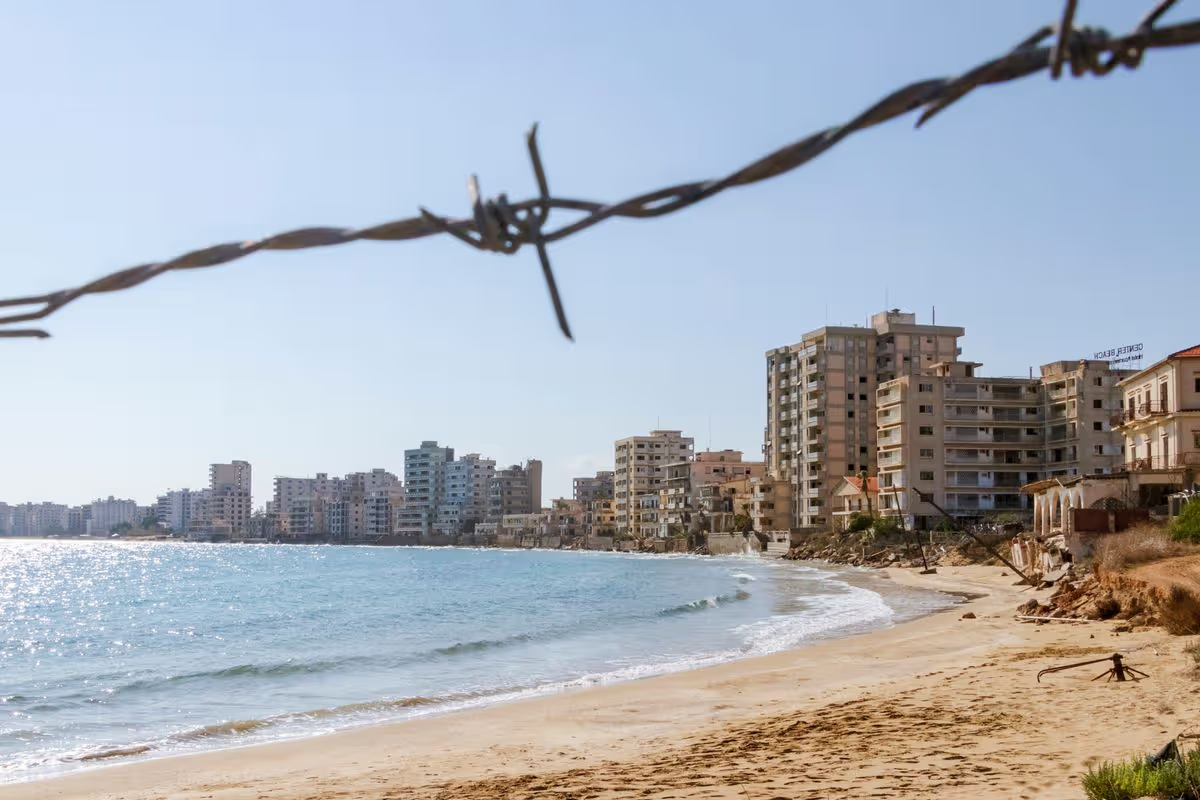
The town is now ghostly and empty – but that’s why it’s becoming a tourist hotspot once again(Image: Getty Images)
Once a playground for Hollywood’s elite, this coastal resort has transformed into an unsettling ghost town. Yet this Cypriot location has found new purpose amongst travellers, emerging as a destination for ‘dark tourism’.
A short distance from well-known Cyprus holiday spots such as Paphos and Limassol lies Varosha. Varosha was formerly a glamorous getaway destination in its own right, attracting Elizabeth Taylor and other luminaries of the 1960s.
However, when Turkish forces invaded Cyprus’s northern territory on July 20, 1974, the seaside resort was altered forever. Five days earlier, there had been a coup attempt backed by the Greek junta. The 15,000 inhabitants of Varosha were compelled to evacuate en masse following the military incursion, leaving behind their homes, businesses and pristine beaches.
Consequently, the district became a ghost town with structures left predominantly vacant. Even now, the neighbourhood remains frozen in time under Northern Cyprus’s jurisdiction. Unsurprisingly, the area lost all attraction for holidaymakers, as vegetation began reclaiming the pavements and sea turtles made nests on Varosha’s formerly sunbather-packed beaches.
Yet in October 2020, a decision was taken by Turkish President Recep Tayyip Erdogan and the then prime minister of Northern Cyprus, Ersin Tatar, to reopen the district to visitors. Varosha has since begun drawing a markedly different type of tourist than it did during its 1960s golden era.
More than 1.8 million tourists have descended on the ghost town over the past four years, according to figures published in 2024. Visitors appear to be drawn in by the town’s chilling historical significance and its crumbling, derelict landscape.
Speaking to the Daily Express, Hubert Faustmann, a professor at the University of Nicosia, said: “The section found itself in the top tourist sites in terms of dark tourism, so they started to open up certain parts of Varosha, and it’s now a tourist destination with guided tours, with e-bikes, vehicles and coffee shops.”
Faustmann continues: “Varosha is being used as a tourist destination, as a tourist attraction, without a single inhabitant prior to 1974 returning. It’s changed in the sense that it’s open to the public, but it’s not open for return.”
In a bid to shed its decaying reputation, Varosha has undertaken clean-up efforts ahead of its reopening. The town now boasts a range of amenities catering to all types of visitors, from beach umbrellas to canteens.
PACE rapporteur for Varosha Piero Fassino, who had visited the ghost town in mid-May, presented his findings to the assembly during the gathering. The Italian senator expressed his hopes that Varosha could be transformed back into a “living town” following his visit.
That being said, dark tourism has been a longstanding element of the travel sector, achieving widespread attention through the Netflix programme, Dark Tourist. The series explores the bizarre, eerie and superstitious customs and folklore connected to numerous locations across the globe.
Speaking to The Mirror, dark tourism enthusiast Louise Joy explained: “Traditionally, dark tourism is visiting places associated with death and tragedy.” Joy is a blogger and founder of The Morbid Tourist and reveals she routinely seeks out “spooky” locations when travelling.
Joy suggests TikTok has also made a substantial impact on the dark tourism sector in recent years. “The individuality on TikTok [helps] people seeing stuff that is different and you don’t necessarily see that out there offline, like in books,” says Joy.
One city has been crowned Europe’s chocolate capital in a new study analysing chocolate culture across the continent
Isobel Pankhurst Audience Writer
14:14, 02 Apr 2026
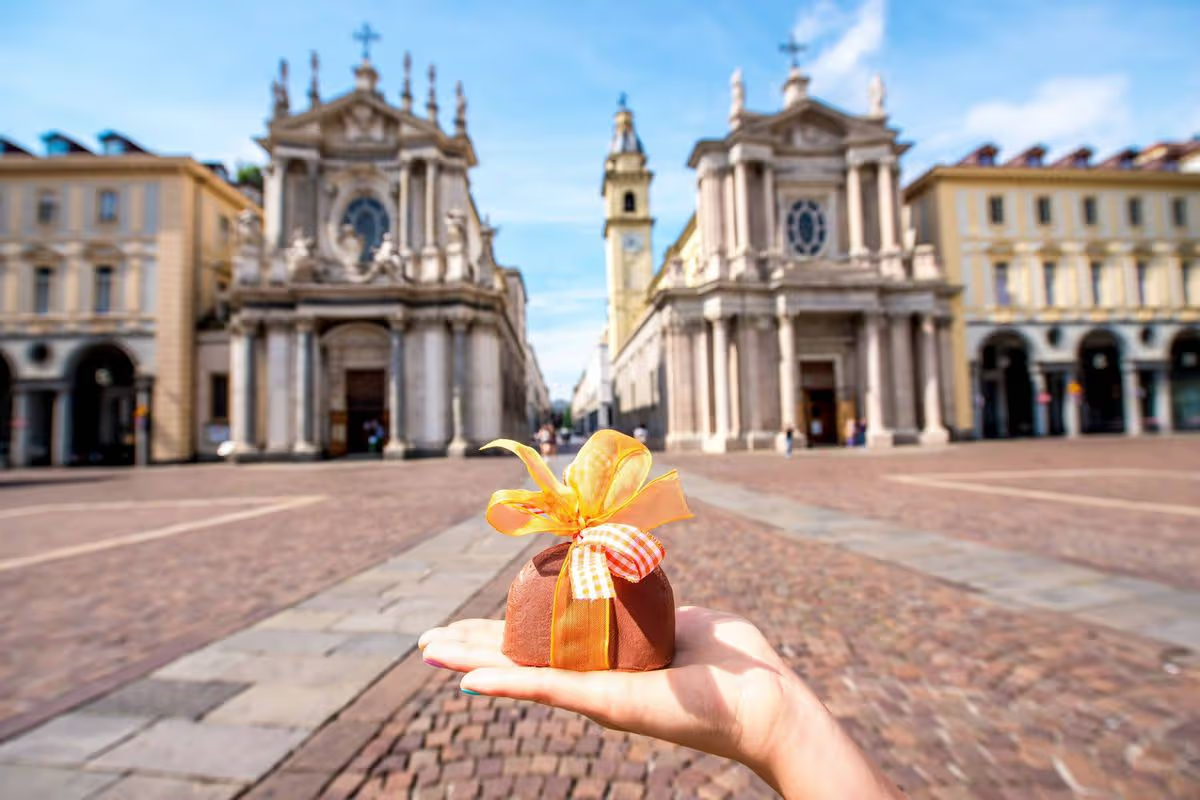
Turin has been known for its chocolate since the late 1500s(Image: Getty)
When you think of chocolate, your mind might wander to the Belgian capital of Brussels, or perhaps the Swiss Alps, yet neither has claimed the top spot on Europe’s list of “chocolate capitals”. Instead, that coveted title belongs to the Italian city of Turin.
Ahead of the bustling summer tourist season, Avis examined European cities for their chocolate culture, taking into account the number of chocolatiers and shops listed on Yelp, chocolate-related attractions such as museums and factory tours, and consumer ratings.
Their research placed Turin firmly at the top, closely followed by Perugia, also in Italy, with Austria’s Salzburg taking third place.
Two British cities also featured on the list, with one securing fourth place and London coming in eighth.
Turin boasts 233 chocolatiers and five chocolate attractions; regarded as Europe’s historic chocolate capital since 1585, the city is the birthplace of gianduja and bicerin – iconic hazelnut-chocolate specialities.
There’s also the Pfatisch Chocolate Museum and factory tours from renowned brands such as Caffarel.
The city’s annual CioccolaTò festival further solidifies its standing as a must-visit destination for immersive chocolate experiences.
Taking to TripAdvisor, one recent visitor to the Pfatisch Chocolate Museum wrote: “Beautiful audio guided tour, interactive for families. The children had a great time with the interactive games.
“Very cosy and realistic environment recreated for the tour. Exhaustive on the subject. It involved all the senses.
“Small taste of the three chocolates (dark, milk, white) and finally the king Gianduiotto.”
Meanwhile, another visitor who enjoyed a trip to the Pfatish Museum remarked: “This place looks it belongs on a movie set. Everything looks so good and so perfect. Even if you don’t buy anything here, it is well worth a visit.”
I dropped in on a bustling village that fringes a busy roundabout – and every corner leads you to beautiful green spaces
Beautiful scenery surrounds the ’roundabout’ village – and the shops are amazing(Image: Katie Oborn)
While I thoroughly enjoy residing in the city of Plymouth, I equally relish the opportunity to regularly escape the hustle and bustle to find somewhere I’m enveloped by woodland and birdsong. I recently discovered a destination offering respite from urban life – and it’s an ideal “traditional” location with several thriving independent retailers alongside excellent walks and scenery.
Being based in Plymouth means I’m generally spoilt for choice when it comes to escaping the concrete and cobbles of city life. Within easy reach is the South West Coast Path, stunning beaches or coves, plus numerous other small towns and villages to discover in the rest of Devon or neighbouring Cornwall.
I recently paid a visit to a village situated right on Plymouth’s edge, and it’s an underrated treasure of a destination. Yelverton, particularly the Yelverton Roundabout area, is straightforward to reach (I travelled there by bus) and it boasts a flourishing collection of shops plus beautiful countryside in every direction.
This well-loved village sits on the outskirts of the city. I appreciated the journey, travelling through Plymouth, then, abruptly, the urban landscape was left behind, giving way to Roborough Down.
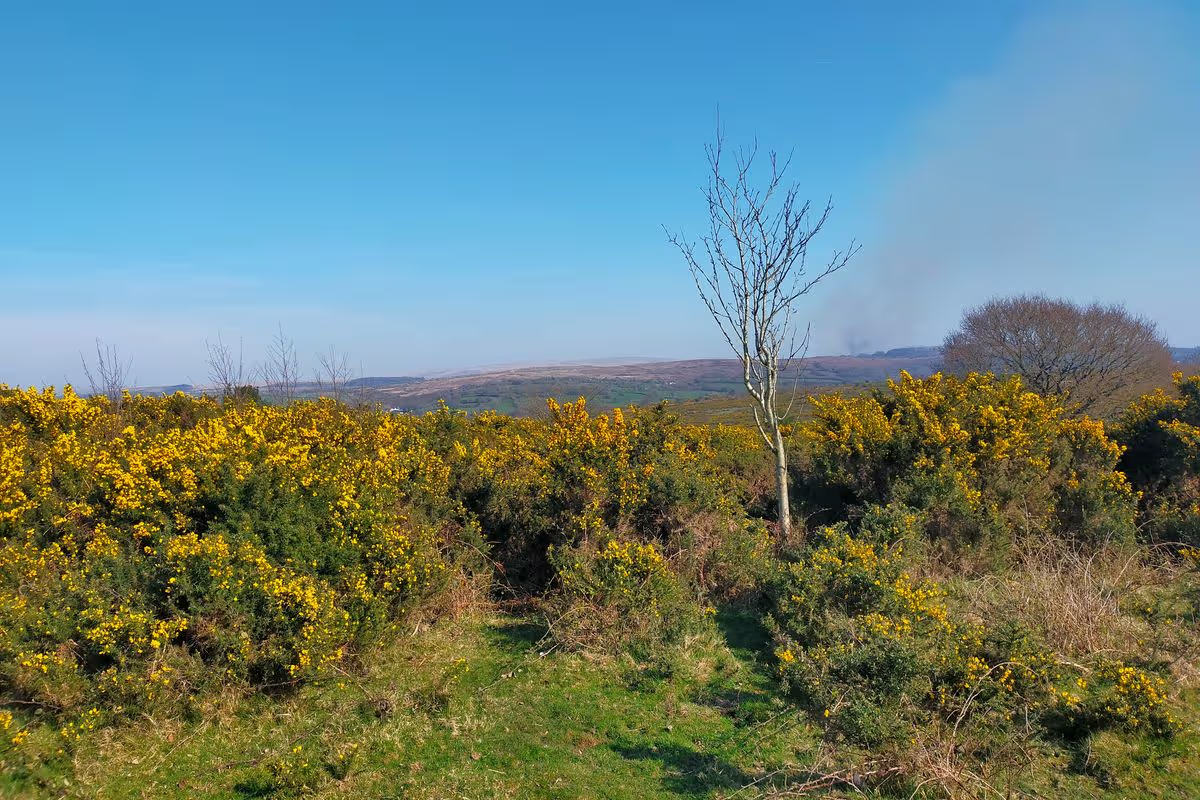
After crossing the heath, golden with gorse and scattered with Dartmoor ponies, you encounter the Yelverton Roundabout – and this spot even has its own Facebook page with more than 7,000 followers, reports Plymouth Live.
Now, having spent several hours there, I can understand why it’s so beloved. Yelverton village has preserved its village character despite housing developments emerging around it over the years.
The locals were welcoming, and the independent shops and businesses offer something truly special, including a proper butcher’s, a deli, a cafe, a gift shop, and plenty more. Even the Post Office is packed with useful and intriguing items.
There’s also a classic red telephone box still standing at Yelverton Roundabout, directly across from the picturesque church on the green.
My first stop was the Dartmoor Bakery, a brief stroll from the roundabout over at Leg O Mutton Corner on Roborough Down.
I sampled a savoury swirl with honey-garlic roasted tomatoes and brie, and it was absolutely delicious. I enjoyed it while sitting on a bench that was “erected in 1968” by the Yelverton District Residents Association, in “memory of Winston Churchill”.
Afterwards, I wandered across to the shops and green space beside the roundabout, where I chatted with three residents, Belinda Gardiner and husband-and-wife duo Ian and Liz Marshall.
Ian revealed there’s a “thriving set of shops” around the Yelverton Roundabout, and while they’ve “changed over the years” they remain all “really well used”.
The three residents reflected that overall, though, since the 1980s, the area has altered “very little” despite there being “more cars” and a “few more surrounding houses”.
“We’ve also lost two pubs”, Ian noted, “the Leg O Mutton pub and the Devon Tors hotel are gone, but we still have The Rock Inn, which is great and well used”. The three residents described it as a marvellous place to call home, boasting abundant wildlife, including owls and bats, excellent walking and cycling trails, alongside “a reliable bus route” connecting passengers to Plymouth or Tavistock every 20 minutes.
I then ventured into Hearn’s Dartmoor Butchery and Meatbox, a sizeable independent establishment offering an impressive selection of locally-sourced meats.
Behind the counter, a staff member was preparing some particularly appetising-looking pasties, and I was also delighted to discover a vegetable stall within the premises.
I chatted with proprietor Richard Hearn, aged 40, who has practised butchery for over two decades. He’s also a devoted local and “sixth-generation” farmer’s son.
Richard shared: “I love it, the customers, the trade, I wouldn’t do anything else, it’s what I know. We push the local side of things, purchasing a lot of the meat from a farm in Meavy.
“I first worked here aged 22, then eventually started it up as my own business, the customers are fab, friendly and smiley – and it’s a slower pace of life here than Plymouth.”
Equally flourishing enterprises neighbour Hearn’s Dartmoor Butchery, including the highly-rated gift shop, Cards and Moor, characterised as a “beautiful shop full of treasures” by patrons.
I stopped by for a browse, and it’s certainly brimming with charming gifts, cards and some delightful-looking Easter goodies. I’ll undoubtedly remember these Yelverton retailers when I need to purchase a birthday present or another gift.
Residents informed me that this thriving cluster of shops is “getting busier”, and everyone I encountered was courteous and welcoming, with the area buzzing with activity.
Another outstanding shop, The Larder Yelverton, is an absolute must-visit if you find yourself in the area, offering a selection of unique cheeses, Cornwall-made pottery, and much more. I can’t wait to return.
Henry Smith, aged 46, is one of the proprietors of The Larder Yelverton, the deli which opened its doors in September 2020. Since then, the distinctive store has proved a hit, with its cheese selection proving particularly popular amongst locals and visitors alike.
Henry told me: “It’s a nice area to live and work in, it’s the people, and it’s so great to see the community supporting all the shops here.
“We have a lot of regulars along with walkers, cyclists, visitors and people on holiday – we even had a celebrity visit the shop yesterday.
“The only slight issue is parking and traffic flow in the area at times, but it’s great that it’s free to park for up to 2 hours at the Yelverton Roundabout.”
Debra Dewinne was enjoying lunch at another flourishing establishment in the same location, Scarlet’s Kitchen. Having relocated to the area a few years ago, Debra spoke highly of the local bus service, while acknowledging that traffic congestion can occasionally pose a problem in Yelverton.
“The car park is always full”, she said, “but it’s a sign that the shops are well supported here”.
Nearby, you’ll also find Ochre Hair Lounge, The Rock Inn and a host of other independent businesses at The Rock Complex on Dousland Road, just a short stroll from the other shops.
Despite being a modest cluster of shops and businesses, it’s undeniably a flourishing area; Yelverton Roundabout has almost everything you could need, it’s fair to say.
Also speaking to us was parish councillor and local resident Alastair Cunningham, an Independent Councillor on West Devon Borough Council representing Buckland Monachorum Ward.
On the subjects of parking, planning notices and traffic concerns, he said: “Our parish council meetings are open to anyone local; if people have any issues or problems they’d like to discuss, they can come along.”
Cllr Alastair noted that notices of these meetings are displayed on the noticeboard next to the red telephone box.
He went on to say: “It’s a good area to live in, there’s a lot of community, and the village halls and businesses are thriving here. The people and the shops are great; people tend to pick up their litter here, but we also have volunteer litter pickers.
“The butchers transformed the area, and we’re really lucky to have the community we’ve got in Yelverton. It’s a unique and traditional area.”
JEDWARD star John Grimes hard launched his new girlfriend on social media today, and she’s absolutely stunning.
It comes just before the singer is due to appear on CelebrityEx On The Beach.
Sign up for the Showbiz newsletter
Thank you!
John Grimes hard launched his new girlfriend on Instagram todayCredit: InstagramThey posed together in sparkles in front of Tower BridgeCredit: Instagram
Taking to the official JedwardInstagram page that he shares with twin brother Edward, John shared some cosy snaps of himself with his lady on a day out in London.
In the photos the loved-up duo are standing in front of the iconic Tower Bridge.
The beautiful brunette rests her hand on John’s chest while he wraps his around her waist.
The happy couple beam at the camera, both dressed up with sparkles as the sun sets.
In thefirst-look at the new episodes, John is stunned to be reunited with former flame Sarah Carragher – but it’s not long before they pick up where they left off.
He tells her: “No one really ever came close to what we had.”
John and Sarah are then seen kissing, suggesting the shock reunion was a successful one.
While he’s never publicly spoken about his relationship with Sarah, John previously revealed he prefers to keep his private life separate from his work after shooting to fame on The X Factor in 2009.
He said in 2017: “I’ve had two long-term relationships that were private. That wasn’t part of my career.”
John is one half of the Irish musical duo, JedwardCredit: Getty Images – GettyThey rose to fame on The X Factor in 2009Credit: Reuters
Orlando Bloom and Swiss model Luisa Laemmel were snapped last month leaving the Super BowlCredit: BackGridLuisa has worked for Calvin Klein, Maybelline and YSL BeautyCredit: InstagramOrlando and US pop star Katy split last year after nine yearsCredit: Splash
Last week the couple enjoyed a mini-reak in Switzerland, along with Orlando’s pet dog, and the Brit is believed to have met some of Luisa’s pals and family.
They stayed in a luxury suite at the Dolder Grand in Zurich, where rooms cost up to £13,700 per night, as dad-of-two Orlando took part in a promotional event for Porsche.
They then spent the weekend at the five-star Bürgenstock on Lake Lucerne.
A source said: “Orlando and Luisa have been quietly seeing each other for several months.
“They’ve become a proper little family unit and Orlando even flew his teacup poodle Biggie Smalls over for the trip. He is based in Los Angeles while she’s in New York, so they don’t get to see each other all the time. But they’re constantly in touch and there’s a real spark.”
The couple were first linked last month when they were seen leaving the Super Bowl arm-in-arm at Santa Clara, California.
Luisa has a degree in psychology and has worked for Calvin Klein, Maybelline and YSL Beauty.
The travel expert previously shared his recommendations for a gorgeous yet affordable European summer holiday, and one place is well worth a visit.
Andrea Blazquez Editor of Spare Time and Nicola Roy Multimedia content creator
03:01, 21 Mar 2026
This article contains affiliate links, we will receive a commission on any sales we generate from it. Learn more
The gorgeous European gem is cheap too(Image: Getty)
If you’re still to book your holiday for 2026, Simon Calder is on hand to help with suggestions on where to go. The travel expert has previously spoken out about his favourite affordable spots to take a trip, and they’re all gorgeous too.
Simon highlighted Portugal, Bulgaria, Montenegro and Albania as some of the most stunning yet affordable holiday destinations. He said: “In Western Europe, it has to be Portugal and in Eastern Europe, Bulgaria – obviously a very popular package holiday destination.”
In fact, according to research in 2023 by holiday specialists Jersey Island Holidays, Montenegro topped the charts as Europe’s most affordable destination, reports the Express. Although this was a few years ago, the destination still remains very affordable.
For example, Brits can secure a seven-night break in an all-inclusive four-star resort in Herceg Novi next month for £419pp, including flights, according to Love Holidays.
The Iberostar Waves Slavija hotel, which is right by the beach, will only set you back £409 for seven nights — excellent value for money.
It’s cheap when you’re actually there too. According to Cost of Living, the average price of a beer in Montenegro is €2.50, which is around £2.15.
The average pizza costs €12, whereas pasta and meat dishes come in at around €15, according to Porto Montenegro. Flights in April start at just £16 one-way from Gatwick Airport.
But Simon Calder isn’t the only one singing the praises of this holiday destination, as travel bloggers at Wander-lush crowned Montenegro Europe’s most “underrated nation”.
Kotor Bay stands out as one of Montenegro’s most spectacular locations, and conveniently for tourists, the nearest city and airport is Podgorica.
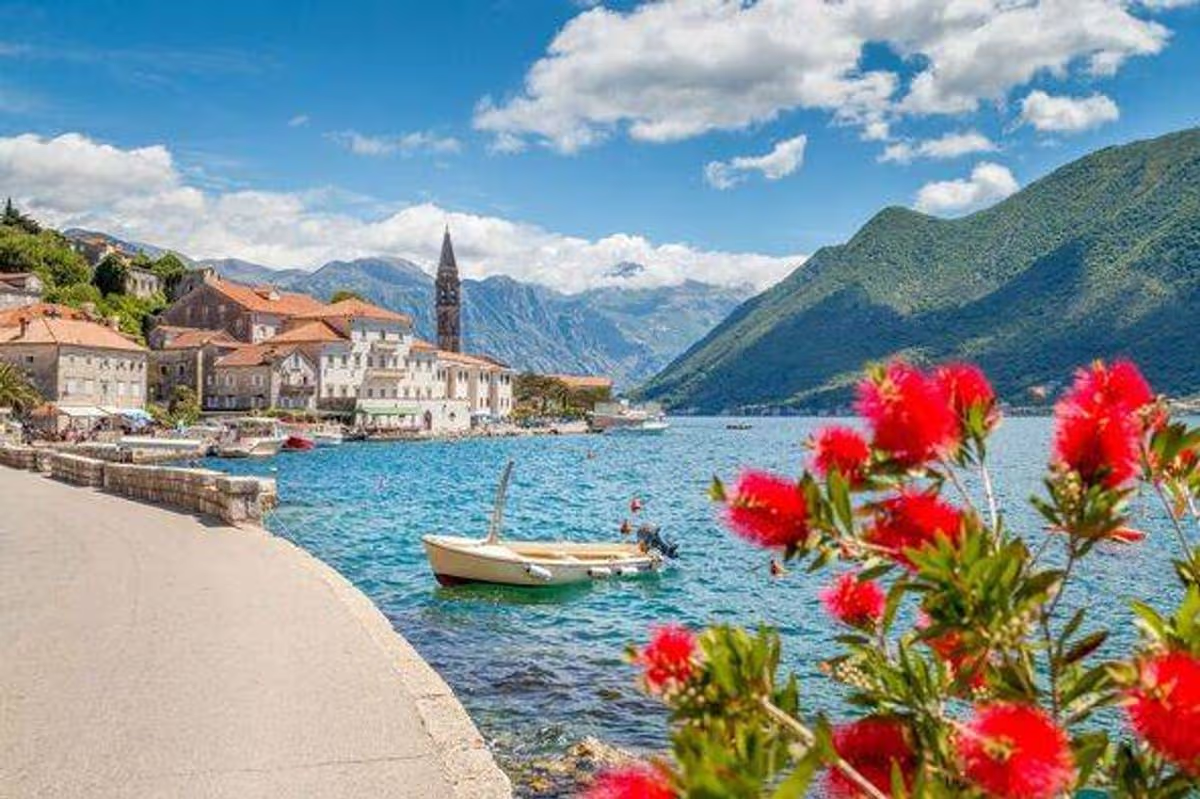
The experts highlighted that whilst Kotor ranks among the most striking towns on Kotor Bay, if they “had to choose the most beautiful place in Montenegro overall, it would be the harbour town of Perast”.
Travel experts at Starsinsider agreed, declaring that Montenegro “is the most underrated jewel of the Mediterranean”.
In Podgorica, one of the top attractions is Saborni Hram Hristovog Vaskrsenja, a “beautiful and very impressive” church that’s “absolutely worth visiting”, according to some travellers on Tripadvisor.
Kotor Bay has earned praise on the platform as “the best coastal road in the world” and a “beautiful and peaceful” destination for a getaway.
“We fell in love with Montenegro. The water is so clear, the mountains come down to the water, and it’s stunning scenery.
“That said, what I love about it is that it’s so unspoiled. I sure hope it can stay that way. So peaceful and lovely,” one person shared in a review.
A travel vlogger visited a stunning island nation in Southern Europe with a historic capital city he described as “one of the most beautiful places” he’s ever seen
A vlogger enjoyed a trip to a “beautiful” English-speaking island nation(Image: Getty Images)
A vlogger who enjoyed a trip to an English-speaking island boasting 20C warmth in April has hailed it as “one of the most beautiful places” he’s ever been to. Alex Daltz, a YouTuber on a quest to chronicle his worldwide travels “one vlog at a time”, recently visited a spectacular European nation merely three hours from the UK.
Starting off, Alex pointed his camera towards the stunning panorama from his hotel room balcony, featuring undulating hills and a peaceful expanse of water in the distance, set against brilliant sunshine and clear blue skies.
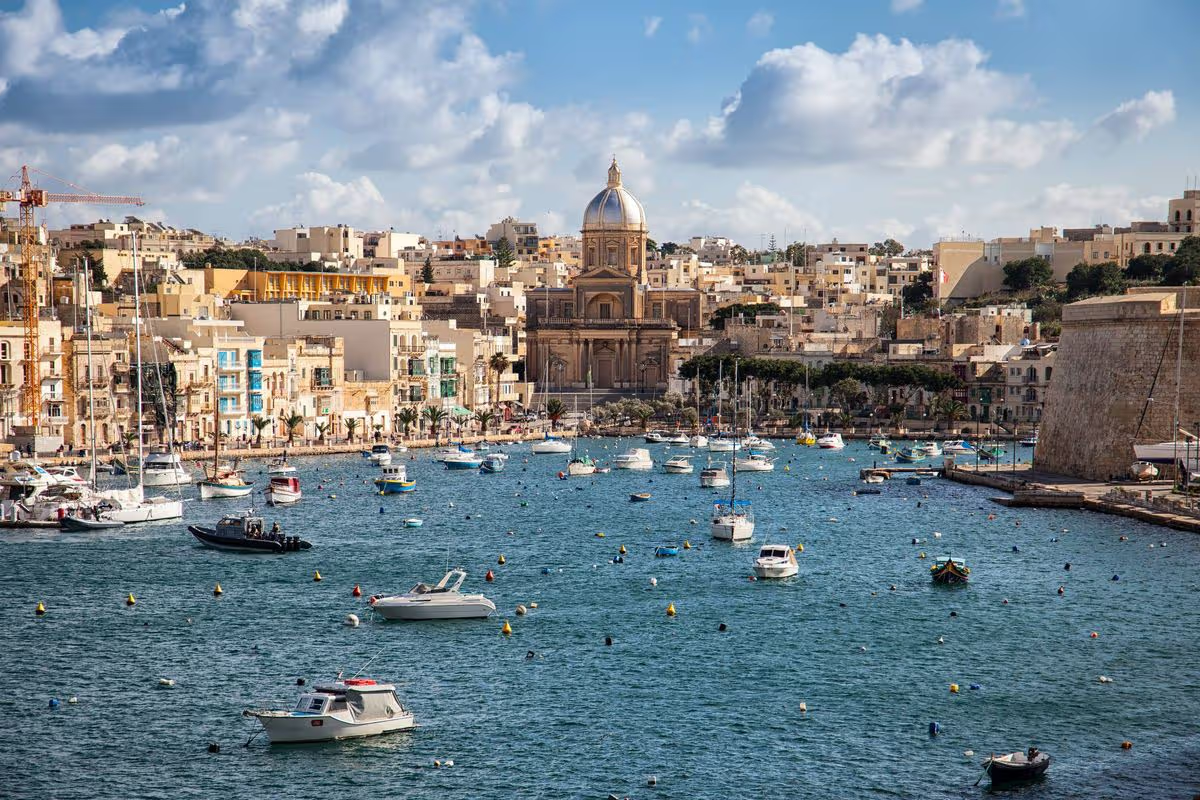
Switching to a street view, Alex disclosed he was in the ancient capital of Malta, the 16th-century city of Valletta. An island nation in Southern Europe, Malta is positioned south of Sicily in the Mediterranean Sea and north of the north African coastal country of Libya.
SkyScanner reports that the average flight duration from the UK is 3 hours and 16 minutes, with prices beginning at just £29 at the time of writing. TUI suggests travelling between April and October, with April temperatures varying from 15 to 20°C.
A fortified city and UNESCO World Heritage site, Valletta was designated Europe’s Capital of Culture for 2018. Alex swiftly highlighted the city’s cultural appeal, evidently captivated by its characteristic Baroque architecture.
Indeed, he described the capital as “beautiful” with a “chilled out touristy vibe”. He said: “We have just made it to Valletta. One of the most beautiful places I think I’ve ever been because it’s so, so medieval, the whole place.”
Alex added: “It’s literally like you’re walking through the 1500s. I already get like a chilled out touristy vibe already, and I’ve been here like five minutes.”
Content cannot be displayed without consent
Venturing out to find water, Alex could be spotted outside St. John’s Co-Cathedral, a landmark that houses two masterpieces by the renowned Italian painter, Caravaggio, The Beheading of St John the Baptist and St Jerome Writing.
Alex displayed the bustling Valletta streets and subsequently found himself near Fort St Elmo – constructed in the Early Modern period – and the National War Museum, which provides visitors with 7,000 years of Maltese military history.
Among the museum’s highlights are the Gloster Sea Gladiator N5520 FAITH aircraft, Roosevelt’s Jeep “Husky”, and, as pointed out by Alex, the George Cross, the nation’s honour for gallantry during the Second World War.
Subsequently, Alex visited the city of Mdina, another breathtaking Maltese location that functioned as the country’s previous capital. Also referred to as the “Silent City”, inhabitants have resided in the area since before 4000BCE.
Throughout the centuries, the city has been controlled by Phoenicians, Romans, Arabs and even the Normans. For Alex, who recorded himself as he wandered the honey-coloured streets, it was “astonishing” and “mind-blowing”.
Other Maltese highlights showcased by Alex included local catacombs and the Blue Lagoon, where the fortunate YouTuber experienced some of the “most blue water” he’s ever seen.
METALLICA’S James Hetfield is engaged to his stunning girlfriend Adriana Gillett, four years after his divorce from his wife of 25 years.
The musician, 62, proposed to his other half underwater while swimming with sharks in an elaborate proposal.
Sign up for the Showbiz newsletter
Thank you!
Metallica icon James Hetfield has proposed to his girlfriend, Adriana GillettCredit: GettyThe singer popped the question while swimming with whale sharksCredit: Instagram
She took to her Instagram to share the exciting news along with some pretty cool pictures.
In the snap, both can be seen wearing snorkelling gear in the water as James holds up a sign that reads: “Adriana Gillett will you marry me?”
A second picture shows a huge fish as they get up close to the sea creatures during their expedition.
Adriana captioned it: “The BEST birthday trip surprise. Swimming with whale sharks on Friday the 13th with the most unique, special and romantic proposal a Pisces could ever imagine.
“In a sea full of fish, we caught each other. Thank you God for putting us together.”
Fans rushed to the comments section to send the couple their well-wishes as they enter this amazing new chapter.
One person gushed: “This ROCKS and makes me so happy!! Congratulations Addy & James!!”
Another enthused: “YES!!!! Fantastic!!! It’s been incredible to see the beautiful journey you both have been on and continue to travel. Much love and congratulations to you both!!!”
Somebody else commented: “Congratulations to the two of you! We are so happy for you.”
Yet another said: “Congratulations! No surprise, you two are one in a million.”
While a fifth follower added: “What a whale of a tale this is!!! Congratulations you two!!!”
The couple began dating in 2023 following his divorce from Francesca Tomasi the previous year.
The pair had been married since 1997 and have three children together – Cali, Castor and Marcella.
They filed for divorce in 2022, citing irreconcilable differences.
He was previously married to Francesca Tomasi and they share three children togetherCredit: Getty
This led to Metallica having to postpone their tour dates in Australia and New Zealand.
Sharing a statement on social media at the time, the band penned: “We are truly sorry to inform our fans and friends that we must postpone our upcoming tour of Australia and New Zealand.
“As most of you probably know, our brother James has been struggling with addiction on and off for many years.
“He has no, unfortunately had to re-enter a treatment program to work on his recovery again
“We are devastated that we have inconvenienced so many of you, especially our most loyal fans who travel great distances to experience our shows.”
The iconic heavy metal band was formed in Los Angeles in 1981 by James and drummer Lars Ulrich.
The current lineup is comprised of the founding members along with longtime lead guitarist Kirk Hammett and bassist Robert Trujillo.
They’ve released 11 albums over the last four decades and are one of the most commercially successful bands’ of all time.
Metallica have been going strong for over four decadesCredit: Getty
A London beauty spot is being praised as ‘pretty’ and ‘stunning’ while drawing comparisons to Japan thanks to the abundance of cherry blossom trees that are starting to bloom there
Jess Flaherty Senior News Reporter
15:59, 16 Mar 2026Updated 15:59, 16 Mar 2026
People hoping to see an abundance of cherry blossom trees in the UK are in luck (stock image)(Image: serts via Getty Images)
A “stunning” beauty spot has been branded “special” and “pretty” for offering visitors a taste of Japan, all without leaving the UK.
With spring now in full swing, countless nature enthusiasts are eager to embrace the kaleidoscope of colours emerging as flora and fauna transform with the changing seasons. The bare branches and dormant plants of winter are quickly changing and bursting into bloom.
Cherry blossoms are a highly sought-after sight, strongly linked with regions of Japan. Referred to as Sakura in the East Asian country, blossom trees are the most widespread tree throughout the country, with many tourists timing their Japanese holidays around the cherry blossom forecast.
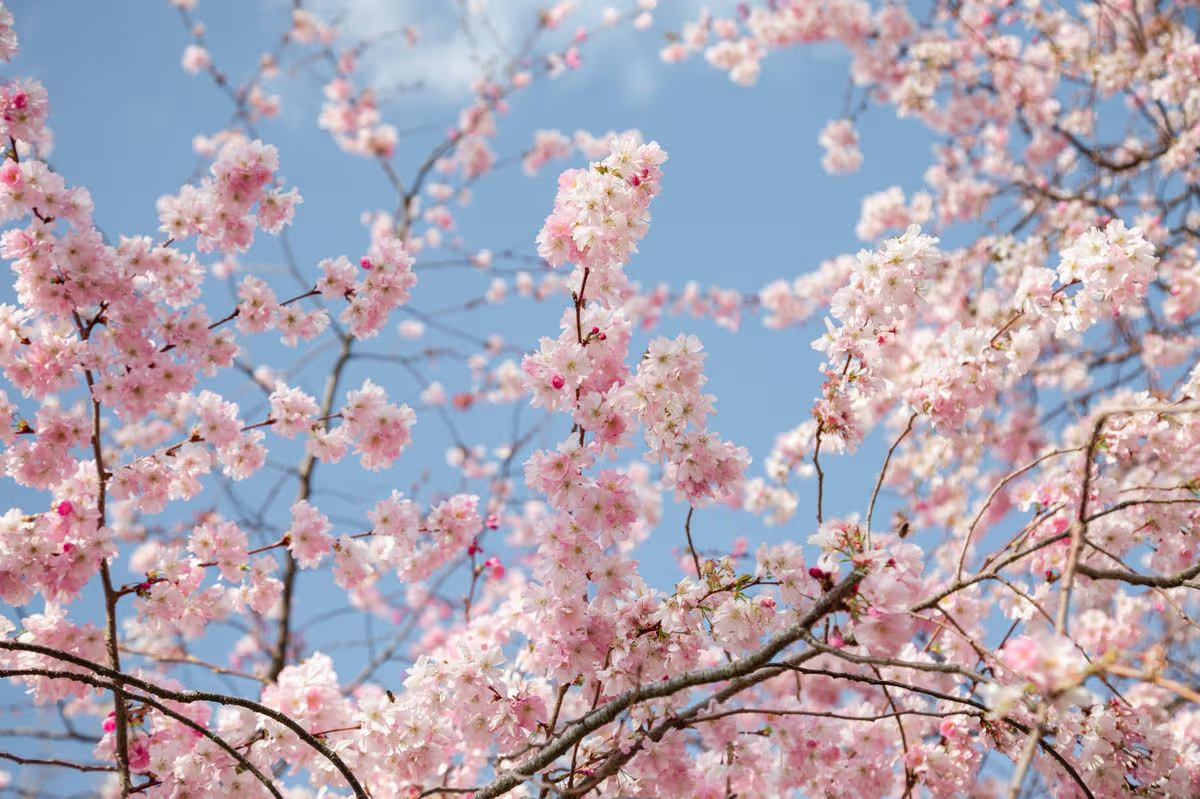
However, those unable to jet off across the globe in pursuit of picturesque pink petals are in luck, as one corner of London features an impressive display of cherry blossom trees.
Rita Farhi, a digital content creator who focuses on “noticing quiet magic in everyday life” in “London and beyond”, shared a video on Instagram showcasing a “hidden cherry blossom spot” in leafy northwest London.
In the caption alongside the footage, Rita wrote: “London has a few hidden cherry blossom spots… and this little path near Swiss Cottage is one of the prettiest.
“For a few weeks every spring it turns completely pink and feels like walking through Japan. It’s already starting to bloom this year. If you love cherry blossom walks, this one is worth saving for the next sunny afternoon.”
She added: “Have you seen it yet? Swiss Cottage, London. Spring in London never stays long… which makes these little moments feel even more special.”
Content cannot be displayed without consent
In the comments section, Rita provided further detail about her video and explained: “Filmed a few springs ago. The blossoms often start pink and turn paler as they open.”
Felloe social media users were quick to share their thoughts. One person commented: “So pretty”.
Another wrote: “What a beaut!” A third said: “So beautiful” while a fourth agreed: “Stunning”.
Someone else enquired: “This is so beautiful! Thank you for sharing. Where in Swiss Cottage is this?”
Rita replied: “Very close to the tube station”.
Another Instagram user shared: “I saw it yesterday and it’s so beautiful”. While another added: “How beautiful! Love this area”.
For those hoping to spot cherry blossoms across the UK, the Natural History Museum explains: “Most of the common cherry trees planted in the UK blossom in April. Mild winters can result in the trees flowering earlier, sometimes in March, but in cooler years they might not do so until May.
“In London, and other particularly warm and sheltered locations, cherry trees can sometimes burst into flower as early as February.”
The 13th-century National Trust castle features the UK’s largest private collection of South and East Asian artefacts and Britain’s best baroque terraced gardens
It looks Italian, and inside is a vast Indian collection and yet it’s here in the UK(Image: Tornadoflight via Getty Images)
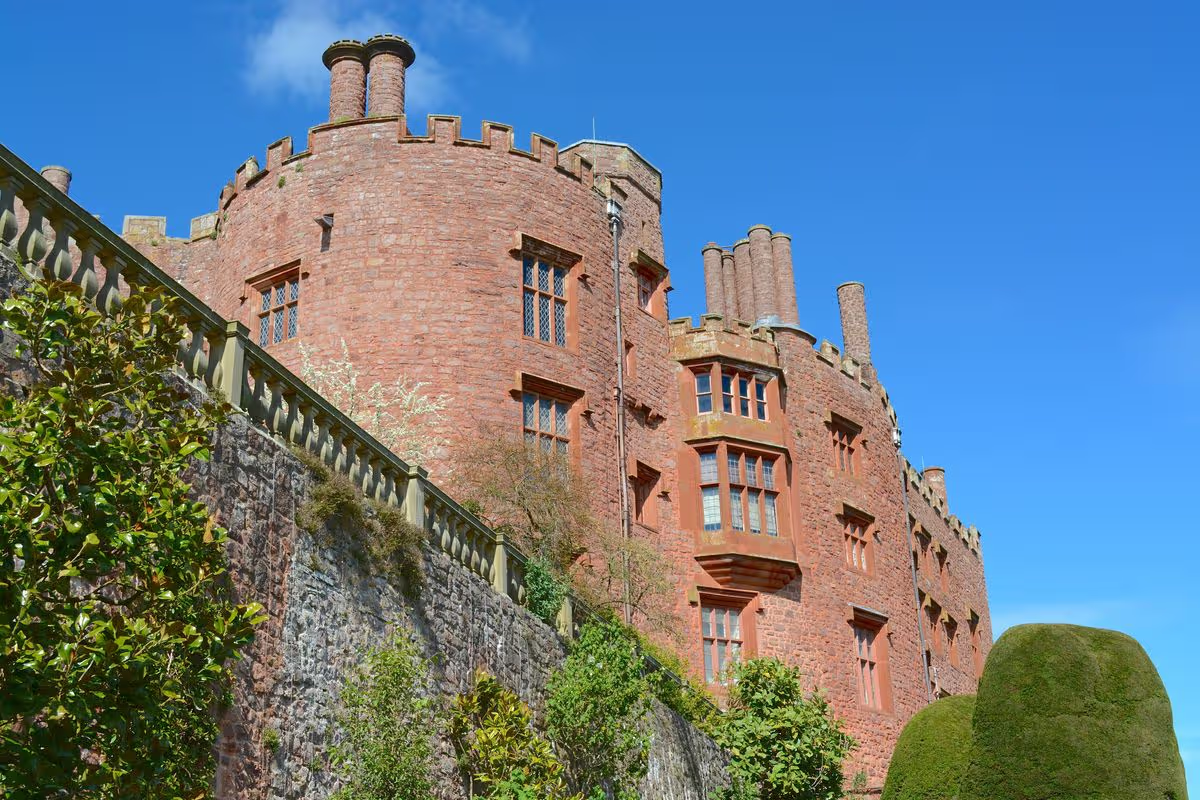
Nestled close to the English-Welsh border, in the town of Welshpool, stands a genuine fairy-tale fortress which appears straight out of a storybook and provides a vibrant splash of colour against its sprawling green backdrop.
Built in the 13th century, this mediaeval stronghold is brimming with stories and continues to evolve, much to the delight of those who visit.
For the perfect day spent appreciating historic architecture, discovering a different heritage and exploring the most spectacular of gardens, Powis Castle is the destination to seek out.
Its most recent ownership belonged to the same family, who resided in the castle from as early as the 1570s – the Herbert family. This continued until the castle and its grounds were handed over to the National Trust in 1952 by the 4th Earl of Powis.
Best holiday cottage deals in Wales
This article contains affiliate links, we will receive a commission on any sales we generate from it. Learn more
Wales is renowned for its stunning mountains, picturesque coastline and rich Celtic history. Sykes has a wide and varied collection of holiday cottages, houses and apartments across the country. Prices start from £35 per night with current deals.
One TripAdvisor reviewer said: “This site is stunning. I was blown away by how picturesque the place is.”
Another wrote: “This place really exceeded my expectations. The interior is super detailed and interesting, with some spectacular pieces of furniture.
“The gardens are truly beautiful on a lovely warm hillside and some stupendous giant yew trees. Has to be seen.”
History
The heritage of this fortress stretches back hundreds of years, encompassing numerous owners, as the property expanded and transformed, whilst preserving its original character throughout.
However, it all started in the 13th century when a Welsh prince, Gruffudd ap Gwenwynwyn, established some independence. When he and the remainder of his direct lineage died in 1309, leaving no male heir, the castle passed to an heiress called Hawise. She then married Sir John Charlton from Shropshire.
The fortress came under attack during this period from Hawise’s uncle, who was trying to claim the lordship he believed he was entitled to instead of her, but was unsuccessful.
In response, they chose to repair the damage and constructed two imposing drum towers on either side of the castle’s west entrance. Charlton’s descendants remarkably remained lords of Powis for more than 100 years, until no male heir could be found.
Consequently, in 1421, the castle was split between two daughters, after which the fortress entered a sharp decline, desperately needing restoration following years of abandonment. Before long, it was taken over and lovingly rebuilt before being leased to the Herbert family.
Most significantly since that time, one of the most substantial changes occurred when the Clive family introduced what is now recognised as the Clive collection. A collection teeming with South and East Asian artefacts exhibited in the castle, and the largest private collection of its kind in Britain.
Clive Collection
What makes this fortress particularly unique is its fascinating array of artefacts housed within it. Originally assembled by two generations of the Clive family, comprising Robert and his son Edward, who had wed Henrietta Herbert, the daughter of the 1st Earl of Powis.
The collection was assembled during Britain’s colonial rule of India, when these artefacts were removed from their country of origin and brought to the castle, starting in the 1800s. Today it houses more than 1,000 pieces originating from South and East Asia.
According to its website, visitors can expect to discover an extensive array of ivories, textiles, statues of Hindu deities, decorative silver and gold, weapons and ceremonial armour.
Naturally, this remarkable collection carries with it a troubling past, one which connects the castle to a proprietor who played a role in the invasion of India. Robert Clive was directly employed by the East India Company, which sent armies to both invade and subjugate India.
In doing so, they exploited the nation financially and profited from the natural resources it possessed. This contributed to establishing the British Empire’s presence within India and, consequently, secured a lifetime of riches and prosperity for Clive, which is evident in the castle’s magnificence.
Gardens
Beyond the striking castle itself, the true highlight of the estate lies in its grounds and immaculately-maintained gardens. Part of its impressive display of flowers, plants and trees is attributed to the captivating hedging that encircles the castle.
It covers up to 8,500 square metres of the estate, with the yett, tumps and top terrace contributing an extra 7,000 square metres to that figure. And with this comes some extreme-gardening methods adopted by the National Trust to guarantee it stays in impeccable condition.
To put that into perspective, it states that one skilled gardener can spend up to 10 weeks annually working at height, using a hydraulic cherry picker to trim and sculpt the towering hedges. That represents just one element of these magnificent gardens.
What makes them particularly remarkable is their Italian-influenced design dating back to 1680. The gardens at Powis Castle are regarded as the finest surviving example of a baroque terraced garden in the entire country – blending both Italian and French influences.
Without a National Trust membership, it costs £18 for entry to the castle and gardens for an adult, excluding gift aid. Meanwhile, children will be charged £9, while families can choose a family ticket for a reduced price.
It’s worth noting that ticket prices are reduced during off-peak periods of the year.