studio

Everything to know about ‘Spaceballs 2’ a.k.a. ‘The New One’

It turns out the “Spaceballs” sequel won’t be called “Spaceballs 2: The Search for More Money” after all.

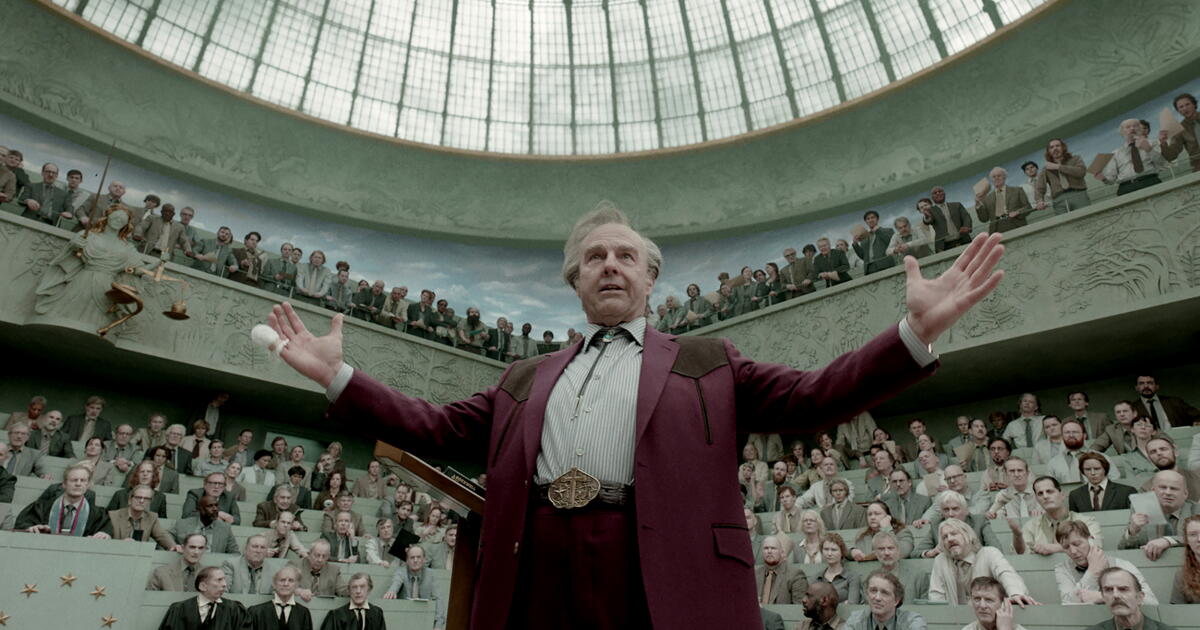
Mel Brooks beamed into Amazon MGM Studios’ CinemaCon presentation to set the record straight via a pre-taped video Wednesday. The follow-up to his 1987 film set in a galaxy very, very, very, very far away is actually titled “Spaceballs: The New One.”

“After all these years, I found the money,” the comedy icon explains as he waves toward a duffel bag overflowing with “Spaceballs” money. “But everywhere I go people say, ‘Mel, Mel, where’s the new “Spaceballs”? When are you going to make the new “Spaceballs”? When are you going to make the new one?’”

“Well, we did it, and the title is ‘Spaceballs: The New One,’” Brooks continues. “It’s just like the old one, but it’s newer.”

While details about “The New One’s” story remain under wraps, the studio did offer attendees a glimpse of the film with a new trailer that pokes fun at the current state of the industry. A voice-over declares Hollywood studios are “merging willy-nilly” as images of the Paramount and Warner Bros. signs appeared on screen — before noting that the merger between Amazon and MGM Studios is what led to “Spaceballs 2.”

Dark Helmet’s look appears to be updated for the times, as his mask resembles that worn by the “Star Wars” sequel trilogy’s Dark Side warrior Kylo Ren. The trailer also included footage of lightsaber (or Schwartz ring) fights as well a nod to the “Avatar” franchise, with Dark Helmet crossing paths with a Na’vi in the restroom.

“Spaceballs: The New One” is slated to hit theaters April 23, 2027. Here’s everything we know about the sequel so far.

What is “Spaceballs: The New One” about?

According to Amazon MGM’s press release, the film’s story details “are being kept under lock, key and an industrial-strength Schwartz shield.”

Who is in the movie?

Original “Spaceballs” cast members Rick Moranis (Lord Dark Helmet), George Wyner (Colonel Sandurz), Daphne Zuniga (formerly Princess, now Queen Vespa), Bill Pullman (Lone Starr) and Mel Brooks (Yogurt) are confirmed to return for “The New One.” This marks Moranis’ first onscreen film role since taking a hiatus in 1997.

Newcomers include Josh Gad, Keke Palmer, Lewis Pullman and Anthony Carrigan playing new characters who’ve yet to be revealed.

Who are the filmmakers?

“The New One” is directed by Josh Greenbaum (“Barb and Star Go to Vista Del Mar,” “Will & Harper”) from a script written by Josh Gad, Dan Hernandez and Benji Samit (based on characters created by Brooks, Thomas Meehan and Ronny Graham).

Brooks is among the producers of “The New One,” which also includes Brian Grazer and Jeb Brody as well as Gad, Greenbaum and Kevin Salter. Executive producers include Adam Merims, Samit and Hernandez.

Time staff writer Samantha Masunaga contributed to this report.

Source link

Sony Pictures Entertainment to cut hundreds of film and TV jobs

Sony Pictures Entertainment plans to lay off a few hundred employees globally in a move to restructure its business.

The cuts, announced Tuesday afternoon, are set to affect employees who work across Sony’s film, TV and corporate divisions the company said, declining to specify how many would lose their jobs.

Sony said the cuts reflect a shift in business strategy under its new chief executive, Ravi Ahuja.

“As we lean into those priorities, we need to operate with greater focus, speed, and alignment to strengthen our differentiated capabilities,” said Ahuja in a statement. “To support our growth, we are aligning our organization with where the business is going — not where it has been. That requires changes to how we are structured and where we invest.”

Ahuja, who was promoted just over a year ago, added that the company is ”reducing roles in certain areas while increasing focus and investment in others that are most critical to our future.”

Sony plans to focus on franchise strategy and brand extension with game shows, as well as develop more anime, experiences and invest in content that will connect with a younger audience. This includes more game adaptations and growing its YouTube capabilities.

One of the studio’s biggest franchises is the “Spider-Man” universe, which includes both live-action films starring actors like Tom Holland and the Oscar-winning animated “Spider-Verse” movies. The studio is set to release the latest live-action installment, “Spider-Man: Brand New Day,” this summer. The previous movie “Spider-Man: No Way Home” was a major win for Sony as it generated $1.9B globally.

Sony Pictures operates under its Japanese parent company Sony Group Corp, alongside other subsidiaries like Sony Music Group and Sony Electronics. The film studio was established in 1987 and maintains a strong presence in Culver City.

Recently, the studio acquired the “Peanuts” comic in a $457-million deal, reupped the “Reading Rainbow” for a YouTube audience and is working on PlayStation adaptations for video games like “Helldivers” and “God of War.”

The company has also combined its game-show group with its nonfiction TV department and is slowing down areas of its business that have low growth, like the VFX and virtual production studio, Pixomondo.

The layoffs are the latest to hit Hollywood, which has been hard hit by the exodus of film and TV jobs to other states and countries, a cutback in the number of films being released and media consolidation. Last year, Paramount cut 10% of its workforce after it was acquired by David Ellison’s Skydance Media.

Source link

Writers Guild forges tentative contract deal with studios

The Writers Guild of America and the Alliance of Motion Picture and Television Producers have reportedly reached a tentative four-year deal for a new contract.

Negotiations between the union and film and TV studios began in March, with union leaders prioritizing more robust healthcare benefits, streaming residuals and protections against the misuse of AI tools.

Puck co-founder and reporter Matt Belloni first reported news of the tentative deal Saturday. The agreement represents a departure from standard practice, adding one more year to the WGA’s usual three-year contract. Additionally, it includes health plan and pension increases, bumps in streaming pay and protections that will police licensing for AI training.

The new contract is still subject to ratification following a vote by union members. The WGA and AMPTP did not immediately respond to requests for comment.

This tentative deal is a promising signal that the Writers Guild could avoid a strike after 2023’s historic work stoppage that lasted 148 days.

Separately, the Writers Guild of America West’s staff union has been on strike since mid-February.

The union’s current contract is set to expire May 1. WGA is the first of the Hollywood unions to reach a deal. SAG-AFTRA and the Directors Guild of America still need to reach an agreement with the studios.

The actors’ union began negotiations with the studios in February and extended those talks in March, but paused in order for the AMPTP to finish negotiations with the writers’ union. SAG-AFTRA and DGA’s contracts each expire June 30.

Source link

‘The Pitt’ and a science show from Jimmy Kimmel get film tax credits

Even as California’s soundstages suffer from a slowdown in local production, the local economy may get a boost from the state’s expanded film tax credits.

Medical drama “The Pitt,” a “Family Guy” spin-off and a kids’ science competition show from late-night host Jimmy Kimmel are among the 16 shows that received tax credits for filming in the state, the California Film Commission said Wednesday.

In total, the projects represent $871 million in qualified in-state spending and are expected to generate $1.3 billion in economic activity in California. More than 4,500 cast and crew members will be employed across the 16 shows, along with more than 50,000 background actors, the film commission said.

New to this round of awardees are animated shows and competitions, which were added to the film and television tax credit program during its revamp last year. Under the program, producers can receive up to 25% of qualified production expenses back in the form of credits that they can apply toward tax bills they have in the state.

“California’s creative economy isn’t just part of who we are — it helps power this state forward,” Gov. Gavin Newsom said in a statement. “From the folks on the soundstage to the people designing the sets, these are jobs that anchor communities.”

HBO Max’s “The Pitt” received a credit of $24.2 million, while “Stewie,” a spin-off of Seth MacFarlane’s irreverent adult cartoon “Family Guy,” was awarded $6.4 million. Kimmel’s “Schooled!” competition show, which pits young scientists and their experiments against one another, secured $6.9 million.

Since the state’s production incentive program was bolstered last year, more than 100 films and TV projects have received tax credits.

But it has taken a while for those shows to jump-start local production, which has seen a sustained slump since the pandemic, the dual writers’ and actors’ strikes in 2023 and spending cutbacks at the studios.

That lag has affected the business of local soundstages.

For the first half of 2025, the average occupancy rate at Los Angeles County soundstages was 62%, slightly lower than the 63% average recorded in 2024, according to new data from the nonprofit FilmLA, which tracks local production.

Those figures mark a significant decline from the average occupancy rate of 90% seen from 2016 to 2022, according to FilmLA data.

That’s been a problem for local soundstage operators, which had aggressively funded development of new properties or acquired them only to see production slow.

Earlier this year, Hackman Capital Partners said it was turning over the historic Radford Studio Center in Studio City to Goldman Sachs.

Source link

Universal to keep its movies in theaters for at least five weekends

Universal Pictures will now keep its new films in theaters for at least five weekends, a reversal from the studio’s previous policy of at least 17 days that was set during the pandemic.

The change takes place immediately, the studio said Thursday. That means it will apply to its newest film, the Colleen Hoover romance “Reminders of Him,” which is out in theaters this weekend. Other upcoming films include Christopher Nolan’s “The Odyssey,” which will be released in July.

“Our windowing strategy has always been designed to evolve with the marketplace, but we firmly believe in the primacy of theatrical exclusivity and working closely with our exhibition partners to support a healthy, sustainable theatrical ecosystem,” Donna Langley, chair of NBCUniversal Entertainment, said in an email to the New York Times, which first reported the news.

Focus Features, Universal Pictures’ specialty film arm, will keep its existing theatrical exclusivity policies, which vary on a case-by-case basis. Chloé Zhao’s “Hamnet,” for instance, was in theaters for 99 days, while 2024’s “Nosferatu” played for 58 days. The minimum is 17 days.

The amount of time films are available exclusively in theaters — known as “windowing” in industry jargon — has become a contentious topic of conversation in Hollywood.

That debate ramped up during the pandemic, when some studios shortened theatrical exclusivity periods in order to move films to release for video on demand or streaming.

Prior to the pandemic, those windows could be as long as 90 days. Now, the average is around 30 days.

Theater owners have argued that shorter windows cut into box office profits and train audiences to wait to watch a movie at home. Distributors have countered that a one-size-fits-all approach doesn’t necessarily work for smaller or mid-budget films, which may find a bigger audience via at-home viewing.

At last year’s CinemaCon trade conference, top theater lobbyist Michael O’Leary called on distributors to establish a minimum 45-day window, arguing there needed to be a “clear, consistent starting point” to set moviegoers’ expectations and affirm commitment to theatrical exclusivity.

The debate has become even more fierce as box office profits still have not recovered from the pandemic. Last year, theatrical revenue in the U.S. and Canada totaled about $8.87 billion, just 1.5% above 2024’s disappointing $8.74-billion tally.

Source link