stocks

European markets open mixed as AI stocks sell-off hits Asia, South Korea drops 5%

As the rally in AI stocks fades, investors were cautious at the open on Friday, with European markets opening to mixed sentiment following steep falls in Asian markets.


ADVERTISEMENT


ADVERTISEMENT

Indices in London and Frankfurt quickly moved into negative territory, with the FTSE 100 dropping nearly 0.4% and the DAX losing 0.3% right after the opening. The Paris CAC 40 and the IBEX 35 in Madrid were both up 0.3%, while Milan’s main index was flat. So was the EURO STOXX 50, a benchmark index of 50 blue-chip companies from the eurozone.

Investors are awaiting the latest US non-farm payrolls report and keeping an eye on developments in the Middle East.

The US job data is important for forecasting what the Fed’s next move could be. Kathleen Brooks, research director at XTB, said in a market note, “There is now a near 40% chance of a rate hike by year-end. We expect financial markets to be extremely sensitive to today’s data,” adding that this will be the first such report with Kevin Warsh as chairman of the Federal Reserve.

In the UK, the latest data from Halifax showed that house prices unexpectedly declined in May. House prices fell 0.1% month on month, but were still up 0.5% year on year, missing expectations for a 1% jump.

Oil markets are awaiting further direction

Oil prices stabilised after falling on Thursday. Brent crude, the international benchmark, was slightly down and traded at $94.73 per barrel at 10:00 CET. It had been trading at about $70 per barrel before the start of the war in late February.

Benchmark US crude was little changed at $92.51 a barrel.

Oil prices remain under pressure as the Strait of Hormuz, a narrow waterway crucial for global oil and natural gas transport, remains effectively closed, and the war-induced energy shock is threatening to slow economic growth and fuel inflation in many countries.

American and Iranian negotiators reached a tentative deal last week to extend their ceasefire, but the agreement has not been finalised. Meanwhile, developments in Lebanon have cast doubt on the prospects for a permanent end to the conflict.

On Thursday, the Iran-backed Lebanese militant group Hezbollah rejected the latest ceasefire agreement between the Lebanese and Israeli governments.

“While there are few signs of progress in US-Iran talks, the oil market continues to trade on expectations of an imminent deal that would resume flows through the Strait of Hormuz,” ING commodities strategists Warren Patterson and Ewa Manthey wrote in a report.

Asian markets lose steam as AI craze cools

Wall Street rallied on Thursday after falling oil prices and bond yields eased pressure on US stocks. Banks, small-cap companies and other stocks that had previously been left behind by the euphoria around artificial intelligence led the gains.

Banks also helped lead the market, including gains of 5% for Goldman Sachs, 4.7% for Fifth Third Bancorp and 4.4% for U.S. Bancorp.

They helped to more than make up for losses among some AI stocks, which took a sudden back seat after dominating the market. Analysts have been saying AI stocks may have run too high, becoming too expensive, and that the broader US stock market may be set for a slowdown following an unrelenting streak of nine straight winning weeks for the S&P 500, its longest since 2023.

On Wall Street on Thursday, computer chipmaker Broadcom’s shares sank 12.6% after it issued guidance that fell short of investors’ expectations, raising concerns about the wider AI and technology sector.

US memory chip maker Micron Technology dropped 7.7%, and cybersecurity company CrowdStrike Holdings fell 3.8%.

Still, the benchmark S&P 500 climbed 0.4%, and the Dow Jones Industrial Average gained 1.7% to a record high. The tech-heavy Nasdaq Composite edged 0.1% lower.

But in Asia, investors dumped key AI-related shares, with South Korea’s SK Hynix plunging 8.6% and Samsung Electronics shedding 5.4%.

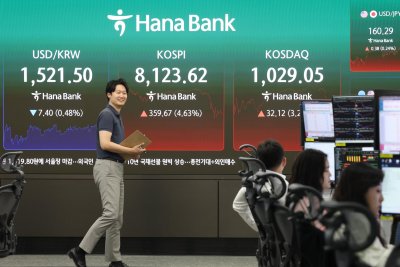
The Kospi dropped 5.1% to 8,199.44. The index has roughly doubled over the past year, lifted by gains in major technology companies.

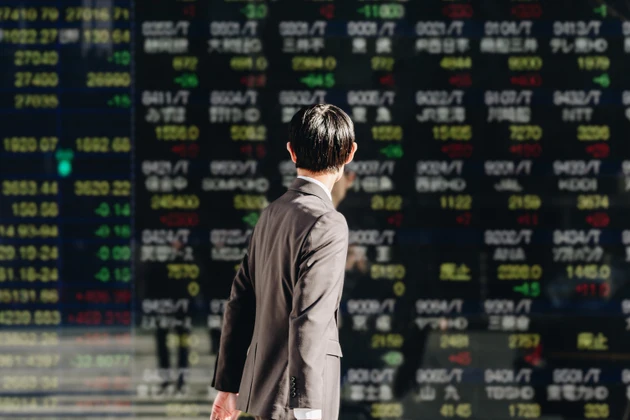
Japan’s Nikkei 225 slipped 1.3% to 66,573.85, with technology shares leading the decline, even as official data showed that Japan’s real wages rose for the fourth consecutive month. Chip equipment maker Tokyo Electron’s shares fell 7%.

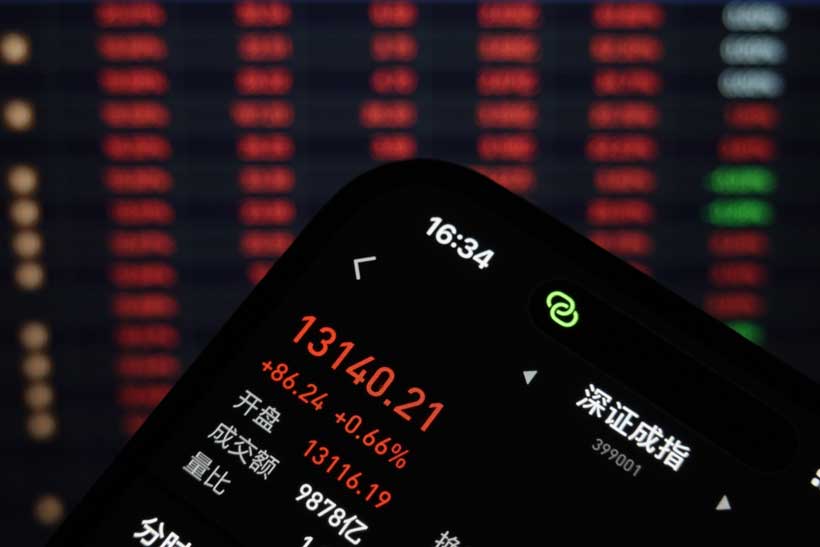
Hong Kong’s Hang Seng declined 1.2% to 24,948.96, while the Shanghai Composite Index fell 0.3% to 4,045.45.

Australia’s S&P/ASX 200 fell 0.7% to 8,623.50.

Taiwan’s Taiex gave up 1.3%, while India’s Sensex was up 0.1%.

In other trading early on Friday, the US dollar fell to 159.96 Japanese yen from 160.03 yen. The euro was trading at $1.1635, up 0.2%. Gold prices were down 0.3%, trading at around $4,490.70.

Source link

Oil Climbs as Middle East Tensions Rise While AI Rally Lifts Global Stocks

Global markets are navigating two powerful and competing forces: escalating geopolitical tensions in the Middle East and continued investor enthusiasm for artificial intelligence-related stocks. While concerns over renewed conflict between the United States and Iran have boosted oil prices and supported demand for safe-haven assets, the AI-driven technology rally has continued to push stock markets higher, particularly in Asia.

What Happened

Oil prices rose for a third consecutive session on Wednesday after fresh hostilities emerged in the Gulf region. Brent crude climbed 1% to $94.74 per barrel as hopes for a quick resolution to tensions between Washington and Tehran faded.

The U.S. military reported that Iranian missile attacks targeting Bahrain, Kuwait and other regional locations were either intercepted or failed. The developments came after negotiations aimed at ending the conflict between the United States and Iran stalled despite both sides announcing a tentative agreement last week.

Meanwhile, financial markets showed mixed reactions. U.S. stock futures were largely unchanged, while European futures edged lower. In Asia, however, technology shares continued their strong advance, helping stock indexes in Japan and Taiwan reach record highs.

Why Markets Are Reacting to Middle East Risks

Investors had previously expected the United States and Iran to formalize an agreement that would reduce regional tensions and ease concerns about energy supplies. The lack of progress in negotiations has instead revived fears of a prolonged conflict that could disrupt oil shipments from the Gulf, a critical region for global energy markets.

Higher oil prices typically reflect concerns about potential supply disruptions. The latest military developments prompted traders to unwind some of their earlier bets on a diplomatic breakthrough, contributing to the rise in crude prices.

Currency markets also reflected growing caution. The U.S. dollar strengthened against the Japanese yen, briefly touching the closely watched 160 level before retreating amid concerns that Japanese authorities could intervene to support their currency.

AI Stocks Continue to Defy Market Uncertainty

Despite geopolitical concerns, enthusiasm surrounding artificial intelligence remained a major driver of equity markets. Wall Street indexes posted modest gains on Tuesday, supported by technology shares.

Chipmaker Marvell Technology surged more than 32% after Nvidia chief executive Jensen Huang described the company as a potential trillion-dollar business. Investor optimism surrounding AI also helped propel SoftBank Group above Toyota Motor Corporation as Japan’s most valuable listed company.

The AI boom has continued to attract investment even as broader markets grapple with geopolitical uncertainty and concerns about interest rates.

What Comes Next

Investors are now closely watching upcoming U.S. economic data, including services sector activity, private payroll figures and Friday’s employment report. Strong labor market data could reinforce expectations that the Federal Reserve will keep interest rates higher for longer or even consider further increases.

Bond markets remained relatively stable, while traders adjusted expectations from potential rate cuts earlier in the year to the possibility of additional rate hikes. Markets have also priced in the likelihood of monetary tightening in Europe and Japan.

At the same time, developments in the Middle East remain a key risk factor. Any further escalation between the United States and Iran could push oil prices higher and increase volatility across global financial markets, while continued strength in AI-related stocks may help support broader equity markets despite geopolitical headwinds.

With information from Reuters.

Source link

China Tech Stocks Surge on AI Optimism Despite Middle East Risks

Technology stocks led a broad market rally across China and Hong Kong on Tuesday as investors poured into artificial intelligence related companies despite continuing uncertainty surrounding developments in the Middle East.

The strongest gains came from major technology firms including Tencent and Meituan, helping push Hong Kong’s technology index to one of its biggest daily advances in months. The rally reflected growing investor confidence in China’s technology sector, particularly in artificial intelligence, even as markets monitored fragile diplomatic efforts and ceasefire discussions involving regional conflicts.

The performance highlights an increasingly important theme in global markets: investors are weighing geopolitical risks against the powerful growth narrative surrounding artificial intelligence and technology innovation.

Background

Chinese technology stocks have experienced a volatile few years marked by regulatory scrutiny, slowing economic growth, property market challenges, and shifting investor sentiment.

However, the global artificial intelligence boom has provided a fresh catalyst for the sector.

As major technology companies race to develop AI models, digital assistants, and enterprise applications, investors have increasingly focused on firms capable of benefiting from the next phase of technological transformation.

At the same time, geopolitical developments continue to influence market sentiment. Escalating tensions in the Middle East, concerns about energy prices, and broader uncertainty in global financial markets have periodically weighed on risk assets.

Against this backdrop, Tuesday’s rally suggests that technology driven growth expectations remain a dominant force in investor decision making.

What Happened?

Major Chinese and Hong Kong equity indices posted strong gains:

  • Hong Kong’s Hang Seng Index rose 2.5 percent.
  • The Hang Seng Tech Index surged 4.7 percent.
  • China’s STAR 50 Index gained 1.6 percent.
  • The ChiNext Index climbed 2.7 percent.
  • The CSI300 advanced 1.5 percent.
  • The Shanghai Composite Index increased 0.4 percent.

Technology stocks were the primary drivers of the rally.

Tencent shares jumped more than 10 percent following reports that the company is moving closer to launching an artificial intelligence agent integrated into WeChat, China’s largest social media and messaging platform.

Meituan also gained strongly after investors reacted positively to signs that intense competition in China’s food delivery industry may be beginning to ease.

The rally extended beyond technology, with artificial intelligence related shares and non ferrous metal companies also recording significant gains.

Tencent’s AI Push Captures Investor Attention

Why Tencent’s Move Matters

The strongest market reaction centered on Tencent.

Reports suggesting that the company is nearing the launch of an AI agent for WeChat generated excitement because of the platform’s enormous user base of approximately 1.4 billion people.

If successfully deployed, such an AI assistant could become one of the largest consumer facing artificial intelligence applications in the world.

The development is significant because AI competition is increasingly shifting from standalone chatbots toward integration within existing digital ecosystems.

Companies that already possess massive user networks may have advantages in scaling AI services rapidly.

The Strategic Importance of WeChat

WeChat occupies a unique position within China’s digital economy.

The platform combines messaging, payments, shopping, business services, entertainment, and social networking into a single ecosystem.

Integrating AI directly into this environment could significantly enhance user engagement while creating new revenue opportunities through advertising, commerce, and premium services.

Investors appear to be viewing Tencent’s AI ambitions as a potentially transformative growth driver.

Why Meituan’s Gains Matter

Signs of Competitive Stabilization

Meituan’s rise may appear surprising given its latest quarterly loss.

However, investors focused less on earnings and more on indications that subsidy driven competition in China’s rapid delivery sector is beginning to moderate.

For much of the past year, food delivery companies have engaged in aggressive pricing battles designed to capture market share.

While beneficial for consumers, these strategies have pressured corporate profitability.

Evidence that the competitive environment is stabilizing could improve future earnings prospects across the sector.

Shift Toward Profitability

Investors often reward companies when they believe industry conditions are becoming more rational.

For Meituan, expectations of reduced subsidy spending may be viewed as a pathway toward stronger margins and improved financial performance.

The AI Investment Narrative Continues

Artificial Intelligence Remains a Global Theme

One of the most important lessons from Tuesday’s rally is that artificial intelligence continues to dominate market thinking.

Despite geopolitical uncertainty, investors remain eager to identify companies positioned to benefit from AI adoption.

This trend is not limited to the United States.

Chinese technology firms are increasingly being evaluated based on their ability to develop competitive AI products, infrastructure, and services.

Zhipu AI’s Listing Plans

Another development attracting attention was the announcement that Zhipu AI intends to pursue a domestic stock market listing in Shanghai.

The move highlights growing confidence among Chinese AI firms and demonstrates the sector’s increasing importance within China’s capital markets.

A successful listing could further strengthen investor interest in domestic AI development.

The Middle East Factor

Why Investors Remain Cautious

Although technology optimism drove markets higher, geopolitical developments remain a significant source of uncertainty.

Investors continue monitoring negotiations involving the United States, Iran, Israel, and regional actors.

Potential disruptions to energy markets remain a key concern because rising oil prices can increase inflation pressures and slow economic growth globally.

Markets Are Balancing Two Competing Forces

Current market behavior reflects a balancing act.

On one side are geopolitical risks, including conflict, energy market volatility, and diplomatic uncertainty.

On the other side is enthusiasm surrounding technological innovation and artificial intelligence.

Tuesday’s rally suggests that, at least for now, investors believe technology driven growth opportunities outweigh immediate geopolitical concerns.

Analysis: Why China’s Technology Sector Is Regaining Momentum

The significance of Tuesday’s rally extends beyond a single trading session.

It reflects a broader reassessment of China’s technology sector.

For several years, investors viewed Chinese technology companies primarily through the lens of regulatory risk, slowing growth, and geopolitical tensions.

Today, artificial intelligence is changing that narrative.

Investors increasingly see Chinese firms as participants in a global technological transformation rather than merely domestic internet companies.

Tencent’s gains illustrate this shift particularly well.

The market reaction was not driven by short term earnings or cost cutting measures. Instead, it was driven by expectations regarding future technological capabilities and growth potential.

Another important factor is capital flows.

China remains one of the few major emerging markets attracting investment across equities, bonds, and currencies simultaneously. This provides a supportive backdrop for asset prices even when external risks remain elevated.

At the same time, investors should not ignore underlying challenges.

China’s economy continues to face pressures from weak consumer demand, property sector difficulties, and slower growth compared with previous decades.

Artificial intelligence enthusiasm may boost valuations, but sustained market strength will ultimately require broader economic improvement.

Nevertheless, Tuesday’s performance suggests that global investors increasingly view China’s technology sector as a key participant in the AI revolution rather than merely a recovery story.

Future Scenarios

Scenario One: AI Momentum Continues

Technology companies successfully launch new AI products and attract additional investment.

This could drive further gains across China’s technology sector and strengthen market sentiment.

Scenario Two: Economic Weakness Limits Gains

Artificial intelligence enthusiasm remains strong, but broader economic challenges constrain corporate earnings and consumer spending.

Technology stocks continue rising, though at a slower pace.

Scenario Three: Geopolitical Risks Reemerge

Escalating tensions in the Middle East or worsening global economic conditions trigger risk aversion.

Investors shift away from growth assets, leading to increased market volatility.

What’s Next?

Investors will closely watch Tencent’s progress in launching AI features for WeChat and monitor adoption rates if the product is introduced.

Attention will also focus on upcoming earnings reports, AI related announcements, and developments surrounding Zhipu AI’s planned listing.

Beyond technology, markets will continue evaluating geopolitical developments in the Middle East and their potential impact on energy prices and global investor sentiment.

The interaction between technological optimism and geopolitical uncertainty is likely to remain one of the defining themes for financial markets throughout the coming months.

Conclusion

Tuesday’s rally demonstrates that artificial intelligence remains one of the most powerful forces shaping global investment decisions. Strong gains in Tencent, Meituan, and other technology companies highlight growing confidence in China’s ability to participate in the next phase of AI driven innovation.

While geopolitical risks continue to create uncertainty, investors appear increasingly willing to look beyond short term tensions and focus on long term technological opportunities. Whether this momentum can be sustained will depend not only on AI breakthroughs but also on the broader health of China’s economy and the stability of the global geopolitical environment.

With information from Reuters.

Source link

Greek stocks vs. Nasdaq 100: Which market won in the last 5 years?

On the morning of 29 June 2015, Greeks woke up to find their banks closed.


ADVERTISEMENT


ADVERTISEMENT

ATMs were limited to €60 a day. The Athens Stock Exchange did not open for trading.

Capital controls, the kind associated with crisis-era emerging markets rather than members of a developed-economy currency union, had arrived.

Five years earlier, in April and June 2010, Standard & Poor’s and Moody’s had cut Greek sovereign debt to junk, the first eurozone member to lose investment grade.

By February 2016 the Athex Composite had bottomed at 516.7 points, a fall of more than 90% from its October 2007 high of 5,334.5. The FTSE Athex Banks index, the country’s lenders, had collapsed by 99.6%.

Greek equities had ceased to function as an asset class.

They had become an obituary.

A decade on, the obituary needs rewriting. The Athens Composite Index has returned roughly 146% over the past five years on a total-return basis.

The Nasdaq 100, riding the artificial intelligence supercycle that has dominated global equity narratives, returned 116% over the same window. The S&P 500 delivered only about half of Greece’s gains, while European large-cap equities – tracked by the Euro STOXX 50 – achieved barely one-third.

This is the story of how Europe’s cautionary tale became one of the best turnaround trades of the modern era.

Greek stocks beat Nasdaq 100 over 5 years: Here is why

To understand the rally, start with the lenders. National Bank of Greece, Eurobank, Piraeus Bank and Alpha Bank carried the heaviest load through the crisis decade.

By late 2016 their combined non-performing loan ratio peaked near 47%, the worst in the European Union. For perspective, most other troubled European banking systems peaked at between 5% and 8%.

Greek lenders were not facing a credit problem. They were carrying a depression on their balance sheets.

The clean-up unfolded in two stages.

The Hellenic Asset Protection Scheme, known as Hercules, allowed the banks to securitise and offload roughly €57bn of bad loans through state-backed guarantees on the senior tranches.

The second leg was the slower work of organic profitability: stabilising deposits, restructuring cost bases, restoring net interest margins.

From bailout to bull market: The Athens turnaround

Combined net profits of the four largest Greek banks reached close to €5bn in 2025.

Shareholder payouts followed suit. Piraeus, Eurobank and Alpha Bank distributed around 55% of earnings, while National Bank of Greece pushed its total payout ratio to 86%, supported by aggressive buybacks.

Konstantinos Hatzidakis, then Greece’s minister of economy and finance, captured the moment in the IMF’s Finance & Development journal in June 2025.

“We have cleaned up bank balance sheets and curbed nonperforming loans. This major milestone has enabled lenders to regain their essential role in financing the real economy,” he wrote.

Hatzidakis pointed to rising deposits, stronger capital buffers and what he described as “a tangible vote of confidence” in the system: the successful sale of the Hellenic Financial Stability Fund’s bank stakes to long-term foreign investors.

“The Greek economy,” he added, “has consistently outperformed expectations, often by a significant margin.”

The quiet engine behind Greece’s economic miracle

The fiscal side of the recovery has received far less attention, but it has been equally important.

In a paper published by the IMF last week, economists Andrew Okello, Stoyan Markov and Chenghong Wang described the transformation of Greece’s tax administration as “one of the quiet engines behind Greece’s broader economic recovery”.

They divided the reform process into three overlapping stages.

The first, between 2010 and 2012, focused on stabilising government revenues under Troika supervision. One of the earliest breakthroughs came via VAT digitalisation: only 65% of registered taxpayers filed VAT returns on time in 2010, compared with 96% by 2014.

The second stage, between 2013 and 2017, centred on institution-building. Greece consolidated 288 local tax offices into 119 and established the Independent Authority for Public Revenue under a landmark 2016 law.

By 2017, the authority had become operational with its own budget and independently selected management board. During that period, the tax-to-GDP ratio rose from 25.8% to 27.6%.

The third stage, from 2018 onwards, introduced real-time electronic invoicing, point-of-sale connectivity and digital analytics systems. VAT revenues climbed from 7.1% of GDP in 2010 to around 9.5% in 2025.

Overall, Greece’s tax-to-GDP ratio rose from 20.5% in 2009 to roughly 28% in 2025.

The result has been a dramatic fiscal turnaround.

Greece recorded a primary surplus close to 5% of GDP in both 2024 and 2025, making it one of only a handful of EU countries running a fiscal surplus at all.

Meanwhile, sovereign spreads over German bunds — which once exceeded 30 percentage points during the peak of the crisis — have returned to levels last seen before the 2008 financial crisis.

According to the IMF’s March 2026 Article IV statement, Greece’s public debt-to-GDP ratio fell by around 10 percentage points in 2025 alone, reaching roughly 145%, down from a peak near 210% in 2020.

The IMF estimates the cumulative decline at roughly 65 percentage points from the pandemic-era peak.

Credit-rating agencies eventually followed. Scope Ratings restored Greece to investment grade in August 2023, followed by DBRS later that year, S&P in October 2023 and Fitch in December 2023.

Moody’s — the final holdout among the major agencies — upgraded Greece to Baa3 in March 2025 and reaffirmed the rating in April 2026.

For the first time in more than a decade, every major ratings agency now classifies Greek sovereign debt as investment grade.

Cheap when nobody wanted to look

The third pillar of the rally was valuation.

Greek equities entered the recovery period trading at discounts that became increasingly difficult to justify once balance sheets stabilised.

Even after the surge, Eurobank Equities estimates Greek banks are trading at roughly 9 times expected 2026 earnings and 1.4 times tangible book value — still more than 20% below European peers.

UBS estimates the sector’s average 2027 price-to-earnings ratio – a key measure of how cheaply or expensively stocks trade relative to expected profits – at 8.4x, compared with 9.5x for European banks overall. For comparison, US equities currently trade at more than 20 times forward 12-month earnings.

Over the past five years, shares of National Bank of Greece and Piraeus Bank have each surged by roughly 500%. Yet despite the extraordinary rally, both lenders still trade at single-digit earnings multiples.

The most structural financial change arrived last.

On 24 November 2025, Euronext completed its acquisition of the Athens Stock Exchange after roughly 74% shareholder acceptance of the all-share offer.

Greek stocks now sits inside Europe’s largest equity listing venue, alongside more than 1,800 listed companies.

The mechanical consequence is a broader pool of natural buyers. International index funds tracking pan-European benchmarks now hold Greek names automatically.

MSCI – the world’s largest index provider – is reviewing Greece for a potential upgrade to Developed Market status, effective September 2026 if approved, which would shift the country out of the small bucket of emerging-market money still chasing it and into the much larger pool of developed-market index allocations.

JP Morgan has forecast a 16% return for the MSCI Greece index in 2026.

Inside the sector, the maturing is showing up in mergers and acquisitions. In May 2026 Eurobank agreed to acquire 80% of Eurolife FFH Life Insurance for around €813m, a deal expected to lift group fee income by roughly 12%.

National Bank of Greece signed a Memorandum of Understanding with Allianz on a 30% stake in Allianz Hellas, with the partnership projected to add 4% to earnings per share.

The Optima offer for Euroxx underscores the same dynamic.

Greek financials are no longer just rebuilding. They are consolidating.

A decade later, Greece looks different

None of this means Greece is insulated from external shocks.

The IMF warned in March 2026 that the outlook remains “clouded by the conflict in the Middle East”. Tourism still accounts for roughly 21% of Greek GDP, leaving the economy vulnerable to geopolitical disruptions.

The Recovery and Resilience Facility — which has underpinned much of the country’s recent investment boom — is also due to wind down in August 2026.

Inflation remains elevated, running at 3.1% year-on-year in February 2026.

Hatzidakis himself acknowledged the remaining weaknesses in his June 2025 essay: investment still trails the EU average, productivity remains below European peers, and female labour-force participation is still among the lowest in the bloc.

Piraeus chief executive Christos Megalou told analysts during the bank’s first-quarter earnings call that a prolonged period of elevated energy prices could slow Greek GDP growth to between 1.5% and 1.6%, albeit still above the EU average.

Still, Greece stands as one of the clearest examples in modern financial history of how a country pushed to the edge of sovereign default managed to engineer a broad-based recovery through fiscal repair, banking-sector restructuring and institutional reform.

Ten years ago, Greek debt was rated junk, banks were shut and the stock market had lost more than 90% of its value.

Today, the sovereign carries investment-grade ratings across the board and the Athens Composite Index has achieved something few thought possible five years ago: it has outperformed the Nasdaq 100.

Whether the next five years will deliver the same kind of returns remains uncertain.

But for the first time in a generation, Greece is no longer a symbol of financial collapse. It is increasingly becoming a case study in recovery.

Source link

Fed rate hikes could be coming, making bank stocks attractive – Regan Capital CIO (KBE:NYSEARCA)

May 14, 2026, 3:29 PM ETState Street SPDR S&P Bank ETF (KBE), KBWB, FTXO, , , , , , , , By: Max Gottlich, SA News Editor

Bank building

ultramarine5/iStock via Getty Images

Despite U.S. President Donald Trump’s public expectations that incoming Federal Reserve Chair Kevin Warsh will cut interest rates, one investment expert believes the central bank may actually be forced to move in the opposite direction.

Skyler Weinand, Chief Investment Officer at

Source link

Bitcoin surge above $80K fuels rally in cryptocurrency-linked stocks (BTC-USD:Cryptocurrency)

Abstract Bitcoin Cryptocurrency concept

Olemedia

Crypto-linked equities advanced in U.S. premarket as Bitcoin (BTC-USD) surged past $80,000 – its highest level in over three months – amid renewed investor risk appetite.

Coinbase (COIN) gained 4.1%, while other gainers included Strategy (MSTR) +3.3%, MARA Holdings (

Source link