stereotypes

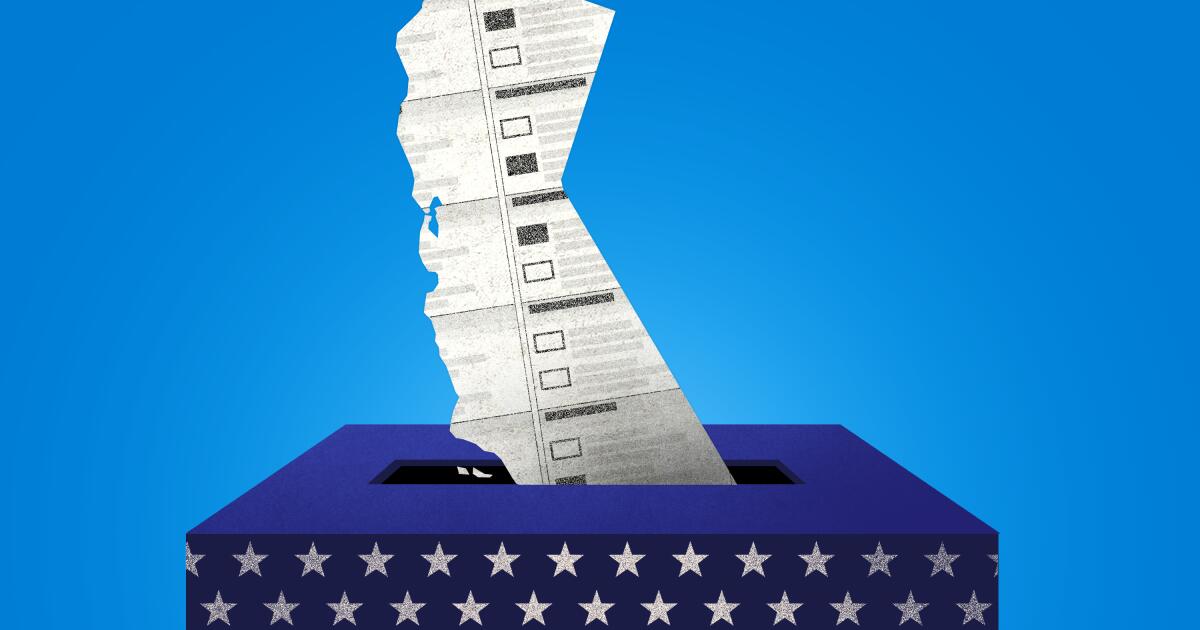
Column: The time has come to discard California’s top-two open primary

It’s probably time for California to reform the outdated “reform” that could be leading us into an absurd November election with no Democratic candidate for governor allowed on the ballot.

The absurdity is that Democratic voters outnumber Republicans in California by nearly 2 to 1. But the voters’ choices for governor could be restricted to just two Republicans — both disciples of President Trump, who is despised in this state.

We’d be electing our first GOP governor in 20 years.

The odds against this scenario are high. But it’s an increasing possibility.

It’s conceivable because of a crowded Democratic field of candidates and a 2010 reform placed on the ballot after a late-night deal demanded by a Republican state senator — Abel Maldonado of Santa Maria — in exchange for his vote to pass a stalled budget and tax increase.

The compromise led to voter approval of California’s unique top-two open primary. The top two vote-getters advance to the November runoff, regardless of party. It’s called an open primary because voters can choose any candidate, no matter their party.

So two Democrats or two Republicans might be the only choices in November — in statewide, congressional and legislative races. That doesn’t happen often, but it has a few times.

It doesn’t reflect the current reality of American politics, with voters sharply polarized between Democrats and Republicans. They want to vote for someone from their own party and are not interested in choosing among two perceived evils.

We should consider returning to a primary system that produces party nominees — one Democrat and one Republican — to give voters a more varied selection in November. Maybe even allow a third or fourth candidate to emerge from minority parties.

It’s too late to change for this year, but we could for future elections. It would require voter approval.

For the present, we’re saddled with the unwieldy dilemma of there being eight major Democratic candidates and just two Republicans. If the combined Democratic vote is splintered among the eight Democrats in the June 2 primary, the two Republicans could end up finishing first and second.

Political data guru Paul Mitchell, who has been running primary election simulations, pegs the chances of a Democratic lockout at 20%.

“There’s only a one-in-five chance, but you don’t want to see a one-in-five chance with something this important,” says the statistician, who works mostly for Democrats.

“To be safe, the Democratic Party needs to have a candidate polling at 20% or more. And none of the Democratic candidates are half way there. It’s scary.”

Mitchell bases his assessment on a poll released last week by state Democratic chairman Rusty Hicks, part of an effort to pressure low-polling Democratic candidates to step out of the race.

The survey showed both Republicans leading the field — former Fox News host Steve Hilton with 16% and Riverside County Sheriff Chad Bianco at 14%. At 10% each were three Democrats: Rep. Eric Swalwell of the San Francisco Bay Area, former Orange County Rep. Katie Porter and wealthy climate activist Tom Steyer. No other Democrat registered above 3%. There were 24% undecided.

The straggling candidates need to ask themselves, Hicks says: “if you’re polling 1% to 2%, do you have a path to get to 20?

“All of these candidates are experienced. They know in their gut when they’re viable or not.”

Mitchell says, “A lot of folks are now looking at why we have a wacky system that causes [a party chair] to tell candidates they should drop out of a race.”

Yes, it does smack of being undemocratic even if it’s practical politics.

Mitchell says the top-two system should be scrapped.

Hicks agrees.

“Things that were promised [by top-two promoters] have not been delivered,” the state party chairman told me. “It’s time to consider going back to the kind of system voters like.”

Appealing to the middle

I called around and got different views from veteran Democratic strategists.

“It was sold as reform, but it’s not reform. It’s a distortion of the process,” one former political consultant told me, asking for anonymity because of his current employment. “Everybody thought it would yield more moderate, consensus candidates, but that’s not what’s happening.”

Consultant Steve Maviglito, who ran the 2010 campaign against the top-two system, says it’s undemocratic because it risks not giving voters “a chance to cast a ballot for a candidate they have some belief in. That’s what our system is built on.”

The grand theory, he notes, was that candidates would be forced to appeal to the middle.

“Just the opposite,” Maviglio argues. “Democrats want a strong Democrat and Republicans want a strong Republican. The only thing in the middle of the road is a dead armadillo.”

Moreover, he points out, the top-two system has been manipulated by Democrats — including Sen. Adam Schiff and Gov. Gavin Newsom — to boost a Republican in the primary to guarantee a non-competitive, easy election in November.

That’s a bit sleazy.

“The top-two has actually been hugely good to Democrats,” says Democratic strategist Garry South. “They need to think this through. Since the top-two primary was implemented, there have only been three same-party runoffs for state office out of 26 races — all three of them Democrats.

“The current specter of two Republicans [in November] is not the fault of the top-two primary system. It’s due to every Democrat and their brother — or sister — taking a flier and filing for governor.”

“Never,” replies consultant David Townsend when asked whether the top-two primary should be junked. He ran the ballot campaign authorizing it. Townsend insists today’s Legislature contains more moderate Democrats because of the top-two and that they provide a check on the liberal majority.

That’s true to some degree.

OK, we could leave the top-two system for the Legislature and scuttle it for statewide offices.

The thought of being limited to a choice between two Republicans — or two Democrats — for governor is unacceptable and un-American.

You’re reading the L.A. Times Politics newsletter

George Skelton and Michael Wilner cover the insights, legislation, players and politics you need to know. In your inbox Monday and Thursday mornings.

What else you should be reading

The must-read: USC cancels gubernatorial debate amid uproar over candidates of color being excluded

The L.A. Times Special: It’s been decades since California had a governor’s race like this one. That was a shocker

Until next week,
George Skelton


Was this newsletter forwarded to you? Sign up here to get it in your inbox.
Source link

Bianco’s fraud crusade is a campaign stunt. It’s also dangerous

Voter fraud conspiracies are like methamphetamine running through MAGA veins, stirring up equal parts passion and paranoia.

President Trump, of course, is the king pusher of this particular addiction, pathologically certain he won the 2020 presidential election (he did not). In his second term, and in advance of the November election, Trump has supercharged voter fraud lies; installed election deniers in key positions; and is attempting through the so-called SAVE America Act to disenfranchise poor and female voters.

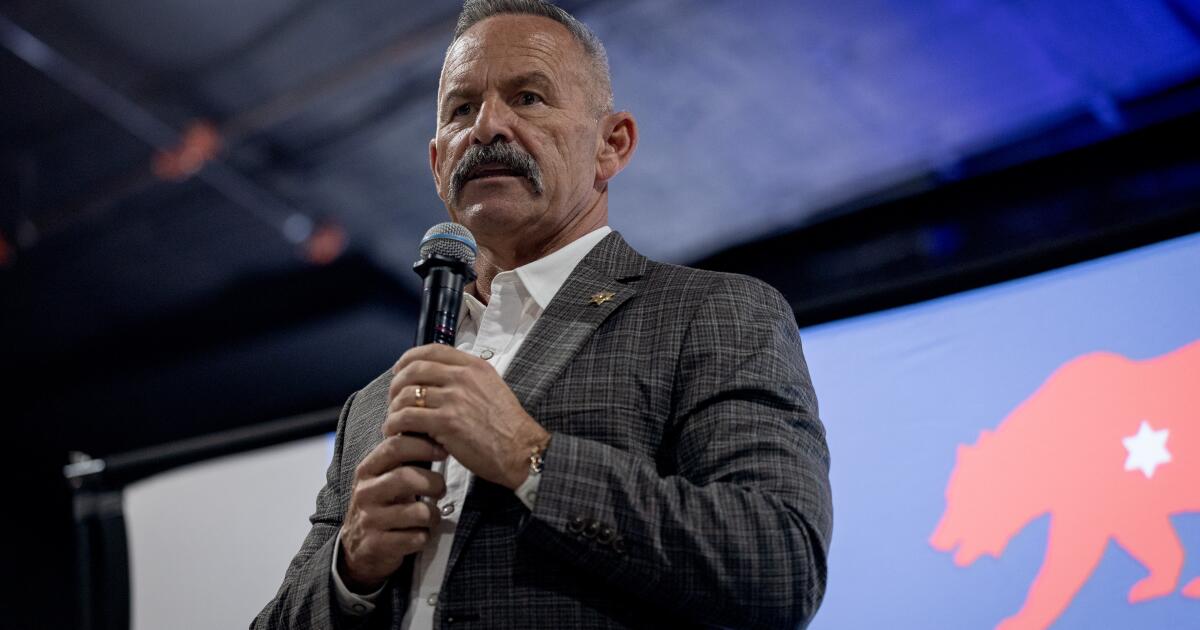
Here in California, the seductive power of Trump’s crusade can be seen in Riverside County, where gubernatorial candidate and Sheriff Chad Bianco is definitely not pursuing a vote fraud investigation for political reasons.

“From the very, very beginning, Chad Bianco didn’t say this was political,” Bianco told me, referring to himself in the third person. “Chad Bianco said we have an allegation of fraud with numbers that don’t add up, and no one has an exact reason why. So we have to find out the exact reason why. It’s plain and simple. Plain and simple.”

If you’re clueless as to what Bianco is talking about, let me give you the short version. A citizens group of election “auditors” claimed that in the last election over Proposition 50 in November, there were about 45,800 more ballots counted than cast.

The Riverside County Registrar of Voters, Art Tinoco, a highly respected election official, gave a long presentation explaining why that number was not accurate. He said that the actual difference in ballots cast and counted is only 103, within the acceptable margin of error for the 1.4 million voters in his area.

But unhappy with that answer, the group apparently took their concerns to Bianco, who decided to use his powers of criminal investigation to circumvent the many established avenues for vote audits through his own county and the California secretary of state (though he hasn’t revealed publicly exactly what led to the investigation).

Using a secret, sealed warrant — so none of us actually know what he’s alleging — he seized more than half a million ballots. The court has apparently appointed a special master to count those ballots, though Bianco at first said his deputies would do their own counting. But we don’t know who that special master is, or even if he or she has yet been appointed.

Here’s what we do know, and why it counts as a danger not just to Riverside, but also to American democracy writ large, when a politically ambitious lawman decides to run elections himself.

The fraud fiasco

So where did the citizen-auditors get their 45,800 number? Like many California counties, Riverside tallies ballots as they come in. So for the 11 days voting was happening (and for the mail-in ballots that came later) someone was making a handwritten note for every ballot that the county received.

Yes, I said handwritten, for more than 600,000 ballots going through 2,500 workers and volunteers. It’s often inaccurate and not every ballot is going to end up being a good one — some lack signatures, for example.

Tinoco, the registrar, called these handwritten logs “raw data” that also are missing ballots from other sources that increases the final tally, such as people who register on the day they vote. So no one who understands elections expects this number to be accurate or final.

Once all these ballots are checked to make sure they should be counted, they are sent to an entirely separate system, which reads them electronically and provides the election results.

When the number of vetted ballots is compared with the number of ballots that are counted by the second system, the difference is 103, Tinoco said.

So no fraud, only human frailty with the difficult business of counting by hand.

Matt Barreto, a UCLA political science professor and director of its Voting Rights Project, said Bianco’s actions were similar to what happened in Fulton County, Ga., where the FBI seized ballots after Trump’s debunked claims of fraud — despite plain and simple explanations from election officials.

“In both cases, Georgia and Riverside, independent elections offices had already verified the accuracy of the ballot count, and in both cases the results had been certified by the Secretary of State,” Barreto said. “It is worrisome that a very partisan law enforcement officer is questioning the integrity of an election, perhaps because he did not support the results.”

The investigation

Bianco has been investigating the 45,000 claim for months, but it came to a head in recent weeks, in no small part thanks to a news conference he held. Bianco’s office, as first reported by the Riverside Record, served a warrant on the election office one day before Tinoco made his presentation to the Board of Supervisors in early February.

Since then, the California secretary of state, which handles elections, and the state Department of Justice have both tried to intervene to stop Bianco from taking ballots or doing his own recount, Pillow Guy-style. But they’ve had little luck.

Secretary of State Shirley Weber called the allegations “unsubstantiated” and questioned the legality — and common sense — of having deputies hand count ballots. Now, her office is trying to make sure folks trained in elections are involved in whatever happens next.

“The sheriff’s assertion that his deputies know how to count is admirable,” Weber said. “The fact remains that he and his deputies are not elections officials.”

Separately, California Atty. Gen. Rob Bonta has gone to the courts to try to keep Bianco from spiriting away the ballots. Bonta’s office went straight to the California Court of Appeals to ask it to force the sheriff to comply with their requests to take no further action and supply the Justice Department with the probable cause evidence used to obtain the search warrant — basically tell them exactly what proof he’s using to claim a crime might have been committed.

The appeals court declined to intervene until Bonta went to the lower Riverside County Superior Court. But in the meantime, Bianco went back to his judge and asked for another secret, sealed warrant — which he got.

The bigger problem

And that brings us to why we should all be concerned about Riverside County.

First, why all the secrecy? Shouldn’t elections and everything about them be transparent, so we all can feel confident any investigation is on the up and up?

I asked Bianco why the warrants are sealed, and he told me I didn’t understand investigations.

“In an ongoing investigation, we never unseal the warrants,” Bianco said. “No, I can’t say never. I can’t say never. Why are you coming at me like I’m the bad person here, instead of like a rational person?”

When I asked him why a sheriff needed to be involved, rather than allowing the state officials who handle elections to investigate, he told me this was a crime investigation just like any other — domestic abuse or murder, for example.

“It’s called fraud,” he said. “Let me ask you this: Do we just let, do we let doctors investigate themselves for medical malpractice?”

The implication there is that election officials are in a conspiracy to commit an actual crime — fraud — and can’t be trusted. That jumps the shark from maybe election staff counting sloppy in their handwritten tallies of ballots received, to a — yes, folks, here it is — a conspiracy of Democrats, from those volunteers up to the highest state officials.

That is a political vendetta, straight from Trump, and has little to do with tracking down crime — which, by the way, Bianco’s office is not great at. It has some of the lowest clearance rates in the state.

“Oh, please,” Bianco said regarding my questions on whether this was, in fact, political. “I’m the sheriff of Riverside County, and my investigators are responsible for crime. I have nothing to do with this investigation.”

His news conference would beg to differ.

And now we have a precedent for a politics-driven sheriff seizing ballots, maybe to make headlines, maybe to please Trump, maybe both. What happens if other Republican sheriffs across the country decide to do some ballot seizing of their own in swing states or contested races come November?

Is it all fair game now for whoever can physically take the ballots to be the arbitrator of results?

“The political corruption in California just gets bigger and bigger,” Bianco said on social media recently.

On that, we can agree.

You’re reading the L.A. Times Politics newsletter

George Skelton and Michael Wilner cover the insights, legislation, players and politics you need to know. In your inbox Monday and Thursday mornings.

What else you should be reading

The must-read: Landmark L.A. jury verdict finds Instagram, YouTube were designed to addict kids
The deep dive:He’s an election skeptic. And he’s in charge of elections in Shasta County
The L.A. Times Special: Court denies AG’s petition to block Republican sheriff’s investigation of 650,000 ballots

Stay Golden,
Anita Chabria

P.S. Here’s Bianco on social media not long ago, once again definitely not espousing partisan voter conspiracies.

Was this newsletter forwarded to you? Sign up here to get it in your inbox.
Source link

Trump attacking Newsom’s dyslexia proves president’s incompetence

You’re reading the L.A. Times Politics newsletter

George Skelton and Michael Wilner cover the insights, legislation, players and politics you need to know. In your inbox Monday and Thursday mornings.

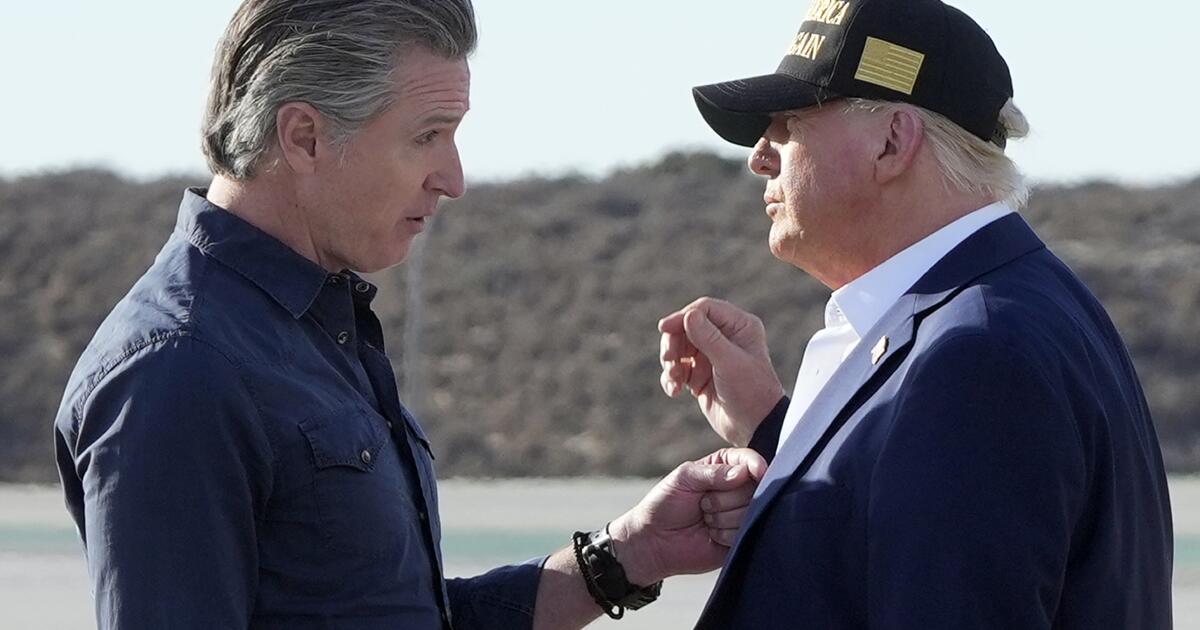
President Trump claims Gov. Gavin Newsom is unfit to be president because he has a “learning disability.” It’s a classic case of the pot calling the kettle black.

The centuries-old pot-kettle idiom points out hypocrisy — as when one person accuses another of a flaw that afflicts himself.

California’s governor has battled dyslexia all his life — very successfully, by any measure. Dyslexia is a learning disability that makes reading and writing difficult. But it doesn’t mean a stricken person is unable to learn. He just needs to learn differently, as Newsom has done since he was a teen.

Trump apparently isn’t dyslexic. But he clearly has some learning disabilities — including stubbornness, narrow-mindedness and intolerance.

The president still hasn’t learned, for example, that he lost the 2020 election. He persists in the belief — or maybe it’s merely another boldface lie — that the election was stolen in a Joe Biden conspiracy. That’s a bizarre fantasy.

He also didn’t learn from past administrations that a commander in chief should not wage war against Iran without a concrete plan to keep open the Strait of Hormuz so Middle Eastern oil can keep flowing to the world.

And he never has learned what most of us were taught by our parents: that you don’t berate your friends if you expect to keep them friendly — lashing out, for instance, at allies before and after their balking at sending warships to help protect the vital strait.

Moreover, he didn’t learn that the nation’s founders embedded a checks-and-balances governing system in the Constitution and that Congress has a role in imposing tariffs.

When the normally Trump-friendly Supreme Court ruled against his unilateral tariff agenda, the spoiled president did what he usually does: attack, insulting the justices who struck down his edicts.

“Fools,” “lapdogs” and a “disgrace to our nation,” he whined. “It’s an embarrassment to their families.”

Trump still hasn’t learned to shut up and try to be civilized.

Not even after shocking everyone by saying of the late Republican Sen. John McCain, a Navy Pilot who spent more than five years as a tortured POW in the Hanoi Hilton: “He’s a war hero because he was captured. I like people that weren’t captured.”

Any respect I might have had for the guy vanished in 2015 when the then-candidate for president publicly mocked a New York Times reporter’s disability. At a campaign rally, Trump jerked his arms and flailed his hands while making fun of the reporter’s palsy-like ailment.

So it wasn’t a surprise recently when Trump tore into Newsom for his dyslexia four times in one week.

Yes, Newsom has his eye on the 2028 presidential election and has been scoring points nationally with Democratic activists by using Trump as a punching bag. But Trump keeps offering himself up as an irresistible target.

Regardless, there’s no excuse — even in hard knocks politics — for attacking someone because of his disability.

“Gavin Newscum” — Trump’s synonym for the governor — ”has admitted he has learning disabilities, dyslexia,” he told reporters in the Oval Office. “Honestly, I’m all for people with learning disabilities but not for my president.”

“Everything about him is dumb,” Trump added.

In a Fox News Radio interview, Trump said that “presidents can’t have a learning disability.” And on Facebook, Trump wrote: “I don’t want the president of the United States to have a cognitive deficiency.”

A quick Google search could have shown Trump that several presidents have had learning disabilities, including dyslexia.

Start with George Washington, who struggled with grammar and spelling. And Thomas Jefferson, author of the Declaration of Independence, who had trouble with reading and spelling.

Other presidents with learning disabilities: Andrew Jackson, Woodrow Wilson, Dwight Eisenhower, John F. Kennedy and Lyndon Johnson. “It’s a poor mind that can think of only one way to spell a word,” Jackson asserted.

Scientist Albert Einstein was dyslexic. So were Apple co-founder Steve Jobs and Thomas Edison.

Dyslexia affects roughly one in five Americans to some degree — more than 40 million people, although relatively few are aware of it, according to researchers.

Newsom has spoken openly for years about his struggles with dyslexia. It’s difficult for him to read, especially prepared speeches. So he reads and re-reads, underlines and highlights and meticulously takes notes. When a speech must be read off a teleprompter, he practices for hours.

In January, the governor began his State of the State address to the Legislature with this ad-lib:

“I’m not shy or, you know, embarrassed about my 960 SAT score. But I am a little bit about my inability to read the written [speech] text. And so it’s always been something that I have to work through and I’m confronting.”

In his recently released autobiography, “Young Man in a Hurry,” Newsom writes: “My high school grades were all over the place and I scored lousy on the SAT, three hours of dyslexic torture.”

Early in his political career as a San Francisco supervisor, he writes, “speaking to a crowd was not unlike the fear I felt in third grade reading to my classmates …. So I learned to memorize my talking points and best lines … and wing it from there.

“This is how I discovered one of the secret powers of dyslexia. I could read a room with the best of them. I’d walk in and immediately size up the faces, mood and manners. … I learned that an audience didn’t mind occasional hiccups of speech as long as you looked them in the eye.”

Newsom was twice elected mayor and twice governor.

None of this means he should necessarily be elected president.

There may be policy and political reasons to consider him unfit — but not because of any learning disability.

What else you should be reading

The must-read: Newsom leads Harris for president among California Democrats, poll finds
The TK: Democrats excluded from USC gubernatorial debate urge rivals to boycott in solidarity
The L.A. Times Special: Rep. Eric Swalwell’s private AI company raises money, questions

Until next week,
George Skelton


Was this newsletter forwarded to you? Sign up here to get it in your inbox.
Source link

‘My silence ends here’: The heartbreaking burden of Dolores Huerta

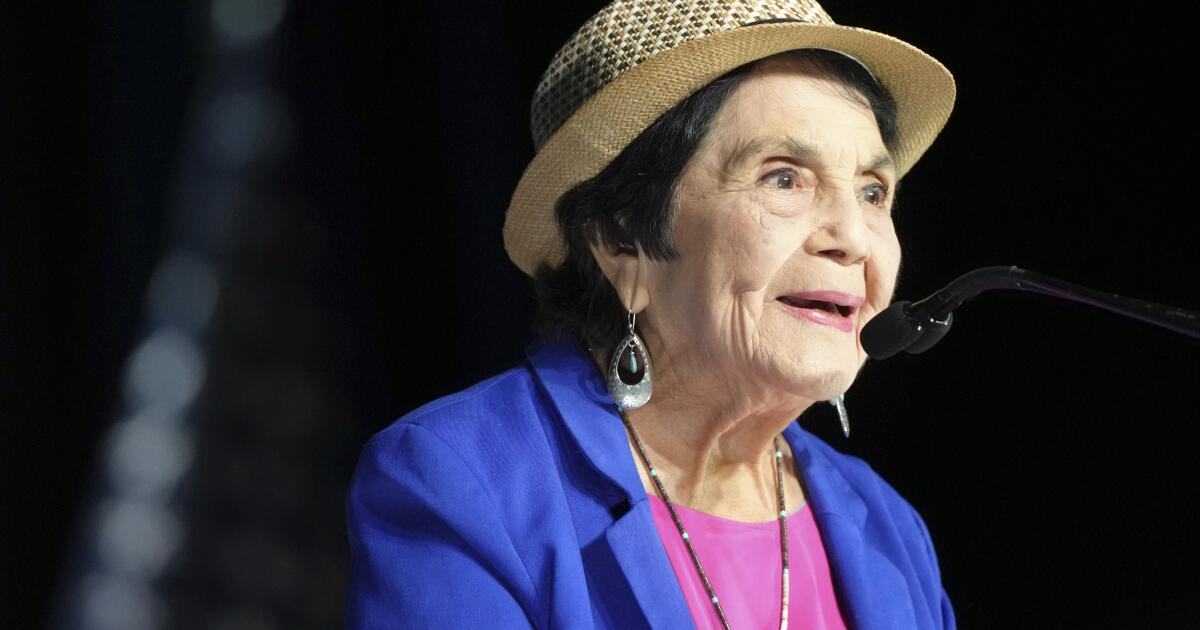
At 95, labor icon Dolores Huerta made a shocking and heartbreaking revelation Wednesday, in the wake of a New York Times investigation into sexual abuse allegations against her fellow icon, Cesar Chavez.

She was raped by Chavez, she said. Twice — both times resulting in pregnancies.

“I have never identified myself as a victim, but I now understand that I am a survivor — of violence, of sexual abuse, of domineering men who saw me, and other women, as property, or things to control,” Huerta wrote in a statement Wednesday. “I have kept this secret long enough. My silence ends here.”

Like so many women who have carried the burden of their own attacks behind an iron curtain of guilt and shame, Huerta now finds herself in the difficult, painful position of having not only to relive this trauma as it becomes public, but explain it to the rest of us.

Like the brave women of the Epstein files; like our First Partner Jennifer Siebel Newsom and the courageous women who spoke out against Harvey Weinstein; like Cassie Ventura; like E. Jean Carroll; like Christine Blasey Ford, Huerta joins the ranks of women forced to justify their response to abuse by powerful men.

Huerta shouldn’t have to engage in this rite of self-flagellation, of course, but she and Chavez are linked by their legacies as two of the greatest civil rights fighters in our history. Now, this hidden truth rewrites not just his story, not just hers — but the entire legend of a workers’ movement that grew from the grape fields of California into a defining story of Golden State fortitude and hope.

If Chavez was a predator, where do we even go from here? What do we believe in when even our heroes are ghosts, as Pink Floyd long ago warned?

“It’s just a very heavy day,” said Huerta’s spokesperson, Erik Olvera. “It is incredibly overwhelming for her.”

And for all of us, really.

Reports of abuse

The New York Times investigation detailed the molestation and abuse by Chavez of two women who were teens at the time the events took place. Huerta, the sharpest 95-year-old I’ve even seen, also told the reporters that Chavez had forced sex on her when she was in her 30s, once by manipulation and once by force.

“The first time I was manipulated and pressured into having sex with him, and I didn’t feel I could say no because he was someone that I admired, my boss and the leader of the movement I had already devoted years of my life to,” she wrote in her statement. “The second time I was forced, against my will, and in an environment where I felt trapped.”

Huerta had two daughters from these encounters and gave them to other families to be raised, though she is close to both of them, Olvera, the spokesman, said.

Olvera said that Huerta was unaware of the allegations of the two other women interviewed by the New York Times until the reporters contacted her several weeks ago.

“She literally thought she was the only one,” Olvera said. “The guilt is really heavy for her.”

As the news broke this week, shock — but not disbelief — rippled through the political and union worlds where Chavez remains revered (he died in 1993) and Huerta remains active. Despite her age, she speaks at multiple events each week and is a fixture at the state Capitol advocating for workers’ rights.

While Huerta has never spoken before about Chavez’s attacks on her, his infidelities and autocratic leadership style — and rumors of misconduct — have been documented for years. In her 2014 biography, journalist Miriam Pawel detailed some of these complaints as well as Chavez’s troubled relationship with his wife.

In a statement, the United Farm Workers union called the allegations “profoundly shocking.”

It canceled all events celebrating the upcoming Cesar Chavez Day — a state holiday — and is working on a survivor-centered response with outside experts to help ensure a fair and inclusive pathway for other people to tell their stories.

Sen. Alex Padilla, who has worked for years with Huerta but who was a child when Chavez was organizing, called for “zero tolerance for abuse, exploitation, and the silencing of victims, no matter who is involved.”

“Confronting painful truths and ensuring accountability is essential to honoring the very values the greater farmworker movement stands for — values rooted in dignity and justice for all,” Padilla said.

Changing times

If there is the slightest bit of solace to be found in this tragedy, it is in the response. So far, we have been spared the usual attacks on victims — though almost certainly they are happening outside the public eye.

Though Huerta may carry guilt, as all survivors so unfairly do, coming forward now has quickly and forcefully changed the narrative. I suspect there are few people who would dare call Huerta a liar, or challenge her motives. I suspect without her revelations, the other women coming forward would be treated differently.

I imagine that had she spoken out back then, as a young mother in the 1970s, a Latina woman in the male-dominated culture of the Central Valley, she would likely have found little relief.

What must it have been like for her all these years to know the man we idolized had this monstrous side?

But after 60 years of hard work, Huerta is now powerful in her own right. And after 60 years of silence, Huerta wanted to use that power to support the other women speaking out. Olvera said Huerta came to that decision reading the New York Times piece, and for the first time understanding that these other survivors were children when their abuse happened.

“When she learned that, that’s when she was like, I need to come out and tell my story,” he said. “She didn’t want them to stand alone.”

In the end, every survivor stands alone because what needs to heal is a soul shattered by the trivial evil of carnal greed, a pain so personal and unique even another survivor can’t fully understand it. It is daring and noble in the crucible of that personal destruction, which lasts years if not decades, to demand accountability. Not all of our heroes are ghosts.

“Your courage and your voices matter,” Siebel Newsom said. “They open the door for so many others to follow suit and tell their stories so that one day soon, we will break this horrific cycle of repetitive abuse by powerful men.”

These women have now made it clear: Chavez was a predator — a powerful man who used his authority to manipulate and force women and girls into sexual encounters.

In the end, all the good Chavez did, the strength and dignity he brought not just to farmworkers but to immigrants across the country, will forever be bound up with this ugly truth — though the movement is far more than one man.

Chavez earned this ending. Hopefully, for Huerta and the other survivors, speaking out is the beginning of healing.

You’re reading the L.A. Times Politics newsletter

George Skelton and Michael Wilner cover the insights, legislation, players and politics you need to know. In your inbox Monday and Thursday mornings.

What else you should be reading

The must-read: Cesar Chavez, a Civil Rights Icon, Is Accused of Abusing Girls for Years
The deep dive:Profoundly shocking’ allegations against Cesar Chavez spark soul-searching in movement
The L.A. Times Special: Democrats face the possibility of a historic upset in California governor’s race, poll finds

Stay Golden,
Anita Chabria

Was this newsletter forwarded to you? Sign up here to get it in your inbox.
Source link

Should child rapists be released just because they’re old? Maybe

Murder is considered the worst crime out there, but for my money, it’s child rapists who are the worst of the worst — especially the serial ones who destroy one life after another.

That’s wholly subjective on my part, but I doubt I’m alone. Which is why I was far from surprised at the outrage that accompanied two recent, successful parole hearings for convicted serial child predators in Sacramento.

Gregory Lee Vogelsang, 57, and David Funston, 64, both attacked children and were granted parole through California’s elderly parole program — though both remain behind bars for now.

But the fury over the possibility of their freedom has put the state’s controversial elderly parole program under scrutiny — again — and led to a flurry of legislation to add new restrictions. Should sex offenders be excluded? Especially heinous murderers? Everyone under the age of 75?

It’s easy to answer “yes” to all of the above.

“Part of the problem we have is we shouldn’t be making policy decisions based on speculation and on scary rhetoric that’s disconnected from the facts,” Keith Wattley told me. He’s the founder and director of UnCommon Law, a nonprofit that provides legal services and parole advocacy.

“That’s how politicians make people afraid, but it shouldn’t be how we make law,” he said.

And he’s right, as grotesque as these headline-grabbing cases are. In 2024, there were 3,580 elderly parole hearings and 606 people were granted that relief. Most have remained law-abiding. In the 2019-20 year, the most recent recidivism statistics available from CDCR, 221 people were granted elderly parole. Within three years, only four had been convicted of new crimes, and only one of those was a felony for a crime against a person. That tracks with lots of data that shows men generally age out of violent crimes.

But Funston and Vogelsang are the worst of what we fear when we talk about parole, and their cases rightfully make us wonder what the heck the parole board is doing. Though Gov. Gavin Newsom sent both of these decisions back for review, it’s easy to imagine the attack ads should he run for president: Under Newsom’s watch, child rapists walked free.

“Elder parole has gone too far,” Thien Ho, the Sacramento district attorney whose office prosecuted both men, told me. “I support the opportunity of people to be rehabilitated. But I think that certain individuals, in my opinion, and in my experience, cannot be rehabilitated.”

Here’s where I’m going to make a lot of folks mad on both sides of this issue. I agree with Ho, but also, I agree with Wattley. I don’t think we can pass laws based on our grimmest view of humanity. Removing hope from the system turns our prisons into dungeons and does not ultimately serve public safety.

But then, neither does releasing child molesters into our communities.

Lost in all the wrath about these two cases is the difficult business of justice that led to the early release law in 2014, and any interest in the hard and nuanced conversation that we need to have around terrible crimes. It’s easy and popular to say no violent criminal should ever be released, but we can’t just lock up everyone with no possibility of ever getting out because the “R” in CDCR stands for “rehabilitation,” and also — we just can’t afford the forever scenario, morally or fiscally.

California tried the throw-away-the-key model in the 1980s and ‘90s and ended up with prisons so overcrowded that the federal courts stepped in. The original elderly parole effort came through a 2014 court decision on overcrowding that gave inmates 60 or older who had served at least 25 years a chance to go before the parole board. A chance — no guaranteed freedom, and usually it takes multiple hearings years apart before the board approves it.

Later, the Legislature expanded elderly parole to inmates 50 or older who had served 20 years, but excluded those sentenced under the “three strikes” law or those who had murdered peace officers.

The reality is California has a lot of old, aging and sick people behind bars — at great expense. As we grapple with the idea of universal healthcare, there’s one place in California where it already exists — our prisons and jails. We currently pay more than $41,000 in healthcare costs per inmate per year, according to the Legislative Analyst’s Office.

I’m not going to tell you it’s the best healthcare, but it’s taxpayer-funded, and includes even long-term dementia care. And yes, we do have incarcerated dementia patients.

“This is about reducing our prison population and our liability to cover housing and healthcare for an aging prison population, and we have to balance that with the safety of the community and the rights of victims,” state Assemblymember Maggy Krell (D-Sacramento) told me. She’s sponsoring a bill that would create an additional layer of safety around sex crimes by referring these possible parolees to the civil system that evaluates sexually violent predators for confinement in mental facilities after their prison terms.

“Under some circumstances, it is worth considering paroling some of these defendants,” she said, with the kind of thoughtful rationality sure to offend many. “But the cases that you’re seeing right now are completely egregious, and those defendants should not be released.”

Vogelsang was convicted of almost 30 counts of kidnapping and sex crimes, against kids as young as 5. He’s served 27 years of a 355-year sentence.

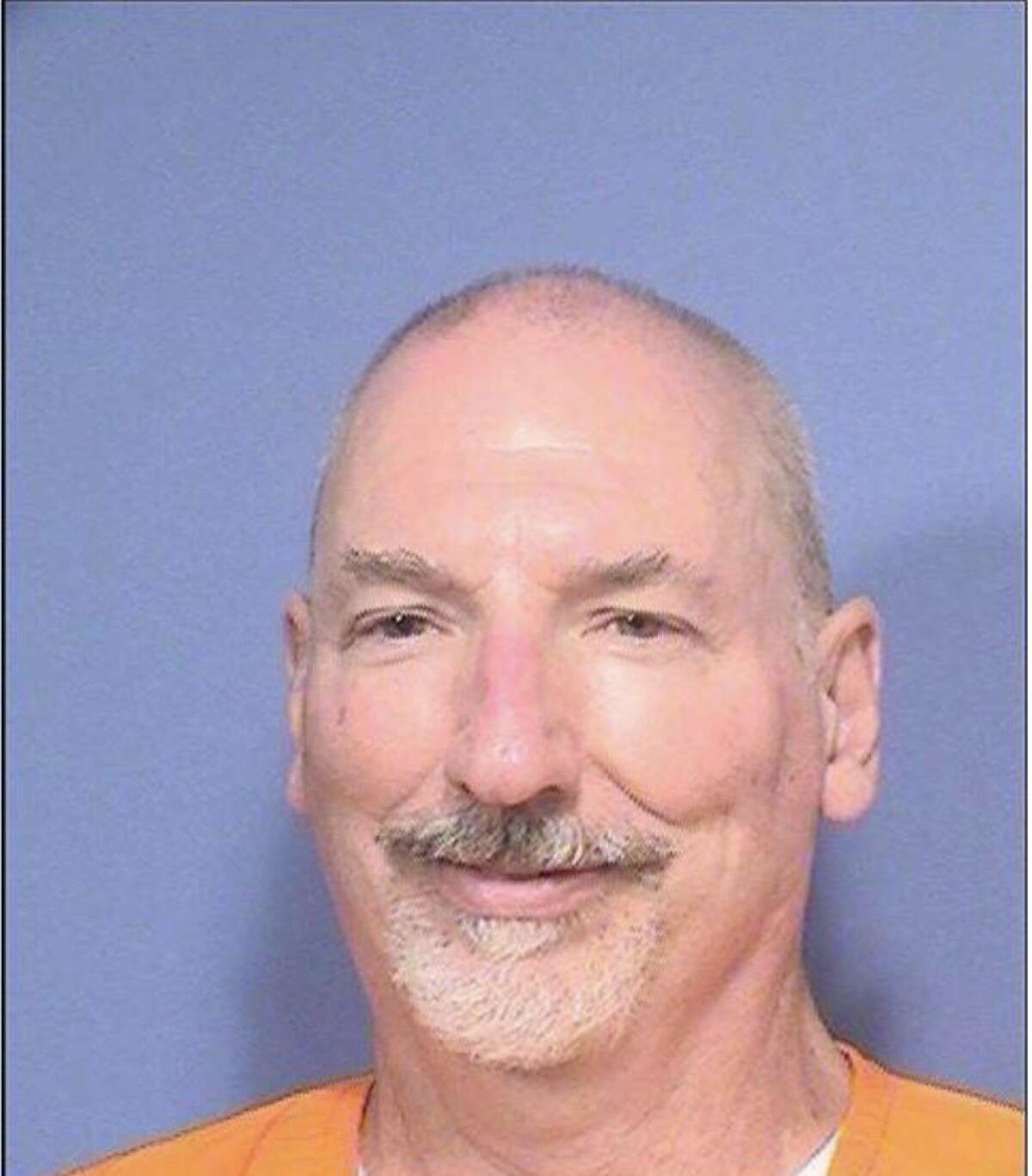
David Allen Funston, a child predator convicted in 1999 of multiple counts of kidnapping and child molestation.

David Allen Funston, a Sacramento County child predator convicted in 1999 of multiple counts of kidnapping and child molestation. Funston was granted parole suitability under California’s Elderly Parole Program after serving more than two decades in prison.

(Sacramento County Sheriff’s Office)

David Allen Funston was convicted in 1999 of 16 counts of kidnapping and child molestation for kids as young as toddlers. He was sentenced to three consecutive 25-to-life prison sentences. Newsom bounced his first successful parole bid back to the parole board for a review, and on Feb. 18, it affirmed its decision.

But Placer County prosecutors quickly charged him with an old crime that had never been filed due to the Sacramento case, and he remains incarcerated awaiting trial on those charges.

Vogelsang’s case particularly raised a red flag for me. He told the parole board he’s been working successfully for about five years to control his thoughts about children.

“I don’t want to become aroused, but I know it’s always going to be there,” he said during the hearing.

Newsom also sent Vogelsang’s case back for review, and he will go before the board again on March 18. Vogelsang’s testimony was concerning enough that if I had a vote in this, I’d probably ask him to come back again in a few years, but we’ll see what the board does.

I’ll admit my decision would be emotional, and these cases do make me wonder. But Wattley is right that condemning elderly parole based on the monstrous deeds of these child predators is shortsighted. There is likely little to no public safety benefit in raising the overall age for elderly parole, and certainly no fiscal benefit.

“When you’re paying for older, sicker people to be incarcerated, and they don’t pose a risk to public safety, what are we actually getting for that? We’re not getting anything that supports survivors. We’re not getting anything that prevents crime. We’re just spending taxpayer dollars on something that doesn’t correlate with the public safety risk,” Wattley pointed out.

As hard as it is to wrap our minds around, it’s best for public safety to allow even the worst of the worst their chance in front of the parole board. It may even make sense for some who have committed truly terrible crimes decades ago to be released, if there is strong evidence of change and a low risk to public safety. That’s the kind of fair and realistic justice that no one on either side of the issue wants to talk about.

I’m not convinced Vogelsang and Funston have met those bars. But that doesn’t mean we should throw out the bars.

You’re reading the L.A. Times Politics newsletter

George Skelton and Michael Wilner cover the insights, legislation, players and politics you need to know. In your inbox Monday and Thursday mornings.

By continuing, you agree to our Terms of Service and our Privacy Policy.

What else you should be reading

The must-read: USC and ABC7 criticized for exclusion of all candidates of color in upcoming gubernatorial debate
Money, it’s a gas: Poison-pill effort to cancel proposed billionaire tax hits voters’ mailboxes
The L.A. Times Special: China-backed Big Pork wants to override 63% of California voters. Even conservatives are mad

Stay Golden,
Anita Chabria


Was this newsletter forwarded to you? Sign up here to get it in your inbox.

Source link

Big Pork attacks California law on caging

Spring has sprung on Leo Staples’ family farm in Oklahoma, and his Berkshire pigs couldn’t be happier about it.

Weighing in at about 550 pounds, Woody, his largest hog (named by a grandson after the “Toy Story” icon) plays “like a puppy” in his free-range paddock, Staples told me, gobbling up the rye, clovers and winter peas that have grown knee-high under the Southern sun.

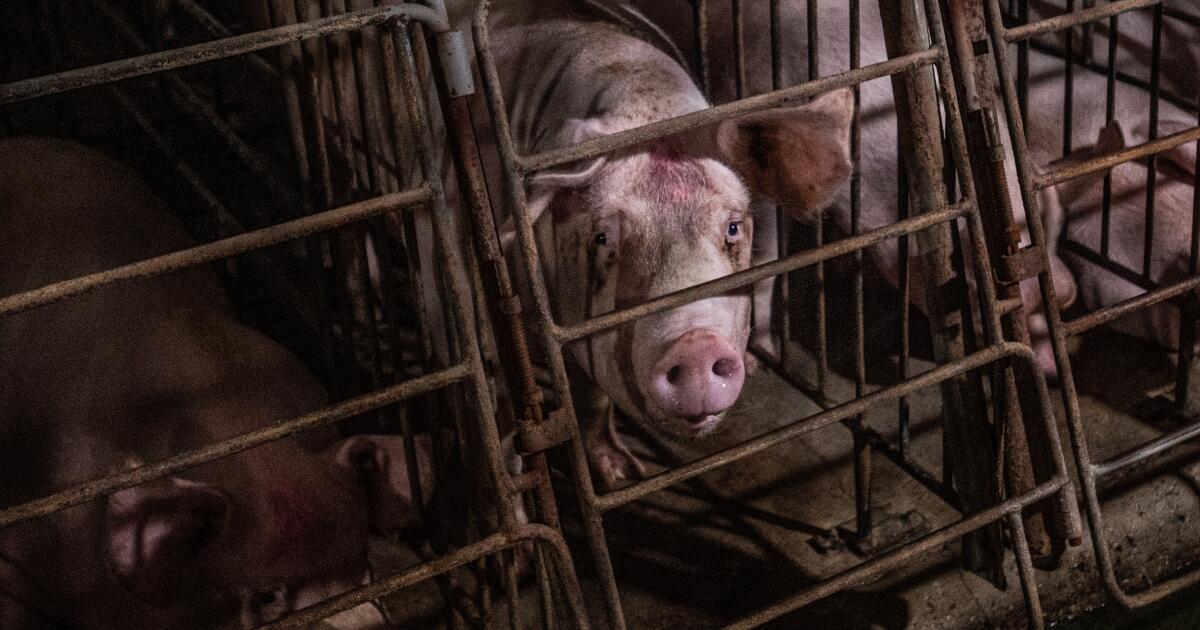
Swine life on Staples’ sustainable family farm is a jarring contrast to the existence of a pig on one of America’s “intensive” corporate-owned mega-farms, where some sows are confined to cages so small they literally can’t turn around or take more than a step or two in any direction.

“It’s not necessary and it hasn’t proven to be good science,” Staples, a self-described conservative Republican, said of Big Ag porcine lockups. “It’s also cruel.”

That confinement is at the heart of a congressional fight over animal welfare standards that Staples — and California — is likely to lose, though we shouldn’t.

At issue is the Save Our Bacon Act, a sneak attack backed by foreign corporations currently hidden deep inside the farm bill. It would severely curb the ability of states to enact limits on animal confinement and maybe accidentally open the door for ending all kinds of state-level food safety laws.

The SOB Act, an apt nickname, would not only cripple small family farmers such as Staples (though its supporters claim it helps family farmers), it would negate the will of California voters, potentially introduce risk into the food chain, and turn greater power of our food supply over to China.

It would also limit consumer choice at a time when more Americans — from fans of far-right Health Secretary Robert F. Kennedy Jr. to far-left granola grandmas — are demanding a say in how their food is produced.

Let’s break that down.

What is the SOB Act?

For the vegetarian hard-liners out there, it is true that Woody himself will someday likely be bacon.

But, increasingly over the past decades, meat-friendly consumers have moved toward wanting animals to “live a really great life and have one bad day,” as Nate Beaulac, another conservative Oklahoma pork farmer, describes it.

In 2018, to further that aim, about 63% of California voters passed Proposition 12, which increased the space that breeding sows were required to have, from something about the size of a small car trunk to the size of a coat closet. We’re not talking rolling acres here — just enough room to turn around. Some of these sows are basically caged for the majority of their breeding life — years — and are about the size of a black bear.

But here was the real bite in Proposition 12: No pork from any state could be sold in California if it didn’t come from a farm that met the new standard.

Overnight, the corporate breeders were locked out of the Golden State market. They sued bigly, and lost bigly in 2023 at the Supreme Court, which upheld California’s right to impose the state standard.

Big Pork tried to revive the issue with the Supreme Court in 2025 and was rebuffed. Surprise, surprise, the drums started pounding for the SOB Act shortly after (though various legislative attempts have floated since Proposition 12 was passed) backed by a Midwestern congresswoman from a Big Pork state.

The SOB Act would negate Proposition 12 (and a similar law in Massachusetts) and forbid states from making laws regarding animal confinement, according to an analysis by the Animal Law & Policy Program at Harvard Law.

That would emphatically overturn the will of the majority of California voters who want those standards.

But hey, Big Pork would make big bank.

“They want to limit American consumers’ ability to fight,” Beaulac told me. “They wanted to limit Americans’ ability to pursue any sort of change. And that is why me, not only as a farmer, but as an American and a capitalist, I’m strongly opposed to the Save Our Bacon Act, and in staunch support of Proposition 12.”

What Prop. 12 did

Beaulac was once a Californian himself, before heading to the Sooner State for college. He describes himself as a “Christian, capitalist, conservative environmentalist,” and a sustainable farmer who depends on consumers’ desire for healthy food to sell his pigs, chickens and cows.

Proposition 12, Beaulac said, “was a huge help to smaller farms, and the only people that it really hurt were the huge multinational conglomerates.”

“I mean very simply, we want the opportunity to compete,” he said.

Staples, Woody’s owner, who is also an expert in project management and environmental compliance from a previous career in the power industry, makes the case that the mega-farms can also come with mega-dangers.

“You have 100,000 pigs within two miles of each other, the chance of issues with a swine flu or natural disaster just increases,” he said. He points out that issues such as disease, groundwater contamination and waste disposal have already become problems for some large farms.

The flaws in the SOB Act don’t stop there.

The Harvard Law analysis points out that the loose language of the bill could have other consequences, maybe even gutting some state safety, labeling and cleanliness standards.

And some Republicans in Congress, including Californian Reps. David Valadao and Young Kim, oppose the measure and sent a letter to the Agriculture Committee late last year urging them to dump the act, pointing out that at least a quarter of Big Pork is owned by Chinese companies and does not represent American interests.

“Foreign-owned corporations — particularly those tied to adversarial nations — already hold a disturbing amount of control over U.S. agricultural assets,” the letter read, citing Chinese-owned Smithfield Foods, the largest pork producer in the United States.

The SOB Act “could further consolidate the influence of such foreign entities,” the letter‘s authors warned.

Armed with those arguments and others, Staples and Beaulac traveled to Washington recently to make their case against the SOB Act with lawmakers.

But, both men told me, they were met with a wall of lobbyists and money.

“It’s very eye-opening in terms of how many lobbyists are there every day,” Beaulac said. “The reality is Big Ag donates big money to the senators, and so when they need their bill to go through or they need a bill shut down, they’re going to have a lot more leeway than the small farmers.”

The lobbyists, Staples said, had the debate wrapped up tight long before the farmers even knocked the dirt off their boots and entered Congress.

“It was very obvious,” he said. “I was not prepared for what Big Ag had done, how they had prepared members of Congress to address the issues we wanted to address.”

Beaulac said he’s discouraged and fears the SOB Act will pass, but also isn’t giving up hope. He sees it as a bipartisan issue, and one he hopes for which people will stand up. This week, a social media post featuring a sad photo of a caged pig went viral, drawing attention across party lines.

“Blue, red. It doesn’t matter. People want healthy food,” Beaulac said. “They want to know how it’s raised. They genuinely care how they’re feeding their family, and it has nothing to do with who they vote for in November.”

What else you should be reading

The must-read: Thune Is in a Vise as Trump and Far Right Demand Fight on Voter Bill
The deep dive: The exodus of California’s tech billionaires from the Golden State to Florida’s Gold Coast
The L.A. Times Special: California could be attacked by drones because of Iran war, memo warns. Officials downplay threat
Stay Golden,
Anita Chabria

P.S. Here’s a post by right-wing commentator Michael Cernovich on the SOB Act, just a taste of how much some of the MAGA folks don’t like this measure.


Was this newsletter forwarded to you? Sign up here to get it in your inbox.
Source link

Promising free college tuition is obvious politics — and a good idea

One unique perk California kids enjoyed for generations was tuition-free college. Now, a candidate for governor promises to bring that back. And bravo for her.

The candidate, former congresswoman Katie Porter of Orange County, even suggests a way to pay for her bold pledge. That’s unusual for a politician. It’s normal to promise the moon without specifying how to get there.

She‘d raise the corporate income tax a notch.

You’re reading the L.A. Times Politics newsletter

George Skelton and Michael Wilner cover the insights, legislation, players and politics you need to know. In your inbox Monday and Thursday mornings.

By continuing, you agree to our Terms of Service and our Privacy Policy.

OK, it’s very unlikely to ever happen.

The powerful business lobby would scream, even though California companies would benefit from a more educated workforce.

And California’s public universities would probably cry about their revenue streams having to rely on unpredictable corporate profits rather than the pocketbooks of students’ parents.

But at least there’s a potential governor who’s advocating tuition-free higher education and proclaiming it to be a priority.

Why is this Democrat, a UC Irvine law professor, pushing the issue? Tuition cost doesn’t show up anywhere on voter lists of important concerns. But California’s high cost of living is a gigantic gripe. And “affordability” these days is one of the most overused words in any politician’s vocabulary.

“When we talk about affordability, there’s lots of talk about the problem, but people want to hear what [candidates] would do about it,” Porter told me over coffee last week. One thing she’d do is eliminate much of the tuition at public universities.

Another reason for making college tuition-free again, she said, is that “it was a promise made to the people” by the California Master Plan for Higher Education.

But that was 66 years and nine governors ago. A lot has changed.

Actually, tuition-free public higher education was a California birthright long before Gov. Pat Brown’s master plan.

Policymakers regarded tuition-free college as a sound economic investment. It was in the state’s self-interest to produce highly educated innovators and skilled professionals to grow the economy. The middle class expanded, with people landing good-paying jobs that resulted in higher tax revenue for state coffers.

That didn’t mean college was free — and it wouldn’t be under Porter’s plan. There’s still housing, meals, books and annoying fees.

But Sacramento switched priorities in the 1970s, spending tax money on other things: enhanced welfare, healthcare and specifically K-12 schooling.

Free tuition existed before the creation of Medi-Cal healthcare, which now eats up 20% of the state general fund. It also was prior to Proposition 13 in 1978 that dramatically cut property tax revenue for K-12 schools. The state felt obliged to make up the difference.

Naysayers contend California can’t possibly afford to educate students today without their paying tuition. Nonsense. The state could happily afford it long before we expanded into the world’s fourth largest economy. It’s about priorities.

And today, free tuition could be the PR tonic California needs to brighten its faded image across America. It could attract middle-class families to California and keep those already here from fleeing.

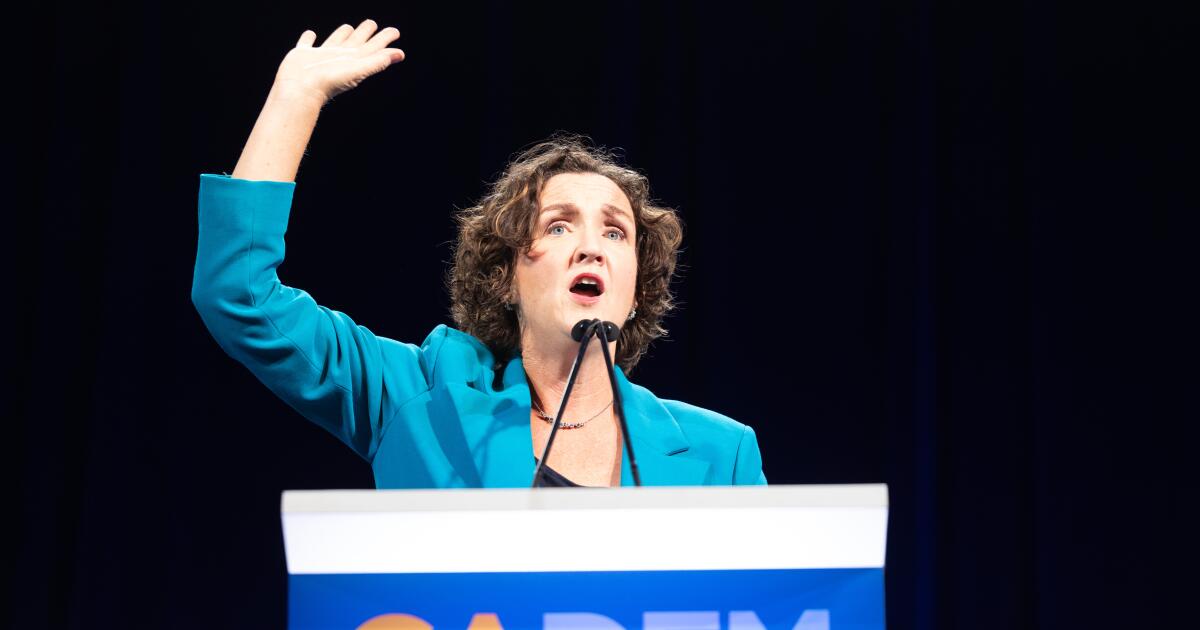
Porter promised a return to yesteryear in a speech that was a far cry from old-time political rhetoric. Addressing more than 2,000 delegates at a recent Democratic state convention in San Francisco, she held up a whiteboard with two words in large letters: “F— Trump.”

And she led the delegates in shouting “F— Trump.”

That was a bit of a turnoff for this old traditionalist, who thinks politics has gotten too coarse and foul-mouthed.

I asked Porter what prompted the profanity and whether she had any regrets.

No, she answered. Candidates were allotted only four minutes to speak and “I was economical with my time.

“I wanted to be very clear in the first 15 seconds that I would fight Trump. I wanted the other three minutes and 45 seconds to be about all other stuff.

“Some people just want to talk about Trump because they don’t want to talk about our own problems.”

Plowing into her speech, she quickly promised to “deliver single-payer healthcare, less-expensive housing, free childcare for all, zero tuition at our UCs and CSUs, and [elimination of] income tax for those earning less than $100,000.

“Those are real affordability solutions.”

Right. But no specifics. How does a state wading in red ink afford all that?

I pressed her when we met later. She didn’t have time for details at the convention, she said. But this is her plan on tuition:

Free tuition only for California residents who are undergrads. And only in their third and fourth years at the University of California and California State University. If they desired free tuition in their first two years, they could attend community college.

Many community colleges already waive course fees for full-time, first-time students. Kids are better educated in their first two years at community college anyway, the UC professor said.

Many liberals complain that free tuition would waste tax money on rich kids who don’t need it.

“I’m a believer in universal programs” that don’t base eligibility on income, Porter said. “Something I learned in Congress. You know what never gets cut? Universal programs such as Social Security and Medicare.”

Anyway, she added, “Kids from really wealthy families go to Harvard or USC or other options.”

Public school tuitions are bargains in California compared to other states and private universities.

At UC, annual tuition is roughly $14,900 and at CSU it’s around $6,500. Without tuition, UC would lose roughly $5.9 billion and CSU $3.7 billion, state budget officials say.

But under Porter’s plan, the universities would lose much less. They’d still collect tuition from freshmen and sophomores and hefty levies from non-Californians. Also student aid could be cut back if kids weren’t saddled with tuition.

Hiking the corporation tax from 8.84% to 9.5% “would generate way more than I need for tuition-free,” Porter said. “I would use any extra money for free childcare.”

Political promises often aren’t worth a nickel. But tenacious and feisty Porter’s free tuition pledge might be worth at least a few bucks. And, maybe some votes.

What else you should be reading

The must-read: Veteran Rep. Darrell Issa decides not to seek reelection in new Democratic-leaning district.
Internal combustion: Anxiety grows among California Democrats as gubernatorial candidates rebuff calls to drop out.
The L.A. Times Special: Yes, Republicans have a chance in California governor’s race. Here’s our expert analysis.

Until next week,
George Skelton


Was this newsletter forwarded to you? Sign up here to get it in your inbox.
Source link