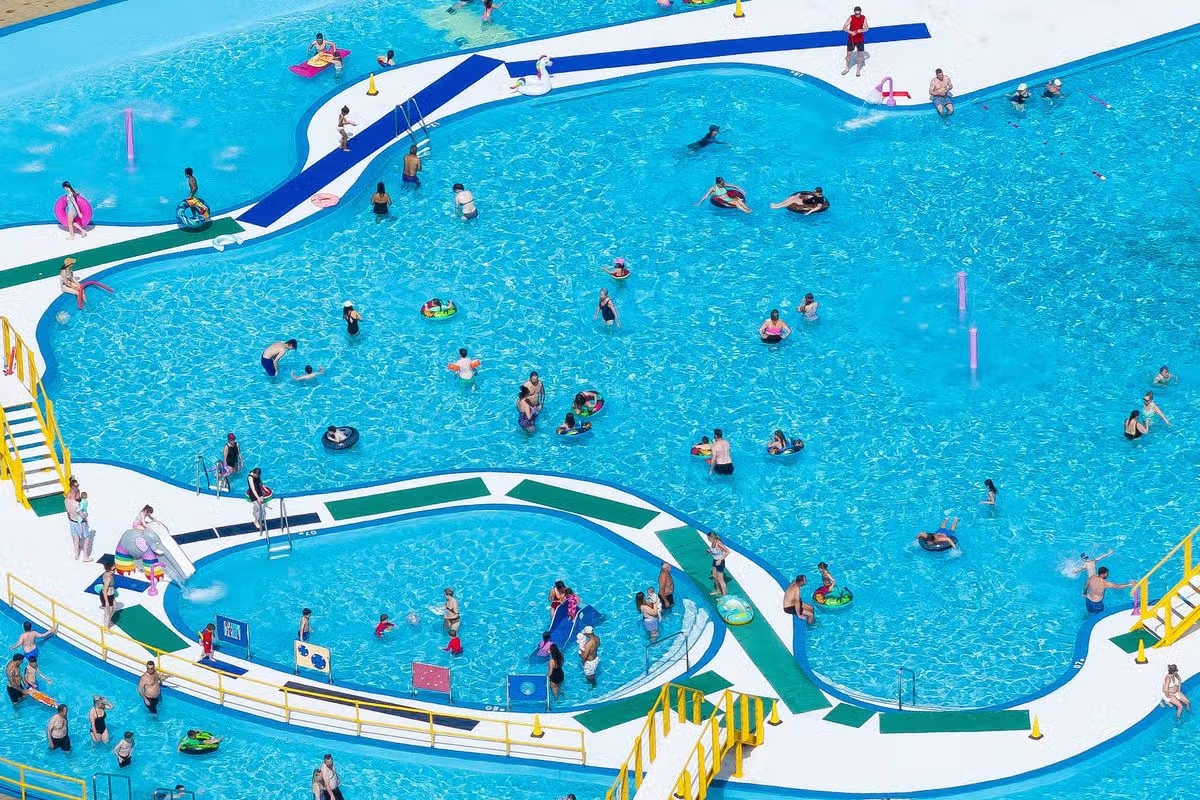
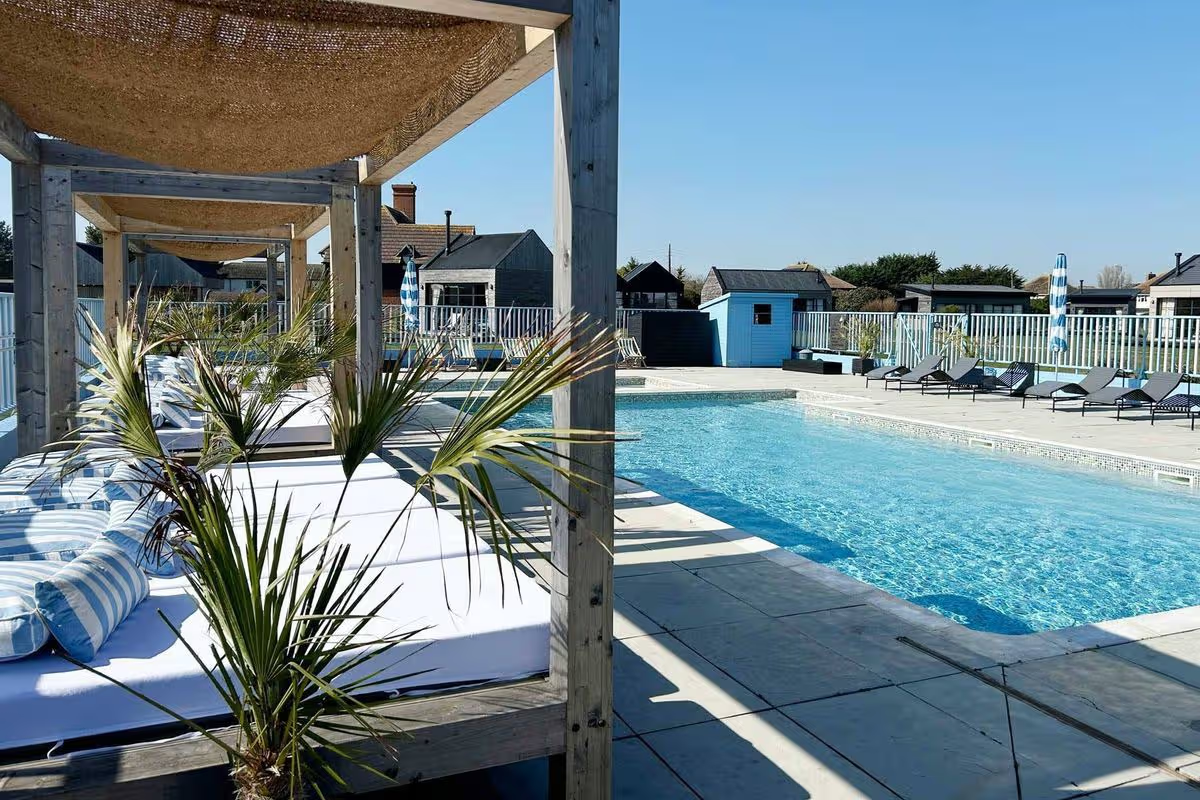
The lido is a beloved outdoor swimming pool for families, and with its Mediterranean-inspired design and 300-metre lazy river, it’s reminiscent of a luxury hotel pool abroad
This vast lido is the perfect place to cool off(Image: Dan Kitwood, Getty Images)
A lido that is often likened to pools found in Greece and across the Mediterranean has opened its doors for the summer season, just in time for the third expected heatwave to hit the UK.
The pool has been loved by local families ever since it first welcomed visitors in 1896, and nowadays draws tourists from far and wide too. It’s not difficult to understand why.
One glance at the lido, with its strikingly blue waters, splashpad and 300 metre-long lazy river, and you’d be forgiven for thinking you were lounging at an overseas hotel pool.
Yet this dazzling blue pool is actually tucked away in Kent, just over an hour from London. The Strand Lido in Gillingham also holds the unique distinction of being the only riverside saltwater pool in the entire UK.
Fed directly from the River Medway, the water is filtered and chlorinated to ensure it’s perfectly safe for swimmers of all ages. The Lido Guide wrote about the Strand: “Nothing about the exterior gives away what lies within. What lies within is a riot of Mediterranean-resort-style colour and fun. Any children in the party will be completely unable to contain their excitement.
“The whole thing is a freeform riot of bright white painted concrete, edged in royal blue, that gives the treated river water that fills the pool a hue that is more reminiscent of Greece than Kent.”
There are six 25-metre long lanes for swimming, alongside a paddling pool for toddlers and enjoyable extras such as water fountains. As the pool is unheated, it operates on a seasonal basis only, and it reopened for 2026 on May 23.
The pool then opens at weekends until the school summer holidays, when it operates daily before closing at some point in September. Tickets must be booked online through the Medway Council website to secure your spot at this much-loved pool.
During opening days, the pool offers two sessions: the first from 10.30am to 1.30pm and the second from 2.30pm to 5.30pm. There’s also a free to use Splash Pad in the park that has the same opening hours as the lido.
Alongside the pool itself, the complex boasts sunbathing and relaxation areas, a café serving food — though you’re more than welcome to bring a picnic and enjoy it in one of the park’s shaded spots — as well as play areas. There are changing rooms, poolside showers and a shop stocking inflatables, though you can also bring your own rubber ring.
The Strand Leisure Park is also home to a miniature railway that operates seasonally, trundling around the park on sunny days, along with plenty of riverside walks to explore.
One glowing review read: “We travelled from Suffolk and booked the afternoon session. Stopped for some lunch on the way. Lovely day out. Pool has a lazy river, kids pool and adult pool, changing rooms, toilets, café. Lots of space to set up camp for the afternoon but not a lot of shade.”
Another visitor commented: “Very good few hours. Looks like we are on holiday. Lazy river all around the outside (take a rubber ring). “
Have a story you want to share? Email us at webtravel@reachplc.com
A new study has named one place as the most expensive seaside destination in the UK, with a day trip costing £38.20 – meaning £100 lasts just over two days
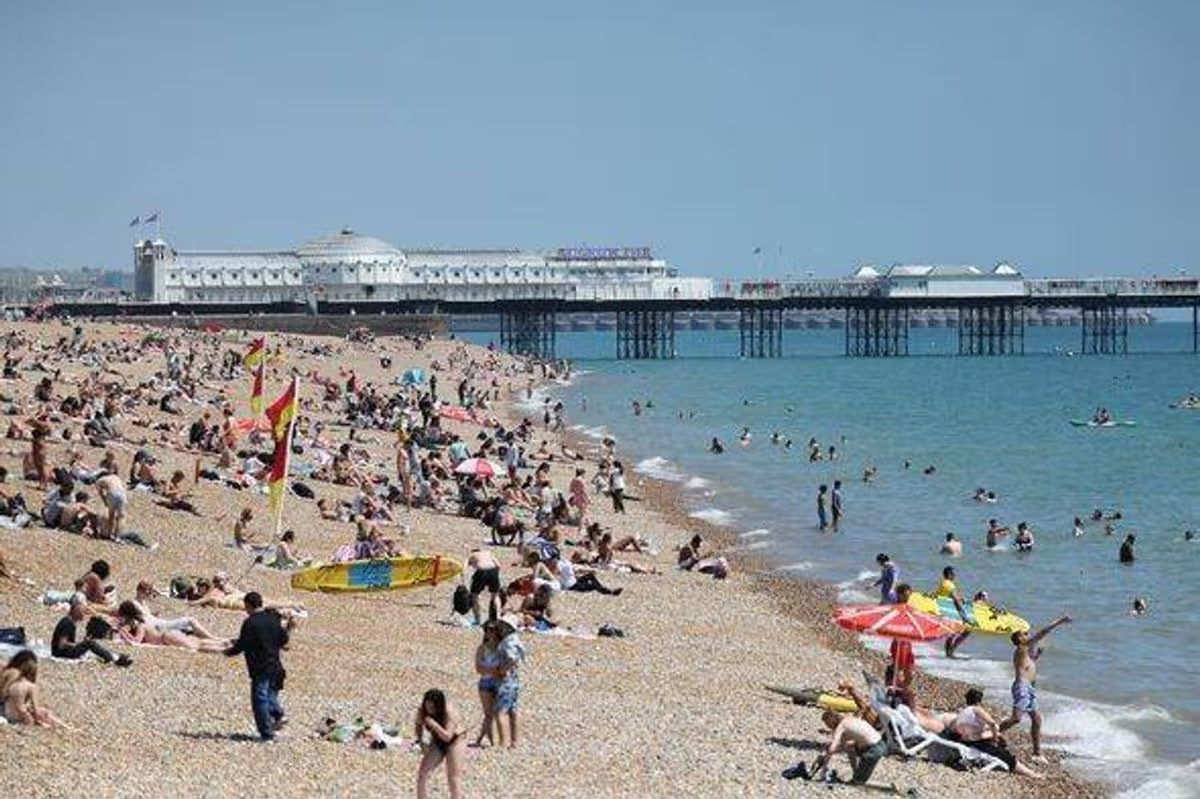
Beachgoers soaking up the sunshine on Brighton beach (Image: Adam Gerrard / Daily Mirror)
From parking fees to the price of fish and chips or an ice cream — a classic day trip or a longer stay at a UK coastal destination could leave a serious dent in your wallet.
New research has looked at some of Britain’s most popular summer hotspots, calculating the cost of deckchair hire, a ’99’ ice cream, and a fish and chips meal — and one city has come out on top as the priciest of the lot.
The study revealed that £100 in this particular seaside spot will ‘only last just over 2 days’, according to figures drawn from the new UK Seaside Affordability Index. The data has laid bare significant differences around the British coastline in terms of how far your hard-earned cash will actually go.
When taking into account everything you’d need for a perfect day at the beach, all the must-have essentials add up to £38.20 per day in this particular city.
Brand new research from NoDepositRewards.org breaks down the cost of a traditional beach day out at locations across the UK, reports the Express.
The study looked at all-day parking charges (based on current local council rates), the average price of a ’99’ ice cream, a large fish and chips meal (using local chippy prices) and full-day deckchair hire.
The research was carried out with the aim of establishing how long £100 would last on a seaside outing.
Brighton was named the most expensive coastal destination in the country, according to the findings. All-day parking came in at £18, while the classic ice cream was priced at £2.70.
By comparison, in the most affordable spot, Swansea, parking for the day costs just £3 and an ice cream is £1.65. A fish and chip supper in Brighton will set you back £11.50, though it’s not the priciest location for the classic British takeaway — in Bamburgh, Northumberland, the same meal will cost you £14.88.
Renting a deckchair in Brighton will generally cost around £6 for the day — meaning the total ‘seaside basket’ for a day at this popular coastal destination comes to a whopping £38.20 per day for all the essential sunny day basics.
Coming in second was the Cornish town of St Ives, labelled the ‘second priciest seaside destination in the UK’. St Ives was ranked as the second most expensive spot, with visitors forking out an average of £25.30 per day.
In St Ives, holidaymakers can expect to pay around £10 for all-day parking, £12.50 for a large fish and chips, and just over £2.50 for an ice cream.
Swansea was named as the most budget-friendly seaside destination, with the same selection of items totalling approximately £16.71 per day.
Mason Jones, data expert at NoDepositRewards.org, said: “Families are budgeting harder than ever for summer 2025.
“Our Seaside Index shows you can triple the number of beach days simply by choosing a different stretch of coast.
“With parking now topping local cost charts, the North and Wales clearly win on value.”
From World Cup watch parties to spa breaks and seaside getaways, guests can enjoy a slap-up breakfast on the house
This article contains affiliate links, we will receive a commission on any sales we generate from it. Learn more
Best Western has more than 200 properties across the UK(Image: Getty)
If this current heatwave has got folks fantasising about a proper summer getaway, they’re certainly not alone. There’s something about not having to make the bed or sort out breakfast that makes a morning on holiday feel infinitely more relaxing.
But with household budgets under pressure, finding a getaway that won’t break the bank is more crucial than ever. Hotel breakfasts alone can easily set a family back £40 or more per day, which is why Best Western’s latest summer offer really catches the eye.
Holidaymakers who book a break with Best Western before the end of July can bag a free breakfast for the duration of their stay. To help you capitalise on this, we’ve explored how a tasty start to the day can be teamed up with their newly launched “GEMS” (Great Experiences, Memorable Stays) packages.
READ MORE:
With the 2026 World Cup currently taking over our screens, attempting to host watch parties in a stuffy living room isn’t exactly appealing. With selected Best Western locations offering dedicated sports packages or lounge bars, escaping for a football-watching break could prove an inspired choice, reports Wales Online.
These convenient bundles combine a hotel room with local experiences, meals or added extras, making the entire trip simpler to arrange. Whether you’re sticking closer to home in Wales or venturing further afield, here are some of the smartest ways to maximise the offer this summer.
Enjoy a free breakfast at over 200 Best Western properties
Of course, the UK is also home to some of the finest golf courses in the world, and many Best Western hotels provide specially designed packages for golfers. Trade the confines of the office for the fairways with a package that includes your stay and course access.
If the summer heat is leaving you feeling more exhausted than energised, a spa package might be exactly what you need. Guests can enjoy a short break with accommodation and spa access, with optional treatments available at a selection of Signature Collection Hotels.
As temperatures rise, many Brits are drawn towards the coast. Best Western boasts a range of seaside hotels positioned along some of the UK’s most breathtaking coastlines, including Brighton, Blackpool, Newquay and Scarborough. Before venturing out to build sandcastles in the sun, a complimentary breakfast awaits.
City breaks are equally popular with families seeking entertainment during the summer holidays. With over 200 Best Western properties scattered across the UK, there are as many as 12 places to stay in London, with many more in sought-after destinations such as York, Manchester, Bristol and Edinburgh, offering numerous heritage and urban escapes.
With a growing number of Brits opting to holiday on home soil this summer, Macdonald Hotels is offering a range of breaks for golf enthusiasts and spa-goers, with discounts available at selected venues. For families seeking great-value getaways with entertainment and activities on their doorstep, Parkdean Resorts boasts more than 65 parks in coastal spots across the UK.
One guest who stayed at the Best Western Aberavon Beach Hotel described it as a “Brilliant hotel”, adding: ” A first class experience, pleasant stay, staff very helpful, rooms good, breakfast just what you want, good place to stay.”
Another traveller who opted for a more tranquil semi-rural stay near the Heritage Coastline chose the Premier Heronston Hotel and Spa, saying: “We were looking for somewhere to stay that was local to a beach and luckily this hotel is near Ogmore by Sea. We had a lovely, spacious room. We have 2 small children, and the hotel went above and beyond to help us with all our needs.”
A third guest who stayed at the upscale Best Western Lamphey Court Hotel and Spa remarked: “Absolutely spot on. The staff on arrival were excellent, kind and patient. Went out of their way to accommodate us. Nothing was hurried. Room was spacious and spotless. I wanted to take the bed home. Food in both restaurants was really good and breakfast although buffet style was all fresh ( I’m a fussy breakfast eater ) A perfect stay – trying to find an excuse to go back.”
Not every visitor was quite so enthusiastic, however, with one reviewer of the Pontypool Metro Hotel commenting: “The views from the hotel are not brilliant, however, everything else was very good. The room was spacious and clean and tidy. The staff were friendly and efficient. The lounge area was small but adequate. Breakfast was well-cooked and tasty. All in all a very satisfactory stay.”
A separate guest who stayed at the very same hotel offered a contrasting perspective, writing: “I came and stayed here when I was setting up a new retail store on the park. Safe car park, friendly staff. The bar is 24/7 which for me was great as I was working overnight shifts. Thank you for an easy stay, my partner and I are already planning to come back.”
A couple converted an £8k van during the pandemic, despite having no experience, and since then have swapped exotic trips abroad for staycations to some very unusual UK locations
The couple have semi-retired and work on a YouTube channel(Image: Read Media Ltd/Andy and Claire Stocks)
A “battered” carpenter’s van that cost £8,000 changed the course of one couple’s lives after they turned it into a home on wheels.
Andy and Claire Stocks, also known as St Christopher of Atlantisto more than 45,000 followers on YouTube, have swapped foreign holidays for staycations in their van, sharing their adventures across the UK’s underrated spots with their fans.
The Barnsley couple fell into van life accidentally, taking on the task of turning a van into a motorhome after their Mercedes broke down during the pandemic and they were unable to get parts. “It started to get this intermittent fault on the dashboard and I didn’t really want to part with the car, but it got worse and worse, and it was coming up more and more,” Andy explained.
Do you have a travel story to share? Email webtravel@reachplc.com
“I was a little bit annoyed at it. So, I decided to buy a van instead. I just kind of threw the teddy out of the pram because the car that I liked, I couldn’t have.”
But that van ended up being life-changing for the couple. They swapped exotic jaunts to hotels and Airbnbs in the Far East and Central America for simpler staycations, and have now semi-retired to spend more time on the road and focus on their YouTube channel.
The couple has also turned their adventures into a book: It Started with a Van, due to be released in paperback on July 16. The story begins with them finding a van and deciding to give vanlife a go, with Andy noting he had no experience and “an unrealistic amount of confidence” when he took on the project.
Andy admitted that the start of the project had its hitches. “The first job that I had to do – there’s a bulkhead that separates the cab from the back to stop things flying into the cabin. So, I had to remove that. I thought that was going to be a really easy job. And I started taking the bolts out, and they were all good apart from one bolt, and that took me two weeks to actually get rid of. So it kind of set the tone for everything else that followed.”
While they learned some skills from YouTube and a book on conversions, the couple went into the project blind, doing jobs after work in the winter whenever they had enough light.
In addition to the initial cost of £8,000 for the van, the couple spent a “few thousand” on the renovations, although they haven’t worked out the true amount. Andy joked: “I might be in trouble with her if I did.”
Their first trip in the van was to Conwy in Wales, and it took place with the build half-done. The couple admitted it was less glamorous than many vanlife influencers would have you believe.
“I was trying to sell the lifestyle to Claire. What actually happened was we sat in a car park with a sandwich. On the bare floor,” laughed Andy.
As they worked on the van the couple had the idea to put updates on their progress on YouTube. They have since built a base of thousands of subscribers. But at first, the reception wasn’t quite what they expected.
Andy said: “When we put it out on YouTube, I think people thought it was a bit of a joke. Some of the initial comments were, ‘Oh, that was really funny. That was, you know, you made me laugh.’ And actually, that wasn’t your intention at all.
“No, I put my best foot forward thinking this would show people how to build a van, but they thought it was more of a funny sort of parody type thing really.”
However, they persevered and have now cut their work days to three a week to allow them to spend more time in the van and creating YouTube content.
In a typical day, the couple travel to a campsite and create a video tour of the facilities. “A lot of people book campsites off the back of us. We turn up, we set the pitch up, then we grab the cameras, and then we will go and tour the campsite and the surrounding area. And then when we’ve done that, we come back to the motor home and we’re working basically,” Andy said.
“The illusion is that we are out and just on campsites and enjoying ourselves., But we’re editing, we’re dealing with the social media side, the comments. And so it’s like our motor home now, it’s a bit like an office on wheels.”
Despite the success of their build, Andy conceded that if they had to do it all again, he’d “probably get somebody else to build it because I really found out what my limits were.”
After enjoying adventures that took them all the way to Italy through Switzerland, Germany, and Belgium, plus lots of staycations, the couple eventually traded in their carpenter’s van, opting to buy a motorhome instead.
As a couple on the road all the time, Andy and Claire noted that living in tight quarters can lead to annoyances. Their original van had no separate seating area, just a bed, and no built-in toilet, so they had to rely on campsite facilities and stay “mega organised” to cope.
The couple also dealt with breakdowns and an incident where they ended up trapped in a full-blown blizzard. Perhaps most memorable was when they ended up in completely the wrong place.
Andy said: “We did have an occasion where we put in the wrong location into the satnav. I went to the completely incorrect country. It said we should have been somewhere in France. We ended up in Belgium.”
Debunking a common myth, Andy and Claire say they like to support the local economies in places they visit, often highlighting local cafes, bars, and shops on their channel.
And their trip highlights? The Isle of Mull was a favourite of Claire’s as it has “the most wonderful sunset we’ve ever seen”. She recommended a campsite called Fidden Farmand said: “And the beaches truly are white beaches up there”, comparing it to the Maldives.
Andy’s favourite was a little more unusual: “This is a really random place that we would never expect it. We went to Hartlepool Marina and we saw dolphins. It was so beautiful, kind of an industrial location actually, but then you look up and you’re watching the dolphins.Goodness!
“The Northeast is a bit like that. You know, you can be on a beach and you look one way and there’s industry, but then you look the other way and you’ve got wildlife. Everywhere has got something going for it.”
So, will Andy and Claire ever hang up their motorhome keys? The couple said that they’d like to stay on the road for as long as possible. “We are quite young to be motorhomers. The demographic of our channel is a lot of people that are older than us. So, we’ve got all that to go and we’ll do it as long as we enjoy it,” Andy added.
And his advice to anyone thinking of taking on this kind of life? “Just do it now while you can. Just do whatever you want to do. Get out and do it. That’s my advice.”
Have a story you want to share? Email us at webtravel@reachplc.com
Just 35 minutes from London’s Victoria station lies a charming neighbourhood bursting with independent shops.
11:46, 03 Jul 2026Updated 11:50, 03 Jul 2026
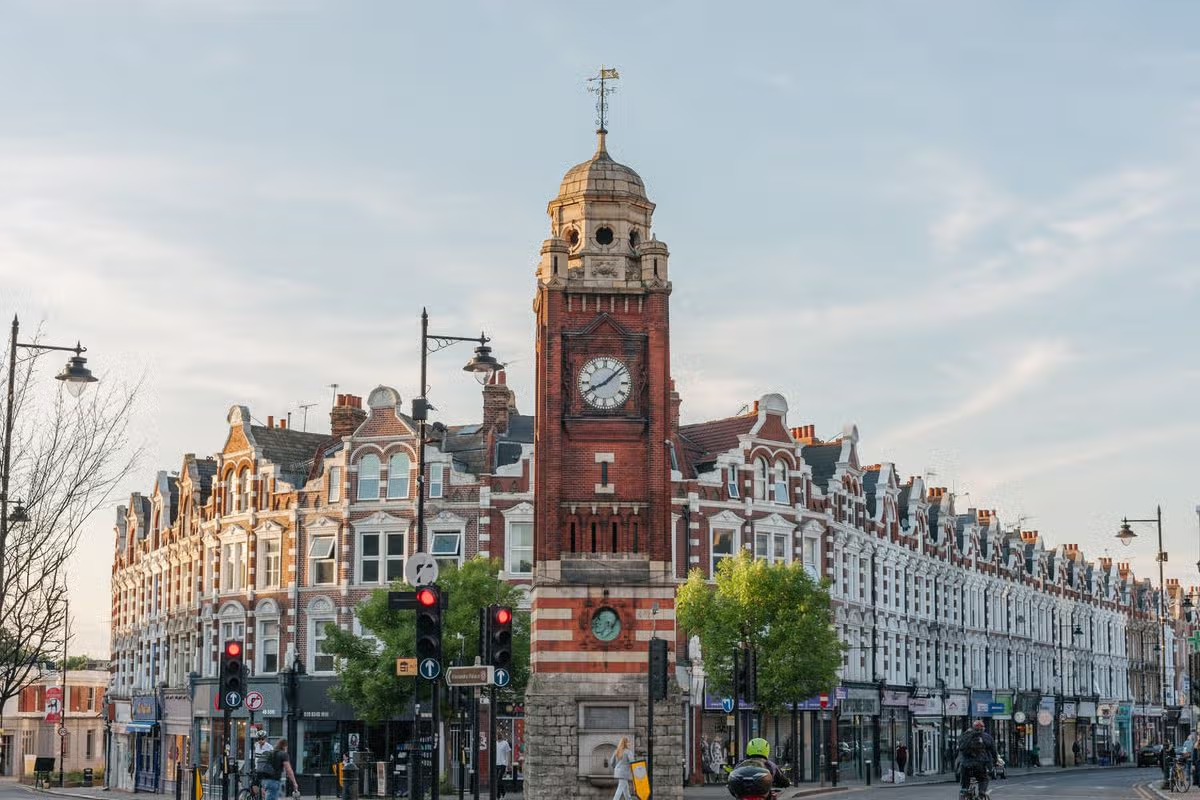
The London suburb that is often dubbed a ‘Victorian town’ (Image: Getty)
When Brits picture stunning and historic spots across the UK, places like the Cotswolds, Edinburgh, Somerset, and York typically spring to mind, renowned for their enduring appeal, charming streets, and centuries-old buildings.
Yet despite boasting a wealth of heritage, London’s neighbourhoods rarely feature in discussions about the nation’s most enchanting locations. Our capital is enormous and brimming with hidden treasures.
As a native South Londoner, I hardly venture up North, but just 35 minutes from Victoria station sits a charming neighbourhood nestled between Finsbury Park and Wood Green that feels like travelling back through the decades, complete with cobbled lanes, vintage and independent retailers, and an impressive 19th-century clock tower.
Here’s why Crouch End deserves a spot on your must-visit list.
What sets Crouch End apart?
My favourite part of exploring this neighbourhood was discovering all the independent retailers, which have remained bustling thanks to the local community. From organic health shops that have traded since 1986 to a florist, garden centre, and pet emporium open seven days a week, there’s a varied selection of outlets on every street.
According to Hornsey Town Hall, “Crouch End is a captivating neighbourhood that exudes a bohemian charm unlike any other in London. With its quirky character, artistic flair, and vibrant community, living in Crouch End offers a unique and enriching experience.”
They added: “Crouch End is often affectionately referred to as ‘a village within the city,’ and for good reason. Despite being only a few miles away from the bustling heart of London, this neighbourhood feels worlds apart.”
I particularly enjoyed browsing fashion boutiques such as Rhoda, which displays original creations from local and international designers and stocks trinkets, mugs, jewellery, ceramics, and more. The shop has been trading since 1998 and was established by three sisters.
A statement on its website read: “Our store is a labour of love and a testament to the power of meaningful connections. Our passion for curating unique fashion and heartfelt gifts led to the establishment of our shop, and we’ve been spreading the joy ever since.”
The neighbourhood is also renowned for its dining and leisure scene. Just a brief stroll through the suburb reveals bakeries, pubs, restaurants, and cafés – you’re truly spoilt for choice in Crouch End.
I’d suggest popping into Sourdough Sophia for a delectable sweet indulgence in a stunningly decorated setting. I sampled a scrumptious Baileys-filled croissant and a decadent hot chocolate.
Crouch End boasts a vibrant creative energy, drawing artists, writers, musicians, and actors for generations. The ArtHouse Crouch End, situated in a former Salvation Army Hall, serves as a local cultural centre, while pubs and venues throughout the area host a dynamic blend of up-and-coming and established live music.
During a visit in early June, I stumbled upon Crouch End’s annual festival, reportedly one of the UK’s largest independent community festivals, taking place at Hornsey Town Hall in the neighbourhood’s centre.
It was established to unite local creatives and celebrate the community and the arts. I have never witnessed a neighbourhood come together so harmoniously and happily to champion and recognise their area.
A brief history of Crouch End
Crouch End began life as a modest rural settlement at the crossroads of ancient pathways, deriving its name from a wooden cross that once stood where the Clock Tower now sits.
It remained predominantly agricultural for centuries until the railway arrived in late 1867, triggering swift expansion. New housing, retail outlets and enterprises transformed the district into a flourishing Victorian suburb and, by the close of the 19th century, Hornsey’s commercial centre.
The iconic Clock Tower, still standing today, was erected in 1895 to commemorate local reformer Henry Reader Williams, symbolising Crouch End’s evolution. More than 130 years on, it remains the neighbourhood’s most recognisable landmark and the focal point of the local community.
Why is the area so hidden?
Crouch End no longer has a railway station, with no underground tube or overground trains serving it. The nearest stations are Finsbury Park, Archway, Hornsey, and Crouch Hill.
According to Ham High, “The line never quite achieved its potential in terms of passenger numbers.” They added: “In the mid-1930s, a plan was devised to incorporate the track and stations into London Underground’s Northern Line.
“Work on electrification was started but then halted early in the Second World War and subsequently abandoned. A peak-hours-only service was maintained using locomotives and rolling stock almost as old as the stations – but that simply staved off the inevitable, and Crouch End and the handful of other stations on the line closed to passenger traffic in July 1954.”
Crouch End may not be on the typical tourist trail, but those who stumble upon it tend to fall head over heels for it. American travel blogger, A Lady in London, paid the area a visit and shared: “Crouch End is one of my favourite under-the-radar London neighbourhoods.
“It has lots of independent shops and restaurants, vibrant streets, and great views of London. East of Highgate and south of the Alexandra Palace, it stays incognito partly because it’s not really on the tube.”
Yet beyond its delightful, characterful appeal, locals cherish the area for its close-knit, welcoming community spirit that looks out for one another — a quality that’s genuinely hard to come by in the capital.
Speaking to long-term resident Judith Abbs, who has called the area home for a number of years, she said: “We thought we knew Crouch End quite well before we moved here five years ago. But one wonderful surprise has been how many friendly people we meet.
“My husband is disabled, and a passing stranger often stops to ask if they can help. It really has a strong community feel.”
From this week, there will be strict rules on the consumption of alcohol in two popular UK seaside towns, and anyone not careful could face a fine of up to a staggering £1,000
Two UK seaside towns will have a ‘booze ban’ in place under a new order(Image: Getty Images)
Two popular UK seaside towns have introduced a ‘booze ban’, with the risk of £1,000 fines for anyone caught flouting the rules.
In a bid to help manage anti-social behaviour in Kent, a new Public Spaces Protection Order (PSPO) has been approved for three years. Under this order, which will be in force from Wednesday, 1 July, there will be a year-round blanket ban on the consumption of alcohol in Margate and Ramsgate high streets.
Anyone caught breaking a PSPO, which is a criminal offence, could be fined up to around £100. This can be reduced if it’s paid within 10 to 14 days; however, if anyone avoids paying the fine, they could face prosecution and be fined up to a staggering £1,000.
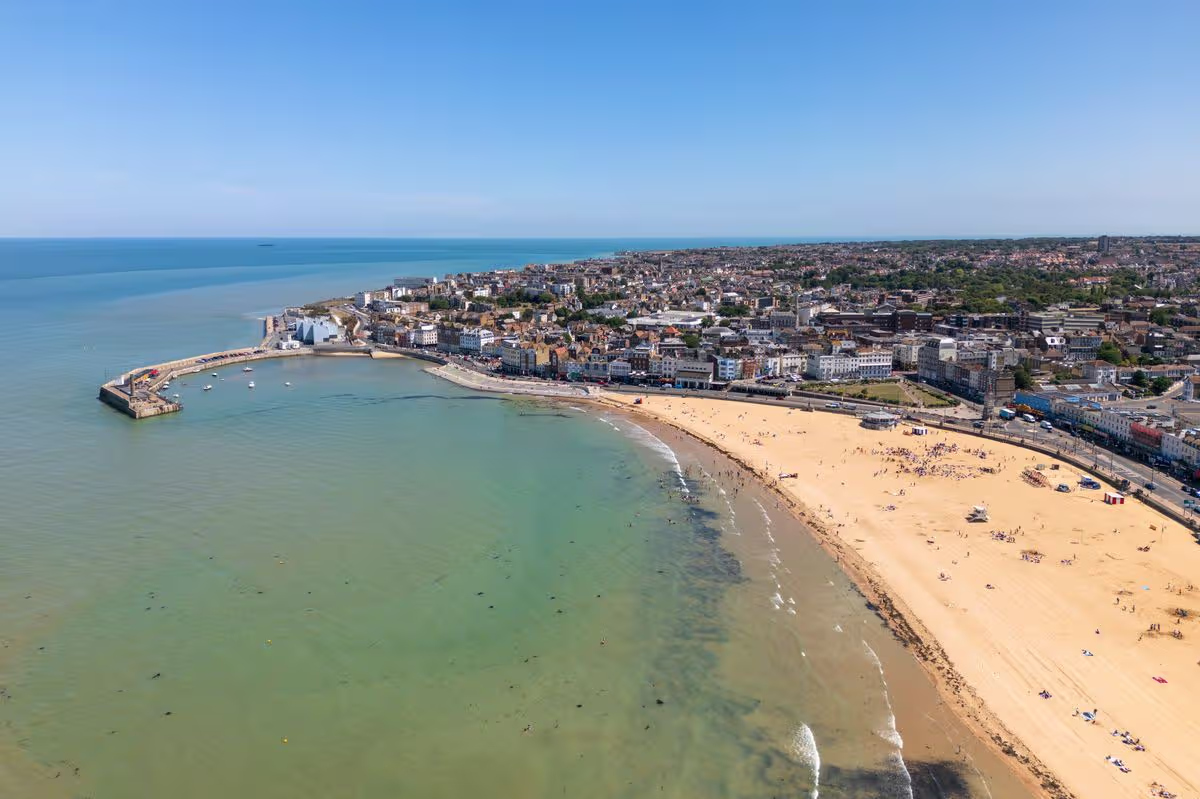
Margate has long been a popular destination in Kent, thanks to its traditional Victorian charm, stretches of golden beach and close link to London, often earning the nickname of ‘Shoreditch-on-Sea’. Ramsgate is just as popular with its sprawling beaches, Royal Harbour and thriving independent food scene.
But it’s not just these seaside towns taking the brunt of the new order.
The PSPO also sets out that in areas across Broadstairs, Cliftonville West, Margate and Ramsgate, there will be bans on anti-social behaviour related to the consumption of alcohol and not handing over alcohol when asked by authorities. It comes after Kent Police said fights had erupted on Broadstairs and Margate beach last week, while people were also assaulted at Margate Railway Station.
Some businesses in Thanet told BBC Radio Kent that they had been forced to close early on occasions due to anti-social behaviour in the area. One even said they were planning to move out of the area as it had become intimidating.
The aim of the order is to “introduce targeted restrictions to curb alcohol-related disorder, public urination, and defecation for a period of three years”, the Thanet District Council website noted. According to the BBC, East Thanet MP Polly Billington said following approval on Thursday: “It’s vital for our economy that people feel confident about keeping their doors open to their shop, and actually, [it’s vital] for the wellbeing of our residents and our visitors that everybody feels safe.”
Meanwhile, before the order was approved, Councillor Heather Keen, Cabinet Member for Neighbourhoods, highlighted: “We are incredibly grateful to everyone who took the time to share their views. Our communities deserve safe, clean, and welcoming public spaces, and this overwhelming support shows how passionate local people are about protecting their environment.
“If Cabinet agrees to implement these proposals, our safety teams and the police will have an effective tool to address persistent issues impacting our towns. We have listened closely to feedback, and while enforcement would always be a last resort, these measures could significantly improve the quality of life across Thanet.”
Do you have a travel story to share? Email webtravel@reachplc.com
The UK seaside town, which is perfect for a staycation this summer, is renowned for its golden sandy beaches, striking sandstone cliffs, and the historic thatched-roof Old Village
The seaside town has been described as ‘like a fairytale’(Image: Getty Images)
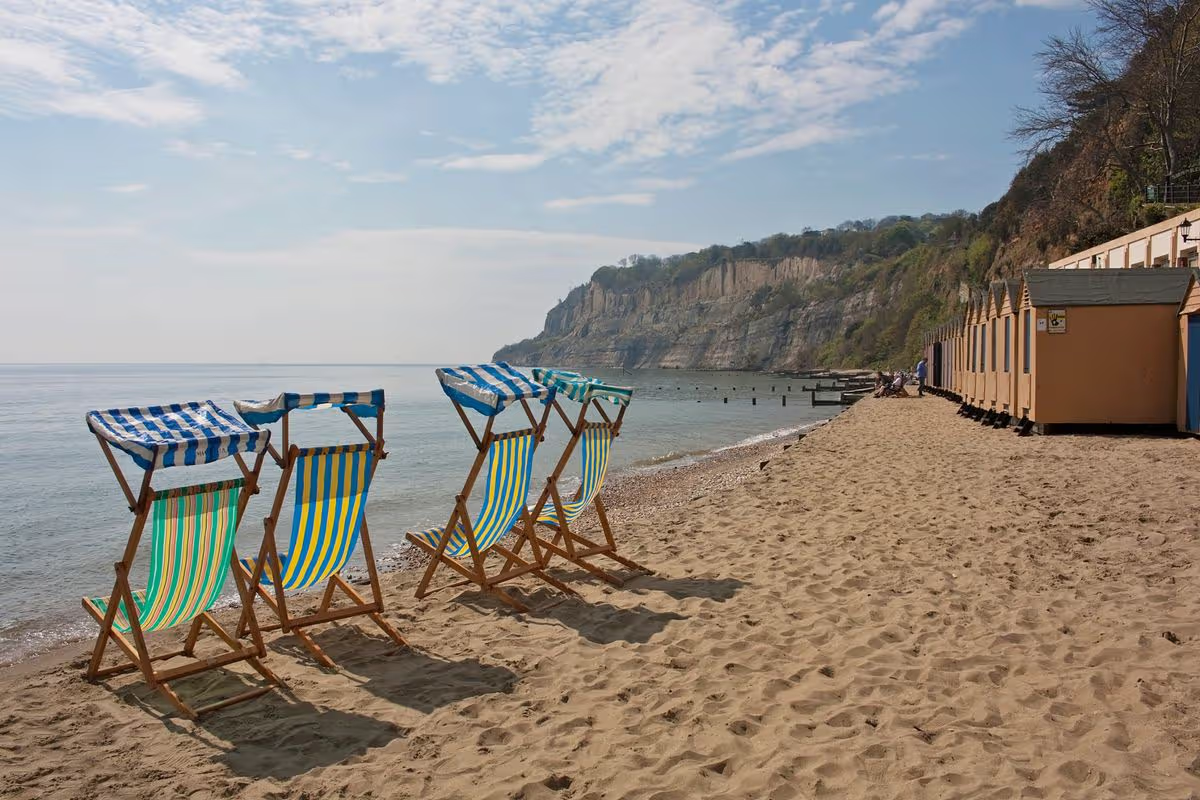
If you’re among them, you’ll want to pay attention, as one seaside gem has been hailed as nothing short of ‘like a fairytale’. Nestled on the southeast coast of the Isle of Wight, Shanklin is a picturesque, traditional seaside town renowned for its golden sandy beaches, striking sandstone cliffs, and the quaint thatched-roof Old Village, making it one of the island’s most beloved holiday hotspots. The town strikes a wonderful balance between coastal fun and rich heritage. Shanklin Beach and The Esplanade is a vast, family-friendly expanse of golden sand.
The Esplanade is brimming with seaside entertainment, classic fish and chip shops, water sports, and several crazy golf courses (including pirate and dinosaur themes).
The Cliff Lift is another must-see attraction. Those staying atop the sandstone cliffs can skip the gruelling descent to the beach by hopping aboard the historic Cliff Lift, which has been ferrying visitors down to the Esplanade since 1957.
The island’s oldest visitor attraction, meanwhile, is Shanklin Chine, which first opened its doors in 1817. This verdant, wooded coastal ravine boasts spectacular waterfalls, winding jungle-like pathways, and a breathtaking illuminated evening light display.
Situated directly above the Chine, the Old Village is renowned for its charming, centuries-old thatched cottages, welcoming tearooms, and independent craft boutiques.
Visitors might also explore Shanklin theatre, a lively year-round entertainment venue hosting over 150 performances annually, encompassing comedy and music through to drama and pantomimes.
Digital travel influencer Reiko, posting as @heyreiko on Instagram, recently used her platform to champion the town to her 39,100 followers.
Content cannot be displayed without consent
She posted footage of the breathtaking town, writing: “Why does no one talk about this fairytale town tucked away on the Isle of Wight?
“Shanklin… or as it feels when you’re here, somewhere between a dream and a postcard you swear you’ve stepped inside.”
She continued: “If you ever needed a sign to disappear for a while and find a little pocket of peace that feels unreal… this is it.”
Followers were loving the post, with it accumulating more than 4,900 likes.
One commenter described it as “so beautiful”, while another declared: “What a cool spot.”
A third who had visited previously added: “Stayed there while at the Isle of Wight festival – such a lovely little place and the beach is lush.”
The UK is home to some of the most beautiful seaside towns, but one stands out for a key reason
The small beach town is perfect to visit in summer(Image: Nicola Roy)
The UK has been so hot this week that I made three trips to the beach in seven days, despite not living particularly close to one. Still, an hour or so’s drive is a small price to pay when there’s a brilliant day or evening by the sea waiting for you.
I’m aware the pleasant weather won’t stick around, which explains my eagerness to spend as much time outdoors as I can. Of my several seaside trips, one location really caught my attention for one particular reason — the food.
Troon, roughly 45 minutes from my home city of Glasgow, proved the ideal spot to spend a warm evening as the heatwave drew to a close.
It’s been over six months since I last went to Troon, which was on a bitterly cold and snowy January day. This week’s outing couldn’t have been more different. After finishing work one evening, we hopped in the car and made our way down to the coastal town overlooking the Firth of Clyde, with one clear goal in mind.
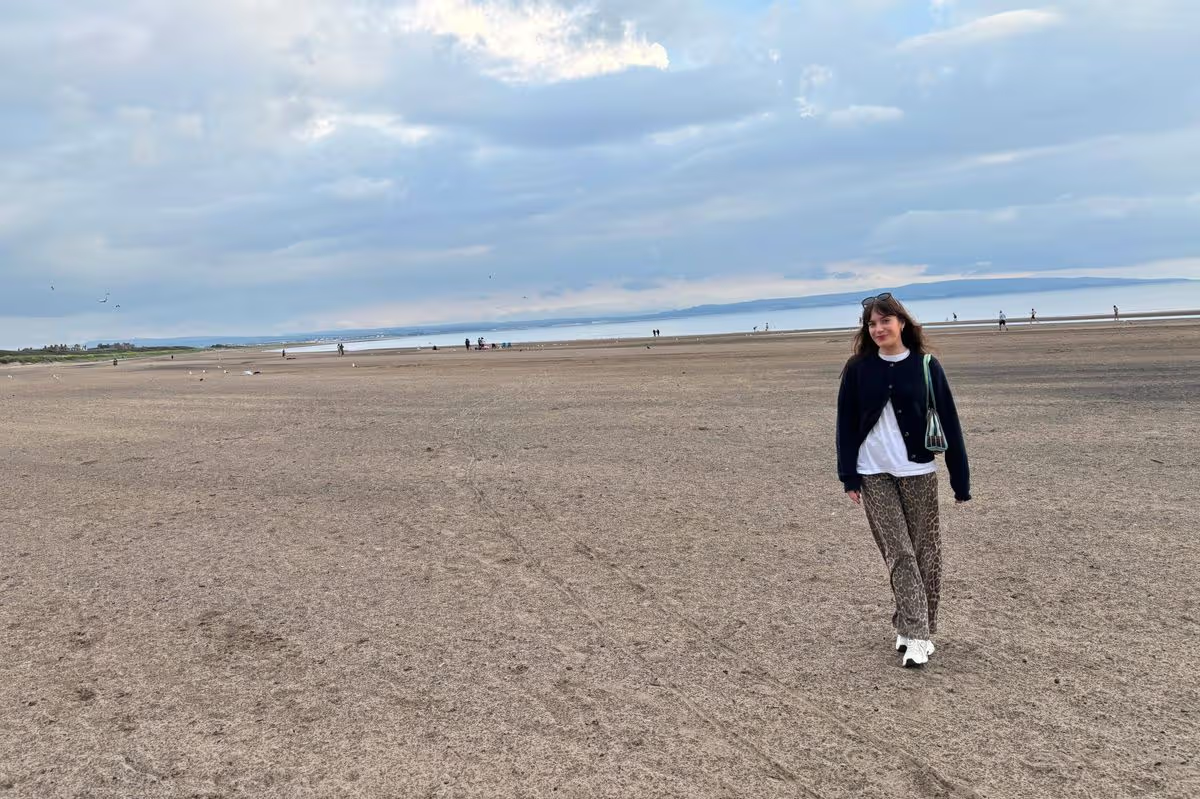
Despite Scotland’s heatwave coming to a sudden halt during the day with a torrential thunderstorm, the sun managed to emerge once more as we strolled along the shoreline. Likely due to the earlier weather, it was pleasantly peaceful, with just a handful of people wandering about on the sand.
While it was lovely to be able to walk on the beach without the bitter wind battering us like last time, the stroll was fairly brief, as it was time to head up to the harbour to get some food. We finally managed to make it to The Wee Hurrie for dinner.
The Scottish fishing fleet had been tied up back in January so it hadn’t been open, which although was our own fault for not checking, still put a major dampener on the day — especially given the icy cold weather.
This award-winning chippy is renowned for its fresh seafood and its prime spot right on the harbour. And it was 100% worth the hype, being one of the best meals I’ve ever had the pleasure of eating.
The scampi was incredibly fresh, coated in a delicate batter that left me feeling neither bloated nor uncomfortable afterwards — a genuine rarity for a chip shop. Choosing just one dish was actually really hard, given how varied and imaginative the menu is.
Where else would you find fritto misto, noodles and lobster all on the same menu?
It arrived alongside a gorgeous tartare sauce and a wedge of lemon, generously seasoned with salt and vinegar. Despite being light and crispy, it was wonderfully filling and satisfying, and the portion sizes were spot on.
At £14.30, it was worth every single penny, and I genuinely can’t stop thinking about it.
It’s a takeaway so you can’t sit in, but loads of people were queuing up to order before taking it home in their cars. We ate standing up outside the shack, which I think says everything about how tasty it was.
The food may have been our main reason for heading to Troon that evening, but with the weather still pleasantly warm after we’d finished eating, a stroll down the high street seemed the perfect way to round off the night.
By this point it was around 7pm, so many of the smaller independent shops and cafes had shut up for the day, but the pubs appeared reasonably busy, with people popping in and out of takeaways, restaurants, shops or simply strolling about as we were.
If I hadn’t been driving, I would have definitely nipped into Lido on the high street for a couple of drinks, but sadly it wasn’t to be on this occasion.
It was a shorter visit than previously, but far more enjoyable thanks to the delicious food and the beautiful evening sunshine. Whether you’re in the area with a few hours to spare, or travelling from further away, Troon is a wonderful place to explore.
This beautiful seaside town has become a popular staycation destination in recent years
Salcombe is the UK’s ‘answer to the French Riviera’(Image: CHUNYIP WONG via Getty Images)
The French Riviera is an enormously sought-after holiday destination, renowned for its breathtaking coastal scenery and magnificent cities. But you don’t necessarily have to travel abroad to find turquoise waters and sandy beaches, as one charming town right here in the UK has been likened to France’s most glamorous stretch of coastline.
Salcombe in Devon has been hailed as a spectacular alternative to heading off to France by one lucky visitor. Taking to Instagram, UK travel content creator Hannah, who shares guides and reviews under @postcardsbyhannah, posted a video of the gorgeous seaside spot.
Questioning why Brits are always quick to moan about living in the UK when “it’s home to places like this,” she drew comparisons between the town and the stunning vistas of the French Riviera region, which takes in Nice, Cannes, Saint-Tropez, Antibes and Monaco.
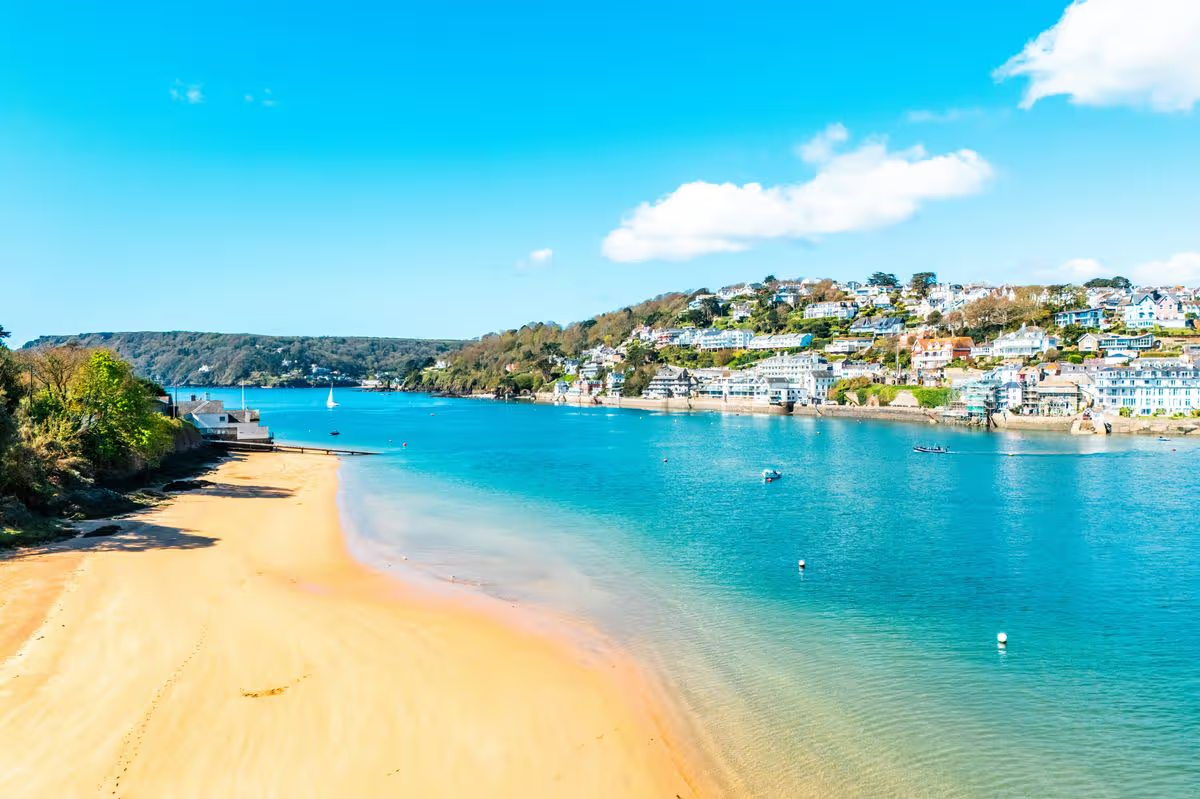
She wrote: “Welcome to South Devon… Salcombe to be exact! Once a quiet fishing village, it’s now one of England’s most sought-after seaside escapes, where pastel-coloured cottages sprawl down the hillside towards bobbing sailboats on turquoise waters.”
Hannah went on to say that Salcombe boasts a relaxed and understated sense of luxury that feels almost effortless, with family-run boutiques, art galleries, ice cream parlours, and waterside pubs dishing up oysters freshly harvested straight from the estuary.
She continued: “Salcombe’s estuary is stunning, surrounded by rolling green hills and sandy coves reached only by foot or boat. Have a wander round town and visit Cranch’s Sweet Shop, one of the most iconic establishments in the town, selling sweets since the 1800s.”
Salcombe boasts numerous breathtaking beaches, including Salcombe North Sands, with its rockpools and panoramic views of the ruins of the nearby Salcombe Castle, and Salcombe South Sands Beach, regarded by many as one of the most pristine beaches in South Devon.
Another well-loved beach in the vicinity is Hope Cove Bay, where watersports enthusiasts can hire kayaks and paddleboards to venture out onto the water.
One visitor to Salcombe North Sands expressed their affection for the beach on TripAdvisor, writing: “Love this little place.
“Tide was in when we arrived but after a stroll around town and lunch at The Winking Prawn, it had started to go out revealing a beautiful sandy bay with low shallow water for paddling in. Dog friendly too!”
Content cannot be displayed without consent
Meanwhile, another visitor to South Sands penned: “A lovely day to spend the day as a couple or with the family. Beautiful beach, especially when the tide goes out. Spectacular scenery from the beach.
“A small kiosk sells sandwiches and salads along with wine and tin beer and of course tea and coffees and soft drinks. You need to bring your own chairs (no deck chairs) A great place to visit!”
Once you’ve soaked up the stunning beaches, why not pay a visit to Overbecks Garden — a Grade II registered garden dating back to the Edwardian Era, brimming with tender and exotic sub-tropical plants that are well worth exploring at a leisurely pace.
One visitor wrote: “Stunning gardens with absolutely fabulous views. Couldn’t believe the size of the tropical plants! Nice route around the garden.”
With stunning beaches, a working harbour and a wealth of activities, it’s not surprise this town is among the best for staycations
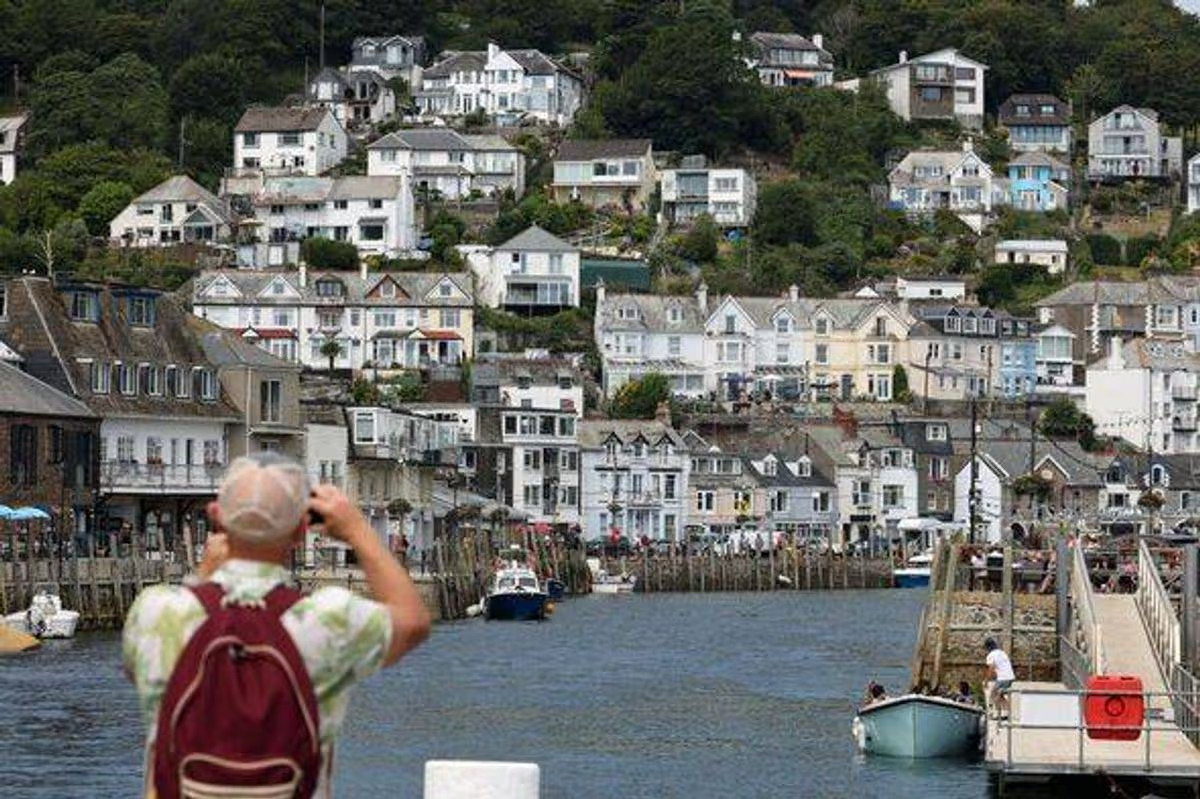
Summer season in the popular and charming Cornish seaside town (Image: Greg Martin / Cornwall Live)
A charming Cornish seaside town that has delighted tourists for generations has managed to hold on to its authentic local character. It is precisely this quality that draws visitors seeking a genuine taste of Cornwall, while also offering plenty to keep the entire family busy.
It has now been recognised as one of the finest seaside destinations in the UK. Looe, nestled in South East Cornwall, is undeniably stunning, boasting sandy beaches, vibrant fishing boats and quaint cottages.
The town’s working harbour has been cherished by generations of hardworking fishing families — and to this day, they continue heading out to sea to supply local restaurants with some of the freshest and most delicious fish you’ll ever taste.
There’s always something happening in and around Looe, both during the day and into the evenings.
With a railway station right in the heart of town, it couldn’t be easier to venture out and explore the surrounding area without needing to get behind the wheel.
Looe is a brilliant base for families — you can visit The Monkey Sanctuary, take a dip or a paddle at East Looe Beach or Talland Bay, or treat the little ones to a visit to the Seaside Sweets shop.
You can embark on a Looe Sea Safari or take to the water with Boatzer Glass Bottom Boat Trips for a truly unique experience.
For thrill-seekers, speedboat trips are available to get the adrenaline pumping.
Local outfit Adventure Fit Southwest offers even more excitement, with canoeing, kayaking and paddleboarding adventures all on the menu. On TripAdvisor, Adventure Fit Southwest outlined the range of other activities on offer: “Other adventure activities, such as bushcraft, mountain biking, hill walking, navigation and outdoor rock climbing.”
The two principal beaches are East Looe Beach, situated in the town itself, and Talland Bay, which can be reached either via the South West Coast Path or by car.
East Looe Beach is home to the iconic Banjo Pier and is widely regarded as a “great family beach”.
One visitor who headed there in May 2025 shared their thoughts on TripAdvisor: “A beautiful stretch of dark golden sand, cleaned daily, ideal for having a picnic or just taking in the sun’s rays. The sands shelve gently into the sea if you fancy a paddle.”
Talland Beach has also received glowing reviews, with one family who made the trip describing it as a “beautiful bay”.
Their TripAdvisor review portrays Talland Beach as a “small bay fronted by a cafe and adjacent car parking”.
They added: “Good walks nearby along the coastal path. Slightly difficult drive due to the very narrow roads, but worth the effort.”
The picturesque woodland surrounding Looe has also proved to be a firm favourite amongst visitors, best experienced along the South West Coast Path — with the charming and “unspoilt” fishing village of Polperro lying just to the west.
The trek to Polperro stretches over five miles, offering breathtaking views throughout — taking walkers directly past the stunning Talland Beach along the way. Getting around by car and finding parking in Looe and Cornwall more broadly can be an absolute headache during the holiday season, but from Looe, there’s the option to hop on the train to certain destinations.
While it’s worth noting that not every corner of Cornwall is accessible by rail, from Looe you can still reach some other fantastic Cornish locations.
In under half an hour you can head inland to the market town of Liskeard – and from there you can catch trains to other areas of Cornwall, although some journeys can take quite a while.
The picturesque Looe Valley Line, which will transport you to Liskeard, also features some other intriguing stops along the way, with many describing this train journey as like “going back in time”.
Unity Holidays has three holiday parks in the UK that have undergone huge transformations – including outdoor lidos, boardwalks and heaps of activities
16:20, 24 Jun 2026Updated 17:05, 24 Jun 2026
This article contains affiliate links, we will receive a commission on any sales we generate from it. Learn more
There are plenty of cheap holiday park deals up for grabs this summer
When it comes to staycations, there’s no shortage of holiday parks to enjoy – but there are some underrated gems that have just had a huge transformation and well worth having on your radar.
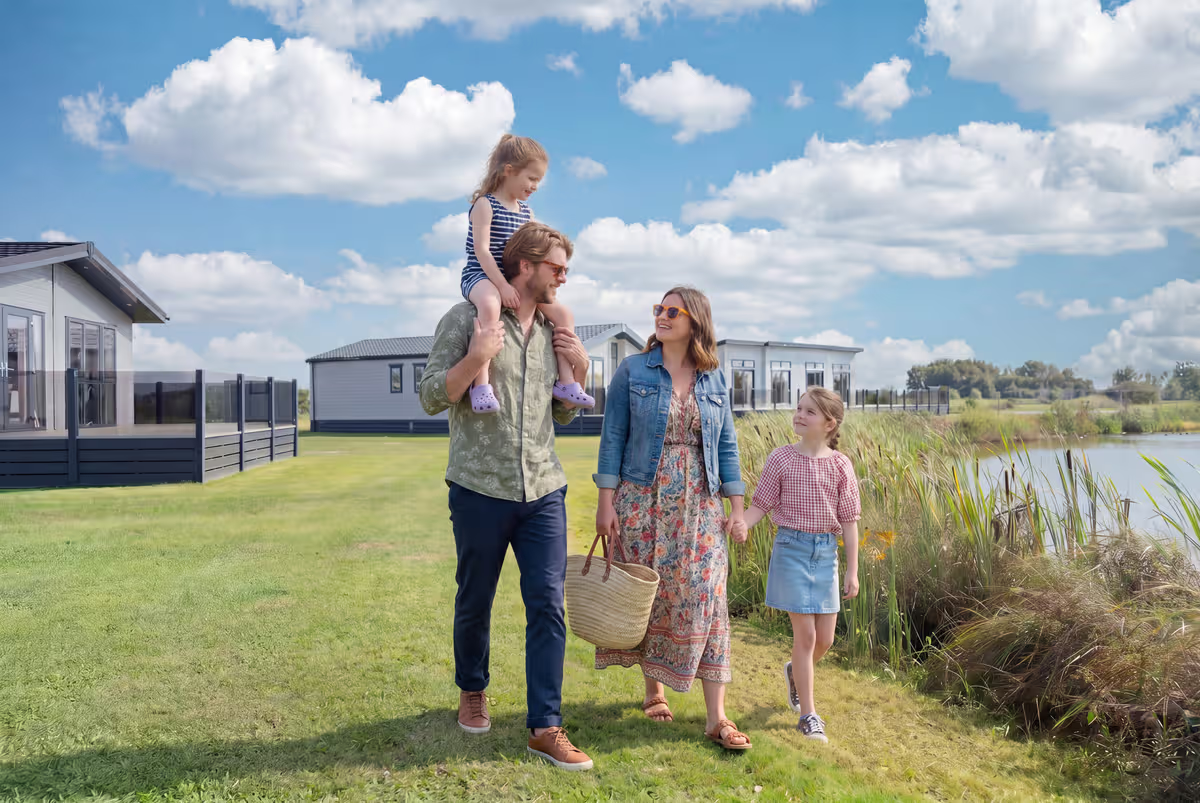
Unity Holidays has three parks – Skirlington Coast in Yorkshire, Unity Beach in Somerset and Seven Lakes in Lincolnshire – and when we took a look we found breaks from £299 for a family of four, including the peak school holiday dates.
The three parks have each undergone a multi-million pound makeover too, with heaps of new restaurants, menus and entertainment, bandstands and boardwalks, as well as trampoline parks, and bookable activities ranging from axe throwing to archery.
The huge makeovers also include outdoor lidos, watersports, and aqua parks which will no doubt be a very welcome offering during those brutal UK heatwaves.
Some of the new highlights include:
Unity Beach: a lido and splash park, a trampoline park, a dog agility park and a boardwalk
Skirlington Coast: an outdoor lido, a splash park, a dog agility park, a new playground, and a boardwalk
Seven Lakes: a refurbed bar and restaurant, as well as outdoor seating with firepits
The holiday parks also boast the likes of soft plays (a lifesaver for any parent), and are dog-friendly, including dog agility parks if you want to let your beloved pet run off some energy before flopping down for a well-deserved meal (and a cheeky drink or two for owners).
In fact, Unity Holidays are currently offering a £100 food and drink voucher with every summer break booked between July 3 and September 28, 2026, to be redeemed at any of the venues on site (excluding the grocery stores). You can book at unityholidays.co.uk and use the code UNITY100 at checkout to claim the voucher.
When we took a look, we found plenty of family breaks under £400 on offer, including the peak travel seasons.
For those who aren’t tied to school holiday dates, there are plenty of cheap breaks to be found. For example, Parkdean Resorts has three-night stays from £129 towards the end of June, while Haven has breaks from £79 in early July (before the school holiday dates). Meanwhile Away Resorts offer four-night stays from £259 outside of the school breaks.
We’ve also got plenty more staycation inspiration whether you’re after a new destination to explore, want to find more last-minute deals, or want to read our reviews of the UK’s best holiday parks and hotels, so you can start planning your next trip!
Have a travel story you want to share? Email webtravel@reachplc.com.
Looking at a blank calendar for the six week summer holiday? With less than a month until the schools break up for the summer, here are some days out that will keep the kids entertained without costing a fortune
This article contains affiliate links, we will receive a commission on any sales we generate from it. Learn more
These deals help families enjoy days out for less(Image: Merlin Entertainments)
Most schools in England and Wales will break up for the six-week summer holidays in less than a month, leaving many parents scrambling to fill the days with things to do.
A theme park is a classic family day out, but it’s not exactly a cheap option, and some deals don’t cover peak summer holiday dates. But there are ways to cut the costs if you’re planning a day out at one of these attractions, and here are some of the parks with discounts you can use in July and August.
Flamingo Land Theme Park & Zoo – 58% off
Wowcher is currently running a deal for day tickets to Flamingo Land in Yorkshire, with 50% off single tickets and 58% off if you buy four. This means a family of four can enjoy access to the theme park, zoo, and a host of other attractions for £97. The offer includes full school holiday availability.
Flamingo Land includes a number of thrilling rollercoasters, Dino-Stone park, and the adorable Muddy Duck Farm where younger kids can visit Peter Rabbit and his friends. Flamingo Land also offers on-site accommodation for longer breaks, including lodges and cottages for those who want to spend multiple days in the park.
Gulliver’s – up to 99% off children’s tickets
Gulliver’s, which has four locations across the UK, is running a unique offer that could snag you up to 99% off children’s day tickets. The catch is that it’s tied to England’s World Cup performance. The discount will be based on the minute of England’s final goal in each group stage match.
So, as an example, if England’s final goal was at 75 minutes, the deal would mean these tickets were discounted by 75%. The deal will be live on June 24 from 10am after England vs Ghana, and June 28 from 10am after their match against Panama and available to snap up for only 24 hours.
However, if you don’t want to base your school holiday plans on the England team’s performance, there’s also a deal running on Wowcher for 50% off Gulliver’s tickets for all four of their locations in Milton Keynes, Rother Valley, Matlock Bath, and Warrington, with good availability across school holiday dates and prices from £11.50.
Alton Towers, Chessington, Thorpe Park – unlimited visits from £16.99 a month
If you live near an attraction owned by Merlin, such as Alton Towers, Chessington, Thorpe Park, or LEGOLAND, then a Merlin annual pass can work out excellent value for money. At the moment, the Merlin annual pass sale includes prices from £139 for the essential pass, while Gold and Platinum passes have £50 off, making them £189 and £249 respectively.
It’s worth noting that the essentials pass does exclude Saturdays in August, but you can still enjoy the parks on other days of the week. If you don’t want to pay in one go, you can also sign up for a monthly pass at Gold or Platinum level for either £16.99 or £20.99.
In addition to its theme parks, Merlin also operates attractions such as the London Eye, Cadbury World, and SEA LIFE centers, so you can ensure you make the most of your pass with a wide range of days out.
Drayton Manor – VAT-free tickets
Drayton Manor is one of the attractions offering VAT savings this summer as part of the government’s scheme to cut the prices of family days out.
If booked in advance, tickets start at £25.80 for peak dates such as the school holidays. Another option is the three-park ticket, although it is only valid until July 31. For £49.50, you get a day at Drayton Manor, one at West Midlands Safari Park, and one at Waterworld in Stoke-on-Trent, a huge indoor waterpark. This works out at just £16.50 per attraction, far below the usual gate price.
Blackpool Pleasure Beach – tickets and stay for £38.03 per person
A deal from Virgin Experiences means a family of four can enjoy a night in a Blackpool hotel, as well as tickets to its iconic Pleasure Beach for just a few pounds more than the usual admission cost.
A Blackpool Pleasure Beach Resort and Family Stay at the Big Blue Hotel costs £169, and if you use discount code DEAL10, this brings it down to £152.10, or £38.04 per person. Day tickets to the park alone usually start at £31.50, so this is a great deal if you want a night away at the seaside.
This deal is not available on bank holiday weekends or Saturdays in July and August, but can be redeemed for other school holiday dates.
Have a story you want to share? Email us at webtravel@reachplc.com
The UK has an incredible range of places to camp, from national parks to unspoilt coastline, so where should you pitch your tent or drive your motorhome this summer? Research has shown the ultimate spot to enjoy the great outdoors
10:04, 19 Jun 2026Updated 10:04, 19 Jun 2026
This article contains affiliate links, we will receive a commission on any sales we generate from it. Learn more
The county has several stunning camping locations(Image: Getty Images/iStockphoto)
A ‘Summer on a Shoestring Index’ has been created to show the best-value money places to camp in the upcoming months, and the winning destination has some of the country’s best beaches as well as inexpensive spots to pitch up.
Devon beat competition from Cornwall, the Scottish Highlands, and many other beautiful UK regions to be named the UK’s best-value destination for a campervan staycation this summer.
The index, put together by Camplify UK, took into account factors including the price per day for a caravan pitch, tourist board ratings, nearby activities, and the proximity of inexpensive places to eat. Devon also topped the list thanks to its number of National Trust Properties, Areas of Outstanding Natural Beauty, and National Parks, all of which offer inexpensive days out for families.
Camping pitches in Devon can be found for as little as £14 a night, and according to Camplify 85% of campsites in the county offer stays for under £20 a night while still maintaining a rating of at least 8.5. For rural escapes, Dartmoor National Park is an incredible choice, offering untamed open moorland and deep river valleys where wild ponies roam.
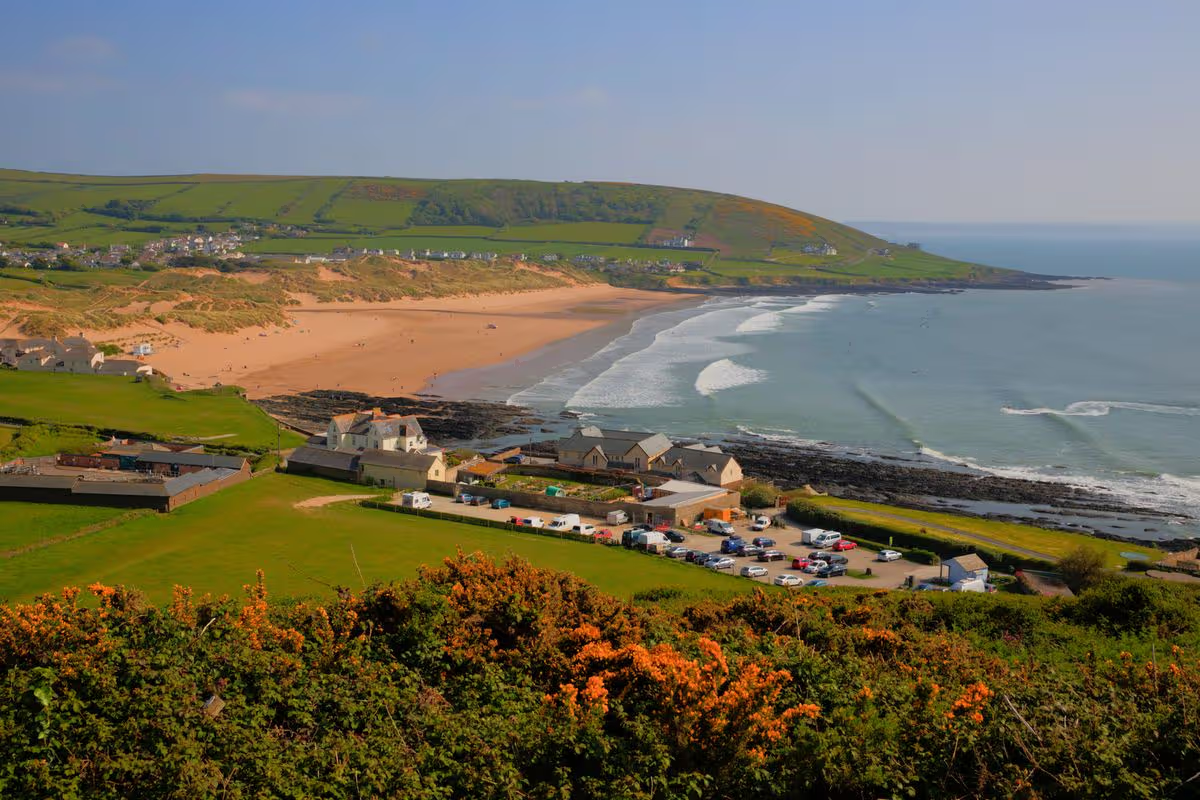
Devon destinations include the beach towns of Woolacombe and Croyde, and National Trust sites such as Baggy Point and Lydford Gorge make for inexpensive days out. There’s also the North Devon National Landscape to explore, an area of outstanding natural beauty that includes rocky coves, waterfalls, and soft sand dunes.
A recent ranking of the Best Beaches in Europe for 2026 included three in Devon. These included Woolacombe Beach at number 8, which beat beaches in the Canaries and Portugal to get a top ten ranking. Trebarwith Beach came in at number 17, while Bigbury Beach in South Devon ranked at 23.
Coming second on Camplify’s list was neighbouring county Cornwall, which also has lots of free and inexpensive days out for families. Like Devon, its also known for its spectacular beaches, with some compared to the Caribbean. Kynance Cove on the Lizard Peninsula, as its turquoise waters and white sands could easily be found on a far-flung island.
For outdoorsy breaks, Cornwall is famous for surfing, especially towns such as Newquay whose beaches are considered some of the best in the UK in which to catch a wave.
Rounding off the top three was the Scottish Highlands, the perfect spot for camping among wild scenery, and waking up to views of mountains and glacial valleys. You’ll find plenty of well-equipped campsites in the region, although unlike England, wild camping is legal in Scotland if you’re in a small tent and ensure you leave no trace when you pack up the next day.
Those camping in motorhomes or bringing caravans still need to ensure they book a pitch at a campsite or other designated area. Forestry and Land Scotland (FLS) offer a stay the night scheme, where self-contained campers can park cheaply overnight in their car parks, with spaces on a first come, first served basis..
Have a story you want to share? Email us at webtravel@reachplc.com
With another heatwave on the way, which could see temperatures hit 30C, Brits can find their nearest outdoor pool or lido using our interactive map
10:01, 19 Jun 2026Updated 10:01, 19 Jun 2026
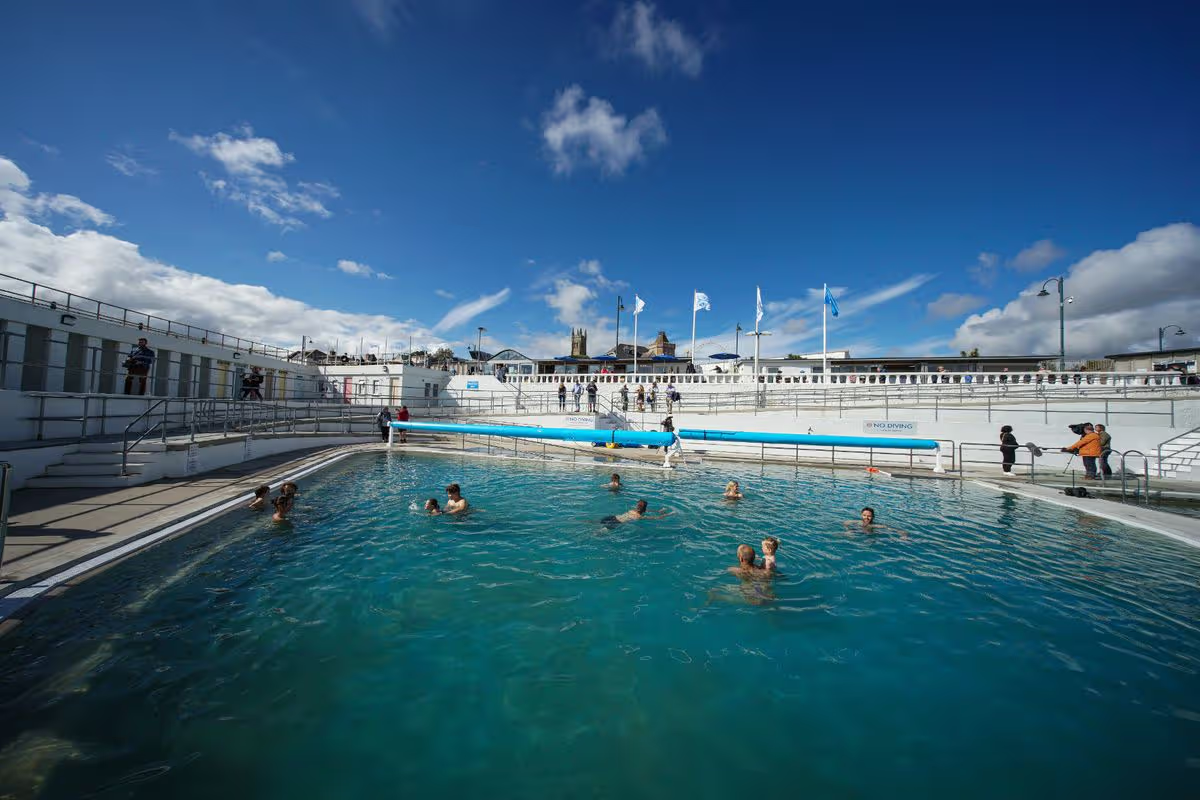
Outdoor swimming venues include the stunning Jubilee Pool in Penzance(Image: Hugh R Hastings/Getty Images)
While the weather is looking pretty damp and miserable across the UK right now, the Met Office has predicted a return to summer very soon.
By the end of this week, it’s forecast that parts of the country will be seeing 30C temperatures again, and the UK is set to be hotter than Ibiza on Father’s Day. So, you might be wondering where you can go to enjoy a cooling dip in a safe environment, and luckily, there are lots of incredible outdoor pools and lidos that’ll give you holiday vibes right on your doorstep.
Our interactive map, based on data from the swimming enthusiasts from allthelidos.co.uk, shows a huge variety of places where you can get some lane swimming in, or just go for a splash around with the kids.
Before you set off, make sure you check the official website of the pool facility you’re visiting. While most outdoor pools are now open for the summer, some have reduced opening hours until the peak times of July and August.
Included on the map are lidos such as the Sea Lanes in Brighton, an outdoor pool opened in 2023 which offers views of the seaside town’s shingle beaches while you swim. The complex also includes a wellness hub and a selection of food and drink outlets.
If you’re in the south east, an option that’ll make you feel like you’re on holiday is the Strand Lido in Gillingham, Kent. It has drawn comparisons with pools in the Mediterranean thanks to its bright white colour scheme and fun waterslides.
Over in Cornwall, the Jubilee Pool in Penzance makes for an unforgettable swim. This classic Art Deco-style lido first opened in 1935, and it’s the UK’s largest seawater pool. Naturally heated by the ocean, it’s usually a couple of degrees warmer than taking a dip on the beach, and there’s also a Geothermal Pool that can reach 28 to 30C.
Inverclyde Leisure Gourock Outdoor Pool has the distinction of being Scotland’s oldest outdoor heated pool, and indie music fans may recognise it from the cover of Blur’s 2023 album The Ballad of Darren. The pool uses heated water from the Firth of Clyde, which is filtered and kept at a temperature of around 29C. The facility also has a kids’ pool and gym.
Many UK lidos have fallen into disrepair in the past few years, only to be brought back to life with investments from local councils that have turned them into major community hubs.
One such success story is Hilsea Lido near Portsmouth, which closed its doors to swimmers in 2022 before getting a £7.75 million renovation. In addition to its pool., the centre built a new sauna for post-swim sessions, new changing rooms and toilets, plus an ice cream parlour and food van. The pool’s operator told the BBC: “We want it to feel like a holiday at home for the local community.”
Have a story you want to share? Email us at webtravel@reachplc.com
The “overlooked” town has been named one of the top places to visit in the UK for 2026, crowning the historic Cotswolds town ahead of overrun tourist hotspots like Bibury and Bourton-on-the-Water
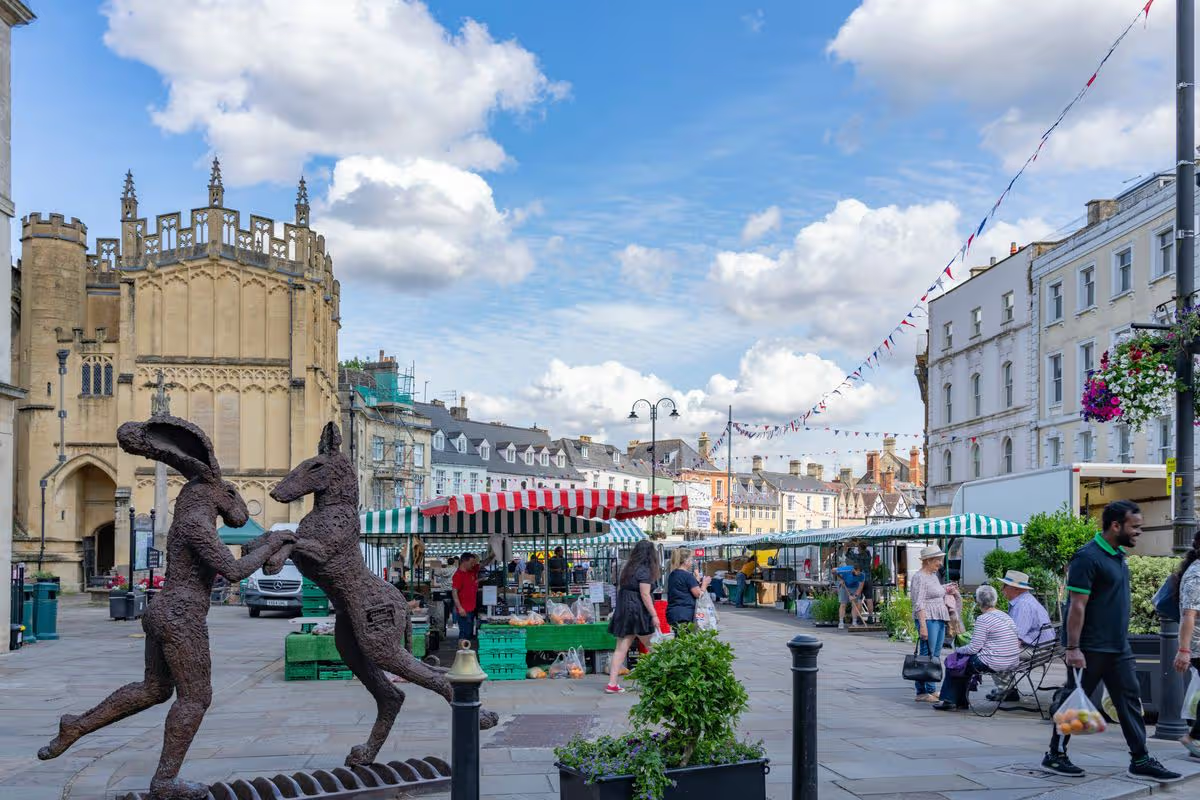
The market town has been named one of the best places to visit in the UK in 2026 (stock image)(Image: Brian Scantlebury via Getty Images)
The best place to visit in the Cotswolds has been revealed – and it’s not the usual suspects like Chipping Campden, Bibury or Bourton-on-the-Water.
There’s an abundance of stunning beauty spots scattered across the UK, with rugged landscapes, peaceful golden beaches, vibrant and quirky towns, craggy rocks and cliffs, vast woodlands, rolling green hills, and plenty more besides.
For a relatively small country, there’s a rich variety of diverse destinations to pick from – whether you fancy exploring the peaceful glacial lakes and fells of the Lake District, or the seemingly endless dramatic coastlines of Scotland, the history and intrigue of sites like the Mourne Wall in Northern Ireland, or the impressive peaks of Eryri/Snowdonia in Wales; there’s no shortage of choices.
This is equally true when it comes to the varied towns scattered throughout the UK, from sleepy fishing villages and bustling market towns, to picturesque places that offer a glimpse into the past, and much more.
If you’re keen to embark on a “staycation” in the UK and feel overwhelmed at the prospect of deciding where to go, you’re in luck.
Time Out has issued a round-up of “the best places to go in the UK in 2026” – and a Gloucestershire town has made the cut. Widely celebrated as the “Capital of the Cotswolds”, the historic market town of Cirencester has claimed fifth place on a national list.
Time Out said: “When it comes to ‘where to travel in the UK’, you might think the Cotswolds has been done to death. Actually, it hasn’t. In fact, only teeny tiny portions of the region tend to get all the love.”
The publication described Cirencester as “often-overlooked” and championed the town – the largest in the region – for being “much better equipped for tourism” than overcrowded destinations such as Bibury.
Cirencester boasts a seamless fusion of Roman heritage with a vibrant independent shopping scene – particularly within the historic Corn Hall and Arcade – alongside stunning green spaces, including Cirencester Park. Home to the 9th Earl and Countess Bathurst, the park is a haven for deer and horses alike.
History enthusiasts will be in their element at the award-winning Corinium Museum, which houses an impressive Roman collection; “one of the largest collections of Romano-British antiquities extensively from Corinium”.
Featuring mosaics, sculptures, coins and much more, the fully accessible venue also includes a gift shop, café, and the Cirencester Visitor Information Centre.
The town is equally well-stocked with stunning historic buildings and characterful pubs that are well worth exploring.
Of summer visits, Time Out noted: “Heading here in summer? Go for a dip in the Cirencester Open Air Swimming Pool, a beautiful old spot for a swim surrounded by old buildings.
“It’s a slice of history all by itself – around since 1869, making it one of the oldest in the country.”
The historic abandoned village is steeped in history and is said to have inspired an iconic novel Jane Eyre
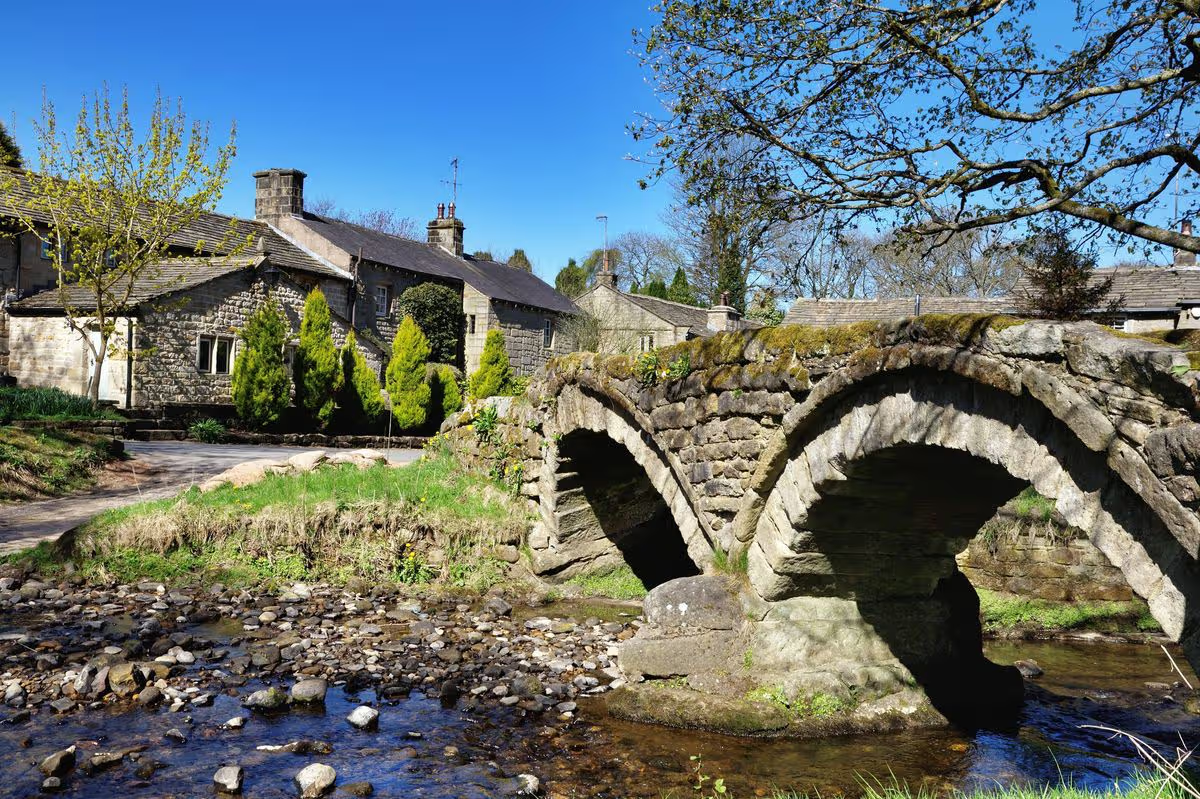
There is a 13th century packhorse bridge(Image: Khrizmo via Getty Images)
Just four miles from Colne sits the historic village of Wycoller, providing a remarkable glimpse into a long-forgotten era, boasting ancient ruins and a compelling literary heritage.
This abandoned village is particularly celebrated for its ties to the legendary Brontë sisters, who made their home in nearby Haworth.
In her seminal novel Jane Eyre, English author Charlotte Brontë created a fictional setting, Ferndean Manor, widely believed to have been inspired by the present-day ruins of Wycoller Hall.
From the 16th through to the 18th century, the hall stood as the village’s centrepiece, dominating the surrounding landscape and almost certainly catching the eye of the author during her travels through the region.
The novelist was known to visit Gawthorpe Hall as a guest of the Kay-Shuttleworth family, and it is widely thought that on these journeys, this striking structure fired her imagination.
The telling clue lies in her depiction within the novel of the approach to the Manor along the old coach road, which bears a striking resemblance to Wycoller Hall. Sadly, today only rubble and remnants remain of what was once a vibrant and picturesque community, reports Lancs Live.
After years of abandonment, local volunteers stepped in to save the village during the 1940s, with Lancashire County Council later taking ownership of the site. Now forming part of Wycoller Country Park, the site is open to all those who wish to explore and wander amongst its historic remains.
Among the heritage highlights, visitors can discover several bridges spanning the peaceful beck that winds through its heart.
Clam Bridge stands proudly amongst these ancient structures, regularly crossed by park visitors, with origins stretching far beyond the 19th century and the era of the Brontës. This bridge is believed to be an ancient monument, over 1,000 years old – and it’s not the only testament to the area’s deeply-rooted history.
Another equally impressive bridge in Wycoller is Sally’s Bridge, which earned its fame by featuring in the film The Railway Children. It has stood the test of time, with origins traced back to the 13th-15th century.
Clapper Bridge likewise comprises substantial gritstone slabs resting on piers, thought to date from as early as the 16th century.
Artefacts unearthed amongst the remnants of this deserted village reveal evidence of human settlement stretching back to the Stone Age.
The site continues to draw visitors today, who come to explore the ruins and uncover the stories of those who once called it home.
Preservation measures are firmly in place to protect its unspoilt charm, keeping modern intrusions well away. This includes a car-free zone, meaning no accessible roads reach the village, which can only be approached on foot, unless you are a resident holding a permit.
One visitor documented their trip on TripAdvisor, writing: “Wycoller is such a cute, picturesque little place. It has a lovely stream for sitting by or paddling in. There’s plenty of shade in summer, from the huge trees.
“There was also a small exhibition, some ruins and well preserved stone bridges. It’s not a long walk but it’s perfect for a picnic and/or for the kids to paddle in the stream.”
Another added: “Beautiful place to go with amazing sights and a lovely shop for snacks and a warm drink. There are also different little trails and bridges to go over and plenty of ducks to feed. I recommend this to anyone who fancies going out for the day to be in touch with nature.”
Sipping coffee in a grand square at one of Europe’s oldest cafe’s, Lucy Williamson discovers a Mediterranean escape that manages to be a city break, beach holiday, and history lesson all at once
09:30, 17 Jun 2026Updated 09:30, 17 Jun 2026
Malta: The Ultimate Lazy Traveler’s Weekend Guide
A spa day in the UK can easily set you back £150 before you’ve even ordered lunch. So when I found myself sipping coffee in a grand Maltese square at one of Europe’s oldest cafes, watching the morning sun bounce off honey-coloured limestone buildings after a £40 flight from London, I couldn’t help feeling I’d stumbled across one of Europe’s best-value city breaks.
Malta has long been a favourite with British travellers. Yet somehow it still feels slightly overlooked when conversations turn to weekend escapes. People talk about Lisbon, Barcelona and Rome. Meanwhile, sitting in the middle of the Mediterranean, Malta quietly enjoys more than 300 days of sunshine a year; making it one of the sunniest in Europe.
I spent three days there for a spontaneous solo trip and quickly realised Malta has cracked something many destinations haven’t. It manages to be a city break, a beach break and a history lesson all at once, without requiring military-grade holiday planning.
The first thing working in Malta’s favour is its size. This is not a destination where you’ll spend half your holiday staring at Google Maps, wondering whether the slightly disappointing mural is really worth a 45-minute metro journey and an existential crisis in the heat. Most places are close together. The capital city, Valletta, is wonderfully walkable.
Do you have a travel story to share? Email webtravel@reachplc.com
Things to do
If you stay in neighbouring Sliema, as I did at the Preluna Hotel (about £200 for two nights, includes its own beach club) accommodation is often cheaper than inside the capital itself. And the short ferry across to Valetta costs just a few euros. It glides over the water toward a city that looks like an enormous sandcastle built by a giant child who grew up to become an architect.
Many of the highlights cost nothing. The Upper Barrakka Gardens offer some of the finest views in the Mediterranean. Down below, crowds gather for the Saluting Battery (every day at 12pm and 4pm) where cannons are still fired in a tradition dating back centuries. Men in historical uniforms are responsible for the blasts which are to let everyone know what time it is. I loved it, but it seems an incredibly loud and dramatic alternative to just looking at your phone.
Jokes aside, it is an impressive tradition, although you only need to forget it’s happening once to understand why locals still flinch.
You also cannot miss the staggering Baroque interior of St John’s Co-Cathedral (€15 for adults) a church so violently covered in 24-carat gold leaf that it looks like the inside of a divine Ferrero Rocher.
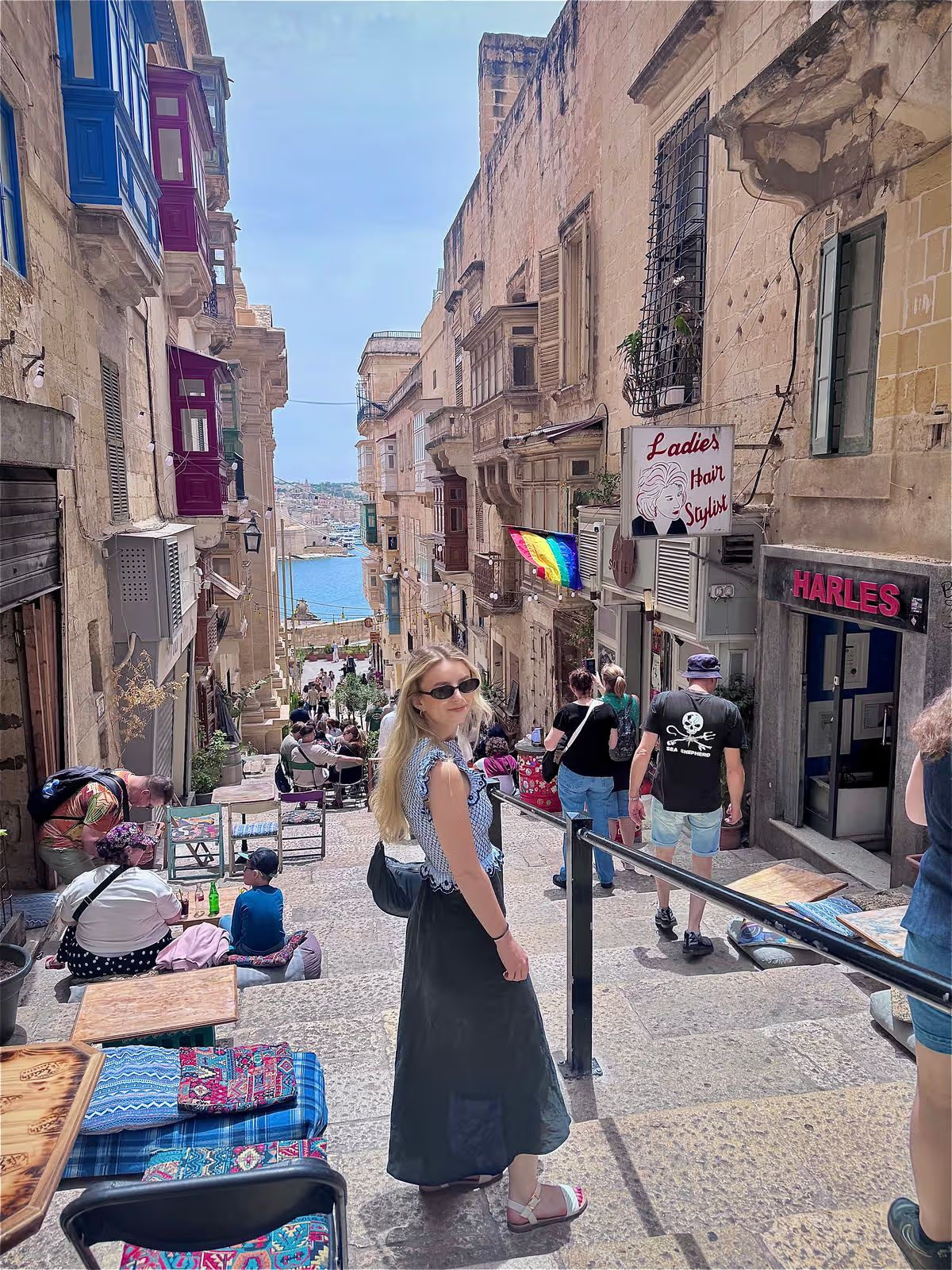
Elsewhere, the city’s streets themselves do much of the heavy lifting. Ornate balconies lean over narrow lanes while laundry flutters overhead on washing lines. It is a deeply moving reminder that even though Valletta was built by the Knights of St John to defend European civilization from the Ottoman Empire, your romantic view of a historic fortress city is occasionally interrupted by a pair of massive beige knickers blowing in the wind.
Locals treat the sea like a public swimming pool that happens to have excellent views. Rocky platforms replace sand. Towels appear. People jump straight into the Mediterranean without the usual British negotiation involving sunbeds, parasols and passive aggressive towel placement.
No one seems to be running a system. It works anyway.
British nostalgia with better weather
Malta occasionally feels like Britain left something behind and never quite bothered to come back for it.
The island was part of the British Empire for more than 150 years, and the influence is still visible in ways that feel slightly surreal. English is an official language. Red phone boxes still stand in corners like they are waiting for a call that will never come.
I wandered into the local branch of Marks and Spencer to check on the progress of British civilization. I can confirm they did not have any picky bits in the Malta store; the traditional British tapas. But they did have tinnies – the traditional fuel for a British explorer. A Monsoon sits nearby. Even a copy of that day’s Daily Mirror at the local newsagent’s.
Where to eat
That blend of influences extends to the food scene. Malta borrows happily from Italy, North Africa and Britain, creating a character all of its own.
One street that perfectly captures the atmosphere is St Lucia Street. By day, it’s an attractive stepped lane. By night, it transforms into one of Valletta’s most buzzy dining spots, with tables cascading down the stone steps like a very tasty avalanche. I spent my second evening at Taste nursing an Aperol Spritz and a plate of rigatoni, which seemed to accidentally on purpose precede a huge tiramisu (€25 bill).
One of Europe’s oldest cafes
For a deeper glimpse into Malta’s past, I found myself at Caffe Cordina, one of Europe’s oldest cafés and one of Valletta’s most enduring institutions.
You will have to resist the temptation to just wander into the air-conditioned void of Starbucks just down the road for some whipped cream and regret. Keep walking, because you will be rewarded with an establishment that has spent nearly two centuries serving Maltese society.
The family’s story began in 1837, when their ancestors arrived from Italy and sold nougat from a donkey cart. They eventually opened a small shop that was destroyed by a German bomb during the Second World War. Yet, as the current owner, Luca Cordina, told me, that bomb was ironically “the best thing that ever happened to us”. It forced his grandfather, Cesare, to take out a bank loan, pivot, and establish the café in its current Valletta location in 1944.
It was a massive gamble. “My grandfather’s friends actually questioned him about the decision, calling him crazy,” Luca explained, noting that the bustling square we see today was little more than a garden at the time. But Cesare believed in the location when very few people did. His response to the doubters was simple: “When the sun rises, it warms everyone”.
That warmth has since attracted a staggering mix of patrons, hosting everyone from Queen Elizabeth II and King Charles to the 1984 Italian national football team. The café inspires just as much loyalty from its staff as its customers, with one employee noted to still be working the floor at 76 years old.
I had a coffee and a traditional ricotta pastizzi (€5.70 bill) and watched the world go by – stunning.
‘The Silent City’
My other favourite lunch spot was in Mdina, the former capital and one of the most atmospheric places on the island.
Game of Thrones fans will recognise parts of it immediately. Everyone else will spend the visit walking past groups who are absolutely certain they are standing exactly where something important happened and are more than willing to explain it in detail whether you asked or not.
It is known as the Silent City because it is incredibly quiet, which is a nice change from London, where the soundtrack is the incessant beeping of a stolen Lime bike.
That wonderful silence was much enjoyed on the roof terrace of the family-run cafe – Fontanella Tea Garden – which is built into the city wall and offers one of the best panoramic views around (Pizza + coffee came to €19).
Mdina is completely enclosed within ancient walls to stop medieval enemies from entering, though it seems they let any old person in these days – especially if you are wearing shorts and carrying a bottle of Fanta Lemon.
The verdict
Three days felt about right. Long enough to see Valletta, Mdina and the coastline without rushing. Short enough that it never drifted into routine. May was an ideal time to go – still warm, not baking, and a little quieter.
Malta works best for couples or solo travellers (like me on this occasion!) who like variety without effort. You get history, sea swims, good food and a walkable city without needing to plan your day around transport logistics or opening times.
Flights from London can be found for around £40 one way. I flew from Luton and returned to Gatwick using Avios points via British Airways, which made the trip back feel particularly smug.
By the time I got home, I’d spent less than many people pay for a day wrapped in a fluffy robe somewhere in the Home Counties.
The cost
Flight from London to Malta (one-way): £40
Preluna Hotel, Sliema (2 nights): £200
St John’s Co-Cathedral entry: €15
Dinner at Taste (Aperol Spritz, rigatoni, tiramisu): €25
Coffee and ricotta pastizzi at Caffe Cordina: €5.70
Pizza and coffee at Fontanella Tea Garden: €19
Sliema–Valletta ferry: €5
Return flight: Not included (paid using Avios points via British Airways) – would have been about £80
The quirky coastal destination has been named one of the best to visit in 2026 by Time Out, thanks to its vibrant shopfronts and historic harbour
Folkestone has been transformed from being derelict to trendy(Image: Tim Merry )
Thanks to the arrival of the long-awaited King Charles III Coastal Path, the UK’s coastline can now be walked in its entirety, and many are setting their sights on its stunning seaside towns to experience it all this summer.
According to Time Out, this is one of the must-visit destinations in 2026, and with an abundance of attractions set against a stunning seaside setting, it’s not difficult to understand why.
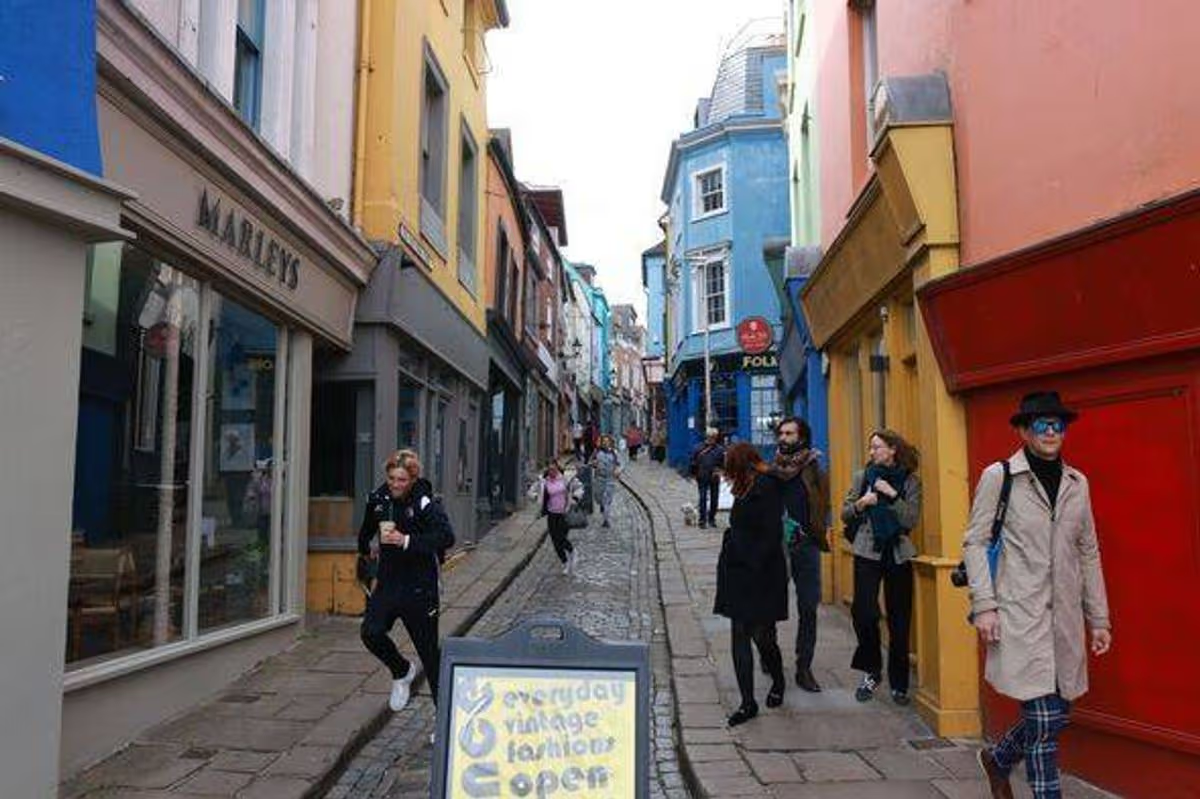
Outshining the likes of its well-known neighbours such as Margate, Whitstable and Brighton, Folkestone has carved out a reputation as a rewarding coastal escape for a picture-perfect break. Situated on the southern fringe of the North Downs, tucked into a valley between two cliffs, lies the historic town, overflowing with offbeat character.
With greater incentive than ever to forgo the flights and discover the UK coastline, Folkstone makes an excellent starting point, coming in at number four on the list of seaside destinations.
Creative Quarter
At the centre of this town lies a thriving cultural hub, overseen by the arts charity Creative Folkestone. Its mission has led to the restoration of more than 90 buildings, now home to a wealth of independent studios, cafes and businesses all rooted in creativity, which permeates the entire town.
Awash with colour, it’s this quarter, comprising winding and meandering streets, that makes Folkestone stand out as a destination. The rainbow-hued painted shopfronts and flourishing independent businesses are what distinguish it and make it immediately identifiable from a single photograph.
On visiting for the first time, one guest wrote on TripAdvisor: “Today was my first visit to Folkestone, and we wanted to visit the Creative Quarter. Was not disappointed.
“Fabulous sunny day, helps, of course. Cobble streets and set on a hill. So might not be great for some. Wonderful galleries and fabulous eateries. Quirky shops and friendly people. I will visit again.”
Visitors could easily find themselves whiling away hours browsing in and out of shops, picking up unique souvenirs, books, homeware and artwork.
Harbour
Steeped in history and buzzing with events throughout the week, the Harbour Arm is a true centrepiece of Folkestone. Once serving as the railway terminal for the Folkestone-Boulogne Ferry and a departure point for troops heading to the Western Front, it has since been transformed into a stunning setting for drinks, food and live entertainment with family and friends.
The picturesque promenade, stretching out towards the sea, is home to more than 70 independent food, drink and retail vendors, meaning visitors are genuinely spoilt for choice. If there’s one thing that rings true about Folkestone, it’s the town’s wholehearted dedication to championing local businesses throughout every corner of its tourist offering.
One impressed visitor shared: “Folkestone Harbour Arm has been transformed into a remarkable destination – a vibrant blend of artistic flair, seaside heritage, and excellent food.
“We thoroughly enjoyed the wonderful walk to the lighthouse, passing a compact market area and plenty of great food stalls. The fresh sea air and creative atmosphere made it a joy.”
Beach
Folkestone boasts several sandy bays and pebble beaches, but one in particular has earned a reputation as a firm favourite with visitors, and tends to get packed out during the warmer summer months.
Nestled by the harbour is Sunny Sands, the go-to beach for many, thanks to its soft sands perfect for sandcastle building and sunbathing, plus its convenient location near the heart of the town.
According to visitors, while it suits everyone, it’s ” especially great for children”, owing to its well-maintained facilities and opportunities for water sports. What’s more, this is among the nearest beaches to London, less than an hour’s journey from the capital, making it a popular choice for Londoners craving a breath of seaside air.
Adding to its appeal is the parking available directly beside the beach at the Harbour Arm Car Park, though expect it to fill up rapidly during peak tourist season.
One visitor summed it up simply, saying: “Beautiful beach, lovely day out. fabulous views and scenery. Great for all ages. Lots to see and do. Very clean beach, worth a visit.”
Minecraft fans can enjoy an immersive pop-up event during the school summer holidays that includes the chance to meet baby Mobs and other characters from the popular video game universe
Minecraft fans will be able to spot ‘Mobs’ around the theme park(Image: Staffordshire Sentinel News Medi)
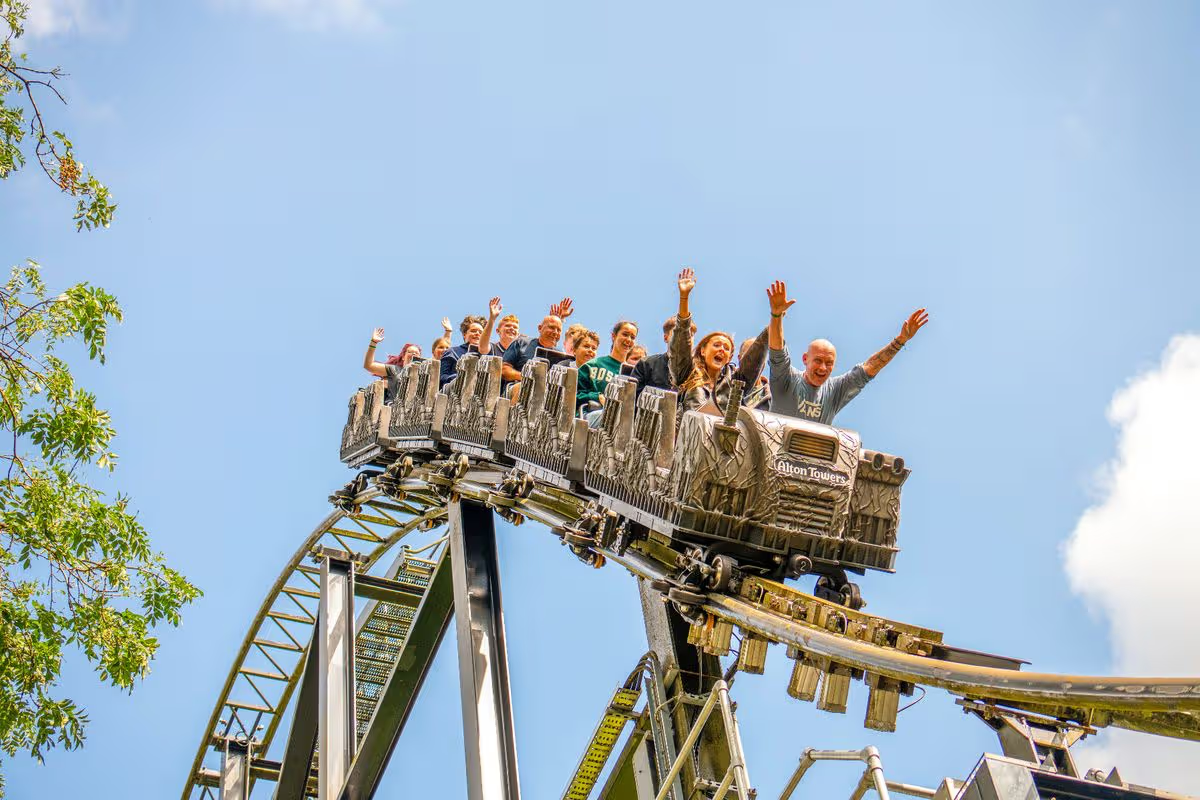
Alton Towers will launch a pop-up event for the six-week summer holidays where guests can enjoy an immersive Minecraft experience, including meeting adorable all-new Baby Mobs.
Announcing the new arrivals with a Buckingham Palace-style sign, the theme park has promised fans the chance to “meet baby Minecraft Mobs in real life across the park” in a first-of-its-kind event. Minecraft Meet the Mobs will take place between July 18 and August 28, coinciding with the school holidays in England and Wales.
Character appearances will include the Iron Golem, Chicken Jockey and Creeper, plus baby Mob scenes featuring yellow axolotls, pandas, pigs, goats, chicks and wolf pups.
The baby Mobs will be positioned in six Minecraft-inspired scenes across Alton Towers, and as visitors find each one, they can stamp their game card. Those who complete the trail will unlock an exclusive downloadable in-game reward – only available to visitors who’ve been to the theme park.
According to Alton Towers, Mobs “are living creatures in the Minecraft videogames that move, interact with the environment and can be passive, neutral, or hostile.”
In addition to the Minecraft trails, visitors can enjoy themed snack stands featuring Minecraft-inspired TNT popcorn and ice lollies. There will also be a range of exclusive Minecraft merchandise to purchase in the park.
Minecraft fans can book tickets for Alton Towers online now for summer dates, and the Meet the Mobs experience is included with the regular price of admission for all visitors from July 18 to August 28.
Minecraft is one of the best-selling video games of all time, with 350 million copies sold, a number only beaten by the addictive puzzle game Tetris. Its first formal release was in 2011 for the PC, and since then, it has been released on a number of consoles and mobile platforms. A version for the Nintendo Switch 2 was recently announced, with many fans speculating it could be released by the end of 2026.
Howard Ebison, vice president at Alton Towers Resort, said in a statement: “Minecraft is loved by families around the world, and this summer we’re bringing that sense of play and discovery into our park. ‘Minecraft Meet the Mobs’ is set to delight our guests with interactive moments across the park, an opportunity to unlock exclusive in-game rewards, enjoy themed treats and plenty of surprises along the way.
“We are proud to offer this unique Minecraft event for our guests joining us over the summer, all within the price of admission to Alton Towers Resort.”
Recently, the Staffordshire-based theme park opened brand new Bluey the Ride: Here Come the Grannies!, the world’s first rollercoaster based on the much-loved cartoon pup and her family. It’s also home to CBeebies Land, where kids can enjoy rides and experiences based on Hey Duggee, JoJo and Gran Gran, Go Jetters, and the Octonauts.
Have a story you want to share? Email us at webtravel@reachplc.com
One town has been hailed as the ‘most beautiful in the UK’ thanks to its stunning beaches and clear blue waters that rival the Greek islands
One Devon town has been hailed as the ‘most beautiful in the UK’ thanks to its stunning beaches and clear blue waters that rival the Greek islands(Image: image by grahammcpherson.com via Getty Images)
With sparkling azure waters, yachts, and a sweep of golden sand, you could easily mistake this stunning beach town for somewhere on a Greek island. Devon’s Dartmouth has been dubbed the UK’s answer to the Greek Isles, with its coastal beauty inviting comparisons to the Mediterranean.
Devon, renowned for its picture-perfect holiday spots, attracts countless tourists each year, yet Dartmouth stands out with its spectacular views and attractions. Travel enthusiast Sarah Hagan, who goes by sarahkhagan on TikTok, sang Dartmouth’s praises in a viral video, calling it the ‘most beautiful town in the UK’.
Her TikTok clip’s comment section brimmed with praise for Dartmouth’s distinctive appeal, with one user saying: “Most beautiful place in the UK I’ve ever been to.”
Another added: “Favourite view ever!”
Some viewers were so taken aback by Dartmouth’s splendour that they questioned its whereabouts, with one commenting: “THAT’S DEVON?! It looks like Greece in my opinion.”
Dartmouth effortlessly combines its coastal grandeur with a rich history, alongside its picture-perfect harbour, teeming with a mix of fishing vessels and sailing yachts, reports the Express.
When it comes to seaside trips, beaches are typically the first thing that springs to mind. A short distance from Dartmouth sits Blackpool Sands, a hidden gem of coastline.
However, this isn’t your typical seaside destination, providing visitors with the distinctive chance to relax in its Seaside Sauna. Switch between the refreshing salt water and the peaceful escape from the outside world’s chaos.
For those craving adventure, paddle boards or kayaks can be rented, or you can join a guided tour along the coastline.
Combining historic architecture with stunning river settings and the South Devon countryside, you’re transported to a completely different world. Dartmouth Castle ought to be among your initial destinations.
Commanding the harbour entrance, Dartmouth Castle may well claim the most picturesque location of any fortification in the UK. The castle saw action during the Civil War and remained operational right through to WWII.
If maritime and naval heritage captures your imagination, the town’s Royal Naval College, where navy officers have undergone training since 1863, is essential viewing. You can also spot HMS Britannia anchored in the River Dart.
A wander through the town will inevitably bring you to Dartmouth Harbour, the hub of the South Devon town, where as many as 3,000 moorings can be discovered during the autumn months. It’s also the perfect place to treat yourself to some classic fish and chips.
Located in the vibrant centre of the harbour, Rockfish is a treasure for seafood lovers, serving fresh local catches that have earned glowing reviews on TripAdvisor. Guests can savour their meals while taking in a scenic view of Bayard’s Cove, with the highly praised fish and chips takeaway option costing £11.95 for MSC Haddock and Chips.
For those who prefer eating inside, Rockfish features a restaurant with breath-taking views across the River Dart. Celebrity Masterchef viewers may recognise the venue’s head honcho, Mitch Tonks, who has previously appeared on the programme as a judge.
The menu showcases a selection of superb dishes, including a sumptuous Platter of “Fruits de Mer” for two at £37.50 per person, Grilled Brixham Cuttlefish at £19.95, and tempting Rockfish Tacos.
For a hint of elegance, the Michelin Guide recommends The Angel of Dartmouth, where Elly Wentworth, recognised from BBC’s Great British Menu, creates dishes with international flair. Standout options include Brixham Crab Risotto for £18, Devonshire Lamb served with asparagus, spring pea, and lamb jus for £37, and a delicious Clotted Cream Parfait at £9.50.
If you’re after a drink, Dartmouth’s most popular spot is Bar 1620, situated at the heart of the harbour. For a peaceful moment overlooking the town while enjoying a cocktail or two, head here.
Bar 1620 offers an extensive range of cocktails — including classics, hot cocktails and some creative 1620 originals — alongside a draft master keg system that serves up the freshest, coldest pints you’ll find anywhere.
Looking for a staycation spot, pub for Sunday lunch, or just a day out? The VisitEngland Awards for Excellence 2026 have picked some of the best of English hospitality up and down the country – see who won awards near you
11:03, 15 Jun 2026Updated 11:03, 15 Jun 2026
Historic sites such as Bletchly Park picked up awards(Image: Education Images/Universal Images Group via Getty Images)
A new interactive map will let you search for some of England’s best pubs and days out near you – as well as those in different parts of the country and the best hotels in the regions if you’re planning a staycation.
The VisitEngland Awards for Excellence 2026 took place earlier this month, showcasing the best of what England has to offer whether that’s family-friendly attractions, brilliant days out, or even just the best restaurants and pubs not to be missed.
We’ve put together an interactive map showcasing the big winners, so you can discover some of the best of English hospitality on your own doorstep. Simply use the map and zoom in on your local region to find the best of the best.
England’s tourism industry is worth around £127 billion a year, and employs around two million people in a huge variety of jobs. At VisitEngland’s awards, winners included both small and large hotels, B&Bs, glamping operators, tourist attractions, restaurants, and pubs.
Among the winners of the awards were MonkBridge House in York, who scooped Gold in the coveted BandB and Guest House of the Year. This property has just eight individually designed rooms, some with four-poster beds, and is full of historic elegance.
Larger properties that won awards included Bovey Castle in Devon, which is set on 275 acres of countryside including a golf course, spa, and restaurant. While those who enjoy the great outdoors may want to head to nearby Clawford Lakes Resort and Spa which won Gold in the Camping, Glamping and Holiday Park of the Year category.
Visit England’s Large Visitor Attraction of the Year went to Jimmy’s Farm & Wildlife Park in Suffolk. The wildlife park is owned by TV star and conservationist Jimmy Doherty, who has presented programmes on both Channel 4 and the BBC.
Bletchley Park in Buckinghamshire, came in second place, where visitors can learn about the code-breaking geniuses who were instrumental in helping the Allied Forces win WWII.
The Morgan Experience Centre in Worcestershire won Small Visitor Attraction of the Year. Set on the historic site of Morgan Motor Company, you can see the extraordinary skill put into making these classic cars with a factory tour. The Ad Gefrin Anglo-Saxon Museum & Whisky Distillery won Silver in this category, promising an “immersive journey into Northumbria’s Golden Age”. It has a fascinating interactive museum where you can see how the Anglo-Saxons really lived.
Other businesses who won awards include Butlin’s. The holiday park operator, that just celebrated its 90th anniversary, picked up an Outstanding Contribution to Tourism award.
VisitEngland Director Andrew Stokes said: “The awards are a celebration of England’s outstanding tourism industry and an opportunity to highlight the excellence that makes it world leading.
“From a hands-on, traditional blacksmith’s visitor experience in the Midlands and a castle hotel and spa set in one of our national parks to accessible and inclusive holidays, these awards showcase the exceptional quality, unparalleled customer service and innovation that drive our industry.”
Have a story you want to share? Email us at webtravel@reachplc.com
Cabü by the Sea in St Margarets, Kent, is a luxury coastal cabin staycation for city dwellers seeking coastal charm without a long journey – and it’s less than two hours’ drive away
Octavia Lillywhite Acting beauty and wellness editor
07:00, 13 Jun 2026
Pretty perfect: the pool is ideal for a dip on warm summer days(Image: Cabü)
At Cabü by the Sea, baby rabbits hop playfully across the grass. “They’re quite used to us,” our host explains as she guides us towards our cabin.
“But they dig everywhere, so do watch out for burrows.”
It’s a fitting welcome to our time at this wonderfully wholesome retreat. Cabü consists of a grassy expanse dotted with luxurious one, two and three-bedroom cabins, nestled against the sea wall in St Margarets, one of those tranquil coastal villages in Kent’s overlooked corner, where Dungeness extends a languid arm into the English Channel.
Uncomplicated and serene, the atmosphere washes over you the moment you arrive, reports OK!.
Discovering the ideal seaside cabin
This spot is defined by thoughtful touches. The log burner is already stacked and primed to ignite with just one match.
Plush, generously soft towels hang in the bathroom, with striped versions on the upper shelf – designated for beach and pool. In the kitchen, there’s a picnic hamper ready should you wish to prepare something for the shore.
If you’d rather not have to do it yourself, simply order from the onsite shop.
Each designer lodge resembles something plucked straight from the pages of a cabin lifestyle book (I know, because they’ve left a copy beside the kingsize bed). It’s difficult not to instantly embrace the notion that owning a modest cabin of your own could be the solution to life’s pressures. It certainly seems that way while you’re here.
Making the most of your time at Cabü
Cabü is a spot where simple pleasures take centre stage, with a handful of added treats thrown in. There’s a pool (fenced off, so you needn’t fret about little ones wandering), and alongside it sits the sitooerie – a space blending indoors and out, where families can bond over the pizza oven and toast marshmallows side by side.
Without children in tow, we hired our own barbecue, grilled burgers on the decking, and gazed at the stars instead.
There’s also the spa facilities you can reserve by the hour – generous wooden hot tubs, a sauna and an icy plunge pool complete with a bracing bucket shower. Steel yourself and give them all a go – it’s absolutely brilliant.
What to explore in the surrounding area
We left the car untouched throughout our visit, opting instead to borrow bikes for the seven-mile ride to Dungeness (the Fish Roll at the Dungeness Snack Shack is essential), where the 21st Century seems to dissolve amid the stark, post-apocalyptic stretch of shingle and weathered boat hulls. Head the opposite way and Dymchurch (3 miles) offers classic seaside charm with fairground rides, fish and chips and ice cream, plus superb meals at Coffee Lounge.
Can’t manage the distance? Fear not, because there’s an authentic miniature steam railway covering the entire route, with a station just a 10-minute stroll away.
How to book your own cabin getaway
Prices start at £375 for a 2-night break in a studio cabin. Studio, 1, 2 and 3 bedroom cabins are on offer, including dog-friendly choices and one featuring a private hot tub.