Colombian President Abelardo De la Espriella ordered police and immigration authorities to begin to identify and deport migrants without legal status, Photo by Carlos Ortega/EPA
Aug. 25 (UPI) — Colombian President Abelardo De la Espriella ordered police and immigration authorities to begin to identify and deport migrants without legal status, starting in Barranquilla, the president’s office said.
De la Espriella issued the order during a security council meeting in the Caribbean city, where he announced measures to combat homicide, extortion, drug trafficking and other crimes, according to an official statement.
“The order to Migration is clear: coordinated operations with the police must begin in Barranquilla to find illegal immigrants,” De la Espriella said.
The president said authorities would first target foreign nationals committing crimes and then those who have not regularized their immigration status in Colombia.
“This is a presidential order that must begin to be carried out this week,” he said. “I will not accept illegal immigrants, regardless of where they come from, who are committing crimes in Colombia. They will leave, and we will deport them.”
De la Espriella said the measure was a political and administrative decision by his government. However, the announcement did not include a decree, an enforcement protocol or a deportation target.
The government also has not explained whether the order changes existing legal standards or seeks to intensify enforcement already carried out by Colombia’s immigration authority.
Deportations and expulsions were already part of Colombia’s immigration policy. Between August 2022 and June, Migration Colombia documented 3,389 deportations and 2,576 expulsions — a total of 5,965 people.
The leading reasons for deportation during that period were remaining in the country without legal status, with 1,380 cases, and entering or leaving the country illegally, with 1,315, according to Migration Colombia.
Other cases involved fraudulent documents, false statements, unauthorized activities, court orders and threats to national security or public order. The immigration authority said deportations and expulsions require individual administrative proceedings.
The decision fulfills a campaign promise. In June, when he was still a candidate, De la Espriella said foreign nationals who entered Colombia legally would receive guarantees, while those who violated immigration rules would be returned to their home countries, El Colombiano reported.
Colombia is home to more than 2.8 million Venezuelans, the country’s largest foreign population. Migration Colombia had registered 2,831,561 Venezuelan nationals intending to settle in Colombia as of Aug. 31, 2025, according to an official report.
The Association of Venezuelans in Barranquilla called on authorities to respect due process and the right to a defense during the new operations.
“Anyone who commits a crime must answer to the justice system, regardless of whether they are Colombian, Venezuelan or any other nationality,” the organization said. However, it warned that “irregular immigration status is not synonymous with criminality,” according to Caracol Radio.
A man pays his respects during the 76th anniversary of the Jeju 4.3 memorial ceremony at the Jeju 4.3 Peace Park in Jeju City, South Korea, on April 3, 2024. File Photo by Darryl Coote/UPI
JEJU ISLAND, South Korea, Aug. 12 (UPI) — The Korea Heritage Service announced Wednesday that Jeju Island’s Darangshi Cave was under final consideration for registration as a national cultural heritage site, highlighting its importance in exposing the government’s role in an early Cold War-era massacre and catalyzing a decades-long truth and reconciliation movement.
The cave was discovered on Dec. 22, 1991, in Jeju’s northeastern Sehwa village by researchers investigating the Jeju Massacre, the slaughter of some 30,000 islanders from 1947-54 mainly by government forces in an effort to snuff out a communist uprising. Inside were the remains of 11 people, including three women and a 9-year-old boy, local villagers who were hiding from the government’s scorched-earth operations of 1948.
The Korea Heritage Service described the site in a statement as being of “considerable academic value as a vivid historical location of the Jeju 4.3 Incident because it served as a catalyst for the movement to uncover the truth about the incident, became widely known to the general public through media coverage, and preserves much of the original form of the refuge.”
In the fall and winter of 1948-49, government forces under the government of newly inaugurated President Syngman Rhee conducted a scorched-earth campaign through Jeju’s mid-mountain region. Under an October order, all but a 5-kilometer band of the island’s coast was prohibited and anyone found within that quarantine zone would be considered a rebel and shot on sight.
On Dec. 18, 1948, residents of Hado and Jongdal villages were living inside Darangshi Cave when it was discovered by punitive forces. Fires were lit at the cave’s mouth and all inside asphyxiated.
Thousands of islanders fleeing government repression took to hiding in the mountains and were killed during the four-month scorched-earth operation. Hundreds of villages in the zone were razed, many never to be restored. For decades after, public discussion of the state’s responsibility was suppressed while families of victims and survivors were forced to live stigmatized as communists and communist sympathizers.
After the cave was publicized, the government sealed its entrance and forced the families of the victims to cremate the bodies of their loved ones who were found inside, and to scatter their ashes at sea.
The discovery of the cave is considered a watershed moment in literally unearthing the truth of the Jeju Massacre and galvanizing a truth movement that would culminate in President Roh Moo-hyun offering Jeju an official state apology on Oct. 31, 2003.
Ko Chang-hoon, a retired professor at Jeju National University, was the head of the Jeju 4.3 Research Institute at the time when it discovered the cave. He told UPI that he and his team publicized the cave’s discovery on April 2, 1992, so reports would be published in newspapers the following day, the 44th anniversary of the start of the massacre.
The discovery of Darangshi Cave was “the cornerstone” of the movement, he said.
Compared to other massacres and incidents of state violence, the Jeju Massacre had little evidence up until that point that the majority of the deaths were committed by the government, he said.
“It is a first as a whole document,” he said.
According to a statement from the Jeju Special Self-Governing Province, artifacts illustrating the circumstances at the time and what life in hiding from government forces was like remain in the cave, while the area around it has been transformed in recent years into a site of education and remembrance.
The province last year applied to the Korea Heritage Service to register the cave as a National Registered Cultural Heritage propertty after it obtained approval from the provincial Cultural Heritage Committee.
“Darangshi Cave is a historic site that bears the pain of residents seeking refuge and being killed en masse during Jeju 4.3,” Kim In-young, director general of Jeju Province’s Special Self-Governing Administration Bureau, said in a statement.
“We will actively cooperate with the Korea Heritage Service so that, following the Suak Garrison Post, it can become the second Jeju 4.3 site to be formally registered as National Registered Cultural Heritage.”
The Suak Garrison Post used in operations against communist guerrillas was designated in 2018.
The Korea Heritage Service will seek to register Darangshi Cave as national cultural heritage after a 30-day notice period to collect public opinions on the registration.
For Ko, who was among those who helped find the cave and make it nationally known, this recognition is “very, very important,” he said.
Josie Gibson failed to hold back on her line of questioning during the latest instalment of This Morning as she asked Ricky Gervais about his relationship
Ricky Gervais discussed his career and new Netflix programme
ITV’s This Morning made for hilarious viewing on Friday (August 7) as Ricky Gervais was interviewed on the famous blue sofa.
The 65-year-old appeared on the daytime programme to discuss his new Netflix show, Alley Cats, with presenters Paddy McGuinness and Josie Gibson. But after briefly talking about the new animated series, Josie questioned Ricky on other matters.
Talking about his character Gus in Alley Cats, Ricky mentioned that he is similar to the animated feline because he dislikes people. Stating that he prefers to stay indoors instead of socialising outside, Ricky said: “It’s my favourite thing!
“It’s couch, me, girlfriend, cat, wine, Netflix.” He added: “Honestly, just to get up and go on tour, I’ve already been paid so I’ve got to do it.”
Josie then probed: “Have you not married Jane then. Is she still your girlfriend?”
To which Ricky awkwardly replied: “Yeah. Yeah – we do everything. We are married, really. But just not in the eyes of God.”
With Josie responding: “Right, okay!”
Ricky and his long-term partner, Jane Fallon, have been together for more than four decades, having started their relationship in 1982 after meeting while studying at University College London.
Over the years, the couple have built successful careers of their own. While Ricky became one of Britain’s most recognisable comedians, actors and writers through projects including The Office, his partner Jane has established herself as a bestselling novelist.
Reflecting on their early years together, Ricky has spoken about the modest flat they shared in London’s King’s Cross, recalling that it was all they could afford at the time. Despite their humble beginnings, the couple have remained by each other’s side as their careers continue to flourish.
Ricky has often praised his partner for inspiring his work, and their relationship has remained strong throughout his rise to international fame. Although they have been together for over 40 years, the pair have repeatedly said they have no plans to marry or have children.
Speaking to The Daily Mail in February 2018, Jane told the publication: “We’re not married because neither of [us] are fussed. I think if one of us really cared then we would probably do it but it’s not really been anything that either of us have ever really needed.”
SAN DIEGO — Emanuel Lexius’ market in El Cajon is typically bustling.
Not lately.
Lexius is Haitian, and so are most of the shoppers at Miche Caribbean Market. They come to stock up on familiar Haitian staples — Ti Malice vegetable oil spread, long-grain heirloom rice, Cola Couronne soda.
“People don’t want to be out,” he said, and “no one wants to be exposed.”
A wave of fear swept Haitian American communities in San Diego County and nationwide last week after the Trump administration revoked protections for Haitian immigrants living in the U.S. under temporary protected status, or TPS. The program has allowed roughly 350,000 Haitians — including thousands in San Diego and Los Angeles — to live and work in the U.S. because their home country is unsafe.
A federal district judge temporarily blocked the action for nearly five months before the Supreme Court upheld the Trump order in June. The Department of Homeland Security officially moved to remove the protections last Monday.
That has left Haitians in Southern California in a state of anxiety over whether and when they could be deported. Community leaders say the repercussions could be widespread, with people now scared to leave their homes or go to work — or at risk of losing their jobs because they no longer have work authorization.
“People who applied for a program that the U.S. government laid in place … they came to the U.S. in search of safety and protection, only for that to be pulled from under them without any support,” said Guerline Jozef, the executive director of Haitian Bridge Alliance, a local nonprofit that provides legal and social services to Haitians and other immigrant groups.
Along with Haiti, the Trump administration has moved to roll back temporary protected status for people from 13 countries, all of them majority Black or brown.
“Temporary Protected Status is exactly that — temporary,” said a Department of Homeland Security spokesperson. “For too long, TPS has been allowed to function as a de facto amnesty program despite Congress never intending it to be permanent.”
TPS was established for Haiti in 2010, after a catastrophic earthquake killed more than 200,000 people and destabilized the country. The protection was extended in 2021 amid the civil chaos that unfolded after Haiti’s president was assassinated and again in 2024 due to ongoing safety concerns. Today, armed gangs control sections of the country, presidential elections haven’t been held in a decade, and millions of people struggle with daily needs, per a recent United Nations report.
Today, the Trump administration says conditions in Haiti have improved enough for Haitians to return. But Haiti remains under a “Do not travel” advisory from the U.S. State Department, and the country has been under a state of emergency since March 2024.
Since their deportation protections ended Monday, local Haitians say they can’t go back to Haiti, pointing to safety concerns for themselves and their families.
“I had no choice but to leave Haiti,” said Galencha, a Haitian TPS holder who works in San Diego and requested his last name be withheld for fear he might be deported.
The 42-year-old, who is married with two young daughters, has lived in San Diego for seven years. He said his mother and uncle were killed in Haiti; his older brother was shot. His father is still there, but his sisters and close friends have left.
A Homeland Security spokesperson declined to comment on plans for any enforcement operations targeting Haitians but said enforcement actions are happening every day.
“Whenever we go out, it makes me feel bad,” said a 43-year-old Haitian man who lives near El Cajon. He too just lost his temporary protected status.
He arrived in the U.S. two years ago, alone, leaving behind his family. He typically waits in a Home Depot parking lot with the hope of getting picked up for a job, but it hasn’t been easy to find steady work.
Now, he and other local Haitians say they have been keeping their head on a swivel for immigration enforcement.
Even with temporary protected status, immigrants face a host of challenges to find work in the first place, said Maria Chavez, immigration legal director at the Partnership for the Advancement of New Americans. The process to qualify for a work permit and a reauthorization can take over a year with delays, she noted.
Most Haitians who have settled in San Diego since 2010 have found work in the hospitality, healthcare and construction industries — though many arrive with an entrepreneurial mindset forged in their home country, explained Jozef, from the Haitian Bridge Alliance.
“Due to the lack of a formal job market, the majority of the people have to find ways to create small businesses in Haiti,” she said. “So they come with that mindset of creating businesses.”
Right now, Haitian Bridge Alliance is focused on helping former TPS holders create a family plan — including getting their financial documents in order and creating contingency plans in case they’re deported. It’s also helping get basic needs like food to Haitians who are scared to leave home and connecting them with legal representation.
Since going back to Haiti is not an option for many Haitians in the region, now is the time for former TPS holders to pursue alternatives such as asylum or seeing if they qualify to stay in the U.S. through marriage, Chavez said.
“None of these are fast options,” she noted.
PANA and Haitian Bridge Alliance are fighting in court against the Trump administration’s termination of temporary protected status for Somalia. But Chavez says that fighting the termination for Haiti is largely off the table, since the Supreme Court has already upheld that order.
In the meantime, the end of Haitians’ temporary protections has created heartbreak throughout the community.
Husband and wife Martha and Feret Milliem own Caribbean Pleasure, a Point Loma restaurant serving Haitian cuisine in a dining room hung with Haitian flags.
The couple have lived in San Diego for nearly half a century and aren’t personally affected by the end of TPS protections — but it’s been painful to watch their community grow fearful and lose their grip on the American lives they’ve worked to build.
The impact extends to families back in Haiti, too, they add, if relatives in the U.S. who suddenly lose their legal jobs are unable to send money back to them.
“Right now, the Haitians are living under hell,” Martha said.
McALLEN, Texas — A Texas mother deported to Mexico despite having legal permission to stay in the U.S. has filed a lawsuit against the federal government after it notified her it would be terminating her permission because of “unauthorized travel” stemming from her deportation.
Jessica Treviño, 34, filed a lawsuit through her attorney this week asking a federal judge to intervene.
Treviño and her husband were arrested in December after federal agents followed them and two of their daughters into a Home Depot parking lot in South Texas. Both were deported and are living in Matamoros, Mexico, just south of Brownsville, Texas. Their three children, all U.S. citizens, are living with family on the U.S. side near the border.
After being brought to the country as a child at the age of 7, Treviño subsequently received legal permission at 20 to remain in the U.S. under the Deferred Action for Childhood Arrivals program, or DACA. Introduced in 2012, DACA does not confer legal status but has allowed hundreds of thousands of people who had come to the U.S. as children to temporarily remain and obtain work permits.
As a DACA recipient, she must maintain a clean criminal record and is not allowed to travel outside the United States.
Her attorney, David Rozas, filed the lawsuit. He noted her status and work permit were most recently authorized until April 2027.
Notice to terminate DACA cites ‘unauthorized travel’
Last week, U.S. Citizenship and Immigration Services sent her a notice of intent to terminate her status for “unauthorized travel outside of the United States on or about March 25, 2026,” the same day she was deported from the country by the Department of Homeland Security.
In a statement, DHS said Treviño’s husband was in the country without permission and driving at the time of the arrest. After a collision between the couple’s vehicle and an unmarked Homeland Security Investigations vehicle, the couple was arrested. DHS claimed she “knowingly accepted voluntary departure and waived appeal. She left the U.S. on March 25, 2026, and will NOT return.”
In a recent interview with the Associated Press, Treviño said she did not sign any forms at the U.S. Immigration and Customs Enforcement detention facility and did not want to be deported.
Lawsuit seeks restitution of status
Rozas filed a petition asking a federal judge in Brownsville to declare the woman’s expulsion was unlawful, order the government to facilitate Treviño’s return to the U.S. and allow her DACA status to remain valid.
“The government had no lawful basis to remove her, and we filed this petition to demand she be brought back home,” her attorney added.
An immigration judge under the Justice Department had issued a voluntary departure order for Treviño in February while she was in ICE custody, but a valid DACA status prevents the Department of Homeland Security from deporting her.
“I would be so blessed to be able to go back home, because that’s what I long for most right now. I’m really desperate. It’s been seven months since I’ve been home,” Treviño said Thursday. Her three children are set to start school next month and Treviño said she would like to be there.
The current Trump administration has deported 86 DACA recipients and arrested 241 others, according to a DHS letter sent in February to Democratic Sen. Richard J. Durbin of Illinois.
Advocates for DACA recipients say Treviño’s deportation is part of a pattern.
“This is what a deliberate, systematic effort to destroy DACA looks like in practice: target recipients one by one, manufacture justifications after the fact and leave their children to grow up without them,” said Todd Schulte, president of FWD.us, a policy organization defending immigration rights.
New York’s Haitian community is living in limbo and fear after Temporary Protected Status (TPS) was terminated on Monday. Around 300,000 Haitian nationals rely on the special designation to live legally in the US.
Madrid, Spain – Badr Tmairi, 22, from Morocco, has spent six years living in Spain without legal status. He arrived at 16, alone, without his family. He held legal residency briefly after turning 18, but lost it when he failed to renew it in time.
“What I want is to get my papers back so I can work as a hairdresser and travel to visit my family in Morocco,” he said.
Recommended Stories
list of 4 itemsend of list
Tmairi is one of more than a million people who have now applied for regularisation under a new scheme that contrasts with a growing European trend against irregular immigration.
He has been homeless for the past year. Without documents, finding work and decent housing in Spain is difficult.
“It’s very encouraging to know that so many people submitted an application and are trying to regularise their situation, but that huge number is also proof that the state has failed in its duty to protect the most vulnerable,” Edith Espinola, president of the Active Domestic Workers’ Service Association (SEDOAC) and spokesperson for the Regularizacion Ya (Regularisation Now), told Al Jazeera.
Regularizacion Ya, a collective made up of migrants, has led the push for regularisation since 2020. The measure grew out of a broad social consensus and has been backed by civil society organisations, the Catholic Church, trade unions and business associations.
Living without legal status, Espinola said, condemns people to social exclusion, as it has for Tmairi. Without rights or protection from abuse, they are unaligned with most of the rest of the population.
The new initiative, Spain’s first regularisation process since 2005, began in April and closed on June 30. The government now has three months to resolve the vast majority of the applications submitted.
Of the 1,174,978 applications, according to the Ministry of Inclusion, Social Security and Migration, only 11,000 have received a favourable resolution so far. About 608,000 have been accepted for processing, granting provisional residency and work permits until a final resolution.
‘All I want is to work’
Rocio Neciosupe, 54, is a Peruvian migrant who has spent two years without legal status in Spain. “Regularisation isn’t a handout; all I want is to work. To work without fear and with rights, so that if I fall and I’m sick, I don’t have to go to work that day and can still get paid, like anyone else,” she said.
Neciosupe, a cleaner in private homes, is busy across six different buildings around Madrid. But she is currently recovering from a back injury sustained in a fall at work. Without documents or a contract, she has no right to sick leave.
Unable to afford to lose her income while she recovers, her husband accompanies her to work each day and helps her with tasks she cannot manage alone.
Rocio, her husband and their two daughters, aged 22 and 17, have all had their regularisation applications accepted for processing and are now awaiting a favourable resolution.
“I want to support the country I live in, and if the country grows, we grow too,” Neciosupe added.
It is precisely in the contribution and growth potential of people like her that the Spanish government has framed its case for the measure.
“By 2050, Spain’s GDP would be 19 percent lower, 90,000 bars would close, 50,000 classrooms would shut and 220,000 farms would disappear,” Prime Minister Pedro Sanchez said recently in a public address.
Gonzalo Fanjul, director of ISGlobal’s policy and development team and head of Research at the porCausa Foundation, said: “If you look at what’s happening in the United States, there are already estimates of the impact of the government’s violent, hostile anti-migration policies. Whole economic sectors are struggling to keep functioning.”
One of those sectors is care work. With an ageing population, Spain needs trained workers to fill positions in that sector, among others.
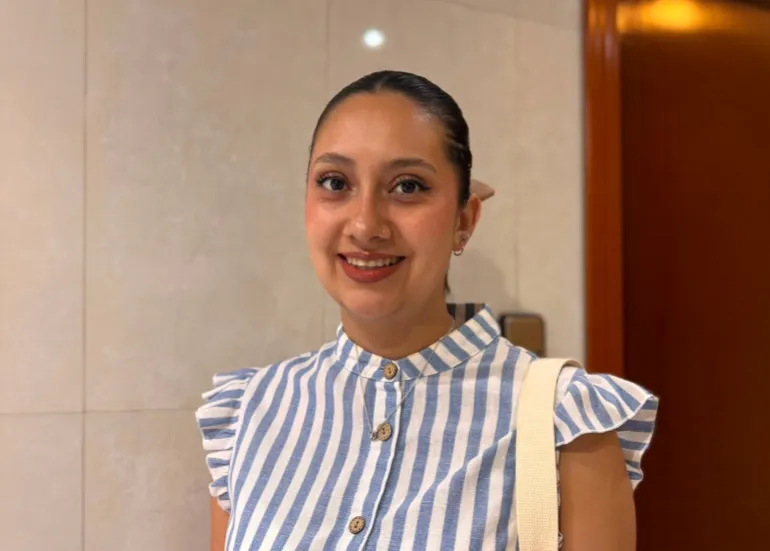
Josselyn Aguirre, originally from Ecuador, works as a carer for a family in Madrid [Courtesy of Josselyn Aguirre]
Josselyn Aguirre, 32, is one of those workers. A nursing assistant, she migrated from Ecuador to Spain in 2024. Her original plan had been to move to the United States, but her visa application was rejected.
“My goal is to stay and help older people. I really enjoy working with them,” she said.
“Here, in my country and in other countries around the world, this sector is collapsing due to a shortage of staff. That’s why I believe that being able to regularise your status and contribute as a professional benefits everyone,” she told Al Jazeera.
Migrants and refugees who applied for regularisation had already been living in Spain, working in the informal economy for years; 57 percent are men, most come from Latin American countries, and six out of 10 are below the age of 34.
So far, 159,097 additional people have registered with the Social Security system as a result of the regularisation process.
With this measure, “Spain has made a bet on growth. We’re going to be a country of 50 million people,” Fanjul said. “But it’s not enough.”
Amid a European political climate in which anti-migration rhetoric appears to be gaining ground, Spain’s approach shows another path is possible, though “regularisation is only the beginning”, Fanjul said.
“The system has been reset, but none of the underlying reasons that brought us to this point have been resolved.
“For the state to open up legal, safe and orderly channels for labour mobility is simply common sense,” he concluded.
Espinola is in no doubt.
Despite criticism from those opposed to the regularisation, she stressed, “We have come out stronger. The migrant community has once again shown its capacity for mutual support in difficult situations.”
The regularisation process is not yet over, she added: “We will remain vigilant to make sure the more than a million applications submitted are processed properly.”
The United States-Israel war on Iran has inflicted the greatest disruption to merchant shipping since the back-to-back shocks of the COVID-19 pandemic and Russia’s invasion of Ukraine.
Since the start of the war in late February, shipping lines have faced attacks on their vessels, lengthy delays and steep rises in operating costs.
Recommended Stories
list of 4 itemsend of list
Yet even after more than four months of turmoil for the industry, the most enduring legacy of the war for shipping may end up being just how little it ultimately changes.
While shipping firms are expected to more explicitly factor risk into their expenses and diversify supply chains where possible in the future, the indispensable nature of seaborne trade means the industry is likely to continue much as before over the long term, analysts say.
That is likely to be especially the case for the container shipping industry, which, unlike the operators of the oil and gas tankers whose dislocation has roiled energy markets, is not heavily reliant on the Strait of Hormuz to transport its cargoes, which range from agricultural produce to apparel and consumer electronics.
While there is no alternative to the strait to access oil-producing Gulf nations by sea, container shipping firms have had the option of redirecting their vessels along longer alternative routes to avoid conflict in the region, including attacks by the Iran-aligned Houthis in the Red Sea.
The global shipping industry has long stood apart for its resilience in the face of crises, bouncing back from major upheaval at remarkable speed.
In 2020, the first year of the COVID pandemic, global container shipping volumes fell by just 1.2 percent compared with the previous year, according to the Baltic and International Maritime Council (BIMCO), one of the world’s largest associations for shipowners.
By January 2021, the volume of cargo handled at ports worldwide had already surpassed pre-pandemic levels, rising 6.4 percent year-on-year, according to data from the Institute of Shipping Economics and Logistics.
By contrast, it took more than four years for global air travel to fully recover from the shock of COVID-19.
While the Iran war and Houthi attacks in the Red Sea since 2023 scrambled regional supply chains, shipping companies have been rapidly adding capacity since Washington and Tehran signed their memorandum of understanding on ending the conflict on June 17.
After plummeting from 3.2 million TEU (Twenty-foot Equivalent Unit of cargo) to 74,000 TEU as of mid-June, container capacity in the region has already rebounded to pre-war levels on some routes, according to Xeneta, an ocean and air freight rate market analytics platform.
Capacity between Asia and the United States’ West Coast last week surpassed its pre-conflict record, hitting 350,000 TEU, according to Xeneta.
On Monday, Maersk and Hapag-Lloyd, the second- and fifth-largest container shipping firms, respectively, announced that they would begin sailing through the Suez Canal again for the first time since February, following an assessment of the security situation in the Red Sea.
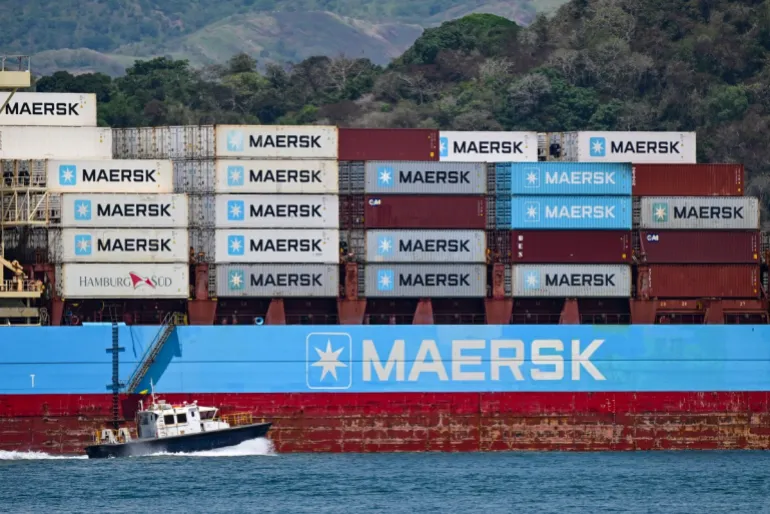
A cargo ship carrying containers from the Danish company Maersk sails into the Pacific entrance of the Panama Canal in Panama City on April 21, 2026 [Martin Bernetti/AFP]
Shipping is indispensable to global trade, in large part because no other mode of transport comes close in terms of capacity and cost-effectiveness.
The world’s largest container ships have capacities exceeding 24,000 TEU – the equivalent of roughly 12,000 trucks, 2,240 cargo planes, or 360 freight trains.
Lacking genuine competition in the transport of goods in huge volumes, shipping facilitates about 90 percent of global trade.
Shipping will look “remarkably familiar” in five years from now because it is an industry driven by demand, said Punit Oza, the head of the consultancy Maritime NXT and the former executive director of the Singapore Chamber of Maritime Arbitration.
Even the most severe conflict cannot change the “physics or the economics” of seaborne trade, he said.
“Ships do not sail because shipowners want them to; they sail because consumers somewhere want grain, iron ore, gas, or televisions,” Oza told Al Jazeera.
“It is the consumers of shipping – the cargo interests, the economies, the households – who ultimately shape the industry, and their demand will endure long after the headlines fade.”
Judah Levine, head of research at freight booking company Freightos, said container shipping in the future is likely to look “quite similar” to how it did before the war, with Dubai’s Port of Jebel Ali continuing to serve as the region’s main hub for both Gulf-bound goods and cargoes destined for Asia, Europe, Africa, and the Americas.
But Levine said diversion of cargoes to smaller hubs – such as the UAE’s Port of Fujairah and Khor Fakkan Port, and Port Sultan Qaboos in Oman – during the war offers a preview of the contingencies shipping firms are likely to deploy in future crises.
“All of a sudden, they were handling much larger volumes, and then creating these land bridges, usually to go on to Jebel Ali,” Levine told Al Jazeera.
“Containers find a way,” Levine said.
“It’s kind of like water. They’ll trickle, you know, to where they need to go by other paths.”
International Maritime Organization Secretary-General Arsenio Dominguez holds a news conference after an Extraordinary Session meeting, in London, UK, on March 19, 2026 [Alberto Pezzali/AP]
Another lasting impact of the war could be greater international cooperation on maritime security and safety.
The International Maritime Organization, the UN body responsible for shipping and seafarers, has listed the protection of shipping lanes as one of its top agenda items for discussion at its biannual meeting taking place from Monday to Friday.
“Seafarers have tragically lost their lives in connection with this conflict, and the impact has been felt well beyond the region, with real consequences for global trade, energy and food security,” IMO Secretary-General Arsenio Dominguez said in opening remarks to the session on Monday.
Ruth Banomyong, a professor of logistics and supply chain management at Thammasat Business School in Bangkok, Thailand, said he expects to see international coordination to strengthen trade routes that integrate both land and sea even as shipping networks remain “largely the same”.
“This means ensuring that maritime transport, ports, inland logistics, customs procedures and alternative land transport options work together as an integrated system when disruptions occur,” Banomyong told Al Jazeera.
“Maritime freedom is no longer just about freedom of navigation. It is about ensuring the continuity of global trade.
“The long-term lesson is not to replace the Strait of Hormuz, but to reduce overdependence on any single transport corridor,” Banomyong added.
Oza, the head of Maritime NXT, said the ad hoc naval coalitions deployed to ensure freedom of navigation during times of conflict could ultimately be succeeded by a multilateral security framework with “regional ownership rather than purely external enforcement”.
“Freedom of navigation is too important to be left to improvisation,” Oza said.
“If there is one consistent lesson from shipping’s long history, it is that human ingenuity always finds a way – pipelines get built, reserves get repositioned, technologies emerge, and trade, like water, finds its path. It will do so again,” Oza added.
“The innovations that follow this war will be a tribute to human resilience; the tragedy is that it took a war to summon them.”
China’s President Xi Jinping (C), North Korea’s leader Kim Jong Un (R) and Russia’s President Vladimir Putin (L) arrive for a reception in the Great Hall of the People, following a military parade marking the 80th anniversary of victory over Japan and the end of World War II, in Beijing, China, on Wednesday, September 3, 2025. File. Photo by Kremlin Press Office/UPI | License Photo
July 6 (Asia Today) — North Korea is using tacit support from China and Russia to harden its status as a nuclear-armed state, raising pressure on South Korea to rebuild the kind of international sanctions coordination that brought Pyongyang back to negotiations in 2018 and 2019, analysts said Monday.
North Korea has repeatedly stressed the “constant expansion and strengthening” of its nuclear forces and the “thorough exercise” of its status as a nuclear-armed state, signaling that it has no intention of returning to talks premised on denuclearization.
Diplomatic observers in Seoul say North Korea is taking advantage of a turbulent international environment to consolidate its nuclear status.
Russia, which has become a close partner of North Korea since the war in Ukraine, vetoed the renewal of the U.N. panel monitoring sanctions on North Korea in March 2024. At the Nuclear Non-Proliferation Treaty review conference in May, Russia also opposed including language on North Korea’s nuclear program in a consensus document, according to the report.
China, which has long maintained a formal position supporting denuclearization of the Korean Peninsula, did not mention the issue during a North Korea-China summit in June.
The North Korean nuclear issue has become even more difficult to resolve as U.S. attention remains focused on the Middle East and the U.N. Security Council has become increasingly ineffective, analysts said.
Experts say South Korea should pursue denuclearization by maintaining sanctions on North Korea, strengthening its military capabilities in response to Pyongyang’s nuclear buildup and securing diplomatic means to apply pressure through China and Russia.
Kim Tae-woo, former president of the Korea Institute for National Unification, said South Korea must acquire capabilities that can offset North Korea’s growing nuclear threat.
“As North Korea’s nuclear threat grows, South Korea must secure corresponding capabilities to neutralize that threat,” Kim said. “Only when North Korea recognizes that an intensifying arms race will be harmful to both Koreas can nuclear arms control negotiations begin.”
Kim said South Korea should quickly move forward with security consultations under the Korea-U.S. joint fact sheet. He said Seoul should pursue the construction of nuclear-powered submarines, secure what he called “nuclear latent capability” and push for stronger U.S. extended deterrence.
Analysts also said Seoul should wage a more active diplomatic campaign toward China and Russia, which retain significant influence over North Korea.
They said South Korea should work to recreate the diplomatic environment of 2016 and 2017, when the U.N. Security Council unanimously adopted a series of strong sanctions resolutions in response to North Korea’s nuclear tests and intercontinental ballistic missile launches.
Experts say those sanctions were the key factor that pushed North Korea into inter-Korean and U.S.-North Korea denuclearization talks in 2018 and 2019.
A former senior South Korean diplomat, who requested anonymity, said sanctions remain one of the few long-term sources of leverage over North Korea.
“Every area of North Korea except its nuclear program remains backward because of sanctions,” the former official said. “As long as sanctions are not abandoned in the long term, I believe there is still hope for North Korea’s denuclearization.”
Spain’s immigration scheme sees more than a million applications, with Latin Americans leading the numbers at 67 percent.
Published On 2 Jul 20262 Jul 2026
Almost 1.2 million undocumented migrants have sought legal status in Spain under a scheme that has defied a growing European crackdown on irregular immigration.
The government of Socialist Prime Minister Pedro Sanchez, a standard-bearer of more open immigration policies, launched the vast plan in April while European neighbours toughen measures in response to pressure from ascendant far-right parties.
Recommended Stories
list of 3 itemsend of list
A total of 1,174,978 applications were submitted between mid-April and June 30 when the window closed, with more than 600,000 already being processed, Secretary of State for Migration Pilar Cancela told a news conference in Madrid on Thursday.
Latin America accounted for 67 percent of the submissions, with Colombia alone representing 25.9 percent of the total. African nationalities followed with 22.9 percent.
After Colombia, the most represented countries were Morocco at 13.3 percent, Venezuela with 11.8 percent and Peru at 8.8 percent.
An overwhelming majority of applicants were young, with eight out of 10 younger than 45 years old, while 57 percent of the total were males against 43 percent for females.
The application total does not necessarily indicate how many people will normalise their situation. According to government projections in April, there are about 500,000 potential beneficiaries.
Applicants must prove they have a clean criminal record and spent at least five consecutive months in Spain before January 1.
The authorities have three months to process their paperwork and decide whether to issue a work and residence permit valid only in Spain.
Sanchez has touted the benefits of immigration and the vast regularisation scheme for sectors such as construction that need to boost their workforce.
“Without immigration, Spain would lose 19 percent of its GDP by 2050,” Sanchez said on Tuesday during a presentation on migration. “And what does that mean in business terms? It means, for example, that 90,000 bars would have to close, that 50,000 primary and secondary classrooms would find themselves without students, and that around 220,000 farms would disappear.”
Without immigration, he added, Spain would be “poorer, emptier, weaker and without the resources to fund its welfare state”.
“Spain has never moved forward by building walls,” the prime minister said. “The only decent thing to do is extend a hand, not turn our backs on immigration.”
Spanish business leaders have welcomed the move, but the conservative and far-right opposition are furious about a policy they say will encourage more irregular immigration. Santiago Abascal, the leader of the far-right Vox party, slammed the scheme, calling it an “invasion”.
“More than a million strangers now competing with Spaniards for jobs, housing, daycare places, hospital beds, and social assistance. It’s an invasion. And it’s a betrayal,” Abascal said on X.
Clarkson’s Farm Season 5 ended with a devastating turn of events for Jeremy Clarkson.
Jeremy Clarkson was left devastated in Season 5(Image: Amazon Prime)
Jeremy Clarkson discovered the shocking truth about the TB results at the end of Clarkson’s Farm Season 5.
Clarkson’s Farm fans are keen to find out what happened to Diddly Squat Farm after it was suspected one of Jeremy Clarkson’s pregnant cows had TB (Bovine tuberculosis).
Welsh vet Dilwyn Evans had been carrying out routine tests on Clarkson’s cattle when he found a potential ‘fail’ on one of the cows, who happened to be pregnant.
In heartbreaking scenes in the final episode of Season 5, the first ever cow to have been bought to the farm, whilst pregnant with two calves, was taken to be slaughtered after the suspected outbreak of TB lead to two inconclusive tests.
Clarkson was later left with his “blood boiling” after a post-mortem of the cow showed she did not actually have TB, but the farm was still required to stay in lockdown.
Here is all you need to know about the current status of Diddly Squat following the TB scare.
The outbreak took place in August of 2025, before Season 5 of Clarkson’s Farm was released, with the former Top Gear host announcing it on X.
Whenever a cow fails a TB test, the entire herd has to be placed on lockdown and any offending cows are legally required to be slaughtered. Thankfully, Clarkson revealed in a column for The Sun in March 2026 that the farm was out of lockdown measures.
He said: “After seven months of lockdown, Diddly Squat farm became officially TB-free this week.”
Unfortunately, there was some bad news to share, as he went on to explain: “But before we had a chance to celebrate, we found out that one of our donkeys has laminitis and must be put down.
“In farming, it seems you are allowed one bit of good news, but it must always be accompanied by some kind of disaster.”
The star previously explained how much of a toll the TB lockdown had on the farm, as it was not allowed to operate as a business.
He said in his column for The Times: “All the barns we needed to store the grain in, we now have to convert into a cow hospital.
“We’ve got another calf with pneumonia, so that needs to be housed. And we can’t buy or sell a cow now because the farm officially, you know, has TB.”
After a devastating time, Clarkson and the rest of the team can now look forward to better luck with TB no longer looming over them.
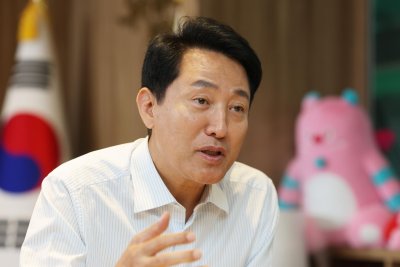
Seoul Mayor Oh Se-hoon vowed to prioritize elevating Seoul into a global top-three city after winning reelection last week. Oh is seen here during an interview with Yonhap News Agency at his office in central Seoul on Tuesday. Photo by Yonhap
Seoul Mayor Oh Se-hoon has vowed to prioritize elevating Seoul into a “global top three city” during his new term following his victory in the June 3 local elections.
Oh made the pledge in an interview with Yonhap News Agency on Tuesday after winning last week’s local election against ruling Democratic Party rival Chong Won-o, his third consecutive and fifth non-consecutive election as Seoul mayor.
“A global top three city is not merely a slogan to raise the ranking but a goal to increase quality of life,” Oh said at his office. “(I) will concentrate the new city government’s capabilities to create a warmer and healthier Seoul.”
Seoul ranked sixth in the Japan-based Mori Memorial Foundation’s Global Power City Index 2025. London topped the list followed by Tokyo, New York, Paris and Singapore.
The index evaluates cities based on six major indicators — economy, research and development, cultural interaction, livability, environment and accessibility.
Oh said he plans to establish a committee to achieve the “global top three city” goal, noting that it will serve to set the direction of the city government for the next four years.
“If (we) continuously work on areas that the city can be good at and can handle, Seoul can rise to a global top three city rivaling London, New York, Tokyo, Paris and Singapore,” he said.
Meanwhile, Oh said he has no plans set up for the presidency, even after his victory cemented his place as a political heavyweight with his party suffering a rout in last week’s elections, winning only four out of 16 key mayoral and gubernatorial seats up for grabs.
“There is no plan for the presidency,” he said, pledging to focus on elevating the city’s status. “(I) don’t think politics works out just by making plans.”
Copyright (c) Yonhap News Agency prohibits its content from being redistributed or reprinted without consent, and forbids the content from being learned and used by artificial intelligence systems.








![Josselyn Aguirre, originally from Ecuador, works as a carer for a family in Madrid [Courtesy of Josselyn Aguirre]](https://i0.wp.com/occasionaldigest.com/wp-content/uploads/2026/07/Josselyn-Aguirre-originally-from-Ecuador-works-as-a-carer-for-a-family-in-Madrid-2-1783945381.jpg?w=640&ssl=1)