state law

Ballot seizure by Riverside County sheriff was ‘unlawful,’ California Supreme Court rules

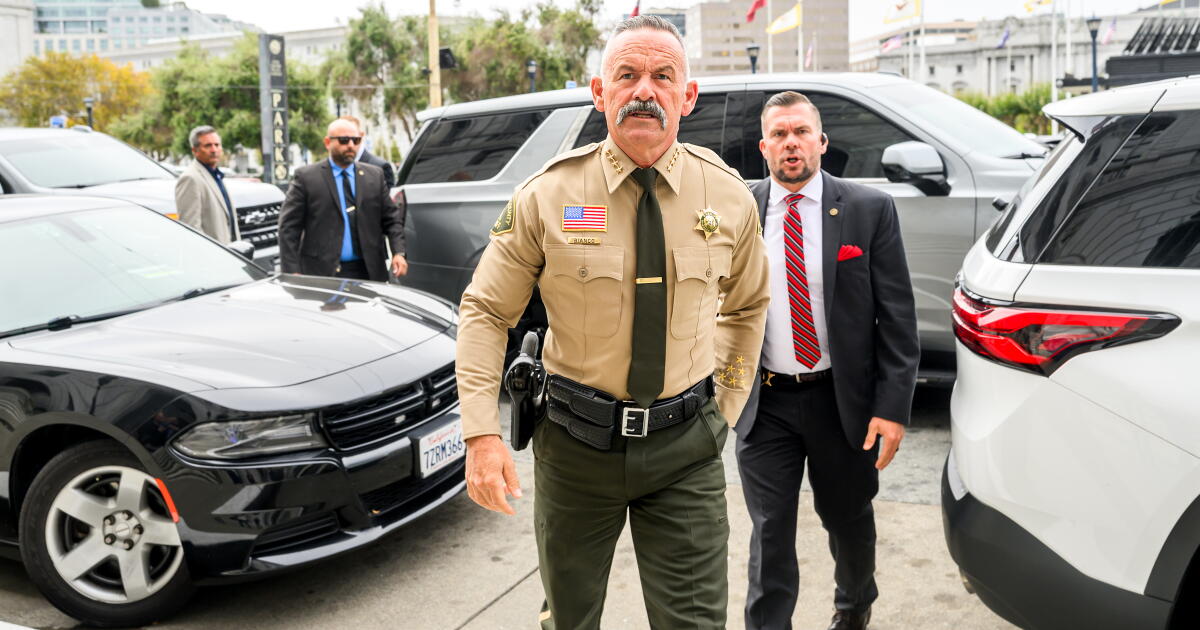
The California Supreme Court excoriated Riverside County Sheriff Chad Bianco over his seizure of hundreds of thousands of Proposition 50 ballots earlier this year, ordering the former gubernatorial candidate to immediately hand over all remaining material in a pair of scathing decisions on Thursday.

“We hold that the seizure of the ballots was unlawful,” wrote Chief Justice Patricia Guerrero. “While allegations of election improprieties are a very serious matter, our Elections Code contains numerous established mechanisms for investigating and proving misconduct that do not compromise the integrity of voted ballots — contrary to the means employed here.”

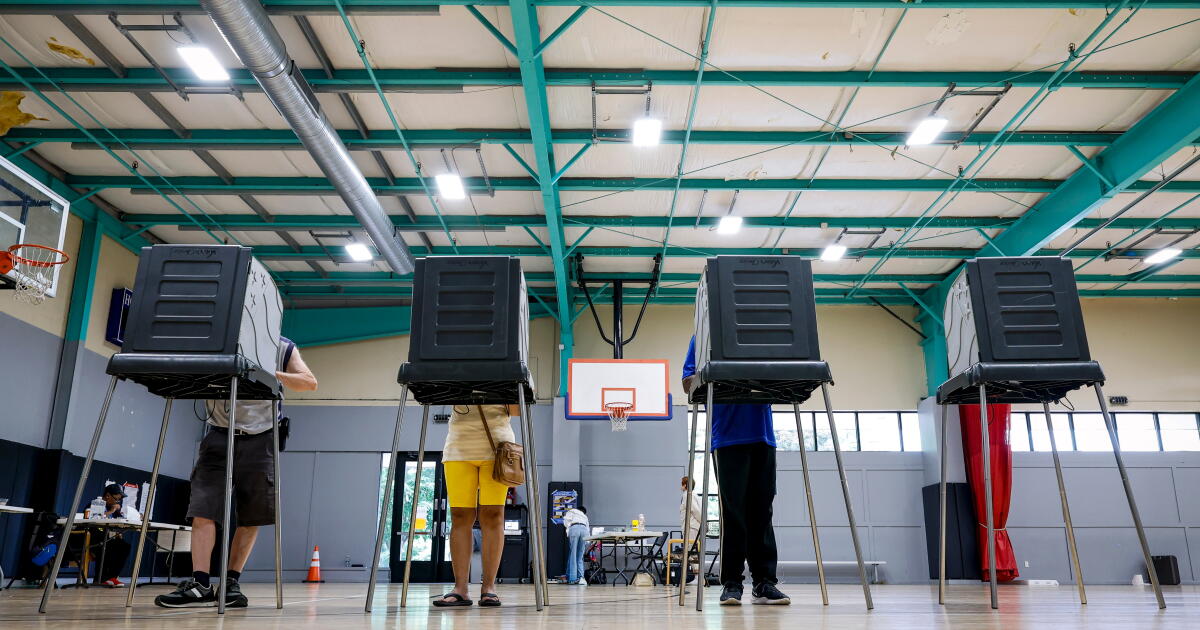
The ruling comes less than two weeks before Californians will start casting ballots in the race for governor and a handful of hotly contested congressional midterms — nationally watched elections that would be vulnerable to similar interference unless the court gave clear orders, advocates warned at oral arguments last month.

“It’s bound to be repeated again,” said Chad W. Dunn of the UCLA Voting Rights Project, which led the first of two election interference suits against Bianco, a popular MAGA personality and former Republican candidate for governor.

Bianco has long flirted with President Trump’s election fraud conspiracy movement. Though the ballot seizures in February were widely seen as a campaign stunt, the legal theory behind them — that local lawmen can commandeer voter materials from elections officials, and that sheriffs are unanswerable to officials who outrank them, including attorneys general — belongs to a larger “constitutional sheriffs” ideology.

California‘s seven Supreme Court justices appeared by turns perplexed by and incredulous of those theories during oral arguments last month.

“You are walking into a very dense thicket of very specific laws that govern elections in particular and I think it’s a very established cannon of interpretation that the specific trumps the general,” Justice Goodwin H. Liu said.

The ballot battle emerged from a Riverside County pilot program meant to boost voter confidence, a handwritten tally that ultimately fell about 46,000 votes short of the official count, sparking claims of fraud.

Riverside County Registrar of Voters Art Tinoco met with the county board of supervisors and the citizens’ group behind the claim and carefully explained how the discrepancy emerged. Yet, Bianco pursued warrants to seize more than 650,000 ballots, alleging they were evidence in an investigation of wide-ranging election fraud.

When he learned of the warrants, California Atty. Gen. Rob Bonta ordered Bianco to stand down. Instead, the sheriff accelerated his plans, dispatching armed deputies from Riverside County’s Special Investigations Bureau, Emergency Response Team and SWAT unit to sweep up the votes.

Later, Bianco directed his underlings to begin counting those ballots by hand — a potential felony under state law, which forbids anyone other than an election official from so much as touching a ballot container.

When Bonta again ordered him to stop, Bianco argued the attorney general had no authority to command him, later claiming in court that the law conferred only an “advise and consent” role.

In fact, California courts have spent more than a century delineating power between the state’s attorney general and local sheriffs and prosecutors. Voters took the matter a step further in 1934, endorsing a ballot initiative that clearly named the attorney general as California’s top law enforcement official, and put the state’s other lawmen beneath him.

In a footnote, justices also took a swipe at Bianco’s initial effort to have the case tossed for lack of standing — a move apparently undertaken on the legal advice of an elaborate artificial intelligence hallucination.

“In his preliminary briefing, Bianco challenged petitioners’ standing based on misquoted passages from, and an incorrect recitation of our holding in, Common Cause v. Board of Supervisors,” Guerrero wrote. “We disapprove of the improper use of artificial intelligence tools, which apparently contributed to the significant error that occurred here and remind counsel of attorneys’ professional duties of competence and candor to the court.”

Source link

DHS voter probe may break state laws and wrongly implicate U.S. citizens, whistleblower alleges

A last-ditch Trump administration effort to hunt for noncitizen voters ahead of November’s elections is requiring federal employees to misrepresent themselves on voter lookup tools in a way that likely violates state laws, according to a federal whistleblower’s statement released Monday.

The Department of Homeland Security probe known as the “Unlawful Voter Initiative” also asks employees to create federal law enforcement records about voters based on unreliable data, the account warns. That could potentially wrongly implicate U.S. citizens in official documentation that could spur further investigation.

The anonymous, nearly 30-page disclosure was published Monday by Democratic Senate Minority Leader Chuck Schumer of New York and Democratic Sen. Alex Padilla of California, the ranking member of a Senate committee overseeing federal elections.

It features screenshots and transcripts of a DHS training for a group of U.S. Citizenship and Immigration Services staffers, who it says were forced in late August to drop their other work, complete a less than two-hour training session and begin running DHS-provided lists of individuals through state voter registration systems to find “unlawful voters.”

The whistleblower contends that agents have been asked to review 40 individuals per day, giving them about 12 minutes to determine whether each person is a legal voter and create federal records of anyone who is not.

Padilla and Schumer said Monday the initiative was an example of President Trump attempting to interfere in elections and the short timelines would impede officials from conducting proper investigations. They noted that the data DHS has on voters can be unreliable and differ from state records, making any federal findings based on that data potentially problematic.

“We just got more proof of Trump’s vile schemes to rig our elections,” Schumer told reporters in a news conference. “The lengths Trump will go to cheat, lie and steal in this upcoming election are simply beyond the pale.”

The White House did not immediately respond to a request for comment.

The Trump administration has been targeting noncitizen voting to allege it could be a source of significant fraud during the midterm elections, even as research shows voting by people who are not citizens is extremely rare. Trump has been pushing for the U.S. Postal Service to send mail ballots only to voters verified as U.S. citizens, and his Justice Department has sued to force the release of detailed voter data in 30 states and the District of Columbia, though it has not yet succeeded in those cases.

The whistleblower report details an effort by the federal government to work around a lack of data from the states by directing Citizenship and Immigration Services employees to pose as individual voters to access their state voter records.

Some states, such as Virginia, explicitly limit their voter lookup tools to individuals who attest under penalty of law that they are looking up their own records. In other states, like California, personally identifiable information such as a driver’s license number or partial Social Security number is needed to look up individual voter records.

The whistleblower said that when officers raised concerns about liability for searching the tools against state guidance, agency leaders told them to proceed with the searches anyway.

Schumer and Padilla on Sunday sent a letter to DHS Secretary Markwayne Mullin requesting more information about the initiative and demanding that it be stopped.

Asked about the whistleblower report, a DHS spokesperson said it is “laser focused on prosecuting and removing aliens who vote and preventing the dilution of the votes of U.S. citizens.”

“The department accessed publicly available data from states’ voter rolls and cross referenced them with known aliens in our systems,” the spokesperson said in an emailed statement. “It’s not rocket science; it’s an easy step to secure our elections.”

In response to complaints about the timing, limited training and quotas for agents, the spokesperson said that “far from being rushed or untrained, these investigative efforts are conducted diligently and professionally.”

The New York Times first reported on the DHS initiative in early September.

The whistleblower account released Monday was produced by the watchdog group Democracy Defenders Fund. The group, which said it represents the whistleblower as a client, said the person is anonymous because of “an extreme fear of retaliation but they feel an obligation to speak up about the misconduct and gross mismanagement they have witnessed.”

Swenson writes for the Associated Press.

Source link

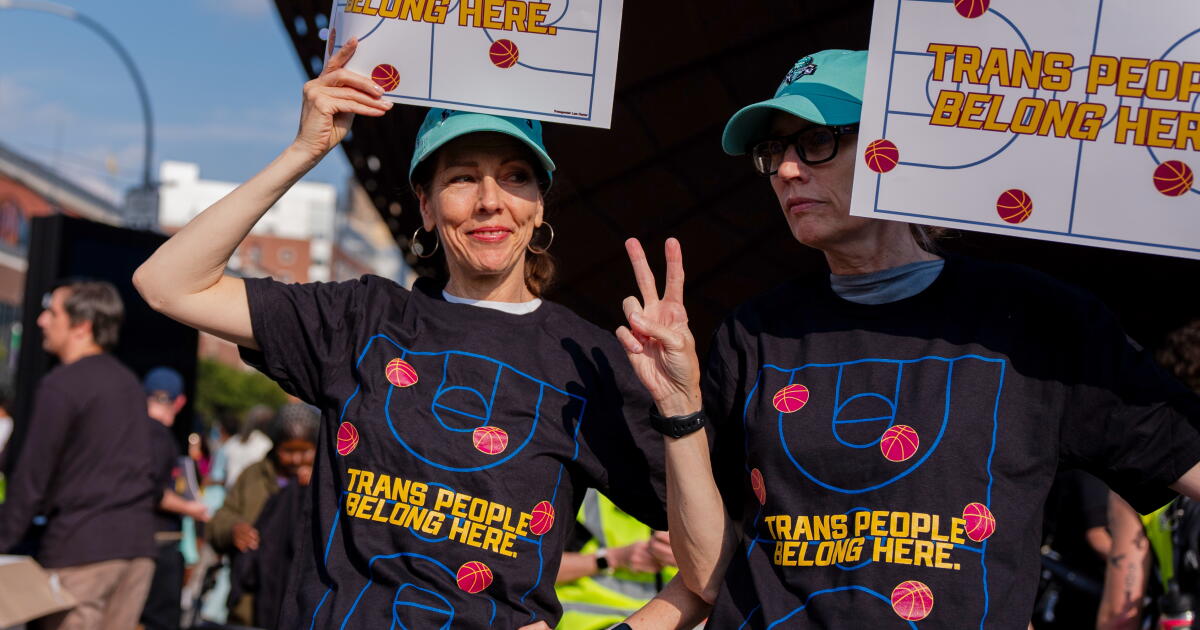
Some Democrats are recalibrating their approach to transgender issues as they seek a path to power

California Gov. Gavin Newsom does not like being on Donald Trump’s side on any issue.

But when it comes to transgender girls and women in sports, particularly at the school level, the Democrat said he largely agrees with the Republican president. Newsom, one of his party’s leading White House prospects, believes it’s “deeply unfair” for people who are assigned male at birth to compete against girls.

“I don’t want to be on that side of it, but I’m being honest — I’d be lying to you if I said differently,” Newsom told the Associated Press as he was campaigning recently in South Carolina. “I haven’t been able to figure out how to make it fair from my perspective.”

Newsom is not alone.

While most Democratic officials remain steadfast supporters of the transgender community, an increasing number in red and blue states are distancing themselves from their party’s unflinching support for the transgender community’s policy priorities, such as allowing athletes to compete on teams that match their gender identity. The shift follows years of conservative attacks against Democrats on the divisive issue, which affects a relatively small number of transgender people and their families, but has emerged as one of Republicans’ most potent political weapons in the Trump era.

Soul searching over transgender issues is one facet of a sprawling identity crisis that Democrats are confronting during the midterms and before the next presidential election. Although they risk a backlash from their progressive base, there is also a sense in some corners that the party must evolve on an issue where the overwhelming majority of voters — even many Democrats — agree with Trump.

The issue was a central theme for Trump and his Republican allies on the main stage at their midterm convention in Dallas last week, where the president said he hoped Democrats would continue to stand up for transgender girls and women who want to compete in girls’ and women’s sports.

“I’m petrified that they’ll change,” he said. “That will really hurt us.”

Republicans are already replaying some of the same political attacks that they used against Kamala Harris in the presidential campaign two years ago, when they said she’s “for they/them, not you.” On Friday, they released a new advertisement targeting James Talarico, the Democratic nominee for Senate in Texas, with the same phrase.

Democrats confront difficult political terrain

A political group backed by billionaire Trump ally Elon Musk has begun running digital ads targeting Democrats in key Senate races in Texas, Ohio and Alaska, accusing them of allowing men to compete in women’s sports.

In Texas’ pivotal Senate contest, the new ad from Musk’s America PAC opens with a video clip of Talarico saying that “God is nonbinary.”

Talarico began to distance himself from those positions months ago. He went further in a Fox News interview last week, saying he would vote in favor of a national ban for gender-affirming surgeries for transgender minors, which are rare.

“I’ve missed the mark on some of my past statements. I will be the first to admit it,” Talarico said in an interview near the Republican convention site. “I think the reason that politicians in that convention center across the street want to talk about six sexes is because they don’t want to talk about $6 diesel.”

In Iowa, State Auditor Rob Sand, the Democratic Party’s nominee for governor, has spoken out against transgender athletes competing in women’s sports as a matter of fairness. Ohio Democratic gubernatorial nominee Amy Acton has taken a similar position, although she has drawn criticism from the left for adopting Trump’s language after saying she opposed “boys playing in girls’ sports.”

And in deep-blue Massachusetts, transgender rights became a defining campaign issue during the state’s recent Democratic U.S. Senate primary, illustrating the potential backlash that party members can face.

Sen. Ed Markey, 80, secured the nomination and later credited his win to not shying away from advocating for transgender rights. He used the issue to attack his Democratic opponent, Rep. Seth Moulton, who had said he wouldn’t want his daughters to play against transgender athletes.

Moulton apologized for his comments, which drew outrage from some progressives, but the damage was done.

While Moulton lost his primary, his position — not Markey’s — is in line with the majority of voters nationally.

A June poll from Quinnipiac University found that about 7 in 10 registered voters think that transgender women and girls should not be allowed to play on women’s and girls’ sports teams. About one-quarter think they should. Democrats are divided, with about half saying transgender women and girls should be allowed and about half saying they should not.

A Pew Research Center poll conducted last year found that just over half, 55%, of Democrats would be “not too” or “not at all” comfortable with athletes playing on teams that don’t match their sex at birth, while 21% said they were “somewhat” comfortable and only 23% said they were “extremely” or “very” comfortable with this.

There’s division among activists

Markey’s public commitment to transgender rights stood out because Democratic politicians are increasingly running away from the issue, said Tyler Hack, executive director of the Christopher Street Project, which is dedicated to electing supporters of transgender rights to federal office.

“The reality of being a transgender person in America in 2026 is that on election nights, while other folks are talking about who had a good night and who had a bad night, sometimes you are quietly wondering, ‘Am I going to be OK?’” Hack said.

At the same time, even transgender activists are divided over supporting Democrats who have positions that are unfriendly to transgender people.

Erin Reed, an advocate and independent journalist covering transgender issues, this month put out a guide flagging Democratic candidates who she accused of taking anti-transgender positions. She highlighted 15 states that have such Democrats, saying that she would not vote for the “worst offenders” even if it means a Republican wins.

She doesn’t want Democrats to see that “throwing transgender people under the bus is a winning strategy.”

“One seat can be won back,” Reed wrote. “A party cannot.”

Meanwhile, Hack would probably vote for a Democrat even if that candidate supports some policies the Christopher Street Project opposes, in hopes that the party can take control of Congress. However, those candidates shouldn’t expect the organization’s endorsement.

“While I hope many of them win, I think they can do it without our resources and without our support,” Hack said.

Laws are changing around the country

The political debate is evolving as transgender people increasingly become the target of conservative backlash through state laws and the Trump administration.

Sports participation has become one of the main fronts in a political battle over transgender rights, although most Republican-controlled states have also implemented policies that affect a bigger slice of the population. There are bans on some gender-affirming health care for transgender young people and rules against transgender people from using the bathrooms that match their gender identity in schools and occasionally other public places.

At least 25 states are now enforcing laws or policies banning transgender women and girls from competing in at least some women’s and girls’ sports and three others have adopted laws but have enforcement blocked by the courts.

Earlier this year, the U.S. Supreme Court upheld state laws barring transgender girls from school teams.

Transgender athletes make up a small portion of team rosters. NCAA president Charlie Baker testified in 2024 that he knew of fewer than 10 transgender college student-athletes out of more than 500,000 total.

The debate is a preview for 2028

The debate within the Democratic Party heading into the 2026 midterms offers a preview for those Democrats contemplating presidential bids in 2028.

Newsom, who is considered a frontrunner in the shadow primary, highlighted his long record of supporting LGBTQ+ priorities, including sanctioning same-sex marriage as the San Francisco mayor decades ago and later appointing the first trans judge in California history.

But in sports, he thinks it’s unfair to allow people assigned as males at birth to compete against girls.

“It’s a hard issue. I struggle with it,” Newsom said. “I think people know where my heart is, my soul is. I have a trans godson.”

Illinois Gov. JB Pritzker, another likely Democratic presidential contender, has taken the opposite position.

He has consistently criticized state-level bans and restrictions on transgender athletes, calling them “bullying” and a “setback for equality.” Following the recent Supreme Court ruling that upheld state bans on transgender athletes, Pritzker, whose cousin is transgender, reaffirmed his position on social media.

“There’s a place for you in Illinois,” he wrote.

In Pennsylvania, Democratic Gov. Josh Shapiro opposes bans on transgender athletes in school sports, which he’s called cruel and designed to discriminate. He argues that athletic participation and eligibility should not be dictated by politicians, but rather handled by local athletic organizations — a stance in line with several LGBTQ+ groups.

He’s also raised questions of fairness, however.

“Look, I think it’s a tough deal being born into the wrong body. And I don’t think these kids deserve to be persecuted and bullied by the president of the United States,” Shapiro told The Atlantic last year. “I also don’t think they deserve an unfair advantage on the playing field.” Research has been mixed on whether transgender women have advantages in sports, and it depends partly on whether they went through puberty as boys.

Former Transportation Secretary Pete Buttigieg, who is gay and a potential presidential contender, said on Fox earlier in the year that he takes people seriously on both sides of the debate “whether you’re talking about parents who are wondering what this means for fairness for their kids competing, or parents who want to make sure that their kids aren’t being discriminated against and get a chance to participate.”

“But I also have to tell you,” he added, “I would be surprised if this is a top three or even a top 10 voter issue in the midterms this year.” ___

Peoples and Mulvihill write for the Associated Press. AP writers Kimberlee Kruesi in Providence, R.I., and Amelia Thomson DeVeaux in Washington contributed to this report.
Source link

State lawmakers to tweak childhood sex abuse law, rebuff damage caps

California lawmakers said Thursday that they plan to make “modest” changes to a controversial law that gave victims of childhood sexual abuse a new window in which to sue, but will stop short of a damage cap.

The proposed legislation, offered in the final days of the legislative session, would require older victims to provide additional proof that they were abused as children, but does not limit the amount they could receive in payouts — a demand made by local governments and school districts that have shelled out billions of dollars in recent settlements.

The proposal follows years of heated debate over a 2019 state law that removed the statue of limitations for childhood sexual abuse claims. The law paved the way for thousands of victims to sue their abusers but has been criticized for draining the coffers of local governments.

Since the law was enacted, L.A. County has agreed to pay more than $5 billion to settle more than 12,000 claims stemming from alleged sexual abuse committed by government employees in foster homes and juvenile halls.

Santa Monica last year declared a financial crisis after officials revealed that the city faces more than $229 million in sexual abuse allegation claims from a former city employee. California school districts have paid nearly a half-billion dollars to settle older claims of sexual abuse.

The new bill, known as Senate Bill 577, tweaks a proposal put forward last year by Sen. John Laird (D-Santa Cruz), who tried unsuccessfully to shepherd through a compromise between local government entities, survivors groups and plaintiffs attorneys.

Laird and Sen. Tom Umberg (D-Santa Ana), who chairs the Senate Judiciary Committee, said in interviews Thursday that they tried to thread the needle in protecting both survivors and municipalities.

Laird said he’s heard reaction from various groups since the new bill proposal was posted online. The groups are “not totally happy,” Laird said.

“My goal here was to get a situation where [the reaction] was sullen but not mutinous,” said Umberg.

L.A. County, which faces more than 5,000 new claims of sexual abuse, lobbied hard to change the law, arguing it opened the door for fraud as records to vet the cases were long gone. Chief Executive Officer Joseph M. Nicchitta praised the bill Thursday as a “thoughtful and balanced package of reforms.”

“This is a responsible step forward and moves us toward a more stable and sustainable framework, and we urge all public entities seeking reform to accept this solution now,” Nicchitta said in a statement.

The Consumer Attorneys of California, a trial lawyer trade group, backed the fact that the bill wouldn’t limit how much victims could receive from these cases.

“Damage caps would place an arbitrary limit on the harm a survivor has suffered and leave survivors bearing more of the lifelong costs of abuse—including trauma, disability, and treatment,” said Doug Saeltzer, president of the association. “Those costs should not be shifted onto the very people the system failed to protect.”

According to the most recent version of the bill, victims older than 40 must now provide “clear and convincing evidence” that the public entity “knew of misconduct” that resulted in the assault and failed to take reasonable steps to avoid it.

The bill also states attorneys who file fraudulent sex abuse lawsuits can be fined $25,000 per violation, a penalty that could be enforced by the state attorney general or attorneys for local governments. The Times reported last year on nine plaintiffs who said they were paid to sue the county over sex abuse, some of whom said they were told to fabricate their claims.

The bill also requires the attorney general to open a two-part investigation into alleged abuse within L.A. County’s juvenile detention centers, probing both the cause of fraudulent lawsuits as well as legitimate claims of abuse.

And it would also require local governments and school districts to adopt a “sexual assault prevention plan” that details to the attorney general “how grooming and sexual abuse concerns and risks will be reported.”

John Manly, an attorney who represents victims in the $4-billion sex abuse settlement, said he believed the bill would make it impossible to represent victims over 40 years old. The burden of proof, he said, was too high and the language in the bill too vague.

“It’s sad, because it tells me that all the stuff about, ‘We care about children, and we care about survivors, and we believe survivors,’ it’s all political window dressing for many of the members of the Legislature,” he said.

The compromise bill follows multiple attempts to change the law in recent years. Sen. Benjamin Allen (D-Santa Monica) tried last year to increase the burden of proof for sex abuse cases, but pulled the bill after outrage from victims rights groups.

The new version seems unlikely to have the same problem, with some groups immediately praising the lack of fee caps.

“It’s a step in the right direction,” said Chantel Johnson, directing advocate at Youth Law Center, which advocates for youth in foster homes and juvenile detention centers. “The bill was more balanced than we thought it would be.”

Senate Bill 577 is expected to come up for a vote in both the Assembly and the Senate by early next week and, if it passes, will be sent to Gov. Gavin Newsom for his consideration. Leaders in both houses praised the proposal Thursday.

“Today, we are grateful to have been able to come to an agreement on a legislative path to protect justice, prioritize prevention for the millions in our care, and acknowledge the impacts to our communities,” said Senate President Pro Tem Monique Limón.

Assembly Speaker Robert Rivas (D-Hollister) said the state would be “safeguarding schools and public services, while investing in prevention and protecting against future abuse.”

Source link