state government

California governor candidate Matt Mahan unveils government reform plan

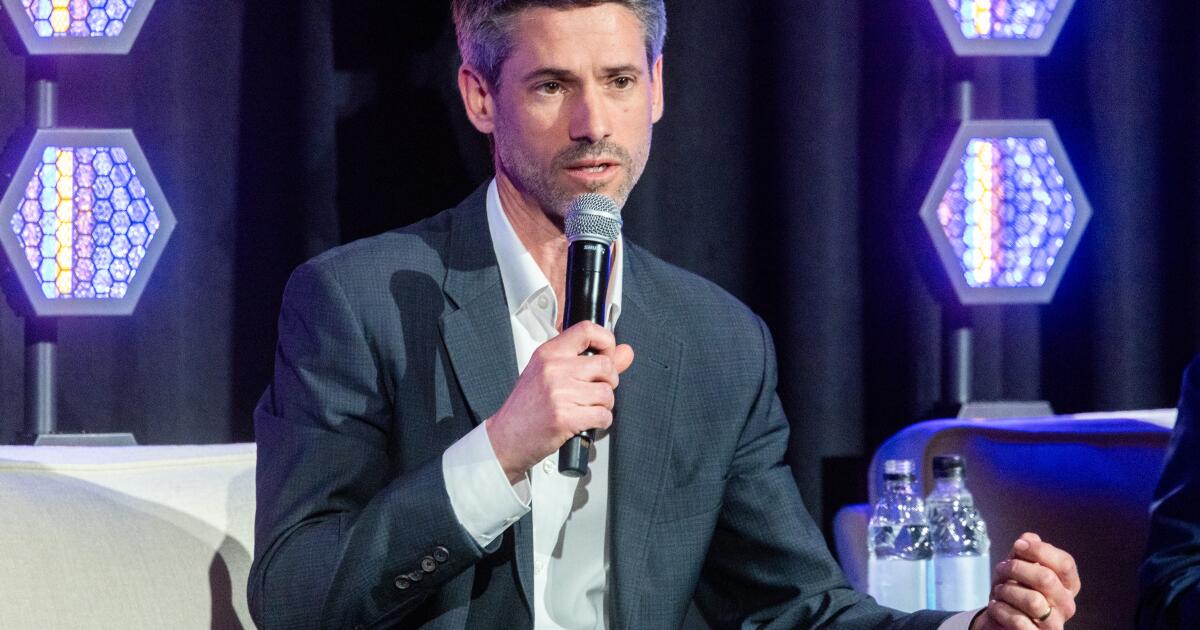
When he entered the race for California governor, San José Mayor Matt Mahan pitched himself as a pragmatic Democrat who would prioritize improving residents’ quality of life and government efficiency.

He unveiled a key part of that promise on Tuesday with an expansive plan to reform state government, including tying pay raises for elected officials and other top leaders to improvements on key issues, and pledging not to approve any tax increase until the state proves “that we can deliver better outcomes with the dollars we already have.”

Mahan also delivered a blistering rebuke of ballooning state spending — which, as he often points out on the campaign trail, has increased nearly 75% over the last six years. In 2020, amid the COVID-19 pandemic and accompanying economic uncertainty, California lawmakers approved a no-frills state budget that came in at $202 billion. Gov. Gavin Newsom’s latest spending proposal is nearly $349 billion.

“We have fallen into this lazy, reflexive mindset of always going back to voters and telling them that the only solution to every problem is a tax increase or a new bond or a new rule coming down from Sacramento,” Mahan said in an interview. “We need to step back and take a really hard look at our existing spending and increase the level of transparency and accountability in government.”

His eight-page plan includes ways to measure and track accountability, some of which are drawn from policies in other states. They include lobbying reforms, following up on audit recommendations and overhauling the state’s digital infrastructure and its procurement process — services Mahan described as “clunky and cumbersome.”

He also proposed a “California Performance Review,” inspired by a similar effort in Texas throughout the 1990s, that would review state agencies and solicit input from employees to eliminate waste and inefficiencies.

But near the top of the list is a proposal to tie pay raises for state officials including the governor, lawmakers and thousands of gubernatorial appointees to “measurable outcomes” in areas such as reducing homelessness and unemployment.

“People in the real world don’t get raises if they don’t do a good job,” Mahan said, “and I think it should be the same for the politicians and senior administrators who are allocating budgets, leading projects, making the big decisions on behalf of the people of California.”

Though the benchmarks would be created with input from the state Legislature, Mahan floated one example: reducing unsheltered homelessness by 5% to 10% within one year, something he said he’s accomplished three years in a row in San José.

It’s a solution one might expect from a former entrepreneur and mayor of a city in the heart of Silicon Valley. Mahan made a similar proposal at the local level last year, but it was rejected by the City Council.

“Tying pay to performance is nothing short of revolutionary in government. It’s a private-sector model that is overdue,” said former state Sen. Steve Glazer (D-Orinda), a Mahan supporter who sponsored several bills aiming to increase transparency in government.

Dozens of tech company executives are backing Mahan in the race for governor and have collectively donated millions to his campaign, as well as two independent expenditure committees supporting him.

That has raised concerns from some voters, and criticism from some of Mahan’s opponents, that he would be beholden to their interests and veto future regulations on tech or artificial intelligence companies.

Mahan has sought to dispel those concerns, arguing that he believes AI and social media platforms should be regulated. Of his plan to overhaul state information technology systems and infrastructure, he said that “whenever we spend public dollars, we have to run open, transparent and competitive procurement processes that ensure best value for the taxpayers.”

Though Mahan did not specify how he would link government outcomes to pay raises, state lawmakers have largely panned his campaign and are unlikely to get on board. The change probably would also require voter approval.

Currently, annual raises for elected officials are determined by a citizen commission that was added to the California Constitution in 1990. Changing how that panel works or imposing limits on when it can approve raises would require a constitutional amendment, which requires voter sign-off.

But Mahan contended it would be one of the fastest ways to fix a system that he says works for special interests at the expense of working people.

“I’m under no illusion that this will be easy, but I think it’s a necessary realignment of incentives,” he said. “We have to make ourselves as accountable to the people as we possibly can be.”
Source link

Why Democrat Betty Yee won’t quit California governor’s race

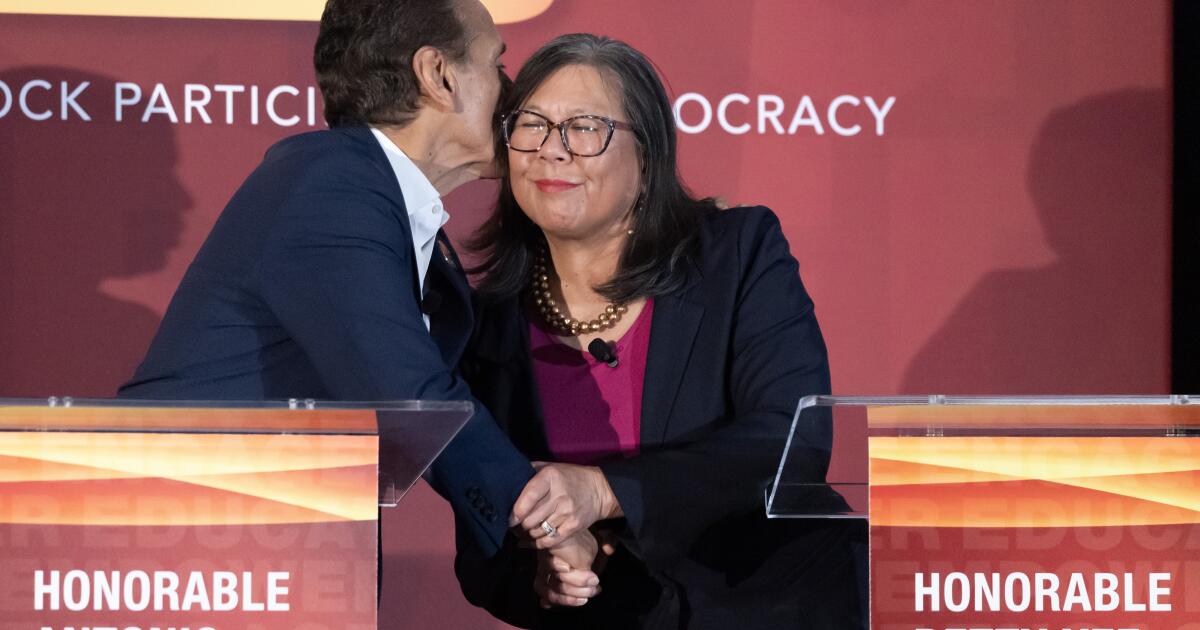
Betty Yee knows what people are thinking. She’s heard what they’ve said and read the many emails she’s gotten.

The former state controller has been running for California governor longer than just about anybody in the cheek-by-jowl field. And yet the Democrat is bumping along near the bottom, a blip in polls and a laggard in the money chase.

But no, Yee said, she has no intention of quitting the race, as she’s been urged, and no fear that, by staying in, she’ll help two Republicans advance to November’s runoff, locking Democrats out of the governor’s office for the first time since George W. Bush was president.

“I just don’t see it,” Yee said, given the way Chad Bianco and Steve Hilton, the top GOP contenders, are smacking each other around, hoping to emerge as the undisputed Republican standard-bearer.

Beyond that, she said, it’s not as if anyone’s running away with the contest; most polls have shown the leading candidate — which depends on the survey — standing atop the pile with around 20% support.

That isn’t exactly landslide territory.

“The public is still shopping,” Yee said. “In the next month or so, we’re going to try to get [a TV ad] on the air, basically make our case and hope that can spread as voters are getting more focused on the race.”

Which is not to say Yee is delusional.

“As a candidate, I make that assessment every day about whether we’re going to be viable or not,” she said last week, just before stopping by the Alameda County voter registrar‘s office to file paperwork for the June 2 primary.

“Right now, it’s less than a 50-50 chance,” Yee said, suggesting it’s her job to boost those odds by getting voters to appreciate what she offers, which amounts to unvarnished talk about the challenges facing the next governor and the ways Sacramento — which has been run for years by fellow Democrats — isn’t working.

“ ‘Accountability’ has kind of become a dirty word … where it’s about who we’re going to throw under the bus, rather than stepping back and saying, ‘What have we gotten for the dollars that we spend and, if we’re not getting those outcomes, how do we do better?’ ”

Yee served two terms as controller, in effect the state’s chief financial officer, and 10 years before that on the Board of Equalization, which oversees property tax assessments. She’s isn’t trying to buy the governorship, like billionaire Tom Steyer, or leverage her political celebrity, like cable-TV fixtures Katie Porter and Eric Swalwell. Instead, Yee is running a grassroots campaign, visiting nearly all 58 California counties and holding as many face-to-face meetings as humanly possible.

“I’m in the trenches,” she said. “I knock on doors every election cycle because to me, that’s the reality check of where people really are in terms of their lives.”

Which is certainly an admirable approach, albeit a rather idealistic strategy in a state of nearly 23 million voters, spread over roughly 800 miles from north to south. It would take more than two years of round-the-clock campaigning just to give each and every one a quick handshake.

The most notable feature of Yee’s candidacy is her message. She’s not selling barn-burning populism or viral take-downs of President Trump — “I don’t have any gimmicks, I don’t swear, I don’t have a reality-TV show personality” — but rather practical know-how and a deep understanding of state government.

It’s almost quaint in today’s theatrical political environment.

Seated at a sidewalk table outside a coffee stand in downtown Oakland, Yee focused on California’s stretched-thin budget, which happens to be her area of expertise.

“People ask what would you do in your first days as governor, if you have the privilege of serving,” Yee said, as her butterscotch latte sat cooling. “I’d come clean with the voters about where we are fiscally.”

After years of surpluses, she said, the state is spending more than it can afford. Facing a structural deficit, the next governor will have to cut programs and raise taxes, not just one or the other, with corporations and California’s richest residents being forced to cough up more. (She’s dubious, however, of a proposed November ballot measure imposing a one-time 5% tax on billionaires, questioning whether it would stand up in court.)

Sacramento’s credibility, Yee suggested, is on the line.

Before any expansive new programs can be implemented — and she has some notions for how to make life more affordable, increase access to healthcare and create jobs — Californians have to be convinced their tax dollars are being well spent and delivering proven results. “I would really insist on and invite stricter accountability of what we do with our money,” Yee said.

She’s not beyond criticizing the current administration.

“I mean, I’ve been termed out as controller since January 2023. I still get calls from companies in the [European Union], Canada, even Mexico about how we want to do business with California. Who do we talk to?” Yee said. “So I’ll send them over to the governor’s Office of Business Development and they tell me, ‘Well, we try to call people, but nobody’s answering our call.’ ”

(In response, a spokesman for the Office of Business and Economic Development touted California as “a premier hub for international business” and described foreign trade and investment as major drivers of the state economy.)

As for Gov. Gavin Newsom, while she supports his teenaged trolling of Trump, she said it shouldn’t be done through official channels, , or on the taxpayers’ dime.

“We have to focus on making the state work,” Yee said, “and that’s where I’m more focused on because people … want service delivery. They want government to be responsive to their needs. Somebody just pick up the damn phone on the other line to help them.”

Tough medicine, as she described it, and “stabilization” — which is “kind of my theme” — won’t make a great many hearts go pit-a-pat. But Yee hopes that straight talk and her distinct lack of ornamentation will count for something with California voters.

“The climate now is that people are very drawn by the performative approaches,” she said. “However, I think that will change. I want to give [voters] credit, because I do think they are very discerning when they’re ready to mark their ballot.”

The coming weeks will test that premise. And Yee is staying put.

Source link