starter

What Eric Lauer is working on to turn things around with the Dodgers

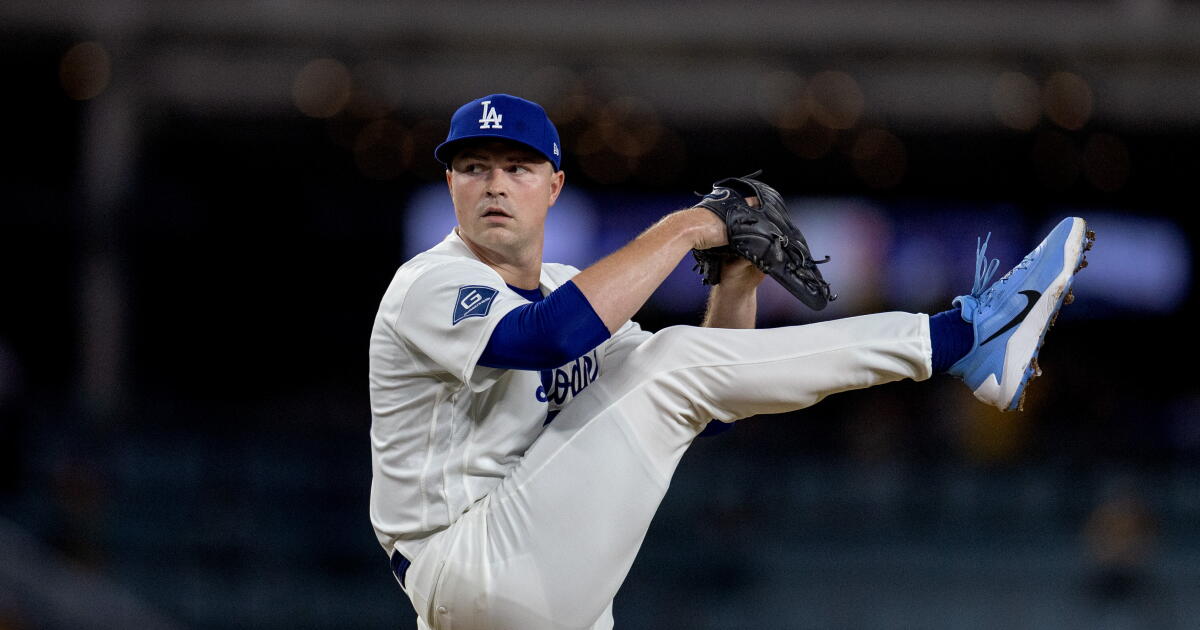
Left-hander Eric Lauer strode up the bullpen mound at Petco Park as the Dodgers-Padres series finale Wednesday transitioned into the late innings.

He had been available to provide length as a reliever, but the plan had been for him to throw either way, he said.

The Dodgers didn’t end up needing him to cover innings, so he tossed a side session. And now Lauer has the weekend to address the mechanical issues that plagued his bumpy first six weeks of the season with the Toronto Blue Jays before making his Dodgers debut Tuesday as a starter against the Rockies at Dodger Stadium.

“It’s nice having a little change of scenery, because it gives me a nice full-blown reset,” Lauer said. “I can get my feet back under me, I can get out of my head a little bit more, understand what makes me good and what’s got me to this point, and run with that.”

Lauer, who landed on waivers at a convenient time for the Dodgers, is their immediate answer to a sudden rotation depth problem.

They don’t expect him to save the day in the absence of Blake Snell (elbow surgery to remove loose bodies) and Tyler Glasnow (back spasms). But the Dodgers saw an opportunity to fill a hole in their roster and ideally help him reverse his early-season regression.

“We’ve had our guys take a look and we’ll sit down and talk through some stuff, see how much we can do on the fly, how much of it is not just subconscious,” general manager Brandon Gomes said. “But we know the makeup is really good, and we’re looking forward to getting our hands on him and helping him be as successful as he’s been in the past.”

As long as Lauer gradually improves, his presence allows the Dodgers to keep their starters on a six- to seven-day rotation, without taxing their relievers with regular bullpen days, at least while they wait for other pitchers to return to health and/or build up their workloads.

Lauer’s only months removed from success. He owned a career-best 3.18 ERA last season and was even better in the postseason, authoring 5 ⅔ scoreless innings against the Dodgers in the World Series.

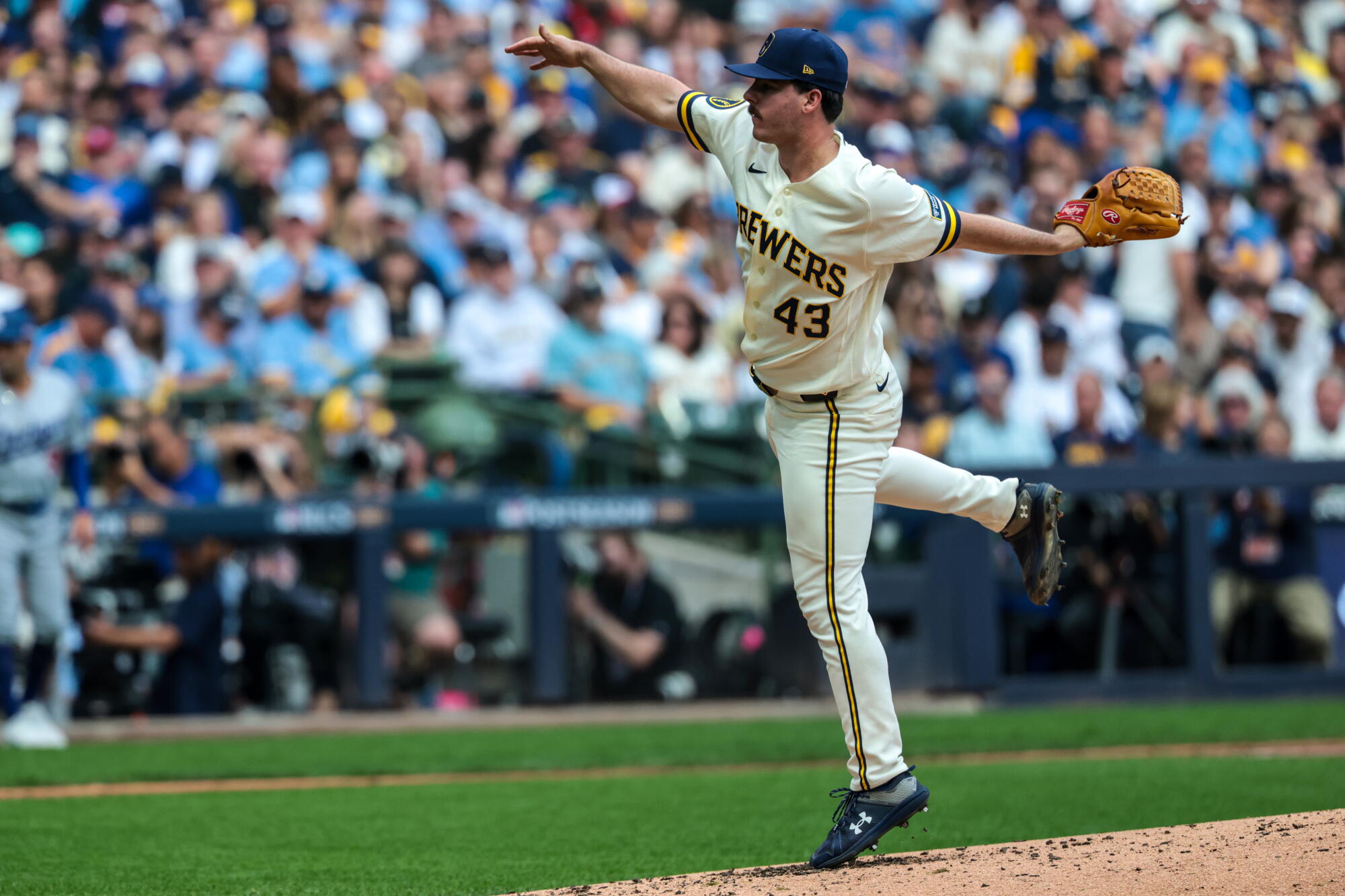
Dodgers reliever Will Klein, who threw opposite Lauer in the 18-inning Game 3 of the World Series, was one of the first people he met when he joined the team in San Diego.

“He introduced himself, and I was like, ‘All right, I know you, I remember you,’” Lauer said.

Coming off of winning the pennant, Lauer’s ERA ballooned this year to 6.96 ERA. In mid-April, the Blue Jays tried using an opener in front of Lauer when he faced the Diamondbacks. And his reaction made headlines.

“To be real blunt, I hate it,” he told reporters then. “I can’t stand it. But you work with what you got.”

This week, surrounded by different set of reporters in the visitors dugout at Petco Park earlier this week after joining the Dodgers, Lauer gave a knowing smile when the topic of usage with Toronto came up.

“There was no ill will there, there was no hurt feelings,” he said of his comments on openers. “It was a very simple question, I thought, how do you feel about an opener? I think if you ask most starters in the league, they would probably have the same response, that they don’t like it. But it doesn’t mean that I’m not willing to do it. It doesn’t mean that I’m not a team player.”

He said he cleared it up with Blue Jays pitching coach Pete Walker and manager John Schneider right away.

“I’m not going to have a problem if there is somebody in front of me,” he said. “It’s part of the game, it’s become part of the game. And we’re all here to win ballgames. It’s not about any individual player. So that was a lot more than I expected that to turn into.”

So far, Lauer has praised the Dodgers’ communication. And he’s been reunited with pitching coach Mark Prior, who was the Padres’ minor-league pitching coordinator when Lauer began his professional career in San Diego’s system.

When Lauer diagnoses his season, he sees two sets of issues working in concert.

“A couple things had compounded for me, and it was just kind of eating at me a little bit too much,” Lauer told The Times. “And I work with a mental skills coach and stuff, to where that shouldn’t happen. But I wasn’t mentally my best, which was making me not my best physically, which made me start to want to tinker.”

Lauer feels like he has a hold on the mental side. Now it’s working from the ground up to get his delivery back in sync. The goal, as Lauer explains it, is to find positions that create tension in his delivery, and pattern them until they feel like second nature.

Making mechanical adjustments during the season, however, tends to be two steps forward, one step back.

Lauer isn’t expected to have it all figured out for his start Tuesday. The Dodgers just want to see him compete with whatever he has that day.

“We compete, and then we go back to the process,” Lauer said. “…Then hopefully the process over time becomes more patterned, more grooved. And then it becomes less process, more just fine-tuning to compete.”

Source link

Can the Dodgers’ starting rotation hold up in wake of latest injuries?

Andrew Friedman got the last laugh last year, and another ring. At the trade deadline, you screamed he had to do SOMETHING BIG to get a left fielder and a closer. He did neither. The Dodgers rode a parade of starters to win Game 7 in Toronto, before they rode in a parade in L.A.

There are few things Friedman despises more than a deadline trade. The price in prospects is too high, the guarantees are too few.

Friedman might well face that same dilemma this year. We are two months from the trade deadline, and he just might need to trade for a starting pitcher by then.

Blake Snell undergoes elbow surgery Tuesday. Tyler Glasnow is back to square one in his recovery from back spasms. The Dodgers believe both will be back by the trade deadline, but you never really know for sure when an injured pitcher will return, and whether he will need some time thereafter to regain his sharpness.

There is something else Friedman despises: finishing second. It is not just about getting into the playoffs. It is about winning the National League West, with one of the two best records in the league, thus ensuring a first-round bye.

However, in a division race that was projected to be a runaway, the Dodgers find themselves in second place. With a 1-0 loss in San Diego Monday, the Padres leapfrogged the Dodgers for the lead in the NL West.

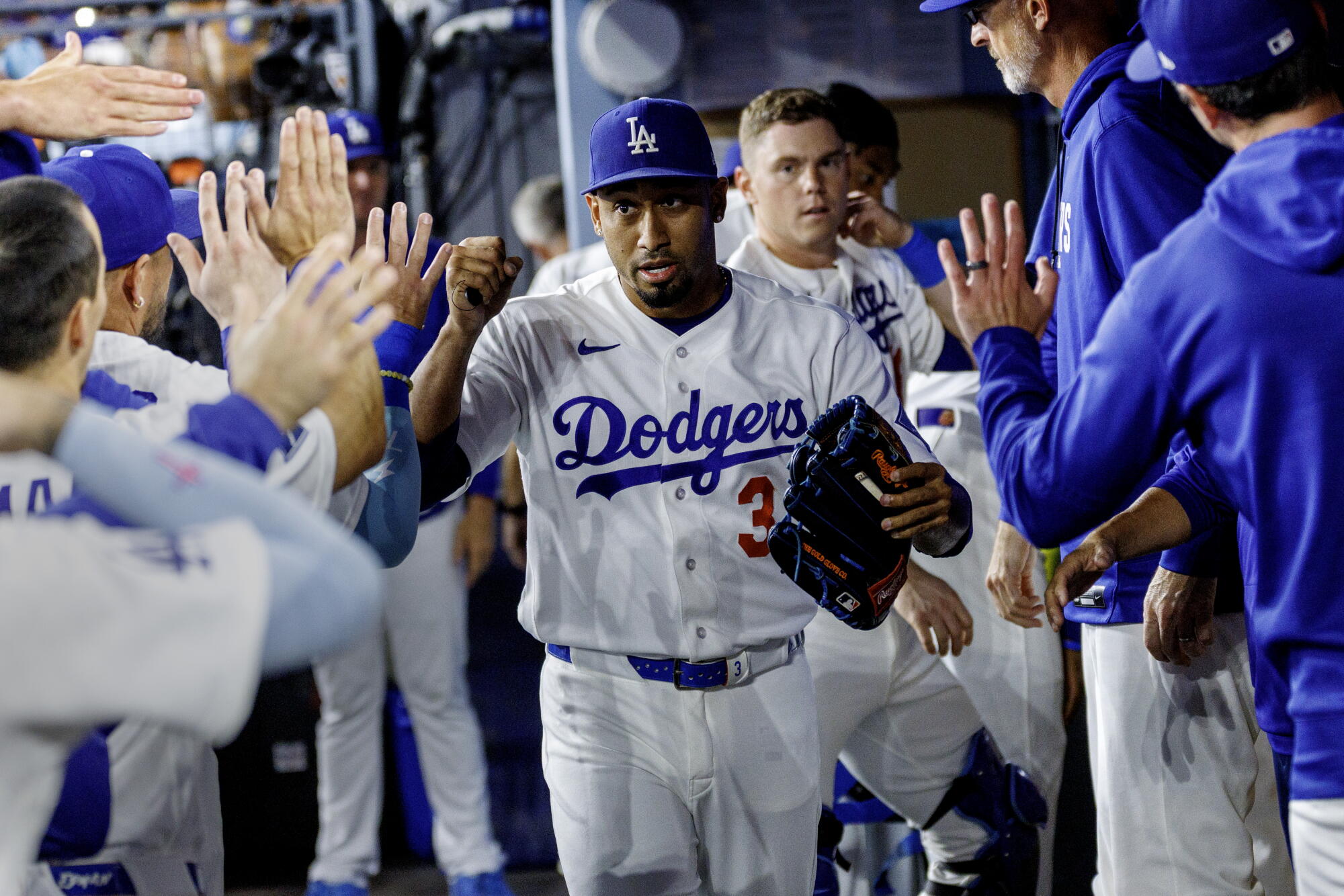
The Dodgers also figure to have a short time frame to determine whether they might need bullpen help at the trade deadline. The Dodgers have said closer Edwin Díaz is expected to return from elbow surgery sometime after the All-Star break, which would confine that time frame to two weeks, if that.

On Monday, Friedman said he was confident that the three key pitching injuries would not push him toward the July trade market.

“It’s more that the timing of the injuries would be way easier if they were spaced out,” Friedman said in a text message. “Obviously, injuries are part of the game and we can’t be shocked when it happens.

“It’s the overlapping nature that is tough in the moment, but that doesn’t really change July thoughts (at this point) or October outlook.”

In the third week of May, nothing is urgent.

The Dodgers are supplementing where they can, picking up three pitchers cut by their former clubs. The only one with name recognition: Eric Lauer, who posted a 6.69 earned-run average for the Toronto Blue Jays and complained about the team using an opener ahead of him.

The Dodgers can mix and match for awhile, but a team that prides itself on positioning its starters best for October success finds itself in an awkward position.

With Snell and Glasnow out, the Dodgers have little choice but to ask Shohei Ohtani, Justin Wrobleski, Emmet Sheehan and Roki Sasaki to take regular turns. No one but Yoshinobu Yamamoto has done that recently.

“You have to deal with the circumstances that are presented to you,” Dodgers manager Dave Roberts said. “We’re not pushing any of these guys right now. It could be a different conversation in September.

“Right now, they’ve got to take the baseball. In May, I don’t think it’s much cause for concern.”

Before the season, Fangraphs projected the Dodgers to win the NL West by 15 games, and to finish 17 games ahead of the fourth-place Padres. However, if what we see in the NL West right now is close to what we get all summer, that “different conversation in September” could involve not how to put a starter on a glide path toward October but whether that starter has exhausted himself to the point where he could not be counted on in an unexpected pennant race.

Ohtani is on pace to pitch 149 innings, a figure he last reached in 2022. He pitched 47 last year, none the year before.

Wrobleski is on pace to pitch 171 innings, 39 more than the professional high he set last season. He pitched 117 innings last year.

Sheehan is on pace to pitch 141 innings, 18 more than his professional high. He pitched 93 innings last season, none the year before.

Sasaki is on pace to pitch 137 innings, eight more than his professional high. He pitched 57 innings last season.

Maybe Lauer turns from a Dodger killer into a Dodger asset. Perhaps prospect River Ryan gets promoted into the starting rotation next month and sticks.

But July trades for starting pitchers need not be such a scary proposition. Friedman acquired Yu Darvish at the trade deadline in 2017 and Jack Flaherty at the trade deadline in 2024, and no one in Dodger Land is bemoaning the loss of Willie Calhoun, Trey Sweeney and Thayron Liranzo.

Source link

Former Corona Centennial star Camryn Bynum giving back to community

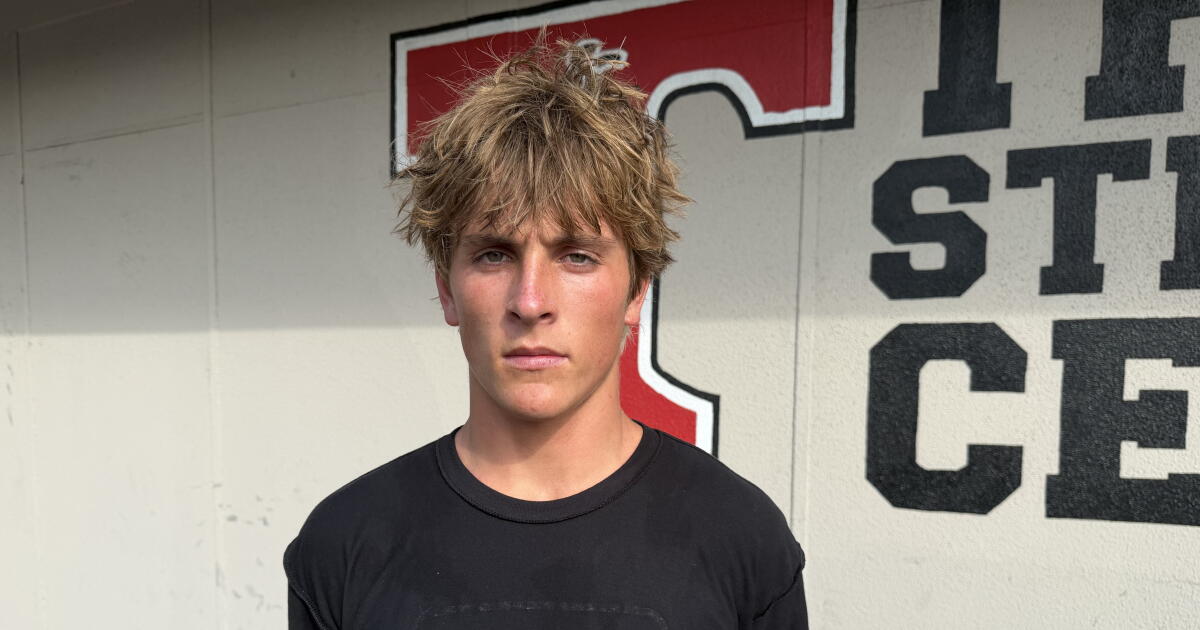
For teenagers dreaming of playing in the NFL, former Corona Centennial high defensive back Camryn Bynum has first-hand knowledge of what it takes. It involves more than a star ranking or posting videos on social media.

“It’s a simple formula to make it to where you want to go,” said Bynum, who recently signed a $60-million contract with the Indianapolis Colts and will be holding a youth camp at his alma mater on May 23.

“It’s just hard to stay on the right track and do every single thing to the best of your ability and consistently do everything the right way,” he said. “You play a few good years of high school ball, you’ll get a chance to play college ball. If you become a starter, maybe one or two years and play well enough, you’ll get a chance at the league, whether you get drafted in the first round, like everybody wants to, or you you’re an undrafted free agent. If you get your foot in the door, there’s hundreds of stories about people getting in.”

Bynum says there’s a big sacrifice that many teenagers are unwilling to accept. It’s called avoiding distractions at all costs. At least it worked for him. He didn’t start on varsity until his junior year. He became a four-year starter at Cal, was a fourth-round draft pick of the Vikings, who immediately told him he’s switching from cornerback to safety. He was ready for anything.

“I think the best way to reach the point where you want to go is to stay distraction free,” he said. “Stay working towards that goal and don’t let anything come in between. That’s been the biggest part of my journey, my faith, and being able to just trust that God will put me exactly where I need to be, but also putting in the work myself knowing that if I want to play college ball, I need to keep my grades up in high school, stay away from all the distractions, the parties, the drinking, the drugs, like a lot of people unfortunately fall into.”

His first major test was dealing with adversity. He started on JSerra’s freshman team, then transferred back home to Centennial. He said he was fifth string on the JV team. “I was literally not playing,” he said. He gave serious consideration to leaving. But Centennial coach Matt Logan and others made it clear he had to earn his playing time.

Detroit Lions tight end Sam LaPorta (87) is tackled by Minnesota Vikings safety Camryn Bynum in 2024.

(Paul Sancya / Associated Press)

“Coach Logan, he’s like, ‘No, you gotta work. You gotta work, figure it out and grind. You’re good. You’re plenty good enough, but you have to earn your spot.’ And I remember a few other coaches telling me, ‘It’s all up to you, if you want to put the work in and you want to compete, This is a competitive program, you got to figure out how to earn your playing time.’”

Bynum went to a private coach and started training morning and night. He became stronger, faster and more confident. As a junior, he became a standout. He still uses that same private coach, Jordan Brown, in his training.

Bynum, born to a Filipino mother, now lives in the offseason with his Filipino wife and young daughter on the outskirts of Manila.

Asked if Manila traffic is worse than Los Angeles traffic, he said, “They’re both pretty bad. They’re just bad in different ways.”

His first youth camp will help raise funds for his foundation that is supporting causes such as teaching flag football in the Philippines. The camp will be for youth and high school-age players and provide a vehicle for exposure along with football development.

“We want it to be a learning environment and a competitive environment to help kids get recruited and be seen more,” Bynum said.

Just remember the path is simple but the road blocks are many to overcome.

Source link

Saul Pacheco story: From jumping out of planes to track starter for 49 years

Anyone who has jumped out of a plane with a parachute deserves respect, but to do it 36 times, that’s worthy of a salute.

Saul Pacheco, who turns 88 in November, is sitting in a lawn chair at the Arcadia Invitational with his friends, the starters dressed in red suits who fire pistols to begin races.

That’s when he mentions how he was in the 82nd Airborne Division and jumping out of planes in the 1960s after graduating from Wilmington Banning High and UCLA.

“I was a jump master who became in charge of the parachute troopers,” he said.

Then he talks about becoming a teacher and wanting to return to his alma mater, Banning, which had no openings, so he ends up at rival Carson and coaching the offensive line for Hall of Fame coach Gene Vollnogle for more than two decades. Vollnogle was football coach from 1963 to 1990, winning eight City titles.

Pacheco also became a track starter in 1977. He was already well trained to fire a pistol. It was learning all the rules required in track and field that needed to be mastered.

He apparently did just that, because he’s been at it for 49 years and plans to retire as a track starter this spring. For 25 years, he was a starter for the Arcadia Invitational. Then he became the meet referee to settle any disputes. The respect he has earned can be seen in the way other starters appreciate him for helping them learn the ropes.

He’ll be inducted into the Carson Hall of Fame this fall for his contributions as a coach and athletic director.

His story is pretty amazing. He was one of 13 children. His parents apparently wanted enough siblings to form a football team. His father was a carpenter helping build minesweepers at Terminal Island for the Navy. His mother stayed home and took care of everyone. The first seven kids born were boys. He was No. 5. Imagine the competition for food at dinner time.

“Everbody came in to eat at different times,” Pacheco said. “My mother did a great job having stuff ready.”

But what about 13 children together for Thanksgiving?

“We had a lot of laughs. We all got along.”

Five of the brothers are still alive, including a 90-year-old. All three sisters are alive. One of his brothers, Henry, was football coach at San Pedro for 12 years. Henry was drafted and ended up in the Vietnam War, where environmental issues might have led to the illness, lymphocytic leukemia, that took his life in 1991.

Two of his brothers worked for the LAPD. Two other brothers became firefighters. He has a grandson who’s a deputy sheriff in Riverside.

Pacheco has worked five state track championships and numerous City Section championships.

Like an umpire in football who calls a holding penalty, the only time anyone notices a starter in track is when there’s a false start.

“If there’s a false start, someone complains,” he said.

So why spend 49 years as a track starter?

“The fun part is watching all the athletes compete and being around all the other officials,” he said. “The officials are tremendous and dedicated trying to do a good job.”

All this came out by just happening to stop by and say hello to the starters who are always pleasant and enjoy talking. Unless you ask a question, you’ll never find out about someone’s background.

So why wasn’t Pacheco wearing a red suit like the rest of his friends at Arcadia?

“I brought it just in case,” he said. “I was an alternate.”

Pacheco is always prepared, whether jumping out of planes or teaching life lessons to football players.

If anyone deserves a salute, it’s Saul Pacheco.

Source link