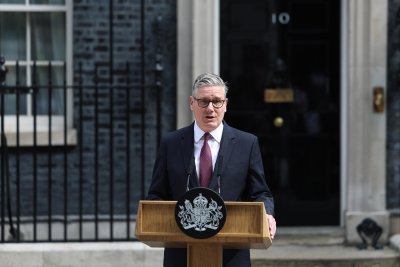
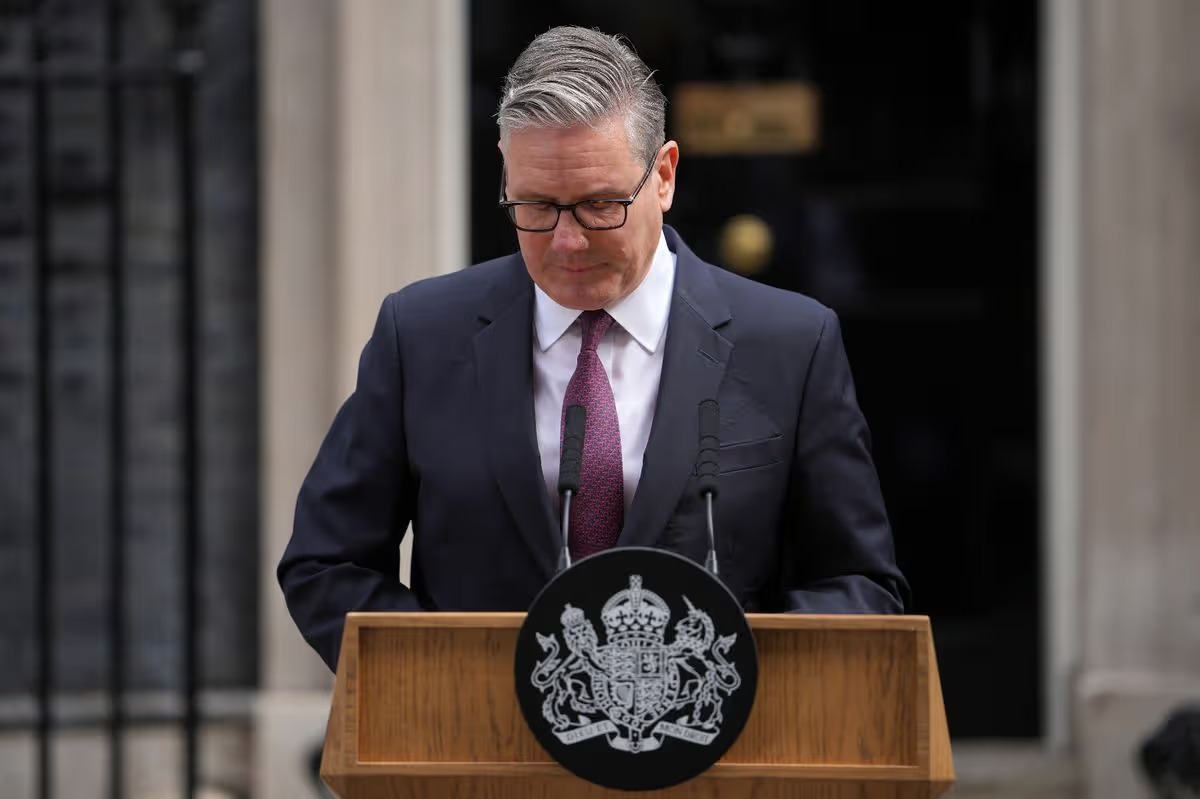
Starmer

Starmer lets US use bases for Iran clash: UK’s military, legal quagmire | Israel-Iran conflict News

Early on Monday, a suspected Iranian drone crashed into the runway at the United Kingdom’s RAF Akrotiri base in southern Cyprus. British and Cypriot officials said the damage was limited. There were no casualties.

Hours later, two drones headed for the base were “dealt with in a timely manner”, according to the Cypriot government.

Recommended Stories

list of 4 itemsend of list

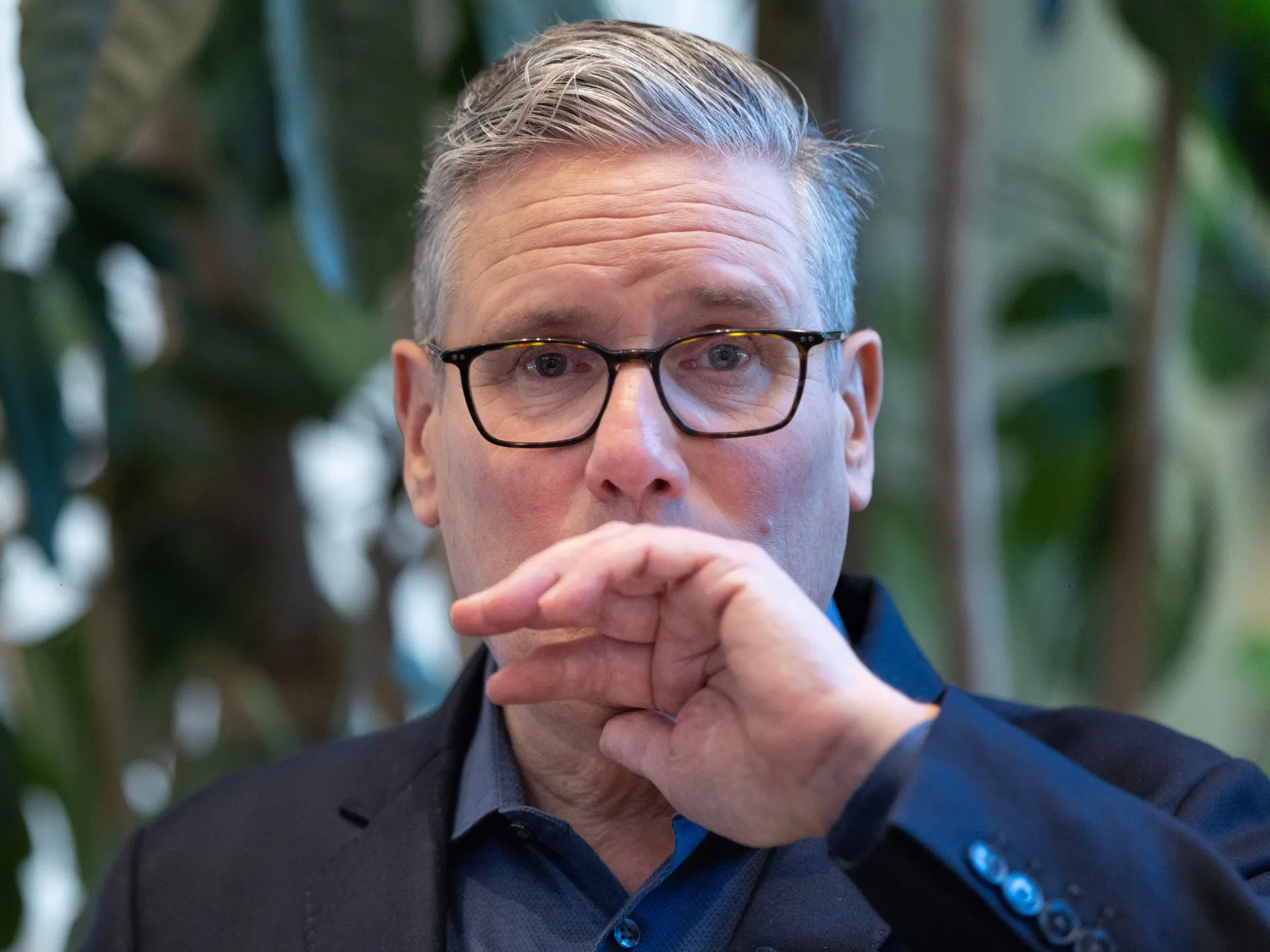
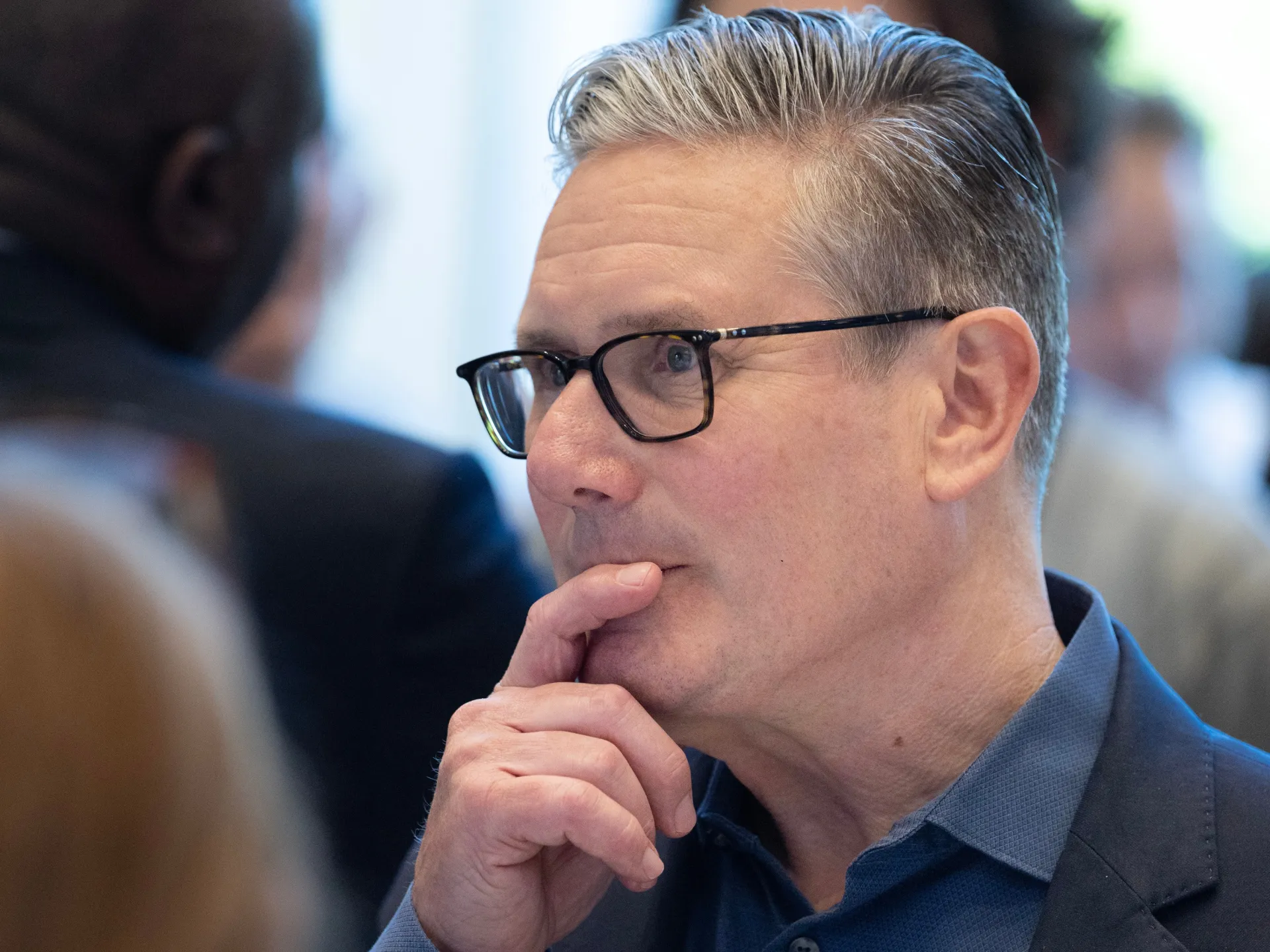
The incidents came as Prime Minister Keir Starmer signalled on Sunday that the UK was prepared to support the United States in its confrontation with Iran – raising the prospect that it could be drawn deeper into a war it did not choose by its closest ally.

In a joint statement with the leaders of France and Germany, Starmer said the European group was ready to take “proportionate defensive action” to destroy threats “at their source”.

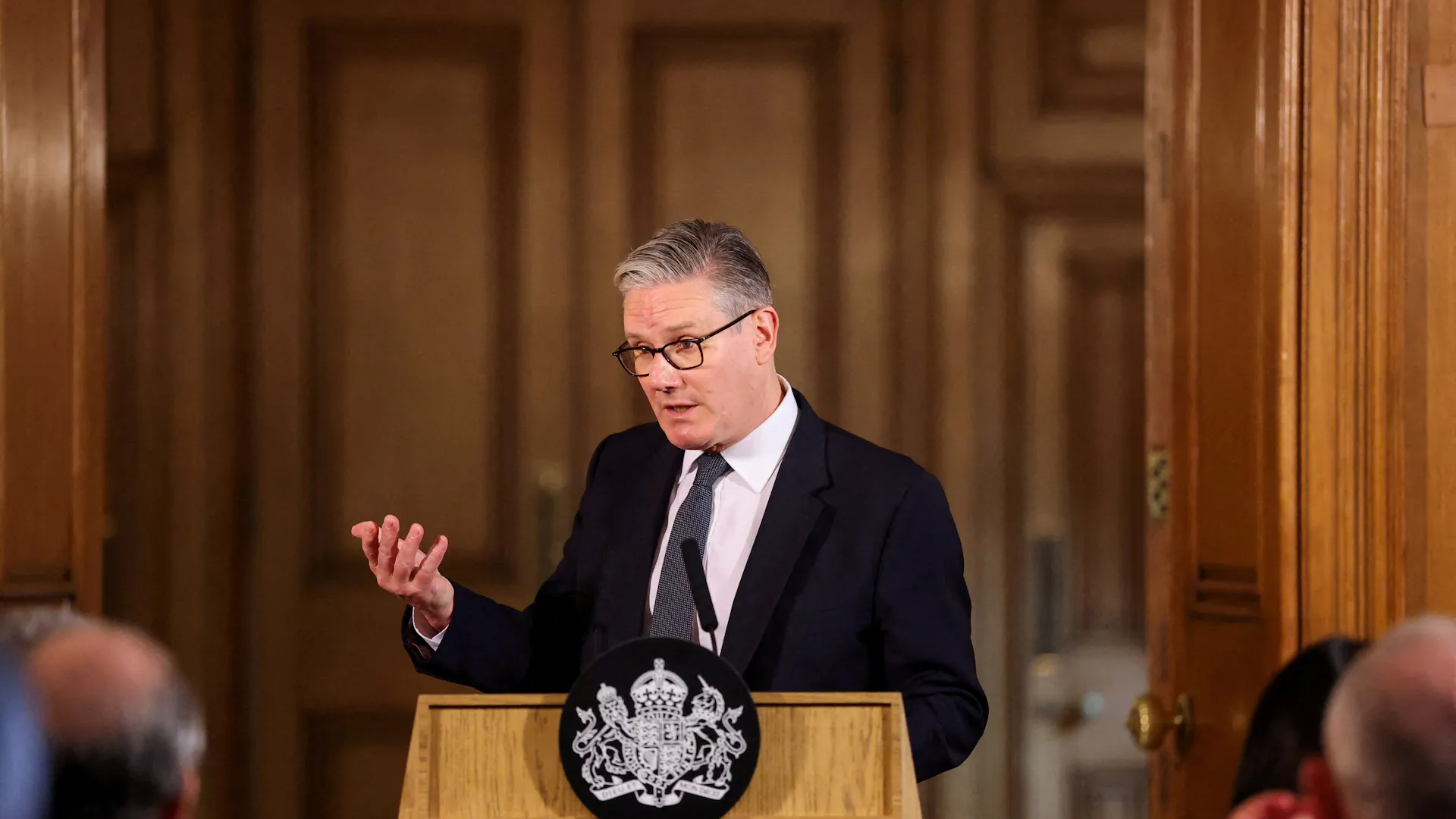
Later, in a televised address, he confirmed that Westminster approved a US request to use British bases for the “defensive purpose” of destroying Iranian missiles “at source in their storage depots, or the launches which are used to fire the missiles”.

But his agreement did little to placate US President Donald Trump, who said the decision came too late.

UK-based military analyst Sean Bell cautioned against reading too much into the Akrotiri incident.

“I understand the projectile that hit Cyprus was not armed, it hit a hangar [with] no casualties, and appears to have been fired from Lebanon,” he said, citing sources.

Al Jazeera was not able to independently verify the claim.

The broader context, he argued, is more consequential.

The US has taken the action “and everybody else is having to deal with the fallout”, he said.

Iran’s military strength lies in its extensive ballistic missile programme, he said, adding that while some have the range to threaten the UK, they do not extend far enough to strike the US.

“I don’t think [US] President Trump has yet made the legal case for attacking Iran, and … international law makes no discrimination between a nation carrying out the act of war and a nation supporting that act of war, so you’re both equally complicit,” he said.

Bell said that Washington likely reframed the issue, communicating to London that, whatever triggered the escalation, US forces were now effectively defending British personnel in the region.

That shift, he suggested, provided a legal basis to “not to attack Iran, but to protect our people”, allowing the UK to approve US operations from its bases under a “very, very clear set of instructions” tied strictly to national interest and defence.

UK officials ‘tying themselves in knots’

However, concerns of complicity had reportedly shaped earlier decisions, according to Tim Ripley, editor of the Defence Eye news service, who said the British government initially concluded that US and Israeli strikes on Iran did not meet the legal definition of self-defence under the United Nations Charter.

When Washington requested the use of bases such as RAF Fairford in Gloucestershire, UK, and Diego Garcia in the Indian Ocean, Starmer is understood to have consulted government lawyers, who advised against participation.

Up until Starmer’s televised address, in which he approved the US request, the UK had not considered the campaign a war of self-defence, said Ripley. While Washington’s legal reasoning has not changed, the war’s trajectory has.

Iranian retaliatory strikes – which have seen drones and missiles targeting Gulf states – have placed British expatriates and treaty partners under direct threat.

“The basis of our decision is the collective self-defence of longstanding friends and allies, and protecting British lives. This is in line with international law,” Starmer said.

According to Ripley, several Gulf governments, which maintain defence relationships with the UK, sought protection, allowing London to focus on protecting British personnel and partners rather than endorsing a broader campaign. However, with memories of the Iraq War hanging over Westminster, British ministers have stopped short of explicitly backing the US bombing campaign.

British officials are “tying themselves in knots” trying to describe a position that is neither fully participatory nor detached, he said.

US-UK: A strained relationship

Starmer on Monday told Parliament that the UK does not believe in “regime change from the skies” but supports the idea of defensive action.

But Ripley warned that any arrangement allowing US warplanes to operate from British air bases carries significant risks.

Iran’s missile systems are mobile and launchers mounted on trucks, he said. From RAF Fairford or Diego Garcia, US aircraft face flight times of seven to nine hours to reach Iranian airspace, necessitating patrol-based missions.

Once airborne, pilots may have only minutes to act. The idea that a US crew would pause mid-mission to seek fresh British legal approval is unrealistic, he said.

London must rely on Washington’s assurance that only agreed categories of “defensive” targets will be struck. If an opportunity arose to eliminate a senior Iranian commander in the same operational zone, the temptation could be strong. Yet such a strike might fall outside Britain’s stated defensive mandate. The aircraft would have departed from British soil, and any escalation could implicate the UK, Ripley said.

Bell highlighted another weakness: Britain has no domestic ballistic missile defence system.

If a ballistic missile were fired at London, he said, “We would not be able to shoot it down.”

Intercepting such weapons after launch is notoriously difficult, reinforcing the argument that the only reliable defence is to strike before launch.

The UK, therefore, occupies a grey zone: legally cautious, operationally exposed and strategically dependent on US decisions, it does not fully control.

Beyond the legal and military dilemmas, Starmer must also contend with a sceptical public.

A YouGov poll conducted on February 20 found that 58 percent of Britons oppose allowing the US to launch air strikes on Iran from UK bases, including 38 percent who strongly oppose.

Just 21 percent support such a move, underscoring limited domestic backing for deeper involvement.

Source link

A coup that never was: Why UK’s Starmer faced major leadership challenge | Politics News

United Kingdom Prime Minister Keir Starmer has emerged rattled but ultimately unscathed after a day and night of drama during which a key member of his Labour Party called for him to resign over revelations about a former ambassador to the US, Peter Mandelson, in the Jeffrey Epstein files.

Starmer has faced more than a week of mounting pressure since the release of the latest tranche of documents from the US Department of Justice relating to the criminal cases against the late sex offender. They revealed that Mandelson had maintained a close friendship with the disgraced financier even after Epstein had pleaded guilty to solicitation of sex with a minor and was jailed in 2008.

They include documents and emails that suggest Mandelson may have received payments from Epstein and passed sensitive information to him during the 2008-2009 financial crisis.

Since then, Starmer has admitted that he knew of the pair’s friendship when he appointed Mandelson as ambassador but said the peer had lied about the extent of it. The affair has caused outrage in parliament. Two key members of Starmer’s inner circle have resigned and a third is under pressure to go. On Monday, Scottish Labour leader Anas Sarwar called for the prime minister to do the same.

While Starmer’s position has been shored up for now by a rally of support from his cabinet on Monday night, just how badly has this affair shaken his government?

anas sarwar
‘The distraction needs to end,’ Scottish Labour leader Anas Sarwar says at a news conference in Glasgow on February 9, 2026, at which he called for Starmer to step down [Andy Buchanan/AFP]

Why did Anas Sarwar call for Starmer to resign?

Sarwar said at a news conference early on Monday afternoon that he had called Starmer and told him it was time for him to resign. “I spoke to the prime minister earlier today, and I think it’s safe to say he and I disagreed,” Sarwar said.

He said “too many mistakes” had been made in relation to the appointment of Mandelson.

“The distraction needs to end, and the leadership in Downing Street has to change,” Sarwar said as he became the first Labour heavyweight to stand against the prime minister.

While Sarwar said he believed Starmer to be a “decent man”, the fury over the Epstein files had severely damaged the government’s support and wrecked its chances in the upcoming Scottish parliament elections. Opinion polls put Scottish Labour some distance behind the Scottish National Party, followed by the far-right Reform party, led by Nigel Farage.

But cabinet members came out in support of Starmer, ultimately ending the coup that never was. Angela Rayner, former deputy prime minister and a senior member of the Labour Party, was the first to show him support. She said in a post on X that while she did not defend Starmer’s judgement, “the worst possible response [to the scandal] would be to play party politics or factional games.”

“I urge all my colleagues to come together, remember our values and put them into practice as a team,” she wrote on X. “The Prime Minister has my full support in leading us to that end.”

Within hours, nearly every minister had followed suit. Wes Streeting, the health secretary, urged people to “give Keir a chance”. Pat McFadden, the work and pensions secretary, said he hoped the prime minister would stay on, and Douglas Alexander, Scotland secretary, said he “respected” Sarwar’s stance but backed the prime minister.

On Monday night, Starmer addressed more than 400 MPs and peers at a Labour Party meeting. “I have won every fight I’ve ever been in. I fought to change the Labour Party to allow us to win an election again,” he told them.

“But I’ll tell you this, after having fought so hard for the chance to change our country, I’m not prepared to walk away from my mandate and my responsibility to my country or to plunge us into chaos as others have done.”

starmer
Journalists gather outside 10 Downing Street, the official residence of Britain’s prime minister, on February 9, 2026, as Starmer was ‘getting on with the job of delivering change across the country’, a spokesman told them. [Henry Nicholls/AFP]

Who has resigned from Starmer’s team and why?

Two key figures have already resigned, and a third is under pressure to do so, UK media has reported.

Amid growing outrage over the new revelations about Mandelson and Epstein, Starmer’s chief of staff, Morgan McSweeney, resigned on Sunday, taking “full responsibility” for advising the prime minister to appoint Mandelson to the ambassadorship, which he took up in 2025, despite the risks.

“The decision to appoint Mandelson was wrong,” McSweeney said. “He has damaged our party. … I advised the prime minister to make that appointment and I take full responsibility for that.”

Mandelson was dismissed from the post in September after serving seven months after the UK daily The Sun obtained other emails between him and Epstein that showed the depth of their friendship.

After the release of the latest tranche of Epstein documents on January 30, Mandelson resigned from the Labour Party and the House of Lords.

Tim Allan, Starmer’s communications chief, resigned on Monday, saying he was leaving to pave the way for a “new No 10 team” to be built as Starmer tries to reset his government.

Allan, who founded the Portland Communications firm specialising in reputation management, had been in the job for only five months, and Starmer is now looking to hire his fifth communications chief since taking office in 2024.

Chris Wormald, the cabinet secretary and senior-most civil servant in Downing Street, is also reportedly under pressure to resign and is said to be currently negotiating his exit from the role, which he has been in for less than a year.

The UK’s Guardian newspaper reported that some people close to Starmer view him as a “disastrous” appointment.

mandelson
UK Ambassador Peter Mandelson, shown standing just right of US President Donald Trump, seated, talks with UK Prime Minister Keir Starmer by speaker phone in the Oval Office of the White House on May 8, 2025, in Washington, DC [Anna Moneymaker/Getty Images via AFP]

What did the Epstein files reveal about Mandelson?

The latest release of files showed Mandelson maintained his relationship with Epstein after the latter was jailed in 2008.

They also suggested Mandelson received payments from the late financier and may have shared market-sensitive information with him that was of financial interest to Epstein.

Leaks of sensitive information by Mandelson allegedly took place in 2009 while he was serving as the UK’s business secretary.

The UK police have launched a criminal investigation over suspected misconduct in public office linked to Mandelson’s relationship with Epstein.

In one of the emails revealed in the most recent tranche of documents released from the US Justice Department, Mandelson told Epstein to “fight for early release” shortly before he was sentenced in 2008.

“I think the world of you,” Mandelson told Epstein, adding about his prosecution: “I can still barely understand it. It just could not happen in Britain. You have to be incredibly resilient, fight for early release and be philosophical about it as much as you can.”

starmer
Prime Minister Keir Starmer, right, talks with then-Ambassador to the US Peter Mandelson at a welcome reception at the ambassador’s residence in Washington, DC [File: Carl Court/pool/AFP]

How damaging has this all been for Starmer?

Starmer has apologised publicly for appointing Mandelson as ambassador to the US despite knowing of his ties – but not the extent of them, he said – to the disgraced financier.

“None of us knew the depth and the darkness of that relationship,” Starmer said on Thursday as he apologised to Epstein’s victims.

“I am sorry – sorry for what was done to you, sorry that so many people with power failed you, sorry for having believed Mandelson’s lies and appointing him.”

But this has not been enough to let him off the hook entirely, experts said.

Tim Bale, a professor of politics at Queen Mary University of London, said the scandal has been hugely damaging for Starmer. “A more popular PM might have been able to ride it out, but he was already facing a good deal of hostility from voters before it blew up,” Bale told Al Jazeera. “He’s managed so far to hold on to his cabinet, but he’s completely lost the trust of the electorate – and that’s hard to get back.”

Bale said “people are disgusted by” Starmer’s decision to appoint Mandelson “despite knowing that he’d stayed friends with Epstein after he’d been convicted”.

Britain's Foreign Secretary David Lammy and Deputy Prime Minister Angela Rayner
Then-UK Foreign Secretary David Lammy and Deputy Prime Minister Angela Rayner greet each other as they arrive for a cabinet meeting at Downing Street in London on September 2, 2025 [Toby Melville/Reuters]

Can Starmer’s leadership still be challenged?

While Starmer has survived Monday night, his position is still weak with low approval ratings, experts said.

Labour is expected to suffer losses in crucial Scottish elections in May. A parliamentary by-election is also due on February 26.

“The immediate danger [to Starmer] is that [Labour] suffers catastrophic losses in a by-election and then a big set of elections in May,” Bale said. “That will reignite calls for Starmer to resign and, if he doesn’t, a challenge from one or more of his colleagues.”

Among the top runners to replace Starmer are Rayner, his former deputy prime minister who resigned from the cabinet last year over a tax scandal.

A website pitching Rayner as leader, angelaforleader.co.uk, went live in January briefly, The Guardian newspaper reported. Rayner has denied any links to the website.

Another politician gearing up to replace Starmer is Wes Streeting, the health secretary.

Streeting, 43, has also been called out for his ties with Mandelson. In a bid to distance himself from the former ambassador, Streeting this week shared private chats he had with Mandelson that questioned the government’s growth plan.

Home Secretary Shabana Mahmood, 45, is another possible successor to Starmer. She has grown popular among several right-aligned leaders of the Labour Party with her moves to tighten border controls and crack down on unauthorised immigration.

epa12520210 British Prime Minister Sir Keir Starmer departs 10 Downing Street for Prime Minister's Questions at parliament in London, Britain, 12 November 2025. EPA/ANDY RAIN
British Prime Minister Keir Starmer has survived calls for him to step down, but his approval ratings are low, and he remains vulnerable [File: Andy Rain/EPA]

What other issues has Labour faced under Starmer?

The Labour Party swept to power in July 2024, ending nearly 14 years of Conservative rule. However, the prime minister has since had a difficult time in Downing Street.

In the 2024 elections, Reform UK, the right-wing, populist, anti-immigration party led by Farage, won just five of the 650 seats in parliament. However, it has gone on to become one of the best polling British parties. In July, a YouGov poll put Reform in the lead, predicting it could win 271 seats if elections were held then.

In his speech on Monday, Starmer called the challenge posed by the rise of the Reform party, which has won over a number of high-profile defectors from the Conservative Party in recent weeks, “a fight for our lives”.

Starmer is also facing domestic pressure to put a stop to undocumented immigration to the UK. More than 32,000 people tried to cross the English Channel from France in small boats last year. These crossings are dangerous and have resulted in many deaths.

The UK and France have laid the blame on each other for the rising numbers. This led to a “one-in-one-out” migrant deal signed between the UK and France last year, under which the UK returns one migrant to France for each accepted refugee. The scheme has had little success, however, with only a handful of migrants returned.

Starmer himself has dropped in popularity by 20 percentage points from July 2024 to January this year, according to YouGov.

“Reform has obviously spooked some in the Labour Party,” Bale said, adding, however, that Reform is eating into the Conservatives’ base more. “And Labour probably needs to worry more about the Greens and the Liberal Democrats at this stage.”

“The break-up of the two-party duopoly that has dominated British politics for a century is no longer simply an aspiration among challenger parties but an ongoing reality,” Bale said.

Source link

Trump tempers criticism of UK’s Chagos Islands deal after talk with Starmer | Donald Trump News

Despite calling it earlier an ‘act of great stupidity’, Trump signals support of Starmer’s Chagos deal.

United States President Donald Trump appears to have endorsed the deal struck by British Prime Minister Keir Starmer to hand over the sovereignty of the Chagos Islands to Mauritius, weeks after calling it a “great stupidity”.

Trump had last month described the United Kingdom’s decision to cede sovereignty of the Indian Ocean archipelago, which includes a joint US-UK military base on the island of Diego Garcia, as an “act of great stupidity”.

Recommended Stories

list of 3 itemsend of list

The US president said he held productive talks with Starmer on Thursday and that the UK leader had made the “best deal he could make”.

But he also warned in a post on Truth Social that the US would retain the right to “militarily secure and reinforce” the US presence on the island of Diego Garcia if it were threatened.

The British government said in a statement that “the leaders agreed their governments would continue working closely to guarantee the future operation of the base and speak again soon”, the AFP news agency reported.

Under a deal agreed last May, the governments of the UK and Mauritius jointly announced that full sovereignty of the Chagos, a remote group of more than 60 islands, would again belong to Mauritius in exchange for guarantees that the US military base could continue operating there for the next 99 years.

Last year’s announcement stirred a range of emotions among the Chagossians, who were forced from their island home in the 1960s and 1970s and resettled in Mauritius, the Seychelles and the UK. For decades, they have campaigned to return to their ancestral lands freely, without any restrictions.

The Chagos Islands have been under British control since 1814. In the 1960s and 1970s, Britain forcibly evicted nearly 2,000 locals to make way for the US military base, which played a pivotal role in US military operations in Vietnam, Iraq and Afghanistan. In 2008, the US also acknowledged that the base had been used for covert rendition flights of “terrorism” suspects.

Source link

UK PM Starmer urges ex-Prince Andrew to cooperate in Epstein files probe | Sexual Assault News

Starmer says Andrew Mountbatten-Windsor should testify before US Congress about his past dealings with the late convicted sex offender.

The United Kingdom’s Prime Minister Keir Starmer has suggested that Andrew Mountbatten-Windsor, a former prince, should cooperate with authorities in the United States investigating the Jeffrey Epstein files and activities.

Speaking on Saturday to reporters at the end of a visit to Japan, Starmer said, “Anybody who has got information should be prepared to share that information in whatever form they are asked to do that.”

Recommended Stories

list of 4 itemsend of list

“You can’t be victim-centred if you’re not prepared to do that,” he added, according to remarks carried by Sky News. “Epstein’s victims have to be the first priority.”

Asked whether Mountbatten-Windsor, the younger brother of King Charles III, should issue an apology, Starmer said the matter was “for Andrew” to decide.

His comments came as the US Justice Department said it would be releasing more than three million pages of documents along with more than 2,000 videos and 180,000 images under a law intended to reveal most of the material it had collected during two decades of investigations involving the wealthy financier, who died in a New York jail in 2019 while awaiting trial on sex trafficking charges.

The disclosures have revived questions about whether the former British prince, who was stripped of his title last year over his friendship with Epstein, should cooperate with the US authorities in their investigation.

Mountbatten-Windsor – who has long denied any wrongdoing in relation to Epstein – has so far ignored a request from members of the US House Oversight Committee for a “transcribed interview” about his “longstanding friendship” with the billionaire.

The files have also prompted the resignation of Slovak official Miroslav Lajcak, who once had a yearlong term as president of the United Nations General Assembly.

Lajcak was not accused of wrongdoing but left his position after emails showed that Epstein had invited him to dinner and other meetings in 2018.

The newly released files also show Epstein’s email correspondence with Steve Bannon, one-time adviser to US President Donald Trump; New York Giants co-owner Steve Tisch and other prominent contacts in political, business and philanthropic circles, such as billionaires Bill Gates and Elon Musk.

The files show a March 2018 email from Epstein’s office to former Obama White House general counsel Kathy Ruemmler, inviting her to a get-together with Epstein, Lajcak and Bannon. Lajcak said his contacts with Epstein were part of his diplomatic duties.

Meanwhile, the US Department of Justice is facing criticism over how it handled the latest disclosure.

One group of Epstein accusers said in a statement that the new documents made it too easy to identify those he abused, but not those who might have been involved in Epstein’s criminal activity.

“As survivors, we should never be the ones named, scrutinised, and retraumatised while Epstein’s enablers continue to benefit from secrecy,” it said.

Source link