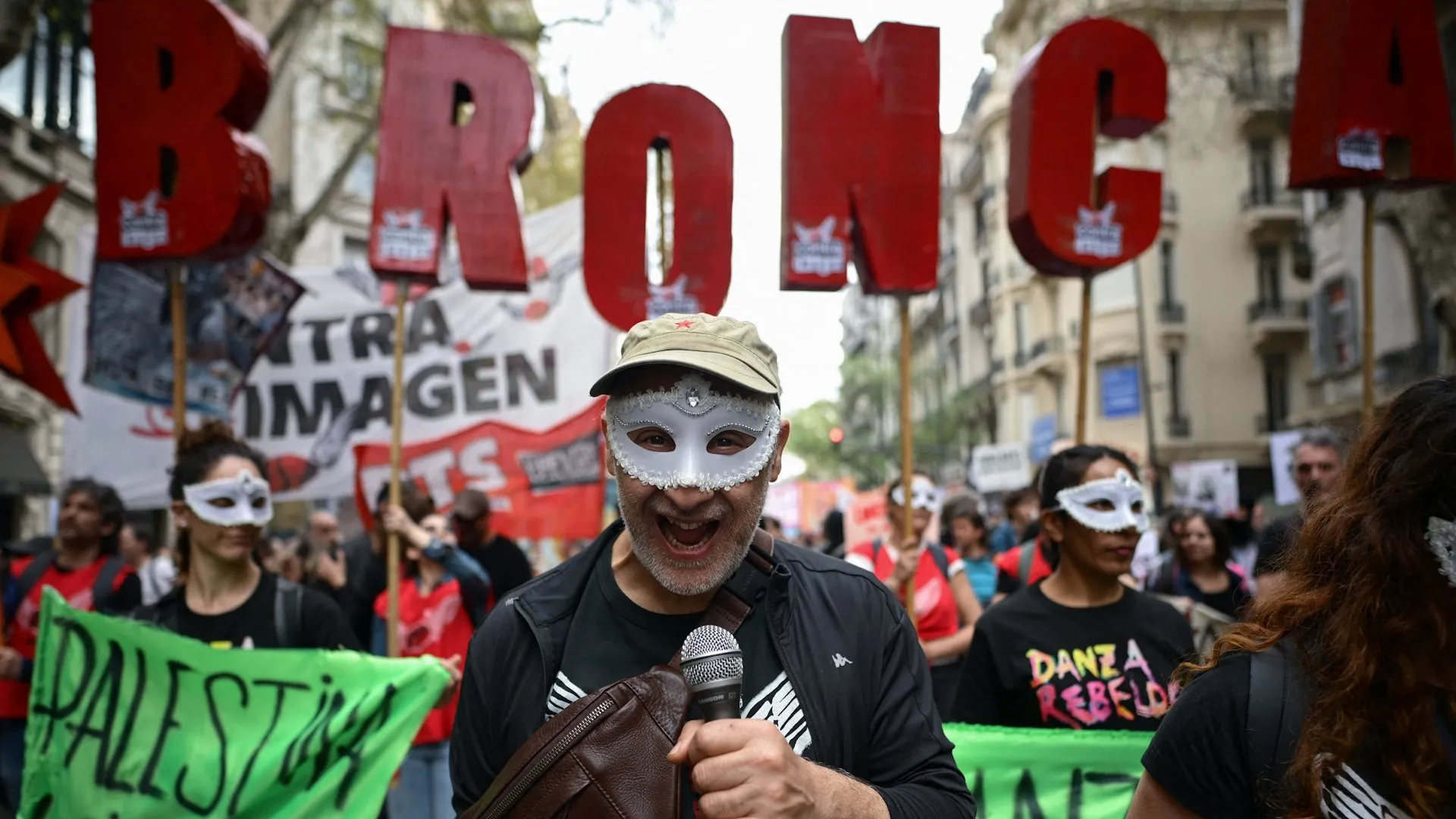
Thousands of protesters took to the streets of Buenos Aires for the ‘March of Anger’, organised largely by left-wing groups opposing the Milei government’s austerity policies. Protesters say the cuts are hurting working families.
A FURIOUS Scarlett Moffatt today hit back after a complete stranger told her that she looks “humongous”, as she reaches the final stages of her pregnancy,
Pregnant Scarlett Moffatt was left furious after a stranger called her ‘humongous”Credit: Instagram/ @scarlettmoffattScarlett said she is getting fed up with people calling her ‘huge’Credit: Instagram/ @scarlettmoffatt
Scarlett, who is also a mum to Jude, two, today revealed she had been told she was “huge” by someone she didn’t even know, while at a party – and that it had happened before.
Venting on her Instagram Stories, the heavily pregnant Gogglebox star, who is due to give birth next month, said: “I’ve had women come up to me and tell me I look huge.
Sign up for the Showbiz newsletter
Thank you!
“I’m not even joking. Like people are actually just coming up to us.
“I was at my nanny’s party and a woman came up to me and this is where it started and then it’s carried on.
“She didn’t even say hello, she went, ‘Oh my goodness, you look humongous!’
“What am I meant to say to that? I know they’re not saying it to be mean, but let’s not, let’s just not, let’s just not.
The I’m A Celeb star is expecting her second son with partner Scott DobinsonCredit: InstagramScarlett has kept fans up-to-date with her pregnancyCredit: Getty
“Let’s just not comment on anyone’s bodies, whether they’re pregnant or not.
“Because I don’t know how to respond to someone telling me that I look huge.
“Cause I’ve still got a little while left of my pregnancy as well. It’s not like. I’m like literally about to drop.”
“The first trimester was horrific,” she told us earlier this month.
“With Jude, I was lured into a false sense of security – I kept thinking that all my friends who were pregnant were dead whingey because I had no morning sickness or any symptoms other than the fact I could feel him moving about.
“But this time, the first trimester I was still working and filming and I was getting bad travel sickness – I’ve never had that in my life before. I was also running off to throw up at work.”