Dodgers clinch postseason spot
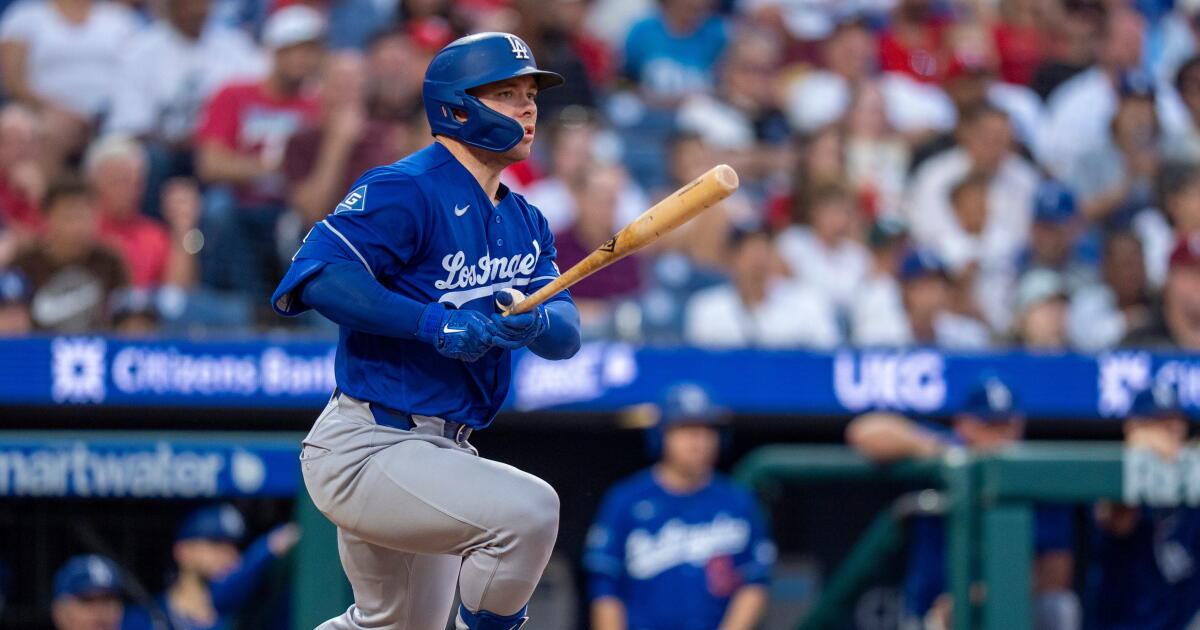
From Maddie Lee: The Dodgers celebrated clinching a postseason berth with a champagne toast. Simple. Restrained. Leaving room for larger celebrations to come.
“The message was, ‘We haven’t come close to playing our best baseball yet,’” manager Dave Roberts said after the Dodgers’ 4-1 win over the Reds on Monday. “And here we are with 12 games left, getting a ticket to the postseason. And that says a lot about this entire organization. And just to finish strong.”
It marked the Dodgers’ 14th straight playoff berth, tying a record set by the Atlanta Braves from 1991 to 2005.
“It’s different than anything I’ve experienced, for sure,” Tarik Skubal said of the understated celebration. “But I think it just speaks to the people in this room and what they expect out of this team. That was cool. A little toast and move on. Forget it happened. We’ve got more to accomplish.”
Most teams don ski goggles to celebrate with champagne and beer showers. The Dodgers will save the messier celebration for clinching the division. Their win over the Reds (70-80) trimmed that magic number to three.
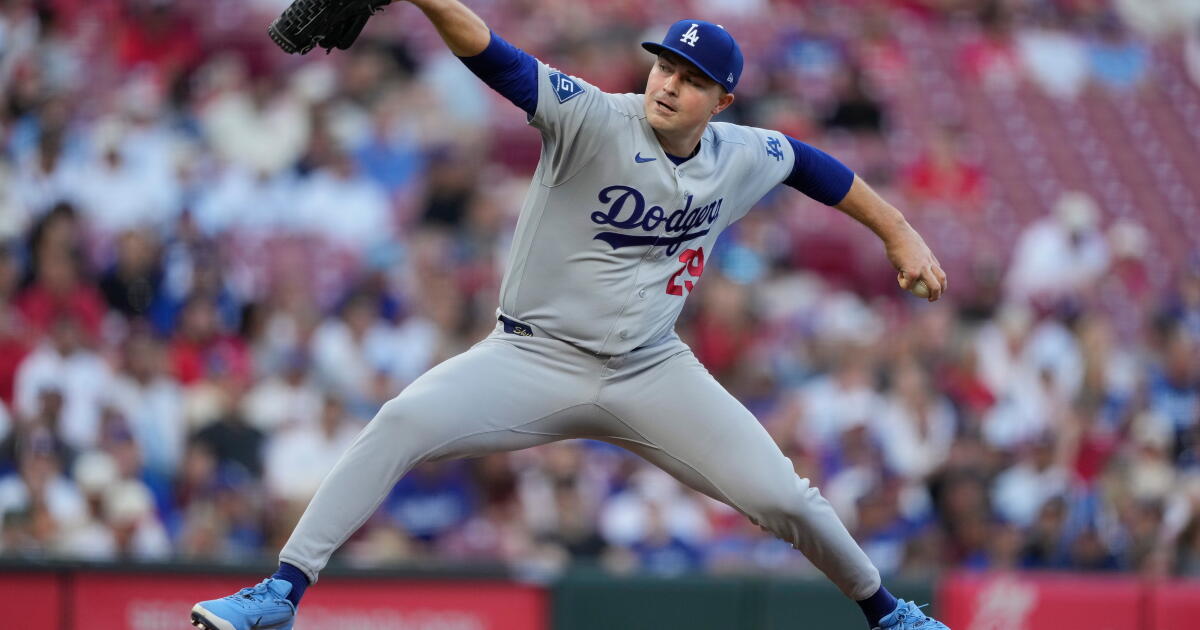
It was fitting that Skubal, the Dodgers’ big trade-deadline acquisition, was on the mound for the clincher. He’s progressively improved in his eight starts with the Dodgers. And on Monday, he breezed through seven shutout innings, allowing just four baserunners (three singles and a walk).
“I think a lot of the struggles have been me versus me,” Skubal said. “Thinking too much out there, not competing the way I know how to compete. Just thinking too much about pitch selection at times and trying to be too fine and not challenging guys.”
Continue reading here
Dodgers box score
MLB standings
Get the latest on L.A.’s teams in the daily Sports Report newsletter.
By continuing, you agree to our Terms of Service, which include arbitration and a class action waiver. You agree that we and our third-party vendors may collect and use your information, including through cookies, pixels and similar technologies, for the purposes set forth in our Privacy Policy such as personalizing your experience and ads.
Will Edwin Díaz be on postseason roster?
From Maddie Lee: Even as the Dodgers clinched a postseason berth with their 4-1 win over the Reds on Monday, bullpen uncertainty loomed.
When they get to the playoffs, who’s going to take the ball in high-leverage situations?
Their options are dwindling. Edgardo Henriquez landed on the 15-day injured list Monday with low back discomfort, ruling him out for the rest of the regular season. Edwin Díaz was so shaky in his rehab assignment Sunday that a spot on the postseason roster isn’t guaranteed.
“We have to go with our best pitchers, as far as performance, talent, all that stuff,” manager Dave Roberts said before the Dodgers opened a four-game series against the Reds. “So my bet is that he will be [on the roster]. But there’s got to be some kind of evidence or something for us to sort of bet on. And so my bet is, yes, but we’ve still got to see something.”
Continue reading here
Angels defeat the Mariners
Reid Detmers struck out eight over six innings, and Jose Siri and Denzer Guzman each drove in two runs to help the Angels beat the fading Seattle Mariners 6-4 on Monday night.
Detmers (6-8) gave up three runs and seven hits and a walk as third-place Seattle (70-81) dropped 5½ games behind AL West-leading Houston with 11 to play.
Ryan Watson pitched 1⅓ scoreless innings and Ben Joyce walked two in the ninth before retiring J.P. Crawford on a lineout to first base for his fifth save.
Continue reading here
Angels box score
MLB standings
Steve Ballmer did the right thing for his team
From Kevin Baxter: Clippers owner Steve Ballmer and his staff had spent the last 12 months loudly insisting they’d done nothing wrong.
The podcast “Pablo Torre Finds Out” first raised questions about payments star forward Kawhi Leonard received from Aspiration Partners without doing any endorsement work to benefit the company on Sept. 3, 2025. The NBA responded by starting an investigation.
In its findings — released Sept. 2 — an independent law firm reported “a pattern of misconduct and multiple significant rules violations” that benefited Leonard, who received $66 million in cash and equity from four companies through agreements facilitated by Ballmer and team executives at the request of Leonard’s uncle and then-agent. Those deals violated the league salary cap, which limits how much teams can pay players. The cap is $164.961 million for the coming season.
The Clippers released two statements that same day, protesting the finding and the stiffest sanctions in NBA history, including a $30-million fine and the loss of five future first-round draft picks. In addition, Ballmer, 69, was banned from all league activities for the next year.
After immediately calling the NBA’s investigation “biased” and vowing to “vigorously challenge these findings and penalties through every avenue available to us,” the Clippers were silent for 11 days.
On Sunday night, they surrendered.
Continue reading here
Swanson: Clippers avoid a death penalty with Kawhi Leonard trade, but only if they clean house
Chargers miss chance to seize spotlight in L.A.
From Mirjam Swanson: It’s just one game. And it’s a long season.
Maybe a loooong season, if you’re a Chargers fan.
Sunday’s season-opening debacle — a sloppy, uninspired and uninspiring 26-14 loss to the Arizona Cardinals at SoFi Stadium — was a first, giant step back for these Chargers.
You can’t call Game 1 of any season a must-win. But you can pan back and recognize that sometimes Game 1 is a really, really should-win affair.
Not only because the Cardinals represented as close to a gimme as the Chargers are going to get on their precarious schedule.
But the Chargers also missed a prime opportunity to fill a hole in the L.A. football plot, rare as those are.
Continue reading here
Rams give updates on Garrett, Donald
From Gary Klein: Sean McVay and the Rams thought the situation was under control, or at least manageable.
Star edge rusher Myles Garrett first experienced knee discomfort and swelling during training camp, a condition that caused him to sit out the majority of team workouts throughout the weeks leading up to the season opener.
But Garrett failed to record a tackle, and was clearly not himself, in an embarrassing defeat by the San Francisco 49ers on Friday in Australia.
On Monday, Garrett was scheduled to have surgery, and he will sit out at least the next four games on injured reserve.
Will lineman Aaron Donald, who has returned from a two-year retirement, make his season debut against the Giants?
“We haven’t decided that yet,” McVay said. “He’s going to continue to work his process and we’ll see what that looks like.”
Continue reading here
This day in sports history
1899 — Willie Smith wins the U.S. Open golf title, beating George low, Val Fitzjohn and W.H. Way.
1923 — Bill Tilden wins the U.S. Lawn Tennis Assn. championship, beating William Johnston in straight sets, 6-4, 6-1, 6-4.
1962 — Frank Tripucka of the Denver Broncos passes for 447 yards and two touchdowns in a 23-20 win over the Buffalo Bills.
1971 — Stan Smith wins the U.S. Open title over Jan Khodes and Billie Jean King beats Rosie Casals for the women’s title. It’s the first time in 16 years both titles were won by U.S. players.
1973 — Three-year-old Secretariat wins the Marlboro Cup Invitational Handicap in the then-world record time of 1:45 2-5 for 11/8 miles.
1973 — Archie Griffin of Ohio State starts his NCAA record string of 31 games of rushing for at least 100 yards, leading the Buckeyes to a 56-7 rout of Minnesota in Columbus.
1978 — Muhammad Ali becomes the first three-time heavyweight champion with a unanimous 15-round decision over Leon Spinks at the Superdome in New Orleans.
1991 — The United States women’s gymnastics team makes history with its first team medal — a silver — at the World Championships in Indianapolis.
2002 — Sam Hornish Jr. wins another incredible race at Texas Motor Speedway, and his second straight IRL title. Hornish side-by-side with Helio Castroneves for many of the last 25 laps in the season-ending Chevy 500, crosses the finish line 0.0096 seconds — only a few inches — ahead of the other driver in contention for the season championship. Hornish wins his IRL-record fifth race of the season and becomes the first driver to win two IRL championships.
2002 — Oakland quarterback Rich Gannon begins NFL record-tying (Kurt Warner, Steve Young) streak of six consecutive 300-yard passing games, throwing for 403 yards in Raiders’ 30-17 victory at Pittsburgh.
2004 — NHL commissioner Gary Bettman announces a lockout of the players union and cessation of operations by the NHL head office.
2012 — LSU beats Idaho 63-14 to give the Tigers an NCAA FBS record 40th-straight non-conference regular season victory. LSU also set a Tiger Stadium mark with 20 straight home wins. Kansas State had 39 straight non-conference regular-season wins from 1993-2003.
2013 — Philip Rivers is 36 of 47 for 419 yards and three touchdown passes to Eddie Royal to lead San Diego to a 33-30 victory at Philadelphia. Michael Vick of the Eagles passes for a career-best 428 yards and two touchdowns and runs for a score.
2018 — Zlatan Ibrahimovic scores his 500th worldwide goal in the Galaxy’s 5-3 loss to Toronto FC. The 36-year-old Swede joins Lionel Messi and Cristiano Ronaldo as the only active players with 500 goals for in club and international play.
2021 — U.S. gymnasts, including Simone Biles, testify against former team doctor Larry Nassar at a Senate Committee hearing, criticizing a system that allowed it to happen.
2022 — Tennis great Roger Federer announces his retirement from pro tennis at 41 with 20 grand slam wins and 103 ATP titles.
Compiled by the Associated Press
This day in baseball history
1902 — Chicago Cubs infielders Tinker, Evers and Chance turn their first double play together.
1912 — Joe Wood of the Boston Red Sox pitched his 16th consecutive victory to tie Walter Johnson’s record as he beat the St. Louis Browns 2-1.
1938 — Brothers Lloyd and Paul Waner hit back-to-back homers for the Pittsburgh Pirates off Cliff Melton of the New York Giants. This was the only time brothers hit successive home runs in a major league game. It was Lloyd’s last homer.
1946 — The Brooklyn Dodgers beat the Chicago Cubs 2-0 in five innings when the game was called because of gnats. The insects became such a problem for the players, umpires and fans that the game had to be stopped.
1963 — All three Alou brothers — Felipe, Matty and Jesus — played in the outfield at the same time for the San Francisco Giants in a 13-5 victory over the Pittsburgh Pirates.
1969 — St. Louis left-hander Steve Carlton struck out 19 Mets for a nine-inning game record. New York won the game 4-3 on a pair of two-run homers by Ron Swoboda.
1979 — Bob Watson of the Red Sox became the first player to hit for the cycle in both leagues as he led Boston to a 10-2 victory over the Baltimore Orioles. He hit for the cycle with the Houston Astros against San Francisco on June 24, 1977.
1990 — Bobby Thigpen pitched one inning and became the first relief pitcher with 50 saves in a season as the Chicago White Sox beat the Red Sox 7-4.
1996 — The Baltimore Orioles set baseball’s season home run record with five against Detroit, including Mark Parent’s record breaking shot in the third inning and Brady Anderson’s 10th leadoff homer of the year. The homers gave the Orioles 243, three more than the 1961 New York Yankees.
1997 — Ken Griffey Jr. hit his 51st and 52nd homers in Seattle’s win over Toronto to become the sixth major league player to hit 100 or more home runs over two consecutive seasons. Griffey hit 49 homers last season.
1998 — Ken Griffey Jr. hit his AL-leading 52nd homer and drove in five runs to become the fourth-youngest player to reach 1,000 RBIs, leading the Seattle Mariners over the Minnesota Twins 12-7.
2002 — Arizona’s Curt Schilling struck out eight to reach 300 for the season, joining Randy Johnson as the first teammates in baseball history to each strike out 300 in the same season. The Diamondbacks beat Milwaukee 6-5 in 13 innings.
2008 — In an unprecedented move, the Milwaukee Brewers fired manager Ned Yost. It marked the first time in major league history — except the strike-split 1981 season — that a manager was fired in August or later with his team in playoff position. The Brewers, 83-67, lost seven of eight and fallen into a tie with Philadelphia for the NL wild-card lead.
2009 — David Ortiz hit his record-breaking 270th homer as a designated hitter and had an RBI single in Boston’s 4-1 victory over the Angels. Frank Thomas had held the mark with 269.
2011 — Pablo Sandoval tripled in the sixth inning to complete the first cycle of his career and San Francisco beat Colorado 8-5.
2017 — The Cleveland had its AL record winning streak stopped at 22 as the Indians were beaten 4-3 by the Kansas City Royals, who became the first team to conquer the defending league champions since Aug. 23. The Indians came within four of matching the overall record held by the 1916 New York Giants.
2014 — The Mets’ Jacob deGrom ties a major league record when he strikes out the first eight batters he faces before his opponent on the mound for the Marlins, Jarred Cosart, singles to right. DeGrom ties the record set by Jim Deshaies in 1986. He strikes out 13 in seven innings but ends up with a no-decision as the Marlins win, 6-5.
2022 — On Roberto Clemente Day, the Rays make history by fielding an all-Latino line-up (excluding starting pitcher Shane McClanahan). It consists of C René Pinto, 1B Harold Ramirez, 2B Isaac Paredes, SS Wander Franco, 3B Yandy Díaz, LF David Peralta, CF José Siri, RF Randy Arozarena and DH Manuel Margot, with five countries being represented. All wear Roberto Clemente’s iconic uniform number, 21, as they go on to defeat the Blue Jays, 11-0.
Compiled by the Associated Press
Until next time…
That concludes today’s newsletter. If you have any feedback, ideas for improvement or things you’d like to see, email me at houston.mitchell@latimes.com. To get this newsletter in your inbox, click here.