Sports

Sports Illustrated is attempting a rebound after layoffs

One of the hottest tickets for the events surrounding Super Bowl LX in February was a party thrown at the Cow Palace in San Francisco by Sports Illustrated, where attendees could hang with Justin Bieber, Kevin Hart and Travis Kelce.

The magazine’s logo and a team of models from its latest annual swimsuit issue were present at another pre-game bash at the Michelin three-star restaurant Quince.

Sports Illustrated journalists were getting requests from peers looking to score invites to the gatherings, which symbolized a turnaround at the 72-year-old title. Just two years earlier, many of its writers were told their jobs were being eliminated.

But Authentic Brands Group, the New York-based company that purchased Sports Illustrated in 2019 for $110 million, says the title is now thriving after reducing its reliance on advertising and circulation revenue. The privately held firm — which expects $38 billion in global retail sales this year, up from $35 billion in 2025 — does not break out the finances for its businesses but says SI is highly profitable after a rocky period. Less than half of SI’s revenue comes from its media business.

“It took us a little while and we had a couple of bumps along the way,” Daniel W. Dienst, executive vice chairman for Authentic, said in a recent interview from his New York office, where a photo of baseball legend Hank Aaron taken by acclaimed SI photographer Neil Leifer hangs on the wall behind his desk.

For decades, SI was where every sports journalist aspired to work, hoping to become the next Frank DeFord or Gary Smith, whose 32-year career at the magazine is highly revered. Cover images of Muhammad Ali, Michael Jordan and other superstars are emblazoned in the memories of fans who eagerly awaited the title to arrive in the mail each week. For athletes and sports institutions, the cover remains a coveted honor.

“You go to LeBron James’ office in Akron, it’s got his 30 covers on the walls,” Dienst said. “You go to USC, they’ve got 21 covers with their athletes and coaches all over their athletic department.”

Now a monthly magazine, the flagship business of Sports Illustrated is no longer the first stop for fans looking for game analysis or profiles of athletes, many of whom have asserted greater control over their images through social media and podcasts.

Like other print magazines, SI has seen a sharp falloff in its circulation, currently at 400,000, down from 3 million in 2010. Authentic says SI has 52 million users a month on its web site and 21 million social media followers. ESPN had 229 million digital users in November.

But the famous SI name still resonates with generations of consumers and Authentic has sought ways to capitalize on it, from selling replica covers to opening branded resort hotels in Chicago and Nashville. International editions of the magazine have been launched in Germany, China and Mexico, with plans to launch in France and the U.K.

In January, Sports Illustrated launched its own free ad-supported streaming TV channel called SITV that features live shows with its journalists and includes films and shows from an archive stocked with documentaries and swimsuit issue specials going back decades.

The channel, which along with the other SI assets is managed by New York-based Minute Media, will also carry live sports coverage including college basketball. While Minute Media did not reveal early viewership figures, the company said the audience for the channel has grown 60% since its launch.

Cincinnati Bengals quarterback Joe Burrow on the cover of Sports Illustrated.

Cincinnati Bengals quarterback Joe Burrow on the cover of Sports Illustrated.

(Clay Patrick McBride)

The streaming channel is a major media initiative for brand that has seen more activity in other sectors.

In 2023, Authentic put the SI name on Lunatix, a sputtering ticket marketplace. Now called Sports Illustrated Tickets, the business has signage deals with 13 venues around the world including a New Jersey-based stadium — the home of the New York Red Bulls soccer team. The service expects to generate $500 million in revenue this year.

Authentic also uses Sports Illustrated-sponsored events such as the ones held at the Super Bowl to entertain clients for its other businesses and makes tickets available to the public. SI will host an event for Authentic at the Masters golf tournament in Augusta this week and has a permanent high-end, track-side hospitality space at Churchill Downs in Kentucky called Club SI.

Authentic specializes in acquiring and investing in famous retail properties that have foundered. The firm has acquired such names as the outerwear retailer Eddie Bauer, Brooks Brothers and Reebok, and in January took a 51% share in the fashion brand Guess.

ABG enlists outside operators to run the brands. Those operators pay an ongoing license fee to ABG, which also takes a cut of the revenues.

That was the plan when Authentic bought Sports Illustrated from Meredith Corp., now known as People Inc.

After the purchase, Authentic entered a $15-million-a-year licensing agreement with Arena Group (at the time known as Maven) to run Sports Illustrated. A New York-based digital media company, Arena operated such well-known titles as Men’s Journal, Parade and TheStreet. But the partnership unraveled when Arena used AI for sponsored content on Sports Illustrated’s website, which sounded alarm bells at the esteemed publication.

Sports Illustrated's 2026 Super Bowl party at the Cow Palace in San Francisco.

Sports Illustrated’s 2026 Super Bowl party at the Cow Palace in San Francisco.

(Sports Illustrated)

The Arena Group acknowledged it hired an outside firm to create product reviews that used fake bylines. The scandal coincided with the termination of its chief executive, Ross Levinsohn, who once held a leadership role at the Los Angeles Times.

The relationship with Authentic worsened when Arena’s majority owner, Manoj Bhargava, took over as interim chief executive. The founder of 5-Hour Energy, Bhargava tried to fire Sports Illustrated’s unionized editorial staff and renegotiate a lower licensing fee from Authentic. He also used the magazine’s editorial pages and website to promote his energy drink business.

The SI media business was unprofitable under Bhargava and Arena missed a payment to Authentic on its licensing deal. In March 2024, Arena announced it was shutting down the print edition of SI.

Around the same time, Authentic hired Minute Media, which runs the digital sites Fansided and Players’ Tribune, to take over Sports Illustrated. Bhargava didn’t go quietly; according to legal filings, he threatened to delete Sports Illustrated’s archive of intellectual property.

Authentic sued Arena for breaching the SI licensing agreement, which was settled. Many of the title’s laid-off journalists were rehired.

The experience with Arena was a harsh lesson for Authentic, which never had owned a media property before.

“The minute I make that phone call or anybody perceives that Authentic could control the newsroom, forget it, game over,” Dienst said, referencing Bhargava. “We had to move on.”

Minute Media has gotten high marks from the SI staff for its repair work on the media side of the business.

“It’s been a long time since we felt like we had an operator and support from the very top to not just grow what we’re doing day to day, but to grow what Sports Illustrated is going to look like 10 years down the road,” said Steve Cannella, editor in chief of Sports Illustrated.

SI’s union representing editorial employees praised Minute Media when it took over, and is close to agreeing on a new contract deal with the company.

Minute Media is aiming to expand the SI brand‘s reach across other media platforms to make up for the time lost under previous regimes.

“I’ve asked, ‘guys, what are all the things you wanted to do that you haven’t been able to do?’ ” said Minute Media President Rich Routman. “If we’re not trying new stuff, we’re failing.”

Some sports media types believe SI is largely a nostalgia play in a landscape where young fans go elsewhere for game highlights and turn to provocative hosts such as Pat McAfee on YouTube. But awareness goes beyond the audience of baby boomers and Gen Xers who grew up with the brand.

Lisa Delpy Neirotti, who leads the sports management program at George Washington University, recently conducted a study with her students on their media consumption habits. She said she was surprised to see high recognition of Sports Illustrated with the Gen Z crowd, and credits SI for Kids, the spin-off publication for younger readers launched in 1989.

“They would remember getting it in the mail, and it was the first thing that got them interested in sports,” Neirotti said. “There are a lot of positive memories that keep the brand alive.”

Dienst said the audience for SI has gotten younger under Authentic’s ownership. But he doesn’t disregard the oldsters who grew up with it.

“They’re very affluent and they’re super loyal,” he said.
Source link

Trump pushing to stabilize college sports and limit transfers

President Trump signed an executive order aimed at fixing college sports Friday that would give federal agencies authority to cut funding at schools that don’t comply with mandates covering transfers, eligibility and pay-for-play in the rapidly changing industry.

The order is a laundry list of proposed fixes, many of which lawmakers and college leaders have been pushing for since the approval of a $2.8 billion settlement changed the face of games that were once played by pure amateurs.

Among the notable parts of the order was a call to establish “clear, consistent and fair eligibility limits, including a five-year participation window” — an element that could fend off the dozens of lawsuits the NCAA has faced of late.

It also calls for “structured transfer rules,” but offered no specifics for a system that allows players to move around freely, sometimes in the middle of the season, which adds uncertainty to roster building that many consider unsustainable.

As much as the changes he directs, Trump’s call for the Education Department, the Federal Trade Commission and the attorney general’s office to evaluate “whether violations of such rules render a university unfit for Federal grants and contracts” stands out as a proactive way to force change.

Several universities across the country have made policy changes related to diversity, equity and inclusion, transgender rights and even the sorts of courses they teach to comply with federal orders and avoid funding-related showdowns with the government.

At a college sports roundtable last month, Trump said he anticipated any order he signed would trigger litigation. Attorney Mit Winter, who follows college sports law, agreed, saying the order “appears to direct the NCAA to create rules that would likely violate” court orders.

NCAA President Charlie Baker, however, did not signal any intent to litigate, saying Trump’s order “reinforces many of our mandatory protections — including guaranteed health care coverage, mental health services and scholarship protections.”

“This action is a significant step forward, and we appreciate the administration’s interest and attention to these issues,” Baker said. “Stabilizing college athletics for student-athletes still requires a permanent, bipartisan federal legislative solution.”

Trump, in the order, also called on Congress to “quickly pass legislation,” the likes of which has stalled multiple times.

The president’s mandate is likely to set up a situation where the NCAA and schools have to decide whether to follow a federal court order or an executive order, Winter said.

“Federal court orders prohibit the NCAA from making athletes sit out a season if they transfer more than once and prohibit the NCAA from enforcing rules that limit collectives from being involved in recruiting,” he said. “The EO appears to direct the NCAA to create rules that would likely violate both of these court orders. Will the NCAA create rules that do that? And if they do, will schools follow them?

“Either way, we’re likely going to see litigation challenging the EO by athletes and third parties.”

Winter added that the order also appears to urge schools to pay new revenue share amounts.

“Most schools are paying 90-95% of their rev-share funds to men’s basketball and football players,” he said. “And those funds are already promised via contracts signed with those athletes. Will the order purport to make schools not adhere to those contracts?”

Long and Pells write for the Associated Press. AP writer Maura Carey contributed.

Source link

Prep talk: LA84 Foundation continues to be champion for youth sports

The greatest legacy from the 1984 Olympic Games in Los Angeles continues to be the LA84 Foundation, which has invested more than $250 million supporting youth sports organizations in Southern California through cash grants. It was created by receiving $93 million in profits from the 1984 Olympic Games under the vision of lead organizer Peter Ueberroth.

On Thursday, the LA84 Foundation sponsored its eighth Play Equity Summit, which is designed to find solutions to the challenges of access to youth sports activities. The theme was, “Play Because it Matters.”

Renata Simril, CEO of the LA84 Foundation, said, “The most powerful stadiums in America are the school yard and the block on your street.”

LA84 Foundation CEO Renata Simile.

LA84 Foundation CEO Renata Simile.

(Eric Sondheimer / Los Angeles Times)

She said youth sports at the grassroots level are failing. The pay-to-play model is rising, making youth sports a $40-billion industry while leaving many behind.

“The only P.E. that belongs in youth sports is play equity,” Simril said.

She told those attending, “The task is to act and think differently.”

She remembers learning tennis on her neighborhood street and “the cracked court” at Carson High.

Simril said with the World Cup, Super Bowl and Olympic Games coming to Los Angeles over the next two years, “We have a generational opportunity to align the biggest moment in sports.”

She wants others to create legacy programs that last for youth sports through “more partnerships, more sponsorships, more access.”

“Purpose and profit can grow higher,” she said. “It should grow. It can lead to a legacy of investment in young people forever.”

She made it clear why participation in sports is so important for boys and girls.

“Play is how they become ready for life,” she said.

This is a daily look at the positive happenings in high school sports. To submit any news, please email eric.sondheimer@latimes.com.

Source link

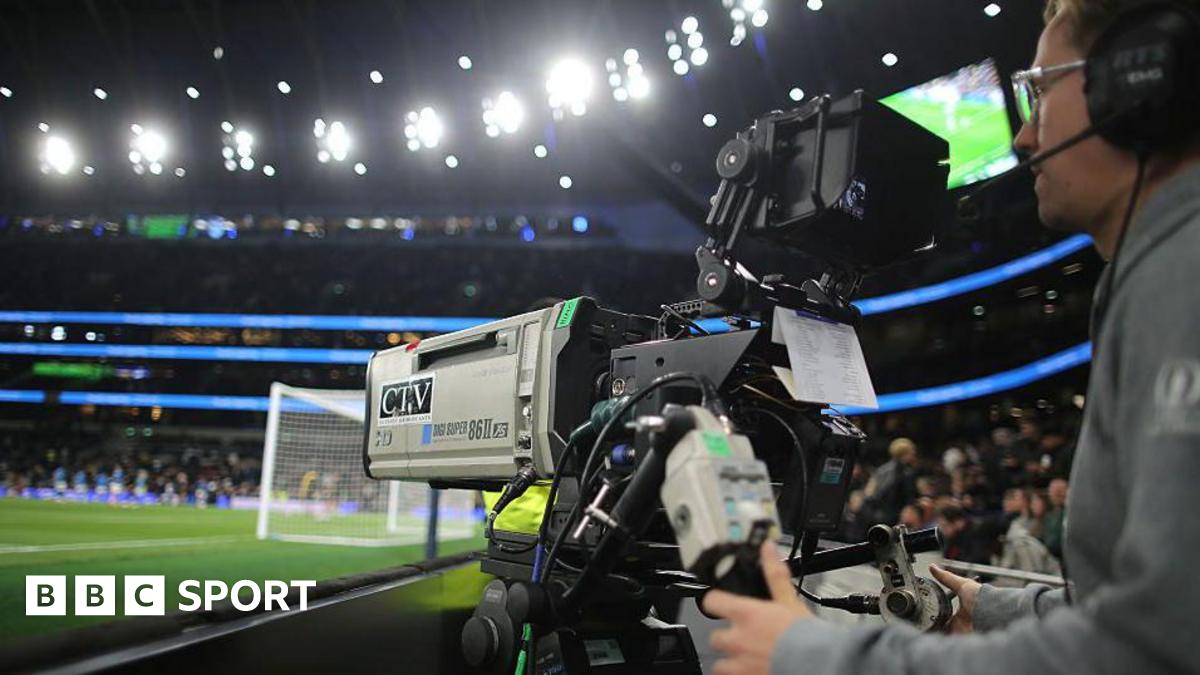
Sky Sports TV picks: How they work & why they are headache for fans

Sky Sports has a position of dominance, with four of the five available TV packages.

It can combine its packs and make the system work as it sees fit.

Selections can be made in one package, but the time and day swapped with another.

This is how it can work.

Every team should be picked at least once. Arsenal and Tottenham are the only clubs who have not played on a Friday or Monday.

However, it does not necessarily mean Sky has not picked them in the slot.

Likewise, Everton have seven Friday or Monday games but two of those might be allocated to a different package.

When asked, Sky Sports and the Premier League would not discuss the breakdown of selections on a week-to-week basis.

But, as an illustration, BBC Sport can suggest how it could work from one weekend in January.

Let’s say Sky Sports picked Everton v Leeds as Saturday 17:30, and Bournemouth v Liverpool as Monday 20:00.

Liverpool could not play on the Monday because of the Champions League, so Sky Sports could swap the games.

Everton‘s game is on a Monday, but it was not picked for a Monday. So it may not count as part of the Monday allocation.

Sky Sports says the process involves so many bodies, including clubs and the police, that much of the decision-making is taken out of their hands.

The order of first, second and third-choice picks between Sky and TNT Sports can also have an influence.

It is clear that the five-appearance maximum is a just loose limit.

Supporters will simply see their club has been picked six, seven or eight times.

Manchester United will almost certainly be in Europe next season, so will join the band of clubs largely shielded from the Friday-Monday package.

But with at least eight Premier League clubs set to be in Europe, the issue is not going to go away.

If Tottenham stay in the Premier League they will go to the top of the list for Friday and Monday selection, given they have a large fan base and are viewed as a glamourous club.

Everton fans say the scenario is “damaging supporter accessibility, matchday experience, and long-term engagement”.

It seems unlikely to change next season.

Source link

Letters to Sports: Bill Plaschke’s Dodgers prediction is a winner

p]:text-cms-story-body-color-text clearfix”>

Congratulations to all the young athletes and their teams on The Times All-Area high school basketball teams. I do wonder about the choices the seniors are making in their commitments to colleges and I look to The Times to explain why UCLA is seemingly not on the radar for these young players.

It used to be known that the Bruins’ academic requirements were a significant barrier to many high school players. Is that still true? Are the local graduates not the cream of the crop that Southern California was known for in past years? Are NIL deals affecting the choices of these future freshmen? Is UCLA not making a strong outreach effort for the top local talent? Is L.A. so awful for these kids that it isn’t even on their radar to stay close to home?

I am sure I am not alone in seeking clarity around the issue of the exodus of local talent to Missouri, Oregon State, Texas, North Carolina, Nevada, and even more confounding, USC.

David Gerne Echt
Torrance


The Los Angeles Times welcomes expressions of all views. Letters should be brief and become the property of The Times. They may be edited and republished in any format. Each must include a valid mailing address and telephone number. Pseudonyms will not be used.

Email: sports@latimes.com

Source link

Women’s Olympic sports be limited to biological females from 2028

The women’s category of Olympic sports will be limited to biological females from 2028, says the International Olympic Committee.

Eligibility will be determined by a “once in a lifetime” sex test, which would prevent transgender women and those with differences in sexual development (DSD) from competing.

It will take effect from the Los Angeles Olympics.

IOC president Kirsty Coventry said the policy was “led by medical experts”.

“At the Olympic Games even the smallest margins can be the difference between victory and defeat,” she said.

“So it is absolutely clear that it would not be fair for biological males to compete in the female category. In addition, in some sports it would simply not be safe.”

Source link

Letters to Sports: WBC brings joy back to All-Star-level play

p]:text-cms-story-body-color-text clearfix”>

On a night when my family watched Austin Reaves pull off the miraculous intentional missed free throw put-back basket on the way to a thrilling Laker overtime win against the Denver Nuggets, we talked more about the newest Lakers super fan on the way home. Kudos to Bill Plaschke for recognizing and capturing the power of 6-year-old Jackson Tuyay’s passionate cheering that helped ignite the laid-back crowd and inspire the Lakers to a huge comeback win. As a lifelong Laker fan since the same age as Jackson it was so awesome to see such innocent and authentic passion for the Lakers. In an arena full of stars in the stands and on the court it was the voice of a 6-year-old that reminded us how awesome it is to be a Lakers fan for life!

Paul Stapleton
Los Angeles


To quote Jackson Tuyay, “Yeaaaaah!” It looks like the Lakers can play some defense and beat the better teams after all.

Vaughn Hardenberg
Westwood


The Los Angeles Times welcomes expressions of all views. Letters should be brief and become the property of The Times. They may be edited and republished in any format. Each must include a valid mailing address and telephone number. Pseudonyms will not be used.

Email: sports@latimes.com

Source link

Prep sports roundup: Bishop Alemany takes two of three games vs. Harvard-Westlake

Harvard-Westlake doesn’t drop too many series in baseball these days, but if there’s one coach who gives the Wolverines fits, it’s Randy Thompson of Bishop Alemany. The reminder happened years ago when Harvard-Westlake had three future first-round draft picks on the same team in Max Fried, Lucas Giolito and Jack Flaherty, and Alemany defeated that powerful Wolverines team with Giolito on the mound.

On Friday, Alemany (8-3, 4-1 Mission League) completed a week in which it took two of three games from the Wolverines with a 10-4 victory. Apparently success against Harvard-Westlake isn’t just limited to the head coach. Thompson’s son, Brody, hit two home runs and a double and finished with three RBIs. Also hitting two home runs was Chase Stevenson, who had three hits and two RBIs.

Alemany had 16 hits on the day.

Sherman Oaks Notre Dame 5, Chaminade 4: The Knights (10-0) stayed unbeaten, with Dru Wilson’s RBI single in the sixth breaking a 4-4 tie. Malakye Matsumoto had three hits and three RBIs, including a home run. Lachlan Clark threw four innings of scoreless relief with seven strikeouts and no walks. Andrew Chute had a home run and three RBIs for Chaminade.

Loyola 5, St. Francis 4: Freshman Anthony Adame closed out the win with two innings of stellar relief and three strikeouts in the eight-inning contest. Austin Junk drove in the winning run with a double.

Sierra Canyon 19, Crespi 2: Charlie Cummings had two doubles, a single and three RBIs for Sierra Canyon.

Royal 6, Simi Valley 2: Dustin Dunwoody struck out 16 in six innings for Royal.

Hart 15, Valencia 14: The Hawks survived a four-run rally by Valencia in the seventh to win a wild Foothill League game. Justin Gaisford had a home run and five RBIs for Valencia. Hart received four hits and three RBIs for Matix Frithsmith. Josh Whitson had three hits and four RBIs and Hayden Rhodes hit a three-run home run. The two teams combined for 49 runs and 11 errors in two games. Another game ended in a 10-10 tie.

El Camino Real 6, Chatsworth 3: RJ De La Rosa and Jackson Sellz each had two RBIs to help El Camino Real stay unbeaten in the West Valley League.

Birmingham 8, Granada Hills 2: Carlos Acuna struck out five in six innings, Aidan Martinez struck out three in one inning of relief and Julius Monroe-Truitt had three RBIs for Birmingham.

Cleveland 3, Taft 2: Ezra Preis had two hits and two RBIs for the Cavaliers.

Bell 17, Huntington Park 1: Daniel Garcia had two triples and three RBIs for 12-1 Bell.

Carson 6, Banning 4: The Colts took control of the Marine League race this week. Skylar Vinson had two hits.

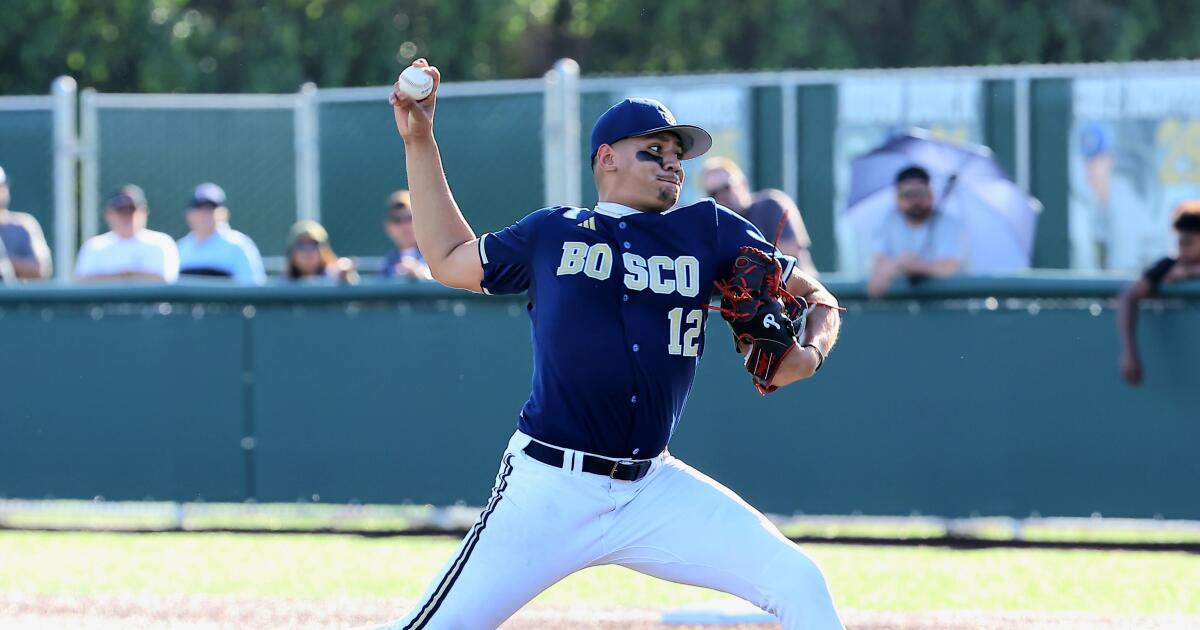
St. John Bosco 13, JSerra 0: For the fifth time in seven games, St. John Bosco (7-0), ranked No. 1 by The Times, recorded a shutout. Jack Champlin started and gave up one hit in five innings. Jhett Ohira had three hits and three RBIs. Ohira was seven for 12 in the Braves’ three-game sweep of JSerra.

Corona del Mar 8, Newport Harbor 1: Stevie Jones gave up one run in 6⅔ innings and Ryan Williams and Grant Horsley each had two hits.

La Canada 6, San Marino 0: Joe Bell threw a five-hit shutout and had two hits and three RBIs.

El Dorado 4, Villa Park 2: Brady Abner had the tying triple and Xavi Cadena hit the winning home run.

Corona 19, King 7: Anthony Murphy had a home run, a double and two singles. He also struck out three batters in his one inning of relief. Trey Ebel added two hits and three RBIs.

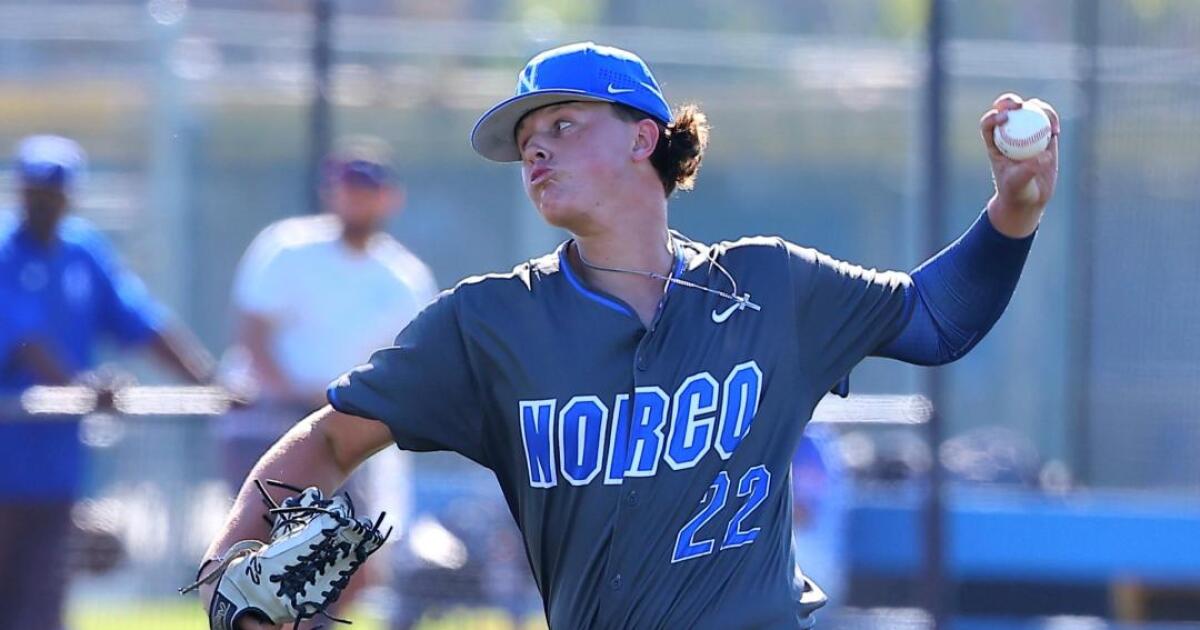
Norco 7, Corona Centennial 4: Dylan Seward and Jordan Ayala hit home runs for Norco.

Corona Santiago 9, Eastvale Roosevelt 1: Striker Pence hit a two-run home run and Joshua Angulo had two hits and three RBIs for Santiago. Ayden White threw three innings of hitless relief.

Redondo Union 6, Mira Costa 2: Robby Zimmerman struck out eight in 5⅔ innings.

Cypress 7, Mater Dei 5: Austin Gerken hit a three-run home run for Mater Dei, but Drew Slevcove got the save for Cypress.

Los Alamitos 6, Edison 5: A two-run double by Willie Adams keyed the comeback win.

Bishop Amat 7, St. Paul 0: Ashton Chavez, Kevin Martin and Izaac Muniz combined on the shutout. Omar Arretche had three hits for Bishop Amat.

Softball

Norco 14, Corona Centennial 0: Leighton Gray hit two home runs for Norco.

Source link

WNBA CBA expected to raise pay for other women’s sports leagues

After 17 months, the WNBA has agreed to terms on a new collective bargaining agreement and players will be paid more than in any other professional American women’s sports league.

It is the latest in a trend of increasing equity for women athletes.

  • In 2022, the U.S. women’s soccer team won a $24-million settlement with U.S. Soccer after players disputed making significantly less than the less successful men’s team.
  • Then the Professional Women’s Hockey League was born in 2023 following many players defecting from the National Women’s Hockey League to form the Professional Women’s Hockey Players Assn., then merging with the Premier Hockey Federation until a historic bargaining agreement.
  • The National Women’s Soccer League announced a new CBA in the summer of 2024 that included giving players agency on where they are traded and abolishing expansion and collegiate drafts.

That momentum put considerable pressure on WNBA negotiations. Could the players set a new benchmark for future contract negotiations across women’s pro sports leagues?

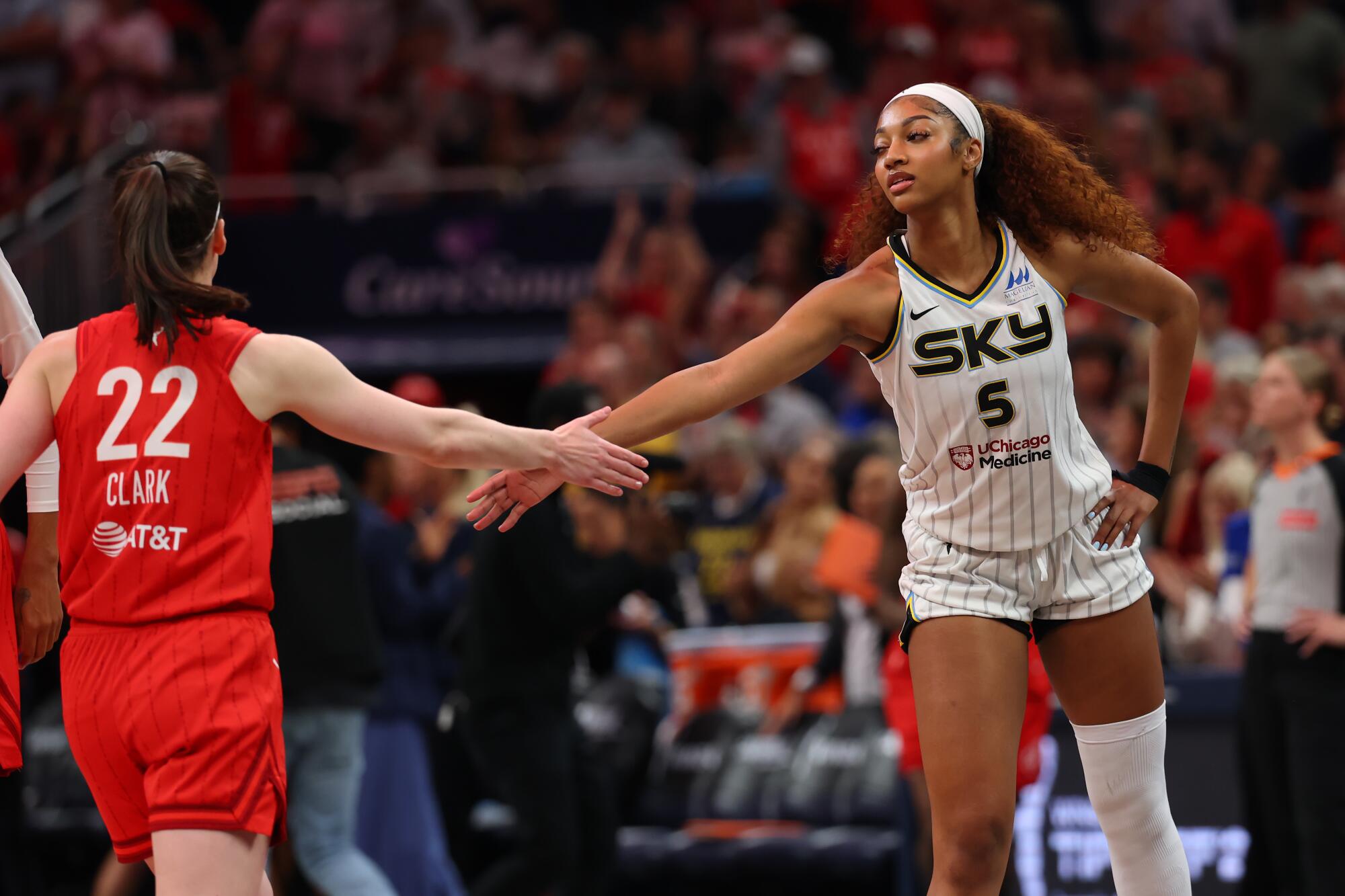
The Sky's Angel Reese and the Fever's Caitlin Clark shake hands before a game at Gainbridge Fieldhouse on May 17.

The Sky’s Angel Reese and the Fever’s Caitlin Clark shake hands before a game at Gainbridge Fieldhouse on May 17.

(Gregory Shamus / Getty Images)

The WNBA’s CBA was a flashpoint because of the boom in popularity in supporting women’s sports, with players such as Caitlin Clark and Angel Reese becoming household names. Last season, the WNBA made enough revenue to trigger revenue-sharing for the first time and this season marks the start the league’s new 11-year, $2.2-billion media rights deal.

Unlike in the NBA, where players get around 50% of the league’s revenue before expenses, the WNBA’s first revenue-sharing kicked in only after the league hit a benchmark determined by a formula of revenue targets, which had been difficult to achieve since the start of the deal was the 2020 COVID season played in front of empty stands.

The WNBA broke its single-season attendance record in 2025. As league interest grew, so did the tension between the league and the players’ union.

Many viewed this negotiating cycle as an opportunity to pounce on the increased visibility, and in a lot of ways, the union did. Players are going to be paid significantly more and they got a win in revenue sharing, earning 20% of the league’s revenue before expenses — a big jump from the previous 9% share.

The average player salary before revenue-share payments will be around $584,000.

But was it as much as they should have gotten?

Tamika Tremaglio, former NBPA executive director and advisor to the WNBPA during the 2020 CBA negotiations, said observers were less concerned about the start of training camps looming on April 19 and more focused on whether negotiations would end with a stable deal that would hold for the length of the agreement as market conditions evolve. Increased salaries are always celebrated, but both sides agreeing to a new revenue sharing model was a consequential step forward for players.

“The real story is the revenue share,” Tremaglio said. “At the end of the day, that’s what is going to drive the future.”

The fallout from the new deal will take months or years to fully understand. Free agents will be able to begin signing with teams in April, and since 80% of the players are eligible for free agency, there will be higher figures being floated around than ever.

A'ja Wilson and her Las Vegas Aces teammates celebrate while holding the 2025 WNBA championship trophy.

A’ja Wilson and her Las Vegas Aces teammates celebrate while holding the 2025 WNBA championship trophy.

(Chris Coduto / Getty Images)

That might affect what talent comes to the league, too.

“More European players might come into the league,” a WNBA team consultant not authorized to speak about the league publicly told The Times. “Now that the money is better, that might knock out several college players in the draft.”

There are some WNBA-level players who have stayed in Europe due to restrictive prioritization rules that force players to participate in all WNBA practices and games even if they conflicted with international league obligations. Many WNBA players compete in international leagues during the offseason and prefer the option to keep playing in lucrative foreign leagues if there is an overlap with the WNBA season.

While the new rules for international play in the WNBA CBA are not yet clear, compensation changes could open the door for more players to choose to prioritize the league.

The general consensus among people operating within the WNBA is relief that a deal is in place.

“It’s huge,” one player agent told The Times. “They made big strides. This is important for women’s basketball.

Sparks players Dearica Hamby, Rickea Jackson, Azura Stevens, Kelsey Plum and Julie Allemand talk during a game.

Sparks players Dearica Hamby, Rickea Jackson, Azura Stevens, Kelsey Plum and Julie Allemand talk during a game against the New York Liberty at Crypto.com Arena on Aug. 12.

(Katelyn Mulcahy / Getty Images)

“Anytime both sides don’t get everything they want,” the agent added, “that’s a good deal.”

That agent also noted that this CBA will set the precedent for the next negotiations to continue to raise the revenue-sharing if the league continues to make more money.

Under the new CBA, the 20% revenue-sharing is tied to the league’s gross revenue, a significantly different number than the net revenue, which is calculated after all expenses are taken into account. The players were fighting for a percentage of the gross revenue, even if it is a smaller percentage than the net revenue the league offered because it is guaranteed.

The NBA first reached 53% of gross revenue in their CBA in 1983 and has stayed around that number ever since.

“If it was net, you’d have all these other expenses and you sort of lose control of the actual expenses,” Tremaglio said. “You have no control from the perspective of where the players are. But now, you don’t even have to go look at the minutia of auditing every single expense line item. That’s what makes such a difference.”

More details around the CBA, including player housing, expansion draft format and roster spots, will become clearer as the deal reaches ratification.

For now, even if 20% revenue sharing is less than the 40% the players first proposed, the deal represents a significant, stable increase in player compensation.

“This will impact women’s sport globally, not just the game of basketball,” Tremaglio said. “This will impact everything, soccer, everything.”

Source link

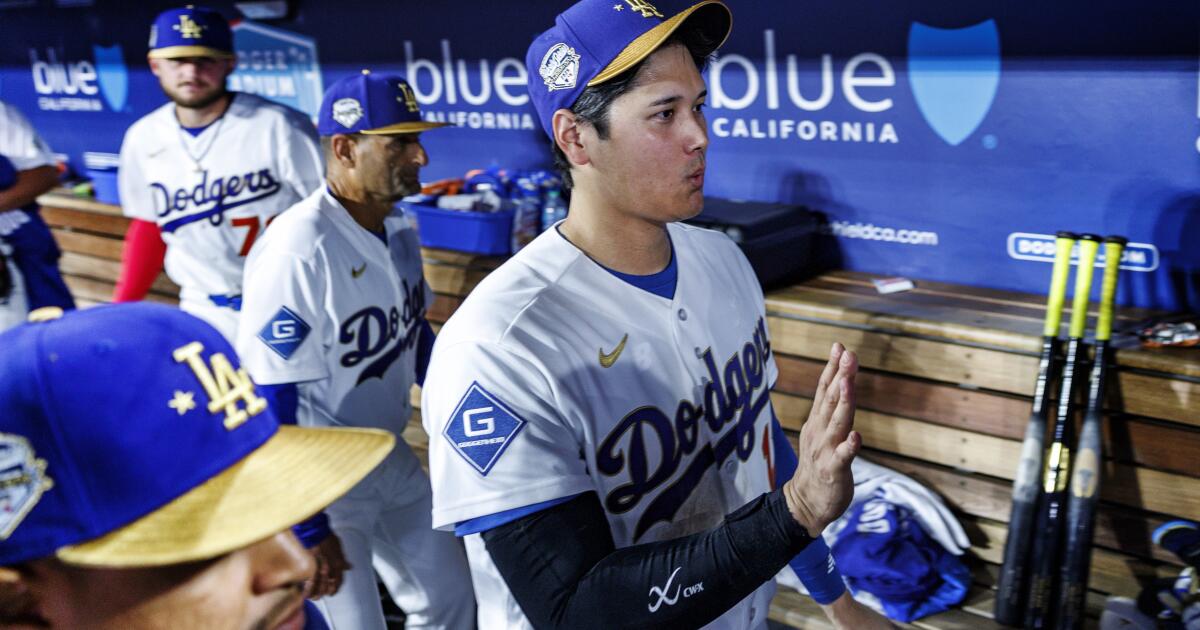
Venezuela Defeats US to Win World Baseball Classic

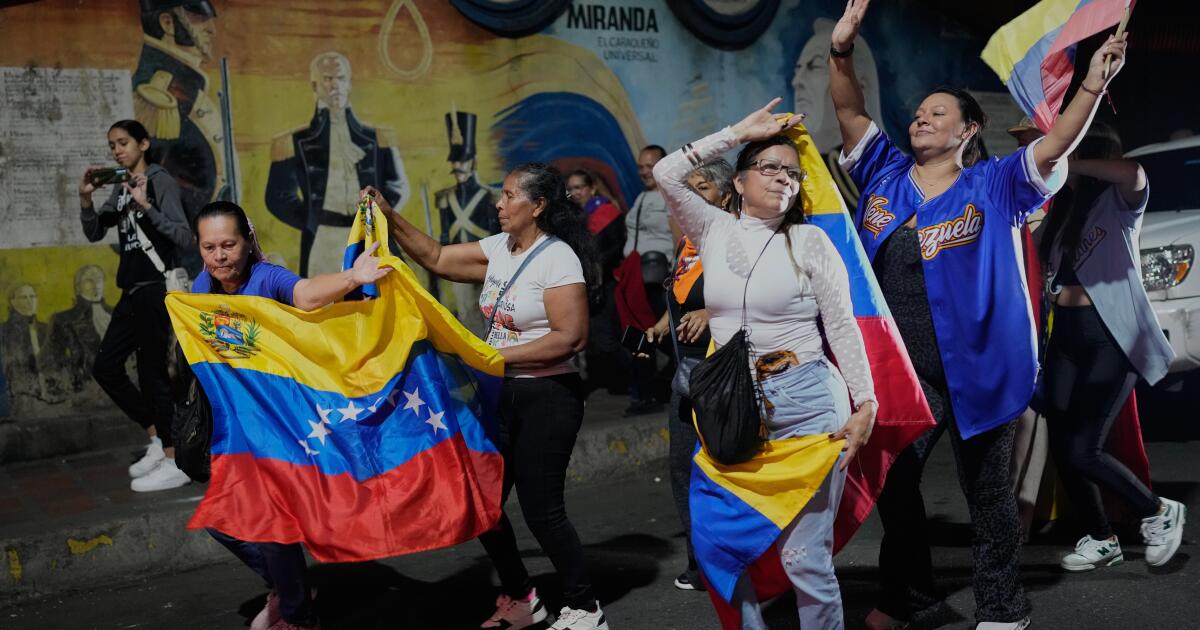
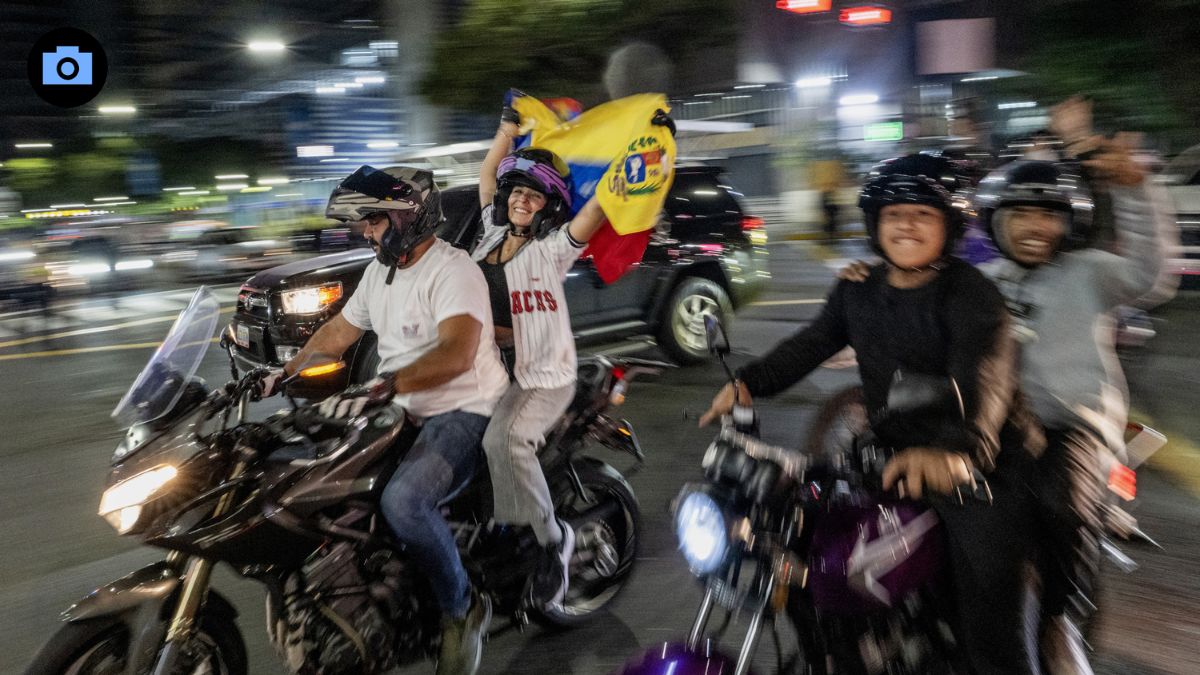
Venezuelans took to the streets to celebrate the WBC title. (AFP)

Caracas, March 18, 2026 (venezuelanalysis.com) – Venezuela won the World Baseball Classic after defeating the United States 3–2 on Tuesday at LoanDepot Park in Miami. 

The Caribbean nation’s first major international baseball title was secured thanks to a decisive double by Eugenio Suárez that broke a tie in the top of the ninth inning.

“I have no words. Seeing Javier (Sanoja) score on my double in the ninth was the greatest moment of my life. We knew we could do it. Nobody believed in Venezuela, but now we are the champions. This is a celebration for the whole country,” Suárez told Fox Sports after the game.

The United States had tied the score at 2-2 in the eighth inning when Bryce Harper launched a two-run home run against Venezuelan reliever Andrés Machado.

Earlier in the game, a sacrifice fly from Maikel García in the third inning and a home run by Wilyer Abreu in the fifth—off rookie pitcher Nolan McLean—had given Venezuela a 2–0 lead before a crowd of 36,490 people that was heavily in favor of the South American team.

Sports journalist Jason Mackey said he had never witnessed such passionate fan support at a sporting event—not even at the Super Bowl. Venezuela’s victory also sparked spontaneous celebrations in several cities across the country, including the capital, with fireworks displays and caravans blaring horns along the main avenues.

Venezuela finished the tournament with six wins and one loss, the latter coming against the Dominican Republic during the group stage. Before reaching the championship, the Venezuelan squad defeated three-time tournament champion Japan 8–5 in the quarterfinals and Italy 4–2 in the semifinals. 

The tournament’s Most Valuable Player, Maikel García, emphasized that the team’s motivation centered on representing the country. “We didn’t play the final to represent Dominicans or Latinos. We did it for Venezuela. Maybe some people didn’t like that, but the jersey said Venezuela, not Latin America,” he said.

Meanwhile, the US team fielded the most star-studded roster in its history but fell short in its second consecutive final to extend its winless draught to nine years. The Americans had previously lost the 2023 final 3–2 to Japan.

Following the victory, Venezuela’s Acting President Delcy Rodríguez declared Wednesday a National Day of Jubilation, encouraging people to celebrate in public squares, parks, and sports fields. She also invited the public to attend a large concert titled “Venezuela Triunfa Unida” (“Venezuela Triumphs United”).

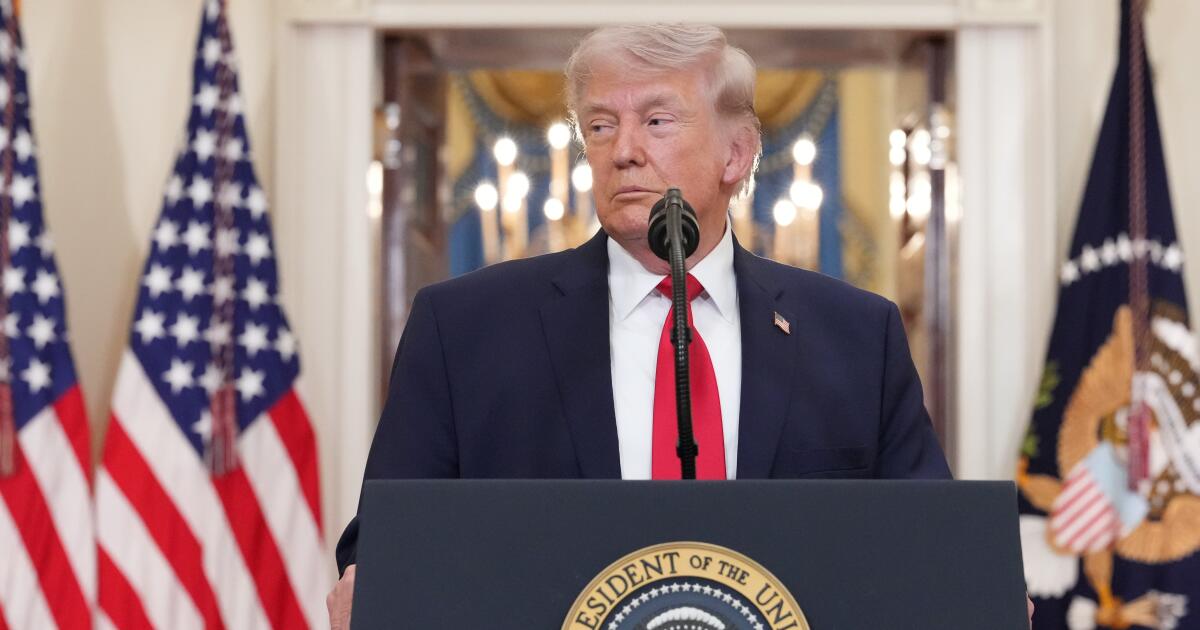
For his part, US President Donald Trump used the moment to again suggest that Venezuela could become a US state. “Statehood,” he wrote on his Truth Social account.

In the run-up to the final, Trump had posted a similar message: “Good things have been happening to Venezuela lately. I wonder what this magic is… the 51st state?”

Tuesday’s final happened in the wake of the US’ January 3 military strikes against Caracas and nearby areas that also saw special forces kidnap Venezuelan President Nicolás Maduro. In the two months since, the two countries have fast-tracked a rapprochement and reestablished diplomatic ties. Despite the strong political overtones surrounding the matchup, players and coaches largely avoided commenting on the state of relations between the two nations.

Edited by Ricardo Vaz in Caracas.

Source link

Prep sports roundup: St. John Bosco gets its fourth shutout in five games

No. 1-ranked St. John Bosco began Trinity League baseball play on Tuesday the same way it has done early in the season — with more good pitching.

Julian Garcia struck out seven, walked one and gave up three hits in five innings of a 6-0 win over JSerra. It was the fourth shutout in five games this season for the Braves (5-0). Jhett Ohira had three hits and Jaden Jackson and Noah Everly added two hits apiece.

Bishop Alemany 6, Harvard-Westlake 5: The Warriors handed Harvard-Westlake its first Mission League loss. Alex Noble had two hits for Alemany (8-2, 3-0).

Sherman Oaks Notre Dame 13, Chaminade 2: Unbeaten Notre Dame (7-0) was led by Benett Pace, who hit two home runs and finished with four RBIs. Jacob Madrid added two hits and two RBIs. Beckett Berg struck out six and gave up one hit in five innings.

St. Francis 6, Loyola 2: Lucas Becerra contributed three hits in the Mission League win. Donovan Udell threw two scoreless innings of relief.

Sierra Canyon 3, Crespi 1: Armando Solorio threw a complete game with six strikeouts and no walks.

Florida Stoneman Douglas 7, Santa Margarita 6: The Eagles couldn’t hold on after opening a 6-1 lead. Warren Gravely III had a home run.

Servite 6, Aliso Niguel 2: The Friars received scoreless innings of relief from Wyatt Karges, Eli Rubel and Isaiah Camacho.

Los Alamitos 5, Edison 3: Will McCullough had three hits for Los Alamitos.

Arcadia 18, Hoover 2: Matt Manzo had four RBIs and Jordan Vogel had three hits.

La Mirada 4, Etiwanda 2: Ian Nunez had a three-run home run for La Mirada.

Huntington Beach 6, Marina 1: Jared Grindlinger struck out four with no walks in four innings. Ely Mason had a double and single.

Cypress 5, Villa Park 3: Tate Belfanti struck out eight in 3 2/3 innings for Cypress.

Newport Harbor 5, Corona del Mar 1: Ryan Williams homered and Gavin Guy picked up the win.

Softball

Murrieta Mesa 12, Temecula Valley 0: Macy Clark hit two home runs in the five-inning win for No. 1-ranked Murrieta Mesa.

JSerra 8, Aliso Niguel 2: Zena Edwards hit a two-run home run and Margenta De Arte had a two-run double for JSerra.

Garden Grove Pacifica 6, Eastvale Roosevelt 5: The Mariners got a walk-off single in the bottom of the seventh from Jenna Valladares.

Harvard-Westlake 11, Louisville 7: Izzy Whelan drove in three runs in the loss.

Downey 21, Sherman Oaks Notre Dame 6: The Vikings (10-2) routed Notre Dame behind Hazel Renteria. Delilah Navarro and Kayla Gutierrez each had four hits.

Source link

Letters to Sports: Bam Adebayo’s 83-point game needs asterisk

p]:text-cms-story-body-color-text clearfix”>

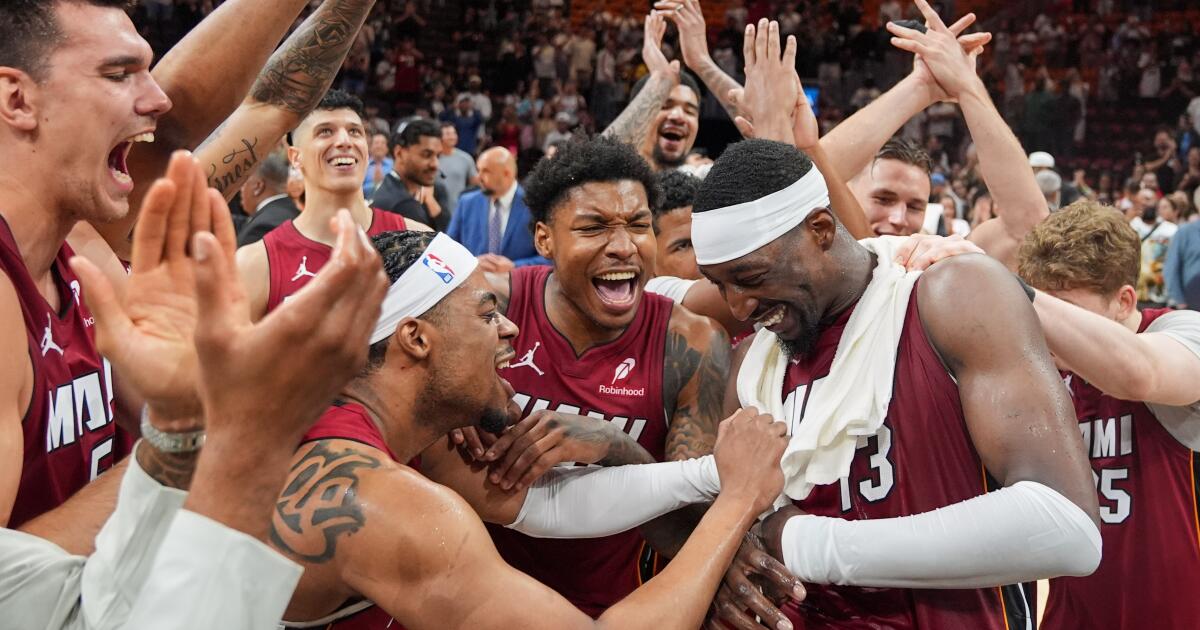
Times columnist Mirjam Swanson is right. Bam Adebayo is an impostor. If ever there was justification for an asterisk next to a record, his illegitimate assault on a scoring record is it. It was contrived and shameful.

Ron Yukelson
San Luis Obispo


Agree with Times columnist Mirjam Swanson, Bam Adebayo’s a fraud! It was a total setup once he got close to Kobe’s record-setting 81 points. Both teams … the Heat and the Wizards … conspired with their flopping and intentional fouling to get him to 83. Is this what the NBA has sunk to? Shame, shame.

Marty Zweben
Palos Verdes Estates


Bam Adebayo’s 83-point game, while impressive, appeared to be a sloppy affair comparable to an All-Star game full of dunks and threes. His field-goal percentage was under 50%. He shot 43 free throws. which was somewhat of an NBA disgrace. Kobe’s 81 took place in a game that was close most of the way, meant getting into a playoff spot, and demonstrated Kobe’s artistry in a majestic display of the entire offensive arsenal he worked so hard to perfect. He was a maestro and savant. I feel like he has been soiled.

Dell Franklin
Cayucos


There has already been much complaining about Bam Adebayo’s 83-point game, complaining that his teammates fed him the ball hoping that he would surpass Kobe’s single-game total of 81. Those of us of a certain age know that the exact same thing happened when Wilt scored 100 in 1962. Perhaps the thing to do is not to look to diminish this effort, but to appreciate it for the accomplishment it is. Congratulations to Bam.

Ronald O. Richards
Los Angeles

Source link

Prep sports roundup: Landon Hovermale keeps throwing blanks for Norco baseball

What a start to the high school baseball season for pitcher Landon Hovermale of Norco. On Wednesday in his latest stellar outing, he threw six shutout innings in Norco’s 3-0 win over Gahr.

In 18 2/3 innings this season, Hovermale has allowed zero runs while striking out 27 and walking one. That’s called great pitching for the 5-1 Cougars. He’s committed to Grand Canyon.

Mira Costa 6, Torrance 4: Joaquin Scholer had two doubles in Mira Costa’s Bay League win.

Rancho Christian 13, Hillcrest 0: Jake Brande retired all 15 batters and had seven strikeouts while Sean Downs hit a grand slam in the five-inning win.

Bell 4, San Pedro 0: The Eagles (9-1) received six scoreless innings from Jayden Rojas, who gave up one hit and struck out seven.

San Fernando 9, Cleveland 5: Armando Villegas had a three-run double to lead the Tigers.

Carson 7, Granada Hills 5: Kris Sinclair went three for four with two RBIs for Carson.

Chatsworth 1, Sylmar 0: Isaiah Sanchez threw the shutout and Vicente Martinez had two hits.

Monroe 3, Eagle Rock 1: The Vikings (8-0) received 10 strikeouts from Miguel Gonzalez, who gave up two hits.

Hart 15, Canyon Country Canyon 2: Joaquin Durazo hit a three-run home run and Matix Frithsmith finished with four RBIs in Hart’s Foothill League opener. Hayden Rhodes and Anthony Cavarretta also hit home runs.

West Ranch 15, Golden Valley 1: Ty Diaz hit two home runs and had a double to lead West Ranch. Connor Clayton and Caydin Wilson also hit home runs.

Los Alamitos 9, Fountain Valley 5: Cruz D’Errico had four hits to lead a Los Alamitos comebacik.

St. John Bosco 11, Damien 0: Twins James and Miles Clark had a big day for the No. 1-ranked Braves. James contributed four hits, including two doubles, and Miles had a home run and three RBIs. Jack Champlin showed he’s not only a closer, throwing four scoreless innings with five strikeouts and no walks as a starting pitcher.

Servite 9, San Juan Hills 6: Mikey Cabral led the way with three hits and two RBIs and John Sullivan had two doubles for Servite.

Newport Harbor 11, Marina 2: Henry Mann had two hits, Gavin Guy had a two-run double and Ryan Williams homered to help Newport Harbor improve to 7-0.

Sherman Oaks Notre Dame 6, St. Francis 2: Dru Wilson, Malakye Matsumoto, Jake Noroian and Troy Trejo each had two hits for Notre Dame (6-0, 2-0).

Bishop Alemany 6, Crespi 0: DC Ravago threw five scoreless innings and Chase Stevenson hit a two-run home run.

Loyola 8, Chaminade 0: Sheriff Hall threw five scoreless innings and Magnus Mayer had a two-run double for Loyola.

Harvard-Westlake 6, Sierra Canyon 0: Evan Alexander struck out nine and gave up one hit in six innings and freshman Louis Lappe of El Segundo Little League fame hit his first high school home run for Harvard-Westlake. Ethan Price also homered.

Huntington Beach 13, Edison 3: Owen Bone finished with three hits, including a home run, and Jared Grindlinger had two hits and two RBIs for the Oilers.

Etiwanda 4, Rancho Cucamonga 1: Adam Ornelas had three hits and Luke Severns had a two-run single. Michael Aleman threw a complete game.

Softball

Simi Valley 4, Carson 2: Parker Ong struck out eight for Simi Valley. Ruby Grajeda homered for Carson.

Santa Monica 2, Carson 1: Ruby Grajeda had three hits for Carson.


Source link

My stay in Switzerland’s oldest mountain inn – where winter sports aren’t allowed | Switzerland holidays

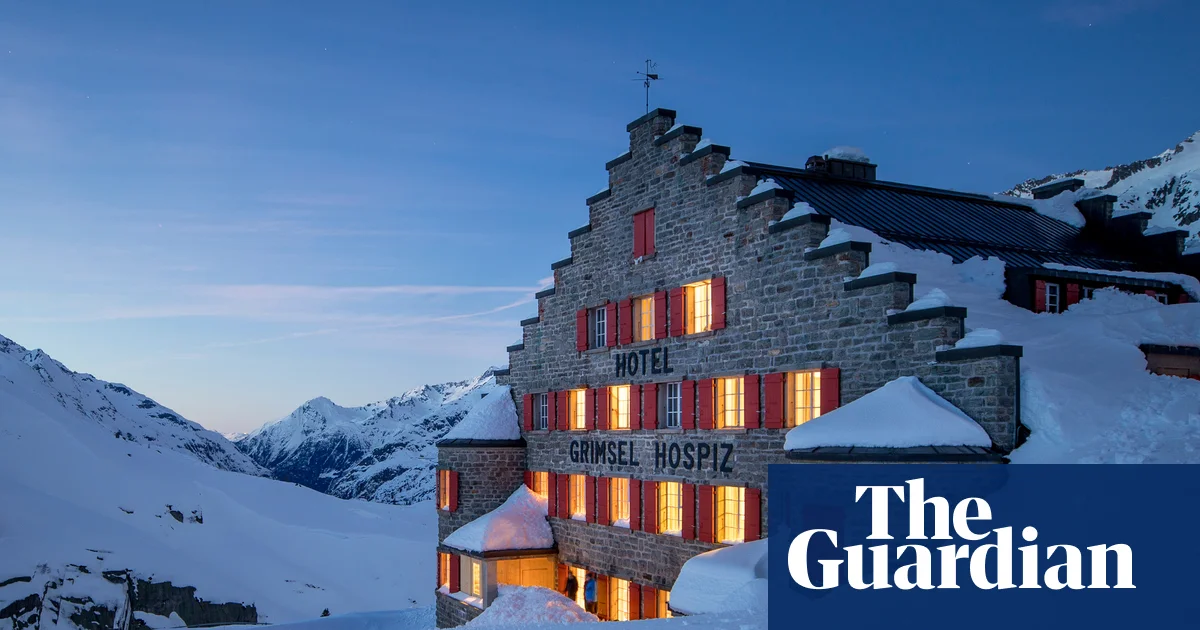
Near the top of the Grimsel Pass in Switzerland’s Bernese Oberland, a small crowd had gathered to take photographs. We were surrounded by bulky mountains and rippling glaciers, but all eyes were focused on a silvery granite chalet with apple-red shutters, its foundations deep in snow.

It was early February and, one after another, we posed in front of it as if standing beside a celebrity. Which in a way we were, because the proud building was the Grimsel Hospiz, the country’s oldest recorded mountain inn and a place that predates Westminster Abbey.

First documented in 1142 and originally built as a simple hostel – either by the Order of Saint Lazarus or the Augustinian monastery of Interlaken, no one is quite sure – today’s much-modernised Grimsel Hospiz is marooned on a spur of sheer rock and snow at 2,000 metres (6,562 ft). Over the centuries it has been inhabited by monks, used by shepherds, needy travellers and soldiers, ravaged by fire and buried by an avalanche. The mountains reach up, but it is surrounded on three sides by plunging ravines and the frozen Grimselsee, which thaws to turquoise ice floes in spring. The scenery is stupendous.

Grimselsee reservoir and Spitallamm Dam, with Grimsel Hospiz above, in autumn. Photograph: David Birri

My visit began on a PostBus, the yellow stagecoaches that reach the parts of Switzerland that the railways can’t. I was south-east of the village of Meiringen, having taken a train to Innertkirchen Kraftwerk, a station built 100 years ago to service the hydroelectric power plants hidden deep in the mountains. The towering stone pines, the tumbling cliffs, the dripping snow, the sky only peeking through – it might have been the landscape of JRR Tolkien’s Middle-earth.

As the bus worked its way higher up the Aare Gorge, we saw that the road ahead was closed for winter. Instead, we were dropped at a high-security shutter leading to an underground hydropower station operated by Kraftwerke Oberhasli AG. The renewable energy plant opens for public tours and, moments later, a minibus appeared from behind the steel door to take us deeper into the mountains. We hopped on board.

A road blasted into the granite, dark and narrow, then crept through a maze of tunnels, ending four miles (6.4km) later at a tiny cable car station that opened to daylight. We looked up at the Grimselsee reservoir and Spitallamm Dam, a 113 metre-tall arch of stone above which we were soon to soar. For a century, the high-altitude lake has stored glacier meltwater to generate green electricity. Now, for visitors like me, it forms part of Grimselwelt, a Swiss Alpine tourist region, serving as a backdrop to a great tract of lonely winter wilderness.

The Grimsel Hospiz in 1950: Photograph: Fox Photos/Getty Images

The picture of the Grimsel Hospiz developed as we rose on the cable car, like a photo going from faded to sharp. The uninhabited valleys beyond led to the Unteraargletscher, an eight-mile leviathan of ice and the Alps’ fifth-largest glacier. From the cable car, I made out a group of horned ibex as they clambered with ease over the col.

It was the Celts, then Romans, who first used the Grimsel Pass, but it has been an important locus in Alpine culture for centuries: a trade route between Berne and Upper Valais in the middle ages, a strategic camp for raids and war campaigns between Swiss, French, German and Austrian armies, a setting for pioneering glacier research. All these aspects combine in a single story at the Grimsel Hospiz.

What lends the mountain inn so much credibility today is its environmental outlook. Located within the Unesco World Heritage Swiss Alps Jungfrau-Aletsch region, the 28-room hotel is in the midst of a critical wildlife habitat, meaning all winter sports are banned. Ski gear is prohibited by the hotel’s management and it cannot be transported on the cable car. The Alps have always been the preserve of travellers keen on activities that take serious effort, but here is an antidote to every other winter destination, a rare meditative place where doing nothing is the only thing to do.

The only activity on offer is snowshoeing and even that is restricted to a 500-metre loop around the inn’s tower-like granite porches and wooden and copper-roofed chapel. It might be “the shortest winter trail in Switzerland”, as manager Markus Meier put it, but it still took me an hour as I kept stopping to take photos.

‘A fantasy of a mountain inn.’ A cosy lounge at the Grimsel Hospiz.

Inside is a fantasy mountain inn, the result of sensitive restorations: a huge wooden door creaks open and you step into corridors leading to cosy double rooms, intimate lounges, fireplaces and a restaurant where dinner is accompanied by one of 250 bottles from one of Europe’s highest-altitude wine cellars. Back in 1932, the guesthouse caused a sensation as the continent’s first electrically heated hotel. Now, the building is sustainably powered by clean energy and waste heat from the hydroelectric plant below.

As evening fell, it was time for the inn’s only other activity: staring at the flaring sunset and night sky from its outdoor wooden barrel sauna and hot tub. The air was bracingly cold, the constellations appeared and it was just me, the burbling water and the mountains stretching away into darkness. Forget any thoughts of Alpine heroes such as George Mallory or Edward Whymper. That night, down to my cossie in -10C (14F), tiptoeing across the snow in a pair of felt slippers and dwarfed by mountains, I was the bravest man in the Alps.

‘The bravest man in the Alps’ … Mike MacEacheran soaking in the outdoor hot tub

At nearly 2,000 metres, dinner is another event. The four-course menu produced by Slovakian chef Roman Crkon is hardly the stuff of traditional refuges. I’ve had my share of mountain meals, but I’ve never had veal sweetbreads, scallops, chicken with truffle cream and a cheese board at high altitude. In 1544, a local chronicler wrote that the Grimsel Hospiz was all about “good wine, brought by pack animals across the mountains”. Looking at the card games and excessive drinking around me, little had changed.

Later, just before bed, I slipped outside to gaze again at the stars. It was pine needle-drop quiet. Though I was separated from some of Switzerland’s most popular resort towns by only a few miles as the eagle flies, I felt engulfed by the Alps in their entirety. Tomorrow, another day with nothing to do beyond the confines of the inn awaited. But in a landscape like this, I was thrilled to have fallen off the map, out of time, into winter’s grasp.

The trip was provided by Jungfrau Region and Historic Alpine Hotel Grimsel Hospiz (Wednesday to Sunday only; grimselwelt.ch). Rooms from £165pp a night, including breakfast, afternoon tea, hot tub and wooden barrel sauna. A four-course dinner costs £85. Return bus, tunnel and cable car transfers cost £70

Source link