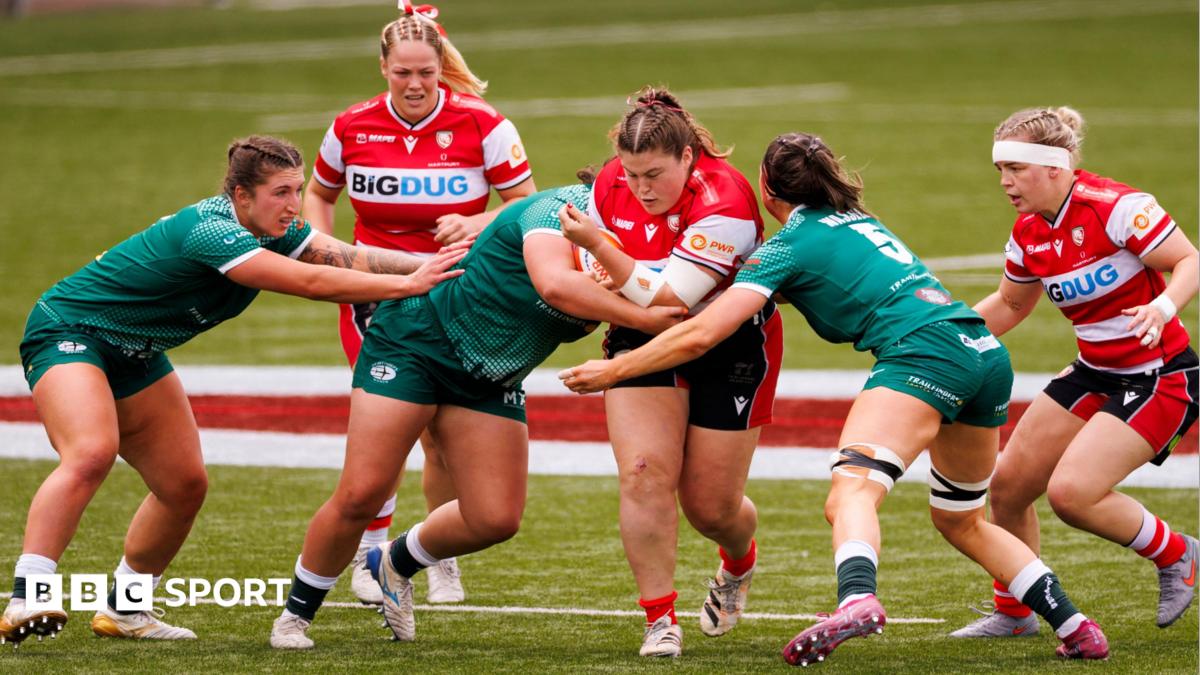
Trailfinders held off Gloucester-Hartpury as they beat the reigning champions 29-26 to reach their first Premiership Women’s Rugby (PWR) final.
Hosts Gloucester-Hartpury had won the title for the past three seasons and took the lead at Kingsholm – rebadged as Queensholm for the PWR play-offs – through a Tatyana Heard try.
However, Trailfinders, who only joined the PWR in 2023 and had never finished higher than sixth, responded with four unanswered tries in their first PWR semi-final.
Maya Montiel, Meg Jones, Isla Norman-Bell and Emma Uren each went over the line as the visitors went into half-time with a 24-7 lead.
Gloucester-Hartpury launched a comeback after the break and a Rachel Lund try reduced the deficit to 10 points.
Georgia Brock was next to touch down for the home side as they closed to within three points of their opponents.
But Norman-Bell scored her second try of the match to give Trailfinders a 29-21 lead and some much-needed breathing space.
And, despite Hannah Dallavalle’s try for Gloucester-Hartpury, Trailfinders kept their hosts out to secure a hard-fought victory.
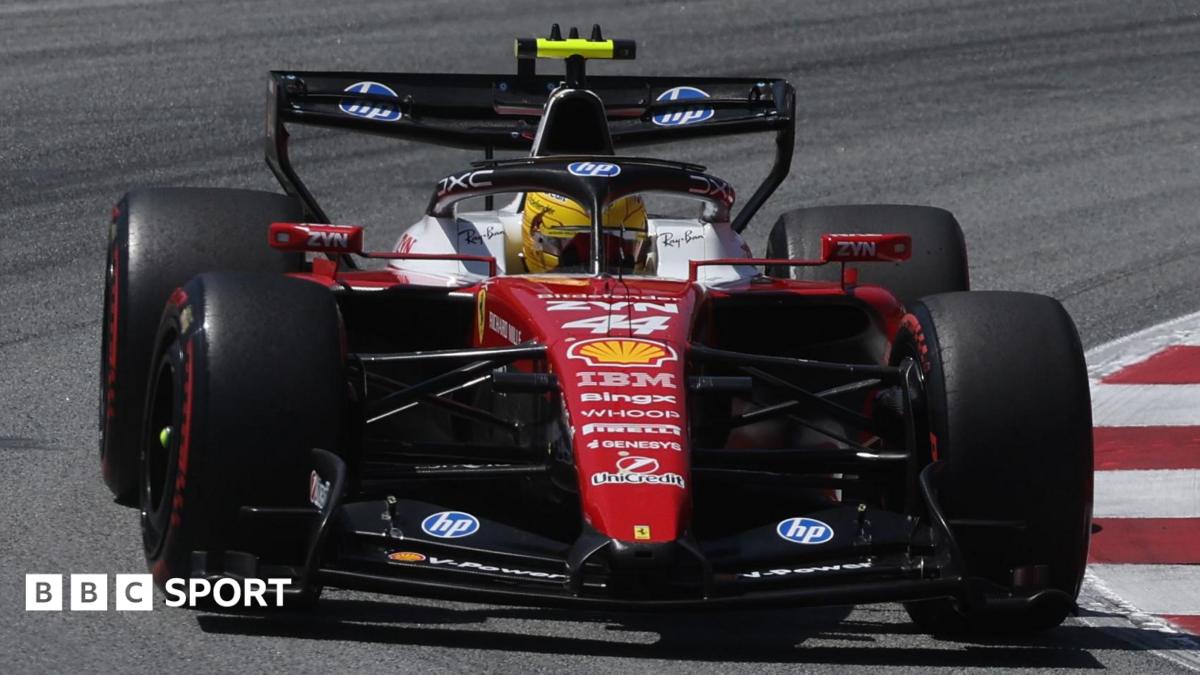
Lewis Hamilton took his first victory for Ferrari in a compelling Barcelona-Catalunya Grand Prix as championship leader Kimi Antonelli retired from second place with four laps to go.
It was a dramatic end to a gripping race that had tension and jeopardy throughout as Hamilton secured his first victory since the 2024 Belgian Grand Prix, when he was still driving for Mercedes.
The win turned on a virtual safety-car period which allowed Hamilton, on a different pit-stop strategy to Mercedes, to pit and retain the lead.
Meanwhile, Antonelli had just passed Russell for second place with five laps to go after a race-long battle when his car ground to a halt with a technical problem.
Russell finished second and McLaren’s Lando Norris was third in the first all-British podium since the 1968 US Grand Prix.
The key stories of a momentous race were:
Confirmation of Hamilton and Ferrari’s return to the front
Antonelli’s first problem of the year providing much-needed luck for Russell
A touch of irony as to the cause of the VSC that turned the race for Hamilton
The U.S. men’s soccer team isn’t only trying to win games in this World Cup. It is trying to win hearts and minds as well.
“We want the game to grow,” star midfielder Christian Pulisic said. “We want to get Americans excited to watch this game, to watch our team. That’s obviously a big goal of ours. And being successful would give that the best boost.”
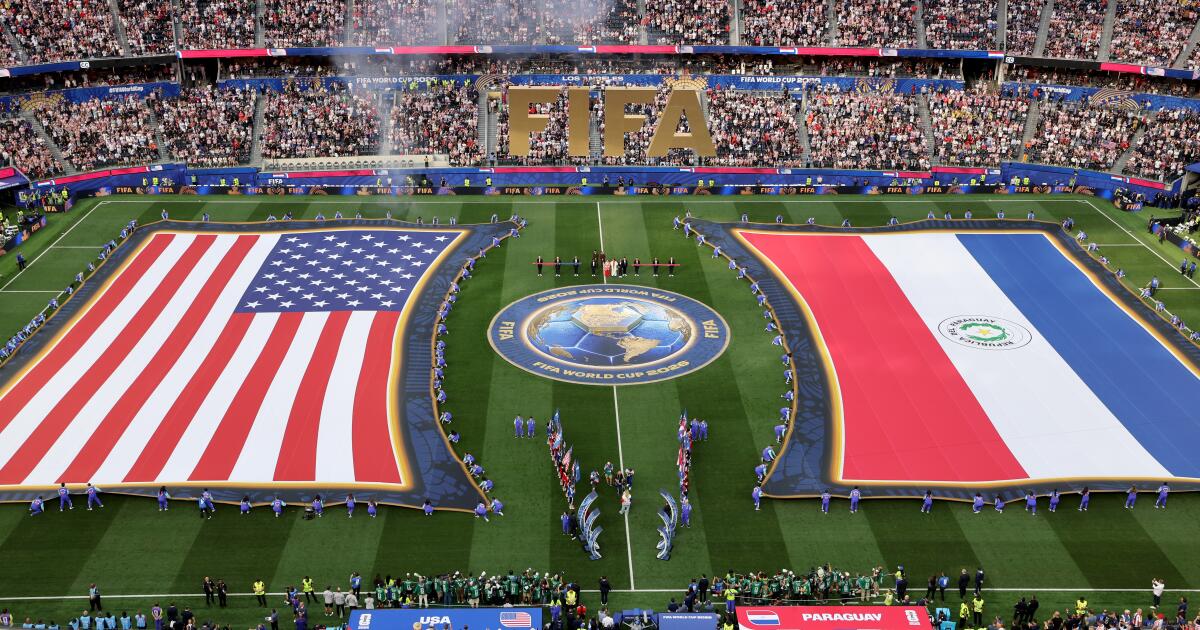
The Americans certainly got a great start Friday, opening the second World Cup played on U.S. soil with a dominant 4-1 win over Paraguay. It was one of the most complete performances the American men have had on the sport’s biggest stage, with Folarin Balogun scoring twice, Pulisic setting up two goals, and just one momentary lapse on defense separating goalkeeper Matt Freese from a shutout.
The U.S. passed well, defended well and, most important, was clinical and dangerous in front of the net, finishing well.
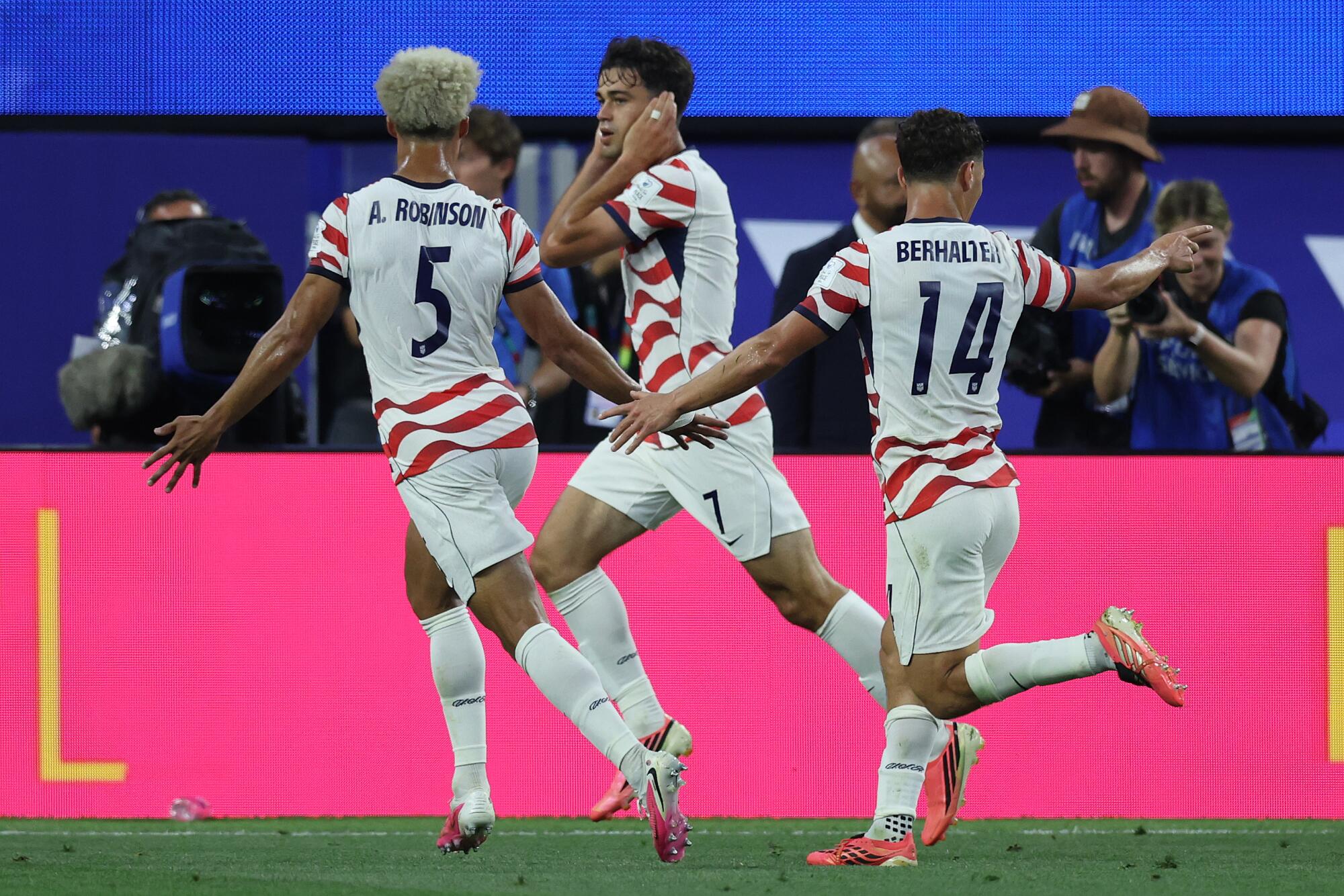
U.S. midfielder Giovanni celebrates with Antonee Robinson and Sebastian Berhalter after scoring against Paraguay.
(Robert Gauthier/Los Angeles Times)
“It was a real statement,” Balogun said. “And that’s what we wanted. I’m very delighted with the overall performance.”
The effort was warmly received by a sold-out crowd of 70,492 at SoFi Stadium, with record-setting crowds watching on TV throughout the country.
Fox Sports announced 15.99 million watched the win, making it the most-viewed U.S. World Cup match on English-language television.
And the Spanish-language broadcast drew a total audience of 8.9 million across Telemundo, Peacock and Telemundo’s streaming platforms. It was the most-watched U.S. World Cup match on Spanish-language television network platforms, harking back to the 1994 World Cup, the first played in the U.S. that also attracted record TV audiences.
At 38, captain Tim Ream is the only member of the team who was alive in 1994, but he and his younger teammates repeatedly have been reminded of the impact that tournament had on soccer in the U.S. That 1994 team won just one game, though, scored just two goals and didn’t make it past the round of 16.
This team is convinced it can do better — on and off the field.
Fans cheer after U.S. beat Paraguay to open the World Cup Friday at SoFi Stadium.
(Kelvin Kuo/Los Angeles Times)
“It’s trying to be an inspiration for the next generation and grow the game,” midfielder Tyler Adams said. “I think we have the opportunity to do that.”
Part of that is kick-starting the kind of interest in soccer that briefly swept the country during the first U.S. World Cup 32 years ago. And this team certainly energized fans Friday.
“Having this crowd around us, seeing the red, white and blue, it’s awesome,” Pulisic said. “It’s really pushing us forward. We just hope it continues like that.”
It will if Pulisic and Co. continue playing like that.
The U.S. controlled the ball for nearly an hour of the 90 minutes, completed more than twice as many passes as Paraguay and took almost twice as many shots. It was a game that was as attractive and inviting as it was one-sided, one that might turn the most skeptical viewer into a fan.
It was, midfielder Weston McKennie said, the kind of game that could push the U.S. closer to becoming a proper soccer nation.
American midfielder Weston McKennie outruns two Paraguay defenders.
(Kelvin Kuo/Los Angeles Times)
“Because it’s a World Cup and it’s in America, people came out,” McKennie said. “We’re OK with that. There’s a lot of people that maybe have never come out to support us. But hopefully today, with this performance, they can connect with us.
“You feel this electricity in the stadium and the passion. That’s one thing that’s going to change soccer here.”
Pulisic and McKennie helped put the U.S. in front to stay in the seventh minute, although the goal was credited to Paraguayan midfielder Damián Bobadilla, who got his right foot in front of a McKennie pass intended for Balogun and deflected it into the net for an own goal. Pulisic made the whole sequence happen, however, pushing the ball between a pair of defenders before poking it on to McKennie in the center of the box.
Balogun scored twice in the final 20 minutes of the first half, one-timing a perfect pass from Pulisic in from the penalty spot in the 31st minute, then running on to a perfectly weighted through ball from Malik Tillman and avoiding two defenders to line a left-footed shot into the top left corner five minutes into stoppage time.
The brace was the first of Balogun’s international career and came in his World Cup debut before a crowd of family and friends, a cheering section he saluted from behind the goal line after scoring.
“I had to sort through a lot of ticket [requests.] It’s a dream night, you know? I’ve not been able to take it all in,” said Balogun, whose brace marked the first multigoal game by an American in the World Cup since 1930.
And that wasn’t the only history the U.S. made Friday. Defender Chris Richards, whose status for the opener was in doubt after he tore two ligaments in his left ankle a month ago, completed all 83 of his passes, the most without a miss in a World Cup game since 1966.
Mauricio pulled one of those goals back for Paraguay in the 73rd minute, before Gio Reyna closed the scoring with his first World Cup goal deep in stoppage time.
Pulisic, who said he took a kick to his left calf in the first half, was replaced by Sebastian Berhalter to start the second. Pulisic showed no signs of injury while talking with reporters after the match, and coach Mauricio Pochettino is hopeful the injury will not limit Pulisic during the next match Friday against Australia.
For the U.S., the commanding win over Paraguay was just the start. The best, the players promise, is yet to come.
Fans fill SoFi Stadium during the U.S. World Cup win over Paraguay on Friday.
(Kelvin Kuo/Los Angeles Times)
“Today was a great starting point for us,” McKennie said. “But we know that’s just a start and this is something we don’t want to over-celebrate. Because we want this to be the normal for us.
“We have two more games to go in the group. Hopefully we improve.”
Added Pulisic: “There’s so much more we want to accomplish.”
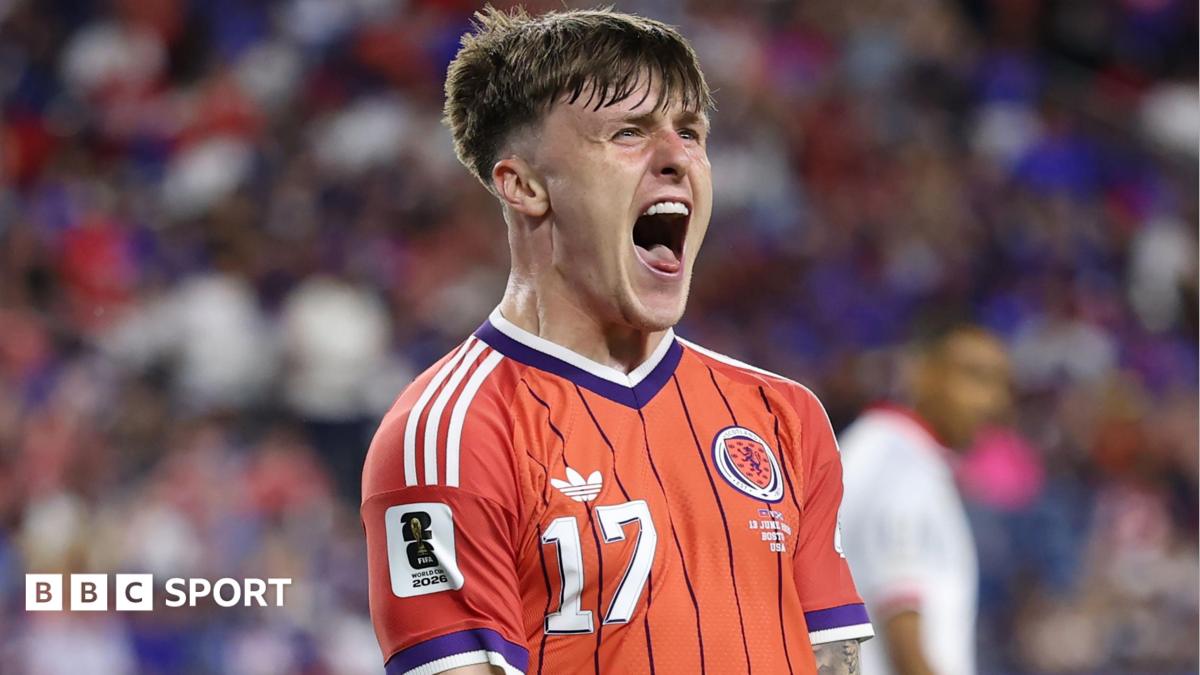
Though he’s “not praying for hat-tricks”, many would have been asking the man above for a favour or two as Scotland eyed up their first World Cup win in 36 years.
It was evident early doors against Haiti that if anything was going to happen, Gannon-Doak would be at the heart of it.
Keeping it simple, when he received the ball down the right, he looked to attack. A sight that makes Scotland supporters rejoice, such has been its rarity in recent times.
When McTominay skelped a post, it was on the end of another dazzling Gannon-Doak burst. He set up Che Adams shortly after for a shot that would be parried right in the path of McGinn, who was wheeling away in ecstasy seconds later as Scotland scored their first World Cup goal since 1998.
For 83 minutes, Gannon-Doak was the youngest man to appear at a World Cup for Scotland. That’s until his 19-year-old pal Findlay Curtis came on.
The pair play in a care-free manner. They don’t carry the years of missed qualifications or even the recent disappointments at the Euros. And it shows.
Gannon-Doak departed with 15 minutes to go against the Haitians. A collective gulp was inhaled.
“He had a cracker tonight,” former Scotland winger Pat Nevin said on BBC Sportsound.
“He’s what you want a Scotland player to be,” added ex-captain Scott Brown on BBC One.
Like few others, Gannon-Doak gets the faithful going. Believing. Hoping.
Like the rest of his generation, we’ve grown up believing ‘it’s the hope that kills you’, but with this 20-year-old driving the team, it’s difficult not to.
Pre-tournament favourites Spain open their Group H campaign with a match against World Cup debutants Cape Verde.
Published On 14 Jun 202614 Jun 2026
The 2026 World Cup will have 13 different kickoff times. You can use the Al Jazeera Sport widget to find out exactly when your team is playing in your local time.
Who: Spain vs Cape Verde What: FIFA World Cup 2026 Group H match Where: Mercedes-Benz Stadium, Atlanta, United States When: Monday, 12pm local time (16:00 GMT) How to follow: Catch all live updates on Al Jazeera Sport
Recommended Stories
list of 4 itemsend of list
Spain, the reigning European champions and strong favourites for the 2026 World Cup, begin their title bid on Monday by facing minnows Cape Verde in Atlanta.
Since winning their maiden world title in 2010, Spain have endured a dismal run in the following three campaigns, bowing out in the group stage in 2014 and exiting in the round of 16 in 2018 and 2022.
But their Euro 2024 success and a new golden generation of Lamine Yamal, Pedri, Gavi, Ferran Torres and others have prompted bookmakers to keep Spain at the top of the potential winners‘ list.
La Roja – known for playing entertaining, attacking football – have become unshakeable over the last four years, going 30 matches unbeaten since a 1-0 friendly loss to Colombia at Wembley in March 2024.
Spain will arguably be the team to beat in North America, with Opta’s supercomputer handing them a 15.94 percent probability to lift the title, and France a close second at 13.62 percent odds.
Spain’s Lamine Yamal, Ferran Torres and Gavi during training [Brett Davis/Imagn Images via Reuters]
Will Yamal play in Spain vs Cape Verde?
Yamal single-handedly stole the show in Germany two years ago en route to their Euro title, and will hope to repeat that form at the June 11 – July 19 tournament.
But the teen sensation may have to wait a little longer to make his World Cup debut.
Spain could take a cautious approach for the Cape Verde opener with winger Yamal and young forward Nico Williams in the final stages of recovery from hamstring injuries sustained in April.
Both returned to training with their teammates on Thursday, but De la Fuente could opt to name them on the bench or keep them out of the matchday squad until they reach full fitness.
Lamine Yamal will make his World Cup debut at the 2026 tournament [Florencia Tan Jun/Getty Images]
Cape Verde to break new ground in North America
Known for its crystal-clear waters and sandy white beaches, Cape Verde will make noise for different reasons this North American summer.
The archipelago of 10 islands in the Atlantic Ocean will make its World Cup debut on Monday, arriving at the global showpiece as one of 10 African representatives.
After their fairytale qualification, which coincided with its 50th anniversary of independence from Portugal, Cape Verde – with fewer than 600,000 inhabitants – became the third smallest country by population to reach the tournament after Iceland in 2018 and Curacao, also in 2026.
The team has slowly built credibility in recent years. Their international breakthrough came in 2013 when they qualified for their first Africa Cup of Nations (AFCON) and reached the quarterfinal stage.
Cape Verde has spread the national team net wide with starters based in several countries, including Portugal, the Netherlands, and the United States.
Cape Verde beat record African World Cup qualifiers Cameroon to seal their spot in the finals [File: Cristiano Barbosa/AP]
Spain vs Cape Verde prediction
Spain are strong favourites to win this match, having an 87.2 percent probability of walking away with three points. Cape Verde have a slim 4.8 percent chance of victory, while a draw has an 8.15 percent chance.
Overall, Spain have a 76.53 percent probability to win Group H, which also includes Saudi Arabia and Uruguay.
How to watch Spain vs Cape Verde?
The following is the list of broadcasters and platforms to watch the game in these countries:
Spain: LA 1, DAZN Mundial, RTVE Play
Cape Verde: New World TV, SuperSport
United Kingdom: ITVX, ITV1, STV Player, STV
USA: FOX, FOX One, Telemundo App, Telemundo Network, Peacock
Ariel Atkins’ head whipped back. After taking an elbow from Indiana’s Monique Billings on May 13, the Sparks’ team doctors spotted the potential for a head injury and sent her to the locker room.
It was the second concussion of her career, but she didn’t know that at the time. All she knew was that her head hurt.
“You just don’t feel like yourself,” Atkins said. “It’s hard to even be a part of society. Luckily, this wasn’t a serious one.”
There have been eight diagnosed concussions in the WNBA already this year after just a quarter of the season. There were eight total in 2025, four in 2024 and six in 2023.
The “why” could be bad luck, better awareness in diagnosing concussions or something else. Atkins thought the lack of game flow because of new officiating standards might be making things harder.
“You would think it should be down,” Atkins said. “Maybe there is no rhythm when there are stoppages.”
Atkins got hit in the nose against the Wings three weeks after returning from her concussion. She stayed in the game after a quick check on the bench.
She didn’t have a concussion that time, but players do seem to be getting hit in the head at a higher rate. Minnesota-based sports scientist Lucas Seehafer thinks it’s too early to make a definitive declaration of why that is happening.
“Some players and coaches in the past have talked about the physicality of the play,” he said. “I know some people have talked about how the rules are kind of lax, or you’re maybe not as rigorous as what they could be in terms of like punishing blows above the shoulders and that kind of stuff. But it’s tough to say with any certainty until we get more data.”
On opening night in Seattle, Golden State forward Cecilia Zandalasini suffered her first concussion when elbowed by the Storm’s Zia Cooke.
She called the process to return a “nightmare.”
“It was so weird with the feeling of always having a headache,” she said. “I had to wait until it was gone, I couldn’t move.”
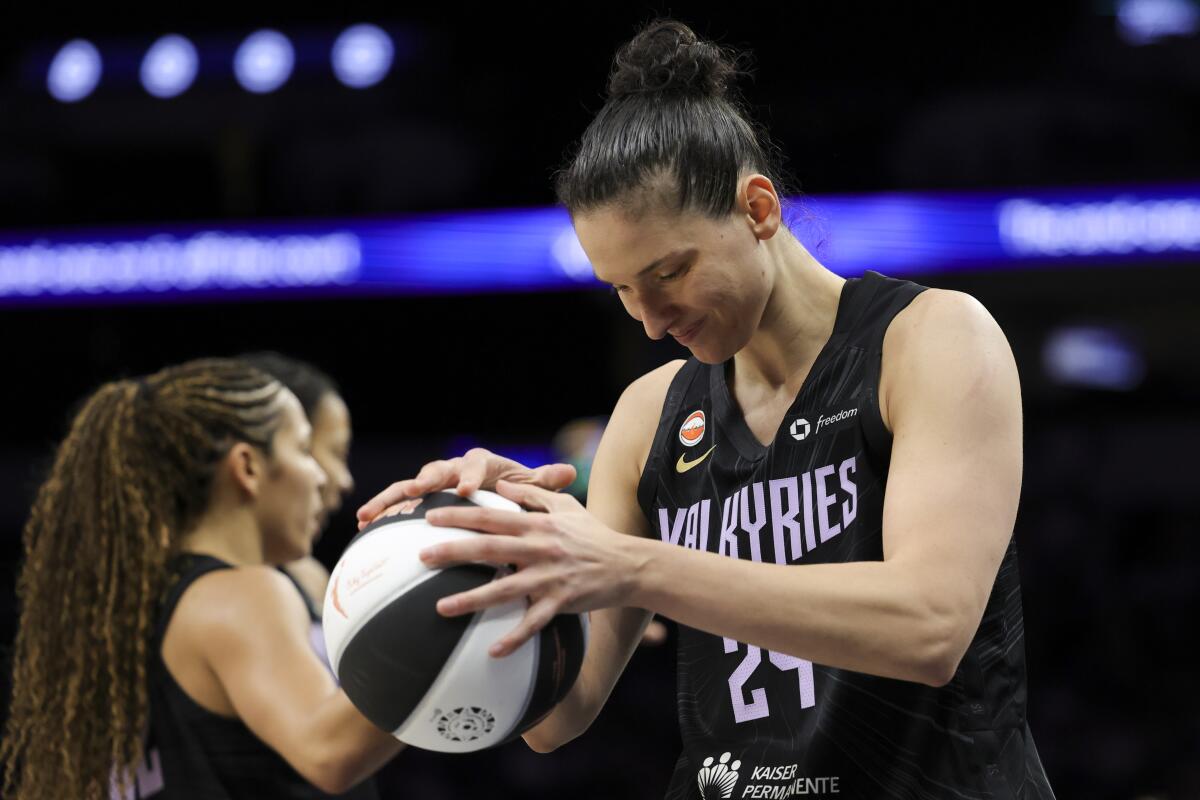
Valkyries forward Cecilia Zandalasini called working through concussion protocal a “nightmare” earlier this season.
(Ellen Schmidt / Getty Images)
Seehafer said that when it comes to women’s sports, hockey and soccer have a reputation for having higher concussion rates, but basketball can be just as physical.
“Compared to the rest of the [pro sports] leagues, the WNBA is pretty much doing exactly what the other leagues are doing, but again, is that enough?” he said. “It’s tough to say. I would say they’re not, but I don’t think they’re egregiously leaving athletes open to even more severe injuries, necessarily. My bias is just that everything can be safer.”
The WNBA follows the same concussion protocol as the NBA, by which a player must undergo a locker room evaluation after getting hit in the head. If the player is cleared by medical staff, they can return to the game.
Any player showing concussion-related symptoms, such as a headache or dizziness, must be monitored for 24 hours by the team’s medical staff. Once they are symptom-free, they go through a range of activities from light physical activity to full-contact practice. They must stay symptom-free throughout that entire process to be allowed back into games.
“Back when I played, I didn’t know what concussion meant,” said Sparks coach Lynne Roberts. “I think now we understand the science of how serious it is, and we don’t rush them back. Once they’re back, there’s really nothing you can do. It’s a contact sport, and the players just kind of play through that, but obviously we’re very cautious with not letting a player play until the doctor’s fully certain that she’s symptom-free and at no risk.”
The hardest part with concussions can be the initial diagnosis. Oftentimes, symptoms show up hours or even days later. For Zandalasini, she was originally diagnosed with a jaw injury before dealing with a headache the next day.
Atkins knew a little bit about what concussions felt like, and even this time was different. Why concussions are up this year is still a mystery, and perhaps it will even out as the season goes on.
But for now, players and medical staff are on alert.
“It’s the thing with athletes, right?” Atkins said. “We’re trying to figure out pain versus injury, like, is it something serious? Is it not? I don’t want to hurt myself further. So, yeah, it can be hard to decipher that with a head injury.”
Vinicius Junior scored a brilliant goal to dig Brazil out of trouble after Ismael Saibari had put Morocco ahead.
A moment of magic from Vinicius Junior salvaged Brazil a point against Morocco in New Jersey, as the five-time World Champions made a shaky start to the tournament.
Ismael Saibari ran through to give Morocco a 21st-minute lead with a clever scoop in the Group C opener on Saturday, but a solo effort from Vinicius ensured the points were shared in this much-anticipated group match.
Recommended Stories
list of 4 itemsend of list
Here are the biggest takeaways from the 1-1 draw at New York New Jersey Stadium.
Brazil coach Carlo Ancelotti at half time [Jeenah Moon/Reuters]
Brazil make a slow start
Brazil are chasing a record sixth World Cup title, 24 years after last lifting the trophy, but this performance suggests there is a lot of work to be done by Carlo Ancelotti’s side.
They showed signs of nerves during the early stages of the game and struggled to cope with a lively Morocco attack.
A fifth-placed finish in South American qualifying underlined the scale of the challenge facing Ancelotti, and this performance has done little to ease concerns about the quality of the Brazil squad.
A number of their players struggled to cope with the intensity of the Moroccan team, with midfielder Casemiro subbed off at half-time after a difficult opening 45 minutes in the heat.
The World Cup final is a long way off in New Jersey, but Brazil will have to vastly improve if they are to have any hope of making it.
Morocco look like the real deal
The Atlas Lions stunned the world of football in 2022 as they made it all the way to the semifinals in Qatar.
Four years later, Morocco have the chance to show that it was not a one-off run to the last four and they are the real deal.
Judging by their performance in New Jersey on Saturday, the North African nation are truly a force to be reckoned with.
They arrived in North America as African Cup of Nations champions, after being retrospectively awarded the title following a controversial final defeat to Senegal, and they continued their strong form with a commanding performance against Brazil, playing with a high level of confidence and plenty of attacking threat.
Morocco appear set for another strong tournament showing.
Vinicius Junior showed his importance to Brazil with a brilliant solo goal in the first half [Jewel Samad/AFP]
Vinicius shows his top quality
If Brazil are to make it to the latter stages of this tournament, they will rely heavily on Vinicius to provide goals and assists in North America.
The Real Madrid man has consistently scored for his club this season, including 16 goals in La Liga and five in the Champions League, and it now appears that he is bringing this form to the world stage.
With Brazil struggling in the first half, Vinicius received the ball from Bruno Guimaraes on the left side of the area before cutting back onto his right foot and hammering into the far corner past Yassine Bounou.
It was the kind of magic moment that he regularly produces for Real Madrid, and the Selecao will be looking for more individual brilliance in their coming games.
Neymar injury hangs over Brazil
The Neymar soap opera is set to dominate another tournament for Brazil, with the 34-year-old on the sidelines for yet another major tournament match.
Brazil’s all-time record goalscorer is still recovering from a calf injury, having not played for his country since 2023.
He was dramatically recalled to the national squad, despite not featuring in Ancelotti’s plans during the Italian’s year in charge, but he remains under scrutiny over his fitness and form following years of injury trouble and an underwhelming spell back at Santos.
It is unclear exactly when Neymar will be fit enough to return to first-team action, but judging by the media’s focus on him during Saturday’s match, this saga is set to dominate discussion around Brazil.
Brazil’s Neymar Jr reacts after the match in New Jersey [Caean Couto/Reuters]
Draw leaves Group C wide open
Brazil and Morocco are the clear heavyweights in their group, but Saturday’s draw in New Jersey has left Group C somewhat in the balance.
Scotland currently sit top of the table after a 1-0 victory over Haiti in Boston, and they will now be eyeing the chance to reach the knockout stages for the first time in their history.
Morocco and Brazil remain heavy favourites to finish in the top two automatic qualification spots, but Scotland know that any points in their final two group games will almost certainly book their spot in the round of 32.
Béla Guttmann may be the most consequential soccer coach you’ve never heard of. But if it weren’t for Guttmann, you may never have heard of Pelé.
And Brazil may never have become the greatest soccer-playing country on Earth.
That’s because Guttmann changed the shape of modern Brazilian soccer — and changed the sport forever — when he imported the revolutionary 4-2-4 system from Hungary to Sao Paulo in 1957. A year later, Brazil won the first of five World Cups and the joga bonito was born.
But what Guttmann brought to Brazil isn’t nearly as interesting as how he got it there. That’s just one of the fascinating stories in “The Beautiful Game … The Untold Story,” the exhibit that will open the Holocaust Museum LA on Sunday at the Goldrich Cultural Center, a $70-million expansion that will double the size of the Pan Pacific Park museum’s campus to 70,000 square feet.
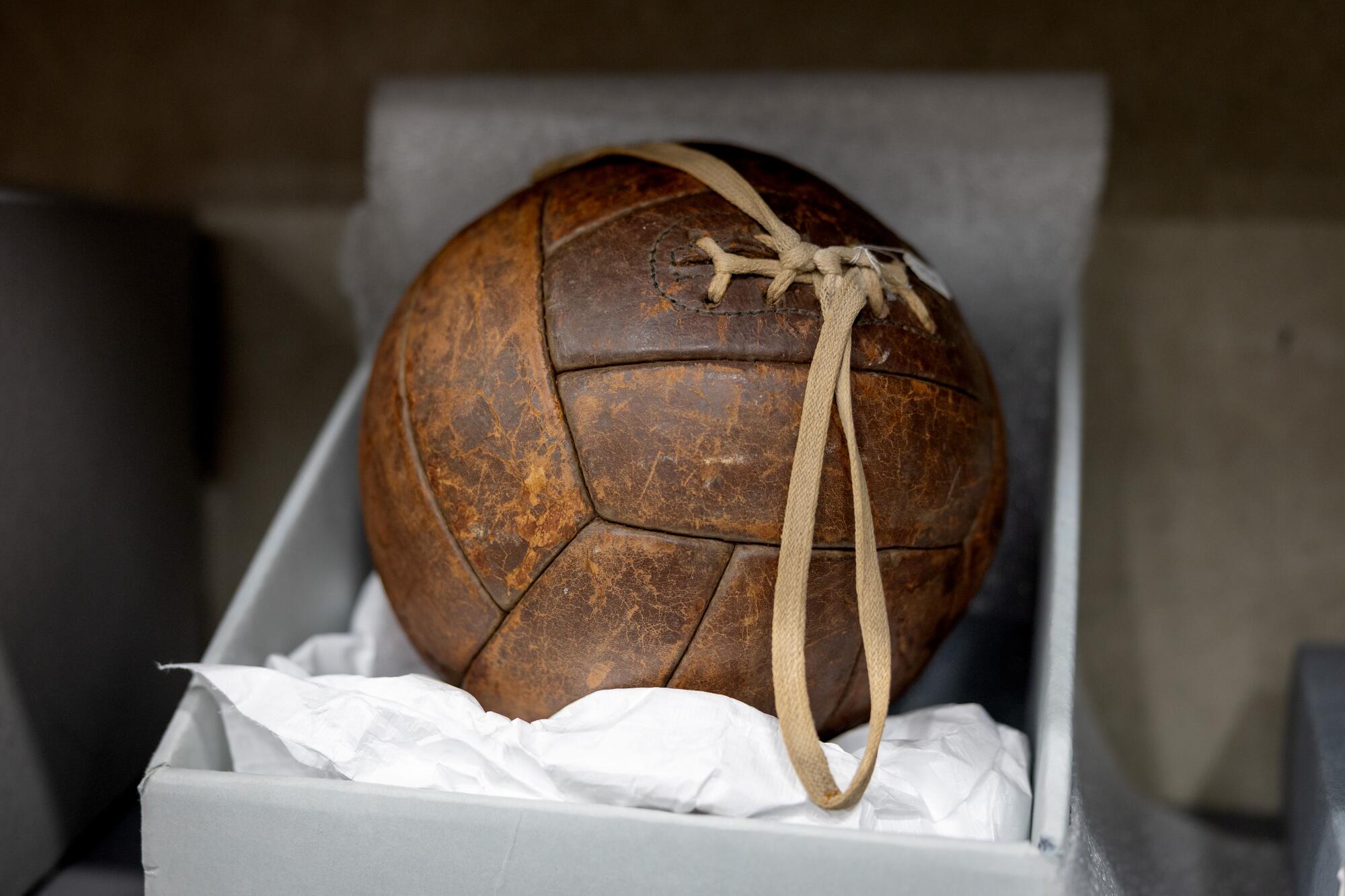
A soccer ball from the holocaust is among the items on display in the exhibit “The Beautiful Game … The Untold Story” at the Holocaust Museum LA.
(Eric Thayer/Los Angeles Times)
The exhibit was unveiled during a private reception on Saturday followed by a free preview day open to the public from 10 a.m. to 5 p.m. The grand public opening will take place in August.
The show’s launch coincides with eight local World Cup matches, which kicked off with the United States’ 4-1 win over Paraguay on Friday at SoFi Stadium, and it shines a light on the important but largely overlooked relationship between Jewish life and the global game, as well as how Jewish innovators like Guttmann shaped the modern rhythm, style and culture of the sport.
“It was in the same intellectual level as jazz, as art and everything modern and progressive,” journalist Allon Sander, who helped curate the exhibit, said of Jewish participation in European soccer in the years before World War II.
“The origin of the game and how it intersects with Jews and the Holocaust and the impact that these Jewish footballers and coaches had to shape the game and help popularize the sport is so fascinating,” added Beth Kean, the museum’s CEO. “And it’s an unknown history.”
Much of that story can be told through Guttmann, who was born in Budapest in the final year of the 19th century and developed into one of the sport’s first Jewish stars, representing Hungary in the 1924 Olympics and playing for nine teams in two countries before retiring to become a coach.
But none of that success mattered when the Hungarian government began introducing anti-Jewish laws in 1938, costing Guttmann his job and nearly his life when he was sent to a Nazi forced-labor camp, where he was tortured. Just days before he believed he would be shipped to Auschwitz, which meant certain death, he escaped alongside Erno Erbstein, another Jewish coach.
Erbstein revolutionized soccer in Italy before dying in 1949, along with the entire Torino team, when their plane crashed into a hilltop outside Turin. Four years ago, he was inducted into the Italian soccer hall of fame. Guttmann, meanwhile, who lost much of his family in the Nazi death camps, would go on to coach for 42 years in 14 countries, winning championships in six of them yet only staying in a single place for more than two years just once.
“He’s running away from his demons,” said Ronen Dorfan, a journalist and sports historian based in Budapest whose research was instrumental in putting the exhibit together. “His father was murdered, his sister was murdered. You never know how you survived in Budapest during the war so he had guilt feelings.”
A jersey worn by player Max Wozniak and a jersey from the 1930s are displayed in an exhibit called “The Beautiful Game … The Untold Story.”
(Eric Thayer/Los Angeles Times)
The exhibit was designed in three sections, the first devoted to the years before World War II, the second is about the Holocaust and the third is the postwar years. And while it details Jewish participation in, and influence on, global soccer, it also challenges the cliché that Jews were intellectuals, artists and laborers but not athletes.
“We are always trying to challenge stereotypes. Stereotypes that we might have about ourselves and even stereotypes that we believe about others,” said Jordanna Gessler, the museum’s vice president of education and exhibits who helped curate the show. “It’s crucial to help people find their place and their voice and really see the unity, the similarities between people.
“This is a story that was lost in time and we’re really bringing it out,” Gessler added. “To really have this conversation and encourage people to explore stories that they might not know.”
One thing people might not know is that in the 1920s and ‘30s, Europe’s best teams weren’t in England, Germany or France, but in Austria and Hungary, where they were led by Jewish players and coaches such as Hugo Meisl, Jozsef Braun, Arpad Weisz, Marton Bukovi, Gusztav Sebes and Gyula Mandi. Weisz and Braun were both killed by the Nazis.
A soccer ball from the 1974 World Cup is displayed at an exhibit called “The Beautiful Game … The Untold Story.”
(Eric Thayer/Los Angeles Times)
The surge of antisemitism and fascism in Germany, Italy and Eastern Europe helped spread the influence of those revolutionary players and coaches around the world.
“With the rise of the Reich and the Holocaust, the coaches ran away,” Dorfan said. “And they ran to every corner of the world, to Brazil, to Argentina, to Portugal [and] provided coaches to Real Madrid, to Barcelona, to Benfica, to Flamengo.
“There isn’t one of these clubs that doesn’t owe its tactical development in the ‘40s and ‘50s to the Jewish coaches, which came primarily from Hungary.”
The primary tactical development was the shift from the popular but rigid 2-3-5 formation, which required immense physical endurance and tactical discipline, to the fluid 4-2-4, which spread the wingers to the touch line and allowed for improvisation and creativity on the attacking end, a formation pioneered in Budapest in the 1920s.
“They developed a more refined game of passing the ball, keeping it on the carpet rather than the English kick and run, and really put thought into tactical thinking,” Dorfan said.
Guttmann, who played or coached for more than two dozen teams in his career — including one, in Romania, that paid him in vegetables during the postwar period — brought the Hungarian approach to Brazil in 1957 when he coached Sao Paulo to a championship. After Vicente Feola, the manager Guttmann replaced at Sao Paulo, took over the national team a year later, he brought the formation with him, popularizing many of the tactics still used in modern soccer, such as fluid defensive wingers, overlapping full backs, the use of a withdrawn striker and an attacking midfield.
The soccer team at the Theresienstadt concentration camp’s flag is displayed in a Holocaust Museum LA exhibit called “The Beautiful Game … The Untold Story.”
(Eric Thayer/Los Angeles Times)
“He is the whole exhibition in one man,” Dorfan said of Guttmann.
“Obviously if we wouldn’t have had the Holocaust, those [coaches] wouldn’t be kept out of Europe, Europe would be much stronger, much more developed. [And] then the development of Brazil or the success of Brazil would be coming much later,” Sander said.
Dorfan spent the better part of two years tracking down many of the more than 100 trophies, uniforms, photos and trinkets that make up “The Beautiful Game” exhibit, a search that required determination, perseverance and more than a little luck. Many of the items, because of their ties to Jewish athletes and teams, were hidden during the war and presumed lost. Others resurfaced only through detective work that sent Dorfan following leads that spanned decades and crossed more than a dozen borders.
That also cost money. So Alan Rothenberg, the man who, as president of the U.S. Soccer Federation, first brought the World Cup to Los Angeles 32 years ago, stepped up to lead an effort that raised more than $1 million to fund the exhibit.
“The story really needs to be told, particularly with what’s going on right now with respect to antisemitism,” Rothenberg said. “It’s really important for people to realize what can happen. And soccer is a great vehicle to draw them in. The one main thing in the museum is bringing schoolkids in.”
The Nazis and their collaborators failed in their attempt to erase the history of Jewish soccer pioneers; in fact, they inadvertently popularized both the men — and women — and their ideas. But the sport also helped other Jews survive a dark period and Kean said that may be the most beautiful and uplifting part of “The Beautiful Game.”
“The main reason we decided to do this exhibition in the first place is because for years so many survivors, when they talk about their life before the war, so many of them talk about soccer. So many of them were passionate and fond of the sport,” she said.
“We knew the exhibit opening was going to coincide with the World Cup. L.A. is going to be on the world stage. This is a great opportunity for the museum to get these stories out.”
The first three days of the 2026 FIFA World Cup are done, with the U.S. and Mexico each winning their group stage openers. However, most of the World Cup field is still looking to hit the competitive pitch for the first time.
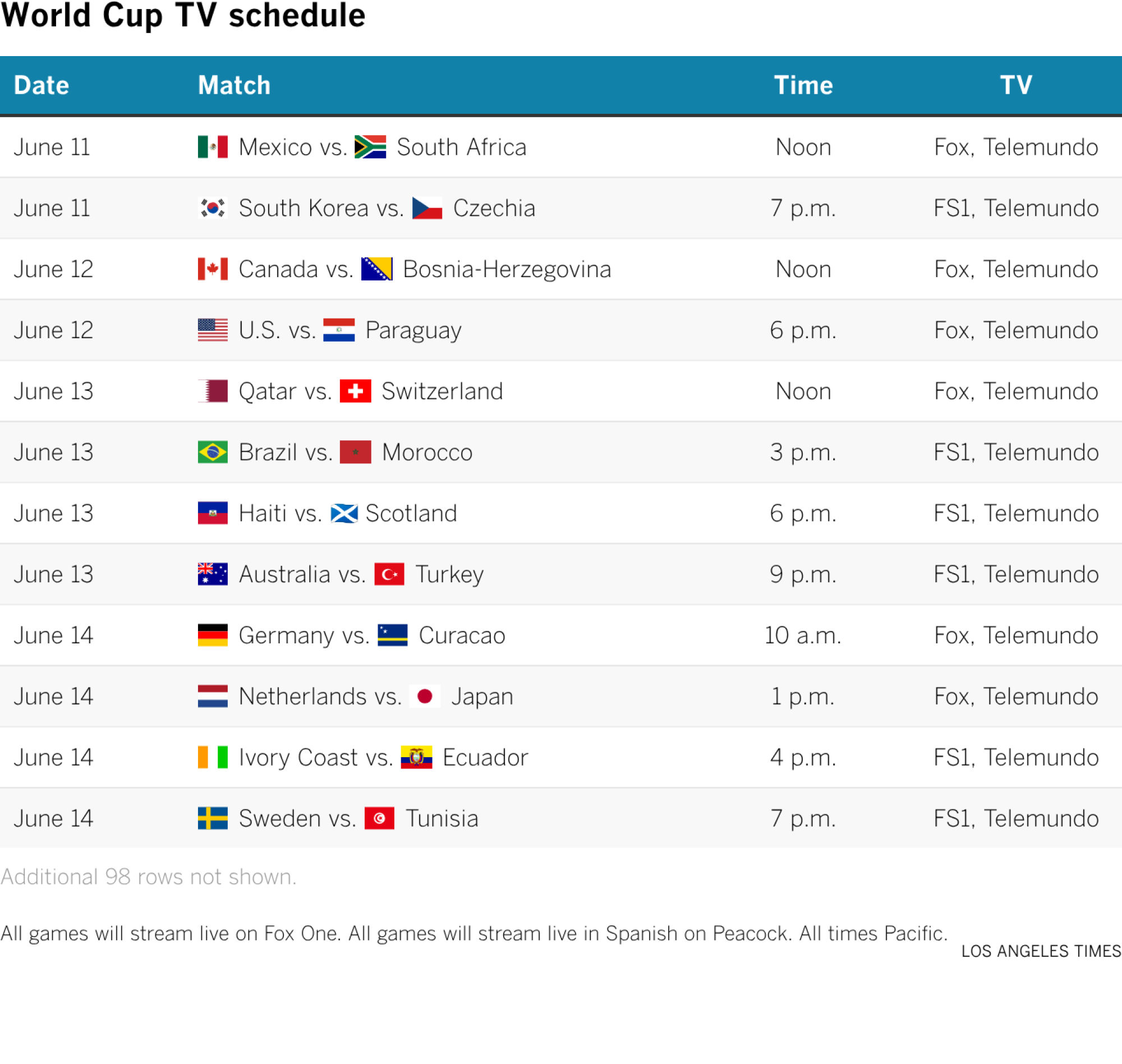
Here’s everything you need to know about matches being played on Sunday, Monday and Tuesday in the 48-team tournament across the U.S., Mexico and Canada (all times Pacific).
Sunday’s Group E games:
Germany vs. Curacao
Germany’s Antonio Rudiger and Deniz Undav walk on the field before a friendly against the U.S. in Chicago on June 6.
The buzz: This is David vs. Goliath. Germany, a four-time champion ranked 10th in the world, against Curaçao, the smallest country to qualify for a World Cup. But remember David won that first battle, and Curaçao, with a roster full of Dutch-born-and-bred players and an experienced coach in Dick Advocaat, at 78 the oldest manager in the tournament, won’t be a pushover.
Ivory Coast vs. Ecuador
Ecuador’s Piero Hincapie controls the ball during a World Cup qualifier against Argentina in September 2025.
(Franklin Jacome / Getty Images)
Where: Lincoln Financial Field, Philadelphia Time: 4 p.m. TV: FS1, Telemundo
The buzz: Ecuador hasn’t lost since September 2024, a run that’s been fueled by the European-based back line of Willian Pacho (Paris Saint-Germain), Piero Hincapié (Arsenal), Pervis Estupiñán (AC Milan) and holding midfielder Moisés Caicedo (Chelsea). Ivory Coast is the youngest team in the World Cup, with an average age of 25.4 years, but it beat France in its final tournament tuneup. In three previous World Cups, the Elephants failed to advance out of the group stage.
Sunday’s Group F games:
Netherlands vs. Japan
Netherlands standout Frenkie de Jong looks on during an international friendly against Algeria on June 3.
The buzz: The eighth-ranked Dutch, arguably the best team never to win a World Cup, come into this tournament with a golden generation led by defenders Virgil van Dijk and Nathan Ake, midfielder Frenkie de Jong and coach Ronald Koeman. Japan’s only loss in the last 12 months came to the U.S. in a friendly last September; after that it beat fellow World Cup qualifiers England, Scotland, Ghana and Brazil and played Paraguay to a draw. The Dutch have lost just twice, to Algeria and Germany, in the last 23 months.
Sweden vs. Tunisia
Tunisia’s Hannibal Mejbri warms up before an international friendly against Belgium on June 6.
The buzz: Tunisia played in five of the last seven World Cups without getting out of group play, but this time it brings a roster that blends international veterans such as midfielders Hannibal Mejbri (Burnley) and Elias Achouri (Copenhagen) and young talent, including teenager Rayan Elloumi of the Vancouver Whitecaps, the ninth-youngest player in the tournament. Sweden beat Ukraine and Poland in a pair of UEFA playoff games this spring to grab a place in this tournament. Aston Villa defender Victor Lidelof is the most experienced player with 76 caps, including four World Cup appearances.
Monday’s Group G games:
Belgium vs. Egypt
Belgium’s Joaquin Seys, left, and Axel Witsel celebrate after defeating the U.S. in an international friendly on March 28.
The buzz: Belgium hasn’t lost in more than a year, but it also hasn’t played a top-10 team since 2024. It has a veteran core of four players — midfielders Axel Witsel and Kevin De Bruyne, goalkeeper Thibaut Courtois and forward Romelu Lukaka — with more than 100 international caps. Egypt, Africa’s oldest national team, is playing in a World Cup for the fourth time and is still looking for its first win. Liverpool forward Mohamed Salah, the team’s active leading scorer, is the only player on the roster with a World Cup goal.
Iran vs. New Zealand
Iran’s Amirhossein Hosseinzadeh plays the ball during an international friendly against Gambia on May 29.
The buzz: For the first time in World Cup history a tournament qualifier, Iran, will play in a country with which it is at war, the U.S. The Iranians, with the second-oldest roster in the tournament, are playing in their fourth straight World Cup. Only a 1-0 loss to the U.S. kept them from advancing out of group play in 2022. New Zealand, playing in its third World Cup, was winless the first two times — although it didn’t lose in its last visit in 2010, playing Slovakia, Italy and Paraguay to draws. The Kiwis are the only team this century not to lose in group play while also failing to advance.
Monday’s Group H games:
Spain vs. Cape Verde
Spain’s Ferran Torres scores during an international friendly against Iraq on June 4.
(Manu Fernandez / Associated Press)
Where: Mercedes-Benz Stadium, Atlanta Time: 9 a.m. TV: Fox, Telemundo
The buzz: Cape Verde is one of four nations making its World Cup debut and it will open against second-ranked Spain, a tournament favorite which has lost just once since March 2024. Every player on Spain’s roster plays for a top European team; four of them played in last month’s Champions League final.
Saudi Arabia vs. Uruguay
Uruguay’s Federico Valverde heads the ball past Brazil’s Joao Gomes during a Copa America quarterfinal match in 2024.
(Godofredo A. Vásquez / Associated Press)
Where: Hard Rock Stadium, Miami Gardens, Fla. Time: 3 p.m. TV: FS1, Telemundo
The buzz: Saudi Arabia, playing in its third straight World Cup, began its last visit by beating eventual champion Argentina in one of the most stunning upsets in tournament history. And the last time the World Cup was held in the U.S., in 1994, the Arabian Falcons became the first Arab-Asian team to reach the round of 16. Uruguay, a quarterfinalist in 2018, comes into this World Cup with an experienced roster led by Real Madrid midfielder Federico Valverde and Atlético Madrid defender José María Giménez.
Tuesday’s Group I games:
France vs. Senegal
France’s Kylian Mbappe works out with teammates in Waltham, Mass., on Friday.
The buzz: France, ranked third in the world by FIFA, played in the last two World Cup finals and is favored to make it back again this year. Its best player, captain Kylian Mbappe, holds the tournament record with four goals in World Cup finals, including a hat trick in Qatar four years ago. Senegal is led by former African player of the year Sadio Mane, the country’s all-time leader in goals. Senegal made the quarterfinals in 2002 and the round of 16 in Qatar.
Iraq vs. Norway
Norway’s Erling Haaland controls the ball during a World Cup qualifier against Moldova in March 2025.
The buzz: Norway is playing in the World Cup for the first time this century which means Manchester City‘s Erling Haaland will finally make his tournament debut. A three-time Premier League scoring champion, Erling has more goals for club at country at 25 than either Lionel Messi or Cristiano Ronaldo had at that age. Iraq has gone even longer between World Cups, making its only appearance in 1986 when it lost all three games. Iraq won its way back with a 2-1 victory over Bolivia in an inter-confederation playoff last March. The winning goal came from forward Aymen Hussein, the team’s active leader in goals and appearances among outfield players.
Tuesday’s Group J games:
Argentina vs. Algeria
Argentina’s Lionel Messi, fourth from left, practices with teammates in Kansas City, Kan., on Thursday.
The buzz: Top-ranked Argentina was upset by lowly Saudi Arabia in its World Cup opener four years ago, then ran the table to give Lionel Messi the one title he was missing. Argentina returns 17 players from its world championship team, among them Messi, the golden ball winner; goalkeeper Emiliano Martínez, the golden glove winner; and midfielder Enzo Fernández, the 2022 tournament’s best young player. Algeria is ranked 28th in the world, it best ranking in more than a decade, and has lost just twice in the last two years. Its roster features 16 players from first-division clubs in Europe.
Austria vs. Jordan
Mousa Al-Tamari of Jordan controls the ball during the international friendly match against Switzerland on May 31.
The buzz: Jordan played its first international match in 1953 but it hasn’t played in World Cup until now, finally qualifying by finishing second to South Korea in its Asian group. Its best player is captain Musa Al-Taamari, a dynamic winger known as the “Jordanian Messi” who leads active players with 91 international caps. Austria is playing in the World Cup for the first time this century and it hasn’t won a game here since 1990. Its best player in Real Madrid defender David Alaba, a four-time Champions League winner and 10-time Austrian footballer of the year.
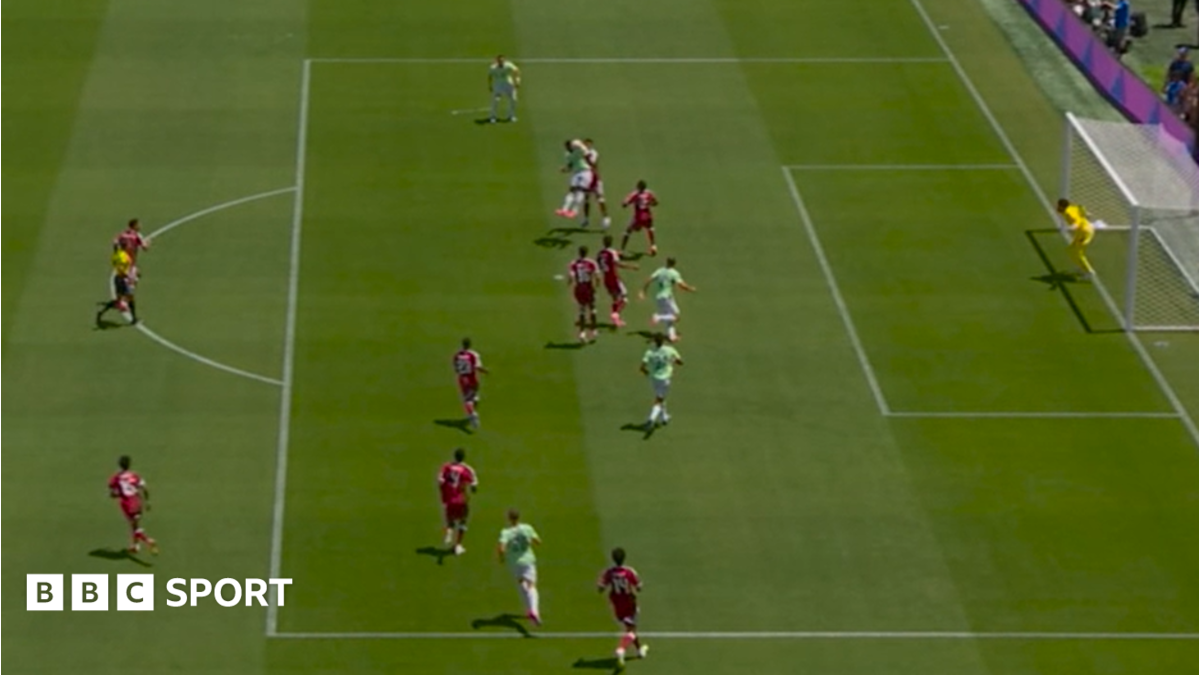
Was Switzerland’s Remo Freuler offside before he was brought down by Qatar goalkeeper Mahmoud Abunada?
It is the question that, for many, remains unanswered despite Fifa finally releasing images four and a half hours after the incident happened.
The move led to a penalty, converted by Breel Embolo, as the teams drew 1-1 in Saturday’s World Cup Group B match in Santa Clara.
Before the tournament Fifa put a lot of stock in its new, enhanced semi-automated offside system.
World football’s governing body scanned every player at the World Cup to create unique, lifelike avatars.
It was supposed to provide the most accurate illustration of offside decisions we have ever seen.
But it did not work and Fifa had to revert to drawing lines to the players and on the pitch.
Fifa released a statement saying “a brief technical outage prevented the onside animation graphic from being generated”.
It went on to say the lines drawn by the video assistant referee (VAR) showed no offside and released two images – which remain unconvincing – but not the usual avatar graphics.
Within the move, two Switzerland players could potentially have been offside.
Fifa released an image for both as evidence they were onside. The first was for Embolo in the build-up, the second for Freuler before he was fouled by Abunada.
Fifa’s statement read: “The workflow of the VAR was not affected by this issue and followed the normal procedure in checking the on-field decision.
“The lines used by the VAR to check the position of the relevant players did not show the attacking player to be in an offside position in either of the two situations immediately before the penalty decision.”
The semi-automated technology is not flawless. It can be impacted by many things, such as players being close together or even something as random as ticker tape on the pitch.
When the technology fails in the Premier League there is the option to fall back to the old technology where the VAR draws the lines.
But the offside image is produced straight away, not several hours later.
“We all think [it was offside],” Gary Neville said on ITV before the statement was released.
“Everybody at home thinks it. Fifa are the host broadcaster and they have the semi-automatic decision that they can show us.
“There is a massive question over that because it is offside in my eyes until they prove to me different.”
If there is one thing that is guaranteed to create doubt it is delay. It creates a vacuum that feeds conspiracy theories. It might give the impression Fifa is hiding something.
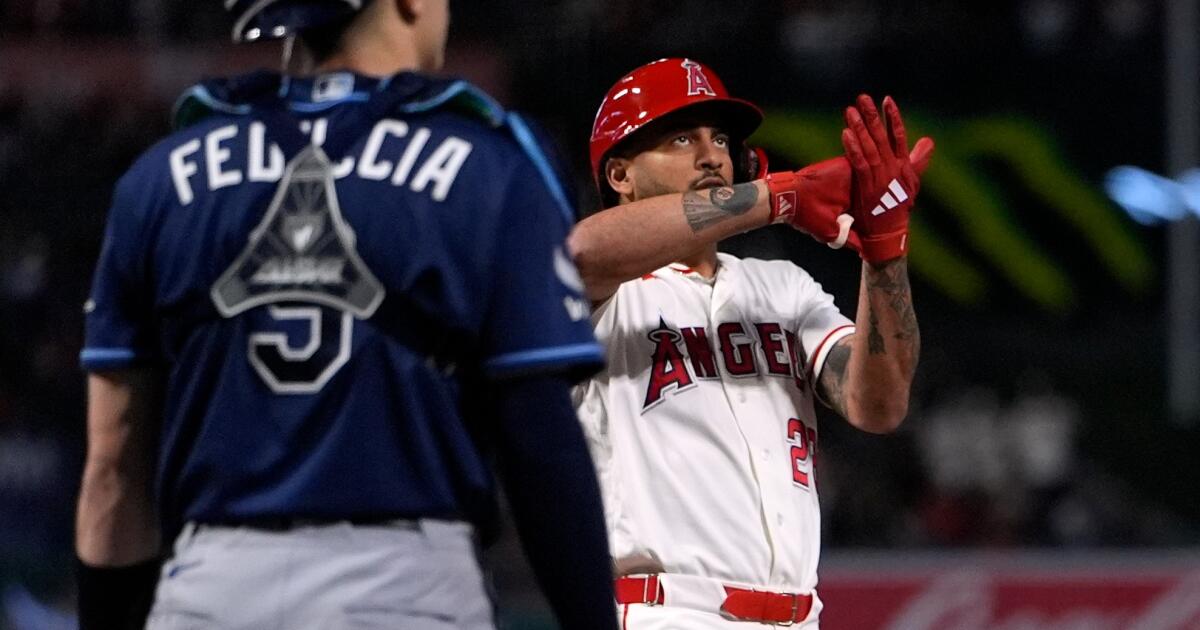
José Soriano pitched five innings, Denzer Guzman drove in three runs and the Angels extended their winning streak to four games with an 8-0 victory over the Tampa Bay Rays on Saturday night.
Jose Siri hit a two-run home run and Donovan Walton had two RBI hits to put the Angels in line for just their second series sweep of the season Sunday.
Soriano (8-4) gave up three hits with two walks and five strikeouts after taking a line drive off his chest and right shoulder area in the first inning. It was Soriano’s first scoreless outing in his past nine starts after he had five over his first six outings of the season.
Griffin Jax (1-5) gave up an unearned run over five innings for the Rays and absorbed a hard-luck loss after giving up five hits with five strikeouts. Jax remained winless in nine starts since moving into the rotation.
Cedric Mullins had two of the five hits for Tampa Bay, which did not collect its first hit off Soriano until Mullins singled leading off the fourth.
The Rays entered the series after a three-game sweep of the Boston Red Sox but have lost consecutive games to the Angels, who were tied for the worst record in the American League at the start of play Saturday.
The Angels took a 1-0 lead in the fourth inning when Jo Adell scored after Rays shortstop Taylor Walls misplayed a ground ball by Nolan Schanuel.
The Angels added to their advantage in the sixth inning when Guzman delivered a two-out two-run single and Walton followed with his run-scoring double.
Siri crushed a two-run home run to center in a four-run seventh before Guzman and Walton added RBI singles.
SAN ANTONIO — Jalen Brunson and the Comeback Knicks did it again. And now they’re the Champion Knicks.
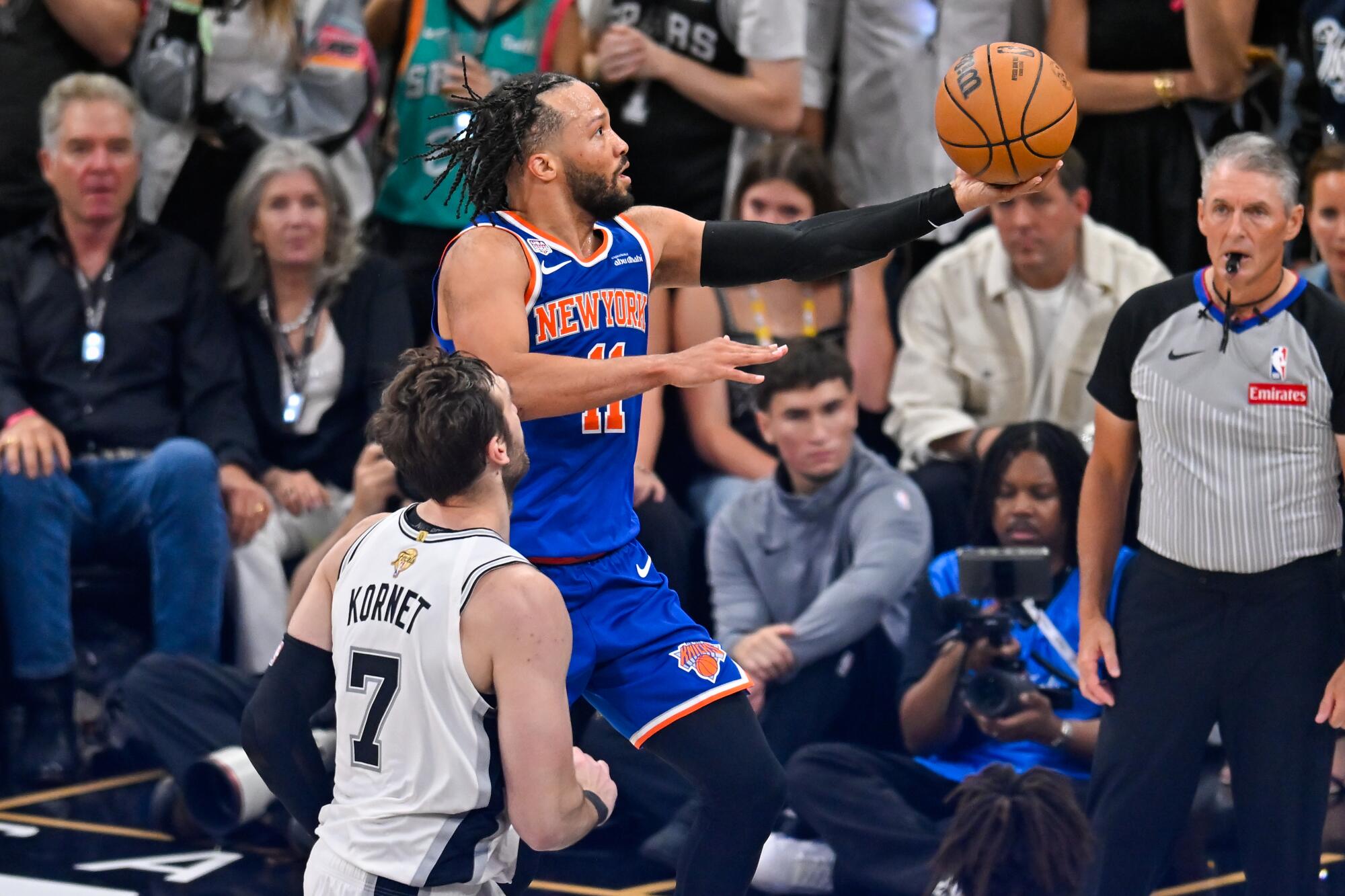
For the first time in 53 years, New York rules the NBA. Brunson scored 45 points, including 13 straight for New York in the fourth quarter, and the Knicks beat the San Antonio Spurs 94-90 in Game 5 of the NBA Finals on Saturday night.
The Knicks won the series 4-1, rallying from double-digit deficits in all four of those victories. The deficit was 16 on Saturday night. Brunson and the Knicks were never fazed.
“I have no words,” Brunson said during the on-court celebration. “It’s everything I ever dreamed of.”
New York guard Jalen Brunson drives in front of San Antonio center Luke Kornet during the second half of the Knicks’ 94-90 win Saturday.
(Darren Abate / Associated Press)
Brunson, fittingly, closed with a flourish. He set a Knicks record for points in a finals game; it had been 38 by Willis Reed against the Lakers in Game 3 of the 1970 series. It now belongs to the left-handed point guard who changed the franchise’s fortunes when he arrived four years ago.
Mikal Bridges and Josh Hart — the other two parts of the “Nova Knicks” trio that also includes Brunson, three players who were NCAA champions at Villanova and teamed up in New York to try to do the same — combined to score 27 points. Bridges had 14, Hart 13.
“I don’t know what I’m feeling,” Brunson said. “I’m in awe. Whenever someone counted us out, we found a way to come back and do something about it.”
New York Knicks center Karl-Anthony Towns, right, hugs forward Og Anunoby after defeating the San Antonio Spurs for the NBA title on Saturday.
(Darren Abate / Associated Press)
Dylan Harper scored 25 for the Spurs, who got 19 points, 14 rebounds and five blocked shots from Victor Wembanyama.
The Knicks improved to 4-0 in closeout opportunities this season, winning them all on the road. It didn’t feel like the road, though — not with thousands of New York faithful having made the trip to Texas to see a moment 53 years in the making.
New York got to the brink of this title by rallying from 29 points down in Game 4 to win 107-106 on OG Anunoby’s tip-in with 1.2 seconds left on Wednesday night. It was the largest comeback in NBA Finals history and the biggest comeback in any game this season, regular season or playoffs.
By comparison, then, a 16-point rally in this one seemed easy.
The game followed the same script in the opening minutes as all the others in the series, with the Spurs taking a double-digit lead in the first quarter and then frittering most of it away in the second quarter.
The Spurs became the first team in the play-by-play era, which started in the 1996-97 season, to lead five finals games by 10 points or more in first quarters.
The Knicks simply could not make a shot, missing on 16 of their first 18 tries and each of their first 11 two-point attempts. There even was a point in the second quarter when Wembanyama had more blocked shots (five) than the Knicks had made shots (four). San Antonio’s lead was as many as 10 in the first quarter, as many as 16 in the second.
Of course, none of it mattered much. As always, the Knicks came back.
New York Knicks fans react in New York after the team’s title-clinching win over the Spurs on Saturday night.
(Heather Khalifa / Associated Press)
A 22-9 run in the second quarter got New York within three, before Devin Vassell scored just before the halftime buzzer to give San Antonio a 42-37 edge at the break.
And that capped an opening 24 minutes of either offensive ineptitude or defensive prowess, depending on perspective. The 79 combined points in the first half were the lowest in a finals game since Game 7 of Lakers-Celtics in 2010, and the combined 31.8% field goals shooting by the Knicks and Spurs was the lowest in the first half of a finals game in the play-by-play era.
Brunson won NCAA crowns twice with Villanova — both in Texas, the 2016 one in Houston and the 2018 one in San Antonio, just a few miles away from the arena that the Spurs call home.
A Texas three-step of titles, and this one was surely the sweetest of all.
Cameron Brink said she’d appreciate some grace. She really would.
Sparks fans should give her some, because where else is she going to get it?
Certainly not from WNBA refs. Not from opponents with more to play for than ever. Certainly not from the game itself; basketball moves fast, and a bummer can become a bust in a blink.
But Brink, 24, is not on the brink of bust territory, no. Block that thought. Technically, it’s Year 3, but after a torn ACL derailed her as a rookie two summers ago, it’s practically like Year 2 for the former Stanford star. And by design, the WNBA is testing her confidence, her decision-making and her patience as she tries to reestablish herself as one of the WNBA’s best young players.
So, grace.
The recognizable 6-foot-4 forward — she’s the long-blond-haired hooper in the New Balance ads — was the No. 2 overall pick in 2024.
Now she’s her team’s No. 3 option in the post. She’s coming off the bench behind Nneka Ogwumike and Dearica Hamby for the Sparks, who are a modest 6-6 after wins this week over the expansion Portland Fire and the struggling Seattle Storm.
Against the Fire, Brink scored two points and picked up four fouls in nine minutes. Then she went to Seattle and had 15 points in 18 minutes but was pulled with more than five minutes left in the fourth quarter after getting her third, fourth and fifth fouls in 86 seconds. (WNBA players get six fouls before being disqualified.)
For the season, Brink has been called for 49 fouls in 208 minutes. A foul about every four minutes!
They’re silly fouls and they’re phantom calls. Egregious and ticky-tack. Costly and common. A real fouled-up buffet. She sets screens that get scrutinized as if by the most vigilant TSA agent. And sometimes, yes, she’s doing the accidental tripping. Other times, the officials are.
Her reputation precedes her, so everyone gets a superstar’s whistle when being defended by Brink. Opponents bake it into their game plans.
That can’t continue.
All that fouling is hindering Brink’s development because it’s robbing her of important in-game reps — which she needs, foremost, to figure out how to stop fouling.
Sparks forward Cameron Brink, left, blocks the shot of the Tempo’s Laura Juskaite during a game last month.
(Jeff Lewis / Associated Press)
“At the pro level,” said Tara VanDerveer, Brink’s coach at Stanford, “every young player always has a lot of work to do. And I saw her make a three. I see her block shots. She rebounds, she can handle the ball, she’s unselfish, she’s a terrific talent. But there’s always things players need to work on.”
We know what Brink’s thing is.
“She has to be disciplined,” VanDerveer said. “And if you want something so badly, if you want to be an All-Star someday or make the Olympic team, you’ve got to be dependable … and I think anyone can change, if it’s behavior they recognize is not in their best interests or not in their team’s best interests. It’s hard, but it’s something I think people can do.
“That’s what Cam is working on.”
And, VanDerveer added, “I’m really so excited that Nneka is there, because she will give her such great guidance and mentorship.”
And grace. Brink is getting that from Ogwumike — also a former Stanford star, the Sparks legend returned to L.A. this season after two seasons in Seattle — and her other teammates.
“I just do my best to lead by example,” Ogwumike, 35, said. “But then also let [Brink] know that she’s very capable, that she’s more than capable, which is exactly why she’s here with us and it’s exactly why we need her on this team.”
Sparks forward Cameron Brink, wearing a facemask, controls the ball while defended by Sun forward Raegan Beers.
(Joe Buglewicz / Getty Images)
But how long will Brink get grace from the Sparks in the what-have-you-done-for-me-lately business of basketball?
The foul trouble tells us why a win-now team wouldn’t trust her, why the Sparks would give meaningful minutes to two veteran post players ahead of her. Why they wouldn’t prioritize Brink’s development alongside winning as they strive to snap a previously unthinkable five-year playoff drought.
And what about fans? How patient will you all be with a player who was drafted immediately after Caitlin Clark and five spots in front of Angel Reese?
These days, that might depend on what the parlay calls for.
Or, preferably, whether you remember Brink’s first 15 WNBA games. All starts, all signs pointing to stardom. She showed up in 2024 throwing lavish block parties. Her 2.3 blocks per game were message-sending spikes, like what Lisa Leslie used to enthrall Sparks crowds with.
From the jump, she had guys coming to games at Crypto.com Arena wearing her No. 22 jersey and little girls arriving in groups with No. 22 painted on their cheeks and “I love Cam Brink” signs in hand.
And then the torn ACL cost her 25 games of her rookie season and another 25 last season, plus her spot on the United States’ Olympic 3×3 women’s basketball team in Paris in 2024.
She had to start over. Lost a lot of ground. But you see that masked woman stuck on the Sparks’ bench for all but 17 minutes per game?
You can’t miss her. She’s looking uncomfortable in protective facial gear that either hinders her breathing or her peripheral vision, her only options to protect the torn septum she suffered in a victory over the Las Vegas Aces last month.
She’s the one with the 6-8 wingspan who’s averaging 9.2 points, 4.3 rebounds and 1.5 blocks while shooting 52.1% from the field in her limited minutes.
She’s still Cameron Brink. Between fouls, she’s fluid and fast and covers more of the court than almost anyone in the WNBA, able to leap from defending guards to centers in a single bound.
“It’s just looking at every day as a new opportunity to learn and grow and not getting too bogged down when things don’t go exactly as you planned,” Brink told me. “Because more times than not, things are not going to go how you want them to. And that’s life. So I just want to be able to put my best effort out there every single night.
She knows what the Sparks need from her: “To perform, just come on the floor and compete.”
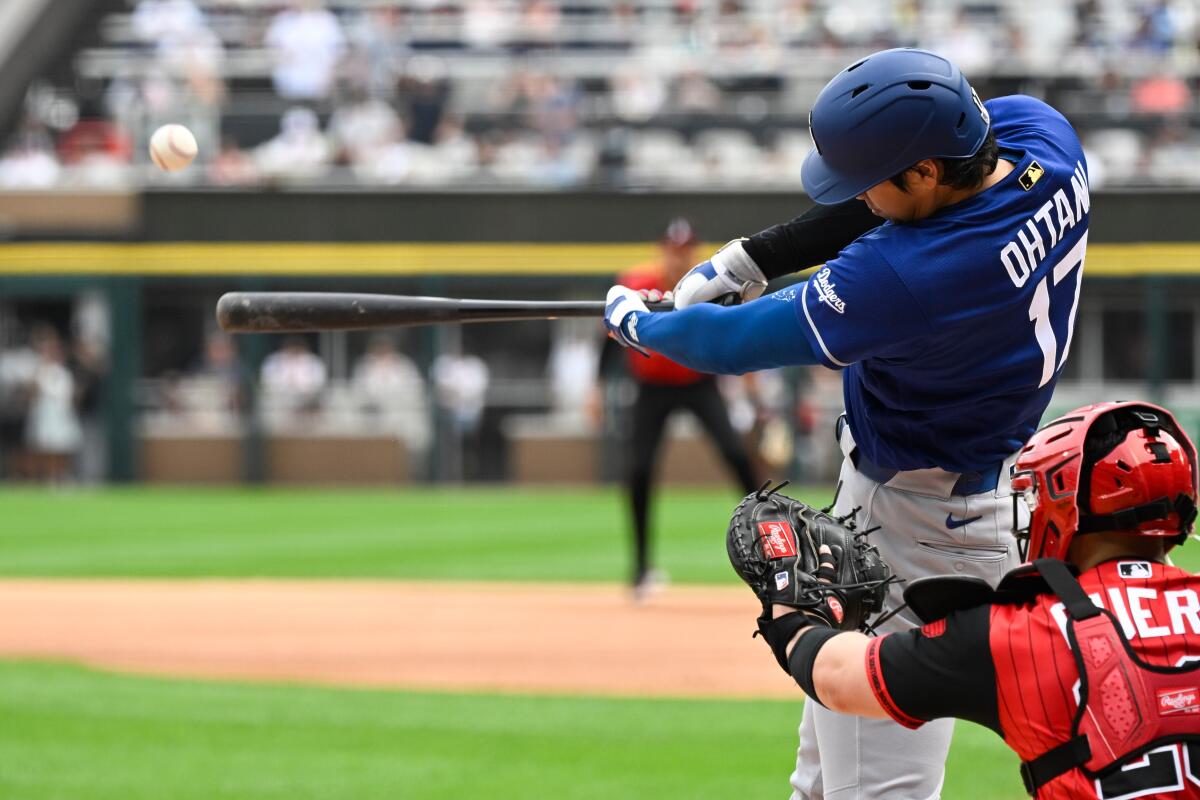
CHICAGO — Dodgers superstar Shohei Ohtani stepped into the Rate Field batter’s box for the first time this series on Saturday, greeted by a smattering of boos from White Sox fans.
He took his first swing at the second pitch of the game. And he sent it into the right-field stands. A no-doubter, proclaiming that his availability was no longer in doubt.
Ohtani returned to the lineup for the Dodgers’ 7-1 win against the White Sox on Saturday, after exiting the Dodgers’ game Thursday against the Pittsburgh Pirates and missing Friday against the White Sox because of inflammation in his left knee.
“I felt good waking up in the morning,” Ohtani said through interpreter Will Ireton after going one for three with a home runs and three walks Saturday. “I feel good now. So I’m pretty confident that I’ll be able to stay healthy, and should be good to go [Sunday] as well.”
Ohtani also tested his knee playing catch before the game Saturday. And the Dodgers will continue to monitor him as he prepares to take the mound Wednesday against the Tampa Bay Rays at Dodger Stadium.
“It wasn’t 100% today,” Ohtani said. “But with the next three, four days, I feel pretty confident, with enough recovery, that I should be able to make the next start.”
Even Ohtani said he hasn’t been able to pinpoint the cause of the swelling. But he has a theory.
“All I can really know for sure is that I think my mechanics weren’t quite great in terms of my pitching side,” he said, “so I believe that had something to do with this.”
Even before Ohtani’s knee swelled the Dodgers planned to have him pitch the day before their Thursday off day.
They switched Ohtani and left-hander Justin Wrobleski in the rotation order, having Wrobleski pitch Thursday on regular rest.
That remains the plan, even after Wrobleski was hit in the leg by a comebacker during his start Thursday. He left the game after that play in the fifth inning with a bruised right hamstring.
The Dodgers considered bringing in a spot starter, manager Dave Roberts said, in order to keep the full rotation on extra rest.
Shohei Ohtani leads off the game with a home run to spark the Dodgers to a 7-1 win over the White Sox on Saturday.
(Matt Marton / Associated Press)
“But considering how Wrobo’s start went short, feels good after it, we feel the four days’ rest will be fine for him,” Roberts said. “And then where Shohei is at, we feel good about just leaving it status quo.”
Ohtani returned Saturday without restrictions in his designated hitter role — except one request from his manager, after a couple days of parsing whether a steal attempt that was snuffed out by a foul ball had contributed to Ohtani’s injury.
Though they didn’t find a clear cause for the injury, Roberts made it clear Saturday: “There will be no basestealing.”
CHICAGO — Fans around Rate Field rose to their feet as Yoshinobu Yamamoto embraced his teammates before walking off the mound.
Of course, the Dodgers fans stood. But fans clad in White Sox jerseys joined them, waving White Sox hats in the air, acknowledging the brilliance they’d just witnessed.
In the Dodgers’ 7-1 win against the White Sox on Saturday, Yamamoto carried a perfect game bid into the eighth inning and a no-hit bid into the ninth.
Dating back to Yamamoto’s last start, against the Angels, he retired 45 straight batters, one shy of the major-league record set by Yusmeiro Petit in 2014.
In an eventful game, which included Shohei Ohtani returning to the lineup to homer in his first at-bat, a two-homer performance from Max Muncy, and a team-effort bounce-back after getting blown out the night before, Yamamoto’s performance on the mound stole the show.
Yamamoto, who exited with one out in the ninth inning and a pitch count of 109, was efficient even within each out. A 10-pitch strikeout in the third inning showed how Yamamoto wasn’t going to give in.
The Dodgers right-hander was one pitch away from striking out Jacob Gonzalez for seven straight pitches. But Gonzalez kept fouling off anything close to the strike zone.
For the 10th pitch of the at-bat, Yamamoto challenged Gonzalez with a cutter over the plate. And finally, Gonzalez swung through it.
The next inning, Yamamoto retired the side in eight pitches.
The only thing that slowed his roll was the mound itself. Yamamoto asked for the grounds crew to fix it in the sixth. And then he kept cruising.
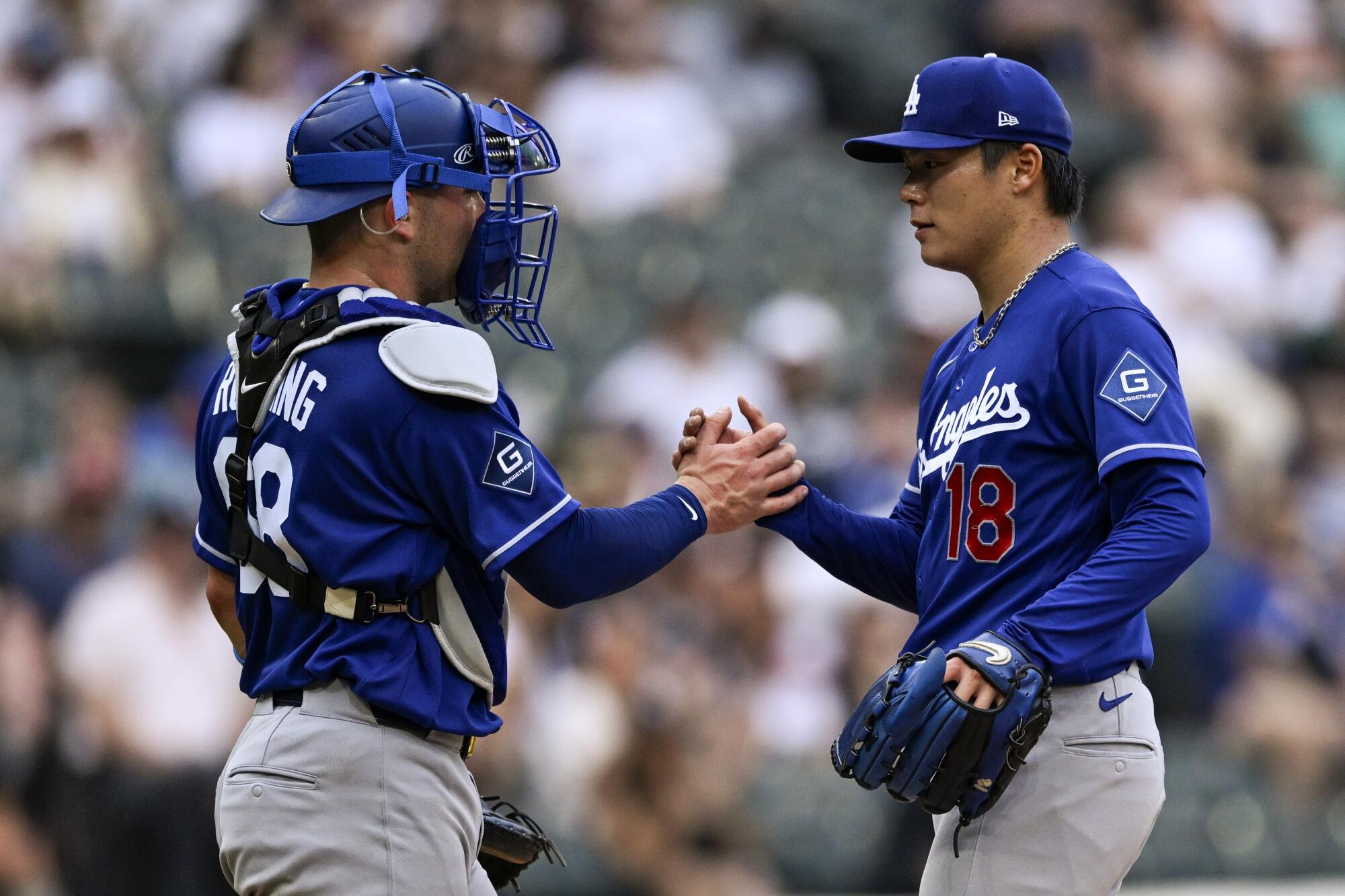
Dodgers catcher Dalton Rushing slaps hands with Dodgers pitcher Yoshinobu Yamamoto in the ninth inning Saturday against the White Sox.
(Zoe Davis / Getty Images)
He had help from a steady defense behind him for much of the game.
The sixth inning included two highlight-worthy plays. Tristan Peters hit a sharp ground ball up the first-base line, and first baseman Freddie Freeman made a sliding stop, tossing the ball to Yamamoto at first to complete the play. Then left-fielder Alex Call ran into the retaining wall in foul territory to catch Edgar Quero’s fly ball for the final out of the inning.
For the most part, Yamamoto made it look easy. The hardest contact against Yamamoto came the third time through the lineup. In the seventh, he pumped a heater to the top rail against Miguel Vargas, who stayed on top of the pitch to send a line drive to left field — and right to Call.
In the eighth, he fell behind Colson Montgomery 3-1. But he worked back to a full count. Montgomery then scorched a line drive up the first-base line — into Freeman’s glove.
His perfect game bid ended two batters later, with two outs, on an error.
Yamamoto got Chase Meidroth to chase a slider, hitting a ground ball to shortstop Mookie Betts. But Betts mishandled the hop. The ball shot to his left, where second baseman Santiago Espinal tried to salvage the play but couldn’t pick up the ricochet cleanly.
The no-hit bid was next to fall. Yamamoto piped a fastball down the middle to Peters, who sent it over the wall in right field.
Yamamoto stayed in for one more batter, inducing Quero to fly out, before handing the ball over to manager Dave Roberts. Left-hander Alex Vesia took over for the final two outs.
Ohtani returns, hits home run
Dodgers star Shohei Ohtani runs the bases after hitting a home run against the White Sox on Saturday.
(Matt Marton / Associated Press)
Before Yamamoto took the mound, Ohtani’s return was the big story of the day.
As Ohtani stepped into the batter’s box for the first time, he was greeted by a smattering of boos.
He took his first swing at the second pitch of the game. And he sent it into the right-field stands. A no-doubter, proclaiming that his availability was no longer in doubt.
Ohtani returned to the Dodgers lineup after exiting against the Pirates on Thursday because of inflammation in his left knee.
“I think Shohei drove it,” Roberts said of the decision to play. “Training staff drove it. We took him out of the game the other night just for precautionary reasons. Yesterday, treated it up. Today he feels great. All the confidence that he can go out there and hit, feel good, not regress at all.”
The Dodgers (45-26) will continue to monitor Ohtani’s knee as he prepares to take the mound Wednesday against the Tampa Bay Rays at Dodger Stadium.
“I think we’re full go,” Roberts said before Ohtani threw on flat ground Saturday. “But I do think once he’s out there playing catch and we see how his knee responds to the pressure, the torque will be some good information.”
Even before Ohtani’s knee swelled (it’s still unclear what caused the inflammation) the Dodgers planned to have him pitch the day before their off-day on Thursday.
They switched Ohtani and left-hander Justin Wrobleski in the rotation order, with Wrobleski set to pitch Tuesday on regular rest.
That remains the plan, even after Wrobleski was hit in the leg by a comebacker Thursday. He left the game with a bruised right hamstring.
The Dodgers considered bringing in a spot starter, Roberts said, in order to keep the full rotation on extra rest.
“But considering how Wrobo’s start went short, feels good after it, we feel the four days’ rest will be fine for him,” Roberts said. “And then where Shohei is at, we feel good about just leaving it status quo.”
Ohtani returned without restrictions in his designated-hitter role — except for one request from his manager, after a couple days of parsing whether a steal attempt that was snuffed out by a foul ball had contributed to Ohtani’s injury.
Though they didn’t find a clear inciting incident, Roberts made it clear Saturday: “There will be no base stealing.”
Asian Cup holders Qatar level in injury time to draw 1-1 with Switzerland in World Cup 2026 opening game.
Published On 13 Jun 202613 Jun 2026
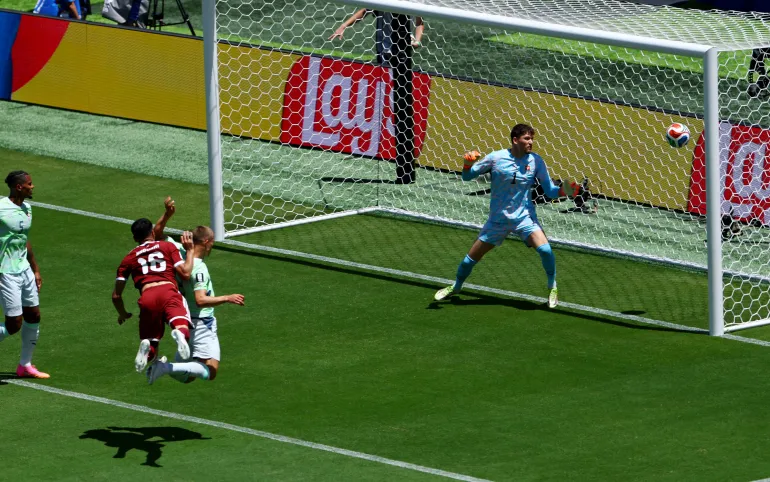
Boualem Khoukhi scored an equalising goal on a header in the fourth minute of stoppage time, and Qatar spoiled a dominant day by Switzerland in a 1-1 draw in Group B of the World Cup.
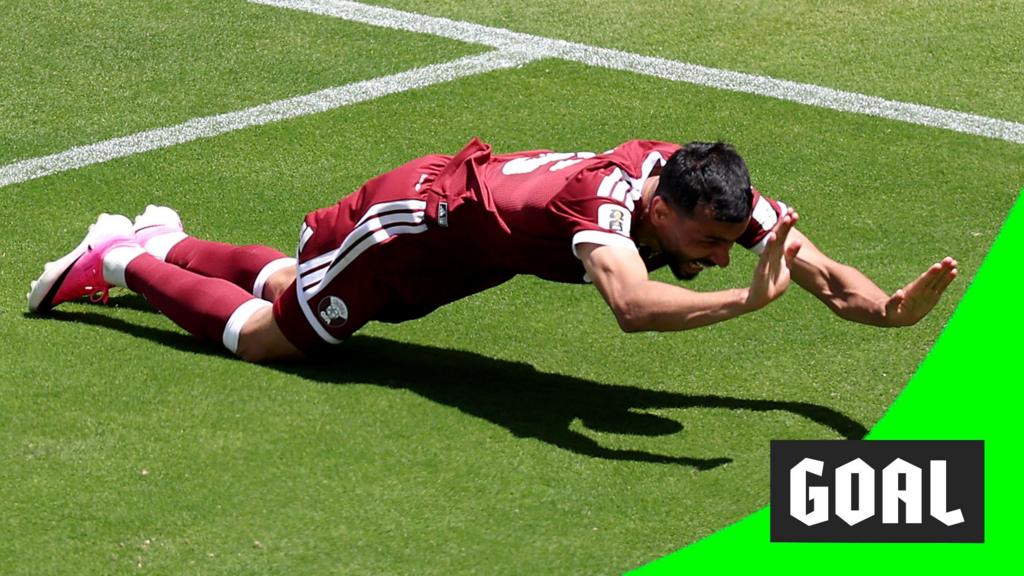
Several of the Qatari players fell to the ground on Saturday in celebration of the late goal, as others ran to each other to embrace.
Recommended Stories
list of 4 itemsend of list
Breel Embolo scored for Switzerland from the penalty spot in the first half just over a week after being cleared to enter the US following a visa delay, but the Swiss failed to capitalise on multiple other scoring chances.
In the 13th minute, Embolo was fouled by Qatar goalkeeper Mahmoud Abunada, who received a yellow card on the play. Abunada lay face down and appeared motionless for a couple of minutes before he began to move his legs and was able to stand up again.
When Embolo calmly sent his penalty into the upper left corner in the 17th minute, it sent the red-clad Swiss fans into a dancing frenzy in the stands of San Francisco Bay Area Stadium.
The 29-year-old forward applied for an urgent visa at the United States embassy in Bern on June 3, one day after he was denied boarding the team’s flight to travel for his third World Cup because of a 2018 criminal conviction that was only finalised in April.
Switzerland dominated the possession game on an unseasonably warm June afternoon — with sprinklers running during a first-half break.
Qatar’s Boualem Khoukhi scores their first goal past Switzerland’s Gregor Kobel [Eloisa Lopez/Reuters]
There were thousands of empty seats scattered throughout Levi’s Stadium, home of the NFL’s San Francisco 49ers. Brazil and Colombia drew 70,971 two years ago in a group match at the Copa America. The stadium in Santa Clara staged the Super Bowl only four months ago.
Switzerland goalkeeper Gregor Kobel made a save in the second minute after Edmilson Junior got through the defence for a one-on-one. Kobel corralled the ball again in the 90th on a close-range attempt by Ahmed Alaaeldin.
Switzerland is hoping to advance further than its round-of-16 showing four years ago before losing 6-1 to Portugal — when Goncalo Ramos delivered an improbable hat-trick playing in place of benched star Cristiano Ronaldo. The loss prompted Switzerland midfielder Xherdan Shaqiri to apologize the the fans.
The Swiss used consistency and experience to go unbeaten through qualifying against Sweden, Kosovo and Slovenia. Coach Murat Yakin’s team produced four wins and two draws to secure its sixth straight World Cup appearance and hasn’t missed one since 2002, but the team has never gotten beyond the quarterfinals.
Qatar, led by Spanish coach Julen Lopetegui, had to qualify through a playoff in November — beating the United Arab Emirates and Oman — after missing an opportunity from its group stage of Asian qualifying.
The Gulf state country became the first host nation to lose all of its group matches four years ago. It lost to Senegal, Ecuador and the Netherlands in the 2022 tournament, scoring its lone goal in a 3-1 loss to Senegal.
The city witnessed Carl Lewis win four Olympic gold medals, cheered Valerie Brisco-Hooks’ historic golden double and watched Edwin Moses extend his 400-meter hurdles unbeaten streak. L.A. has history with track and field.
Now when Ato Boldon, a UCLA Hall of Famer and four-time Olympic medalist for Trinidad and Tobago, looks to this weekend’s L.A. Grand Prix and the city’s future with the sport, he wonders what it holds.
“I’ve always felt like L.A. needs a signature event,” Boldon said, “and with the Olympics coming up in two years, you look at the quality of this event this weekend, and you’re like, yeah, this is the kind of meet they should have all the time.”
At the halfway mark of the Olympic quadrennium, the USA Track & Field event serves as an important checkpoint for the sport’s hope to break out of the four-year popularity cycle.
The two-day event, which begins Saturday with the women’s hammer throw at the South Bay Athletic Club, features 18 Olympic or world champions competing primarily at USC’s Allyson Felix Field. Sunday’s marquee competition beginning at 1 p.m. will be televised on NBC.
With USA Track & Field building toward a home Olympics, L.A. has been a critical but stubborn market to conquer. Last year’s L.A. Grand Prix, which would have been the third edition of the meet, was canceled in April. The decision, USA Track & Field Chief Executive Max Siegel said, came down to another meet scheduled in the same venue within the same month.
But that competing event, part of Michael Johnson’s upstart Grand Slam Track league, was canceled only weeks before it was set to take place at UCLA’s Drake Stadium, leaving L.A. without a major track competition last summer.
“We knew last year when we canceled the meet that we had every intention leading up to the Olympics to be present in the L.A. market,” Siegel said.
The city knows great track. UCLA boasts legends such as Rafer Johnson, Jackie Joyner-Kersee and Florence Griffith-Joyner. USC, which boasts more Olympians than any other U.S. university, had athletes win nine Olympic medals in track and field at the 2024 Games in Paris, including double gold medals for Rai Benjamin in the 400-meter hurdles and 4×400-meter relay and a 4×100-meter relay championship for TeeTee Terry.
After Terry ran the second leg of the relay, Sha’Carri Richardson’s stare down at the end of her anchor leg became one of the iconic shots of the Paris Games, where 70,000 people packed Stade de France and millions more tuned in for one of the most-watched Olympics.
But the sport is back in the shadows like it always seems to be outside of Olympic years, said Boldon, now NBC Sports’ track and field analyst. There have been several attempts to penetrate the U.S. sports consciousness since the successful Paris Games. Reddit co-founder Alexis Ohanian launched Athlos, a women’s track and field meet that began in New York City in 2024 and added a stop in London to its 2026 schedule. Grand Slam Track, founded by the Olympic legend Johnson and touting major names including Gabby Thomas and Sydney McLaughlin-Levrone, filed for bankruptcy last year, after completing only three of four planned events in its first season, and is only now emerging from it.
This year’s inaugural USATF Tour aims to organize the fragmented sport by streamlining the calendar and working with existing event coordinators to provide resources, including prize money and travel for top athletes, marketing and drug testing. The tour, which was in College Station, Texas, last week for the Lone Star Grand Prix, has 17 events in 10 states.
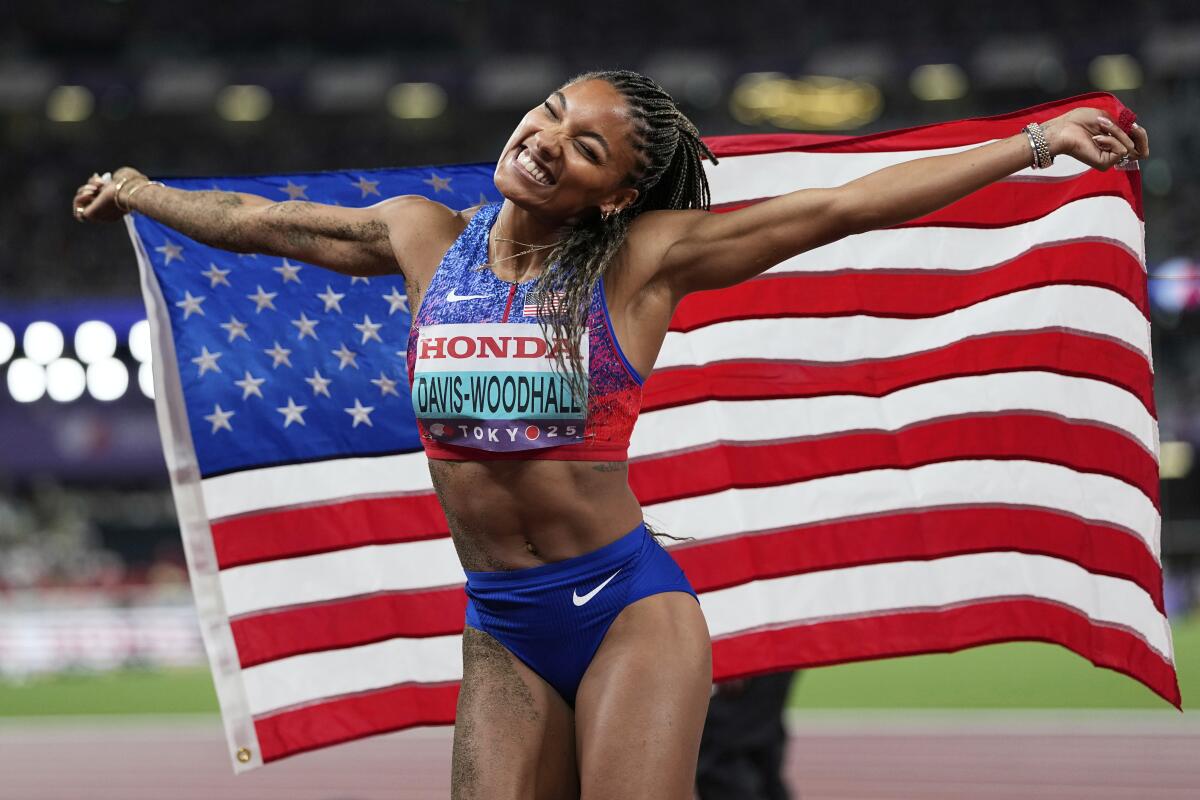
American Tara Davis-Woodhall after winning the women’s long jump at the 2025 world championships in Tokyo.
(Ashley Landis / Associated Press)
“I feel like LA28 gives the country something to organize around,” said Siegel, who hopes track and field can rise to be among the five most popular sports in the United States. “People are paying more attention to athlete stories in anticipation of what’s going to happen on U.S. soil.”
There is no shortage of stories at the L.A. Grand Prix. Almost everyone who matters in American track and field will be there, Boldon said. Kenny Bednarek, the silver medalist in the 200 meters in Paris, will line up in the 100 meters against Botswana’s Letsile Tebogo, who took gold in the 200 in 2024.
Tara Davis-Woodhall, the reigning Olympic long jump champion, will compete in her signature event and race in the 100-meter hurdles for just the second time in the last five years. Her husband, Hunter Woodhall, will race in the 400 meters on Saturday, when Para athletes will be among those competing in the L.A. Distance Classic at Allyson Felix Field.
Richardson will run her first 100-meter race of the season. The 2024 Olympic silver medalist could be in line to end a three-decade gold medal drought in 2028. No U.S. woman has stood atop an Olympic podium for the 100 since 1996, when Gail Devers won in Atlanta.
Such a stacked field outside of an Olympic year on U.S. soil could be a sign of a changing tide for track and field, Boldon said. The L.A. Grand Prix is a gold-level event on the World Athletics Continental Tour, the second-highest tier of single-day international competition. As athletes vie for world ranking points, the event could be a true Olympic preview two years before the Games begin at the Coliseum.
“This,” Boldon said, “is not a normal week in our sport.”
WASHINGTON — One by one, the burly mixed martial arts fighters made their entrance past the solemn, hulking marble statue of America’s 16th president and jogged down the steps of the Lincoln Memorial to roars from thousands of fans drawn to the unusual sporting weekend marking the nation’s 250th anniversary and President Trump’s 80th birthday.
The news conference Friday night featured the fighters who are preparing to face off Sunday in the Octagon built outside the White House. But it was also a chance to see the UFC fans who have thronged to Washington and endured lightning, humidity and bugs.
Tracy Philbeck and his son Levi drove from Charlotte, N.C., with a group of friends to support their favorite fighter, American Justin Gaethje, in the upcoming lightweight title bout against Georgian Ilia Topuria.
“You will hear an eagle screaming when Justin Gaethje wins,” the elder Philbeck said with a chuckle.
David Halstead journeyed from Albany, Australia, to watch the sport he has loved for a decade. Halstead said Trump, who regularly attends the fights, “put UFC on the map.”
The UFC has said it spent $60 million on this weekend’s festivities, and the president has billed his birthday fete as “the greatest show on Earth.”
Not everyone agrees.
The Public Integrity Project described the event as a “private, commercial, corrupt use of our most sacred national monuments for private gain” in a lawsuit the watchdog group filed to try to stop it from happening on federal land. A federal judge ruled Friday that the White House was allowed to go ahead.
About 1 in 10 U.S. adults consider themselves mixed martial arts fans, according to Ipsos Sports polling conducted in February and March. That survey suggests MMA fans tend to be male and nonwhite. They are more likely to identify as Republicans than Democrats.
“One misconception is that everyone who watches UFC is a Trump supporter, but that’s not the case,” said Ricardo Rodriguez, 24, explaining that he loves the physicality of the sport. “People also expect a knockout every time.”
Ellie Louizes, who practices Muay Thai, or Thai kickboxing, and jujitsu martial arts, drove from Daytona Beach, Fla., with her boyfriend, Jacob Purvis.
Female fans of MMA are the minority. But Louizes said she knows a lot of women who get into watching the sport through their male partners. She said “female fighters are often way more aggressive” than the men.
Fans brushed off criticism
The fans at the Lincoln Memorial brushed off criticism about the bouts being held at the White House — on federal grounds owned not by its occupant, but by the American people.
Holding fights at the “people’s house,” Tracy Philbeck said, “goes back to the days of Teddy Roosevelt.”
President Theodore Roosevelt regularly held sparring sessions at the White House, though they were not formal, public prizefights. He was an enthusiastic amateur boxer who had boxed at Harvard and continued the sport throughout much of his life.
Boxing fans also make up a large part of the UFC’s fan base.
At a UFC-sponsored community event this week at the District of Columbia’s Midtown Youth Academy, the boxing gym’s executive director was helping out with a visit from UFC fighter Randy Brown, who sparred with more than a dozen local teenagers and preteens.
Gloria Lee said meeting the fighter was a big deal for kids at her gym. “It’s just been a thrilling week, and I was about to fall out when he came in the door!” she said.
Asked about her personal UFC fandom, Lee said she had not watched it much. But by the end of Brown’s visit, she got into the ring with the professional fighter and threw some slugs of her own.
Hussein writes for the Associated Press. AP writer Linley Sanders contributed to this report.
Qatar’s Boualem Khoukhi heads home an equaliser in added on time as his side earn their first ever World Cup point against Switzerland in San Francisco.
The 2026 World Cup, the largest ever, will be played in three countries and 16 stadiums, organized by geography, not national borders.
Seven of the 11 U.S. venues — all but Kansas City, Philadelphia, Santa Clara and Miami — plus Vancouver normally have artificial-turf fields.
So for the World Cup, which FIFA mandates must be played on grass, those surfaces underwent multi-million-dollar transformations, with state-of-the-art fields — each with its own root system and irrigation methods — rolled out across the plastic turf.
Additionally, stadiums that have corporate names not affiliated with FIFA sponsors — SoFi Stadium, Mercedes-Benz Stadium, etc. — will use generic names such as Los Angeles Stadium and Atlanta Stadium during the tournament.





![Cape Verde beat record African World Cup qualifiers Cameroon to seal their spot in the finals [File: Cristiano Barbosa/AP]](https://i0.wp.com/www.aljazeera.com/wp-content/uploads/2026/03/AP25286764425321-1774510671.jpg?w=640&ssl=1)