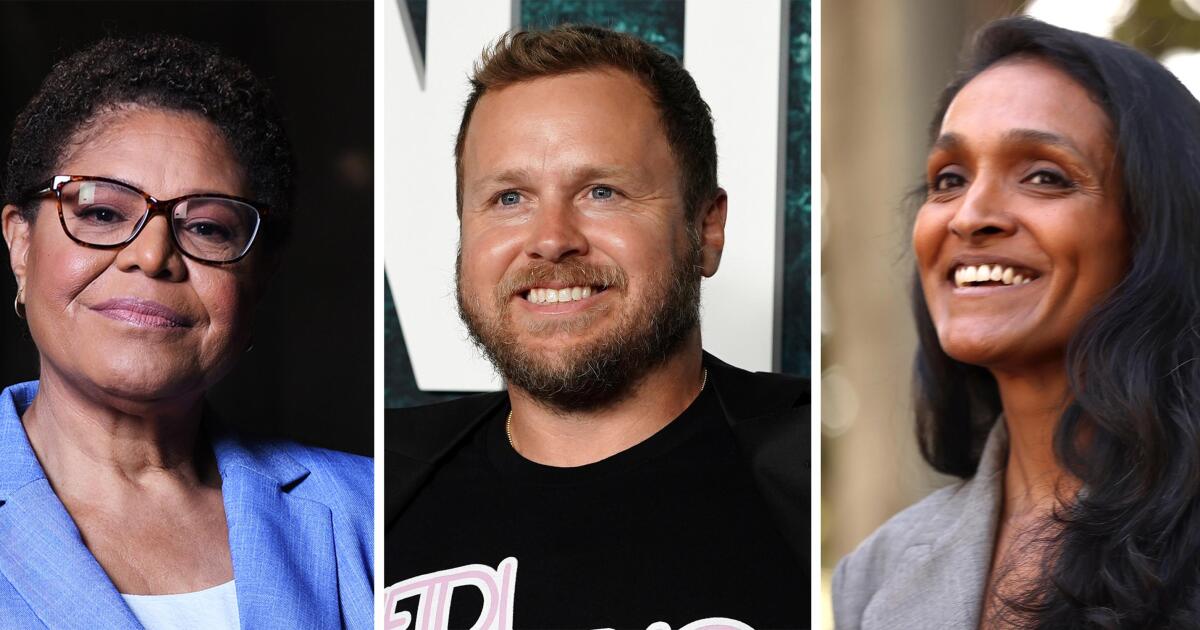
June 13 (UPI) — Reality TV star-turned-Los Angeles mayoral candidate Spencer Pratt says he does not expect to advance to the general election after projections from primary voting suggest he will rank third behind incumbent Karen Bass and challenger Nithya Raman.
The Hills alum ran on a platform of making the city’s streets cleaner and safer, and speeding up the rebuilding of homes and businesses destroyed by wildfires in the Pacific Palisades more than a year ago.
Pratt, who lost his home in the blaze, released a 3-minute video Friday, stating the “campaign portion of my mission to save Los Angeles is coming to a close and I’m moving on to the next, more interesting phase.”
The spot already has gotten more than 8.6 million views on X.
It appears to be a mix of real and AI-generated footage, as well as movie clips.
In the video, Pratt said he plans to keep fighting to improve the lives of Los Angeles residents using the national social media following he has amassed in recent months.
He added that he has evidence that could damage one of the candidates as they head to the general election in November.
“We have some recordings of one of your exalted candidates doing and saying something that would make her resign in shame. I was saving it for the general election,” Pratt said.
“So, Karen, Nithya, ask yourself, ‘Is it possible that one of your employees may have a recording of you doing or saying something that would force you to resign in disgrace?’ Hope you sleep well at night over the next five months.”
The Los Angeles Times said the Bass and Raman campaigns have declined to comment on Pratt’s remarks.
According to the votes tallied Bass is in first place with 34 percent of the vote, Raman earned 29 percent and Pratt scored 26 percent.
If Pratt had won, he would have been the first Republican mayor of Los Angeles since Richard Riordan served two terms, ending in 2001.
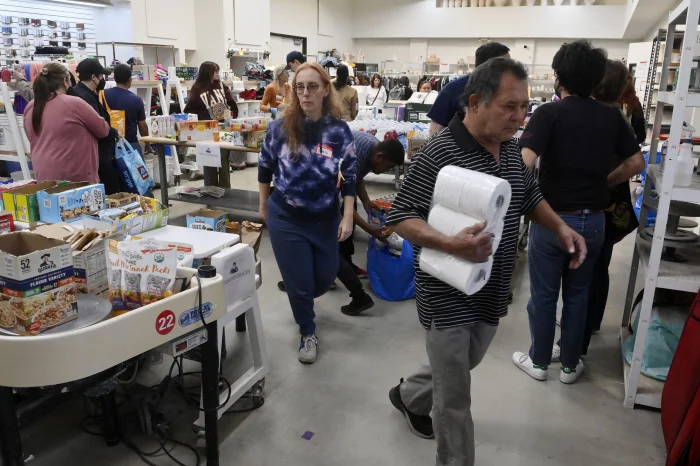
Evacuated residents and those who lost their homes in the Eaton wildfire find supplies, resources and aid at the Clay House of Pasadena, which was turned into a donation center in Altadena, Calif., on January 12, 2025. Photo by Jim Ruymen/UPI | License Photo
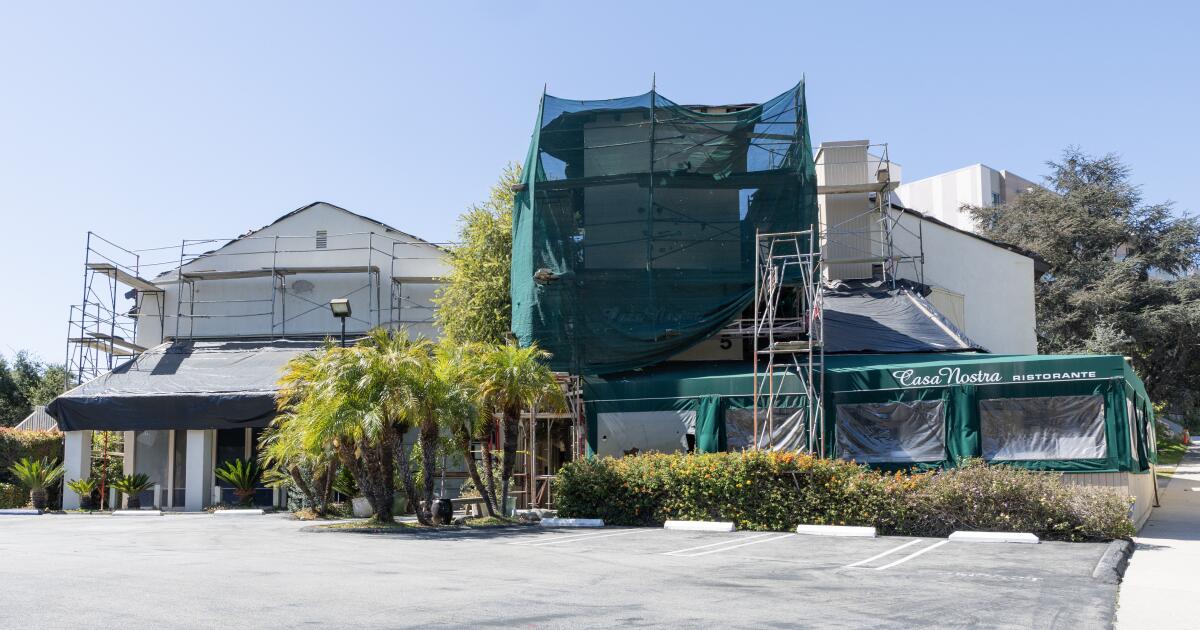
Last January, Spencer Pratt’s house in Pacific Palisades was razed by the raging flames of the Palisades Fire. Now, there has been what he called a “very suspicious fire” in a building in the neighborhood’s tony Highlands where he maintained an office for his crystals company.
Pratt, a former reality TV star who ran a high-profile campaign for Los Angeles mayor that he appeared to concede on Friday, talked to the California Post about the incident, which was first reported by the Palisadian-Post. According to the company’s website, the business sells precious and semi-precious crystal pendants, carvings and chains.
“I want to be careful to not compromise an arson investigation, but this incident is very suspicious,” Pratt told the California Post.
“I will wait for the investigators to make public the details, but this was no accident, and the timing of this … on the heels of all of the contentious election tomfoolery of the last two weeks, it is very suspect, indeed.”
Fire officials have not determined what sparked the blaze, and, in an interview with the Palisadian-Post, the building superintendent said he doesn’t believe the fire is related to Pratt’s campaign for mayor.
A spokesperson for Pratt did not immediately respond to phone calls and a text message seeking comment Saturday afternoon. Pratt suggested in his remarks to the California Post that he believes the fire may have been a politically motivated arson.
“This fire was not an accident, and it would not surprise me in the least if this were a reprisal for my work in opposing Karen Bass and Nithya Raman,” he said.
LAFD Public Service Officer Jamie Stewart told The Times in a phone interview Saturday afternoon that the department received a call at 6:09 p.m. Thursday reporting “a two-story commercial building with light smoke showing.” Stewart added that “arson was notified” and that LAFD arson personnel “did respond and they were on scene” of what he said was a one-alarm fire.
According to the Palisadian-Post, on Thursday, “Multiple firefighting units, including two ladder trucks, were dispatched by LAFD from Fire Stations 23 and 69 in the Palisades and Station 92 in Cheviot Hills to respond to the fire.”
The complex’s superintendent, Oscar Chang, told the local publication that the building was being remediated while waiting for a permit for work on its roof. Eyewitnesses, he told the Palisadian-Post, “saw two guys exiting the building shortly before the fire was reported.”
Chang added that he did not believe the fire was related to Pratt’s political campaign.
“One of the tenants shared a video with me of a homeless person right around the corner,” Chang told the publication, but “no one was living in the building.”
On Saturday morning, Pratt posted on social media about the Thursday fire, which tore through the Highlands Circle commercial complex at 1515 Palisades Drive. The complex was best known as the longtime home of the beloved Italian eatery Casa Nostra Ristorante, which closed a week before the Jan. 7, 2025, Palisades Fire and never reopened.
In the social media posting, he referred to the Los Angeles Times as the El Segundo Times — a derisive moniker referring to the location of its building in the coastal city near LAX Airport — and his repeated allegation that the newspaper “doxxed” him by reporting in April that he was staying in Santa Barbara County, not L.A.
“The El Segundo Times were very eager to dox where my children sleep; they thought that was newsworthy,” he wrote on X, formerly known as Twitter. “Have they reported on the arsonists who set fire to my office in the middle of my election?”
Overhead video footage of the fire posted on the Palisadian-Post’s YouTube channel showed smoke rising from the building as firefighters stood on the roof.
A filing in February with the L.A. City Department of Buildings and Safety proposed work for “change of use from commercial to retail, 2-story” at the property. In September, the department issued a code enforcement violation for “ABANDONED OR VACANT BUILDING LEFT OPEN TO THE PUBLIC.”
He had a heart-tugging origin story that saw him transform from a has-been television star into one of the thousands of residents who lost their home in last year’s Palisades fire. He faced an unpopular incumbent in Mayor Karen Bass. He was powered by a vigorous social media presence and an angry electorate thirsty for change.
He was able to capitalize on those conditions to outraise his main rivals, Bass and city council member Nithya Raman, and transform his candidacy from an afterthought into a national story. Running as a Republican in a super-blue city like L.A. put him at an automatic disadvantage — one that might have been extremely difficult to overcome in the end. But the Pratt posse started to feel like a bona fide movement the more it thundered on, the type of revolt against the old guard that in previous eras led to the passage of Proposition 13 and the recall of Gov. Gray Davis — the type of movements that forever alter California politics.
Pratt, however, faced an apparently insurmountable obstacle.
Pratt.
With almost all votes counted, he’s going to finish in third place with about 26% of the electorate — the same slice Donald Trump received in 2024 — while Bass and Raman proceed to face each other in November. Political strategists will teach his failed attempt to their clients as a cautionary tale of how a candidate blew every advantage they had when they couldn’t afford to lose one.
Pratt’s first mistake was thinking that Angelenos wanted a campaign of wanton rage. Yes, many residents are furious at the state of the city. Yes, they want change. Yes, the angry Angeleno archetype is a real phenomenon that flares up in local elections to smack back at the powers that be.
But L.A. is not MAGAlandia — running from the right on apocalyptic, whiny messaging will only get you the few Republicans that remain in the city and some disaffected liberals. Pratt didn’t run as a MAGA candidate, but it’s hard to say he didn’t run like one — even as he swore he was running for everyone.
He took every opportunity to ridicule progressives in a city where four democratic socialists sit on the city council, one of them — Raman — has a good chance of becoming the next mayor, and five of the six candidates endorsed by the local chapter of the Democratic Socialists of America either won outright or are moving on to the general election.
Instead of making overtures to that side of the populist coin, Pratt recorded videos obsessing over Bass’ trip to communist Cuba in the 1970s, a well-known fact he treated as revelatory and which made Pratt sound like he was stuck in a John Birch Society meeting circa 1965. His dismissal of Raman as “stupid” and the mayor as “Basura” — trash — came off as facile juvenilia at a time when we already have the Big Juvenile Delinquent running things in the White House. Ridiculing homeless people as “zombies,” “vagrants” and “bums” only riled up the worst elements of the city and turned off anyone with a heart.
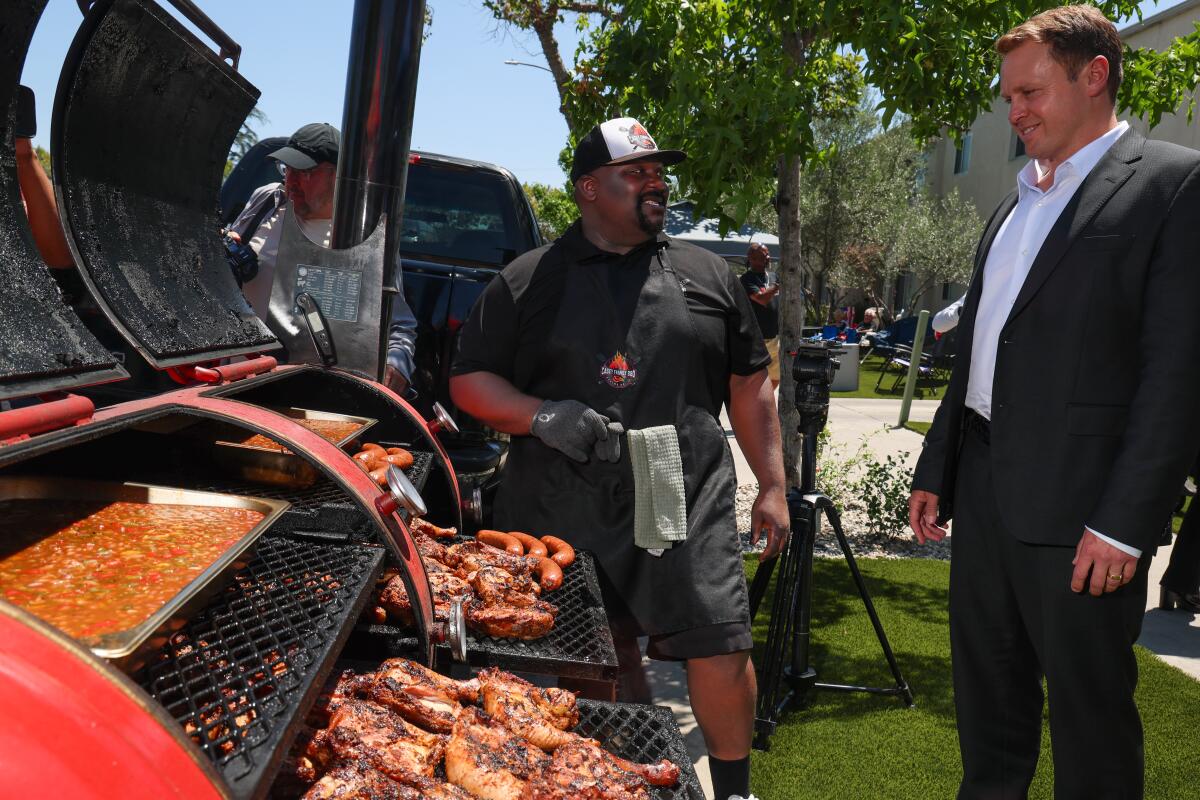
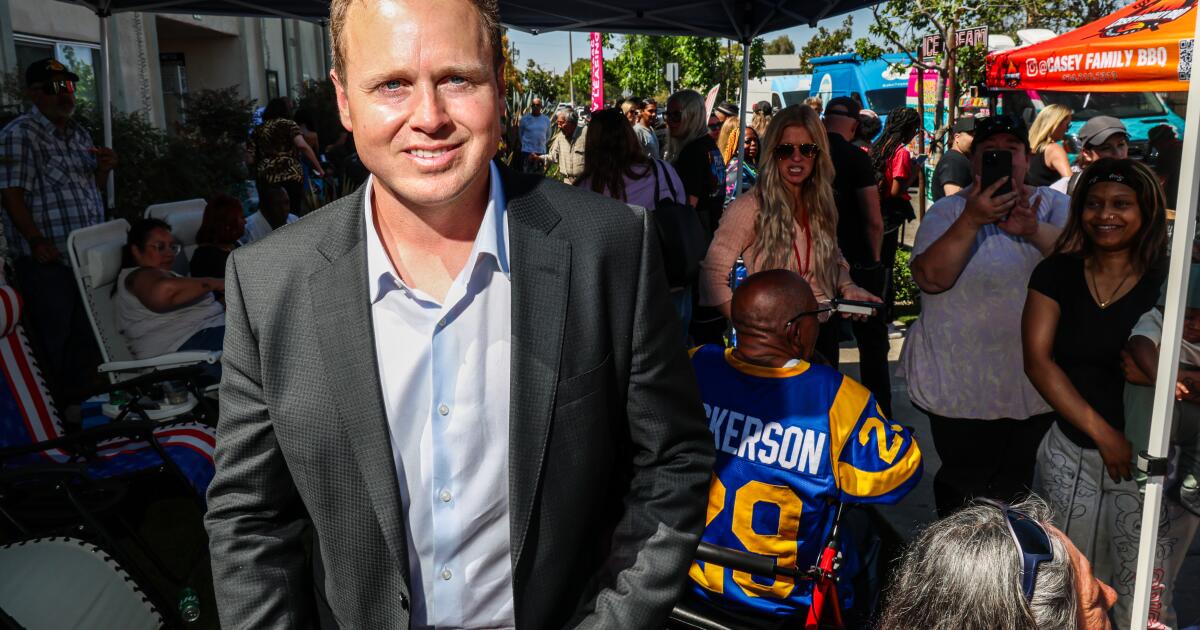
Keith Casey of Casey’s Family BBQ serves up food as L.A. mayoral candidate Spencer Pratt hosts a campaign “block party” event on 10th Avenue in Los Angeles on May 20.
(Robert Gauthier / Los Angeles Times)
Pratt undoubtedly attracted votes from a good amount of non-MAGA people fed up with various problems afflicting L.A. But many of the supporters who brayed the loudest on his behalf were the same people already doing daily propaganda on social media for a failed, hate-filled president and his baleful cronies.
Pratt acted like he believed the AI-generated videos created by fans that cast him as a comic-book hero was real life instead of forgetting that he was a novice trying to take on two experienced politicians. While Bass and Raman trekked across the city during the primary, Pratt limited his public appearances mostly to the Westside and random encounters with supporters he posted on social media. The few times he appeared outside those safe spaces came off as safari expeditions in a mysterious city the 42-year-old lifelong Angeleno obviously didn’t know.
Take the South L.A. block party he hosted last month. Instead of having something thoughtful to say about the state of Black L.A. or how its political leaders continue to neglect the region, all Pratt seemed to take away from that afternoon was that it was in the territory of the Rollin’ 60s Neighborhood Crips, a detail he shared ad nauseum on social media and to the press — as if kicking it with gang members would fix L.A. or gain him any votes or grant some kind of street cred.
That self-centered cluelessness ended up torpedoing Pratt’s best campaign moment. In the one debate he participated in, Pratt put Bass on the defensive, turned Raman into a tongue-tied mess, kept his answers sharp and relatable, and even earned the praise of the moderators. He should’ve demanded more gatherings like that to flex his mastery of television cameras, make his case to as many Angelenos as possible and showcase the self-proclaimed Pratt Daddy as someone willing to take on hard questions anytime, anyplace, from anyone.
Instead, Pratt declined an invite to their only other scheduled debate and never bothered with the forums civic groups across the city held in order for their members to hear from candidates. Instead, Pratt flew out to New York the week before election day to appear on Fox News.
Sticking to largely sycophantic media who lobbed softball questions hardened his ceiling. Pratt needed to proselytize — not preach to the choir.
The thing is, Pratt made some strong points about the inefficiencies of L.A.’s political status quo and the outrage that is having tens of thousands of people live on our streets. And there’s something appealing about an outsider crashing City Hall, which is way too beholden to sclerotic lifers who can be as clueless about what the city needs as Pratt turned out to be.
Instead, he platformed people who saw L.A. as a hellhole — or “shithole,” as Trump likes to call certain places. It was hard to see what some of Pratt’s loudest and most strident supporters actually thought was worth preserving in the city — but not why they felt he was their man.
In the wake of his loss, Pratt sure hasn’t push back against unfounded claims by too many of his followers and Trump, Vice President JD Vance and House Speaker Mike Johnson that Democrats somehow rigged the election against him. Quite the contrary, Pratt has insinuated on social media that they’re onto something.
That last point reinforces the ultimate reason Pratt could never become L.A.’s next mayor: He really doesn’t believe in L.A.
Angelenos don’t mind haters — it’s the type of city that frustrates residents even on its best days. But one insult residents won’t brook is someone who doesn’t have confidence in better days ahead for the city no matter how dire things may be.
Angelenos can spot a phony from far away — and Spencer, you’re turning out to be phonier than the fake drama on any of the television shows you ever appeared in.
You vowed to leave L.A. if you didn’t win the race for mayor. Maybe you should stay and try to righteously pressure Bass and Raman to make much needed changes. If you do, urge your followers to do the same instead of them pouting and sitting out the mayor’s race.
But if you don’t, well, maybe you never really loved L.A. as much as the City of Angels, warts and all, deserves. And you kind of need to really love L.A. to really fix what ails it.
June 8 (UPI) — Nithya Raman will advance to a Los Angeles mayoral runoff in November, besting Spencer Pratt for second place in last week’s primary vote, sources including CNN and NBC News said Monday evening.
Raman, a City Council member, will run against incumbent Mayor Karen Bass; both are Democrats. Raman, a member of the Democratic Socialists of America, is considered a progressive challenger.
Raman emerged second Monday over Republican Spencer Pratt, a former reality TV star. Pratt was in second place as of primary day, but late-counted votes swung the tally toward Raman. They were part of a14-candidate field in the primary.
“Right now, we have a city that feels rudderless,” Raman told CNN before the primary. “So many positions that haven’t been filled, places where Angelenos feel abandoned on some of the most important issues facing this city. I will bring that urgency, I will bring that accountability, I will bring that focus that Los Angeles needs and that Angelenos need.”
Raman and Bass had close political ties before Raman entered the election late. Pratt campaigned on criticism of Bass’ response to the 2025 wildfires — he lost his house in last year’s Palisades fires — and homelessness.
NBC News reported that while President Donald Trump did not officially endorse a candidate in the election, he praised Pratt’s bid before the primary, saying, “I’d like to see him do well. He’s a character.”
Los Angeles’ music industry, in recent years, has generally supported progressive causes. But as the primaries for the city’s mayoral race and California‘s governorship wrapped up Tuesday, some music executives and performers have supported and donated large amounts to Spencer Pratt, the right-leaning activist and reality TV star running for mayor.
According to data from the Los Angeles City Ethics Commission, Pratt’s supporters include two members of the record industry’s most powerful family who donated the maximum amount allowed by law.
Pratt is a registered Republican whose heated rhetoric about homeless “zombies” and AI-created advertisements have rankled progressives and delighted conservatives. He has received support from President Trump, who told reporters that “I’d like to see him do well. He’s a character. I don’t know him, I assume he probably supports me… I heard he’s a big MAGA person.”
In response, Pratt told TMZ that “Everybody wants me to succeed because L.A. is the most important city in the country. The only support I need is from moms that wanna feel safe in Los Angeles. I’m laser-focused on that.”
Universal Music Group is home to some of music’s most outspoken progressives, including Olivia Rodrigo and Billie Eilish, whose brother and collaborator Finneas O’Connell donated $250 to the progressive mayoral candidate Nithya Raman on May 6.
Earlier this year, UMG’s chairman and chief executive Lucian Grainge presented Rodrigo with the company’s Universal Music Group x REVERB Amplifier Award, which advocates for “social and environmental nonprofit campaigns through the cultural power of music,” according to a release.
On May 9, Grainge (listed as a resident of Pacific Palisades, where Pratt lost his home in the 2025 fires) maxed out with an $1,800 donation to Pratt’s campaign, as previously reported in The Times. A representative for UMG did not immediately return a request for comment on Grainge’s donation.
He’s not the only Pratt donor in the family.
Grainge’s son Elliot ascended through the record industry with his 10k Projects label, and now heads UMG’s competitor Atlantic Records. Vocal progressives like Cardi B, the Marías and Charli XCX are some of the label’s most high-profile acts.
On May 8, Elliot Grainge also gave $1,800 to Pratt‘s campaign. A representative for Atlantic did not immediately return a request for comment.
Last month, the record producer and composing titan David Foster and his wife, singer Katharine McPhee, performed at a fundraiser for Pratt where they crooned a version of Tina Turner’s hit “The Best” to the mayoral hopeful. “Spencer, you’re simply the best. Better than all the rest. Better than Karen Bass and Nithya Raman,” McPhee sang.
At Warner Music, Gabz Landman, the senior vice president for A&R at Warner Chappell, its powerful music publishing wing, who has worked with Dua Lipa, Laufey and Amy Allen, gave $105.24 to Pratt on Feb. 4. Through a Warner Music representative, Landman said the donation was for merchandise given to a friend, and was not intended as support for Pratt’s campaign.
The superstar EDM producer and DJ Kaskade has left supportive messages on Pratt’s social media, commenting on one of the candidate’s posts that “At this point, who is buying in to Bass’s fairytale narrative?! I am still shocked she hasn’t resigned!” The DJ and producer Diplo also left a supportive comment — a prayer-hands emoji and “please” — on one of Pratt’s social media posts. Records do not show any personal donations to Pratt’s campaign from either artist.
Public records do not show any donations to Pratt’s campaign from live-industry executives atop firms like Live Nation, AEG or Goldenvoice.
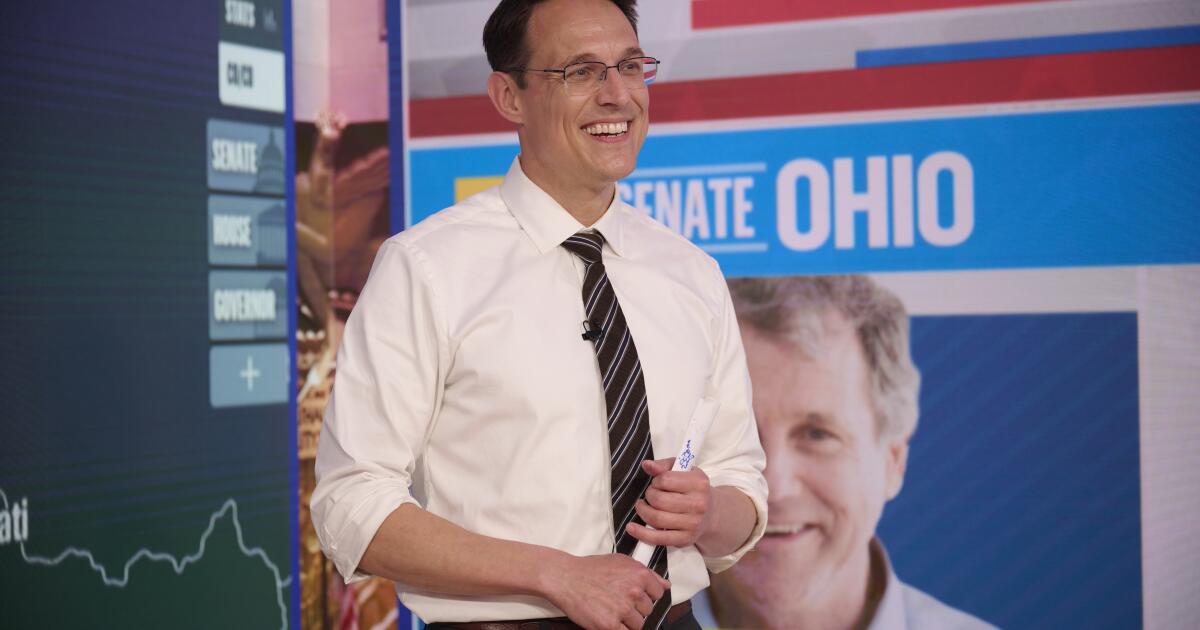
After the polls close in California on Tuesday, NBC News data analyst Steve Kornacki will just be getting started.
Since December, the khacki-clad vote-counting guru has been going live and uninterrupted on streaming platforms to provide results and analysis of every special election and even some state Senate contests.
The stream — called the Kornacki Cam — provides unadulterated number-crunching without any pundits weighing in. Rather than getting updates that last a few minutes, Kornacki provides continuous real time results until the last available total is counted.
“This all happens in full view,” Kornacki said Monday in a phone interview. “The audience gets to see the whole thing. They get to see the buildup, the anticipation, the payoff.”
In the 10 Kornacki Cam sessions streamed by NBC News so far, 20 million viewers have sampled on YouTube alone. The coverage — consisting of Kornacki, his Big Board, his producer and a Stedicam operator — is also available on NBCNews.com, the NBC News app and the division’s social media accounts on Instagram, Facebook and TikTok.
The Kornacki Cam will focus on the primaries for Los Angeles mayor, California and several Congressional districts, shortly after the state’s polls close at 8 p.m. Pacific.
In a Monday chat with The Times, here are the trends Kornacki says he’ll be looking for on the night.
Polling in mayoral races is typically pretty unreliable. What do you make of the contest based on what you’ve seen?
You don’t always have super-competitive mayoral elections and they’re not all created equal. It’s not quite like a presidential election so you just don’t have a wealth of data to draw on for expectations either.
I’ve seen the polling you’ve seen. It suggests that of the three candidates, (Mayor Karen Bass, reality TV star Spencer Pratt and City Council member Nithya Raman) Bass is in the best position to get into the runoff. It also suggests that Spencer Pratt has had the most positive movement in the last month or so of the campaign. But we go in knowing there will be volatility and I’m open to any and all possibilities.
Spencer Pratt is an unusual candidate who has been able to take up a lot of oxygen in the race. Is there a hidden vote for him that people might not be eager to admit to pollsters?
You can look at the city and know where to look for whether Pratt is having a big night. The San Fernando Valley is gonna be more than a third of the vote, probably close to 40%. If he gets in the general election, he wants to be winning there by a big margin. If it’s not happening there for Pratt, I don’t think it’s happening anywhere else. Karen Bass is going to rely on central and south L.A., with probably a third of the vote coming out of those two places. Those should be her bulwarks. The Westside, I think could be more of a toss-up. There’s a fair chunk of the vote there.
We don’t do a ton of mayoral races around the country. So we’re still trying to figure out exactly how detailed we’re going to be able to zoom in, at the neighborhood level and the precinct level.
Turnouts usually are low for Los Angeles mayoral races. Will this year be different?
This mayoral race has received a lot more national attention than 2022. So my thought is that the turnout would be higher, just based on that. But this is something that is resonating nationally because Pratt has that celebrity factor. The number was 646,000 (total votes) for 2022. So that’s something we’ll be following — are we trending over or under that?
And what will be the best indicators for the gubernatorial race?
The place that I kind of got circled here is Orange County. In the last two sort of major statewide elections, it was the first to report out vote. At 8:06 p.m local time in California, in 2024, Orange County reported out half of its vote, right? So you’re getting, you know, you’re getting hundreds of thousands of votes, potentially, from this enormous county within, potentially within 10 minutes of polls closing. There were a couple others — the Central Valley, and we got a we got a good chunk of Merced and Fresno quickly.
So how long are we going to have to wait for a result on Tuesday night?
One of the other things that just surrounds everything in California, whether it’s the mayor’s race, or governor’s race, or anything else, is nothing is definitive in the first hour or so after the polls close. We’re probably realistically looking at a days or even weeks-long process of getting all the vote counted.
I know it drives many people nuts. Without editorializing on that, it’s just a fact that they can get out of about two-thirds of their vote on election night, and if the races aren’t clear and definitive, then you’re generally in for a pretty long haul.
We do know in California that they’re not going (to count) nonstop until they get a result. They’re going to then start doing updates as they process and count the remaining vote by mail, which is usually a considerable pile in a lot of these places. The vote by mail in California can continue coming in for seven days after the election.
So do you think your coverage reflects a shift in what the consumer wants? We already know how fragmented the audience is. Are there now enough political junkies who want the pure uncut stuff?
I’ve been doing this about 20 years, and when I would tell people that I reported on politics for a living, they either moved away from me or changed the subject. And now, you know, I found the last, you know, 10 years or something, has just totally changed. People come up to me, even if they don’t know I work in politics, and they want to talk politics. Everybody seems into it whatever side they’re on.
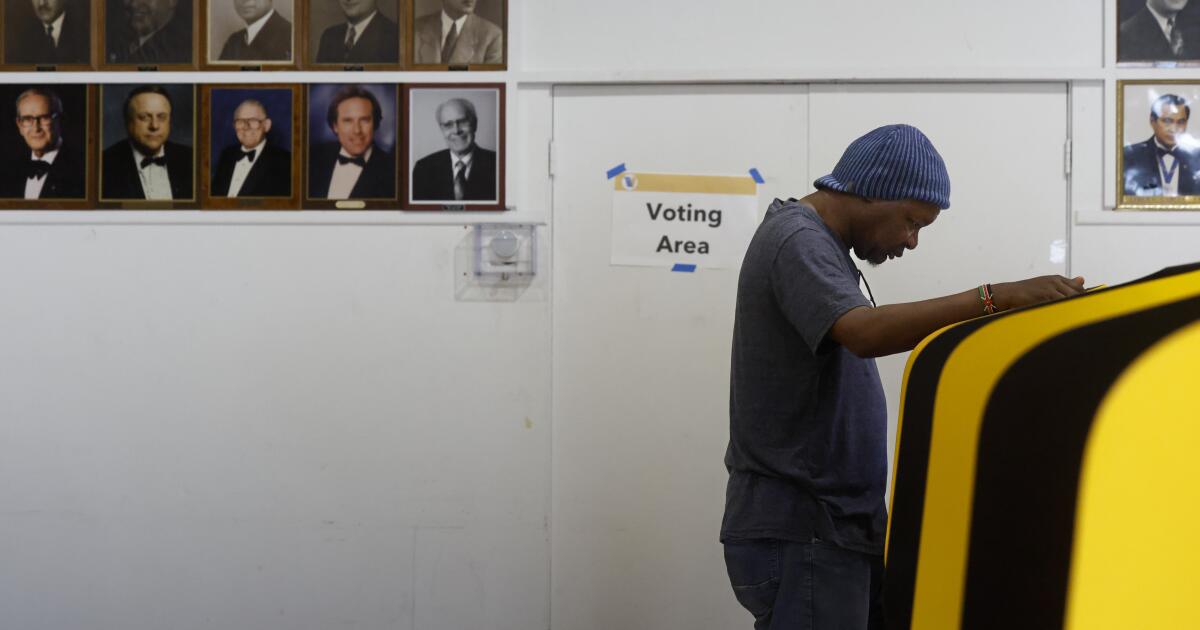
Yes, voting centers will be open across Los Angeles this week. And no, you don’t have to cast your ballot by mail.
With days left before the June 2 primary, President Trump made a round of misleading claims about the electoral process, this time falsely suggesting that the city was holding elections only by mail.
Trump’s comments came Saturday during an appearance on Fox News when he was asked by host Lara Trump — the president’s daughter-in-law — about his predictions for the upcoming primary.
“You know, they don’t have voting booths; everything’s by mail,” Trump responded. “I don’t think a Republican can win in California unless you pass the Save America Act — then they’re gonna have to show proof of citizenship, they’re going to have to get rid of mail-in voting.”
The L.A. County registrar-recorder moved to set the record straight in a tweet posted Sunday morning that read “MISINFORMATION ALERT.”
MISINFORMATION ALERT: There are 646 Vote Centers open in Los Angeles County — all with multiple voting booths, open today and tomorrow 10AM to 7PM & Tuesday (Election Day) 7AM to 8PM. https://t.co/suHN4efyXJ…. In-person options available in all elections. /@FoxNews@WhiteHousehttps://t.co/vH4VAGfdp9
— Los Angeles County Registrar-Recorder/County Clerk (@LACountyRRCC) May 31, 2026
Noting that in-person voting was in fact allowed, the agency announced that it had 646 vote centers across the county — each with multiple voting booths. The centers will be open from 10 a.m. to 7 p.m. on Monday and Tuesday, the agency said in the posting, while tagging Fox News and the White House.
A map of polling locations featured on the agency’s website shows that there are dozens of voter centers available countywide. Mobile vote centers also were made available at various sites in the county. Mobile voting runs for the 10 days before election day and will not be available on June 2, according to the county registrar-recorder.
As of Friday morning, 333,000 mail-in votes had been cast in the June 2 primary for Los Angeles mayor, city attorney, city controller and eight of the 15 City Council seats. This was up from 321,000 at the same time in 2022, according to registrar-recorder.
Registered voters already should have received a ballot in the mail. Those who choose to vote in person can take their mail-in ballot to a vote center and ask to vote in person instead. Residents who haven’t yet registered to vote can still do so by requesting a conditional voter registration application at any voter center and filling out their ballot as they normally would.
Recent polling suggests that, ahead of Tuesday’s primary, incumbent Los Angeles Mayor Karen Bass has what pollsters deem a statistically insignificant lead in her bid for reelection as the city’s top executive. Bass is locked in a tight race with councilmember and former ally Nithya Raman and Spencer Pratt.
Trump has signaled his support for Pratt but hasn’t formally endorsed the former reality TV star and registered Republican. Former Trump advisor Steve Bannon said the president hadn’t done so out of the fear it would hurt Pratt’s chances in Democrat-dominant Los Angeles.
In 2020, during the outbreak of the COVID-19 pandemic, Gov. Gavin Newsom took the unprecedented step of issuing a statewide order for voting by mail for that year’s election in what he described as a necessary step to limit the virus’ spread.
A handful of rural counties had no in-person voting locations that March.
In 1979, the state eliminated the need for an excuse to receive an absentee ballot, and an option to choose permanent absentee voting was created in 2002. In the decades since, Californians have embraced the flexibility that voting away from a polling place offers. In nearly every statewide election since 2008, the majority of votes have not been cast at a traditional polling place.
Fourteen more counties — including Orange, Sacramento and Santa Clara — have adopted the state Voter’s Choice Act, an optional state law that requires them to mail every voter a ballot and to replace traditional neighborhood polling places with multipurpose vote centers. Those in-person locations offer multiple election services for up to 10 days before election day.
Los Angeles, the 15th county to adopt the new state law, was initially given special permission by the Legislature to implement it without mailing every voter a ballot.
Trump has for years repeated baseless claims that the 2020 election was stolen and that undocumented immigrants were swaying elections by voting illegally.
In light of these claims, Trump and some Republicans have pushed for new restrictions on voters. A federal proposal known as the Save America Act — which would require Americans to prove they are U.S. citizens before they register to vote and to show identification at the polls, among other things — cleared the U.S. House but stalled out in the Senate.
In November, California voters will weigh in on a similarly contentious ballot measure pushed by Republicans that would require all voters in future elections to show identification every time they vote in person or provide a special PIN when submitting mail-in ballots.
Under current state law, Californians are required to provide identification when registering to vote and must swear under penalty of perjury, a felony, that they are eligible to vote and are U.S. citizens. They are not required to show or provide identification when casting a ballot in person or by mail.
If passed, the California ballot measure would require voters to present government-issued identification, such as a state driver’s license, every time they vote. Voters mailing ballots would be required to write a four-digit number, essentially a PIN, on their ballot envelopes matching the one generated when they registered to vote.
Critics of California’s voter ID initiative, including many legal scholars, say the ballot measure addresses a problem that does not exist.
In May, a federal judge handed Trump a victory by declining to halt the president’s executive order creating a federal list of eligible voters and then directed the U.S. Postal Service to deliver mail ballots only to those on the list. Observers say the decision opens the door for potential sweeping changes in how American elections are run shortly before this year’s midterm elections.
I was willing to give the young novice a primer on what a mayor can and can’t do, and let him know City Hall is a reality show like no other he’s been on. But Spencer Pratt didn’t call me in response to my column last week.
I did, however, hear from a slew of his most ardent supporters.
Steven C. had this to say: “You’re a left-wing idiot, and … it’s time for you to retire. You’re a joke!!! You always have been!!! God bless Spencer Pratt and the 45th and 47th President of the United States Donald Trump!!!!!”
You may be onto something, Steven!!! I’ve been thinking about retiring!!!! But then a former reality TV star like Pratt comes along and tells Vanity Fair he had a chat with God, who told him He wants Pratt to be mayor of L.A!!!!! With people like this running for office, how can I retire?!!!!!
R.W. wrote to say: “You say Spencer has never done anything in his life…What credentials do you have? From what I’ve read about you, you are a lousy commie journalist who has never accomplished anything in your life!!”
Just recently, R.W., I replaced a broken toilet tank flush valve and I learned two Willie Nelson songs on the guitar. That’s not nothing.
Peter did not mince words: “Your piece on Pratt is a hit piece filled with bull— . You should go f— yourself before someone takes you out, which is the appropriate response to a s—bag like yourself. So please f— off and drop dead, which is exactly what you deserve.”
Peter, I did drop dead once. Cardiac arrest. While on the other side, I saw God, who told me to snap out of it because He was going to tell Spencer Pratt to run for mayor. Who knew God had a defibrillator?
All of these, by the way, were actual emails, and there were many more just like them. But it’s only fair to note that despite the fulminating knucklehead wing of Pratt’s posse, he’s tapped into a justifiable sense of frustration with City Hall, given homelessness, the Palisades inferno and budget issues that squeeze all manner of basic city services.
That’s why Mayor Karen Bass is paddling furiously, trying to keep her political career afloat. In the latest UC Berkeley-L.A. Times poll, Bass is at 26%, Nithya Raman at 25% and Pratt at 22%. That’s so tight, it appears that no one will get the 50% needed to win outright, and if we get a top-two runoff, it’s not clear who will go to the dance.
So as we close out the primary, with the election on Tuesday, five talking points come to mind.
Which candidate knows the city best?
Los Angeles has 114 distinct neighborhoods spread across 470 square miles (that’s 10 times the size of San Francisco), with an estimated 220 languages spoken. Diversity is a defining characteristic, and roughly half the population is Latino, which makes it a shame there’s no Latino candidate for mayor, especially given the raids and roundups by President Trump.
A mayor doesn’t have to speak six languages and know every corner of the city, but residents want to be seen and heard, and feel like they’re understood and represented.
Raman is well-versed on homelessness policy, and she’s spot-on about the need for greater urgency in problem-solving, but as my colleague Noah Goldberg reported, constituents in her district complain that they haven’t seen enough of her.
As I said, Pratt has wisely targeted municipal failure. But in the realm of outsider candidates with Republican credentials, Rick Caruso, who ran against Bass last time, was comfortable whether he was in the Valley, South L.A. or anywhere in between. And he easily connected with people. Would Pratt be a tourist in his own city?
By virtue of her job the last four years, Bass — who raised a blended Black and Latino family — knows the city best, although her unfavorability rating is a big problem.
What about the other candidates?
In the aforementioned poll, minister and housing activist Rae Huang had 9% and former educational technology businessman Adam Miller had 5%. Virtual unknowns, neither had a legit chance of winning, but they could be spoilers for one of the top three candidates.
If only I had a nickel for every time a reader suggested that.
By 101 measures, Los Angeles is one of the great cities of the world and California has built the world’s fourth-largest economy while leading on climate change, so apocalyptic diagnoses are a bit off the mark.
Also, local elections are nonpartisan. You don’t run for mayor as a D or an R.
And yet it’s true that Democrats and their policies and sensibilities rule the day, and they have a lot to answer for in Los Angeles and in California.
But would the same critics suggest that in conservative cities like Fresno and Bakersfield, which have their own homelessness and other problems, Republicans are to blame?
When it comes to housing, poverty, healthcare and streets occupied by people who are addicted or mentally ill, the failures go back decades, touch all levels of government, and cross party lines.
Have I given up on Los Angeles?
When I pointed out that Pratt seemed unaware of these complexities, and of the structural limits of mayoral power, readers suggested he was rising to the challenge while I was giving up on L.A.
Not at all. I care about L.A. enough to hold its leaders to a higher accountability, and to scrutinize posers and pretenders who think they can do a better job.
My advice for the next mayor.
Fix what’s broken, celebrate what works and take responsibility for what doesn’t.
Now let me try one more time:
Spencer, give me a call.
You can’t tell us you had a conversation with God about running for mayor and not share more details.
Did God scold you for referring to the mayor as Karen “Basura,” which means trash in Spanish?
Did He say we should pull out of the ‘28 Olympics, or have any advice on how to fill potholes and fix sidewalks?
If you’re having regular conversations about City Hall with the Father, the Son and the Holy Spirit, we’re dying to know:
Spencer Pratt is a showboat, a loudmouth, a troll and a self-proclaimed villain who seems willing to say anything in his quest to be the next mayor of Los Angeles.
Little wonder that his critics rolled their eyes when the former reality television star told CNN host Elex Michaelson a few weeks ago that his campaign role model is Jesus Christ, because “he was a politician.” How on earth did Pratt — a man who tosses insults with the ease of someone spitting loogies — come off boasting that his political hero was the Prince of Peace?
But anyone who ridicules the exchange as a blasphemous moment by a deluded wannabe isn’t paying attention — which is exactly the error that has allowed Pratt to storm L.A. politics. He isn’t running on an explicitly Christian message — that would be risky in a city with large Jewish, Catholic and secular constituencies. But the proud born-again evangelical is channeling the zeal of an old-fashioned tent revival, even if some of his rhetoric falls far outside the bounds of the Good Book.
In his recent memoir, Pratt recounted his conversion — actor Stephen Baldwin baptized him in a river during the 2009 season of the reality show “I’m a Celebrity, Get Me Out of Here.” Before that, his Christianity had consisted of wearing a black diamond cross necklace he described as “thirty grand of Jesus bling” bought from a Beverly Hills boutique. Pratt credits his faith with providing direction at a low moment in his life, as he embraced Jesus with such fervor that a pastor told him to stop joining altar calls so much during church services — once was enough.
“I needed the receipt stamped weekly,” Pratt wrote, “like a parking validation, just to make sure it stuck.”
Seventeen years later, he’s still seeking that affirmation.
The memoir comes off as a millennial version of “The Confessions of St. Augustine” — perhaps the most famous literary example of someone who saw their wreck of a life not as a series of mistakes to apologize for but as necessary failures on the road to grace. That’s why Pratt and his followers don’t see his sketchy past as a disqualifier, but rather his biggest strength. Only someone who says he was reborn in the inferno of the Palisades fire could possess the clarity and willpower needed to bring salvation to an accursed land, they argue.
In another era, Pratt would have been a welcome edition to the roster of bombastic Southern California preachers a la Aimee Semple McPherson, Chuck Smith and Gene Scott, as well as radio titans such as George Putnam and John Kobylt. His claims that only he can deliver us from damnation and that we need to repent of City Hall’s status quo at the ballot box are nothing less than a modern-day gospel to his followers. Pratt feels the pulse of L.A.’s civic malaise far better than Mayor Karen Bass or another of his opponents, City Councilmember Nithya Raman. Like any good pastor, he knows how to distill that discontent into soundbites and stories.
That’s why the self-designated “Pratt Daddy” has cast this moment in L.A. history as a modern-day Armageddon, urging voters to wage war against apostates and usher in a Second Coming, lest the city continue its supposed descent into hell. He admits in his memoir to holding “epiphanies and apocalyptic visions” in equal measure — no wonder he told a Canadian podcaster in March that life for him is a “spiritual battlefield” where “however I can be to stop evil at this point feels like a purpose.”
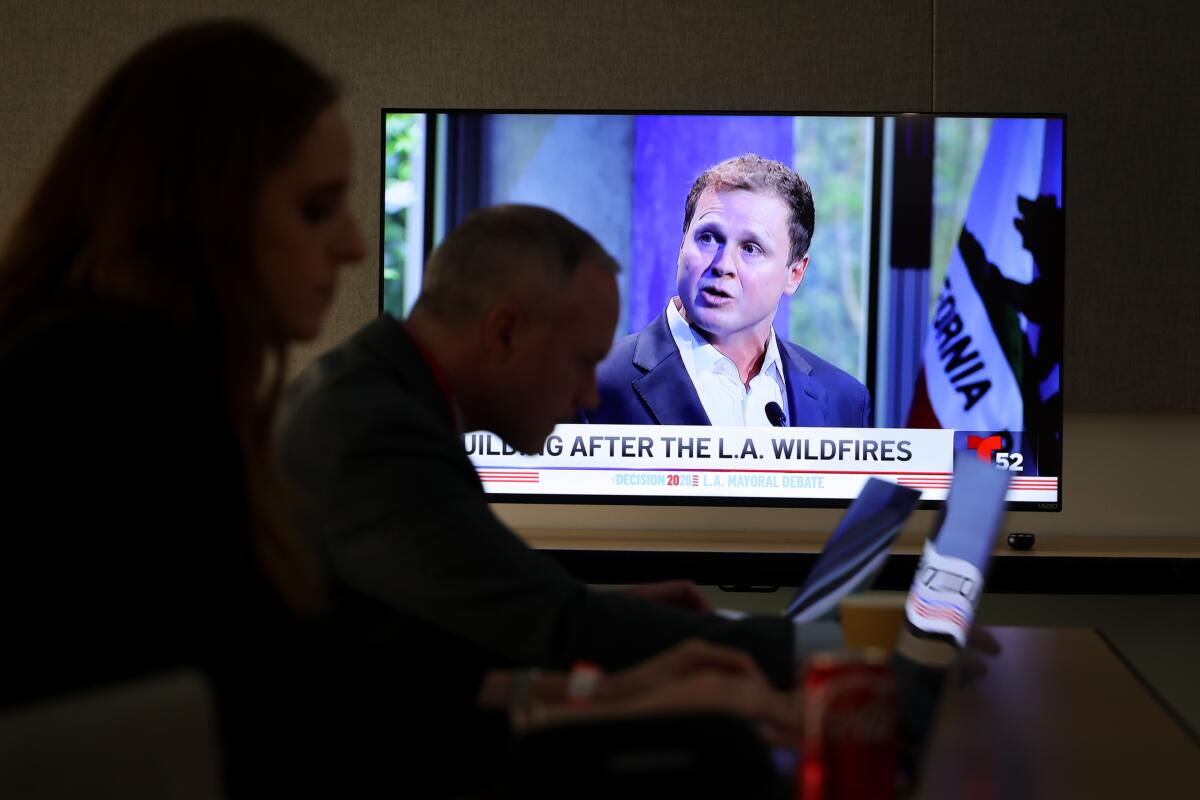
Spencer Pratt is shown on a television while journalists work during the 2026 Los Angeles mayoral debate at Skirball Cultural Center on May 6.
(Jason Armond / Los Angeles Times)
Far from me to criticize someone’s faith. But I urge Pratt to reacquaint himself with the words of the messiah in whose path he professes to follow. Humility, frugality, turning the other cheek — it’s what Jesus taught and what Pratt has long rejected.
Instead of offering compassion or viable initiatives, Pratt consistently calls the unhoused “zombies,” “vagrants,” “drug addicts” and “bums,” with a particular fixation on the naked ones. He vowed to ABC 7 recently that he would push people off L.A.’s streets and onto federal land — like herding stray wildlife. The mayoral hopeful added that “scam homeless nonprofits” exacerbate homelessness, which must have been news to Scripture-based organizations such as the Los Angeles Catholic Worker, Union Rescue Mission and the Salvation Army, which have been trying to help homeless people since before Pratt was born.
“These people, when I unplug them … they’re all going to Seattle, where the mayor will welcome them,” Pratt proclaimed.
Jesus would not only roll out the welcome mat for homeless people — he would embrace them.
Spencer, what New Testament book says that your crude campaign against the most destitute among us is holy?
Christ never looked down on itinerants, famously saying, “The Son of man hath not where to lay his head.” In the Book of Mark, when Jesus sent his disciples out into the world, he told them to bring no food or money, because good people would take care of them.
“And if any place will not welcome you or listen to you, leave that place and shake the dust off your feet as a testimony against them,” Jesus said.
Christ did do some name calling, but his ire was directed at the powerful, the braggarts, the hypocrites — the Pratts of his time. The Nazarene saved his kindest words for the meek, the poor, the peacemakers — who are sorely lacking in Pratt’s caravan of disaffected liberals, Trumpers and the wealthy. Christ didn’t offer counsel to the comfortable but to outcasts — lepers, prostitutes, people possessed by demons or afflicted with disease — whose modern-day contemporaries live on our streets and whom Pratt World blames for all of L.A.’s ills.
Jesus especially embraced outsiders — the Canaanite woman he initially compared to a dog because she sought help for her daughter, the Samaritan lady at the well, the Roman centurion in the Book of Matthew of whom Jesus proclaimed, “I have not found so great faith” anywhere in Israel. Pratt would have rounded up all of them in donkey carts and dumped them in Babylon, if he had been around back then.
I understand how frustrating it is to see homeless encampments in neighborhoods and to deal with unhoused people who disrupt one’s day, as my wife does at her restaurant in Santa Ana. But whenever annoyance gets the better of me, I remember what Jesus told his followers: “Inasmuch as ye have done it unto one of the least of these my brethren, ye have done it unto me,” warning that he would keep this in mind on Judgment Day.
Those who didn’t take his advice? “Depart from me, ye cursed,” Christ thundered, “into everlasting fire, prepared for the devil and his angels.”
Christianity — and good society — calls for us to look to our better angels, not to demonize others, as Pratt regularly does. He knows this too.
“When the whole world hates you,” Pratt wrote, “it’s comforting to think at least the big guy upstairs has your back, so long as you repent.”
But repentance means admitting you’ve done wrong. Instead, Pratt is doubling down on his anti-homelessness nastiness as more and more people join his crusade.
Let’s see how many Angelenos embrace this false prophet on election day.
Homicides in Los Angeles are down to levels not seen since the 1960s. Neighborhoods once awash in gang violence now sometimes go weeks, even months, without a shooting. And the follow-home robberies and street takeovers that captured the public’s attention in recent years have largely subsided.
By many measures, the city is safer than it has been in generations — and yet voters following L.A.’s hotly contested mayoral race might think the opposite.
The challengers to Mayor Karen Bass have zeroed in on homelessness and public drug use to argue she hasn’t delivered on public safety, while also criticizing how the Police Department has operated and been funded during her tenure.
Mike Bonin, a former L.A. City Council member, said the fact that Spencer Pratt — the former reality TV star who has been attacking Bass from the right — has gained so much traction in the race is proof of how Bass and other candidates to the left have failed to change “prevailing narratives that the city is unsafe.”
Mayoral candidate Spencer Pratt hosts a campaign block party on 10th Avenue in Los Angeles on May 20, 2026.
(Robert Gauthier / Los Angeles Times)
Pratt has been particularly active on social media, where he has shared artificial-intelligence videos created by fans depicting him as various superheroes coming to the rescue of a city that, under Democratic rule, has turned into a dystopian hellscape.
In a March 26 post on Substack, Pratt railed against the thousands of drug-related calls that emergency officials respond to every month. He has said that if elected mayor, he would order the police and fire chiefs and the county health director to “treat every encampment as a grave-disability zone.”
“No new laws needed,” he wrote. “No endless task forces.”
Flanking Bass on the left is Nithya Raman, a progressive City Council member who was once the mayor’s political ally.
Raman has argued that Bass has thrown too much money at the LAPD, with raises for police officers coming at the expense of other basic services such as park maintenance and street paving. Raman said the LAPD pay increases have “bankrupted” the city, depriving other services of much-needed funding. In campaign ads, Raman has cast herself as a more sensible alternative to Bass. Raman has said she would work to reduce traffic deaths and prioritize safety on the city’s buses and trains.
When she first ran for office in 2020, Raman called for defunding the police, saying the Los Angeles Police Department should be a “much smaller, specialized armed force.” Since then, however, she has voted for some budgets that increased spending on law enforcement.
In response to questions from The Times, Raman said she would work to find ways to overhaul public safety.
“I’ll propose budgets that expand unarmed response, work with LAPD to improve 911 response to more quickly answer calls for help that don’t require armed officers, and will appoint leadership at the Police Commission who will actively partner with the City Council to work on reform,” she said.
Representatives for Pratt and Bass didn’t respond to requests for interviews with the candidates.
Bonin said Bass — who supported various police reform measures while Congress — has shocked some of her supporters with how “aggressively pro-police she has been.”
When she ran for mayor in 2022, Bass vowed to retool the recruitment and hiring process in order to restore LAPD staffing to 9,500 officers. That hasn’t happened. The number of sworn officers recently fell below 8,600, despite Bass striking a deal with the police union to offer higher starting salaries and new retention bonuses.
Mayor Karen Bass takes part in a candidate forum on May 5, 2026, in Sherman Oaks.
(Eric Thayer / Los Angeles Times)
On Thursday, the City Council approved a $15-billion budget for the upcoming fiscal year, which included funds to hire 510 new officers — just enough to offset turnover and maintain current staffing levels.
Raman has said the LAPD should not shrink any further because there aren’t enough officers to respond to 911 calls “in a timely fashion.”
Samantha Stevens, a Los Angeles political consultant and former legislative staffer, said people seem willing to back Pratt because he acknowledges that their sense of safety has been shaken — even if he has offered few concrete details about how to tackle crime beyond cracking down on homelessness.
Pratt’s critics say that his plan relies on funneling homeless people into a shelter system that doesn’t have the capacity to handle them all. Others have noted that the aggressive tactics he has proposed would probably face legal challenges.
L.A. City Councilmember Nithya Raman, who is running for mayor, makes a campaign stop at the site of a home burned in the Palisades fire.
(Eric Thayer / Los Angeles Times)
“He’s kind of a case study in somebody who has a lot of opinions but has no idea of how the city is run,” Stevens said.
Fernando Guerra, a political science professor at Loyola Marymount University, said Pratt seems to have tapped into a deep well of discontent among Angelenos who believe that crime and homeless have spiraled out of control. The challenge for Bass, he added, is that although the numbers suggest that crime has decreased, many people associate the sight of encampments spilling onto public sidewalks as “a breakdown” that indicates the city is becoming less safe.
“You want to go back to the days of Daryl Gates, you’ve got Pratt,” he said, referencing the former LAPD chief whose controversial police sweeps in the late 1980s yielded thousands of arrests while alienating large segments of South L.A.
“If you want more of the same from the past 20 years, you’ve got Bass,” Guerra added. “And if you want something new, then you’ve got Raman, but she has to explain what exactly she wants to do.”
Although Pratt and Raman appear to be the strongest challengers to Bass, several long-shot candidates have also made public safety a key issue in their campaigns. Some have gone after Bass for her support of LAPD Chief Jim McDonnell. Hired by Bass in 2024, McDonnell has touted the impressive drop in crime under his leadership, but also faced criticism over an uptick in shootings by police and aggressive crowd control tactics during protests against the Trump administration’s immigration policies.
Police Chief Jim McDonnell attends a news conference at LAPD headquarters on May 21, 2026.
(Genaro Molina / Los Angeles Times)
Rae Huang, a minister and housing rights advocate, said if elected mayor she would immediately replace McDonnell with someone who has the “ability to really reimagine what public safety really looks like.”
“I’m the only one with the guts to say that out loud,” Huang told The Times during a recent campaign stop at a bookstore in the West Adams neighborhood.
In social media posts and interviews, Huang has frequently referred to the LAPD as “one of the biggest legal gangs in the world,” and said she would work on diverting money from the police budget to scale up programs that have shown promise in sending unarmed specialists to deal with emergencies that involve people experiencing mental health crises.
The city is already running two such pilot programs, but under Bass they have remained underfunded, Huang said. Last week, the City Council signed off on expanding one of the programs.
Huang said she would also invest more heavily in addressing the city’s lack of affordable housing, which she said is an underlying cause of crime and homelessness.
The Los Angeles Police Protective League has poured hundreds of thousands of dollars into attack ads against Huang and Raman.
Adam Miller, a tech entrepreneur, has tried to strike a balance in his mayoral campaign, advocating for changes while acknowledging that many people still feel unsafe despite the historic drop in violent crime.
He criticized a recent vote by the L.A. City Council to limit so-called pretextual stops, in which officers pull people over for minor traffic infractions in order to investigate more serious offenses. The stops have been blamed for enabling racial discrimination.
Miller said that “constraining the Police Department is the opposite of what we should be doing.” He called for “leveraging” AI and modernizing the department’s archaic computer systems, which he said could allow the LAPD to catch up to other agencies that have embraced new technology.
Miller told The Times that he recently went on a ride-along with officers from the Rampart Division, which he said was eye-opening.
“At the highest level I think Angelenos don’t feel safe anymore,” he said. “They don’t feel safe in their neighborhoods, but more recently they don’t feel safe even in their own homes.”
Statistically speaking, the city might be safer than it’s been in decades, he said — but that doesn’t necessarily matter to voters.
“I don’t think it’s just perception,” he said. “I think it’s reality that crime has spread.”
You say you want to be mayor of Los Angeles, but do you really?
I know that being a candidate has rescued you from anonymity after your career in reality TV went off a cliff. You’ve got CEOs backing you, and fans raving, and you’ve managed to milk social media attention.
But at some point you might have to answer questions from the reporters you’ve been avoiding.
And if you win, you’re going to have to drive to City Hall five, six, seven days a week, and I don’t know if you saw my column a few weeks ago, but the fountain on the south lawn hasn’t worked in about 60 years. If you get elected, you better put a wrench in your lunch box, because nobody has figured out how to fix it.
So that’s the reality, pretty much. And the unions will want what they want, and the socialists on the City Council will be lying in wait, especially after President Trump blew you a cross-country air kiss and certified your MAGA credentials.
More than 30,000 people are waiting for their broken sidewalks to get fixed (I’m not exaggerating) but there’s no money, and if you hire several thousand more police officers as you’ve pledged, the city would be bankrupt for the next decade or so and you’d need to take out a loan to buy a doughnut.
So call me, like I say, because I think there’s still time to change your mind.
If you choose to proceed, and if you actually win, it might feel like you’re in a sequel to that reality show you did called “I’m a Celebrity … Get Me Out of Here,” and you may end up praying the show gets canceled. The mayor’s hours are long, and everywhere you go, someone will want you to fix this problem or that, and as you wander the halls of power you’ll think back on your campaign pledges and hear the constant echo of a line from H.L. Mencken:
“For every complex problem there is an answer that is clear, simple, and wrong.”
Can I confess something?
I’m feeling guilty about all of this.
Not to sound presumptuous, but I feel partly responsible for the fact that you’re in contention for the job.
Like you, I’ve been calling out issues with the management of L.A., and I’ve been doing it for years. But I had the good sense not to run for mayor.
Why’s that?
Because unlike you, I know the fixes aren’t as easy as we’d like them to be.
When Karen Bass was running the first time, I had a long talk with her about her homelessness plan, among other things. At the end of the day, she asked for my input.
I reminded her that as much as people would like for the city’s top elected official to immediately clear the streets, a mayor is limited by shared power with the City Council.
By drug epidemics and untreated mental illness that are largely under county authority.
By uncertain funding from the nation’s capital.
By global forces that transformed the economy and created staggering levels of inequality that are made all the worse by the high cost of housing.
Bass was aware of all that, but said that having worked in Sacramento and D.C., and having built relationships with county supervisors, she’d be able to build better systems and get better outcomes.
So how has she done?
Not great. And then there’s the fire.
As I’ve said before, leaving the country despite forecasts of elevated wildfire risk was probably the worst mistake of her political career.
I don’t need to remind you of that. Having lost your house in the Palisades, you know that Bass badly underreacted, then stumbled on the rebuilding, and then had a hand in downplaying the Fire Department’s failure to adequately deploy and extinguish the fire that became an inferno.
To summarize, she’s left herself wide open to a challenge.
And she probably can’t believe how lucky she is that you might be her November competition, if the two of you bounce out Councilmember Nithya Raman and the other candidates in the June 2 primary.
I don’t hold it against you that you haven’t worked in government or politics before. These days, a lot of voters prefer outsiders. But it might have helped if you’d done something of purpose at some point in your life, like run a successful business or volunteer at a food bank. Were you junior high class president, or were you in the Boy Scouts? Anything could help.
Not that being the boyfriend and later the husband of someone on an MTV reality show called “The Hills,” which chronicled the work of a woman who went from “Laguna Beach: The Real Orange County” to an internship at Teen Vogue, can’t prepare a young man for statesmanship.
In this culture, you could ride that all the way to the White House.
But the flimsy resume could explain, Spencer, why you’ve been taking so many social media-fueled potshots at Bass without offering anything of substance.
Let’s arrest drug zombies.
OK, then what?
I’d advise you to study the primer by my colleagues Doug Smith and Andrew Khouri on what you can and can’t do about homelessness as a mayor in L.A. Clearly, you’ve got a lot of boning up to do. In fact, I’m reminded of a line by a Philadelphia columnist years ago, when he said of a politician who wasn’t up to the job: He’s been standing in shallow water for so long, he doesn’t realize he can’t swim.
If I were you, I’d consider the fact that President Trump made the mistake of promising easy fixes. He was going to deliver a massive infrastructure program. He was going to deliver healthcare reform that was better and cheaper for everyone. He was going to lower consumer prices on Day One, and here we are, with millions of people wondering how they’re going to pay their bills while Trump rigs it so he doesn’t have to pay the IRS.
All that being said, I’m glad you decided to run, because elected officials need constant reminders that their jobs are not secure, even when the challengers are way in over their heads. I’d almost like to see you win, because that’s one reality show I’d be sure to watch.
And I say this despite the fact that you once told your talk show buddy Alex Jones — who insisted that 9/11 was an inside job and that the Sandy Hook massacre of 20 children was a hoax — that melting ice caps are overrated. Or, as you explained it to Jones, “we’ve all seen footage of the polar bears swimming to new pieces of ice.”
When the general election rolls around, and the ice begins to break, will you know how to swim?