specialized

EA-37B Flew Along Kaliningrad Border As Part Of “Specialized” Recon, EW Flight Package

A U.S. Air Force’s new EA-37B Compass Call electronic warfare jet made an appearance near the Russia’s Kaliningrad enclave on Tuesday. The flight was part of a large presence of U.S. and NATO reconnaissance and electronic warfare aircraft and Polish ground forces arrayed near the strategic Baltic Sea salient bordering Poland and Lithuania. This took place place against the backdrop of growing concerns about increasing Russian aggression in the region – including a growing fears of a potential limited action against a NATO member and concerning Russian naval operations in the Baltic Sea. However, NATO is downplaying the aerial mission as routine and not a reaction to any particular event.

“On 18 August 2026, NATO deployed a specialized reconnaissance and electronic warfare flight package over the Baltic Sea near the Kaliningrad Oblast,” a Polish military official told TWZ on Wednesday. “This operation involved the deployment of a rare US EA-37B ‘Compass Call II’ electronic warfare aircraft, relocated from Greece to Powidz in Poland, which operated alongside an E-3 AWACS and an ARTEMIS II surveillance plane.”

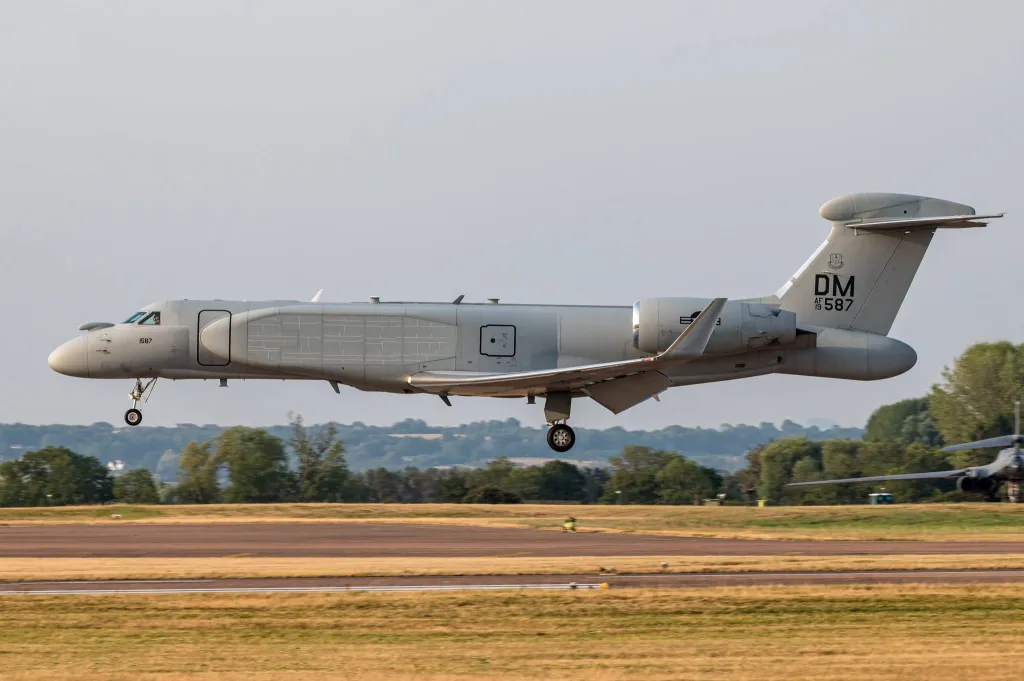
An EA-37B Compass Call electronic warfare jet arriving at RAF Fairford in the U.K. after taking part in Operation Epic Fury. (Matt Belcher)

The Polish military official, who spoke on the condition of anonymity to discuss operational details, declined to offer further information about the role of the Polish ground forces, how many there were, or how they were equipped.

A NATO official on Wednesday clarified to us that the activity, which is ongoing, is allied in nature and controlled by the U.S., not NATO. We have reached out to U.S. Air Forces in Europe – Air Forces Africa (USAFE) for additional details.

Kaliningrad. (Google Earth)

After open-source flight trackers noticed the increased air activity near Kaliningrad on Tuesday, we reached out to NATO spokesman Col. Marty O’Donnell for comment.

“NATO is a defensive Alliance and Allies are constantly honing their defensive abilities,” he explained. “The Allied activity today in the Baltic region involving U.S. and Norwegian fighter aircraft, Polish ground forces, a NATO E-3A Airborne Warning & Control System (AWACS), and more, which is being overseen by the U.S., is one example of this approach.”

NATO aircraft operating near Kaliningrad is not a unique circumstance. The enclave – separated from Russia and ensconced between two NATO nations and the Baltic Sea – is a key Russian military outpost, hosting an array of nuclear-capable ballistic missiles, anti-ship missiles, several squadrons of tactical jets and thousands of troops.It has also been a notorious hub of disruptive Russian electronic warfare activity itself.

However, having an EA-37B operating over the area is of note. This was reportedly the first time one of these highly specialized jets appeared near the enclave. Online flight trackers showed it flying orbits in Polish airspace near Kaliningrad for nearly two hours on Tuesday.

A heavily modified Gulfstream G550 business jet, the aircraft leverages the Conformal Airborne Early Warning (CAEW) configuration developed first for the Israel Defense Forces. The jet packs powerful active electronically scanned arrays is designed to provide critical stand-off jamming support, including against enemy radars and communications systems. The EA-37B also has a secondary intelligence, surveillance, and reconnaissance (ISR) function given its ability to spot, track, and geolocate various types of emitters.

The Air Force is planning to procure 10 of these jets to replace the aging and ever smaller fleet of turboprop EC-130H Compass Call planes, of which only four remain. The 43rd Electronic Combat Squadron flew the first training sortie for the EA-37B on May 2, 2025, and flew its first combat missions during the Operation Epic Fury war against Iran.

The Compass Call is one of, if not the world’s most power airborne EW platform and blinding and deafening Russian forces in the enclave would be critical to minimizing any military impact that capabilities based there could have in a contingency.

An EA-37B Compass Call electronic warfare jet landing at RAF Fairford in the U.K. after taking part in Operation Epic Fury. (Matt Belcher)

As we noted earlier in this story, though NATO is downplaying the activity, it comes amid growing concerns about Russian actions in the region and against the backdrop of the still raging war in Ukraine.

Earlier this week, the Russian frigate Admiral Kasatonov escorted the Russian Floating Storage/Production ship Portovyy through the Baltics, according to The Telegraph. It was the second such transit of a Russian warship in the region in recent weeks and part of Moscow’s increasing efforts to protect its energy shipments in the wake of seizures of its shadow fleet vessels by European authorities, the independent Russian The Insider news outlet noted.

Last week, The Wall Street Journal reported that “Russian President Vladimir Putin could try to test NATO’s resolve with a limited assault on an allied country in the next few years, according to new U.S. intelligence reports that posit possible scenarios ranging from a cyberattack to a small-scale land incursion.”

“U.S. and European leaders increasingly see signs of Russia conducting probing attacks to test NATO’s resolve, including Russian cruise missiles that have landed in Poland and drones flown into Romania,” the publication added.

Last month, Lithuania’s president said intelligence assessments suggest that Russia is planning potential attacks on critical infrastructure in the Baltic states or Poland.

“President Gitanas Nausėda said that authorities were monitoring the risk of attacks that could disrupt the country’s energy and transport systems, including facilities supporting Lithuania’s connections with the European electricity grid,” The Hill reported.

Though NATO says there is no connection between the ongoing air activities and specific Russian threats or ship movements, the Polish military official suggested otherwise.

“Official NATO statements framed the maneuvers as routine defensive capability enhancements under U.S. supervision,” the official posited. “However, expert analysis suggests that this deployment is intended to deter potential Russian provocations in the Baltic region.”

It is unclear how much longer the current U.S./NATO aerial activities around Kaliningrad will take place. Regardless the use of a Compass Call along the highly strategic enclave’s borders is a clear message to Russia.

Contact the author: howard@twz.com
Howard is a Senior Staff Writer for TWZ. He writes frequently about conflict, focusing heavily on the Middle East and Ukraine, and interviews with military and intelligence officials and industry leaders from around the globe. He lives near Tampa, Florida, home of U.S. Central Command, U.S. Special Operations Command.


Source link

Pocket Fleet Of Unseen MQ-1 Predators Still Flying In Specialized Role

The U.S. Navy continues to make use of MQ-1 Predators as test and training assets, eight years after the U.S. Air Force retired the iconic drones. TWZ was first to report that the Air Force was looking at transferring some of its remaining Predators to the Navy back in 2019, but it was unclear what came of those discussions in the end. Now we know.

The Air Force officially retired the MQ-1 in 2018. At that time, the service still had dozens of these drones in its inventory. More than 50 Predators were heavily cannibalized for parts they shared with their newer cousin, the MQ-9 Reaper. A number of demilitarized examples were also put on display. Today, 15 MQ-1s remain in storage at the boneyard at Davis-Monthan Air Force Base in Arizona, and are technically the property of the National Museum of the U.S. Air Force. Then there’s the matter of the MQ-1s that went to the Navy.

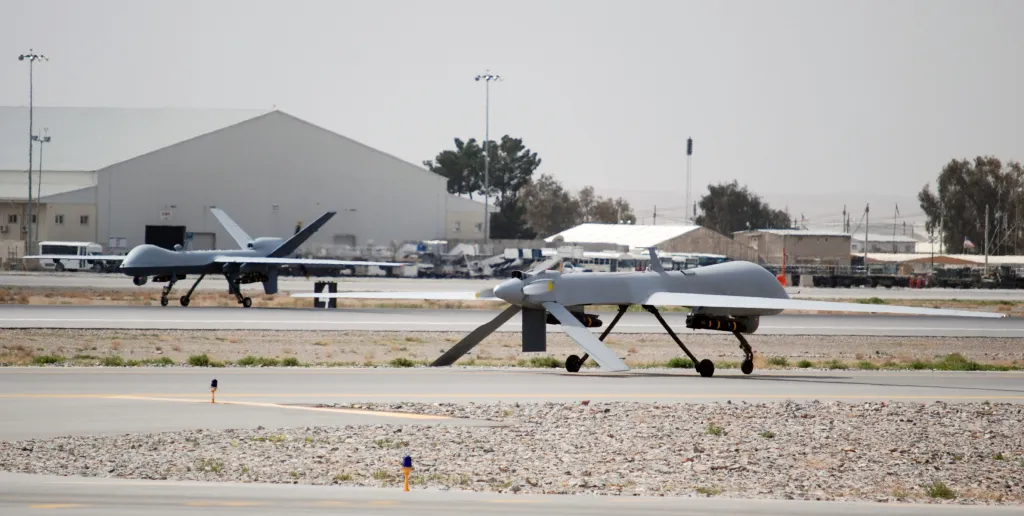
A US Air Force MQ-1 Predator, at right, and an MQ-9 Reaper, at left, seen taxiing at Kandahar Airfield in Afghanistan in 2014. USAF

“In 2019, Naval Air Warfare Center Weapons Division (NAWCWD) received 20 MQ-1 aircraft from the U.S. Air Force,” a spokesperson for NAWCWD, part of the Navy’s Naval Air Systems Command (NAVAIR), confirmed to TWZ. “These aircraft were redesignated as NMQ-1Bs to support our mission.”

The new nomenclature here is notable. In the U.S. military’s joint service designation system for aircraft and missiles, the prefix “N” refers to platforms that have been modified in some way, typically for testing purposes, that are not readily reversible. One of the better-known examples of this is the Air Force’s secretive NT-43A radar cross-section measurement platform, a heavily modified Boeing 737-200 with a completely new and enlarged nose, as well as a huge radome extending from the tail. Other “N” aircraft that various branches of the U.S. military have operated over the years have had far less dramatic modifications. How exactly the NMQ-1B configuration differs from a typical MQ-1B is unclear.

A stock picture of an MQ-1 Predator in US Air Force service. USAF

“NAWCWD is an RDT&E [research, development, test and evaluation] command and the platforms were acquired to support our targets department,” they added when asked for more information. “The NMQ-1B platform is being used for test and training. We have nothing further to provide at this time.”

TWZ had reached out to the Navy for more details after the Air Force had also confirmed the transfer of the MQ-1s. We had asked the Air Force about the status of any Predators still in its inventory after U.S. Central Command (CENTCOM) confirmed the loss of an “MQ-1” to Iranian fire at the end of May. By all indications, what Iran shot down was actually a U.S. Army MQ-1C Gray Eagle, a design that evolved from the Predator, but that is distinctly different.

When the Air Force retired the MQ-1, the service still had dozens of airworthy examples. TWZ pointed out at the time that at least a portion of them could end up as targets for air-to-air and surface-to-air weapons, as well as sensor testing and other weapons testing. The fact that NAWCWD says it is still using the drones today would seem to point more to the latter than the former, though anti-air missile testing does not necessarily have to entail the destruction of the target.

For instance, certain kinds of testing of some missile seekers can be done without it ever leaving a rail on an aircraft or a launcher on the ground. The Navy and Air Force test communities also use specialized podded systems to support the development and evaluation of new and improved seekers for anti-air missiles, something we have explored in detail in the past. Even live fire tests do not always result in the target being destroyed if that is not the intended outcome. Just by removing the warhead, missiles will still pass within lethal distance with their proximity fuzes being triggered to confirm a simulated kill. The missile will fly on, and the target will survive to live another day.

As noted, at least based on the NMQ-1B designation, the Navy’s Predators have been altered in some significant way. One possibility is that they have been modified to be able to mimic an array of different radar, infrared, and/or other signatures. In this way, a Predator could offer a lower-cost and long-endurance flying asset capable of replicating a variety of aerial threats to support testing and training requirements. The U.S. military already uses smaller crewed aircraft as surrogates for cruise missiles and long-range kamikaze drones, as can be seen in the TWZ video below. This is in addition to target drones specifically built for this purpose.

These aircraft masquerade as enemy Shahed-136 drones during U.S. military war games thumbnail

These aircraft masquerade as enemy Shahed-136 drones during U.S. military war games


The NMQ-1Bs could also be modified in a variety of other ways to support more specific NAWCWD requirements, or to make them more adaptable to meet changing demands. The standard MQ-1B variant also features two underwing hardpoints that could be used to carry various stores, such as countermeasures and small munitions. This would further expand the Predator’s flexibility as a test and training asset from one sortie to the next. Being able to more readily modify or swap out the drone’s internal systems, as well as the software running them, would also be a boon for its current role.

Despite being housed within NAWCWD’s targets department, depending on their current configuration, the NMQ-1Bs could also help monitor missile and other test activities, or even act as signal relays. Before armed MQ-1 versions arrived, RQ-1 Predators were already flying surveillance and reconnaissance missions using infrared and electro-optical full-motion video cameras in turrets under their noses. The drones could also be fitted with small radars with synthetic aperture modes capable of capturing still imagery, even through cloud cover, smoke, and dust, and at night.

An early variant of the Predator drone flies near the U.S. Navy’s Nimitz class aircraft carrier USS Carl Vinson during a test in 1995. U.S. military

News that the Navy is still using Predators for testing and training purposes certainly comes at a time when drone threats at home and abroad have become firmly top of mind for the U.S. military. For American authorities, the ability of long-range kamikaze drones, in particular, to hold prized assets at risk was just highlighted by the latest conflict with Iran. Russia’s ongoing war against Ukraine, as well as other conflicts globally in recent years, have also underscored this reality. For years now, TWZ has been calling attention to the dangers that various tiers of uncrewed aerial systems pose, which are only set to continue to expand in scale and scope.

Confirmation that NAWCWD continues to operate a fleet of NMQ-1Bs also comes amid a surge in U.S. military flight testing activities, and commensurate demand for supporting test assets. This is being driven heavily by a flurry of next-generation aircraft and missile developments, as well as efforts to modernize existing platforms to keep pace.

Around their retirement, there were rumors that the remaining MQ-1 fleet could be used to test cooperative swarming capabilities, including hardware, software, and communications networks. There is no hard proof that this occurred, but it seems quite plausible considering the timing and how well-known and adaptable the Predator was at the time.

Using surrogate drones in the development of autonomy agents, teaming architectures, and swarming capabilities is now a very well-established practice. The big question is that if these Predators are still flying, or at least have been since their retirement, how is it that we have not caught a glimpse of them? One answer would be that this work was done at clandestine test facilities like Area 51 or even less secretive but still somewhat remote locales. If this is the case, these aircraft likely have historic significance, paving the way to the autonomous air combat revolution currently underway.

Overall, how much longer the Navy might continue to make use of the NMQ-1Bs remains to be seen. The service’s test community has already given the iconic Predator nearly a decade of extra life.

Contact the author: joe@twz.com

Joseph is TWZ’s Deputy Editor, helping to oversee the site’s highly experienced and dedicated team, while also writing informative and impactful defense and national security content. He lives right in the thick of it in the Washington, D.C. area.


Howard is a Senior Staff Writer for TWZ. He writes frequently about conflict, focusing heavily on the Middle East and Ukraine, and interviews with military and intelligence officials and industry leaders from around the globe. He lives near Tampa, Florida, home of U.S. Central Command, U.S. Special Operations Command.


Source link