The minuscule yet distinctly humanoid figure of a fairy flaps its wings as it flies into the ancient ruins of a bygone kingdom. Guiding a young heroine to meet a mysterious faun, for a moment, the fantastical creature looks as though it might cross the threshold of the screen.
It is in that instant that Guillermo del Toro — wearing 3D glasses while sitting at the Academy Museum of Motion Pictures’ imposing David Geffen Theater for a tech check — chuckles with pride as if to say, “Look at that.” Later that night, almost 1,000 fans were transported into his entrancing 2006 masterwork, “Pan’s Labyrinth,” (a.k.a. “El Laberinto del Fauno”) at the premiere of the new 3D version.
Back in theaters across the country on Friday (which is also Del Toro’s 62nd birthday), “Pan’s Labyrinth” is celebrating its 20th anniversary with a new 4K restoration, available in both 2D and in the aforementioned 3D transfer that Del Toro himself oversaw.
Doug Jones, left, plays the faun that beckons to Ofelia, right, played by Ivana Baquero in “Pan’s Labyrinth.”
(Scott A. Garfitt / Andreea Alexandru / Invision / AP)
As brutal as it is spellbinding, the Mexican filmmaker’s modern classic unfolds during the Spanish Civil War — more precisely, in 1944 — as young Ofelia (Ivana Baquero) and her pregnant mother move into the camp run by the ruthless Capt. Vidal (Sergi López).
Amid the bloodshed, Ofelia discovers an underworld of magical entities, including the alluring faun (Doug Jones), who convinces her that she is a princess who must reclaim her royal status.
By winning three Academy Awards and being nominated for two more — one for Del Toro’s screenplay, the other for foreign language film, representing Mexico — “Pan’s Labyrinth” signified an artistic watershed moment in Del Toro’s career. These accolades came after he directed two comic-book adaptations for Hollywood studios: “Blade II” and “Hellboy.”
Beyond the recognition, the experience felt spiritually transformative for the Guadalajara native; not the least because of the hurdles he overcame to bring it to fruition.
“‘Pan’s’ marks a big divide in what I did before and what I did after. I became invested in a different way in filmmaking,” Del Toro tells me. “I don’t know how to describe it, but filmmaking became a religion, as opposed to something that I could do. It fused with me.”
Though the film is now regarded as one of the greatest works of the 21st century, when Del Toro set out to make it, the industry was not receptive to his ideas.
“Everything I thought I wanted to say about war in ‘Devil’s Backbone’ seemed obsolete, because we had gone through 9/11 and the world had changed,” Del Toro recalls. “I didn’t want to do an American movie. I was being offered a lot of comic- book movies and said, ‘I got to do a companion piece for “Devil’s Backbone” no matter what.’ But nobody wanted to do the movie.”
One key objection was the mature tone of the narrative, in which the child protagonist is directly confronted and endangered by the evils derived from fascist ideologies.
“They said, ‘If it’s a fairy tale then it should be a family movie,’ because I’d been offered ‘Narnia’ a year before by [former Walden Media chief executive] Cary Granat,” Del Toro tells me.
“He said, ‘Why don’t you do ‘Narnia’?’ And I said, ‘Because I want to do my own version of a fairy tale where the lion doesn’t resurrect and it’s about a pitiless world against a boundless imagination.’”
Del Toro’s interest in stories where the woes of children are taken seriously was spurred by ‘Los Olvidados,’ Luis Buñuel’s classic from 1950, about a group of neglected children surviving a harsh reality in the streets of Mexico City.
“When I saw ‘Los Olvidados,’ I was in my early teens,” says Del Toro. “I thought every time somebody told a story about a child that was unsentimental and that was a little brutal — it could be ‘The Spirit of the Beehive’ or ‘Los Olvidados’ or ‘The Red Balloon’ or even Bobby Driscoll in ‘The Window’ — whenever you saw a child in real danger, a child in jeopardy, a child in moral dilemma, like ‘The Fallen Idol,’ I really was transported.”
Children, Del Toro believes, are often invisible to adults. They are “cartoons” in the eyes of “regular adults.” Thus, when his mother started reading child psychology books to better understand a young Del Toro, he read them as well, so that he could try to manipulate her.
Del Toro laughs mischievously as he remembers his antics. “I would do exactly what the book said, and I realized I could work within that preconception and make my grandma buy me horror comic books or make my mom allow me to miss school,” Del Tor recalls. “Ofelia is very strong. That was the point of the movie for me. I wanted to see the clash of wills between a young kid and a fascist captain, and I wanted to see the kid win.”
(Teresa Isasi / Picturehouse)
Del Toro’s mother, Guadalupe, died in 2022. But she lives on in cinema, thanks to the 1985 landmark queer Mexican film “Doña Herlinda and Her Son,” by director Jaime Humberto Hermosillo, where she played the titular Doña Herlinda.
And if you look closely, you’ll also find Del Toro in the movie, which was filmed in Guadalajara.
“I have a cameo with my ex-wife in it. Lorenza. She’s the receptionist and I appear dancing in Chapala, but I’m super thin, so you can never recognize me,” he says. “I’m dancing with a girl that I liked, but I was already in the throes of dating the one who became my wife, Lorenza.”
Then there was the question of the picture’s language. Del Toro wouldn’t waver on making “Pan’s Labyrinth” in Spanish.
“Many of them said, ‘We’ll do it if you do it in English — set in Spain, same ending, the girl dies, no problem, but in English.’ And I said, ‘I can’t. It’s not true to the movie.’ I’m not saying you can never do that, but it’s always this ‘Zorro’ thing like, ‘Are you in a hurry, señor?’ or ‘Come to the hacienda,’” he says, doing a funny, exaggerated accent on the Spanish words.
“If you’re trying to contrast reality versus fantasy, the reality has to be in its language, in its location,” Del Toro adds, emphasizing his resolve to make the movie in his native tongue. “I thought, ‘This is about the reality clashing with the fantasy. I have to make the reality stylized, but I don’t want to do it in English, because then everything is a construct. Everything is just an idea.’”
In 2026, the film’s bilingual appeal is a major component of the marketing strategy that Cineverse — the entertainment company that Del Toro approached to handle the restoration and rerelease of “Pan’s Labyrinth” — is implementing to reach audiences across the country.
“A lot of our messages are in English and in Spanish. The messaging around the making of the 3D — Guillermo likes to say ‘F— AI,’ but we positioned it as ‘Made for humans, for humans. Hecho por humanos, para humanos,’” says Yolanda Macias, chief motion pictures officer at Cineverse. “That’s a really strong message that has resonated with our fans.”
A Mexican American woman whose parents emigrated from Jalisco, Macias sees “Pan’s Labyrinth” as a timeless movie that’s as relevant today as it was two decades ago.
“We are not ignoring a very important segment of the audience, which is the Latino population who have always, in my experience, shown an interest in creators from Mexico or from Latin America,” Macias says. “And we are so proud of Guillermo for being that person for this audience.”
When first envisioning “Pan’s Labyrinth,” Del Toro found himself grappling with existential concerns related to the meaning and relevance of what each person leaves behind when they are gone. Can anything we mortals create stand the test of time? Does it matter?
(Gina Ferazzi / Los Angeles Times)
“One of the things I was going through was I thought, ‘Is making movies worth it? You give them years and years and years, and then they just move down the current into the oblivion of the culture,’” Del Toro says. “A central theme in the film is, ‘Can we give our lives to something that doesn’t change the world?’ That’s why the movie ends with a little flower blooming in a dried tree. That’s all that is left of her story in the real world.”
His films will one day too become flowers left not only as proof of his time on earth, but perhaps as messages for those to come who have the sensibility to appreciate them.
“You can say, ‘Ofelia lived in the other kingdom,’ but in the real world, there’s only one tiny flower. And that’s why it says, ‘For those that know where to look.’ Because that’s what we do as filmmakers. When you ‘discover’ a filmmaker, you say, ‘I discovered this guy Fellini.’ Well, he’s been there for a while, but sure. Or you discover Miyazaki or Mamoru Oshii … They’re continents, but they are only in maps that are very secret. I like that image.”
So long as they are found, Del Toro doesn’t worry that much about how people encounter them.
“[Films] live on to a certain degree. Like when we were shooting ‘Frankenstein,’ I said, ‘We will live forever in the Netflix queue,’” he recalls, trying not to laugh. “Theatrical is the best. There’s no comparison. But I remember my childhood, I saw all the Universal monster movies on TV, and they were monumentally important for me. There’s something to be said about accessibility that is also important.”
I agree with him — and mention that some of the most revelatory movie-watching experiences for me as a young cinephile happened thanks to bootleg DVDs, which I would buy as a teen in Mexico City.
“I love the pirate DVDs in Mexico,” says Del Toro with a laugh. “I’ll tell you a little story: We went to promote ‘Hellboy’ in Mexico City, and we were having coffee. A guy came in and said, ‘You want to buy movies?’ And he had ‘Hellboy’ already, opening week … and it didn’t have a cover either!”
Another distinction that “Pan’s Labyrinth” holds is that it was the last film in Spanish that Del Toro directed. But that could change, he says; he still has another project he’d like to make in Mexico.
“I actually have an idea that I would love to shoot, but I want to make it a drama. I don’t want to make it a fantasy movie,” he explains. “I have a great story that I want to shoot one day. It’s a kidnapping scene from three points of view. The victim, the people doing the pickup, and another component that I will not reveal.” (Del Toro’s late father, Federico, was famously kidnapped in Guadalajara in the late 1990s.)
The thought of Del Toro making another Mexican film in the future, reminded me that the original screenplay for his period ghost story, “The Devil’s Backbone,” was set in Mexico, but a lack of funding forced him to shift the production to Spain, with the help of Pedro Almodóvar’s company El Deseo.
“It was about a traveling circus during the [Mexican] revolution with a mother, a father and a boy. It was full of jarred fetuses. The boy was a clown, and the father was a magician. I was trying to do Bergman’s ‘Hour of the Wolf’ or ‘The Magician’ — modest but creepy,” he explains. “But it was very different. I had the orphanage, I had the legend of the fetuses and a ghost; and I had the devil live in the monastery.”
In any language, Del Toro is a fierce advocate against the use of generative AI in artistic creation. He believes that anything touched by humans has a better chance to endure. The love audiences still hold for “Pan’s Labyrinth” is a testament to this sentiment.
“[Pan’s Labyrinth”] is very truthful to who I was. And whenever you are able to be truthful, people feel that it matters to you,” Del Toro says. “And when you think it matters to someone, you cherish it.”
Emily Atack broke down in tears at the altar during her weddingCredit: Instagram/@thewhitmoreLaura Whitmore shared a string of snaps from the nuptialsCredit: Instagram/@thewhitmore
And she had tonnes of celebs in attendance, including TV presenter Laura Whitmore and her husband Iain Stirling.
Taking to social media, Laura has now shared a string of stunning snaps from the special day, including Emily welling up at the altar as she married her hubby, Alistair Garner.
Sign up for the Showbiz newsletter
Thank you!
Laura captioned her post: “Emily got married!” and they posed together for a fun shot with sunglasses in hand.
The TV stars were also joined by Katherine Ryan for one of the photos, and Iain looked to be having the time of his life at the boozy event, as he clutched hold of two espresso martinis.
In another playful snap, Emily could be seen doing a peace sign as she walked through the picturesque streets in her wedding dress.
Laura was joined by Love Island hubby Iain StirlingCredit: Instagram/@thewhitmoreEmily looked stunning in her gownCredit: Instagram/@thewhitmoreLaura showed a photo with comedian Katherine Ryan and actress Victoria SmurfitCredit: Instagram/@thewhitmore
Other snaps shared by mum-of-two Laura included her enjoying family time with her youngest child, as well as photos from behind-the-scenes of Emily’s wedding during morning glam, and at a peek at the beautiful blooms adorning the wedding.
Following the ceremony, the party then made the short walk to Plaza del Ayuntamiento (Town Hall Square) where dinner was served under the giant umbrella-shaped canopy of a century old Weeping Fig tree.
The party was held in the Costa Almería, a sentimental spot where the actress spent childhood holidays at her musician dad Keith’s old summer pad.
Emily and her scientist hubby Alistair were joined by celebrity pals including David Tennant and Stanley Tucci.
Iain looked in great spirits as he clutched onto two espresso martinisCredit: Instagram/@thewhitmoreLaura looked stunning a blue floral gownCredit: Instagram/@thewhitmore
The star-studded guest list also hosted Emily’s Rivals co-stars Alex Hassell, Victoria Smurfit and Rufus Jones, who plays her on-screen husband in the show.
Emily was walked down the aisle by her pop star father, Keith Atack and celebrated with her actress-comedian mother, Kate Robbins, as well as siblings Martha, George and other family members.
They originally wed at a romantic church service before a party in the garden of their mansion.
Guests were treated to a McDonald’s from a personalised van parked outside.
She wrote on Instagram after the first wedding: “Yesterday we officially got married among close family and friends. It was absolutely perfect.
“I can’t believe we get to do all that again in a few weeks time. Christ, we have fun don’t we.”
The loved-up couple welcomed baby Barney in June 2024 and got engaged in July 2025.
The Inbetweeners star said earlier this year that her second wedding would be a “fat, f***-off party”.
In fact, it’s believed that Tangier was created by the son of Hercules, with the god himself staying in one of the caves.
It has a vibrant café culture thanks to its French influence, tapas culture from Spain – and a mix of languages too.
Thanks to its position in the north of the country, it has long, sandy beaches too like Plage de Tanger and Achakkar Beach.
The second cheapest for return flights is Seville which has an average price of £151.
Seville is Spain’s fourth-largest city – and is one of the hottest during the autumn, winter season.
During October, Seville can still reach highs of 26C and even in January can see highs of 16C.
The Greek island of Rhodes has seen the biggest decrease in price for return flightsCredit: Alamy
Here’s the list of the best value destinations for travel from Oct 2026 – Feb 2027…
These are the destinations and the average economy return flight price, according to Skyscanner…
Rhodes, Greece: Average price £218 (-21% YoY)
Montego Bay, Jamaica: Average price £764 (-13% YoY)
Tangier Morocco: Average price £105 (-13% YoY)
Seville, Spain: Average price £151 (-12% YoY)
Valencia, Spain: Average price £122 (-11% YoY)
Valletta, Malta: Average price £164 (-11% YoY)
Perth, Australia: Average price £1,425 (-6% YoY)
Some of the top attractions include the Royal Alcázar of Seville, Seville Cathedral and Plaza de Espana.
Rhodes in Greece has seen the biggest drop in flight prices year-on-year – it’s down 21 per cent.
The average return flight price is £218 – but in October, we found return flights for less than £60 with Ryanair.
The island is the fourth-largest in Greece, the biggest in the Dodecanese – and it’s considered quieter and cheaper than the likes of Santorini and Mykonos.
Lindos is a popular spot for visitors, the coastal village sits on the eastern coast with a clifftop Acropolis, whitewashed alleys, and sandy beaches.
Greece has incredible summers, but also mild winters with highs of 15C in January and February.
Seville is the fourth-warmest city in Spain during the autumn, winter seasonCredit: AlamyA long-haul option with cheaper flights this year is Montego Bay in JamaicaCredit: Alamy
Further afield, long-haul journeys that have cheap return flight include Montego Bay in Jamaica which from the UK has an average price £764.
Montego Bay on north-west coast of Jamaica is the capital of the parish of Saint James and is one of the most popular tourist spots on the island.
Of course Brits flock there for its great weather and beautiful bays like Doctor’s Cave Beach which is considered one of the most beautiful in the country with white sand and bright turquoise waters.
Aside from sunbathing and paddling, snorkelling is popular too as swimmers are likely to spot parrotfish, turtles, and small sharks.
Looking on Skyscanner, October is the cheapest month for flights with returns from £364.
Laura Lindsay, Travel Trends and Destination Expert at Skyscanner gives her top tips for cutting travel costs…
Head north For those able to depart from north of the border, Edinburgh airport has some of the best deals for those looking for school holiday breaks as Scottish schools aren’t off the same weeks as England.
Is there a better price when departing a day earlier or later? Searching by multiple dates and airports will give you the best chance of a bargain. Because some dates are more popular than others, prices will vary. The ‘whole month’ search tool allows you to see cheap flights at a glance and pick the right deal for you. Consider traveling a day before or a day after your original departure dates, flying on less popular days of the week is always cheaper.
Is there a comparable trip to a different destination? You see a deal from one airline to popular location like Naples, but is there a better price when you consider somewhere less well known, like underrated Bari in Puglia instead?
Can you get a better deal travelling with a different airline?Changing up the airlines you choose to fly with can seriously cut costs. Also, fares don’t have to be booked as returns. Look at flying out with one airline and back with another to save money. You can easily compare prices on Skyscanner’s cheapest month tool.
Is there a cheaper deal from a nearby airport? Travelling to an airport a bit further from home or further from your destination can unlock better pricing and routes. A great example of this is when flying from London to New York. There are so many options and going just a little bit further from your point of origin or destination could mean a saving of hundreds of pounds. Make sure to check using the ‘Nearby Airport’ search on Skyscanner.
If you’re still not sure, make a note “Setting up price alerts will ensure you’re the first to know as prices drop with any additional discounts or added supply. You can mark a flight you’re interested in and Skyscanner will email you whenever the price goes up or down.
Embrace spontaneity by exploring ‘Everywhere’ Re-embrace your spontaneous side and let Skyscanner’s algorithm find the cheapest deal. Just type in ‘Everywhere’ with your travel dates and the site will show you all the destinations that can be reached from your departure point listed in order of price so you can choose the most cost effective one.”
Emily Atack has shown off a third wedding look she rocked during her celebrations with husband Alistair GarnerCredit: Instagram/lydiabarnesmakeupThe actress donned a satin custom gown with a feathered hemCredit: Instagram/lydiabarnesmakeup
Her main dress was an off-the-shoulder gown with a stunning long white train, which was a different look from the shoulder-padded plunging dress Emily wore for her first ceremony.
And now, she has unveiled another dress she wore for the pre-wedding welcome drinks in Spain.
Sign up for the Showbiz newsletter
Thank you!
The beautiful number was satin with a feathered trim hem and a cowl neck design.
Donning the figure-hugging number, Emily had her blonde locks styled into a bouncy curl to welcome her wedding guests to the night one celebrations.
Sharing a picture from the evening to her Instagram Stories, Emily wrote: “Still can’t get over this dress. I wore this on the 1st night – the welcome drinks.”
Adding that it was a bespoke gown made for her, Emily then said: “Was having such a great time that I barely took any pics but here she is in all her feathery glory”.
Emily – who shares two-year-old son Barney with Alistair – said ‘I do’ again in the hilltop town of Mojácar, just three weeks after she tied the knot at a local church in Bedfordshire.
The wedding was held in the Costa Almería, a sentimental spot where the actress spent childhood holidays at her musician dad Keith’s old summer pad.
NOT sure where to head on holiday next year? Well, you’re in luck because the best places to travel to in 2027 have just been named.
Each year Lonely Planet releases its Best In Travel list highlighting amazing destinations around the globe – from beach-filled islands to mountainous coasts.
Lonely Planet has revealed the best places to travel to next yearCredit: Alamy
The list, which features 50 destinations and experiences, is selected by a global community of experts.
And this year, one UK spot has been featured on the experience list – walking St Cuthbert’s Way in the Scottish Borders.
Sign up for the Travel newsletter
Thank you!
The 62-mile walk stretches between Melrose and Lindisfarne, heading over the rolling hills of the Scottish Borders and through Northumberland.
Along the way, there are a number of hillforts to see as well as village pubs to stop at for a tipple, before heading across to Holy Island.
Patricia Yates, CEO of VisitBritain/VisitEngland, said: “It is wonderful to see St Cuthbert’s Way recognised by Lonely Planet as one of the best experiences in the world to enjoy in 2027.
“Britain is blessed with so many breathtaking landscapes, stunning coastlines and remarkable history and heritage that it is fitting that a trail, which effortlessly combines all three, has received such a glowing endorsement by global travel experts.”
As for the best places to go in the world next year, several destinations in Europe made it onto the list including The Veneto, Italy.
The Veneto region spans a large area and includes popular Italian spots such as Venice and Lake Garda, but it also includes smaller cities like Verona and Padua.
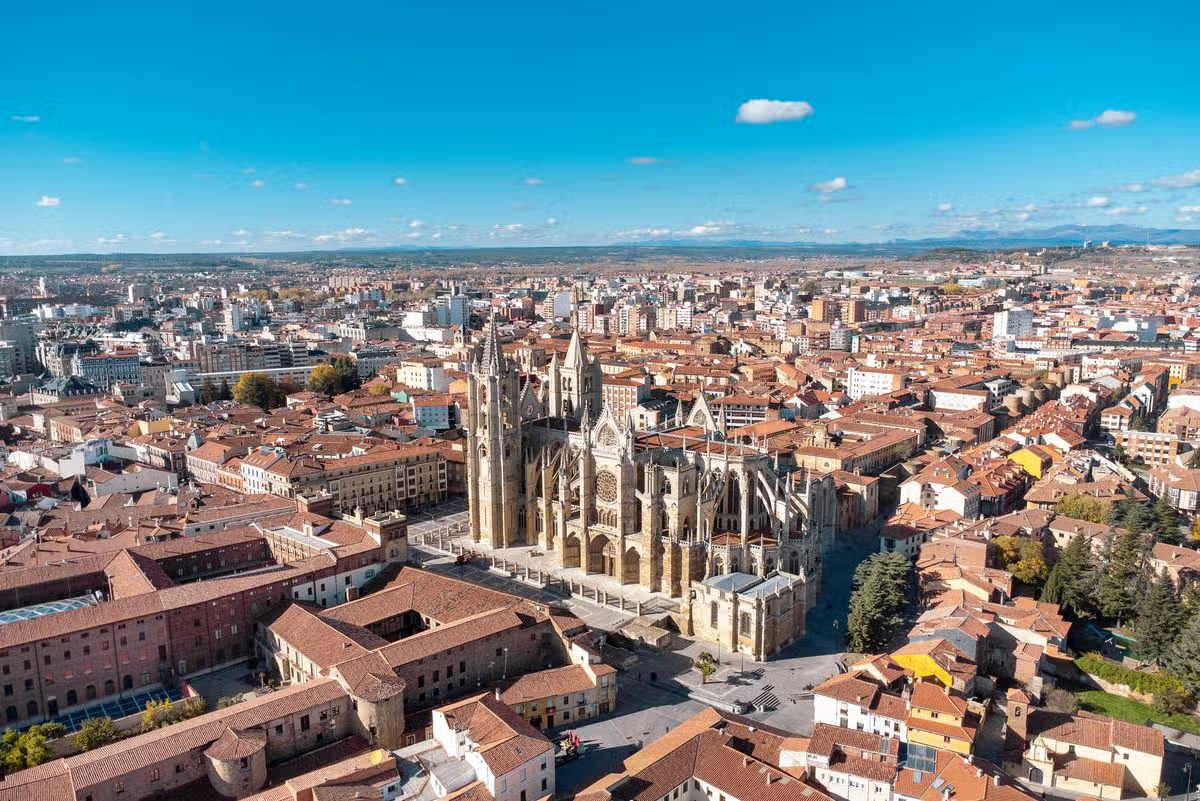
One UK spot made it onto the list and that is experiencing the 62-mile walk – St Cuthbert’s WayCredit: AlamyFor a European break, head to the the lesser crowded Leon in SpainCredit: AlamyOr explore the Veneto region in Italy which includes Venice, Lake Garda, Verona and PaduaCredit: Alamy
Another sunny spot on the list is Šibenik, in Croatia – a small Adriatic city with a number of vibrant festivals throughout the year as well as a white stone palace dating back to the 14th century.
Of course, Spain made it onto the list with Leon, in the north of the country.
Unlike more popular Spanish retreats, the medieval city of Leonbenefits from fewer visitors and crowds, but heaps of Gothic architecture and history – as well as 29C weather in September.
Though, if you wanted to head somewhere completely different to where you have been before, venture to Skanör and Falsterbo, in Sweden, also known as the Swedish Riviera.
These two towns are linked by a bridge and can easily be explored together
Make sure to look out for the colourful beach huts as well as take a dip in the calm, shallow waters.
Plenty of long-haul destinations were named on the list too, including Quebec in Canada .
Travel Reporter Cyann Fielding, who has previously visited, said: “When people ask me where I would recommend travelling to – which is a lot – I always instantly reply Quebec.
For a long-haul trip, Quebec in Canada featured on the list for its Canadian-European charmCredit: Alamy
Lonely Planets Best in Travel Destinations 2027
THESE are the best destinations to head to in 2027, according to Lonely Planet:
Quebec, Canada
Northern California Coast & its Redwoods, USA
Maryland, USA
Prince Edward Island, Canada
New Mexico, USA
The Veneto, Italy
Dessau, Germany
Skanör – Falsterbo, Sweden
Šibenik, Croatia
León, Spain
Montserrat, Caribbean
Bariloche and the lakes, Argentina
Granada, Nicaragua
Bocas del Toro, Panama
Oman
Rabat, Morocco
Tsavo East and West National Parks, Kenya
Dunedin & the Waitaki, New Zealand
The Tweed, Australia
New Caledonia, South Pacific
Okinawa, Japan
Chengdu, China
Gujarat, India
Danang, Vietnam
Fulidhoo, Maldives
“This charming French-Canadian city feels like stepping into a fairytale, even with its own castle on the hill – which is actually Chateau de Frontenac Hotel.
“The city is easily explored on foot and is a great base for exploring the wider Quebec region with waterfalls, dense forests and pretty towns.”
If it is white beaches you are after, Fulidhoo in the Maldives also featured on the list.
Fulidhoo is actually one of the Maldives’ non-resort islands, which means you won’t see commercialisation or tourist traps.
Instead, white sand beaches sit at the edge of the island boasting crystal clear waters with stingrays and nurse sharks.
Or for a different island, Montserrat, which according to Lonely Planet is “one of the Caribbean’s most overlooked islands, with emerald-green peaks, black-sand beaches, and a fascinating history shaped by volcanic fire”.
Or you could head to California in America and see the tallest trees in the worldCredit: AlamyAlways wanted to go on a safari? Well Kenya has the top spot according to Lonely PlanetCredit: Alamy
Fancy exploring somewhere in America? Then head to the Northern California Coast and see its Redwoods.
Coast Redwoods are the tallest trees in the world and along the Northern Californian Coast they grow in many different spots including Humboldt Redwoods and Jedediah State Parks.
Sticking to the forest theme, you could visit Monteverde’s cloud forest, in Costa Rica, where the trees are surrounded by a fairytale-like mist caused by warm winds from the Caribbean meeting the cooler air of the mountains.
Or for a safari, visit Tsavo East and West National Parks in Kenyawith massive savannahs where elephant herds roam freely and Yatta Plateau – the world’s longest lava flow.
When it comes to other great experiences across the globe, Lonely Planet recommends barhopping Miami’s South Beach hotels, where in addition to sunny, sandy beaches you will find the city’s iconic Art Deco hotels.
For something a little closer to home, in Italy, sailing the Aeolian Islands also made the list.
These little-known UNESCO-listed islands feature rugged coasts but also have crystal clear waters.
Or live out your Mamma Mia dream in Greece by diving into Poseidon’s underwater world with wrecks and hidden caves.
Lonely Planets Best in Travel Experiences 2027
THESE are Lonely Planet’s top experiences to do across the globe in 2027:
Walk St Cuthbert’s Way, Scottish Borders to Northumberland
Explore Killary Fjord, Co Galway, Ireland
Turn temporary keeper at Rose Island Lighthouse, Rhode Island, USA
Enjoy wine and fine-dine in Valle de Guadalupe, Mexico
Barhop Miami’s South Beach hotels, USA
Savour the Slow Road, Minnesota, USA
Road-trip through history on Route Napoléon, France
Sail the Aeolian Islands, Italy
Dive into Poseidon’s underwater world in the Aegean Sea, Greece
Go on a Galápagos expedition cruise, Ecuador
Dance tango at a Buenos Aires milonga, Argentina
Take a polar plunge, Antarctica
Marvel at Monteverde’s cloud forest, Costa Rica
The Museums of Abu Dhabi
Meet Jane Goodall’s chimpanzees, Tanzania
São Tomé and Príncipe’s deserted beaches
Immerse in art in the Red Centre, Australia
Experience Faʻa, Samoa
Embark on ocean adventures, French Polynesia
Glide on a longboat to orangutan territory, Sarawak, Malaysia
Ride the Darjeeling Himalayan Railway, India
Michinoku Trail, Japan
Follow a Foodie Trail, Taiwan
Be dazzled by Kazakhstan’s futuristic architecture, Astana
If you’re already dreaming about your next getaway, then you’re in luck, as the best places for 2027 have been named by Lonely Planet, and there’s a lesser-known Spanish city that warrants attention
This article contains affiliate links, we will receive a commission on any sales we generate from it. Learn more
A beautiful Spanish city has been named as the best place to visit in 2027, and its blissfully uncrowded (Image: Getty Images)
We’re all familiar with the Spanish hotspots of Madrid, Barcelona, Ibiza and Palma, but there’s a lesser-known destination worth putting on your radar. Often missed by tourists, Lonely Planet has hailed a Spanish city as the best place for 2027, with blissfully few crowds and free tapas under the Mediterranean sun.
It’s not too early to start thinking about your holiday plans for next year, and now just might be the best time, as Lonely Planet has released its ‘Best in Travel’ list, highlighting the top worldwide destinations to visit in 2027. Among their top 24, five underrated European spots made the list, including the beautiful city of León in Spain.
Sitting along the Bernesga River in northern Spain, León is brimming with whimsical architecture, a vibrant old quarter, and a welcoming free-tapas culture. Crowned as one of the best places to visit next year, Lonely Planet noted: “Located in northern Spain, off the traditional tourist radar, it is one of the country’s most evocative medieval cities, combining magnificent Gothic architecture, centuries of history and a lively contemporary spirit.”
Among its striking French-style Gothic landmarks is the majestic 13th-century León Cathedral, known as Pulchra Leonina, meaning ‘the Leonese beauty’ or ‘the House of Light’. It has more than 1,800 square meters of stained glass across 125 windows, along with intricate stone carvings and towering spires, leaving visitors in awe.
One traveller shared on TripAdvisor earlier this month: “This is an extraordinarily beautiful cathedral. The many stained glass windows create a unique ambience in the cathedral. It is an inspiring space for prayer. Take time to attend Mass so that you can just immerse in the beauty of the space.”
A second commented: “A real jewel in a city a little neglected by tourism. A Gothic marvel at the level of Reims Cathedral. And in addition to the splendid stained glass windows and an incredible atmosphere. The museum is also very rich. Worth the trip.” While one more exclaimed, “I think it’s the most spectacular cathedral I’ve ever seen. It’s worth paying to see.”
In the heart of the Spanish city sits the ancient Barrio Húmedo district, packed with more than 100 bars and a legendary free-tapas culture, where Leonese bars automatically serve a hearty free tapa, from croquetas and patatas bravas to stews, with every drink ordered, whether it’s a local wine or a small beer. The quarter comes alive with locals gathering for drinks and traditional Leonese cuisine, alongside a thriving nightlife scene.
Furthermore, the city is home to the Catholic church, the Basílica de San Isidoro, often referred to as the ‘Sistine Chapel of Romanesque art’, which is interestingly located on the site of an ancient Roman temple. The Casa Botines museum is another standout landmark with its fairy-tale design, and it houses a collection of Spanish art dating back to the 19th and 20th centuries.
Yet, there’s plenty to explore in León simply by wandering its narrow lanes and past medieval stone walls, with plenty of authentic espresso bars dotted around the city alongside trendy restaurants and cosy tapas bars serving up the best of Spanish cuisine. There are serene parks and gardens nestled along the river for gentle strolls and to soak up the sun during the warmer months, as well as outdoor terraces offering picturesque views over the unsung Spanish city.
Offering a closer insight into León, writer and traveller Mark Eveleigh told Lonely Planet: “By day, you’ll encounter a city with its roots firmly planted in the soil of northern Castilla, with its grand monuments, Catholic heritage and access to the Camino de Santiago. By night, León is taken over by a deep-into-the-night soundtrack of revelry that floods the narrow streets and plazas of the picturesque old quarter. Two cities in one.”
Do you have a travel story to share? Email webtravel@reachplc.com
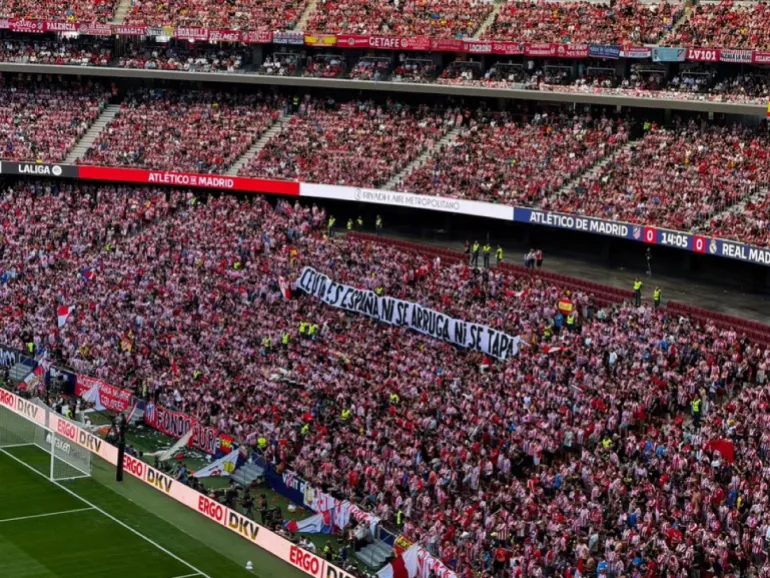
Madrid, Spain – Thirteen minutes into La Liga’s Madrid derby on Sunday, a banner was unfurled in the Metropolitano Stadium’s south stand stating: “Ceuta es Espana. Ni se arruga, ni se tapa.” (Ceuta is Spain. It is neither rolled up, nor covered.)
It was a reference to the controversy involving Real Madrid players Kylian Mbappe, Vinicius Junior and Ibrahima Konate, who in a previous football match against Elche had rolled-up shirts carrying a solidarity message linked to Ceuta, the Spanish enclave at the centre of growing political tensions between Spain and Morocco over the influx of migrants and refugees.
Recommended Stories
list of 4 itemsend of list
A record 72,000 migrants crossed from Morocco to Ceuta over the course of two days in late July, overwhelming local resources and creating a humanitarian crisis. The Spanish NGO Caminando Fronteras documented 141 deaths across both sides of the border in the immediate aftermath.
Mbappe and Konate have strong ties to the African continent. Konate was born and raised in Paris by parents who migrated from Mali, while France captain Mbappe grew up in Bondy, outside Paris, to parents who came from Cameroon and Algeria.
Mbappe said his gesture did not reflect a lack of support for Ceuta.
“I also wanted to think about all the people who are suffering, because in the end I am human and I don’t want to prioritise the suffering of one group over another,” he said.
He also said he wanted to acknowledge migrants who had suffered or lost their lives during the crisis.
Real Madrid later said it respected each player’s freedom to participate in the initiative. A day earlier, Barcelona had chosen not to wear the shirts before their La Liga game against Levante.
La Liga president Javier Tebas, meanwhile, criticised the three Real Madrid players and said he did not regard the campaign as political. David Aganzo, president of Spanish footballers’ union AFE, said players instead needed to be properly informed about what they were being asked to wear and why.
While the debate over Spanish football’s support for Ceuta followed Real into their derby against fierce rivals Atletico Madrid on Sunday, it also united supporters from both sides for two minutes as they joined in chants of “Ceuta no se vende, Ceuta se defiende” (Ceuta is not for sale, Ceuta must be defended) before the usual hostility of the derby resumed.
Mbappe and Vinicius were also the target of whistles from both sets of fans when Real’s starting XI was announced prior to kickoff.
Jorge Garcia, a 32-year-old Atletico Madrid supporter, believed they deserved the jeering.
Speaking to Al Jazeera after the match, Garcia termed the players’ move “disrespectful” to both Ceuta and Spain.
Fans hold a banner during the Atletico Madrid vs Real Madrid La Liga match at the Metropolitano Stadium in Madrid, Spain on Sunday, September 20, 2026 [Leyla Hamed/Al Jazeera]
The campaign was launched on September 11 by Asociacion Valenciana de Empresarios (AVE), a non-profit business association, which described the move as an expression of solidarity with Ceuta’s residents and businesses amid an influx of migrants and a message of “territorial and social cohesion in Spain”.
AVE is chaired by businessman Vicente Boluda, a former interim Real Madrid president whose maritime group also operates in Ceuta.
Spain coach Luis de la Fuente travelled to Ceuta with the World Cup trophy, declaring: “This is Spain, this is Ceuta.” Real Madrid president Florentino Perez later visited and said the trip had been organised weeks earlier and was not a response to the controversy involving his players.
Youssef Temsamani, a Spain-based Moroccan journalist, believes the players found themselves in a difficult position: wearing the shirt could be interpreted as taking a political position, but declining to do so could be portrayed as showing a lack of solidarity.
Temsamani said migrants should also form part of discussions about solidarity with Ceuta, and criticised descriptions of the crossings in parts of Spain’s political and media debate as an “invasion” or “occupation”.
Luhay Hamido, president of AD Ceuta football club, defended the right of individual players to make their own decisions and said he respected those who wore it and those who did not.
“We cannot force anyone to identify with a cause they do not understand,” he told Al Jazeera, suggesting footballers are sometimes simply told to put on a shirt in the tunnel without having received a full explanation.
The scale of the crisis that prompted the solidarity campaign remains difficult to quantify precisely. Spain’s Interior Ministry put the number of people who irregularly crossed into Ceuta on July 30 and 31 at 72,000, saying more than 70,000 initially returned to Morocco.
Seven weeks later, the government estimated that 9,000 to 10,000 migrants remained in Ceuta. RTVE reported on September 20 that around 8,300 people were being accommodated in different facilities while more than 4,000 remained on the streets, reflecting discrepancies between estimates compiled at different stages of the crisis. The new temporary centre at the port reached its capacity of 1,700 people within hours of opening.
Hamido said the crisis had also directly affected AD Ceuta, with several advanced signings collapsing because players and their families were worried by what they had seen on television. The club began paying for prospective signings to visit the city before making their decision.
At the same time, he described the support from Spanish football as “pure fuel for us”, giving Ceuta “strength, hope and energy”, and said AD Ceuta could act as an “amplifier” so the city was not forgotten.
Away from the stadiums and political arguments, football is also played in the neighbourhoods in Ceuta, where migrants had gathered in the largest numbers.
There, children could be seen playing barefoot in the street, marking out makeshift goals against walls and turning whatever space they could find into a football pitch. Some wore shirts bearing the names of Yamal, Hakimi or Mbappe – players whose own family histories stretch across borders.
For Hamido, ordinary people caught in the crisis should not be castigated.
“[These] people, in the end, are not to blame,” he told Al Jazeera.
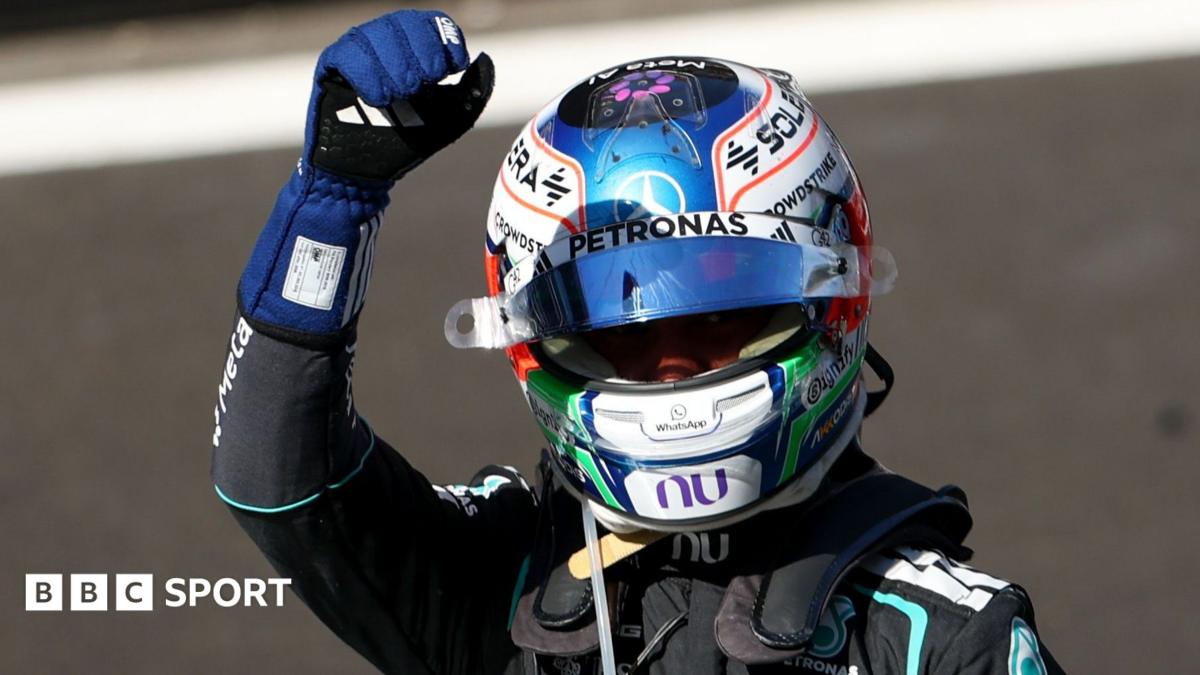
Mercedes driver Kimi Antonelli won the Spanish Grand Prix after McLaren’s Lando Norris lost out because of the bad timing of a virtual safety car.
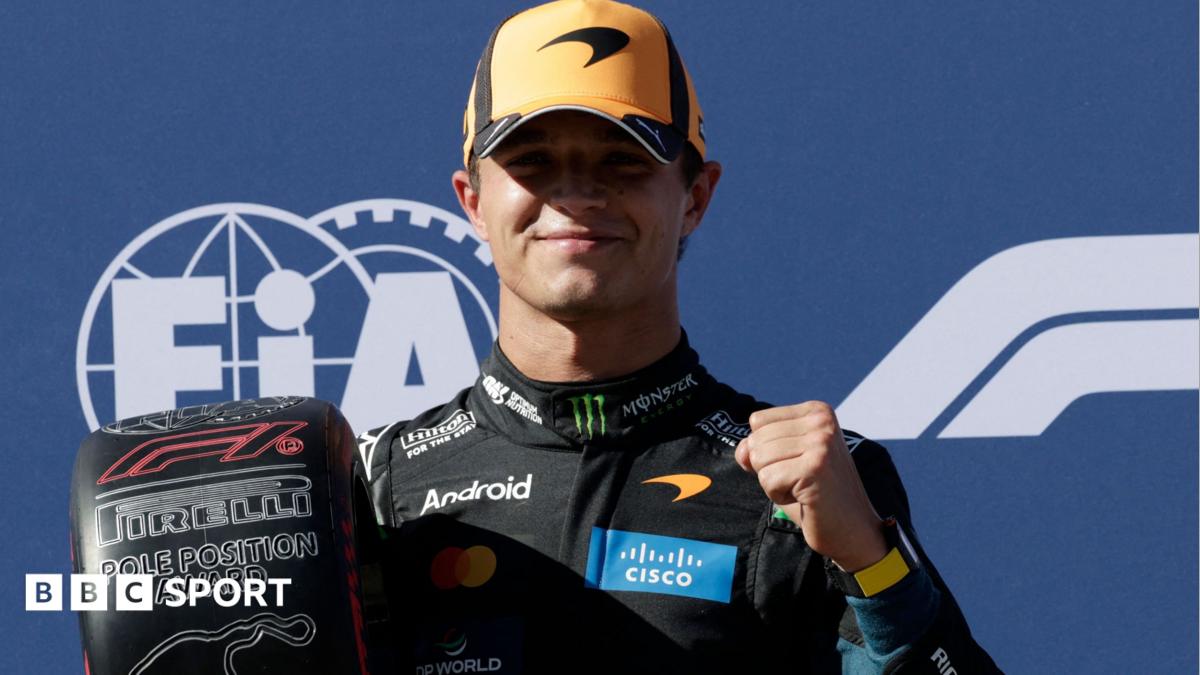
Norris was leading comfortably from pole position when the VSC was called on lap 15. The timing was terrible for the world champion – he had already passed the pit exit when the VSC was called.
That meant Antonelli and Verstappen were able to pit under the VSC, saving time, while the caution period ended before Norris could make it around to the pits again.
He did then come in but, to make matters worse, the stop was slow and he rejoined in fifth place.
Norris was able to recover only to third around this track where overtaking is next to impossible.
Antonelli’s eighth win in 14 races this year puts an even tighter stranglehold on the championship for the Italian.
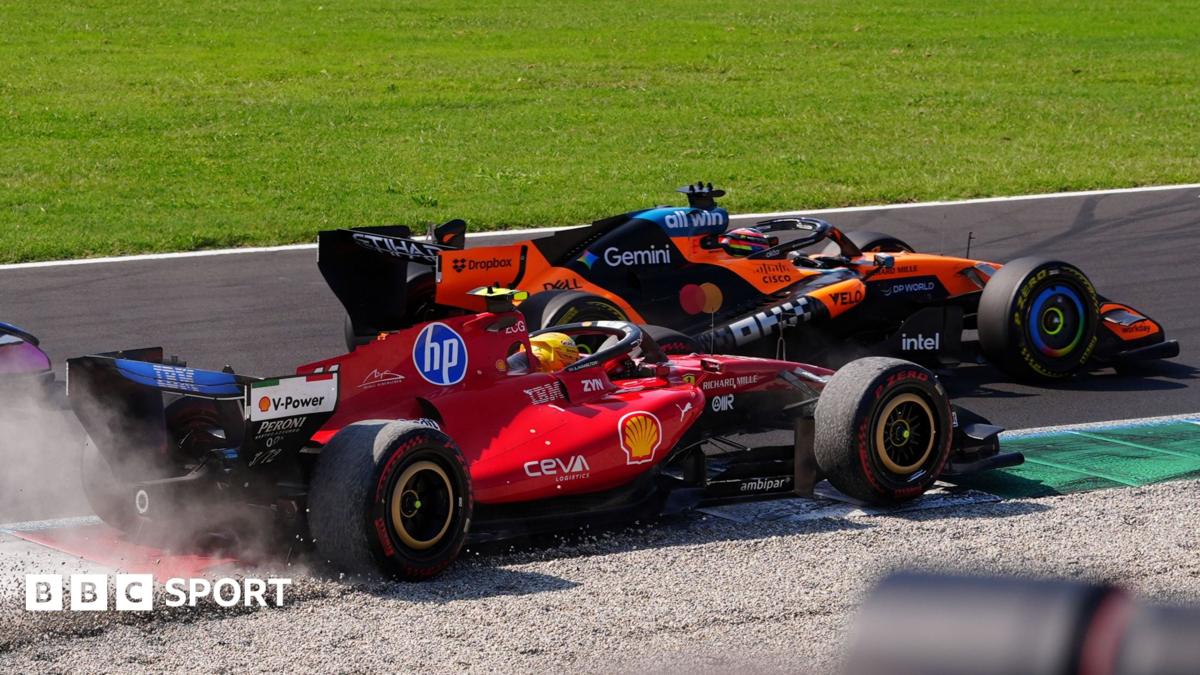
He is now 81 points ahead of team-mate George Russell, who finished fifth after a difficult race on a confusing strategy, and 101 clear of Ferrari’s Lewis Hamilton, who retired early on with brake failure.
The key stories of the maiden race on the new Madring were:
Norris’ terrible luck with the VSC depriving him of a likely third victory this year after a brilliant pole on Saturday
Antonelli’s fortune in a season that is surrendering to him as well as him grabbing it by the throat with his performances
The difficulty of overtaking on a new track designed from a clean sheet of paper, yet without obvious overtaking places
Norris knew that holding on to the lead would be tough from pole but he robustly defended from Antonelli into the first corner.
The Mercedes driver cut the chicanes at Turns One and Two, and again at Turns Five and Six, each time getting into the lead, each time having to give it back.
After that, Norris set about building a lead and looked to be in control of the race as he extended his lead progressively, moving 5.6 seconds clear 10 laps in, and 6.2 when Lance Stroll’s Aston Martin stopped at Turn 20 with brake failure.
The VSC was called, but Norris had already reached the pit straight, while Antonelli and Red Bull’s Max Verstappen had not and could come in.
Norris came in the next time around, but the VSC ended a couple of corners before he reached the entry to the pits, allowing the cars still on track to get back up to racing speed – a stop under a safety car saves a driver about 10 seconds over one under green-flag conditions.
To make matters worse, McLaren’s mechanics had trouble with both the right-hand side wheels, and the stop took seven seconds rather than the usual two.
Norris came out in fifth place, 6.3secs behind Russell, and his hopes of winning were gone.
Laura Whitmore and Katherine Ryan wasted no time in letting loose on the dancefloor in Spain over the weekendCredit: Instagram/@thewhitmoreAnd there was plenty to celebrate, as they attended Emily Atack’s star-studded weddingCredit: Instagram/@thewhitmore
Mum-of-two Laura, 41, looked stunning in a low-cut blue and white floral dress with a leg split, as she wore shades on the dancefloor and sipped from a bottle.
Katherine, who is proud mum to four kids, joined her friend for a dance, mimicking her with her own pair of shades, despite the late hour.
Sign up for the Showbiz newsletter
Thank you!
The comedian, 43, looked sensational in an off-shoulder gown in various splashes of pink.
Laura shared a video of them enjoying their night off from motherhood, captioning it: “Moms out!”
Laura looked stunning in a low-cut blue and white floral dress with a leg split, as she donned shadesCredit: Instagram/@thewhitmoreMum-of-two Laura, 41, hit the dancefloor and sipped from a bottleCredit: Instagram/@thewhitmoreRivals star Emily, 36, said “I do” again, just three weeks after she tied the knot at a local church in BedfordshireCredit: SplashEmily and scientist husband Alistair Garner exchanged vows in a private ceremony in MojacarCredit: Splash
Laura’s Love Island narrator husband Iain Stirling was also in attendance, as was Katherine’s partner Bobby Kootstra.
Rivals star Emily, 36, said “I do” again, just three weeks after she tied the knot at a local church in Bedfordshire.
The latest sun-drenched fiesta featured a 200-strong guestlist, including David Tennant, Alex Hassell, Rufus Jones, Bella Maclean and Victoria Smurfit from Rivals, as well as the show’s writer Dominic Treadwell-Collins.
Other stars included American actor Stanley Tucci and actress wife Felicity Blunt, as well as Emily’s old pal Leigh Francis AKAKeith Lemon.
The wedding party also included her pop star father, Keith Atack and her actress-comedian mother, Kate Robbins, as well as siblings Martha and George and other family members.
Guests arrived just after 4pm and were handed white parasols to protect them from the afternoon sun.
Emily kept the anxious groom waiting not arriving until 5.35pm, pulling up with her chief bridesmaid in a red Cadillac convertible and walked down the aisle by dad Keith.
The couple – who welcomed baby Barney in June 2024 and got engaged in July 2025 – originally wed at a romantic church service before a party in the garden of their Bedfordshire home where guests were treated to a McDonald’s from a personalised van parked outside.
Writing on Instagram after downing champagne, a thrilled Emily joked: “Christ, we have fun don’t we. I can’t believe we get to do all that again in a few weeks time.”
The party moved to Mojácar in the Costa Almería, a sentimental spot where the TV fave spent childhood holidays at her musician dad Keith’s old summer pad.
The town’s iconic Mirador viewpoint and two top eateries are being completely shut down for the exclusive star-studded bash.
The Inbetweenersstar said earlier this year that her second wedding would be a “fat, f***-off party”.
The world champion said: “I’m shocked. I’m a little bit surprised to be here. It was probably one of the best laps I’ve done ever in my career.
“One of those laps when everything came together. I had a good idea of what I wanted to do, it was whether it came together but my brain let me do it almost perfect. It’s one of those laps when you look at the time and go: ‘Oh, that was pretty good.”
The session had started with predictions of a crash-fest, after drivers had been warning about the high-risk nature of the new Madring street circuit, with tricky entries to corners and walls coming back at the drivers on the exits.
Two red flags during final practice had led some teams to have private sweepstakes as to how many stoppages there would be in qualifying, but the session ran cleanly, with no incidents.
Pole looked to be a battle between Antonelli and the Ferraris, with Verstappen perhaps in the mix.
In the end, the Ferraris faded, as they so often have this year when it really matters, and Norris rose to the front with a breathtaking performance.
“The adrenaline was high on the last lap,” he said. “You have to relax and let it all flow.
“It’s easy to get tense around here. There’s a lot of walls that come at you pretty quickly. I have been feeling pretty good, I just wasn’t relaxed.
“I was pretty much perfect apart from the last corner, where I thought I was in the wall. Everything I wanted to achieve I achieved and it’s one of those moments when I was in that flow state.”
Hamilton, who had crashed at the final corner in practice and missed the final half of the session, did improve on his last lap, but only by 0.06secs and it was not enough to prevent him falling backwards.
He edged Leclerc by just 0.006secs as Ferrari rued yet another tantalising chance slipping through their fingers.
Hamilton said: “I felt pretty awesome in Q3 run one, and then just didn’t have any more grip or power in the last one.”
F1 faces a fresh challenge this weekend at the first Spanish Grand at the new Madring, a hybrid street circuit built on the Ifema complex near the city’s international airport.
Hamilton said: “It’s a massively challenging circuit. Of all the new tracks that I’ve gone to, this one, maybe Saudi, are the two closest in terms of how difficult it was to get on top of the car and find the right lines and such.”
Mercedes driver George Russell said: “It’s a crazy circuit, I would put it. Arguably one of the most risky circuits of the whole calendar.
“Because you have real high-speed corners, sort of Jeddah-esque, the walls are very close, so there’s no margin for error, but then you have other corners… where you’re coming from a high speed into a slow braking zone, you’re braking and turning at the same time, so locking tyres are going to be easy and if you lock up you’ll be straight in the wall.
“So, excited to try that out, I think it’s going to be really challenging for us as drivers, the race is going to be challenging to overtake, so on the whole it’s not an easy one.”
Russell heads into the race 66 points behind team-mate Kimi Antonelli after the Italian’s landmark victory in Monza from 19th on the grid.
The Briton acknowledged that his title hopes with nine or 10 races left, amid uncertainty about the end of the season, were fading fast.
“I would definitely need some luck and I need some good performances,” Russell said. “It’s not really something I’m thinking about, because he’s performing better than me, so he deserves to be leading the championship.
“There’s still a long way to go, but he’s yet to have a bad weekend in terms of performance.
“So he’s performing exceptionally well, my performances are better, but if I want to win this championship, I’m going to need some luck on the way. But it’s not something I’m focused on. I’m focused on driving faster and just finding more performance.”
Antonelli said: “I don’t really want to try thinking about the championship. I think Monza was the proof that I wasn’t driving thinking about, or worrying about the championship. I was just driving to win, to do my best. So that’s the mindset.”
The Italian said his win in Monza was “so far the best day of my life and definitely one I will remember forever”.
He said a day karting with Mercedes on Monday helped him move on from the excitement of the day before.
“After Monza, that night, that day overall, I was very excited. But then going karting on Monday helped me to go back to earth, just go back to the ground.
“It was a good day, good fun day with the team. It was also a way to remind myself where I came from, all the journey that was done.
“And then about pressure, I try to embrace it as much as possible. And I try to see it as a positive thing and try to see it as an opportunity too. That’s also what is helping me to stay calm under difficult situations.”
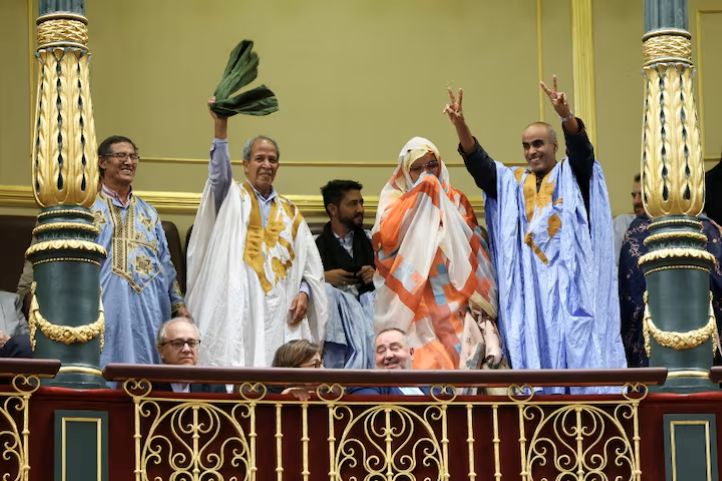
MADRID: Spain’s lower house voted on Thursday to grant citizenship to Sahrawis born when Madrid administered the North African territory of Western Sahara as a colony, a move that could inflame delicate relations with Morocco.
The legislation, which a statement from parliament said was approved with 168 votes in favor, 31 against and 145 abstentions, would also allow descendants of those granted citizenship to acquire it.
Some 70,000 to 110,000 Sahrawis could be eligible for Spanish citizenship, according to local media.
Spain’s ruling Socialist Party and its junior left-wing partner Sumar, which filed the initiative, were among those who supported the bill, while the opposition conservative People’s Party abstained and far-right Vox voted against it.
“With the adoption of this legislation, we are restoring – and I emphasise, restoring – the Spanish national identity card to those Sahrawis who once held it and from whom this state took it away,” said Tesh Sidi of the leftist Sumar coalition, the first woman of Sahrawi origin to serve in parliament.
Tensions with Morocco
Tensions have grown between Spain and Morocco following the mass arrival of at least 70,000 migrants in Spain’s North African enclave of Ceuta in July.
Spain controlled Western Sahara under various administrative arrangements from 1884 until 1976. Morocco claims sovereignty over Western Sahara and began asserting control over the territory after Spanish rule ended.
The Algerian-backed Polisario Front independence movement seeks recognition of an independent state called the Sahrawi Arab Democratic Republic.
Many Sahrawis live in refugee camps in Tindouf, Algeria, or elsewhere abroad, while others remain in Western Sahara. Spain had supported a referendum in the territory — in line with United Nations resolutions — until Sanchez’s government reversed course in 2022 and backed Morocco’s position. Tensions eased somewhat after that shift, with Madrid describing Rabat’s autonomy proposal for Western Sahara as “serious, credible and realistic”.
TO ESCAPE the chaos of summer and enjoy the delights of quieter hotels, lots of us like to book holidays between September and November.
Those three months have lots of names like the ‘magic period’ or ‘shoulder season‘ and taking a break then can save you some serious cash.
Two coastlines in Spain came up trumps for cheap autumn holidaysCredit: AlamyThe beautiful Albanian coastline also came in as being very affordable for BritsCredit: Alamy
Whether you want a quick trip to Spain or a holiday to African resorts for winter sun, there are some great deals out there, and lastminute.com have helped us find some of the best.
They told us: “Once the peak summer period has passed, travellers can often find significantly better value on flights and holidays, while still enjoying warm weather and everything a destination has to offer, proving that it is better to leave it until the last minute.”
Sign up for the Travel newsletter
Thank you!
The cheapest spot is Costa Dorada in Spain where on average holidays cost £79pppn.
The Costa Dorada is a region along the Mediterranean coastline and includes popular spots like Tarragona and Salou.
What’s even better is that you can definitely still spend time on the beaches too as in October there are average daytime temperatures of around 22C.
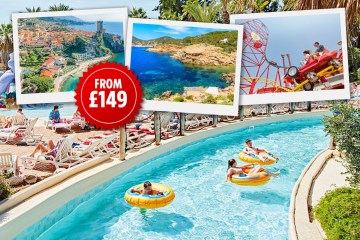
It’s also home to the enormous PortAventura World which is one of Europe’s biggest theme parks – and is home to Europe’s tallest and fastest accelerator coaster Red Force in Ferrari Land.
It’s a beach front spot with rooms that have views of the coast along with a restaurant, bar, swimmingpool, sun terrace and spa.
A four-night stay for two with return flights to London Luton in October starts from £248pp – or £62pppn.
If you want to add half-board to have breakfast and dinner included it’s an extra £26pp.
Hotel Best Negresco in Spain costs as little as £62per night with lastminute.comCredit: Unknown
The second cheapest destination for autumn is Sousse in Tunisia.
The coastal resort city is known for having bright blue waters and plenty of beach clubs.
Visitors can explore the Medina of Sousse – a historic walled quarter that is an open-air market where you can pick up ceramics, leather bags, shoes and jewellery.
With lastminute.com you can book to stay at the Hotel Royal Jinene Beach & Spa from £66pn – and it includes return flights and half board.
The hotel has an indoor pool, outdoor pool with a big slide, bar, restaurant and coffee house as well as activities like tennis and mini golf.
There’s also a spa and live music nights and a short walk away is the sandy Plage El Menchia.
A four-night stay for two people with half board and return flights to London Southend in October is £264pp – or £66pppn.
It’s back to Spain for the third cheapest destination in autumn which is the Costa Brava where on average a holiday is £87pppn – although there are cheaper deals to be found.
The coastal region in northeastern Spain has lots of beaches with cliff backdrops and coves.
Sousse in Tunisia is the second most affordable spot according to lastminute.comCredit: TripAdvisor Hotel Tahití Playa & Suites 4Sup in the Costa Brava is a few steps away from the beachCredit: lastminute
The Costa Brava has 300 days of sunshine every year and is mild throughout September and October.
Sarandë is known as the the ‘city’ of the Riviera.
It’s surrounded by the blue waters of the Ionian Sea with seafood restaurants and cheap beer, with pints as little as £1.30.
Here, you can book a stay in the four-star Bougainville Bay Hotel which is considered a gallery itself full of sculptures, paintings and mosaics.
The hotel is next to the sea and you can enjoy the views from its beautiful infinity pool.
Bougainville Bay Hotel has an infinity pool looking over the Albanian coastlineCredit: Lastminute Stay at the Yocca Hotel Residence in Tunisia – it has an outdoor pool and pretty gardenCredit: Lastminute
It also has four bars, two restaurants and four swimming pools.
In October, temperatures in the daytime sit around 21C – although they do drop in the evening.
A four-night stay for two including breakfast in October at the Bougainville Bay Hotel including return flights to London Stansted is £229pp – or £57.25pppn.
Coming in fifth position for being one of the cheapest spots for a holiday in autumn is Hammamet.
The coastal resort town in northeastern Tunisia boasts golden beaches and there’s plenty of historical sites to explore if you fancy a wander.
Hammamet is a great spot for anyone wanting a dose of sunshine and heat as in October temperatures can be as high as 26C.
For Brits it’s ideal as it’s as little as three and a half hours away from the UK.
The Yocca Hotel Residence is slightly outside of the city with spacious rooms some of which have balconies, swimming pool, garden, terrace and restaurant.
A six-night stay for two at the Yocca Hotel Residence including return flights from London Gatwick is £308pp – or £51.34pppn.
















![Fans hold a banner during the Atletico Madrid vs Real Madrid match in the Spanish La Liga at the Metropolitano Stadium in Madrid on Sunday, September 20, 2026 [Leyla Hamed/Al Jazeera]](https://i0.wp.com/occasionaldigest.com/wp-content/uploads/2026/09/Ceuta-banner-Atletico-Madrid-vs-Real-Madrid-Leyla-Hamed-1789993641.jpeg?w=640&ssl=1)