Ahead of a two-week holiday to the Canary Islands, one Brit arrived at the airport only to be told that his passport was invalid due to a travel rule – even though it was in date

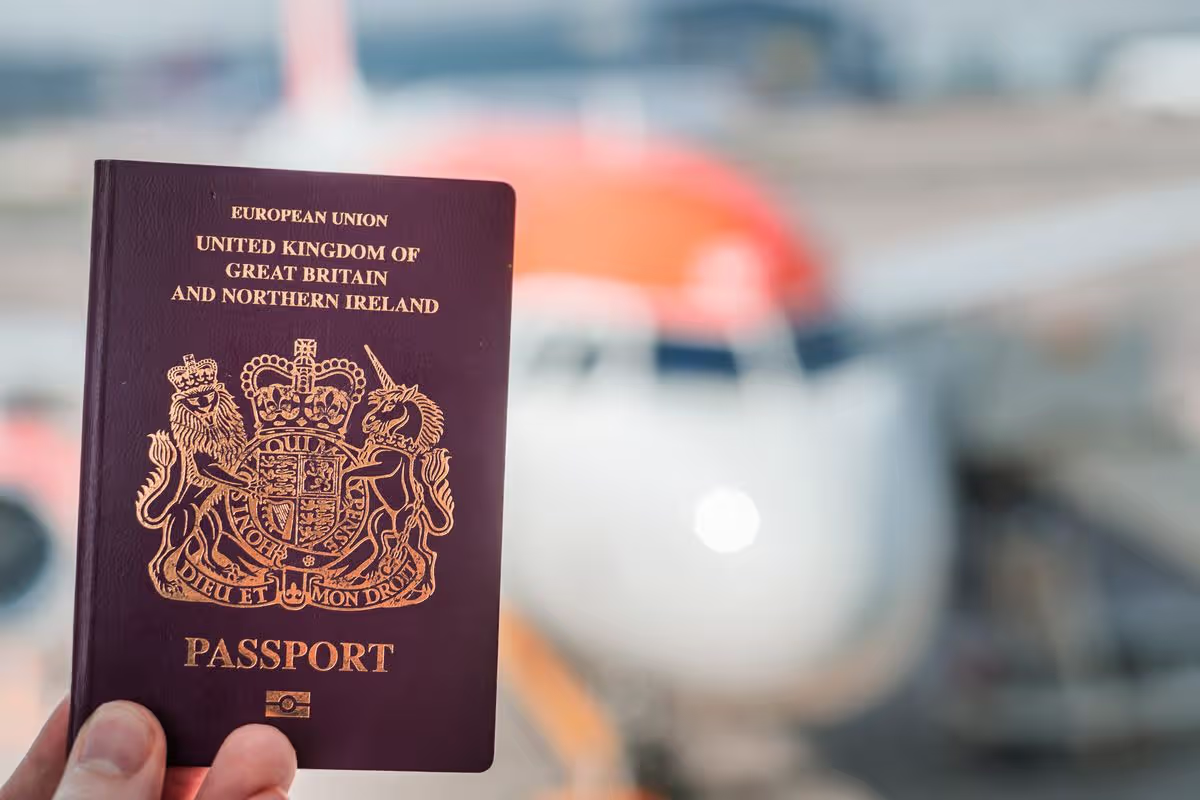
A British holidaymaker was caught out by a passport rule at the airport(Image: Handout)
A Brit was caught out by a common passport mistake and turned away at the airport, leaving their holiday plans in tatters.
Terry Winter, 56, from Oxford, had booked a two-week holiday to Tenerife with his wife, Molly Winter, 62, months in advance and was eager to ensure everything was set in place as it was his first time going abroad since 2018. Their passports were in date, they had a pre-booked airport hotel the night before their early morning flight, and had even found somewhere to go for dinner – everything seemed to be in order. Or so they thought.
On the morning of Friday, 12 June, they arrived at Birmingham Airport and went to check in their bags with easyJet, having already secured their boarding passes online. Yet, when Terry scanned his passport, an error message popped up.
“I put my suitcase on the check-in to get my tag, and that’s when the warning sign came up through easyJet”, Terry exclusively told the Mirror. He waited for assistance from a member of staff and was informed, ‘Your passport is not valid.’
While Terry’s passport had not expired, it had been issued more than 10 years earlier, meaning it did not meet EU entry requirements. “I didn’t know about this rule. I was shocked.”
Under post-Brexit travel regulations, all UK passports must have been issued less than 10 years prior to the date of arrival when visiting most European countries. Terry added: “There was nothing in my knowledge about this rule.
“There were two other people at the airport, and this was happening exactly at the same time. So this isn’t just a one-off thing.”
Just last week, a mum of three was left unable to board her easyJet flight to Greece with her family, due to the same passport mistake. She also only found out at the airport that her passport was not valid and had to fork out almost £700 in additional fees, while claiming that another holidaymaker was also turned away for the same reason.
Terry said he was surprised he hadn’t been warned about the passport rule before getting to the airport, having booked the holiday in January this year and entered his passport details on the easyJet website.
“They accepted the booking, didn’t tell me there wasn’t anything wrong at the time, and then three weeks before the flight, I had to put all my passport details in again to check in. It didn’t flag anything again, and my boarding passes were downloaded,” Terry remarked.
Terry said he asked an easyJet staff member at the airport, “How often does this happen?”, to which they reportedly replied: “It happens daily with a lot of people.” Terry added: “He said it will be happening all throughout the country.”
Having been left “frazzled” at the airport, Terry had no option but to urgently book an appointment through His Majesty’s Passport Office to obtain a new passport using the one-day premium service. His wife, whose passport was valid, chose to stay in the UK with him for extra support.
While there were no suitable appointments available in London, due to it being the weekend, Terry managed to secure a 9.10am slot for Monday (15 June) in Peterborough.
He and his wife travelled up to Peterborough from Oxford the night before, booked a hotel, and on Monday morning went to the passport appointment. Thankfully, after a few hours, Terry was issued a new passport, and he swiftly rebooked flights to Tenerife, departing on Tuesday, 16 June.
While he commented, “I’m just laughing the whole thing off”, Terry said he has lost out on “almost £1,000” in additional costs for his first trip abroad in eight years. He explained that this included around £40 in extra fuel, £50 for the Peterborough hotel, just under £100 for another night at the airport hotel, around £400 for two people flying to Tenerife one-way, and £239.50 for his new passport.
He added that he’s lost around “£400 on the flights” he wasn’t able to board originally, and said: “It’s getting close to nearly £1,000, I’ve been inconvenienced by.”
Terry also claimed that the day after his initial flight, on Saturday 13 June, he was sent a generic email reminder from easyJet that warned passengers: “Please check your travel documents before you fly.” In response, he said, “Well, that’s pointless. The day after, you’ve already lost your flight.”
A spokesperson for easyJet told the Mirror: “Unfortunately, Mr Winter was unable to fly as his passport did not meet passport validity rules. We remind customers during booking, check-in and by email before they travel to ensure they are aware of the travel documentation requirements for their trip, and it is customers’ responsibility to ensure they have valid documentation for travel.”
EasyJet has a dedicated page on its website that warns passengers about passport rules and requirements, including for travel to the EU. As part of these warnings, it explains: “Please check your passport’s expiry and issue date before you travel. If you’re a UK passport holder travelling to the EU (except Ireland), or Iceland, Liechtenstein, Norway, Andorra, Monaco, San Marino, the Vatican City or Switzerland, your passport will need to meet the following criteria:
- It must be valid for at least three months after the day you plan to depart from the EU or above countries*
- It must be no more than 10 years’ old on the date of travel to the EU or above countries.
“Visit the UK government’s advice page for more information.
“Citizens of the European Union, European Economic Area and Switzerland may travel within Europe using a valid EU/EEA/Swiss National Identity Card or Passport Card.”
To renew or replace your passport, online or at the HM Passport Office, visit the government website.
Do you have a travel story to share? Email webtravel@reachplc.com