




South Korea

North Korea keeping Iran at arm’s length, reports Seoul | US-Israel war on Iran News

Seoul says Pyongyang has not been supplying Iran with weapons in the hopes of being able to reopen diplomatic dialogue with the US.

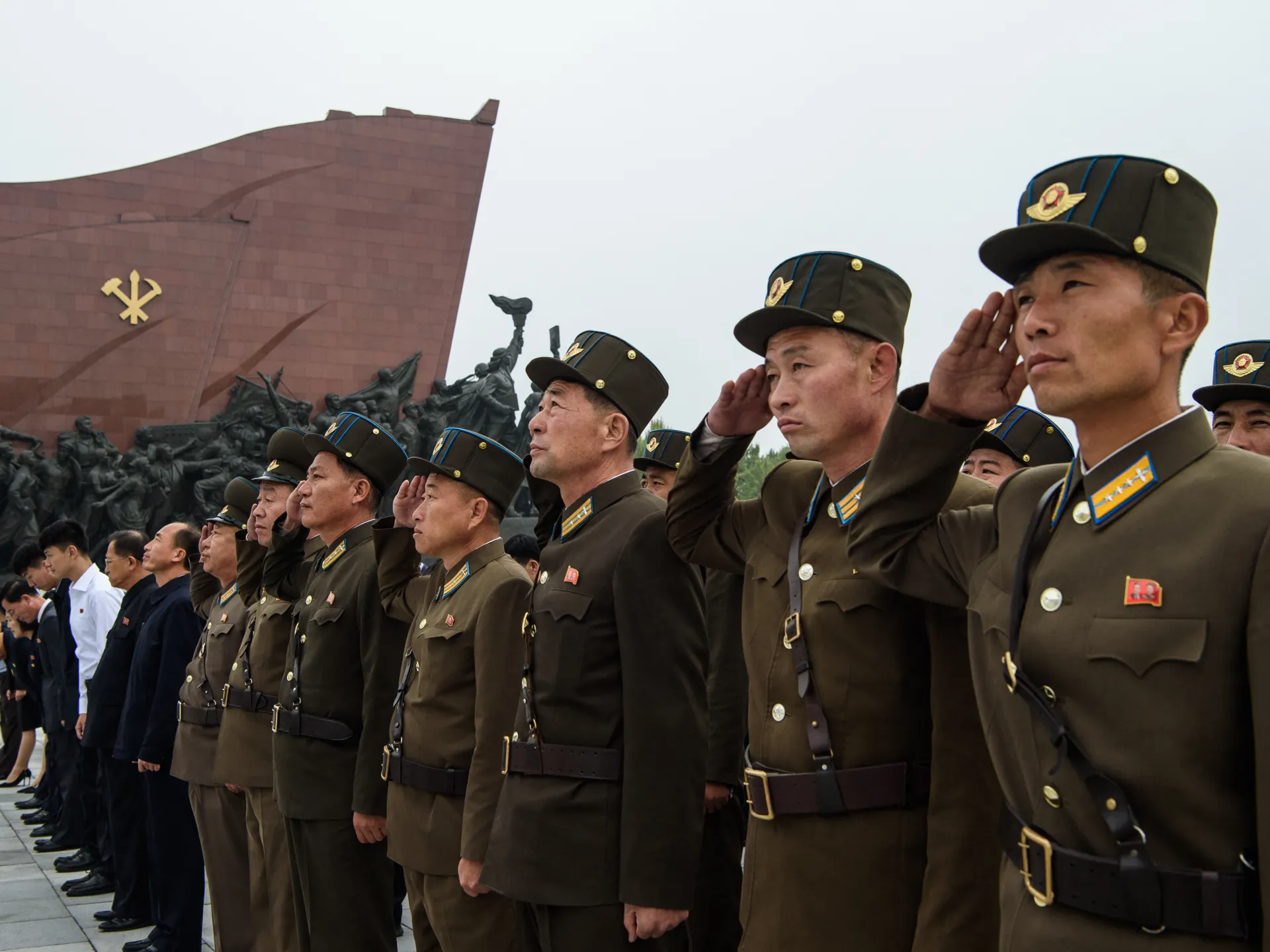
North Korea appears to be distancing itself from longtime partner Iran in the hopes of forming a new relationship with the United States, South Korean intelligence believes.

Seoul’s National Intelligence Service (NIS) sees no signs that North Korea has sent weapons or supplies to Tehran since the US-Israel war on Iran began at the end of February, lawmaker Park Sun-won, who attended a closed-door briefing held by the NIS, said on Sunday.

Recommended Stories

list of 3 itemsend of list

While Iran’s other allies China and Russia have frequently issued statements on the US-Israel war on Iran, North Korea’s Foreign Ministry has only issued two toned-down statements so far, said the NIS.

While Pyongyang did condemn the US and Israeli attacks on Iran as illegal, it did not issue public condolences after Supreme Leader Ayatollah Ali Khamenei’s death or send a congratulatory message when Khamenei’s son, Mojtaba Khamenei, succeeded him.

The spy agency said Pyongyang is likely adopting this cautious approach to position it for a new diplomatic chapter with the US once the Middle East conflict subsides, said Park.

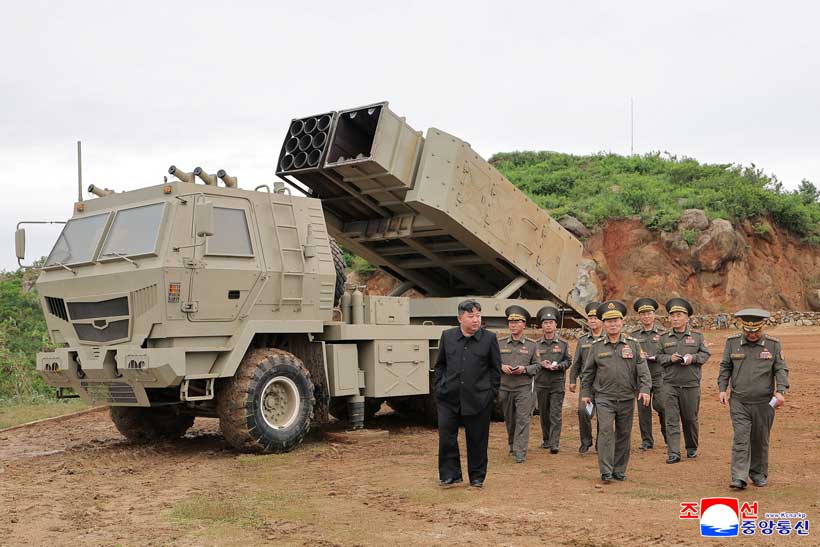
The NIS also told lawmakers that it now believes Supreme Leader Kim Jong Un is grooming his teenage daughter as his successor, citing a recent public display of her driving a tank.

The NIS said the imagery was intended to highlight the supposed military aptitude of the youngster, who is believed to be around 13 and named Ju Ae.

Such scenes are intended to pay “homage” to Kim’s own public military appearances during the early 2010s, when he was being prepared to succeed his father, Park said.

Kim’s powerful sister, Kim Yo Jong, was earlier thought to be a leading candidate to succeed her brother.

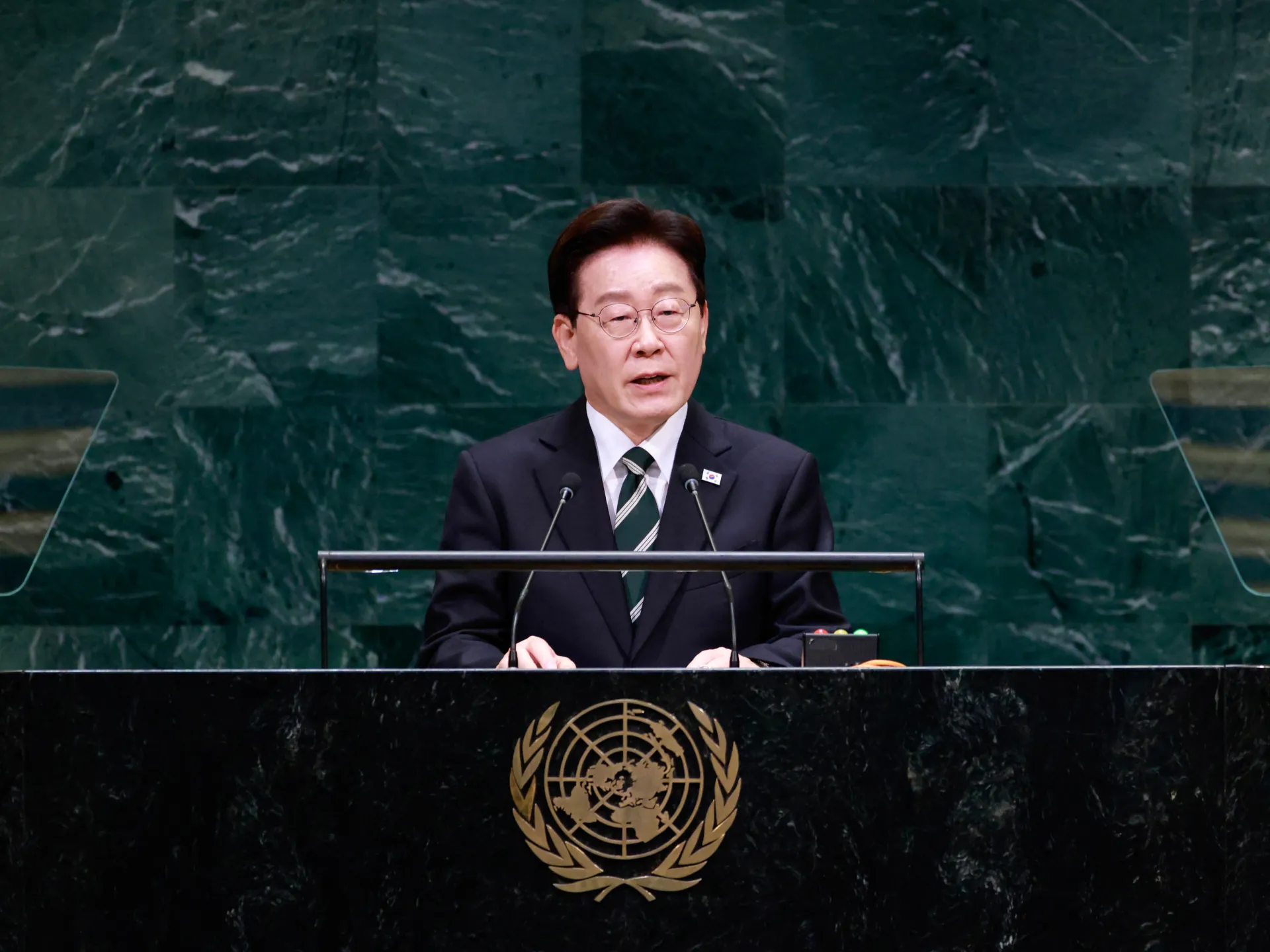
On Monday, she was in North Korean headlines as she welcomed an apology issued by South Korean President Lee Jae Myung on Sunday over a January drone incursion.

“The ROK [Republic of Korea] president personally expressed regret and talked about a measure for preventing recurrence. Our government appreciated it as very fortunate and wise behaviour for its own sake,” Kim Yo Jong said in a statement carried by the official Korean Central News Agency.

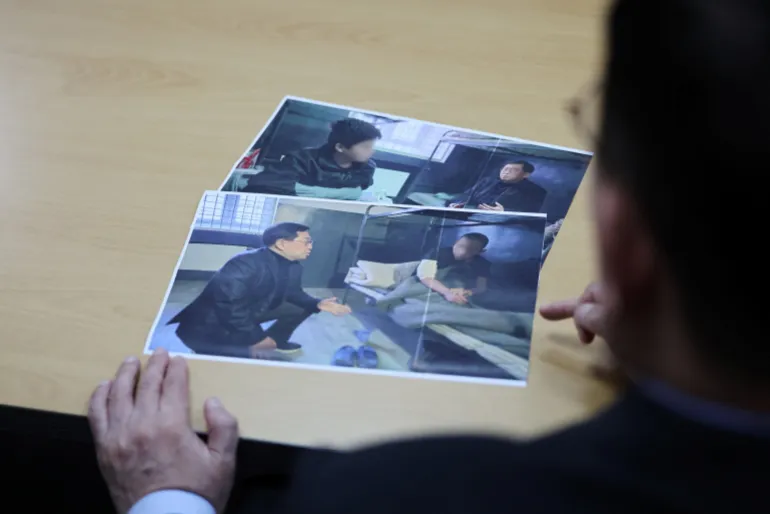
Seoul initially denied any official role in the January drone incursion, with authorities suggesting it was the work of civilians, but Lee said a probe had revealed government officials had been involved.

“We express regret to the North over the unnecessary military tensions caused by the irresponsible and reckless actions of some individuals,” Lee said.

Lee has sought to repair ties with North Korea since taking office last year, criticising his predecessor for allegedly sending drones to scatter propaganda over Pyongyang.

His repeated overtures, however, have gone unanswered by the North until now.

Lee’s expression of regret follows Kim’s labelling of Seoul as the “most hostile state” in a policy address in March in which he vowed to “thoroughly reject and disregard it”.

Source link

US East Asian allies in legal quandary as Trump seeks help in the Middle East | US-Israel war on Iran News

South Korea and Japan are facing uncomfortable questions about their mutual defensive obligations as the United States seeks support from its allies in the war on Iran, now nearly three weeks in and escalating by the day.

Earlier this week, US President Donald Trump urged the United Kingdom, China, France, Japan, and South Korea to send warships to the Strait of Hormuz, which has remained de facto closed since Washington launched its war with ally Israel on Tehran on March 28.

Recommended Stories

list of 4 itemsend of list

The president backpedalled on his position on Tuesday – declaring on social media that “we no longer ‘need,’ or desire, the NATO Countries’ assistance – WE NEVER DID! Likewise, Japan, Australia, or South Korea” – but observers say US allies may not yet be out of the hot seat.

Trump is expected to raise the issue of warships when he meets with Japanese Prime Minister Sanae Takaichi at the White House on Thursday, according to Al Jazeera correspondent Jack Barton.

“People do expect him to put pressure on Takaichi again to send warships to the Strait of Hormuz. It makes sense in a way because Japan is so dependent on energy supplies” from the Middle East, Barton said on Thursday from Seoul.

Japan’s Maritime Self-Defence Force is one of the largest and most advanced navies in the world, he said, which makes it an attractive target for the Trump Administration.

Although Japan and the US share a mutual defence, Tokyo’s pacifist constitution places restrictions on when it can deploy its Self-Defense Force. Legal scenarios include when it is attacked or facing a “survival-threatening” scenario, as well as acting in “collective self-defence” of its allies.

Takaichi told legislators this week that her government is considering what can legally be done to protect Japanese ships and interests, according to Japanese public broadcaster NHK World, although deployment is still a hypothetical scenario.

Japan relies heavily on Middle Eastern oil imports, of which 70 percent pass through the Strait of Hormuz, according to Japanese media. Tokyo began releasing oil from its strategic reserve on Monday to make up for the shortfall.

Stephen Nagy, a professor at the International Christian University, Tokyo, told Al Jazeera it was not unexpected that the US – a treaty ally – would call on it for help, but Japan will need to consider what is expected.

“The question is if they are going to be on the front line of the attack from Iran or if they are going to provide some kind of supporting role, such as anti-mining activities, refuelling missions, maritime domain awareness,” he said.

“It’s not so much of a problem going there and being involved in the challenges associated with the Hormuz Strait; what is more important is what exactly they are going to do in that role. I think the Japanese are going to find a way to legally add value to the Trump administration, but don’t expect warships there fighting Iranian proxies,” he continued.

South Korea finds itself in a similar predicament as it is both a US treaty ally and a country that is heavily dependent on Middle Eastern oil and gas exports.

Seoul last week took the extraordinary measure of imposing a price cap on domestic fuel prices for the first time since the 1997 Asian financial crisis, to keep prices from rising too quickly for consumers. Despite their concerns, legislators continue to urge caution from the government in deploying its navy or military assets to the Middle East, according to Al Jazeera’s Barton.

In-Bum Chun, a retired South Korean lieutenant general, told Al Jazeera that it is not immediately clear whether Seoul’s Mutual Defense Treaty with the US applies to the Strait of Hormuz.

Seoul must also weigh helping the US against maintaining a credible deterrence against North Korea. Recent media reports suggest that the US is considering moving some of its Terminal High Altitude Area Defense (THAAD) missiles from South Korea to the Middle East. The missiles were installed to deter North Korea, and their removal, along with naval assets, could make voters nervous.

“Seoul must also consider the persistent threat from North Korea and the fact that a South Korean warship is already deployed to the Middle East,” Chun told Al Jazeera. “At the same time, because about 70 percent of Korea’s oil imports pass through the Strait of Hormuz, freedom of navigation is not an abstract principle but a core national interest. These competing realities must all be weighed before any final decision is reached.”

Source link

South Korea Says It Can Deter North Even if U.S. Shifts Weapons to Middle East

South Korea said it remains capable of deterring threats from North Korea even if the United States redeploys some weapons stationed on the Korean peninsula to the Middle East amid the war involving Iran.

The comments by South Korean President Lee Jae Myung come after reports that key U.S. missile defence systems and military assets could be moved from Asia to support operations linked to the Iran conflict.

The potential redeployment has sparked concern among Asian allies that shifting military resources could weaken regional deterrence against China and North Korea at a time of heightened geopolitical tensions.

Seoul Says Deterrence Remains Strong

Speaking at a cabinet meeting, Lee acknowledged that reports about the relocation of U.S. military equipment had triggered controversy in South Korea.

He said that while Seoul had expressed opposition to the removal of certain weapons, it could not dictate U.S. military decisions.

However, Lee emphasised that South Korea’s own defence capabilities are strong enough to maintain deterrence against North Korea even if some American systems are temporarily relocated. He noted that South Korea’s defence spending and conventional military strength significantly exceed those of the North.

South Korea hosts about 28,500 U.S. troops as part of the long-standing alliance designed to deter aggression from nuclear-armed North Korea.

Missile Defence Systems May Be Redeployed

Officials have indicated that the U.S. and South Korean militaries are discussing the possible redeployment of Patriot missile defense system batteries to the Middle East.

South Korean media reported that some missile batteries may have already been shipped from Osan Air Base and could be redeployed to U.S. bases in Saudi Arabia and the United Arab Emirates.

There were also reports that parts of the Terminal High Altitude Area Defense (THAAD) system could be moved from South Korea to the Middle East.

While Patriot systems provide lower-tier defence against shorter-range missiles, THAAD systems are designed to intercept ballistic missiles at high altitude.

United States Forces Korea declined to comment on the possible relocation of equipment, citing operational security.

Analysts Warn of Miscalculation Risks

Military analysts say that although South Korea possesses strong military capabilities, the presence of U.S. forces and weapons in the country serves as a crucial signal of Washington’s commitment to the region.

According to Choi Gi-il, a military studies professor at Sangji University, the removal of some systems could carry strategic risks.

He warned that North Korea might interpret the redeployment as a weakening of allied defences and could attempt limited provocations to test the alliance’s response.

North Korean leader Kim Jong Un has recently signalled a more aggressive posture, pledging to expand the country’s nuclear arsenal and describing South Korea as its “most hostile enemy.”

Wider Regional Impact

The redeployment of U.S. assets reflects the broader strategic impact of the Iran conflict on global military posture.

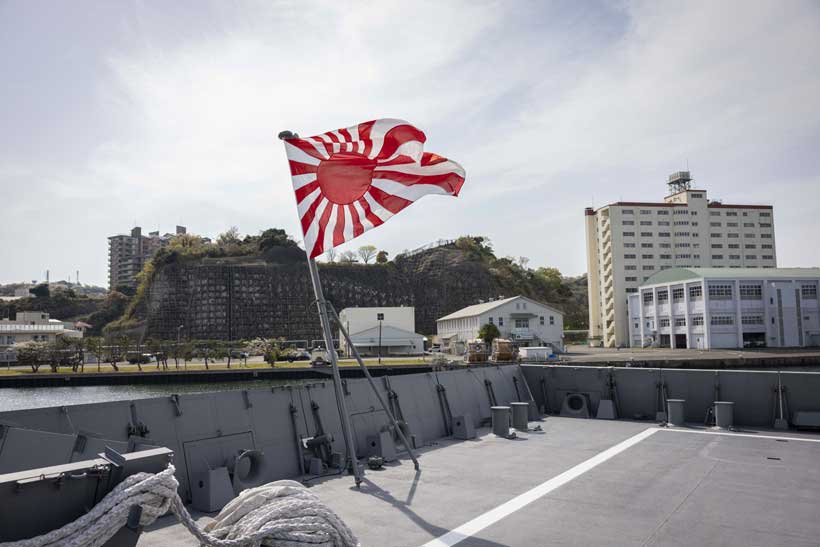
Japan, which also hosts major U.S. bases, has seen two U.S. guided-missile destroyers stationed in Yokosuka deployed to the Arabian Sea to support operations linked to the Iran campaign.

The movements have raised concerns in Tokyo as well, with opposition politicians questioning whether U.S. forces stationed in Japan should be used for operations outside the region.

The developments highlight how the conflict in the Middle East is beginning to reshape global military deployments, drawing resources away from Asia and prompting questions about the balance of security commitments across different regions.

With information from Reuters.

Source link

North Korea denounces ‘muscle-flexing’ US-South Korean military exercises | Military News

North Korea’s Kim Yo Jong said the annual ‘Freedom Shield’ exercises could lead to ‘unimaginably terrible consequences’.

Kim Yo Jong, the powerful sister of North Korean leader Kim Jong Un, has accused the United States and South Korea of “destroying the stability” of East Asia, as the two countries start their annual 10-day joint military exercises on the Korean Peninsula.

“The muscle-flexing of the hostile forces near the areas of our state’s sovereignty and security may cause unimaginably terrible consequences,” Kim Yo Yong said on Tuesday, according to the state-run Korean Central News Agency (KCNA).

Recommended Stories

list of 4 itemsend of list

“The enemies should never try to test our patience, will and capability,” Kim said.

“We will watch to what extent the enemy violates the security of our state and what it is playing at,” she continued.

Kim’s remarks follow the start of the joint Freedom Shield exercises on Monday, which will run for 10 days and involve 18,000 South Korean and US military personnel.

The military manoeuvres are designed to “enhance the combined, joint, all-domain, and interagency operational environment, thereby strengthening the Alliance’s response capabilities,” United States Forces Korea said.

This year’s Freedom Shield will involve 22 field training drills, according to South Korea’s Yonhap News Agency, which is fewer than half the number carried out last year.

Kim added on Tuesday that there was no justification to hold the exercises, which have been called a “defensive” action by Washington and Seoul in the past.

“No matter what justification they may establish and how the elements of the drill may be coordinated, the clear confrontational nature of the high-intensity large-scale war drill staged by the most hostile entities in collusion at the doorstep of [North Korea] never changes,” she said.

“The recent global geopolitical crisis and complicated international events prove that all military manoeuvres of the field warfare troops, to be conducted by the enemy states, assume no distinction between defence and attack, training and actual warfare,” she continued, in an apparent reference to the US-Israel war on Iran.

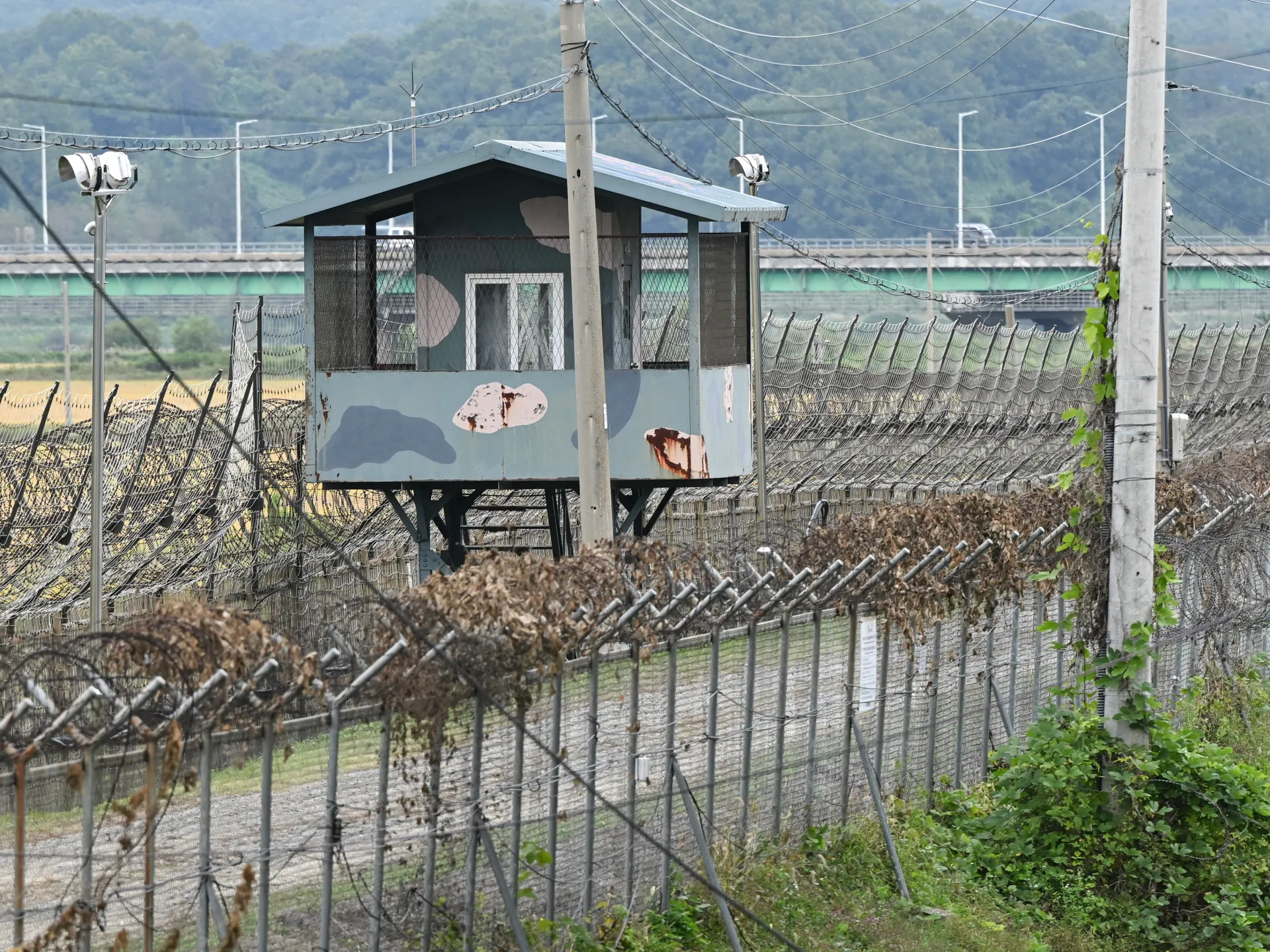
South Korea and North Korea have technically been at war since 1953, when an armistice agreement paused fighting but did not formally end the armed confrontation.

North Korean leader Kim Jong Un said in 2024 that he would no longer pursue reconciliation with South Korea, although it remains Seoul’s long-term goal.

An official at South Korea’s Ministry of Unification told Yonhap that Kim’s remarks on Tuesday were relatively muted by North Korean standards.

The statement did not refer directly to the US or threaten to use nuclear weapons, the official said, speaking on condition of anonymity.

“Kim appears to have limited her response to merely pinpointing the South Korea-US exercise, taking the current security situation into account,” the official told Yonhap.

Source link