South America

6 places in Southern California to try bikepacking

Growing up, Daniel Connell loved bicycling on streets near his home in Cheviot Hills. In college, he began camping. But it wasn’t until he combined the two that his adventures really began.

Connell was bikepacking — backpacking by bike. Bikepackers are usually found off-road, pedaling up and down dirt trails and then finding sites to set up their tents and spend the night. With a bicycle, you can cover more terrain than by foot yet still access rugged trails closed off to cars.

In his early days with the sport, Connell rode from Santa Barbara to Medellin, Colombia, on a 1980s mountain bike he bought for $100. He then pedaled from Egypt to South Africa with a couple of friends. Last year, he completed a “Triple Everest” in Santa Barbara, riding the equivalent of three trips up the globe’s tallest mountain, more than 87,000 vertical feet. He also rode nearly 3,000 miles from Canada to Mexico on a route that traverses the Rockies in a self-supported race called the Tour Divide. This summer, he plans to set off from Prudhoe Bay, Alaska on his bike and eventually end up at the tip of South America in Patagonia in an effort to break the world speed record for the 13,500-mile ride. Much of the lengthy pedal will be along the Pan American Highway.

“I feel focused, incredibly free and alive when I’m on my bike,” says Connell, known in the cycling world as “Dirty Dan,” whose adventures are sponsored by the Trek Bicycle Corp..

Interested in trying bikepacking? Connell says novices should have “at least some exposure to trail riding and camping in the wilderness.” He recommends starting small: load up your bike with gear and just practice pedaling with all that extra weight. (His own Trek Supercaliber cross-country mountain bike weighs 55 pounds when completely loaded.) And go with someone more experienced. You can find bikepacking groups on Facebook, Meetup, Reddit or by checking your local bike shop. Topanga Creek Outpost, Connell says, is focused almost entirely on bikepacking.

Connell believes that Los Angeles is a great place for bikepacking “as long as you’re willing to get outside of the city center and up into the hills away from the cars. Here are six rides he suggests in Southern California, most of which come from bikepacking.com, a website Connell calls an “online bikepacking Mecca.” Note that the markers on this map are rough starting points for the routes. For the exact locations, visit the route websites.


Source link

Trump indicates the U.S. ‘hit’ a facility in South America that he tied to alleged drug boats

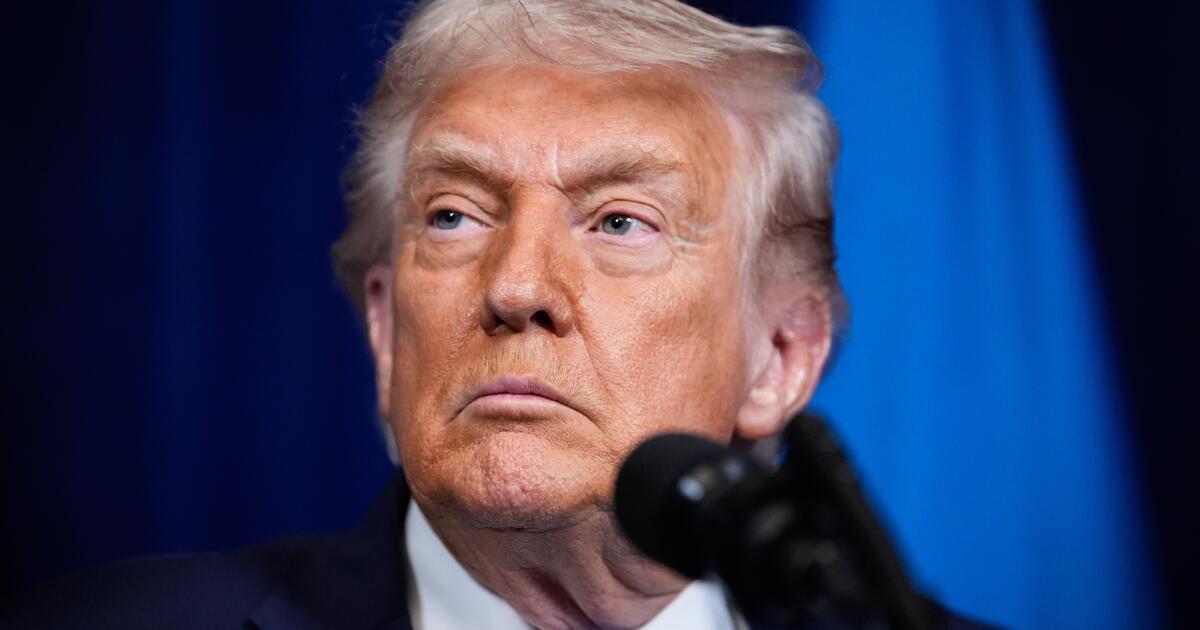
President Trump has indicated that the U.S. has “hit” a facility in South America as he wages a pressure campaign on Venezuela, but the U.S. offered no other details.

Trump made the comments in what seemed to be an impromptu radio interview Friday.

The president, who called radio host John Catsimatidis during a program on WABC radio, was discussing U.S. strikes on alleged drug-carrying boats in the Caribbean Sea and eastern Pacific Ocean, which have killed at least 105 people in 29 known strikes since early September.

“I don’t know if you read or saw, they have a big plant or a big facility where they send the, you know, where the ships come from,” Trump said. “Two nights ago, we knocked that out. So, we hit them very hard.”

Trump did not offer any additional details in the interview, including what kind of attack may have occurred. The Pentagon on Monday referred questions to the White House, which did not immediately respond to a message seeking comment.

Defense Secretary Pete Hegseth or one of the U.S. military’s social media accounts has in the past typically announced every boat strike in a post on X, but they have not posted any notice of any strike on a facility.

The press office of Venezuela’s government did not immediately respond Monday to a request for comment on Trump’s statement.

Trump for months has suggested he may conduct land strikes in South America, in Venezuela or possibly another country, and in recent weeks has been saying the U.S. would move beyond striking boats and would strike on land “soon.”

In October, Trump confirmed he had authorized the CIA to conduct covert operations in Venezuela. The agency did not immediately respond to a message seeking comment Monday.

Along with the strikes, the U.S. has sent warships, built up military forces in the region, seized two oil tankers and pursued a third.

The Trump administration has said it is in “armed conflict” with drug cartels and seeking to stop the flow of narcotics into the United States.

Venezuelan President Nicolás Maduro has insisted the real purpose of the U.S. military operations is to force him from power.

White House chief of staff Susie Wiles said in an interview with Vanity Fair published this month that Trump “wants to keep on blowing boats up until Maduro ‘cries uncle.’”

Price writes for the Associated Press. AP writers Konstantin Toropin in Washington and Regina Garcia Cano in Caracas, Venezuela, contributed to this report.

Source link