Netflix plans a substantial round of layoffs as the streaming giant faces rising competition and pressure to retain its subscribers, according to people familiar with the job cuts.
The cuts are expected to affect 5% of the company‘s workforce, which could be 800 employees, according to one of the sources who was not authorized to comment. The job losses will affect the creative team including those working on features, the source said.
Netflix declined to comment. The planned cuts are believed to be the biggest at the Los Gatos company since 2022. The news was first reported by news outlet Puck.
Netflix has been under scrutiny from investors over how much time its subscribers spend on the streaming service. View hours rose only about 2% in the first half of 2026 compared with a year earlier, even as content spending climbed.
“Overall we’re not growing as fast as I want us to, and we’re working on making that move faster,” said Netflix co-Chief Executive Ted Sarandos at the Bloomberg Screentime event last week.
Netflix has noted how engagement can be measured in different ways. For example, its investment in live programming helps spur significant subscription sign-ups, even though it represents a small percentage of watch time on the streaming service, the company has said.
But some investors remain skeptical about the company’s future growth. Rival YouTube remains the leader in streaming viewing hours in the U.S. on TVs, representing 14.2% versus Netflix’s 7.8% in July, according to Nielsen. Netflix stock has also declined 43% compared to a year ago. On Friday, the stock closed at $70.30, down about 2%.
Netflix last conducted major layoffs in 2022 after the streamer reported subscriber losses for the first time in more than a decade. In May that year, the company laid off 150 workers and dozens of contractors and part-time workers in areas including its social media teams. The following month, it laid off 300 people or roughly 3% of its staff.
Recently, Netflix made changes to its games division. In August, the company closed its Hollywood-based gaming studio Night School and said it was in the process of closing its Helsinki-based gaming studio Moonloot.
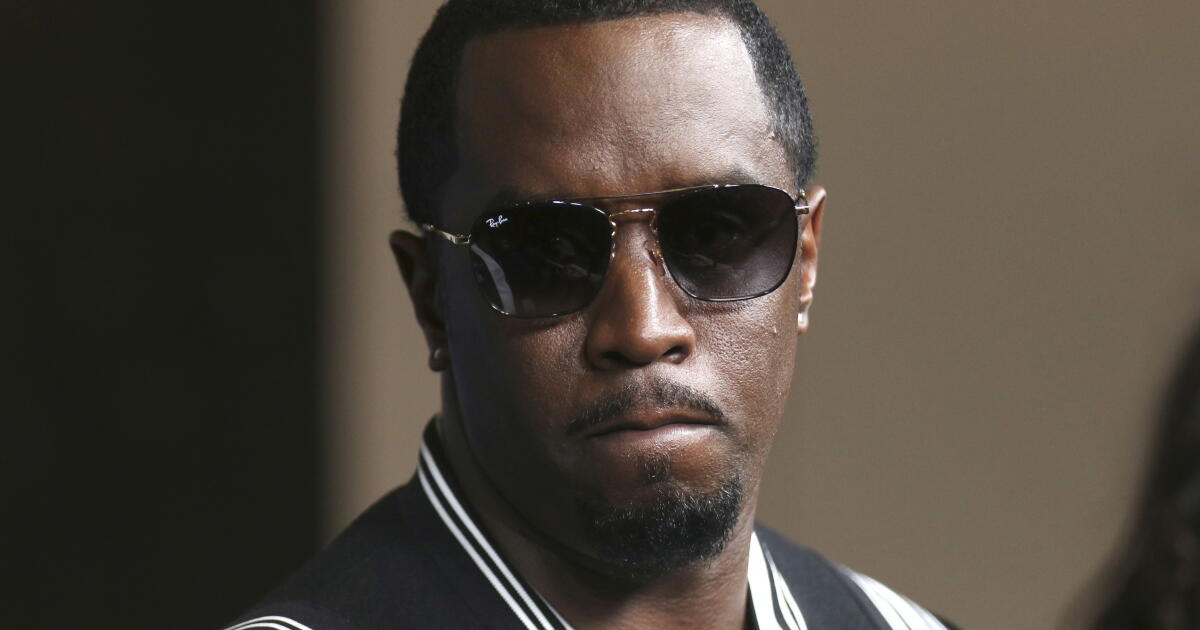
Sean “Diddy” Combs’ release date has been pushed back following allegations of a plush prison lifestyle.
The disgraced music mogul is currently serving a 50-month sentence after he was convicted of transporting prostitutes across state lines for drug-fueled sex performances known as “freak-offs.”
While earlier October reports indicated that the artist and producer would be released on Jan. 21, 2028 — which shaved months off his original June 2028 discharge — an updated search on the Federal Bureau of Prisons inmate database reveals his new revised date as March 2, 2028.
News of his release date comes as the “Bad Boy for Life” singer was reportedly placed and remained in solitary confinement at FCI Fort Dix, a low-security federal prison in New Jersey, following allegations of a pampered prison lifestyle.
On Sept. 29, an NBC report detailed the accounts of four anonymous inmates who claim that the 56-year-old had been paying men for special services.
Sources told NBC News that Combs paid inmates to clean and cook special meals for him, including curry chicken, pizza and empanadas, and that the hip-hop and R&B music producer also receives Chinese-style massages.
To pay for the labor, inmates allege that individuals outside of the prison are depositing thousands of dollars into the commissary accounts of those waiting on the “Satisfy You” singer.
The news outlet also published an image of Combs using a contraband phone, a prohibited item across state and federal prisons; multiple inmates said that he uses it to scroll Instagram and view explicit nude content shared by an old girlfriend.
Two sources also shared that Diddy has access to a “jailbroken” tablet where he watches movies and documentaries, including “Sean Combs: The Reckoning,” the Netflix docuseries produced by his adversary Curtis “50 Cent” Jackson.
Sources also allege that Combs is smuggling an illegal stash of alcohol and purchasing an antidepressant drug known as Remeron, or “rem-roms,” from other inmates.
“This is not some normal s— you see in jail. This is some rich s—. It looks crazy, but again, it’s Diddy,” one source told NBC.
The Times reached out to Combs’ representatives, but did not hear back.
A representative from the Federal Bureau of Prisons said they “do not comment on the conditions of confinement for any incarcerated individuals, including quarters assignment, release plans, or whether a particular individual is the subject of allegations, investigations, or sanctions.”
Legal troubles hit a high note last year for Combs when he was involved in a lengthy and public trial involving allegations of sexual assault and other violence. His former girlfriend Casandra “Cassie” Ventura and producer Rodney “Lil Rod” Jones lodged civil complaints against the music tycoon.
In July 2025, Combs was found guilty on two counts of a prostitution-related charge, but not guilty of racketeering conspiracy and sex trafficking, which carried heavier penalties, including a maximum sentence of life in prison.
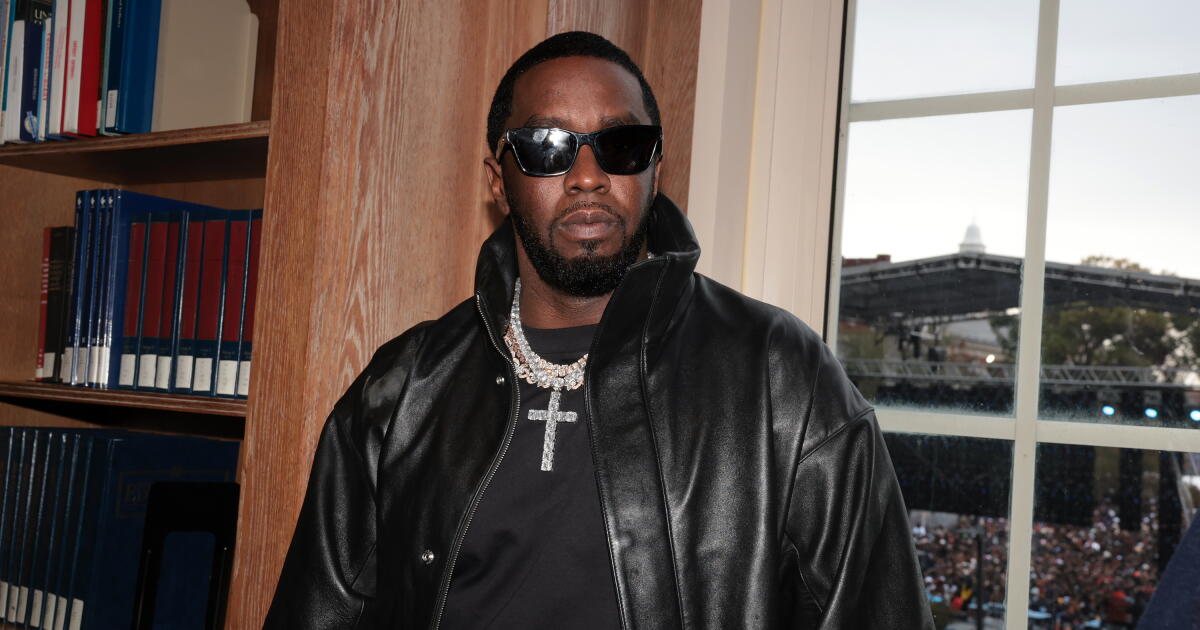
Sean “Diddy” Combs has reportedly been placed in solitary confinement following allegations of his lavish federal prison lifestyle.
The action follows NBC News’ Tuesday reporting of detailed accounts of four anonymous inmates who alleged that the 56-year-old has been paying men for special services including massages, using a contraband phone and keeping an illegal stash of alcohol.
Combs is currently serving a 50-month sentence at FCI Fort Dix, a low-security federal prison in New Jersey, after he was convicted of transporting prostitutes across state lines for drug-fueled sex performances known as “freak-offs.”
Following the news, Combs was placed in a Special Housing Unit (SHU), better known as solitary confinement, a source told the outlet.
This is not the first time the disgraced music mogul has stepped foot inside the SHU. In July, the music artist and producer spent some solo time after getting into a prison fight, sources told TMZ and NBC News.
Allegations of Combs’ pampered incarcerated lifestyle emerged just as his release date moved up again, according to the Federal Bureau of Prisons inmate database.
He is now scheduled to be released on Jan. 21, 2028.
Sources told NBC News that Combs pays inmates to clean and cook special meals for him, including curry chicken, pizza and empanadas and that the hip-hop artist also receives Chinese-style massages.
To pay for this labor, inmates allege that individuals outside of prison are depositing thousands of dollars into the commissary accounts of those serving the “Bad Boy for Life” rapper.
One source told NBC, “This is not some normal s— you see in jail. This is some rich s—. It looks crazy, but again, it’s Diddy.”
The news outlet also reviewed footage obtained from inside the correctional facility which showed Combs using a phone, a prohibited item across state and federal prisons. Multiple inmates claim he uses it to scroll Instagram and view explicit nude content shared by an old girlfriend.
Two sources also say Diddy has access to a “jailbroken” tablet where he watches movies and documentaries, including “Sean Combs: The Reckoning,” the Netflix docuseries produced by his adversary Curtis “50 Cent” Jackson.
(After learning of this detail, the “In Da Club” reacted with amusement on his Instagram account, sharing an image of the article and stating in his caption: “coming to a prison near you”).
Other claims state that the “Mo Money Mo Problems” rapper is purchasing an antidepressant drug known as Remeron, or “rem-roms,” from other inmates and keeping a stash of smuggled liquor.
“Hell yeah, I drank with him,” one of the men, who recounted drinking Hennessy with Combs, told NBC.
Combs’ representatives on Friday claimed to be unaware of any actions taken against the rapper: “We have no idea that he’s there. And we have no idea when he’s exiting, if he is. BOP doesn’t share that information with us.”
They also shared a statement on Wednesday following allegations against Combs.
“The continued scrutiny of every mundane detail of Sean Combs’s life in prison has reached the point where the media characterizes ordinary prison life as news,” the spokesperson said via email. “The only real news is that Sean continues to serve his sentence within the rules and he patiently awaits the court’s decision on his appeal.”
The Federal Bureau of Prisons did not immediately respond to a request for comment on Friday; however, a FCI Fort Dix spokesperson on Wednesday said they cannot comment on the “conditions of confinement for any incarcerated individual,” nor can they “confirm or deny the existence of a corresponding investigation.”
“Like all correctional agencies, contraband, particularly cell phones, narcotics, and weapons, remains a constant challenge, and we continue to tackle the problem of contraband being introduced into our facilities,” the spokesperson said on Wednesday. “Inmates are not permitted to have access to cell phones, and all incarcerated individuals in the Federal Bureau of Prisons (BOP) who are found to violate the ‘Inmate Discipline Program’ policy are subject to sanctions.”
Last year, Combs’ was involved in a lengthy and public trial involving allegations of sexual assault and other violence. His former girlfriend Casandra “Cassie” Ventura and producer Rodney “Lil Rod” Jones lodged civil complaints against the music tycoon.
In July 2025, Combs was found guilty on two counts of a prostitution-related charge, but the magnate was found not guilty of racketeering conspiracy and sex trafficking, which carried heavier penalties, including a maximum sentence of life in prison.
Islamabad, Pakistan — The motorway linking Pakistan’s capital with Peshawar, about 180km (110 miles) to the northwest, has been closed to all traffic until further notice, according to a police notification.
So have the highway towards Dera Ismail Khan, the Hazara motorway and the Grand Trunk Road at Attock.
Recommended Stories
list of 4 itemsend of list
Each carries traffic between Islamabad and Khyber Pakhtunkhwa, the province governed by the party of jailed former Prime Minister Imran Khan, whose supporters plan to march on the capital on Sunday, September 27, demanding his release.
The motorway from Lahore, about 375km (235 miles) to the southeast, remains open.
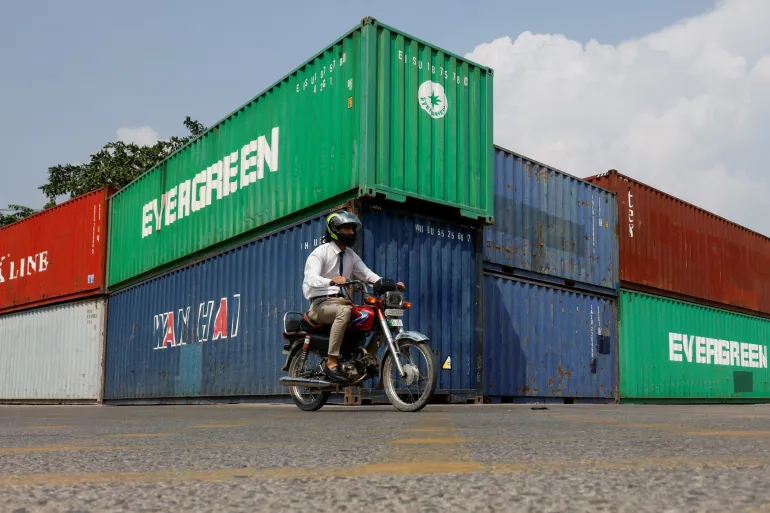
Inside Islamabad, workers have welded shipping containers together and filled them with gravel and sand so they cannot be pushed aside. Several schools and colleges have been told to shut so police brought in from Punjab and Sindh can be housed there.
Police expect the march to draw between 20,000 and 25,000 people, according to local media reports.
While two of the country’s main opposition parties announced marches on the capital this month, only Khan’s Pakistan Tehreek-e-Insaf (PTI) has faced measures on this scale.
Jamaat-e-Islami (JI), a religious party, also set out for Islamabad last week to protest against rising fuel prices. On Monday, Prime Minister Shehbaz Sharif telephoned its leader, Hafiz Naeemur Rehman, and by Tuesday afternoon JI had postponed its march, pending a meeting between the two men.
PTI leaders have received no such call.
Instead, Khan’s three sisters, all over the age of 65, have been detained in Lahore and at least six of the party’s legislators in Islamabad, all under a 1960 public order law that allows preventive detention without charge.
PTI says the true figure of those arrested is higher, and that one lawmaker taken from the parliament lodges has not been traced since.
Khan has been in prison since August 2023 and remains Pakistan’s most prominent opposition figure. But his party enters the final stretch before the protest weakened, with no major demonstration outside Khyber Pakhtunkhwa since November 2024, by its own account.
Yet, say analysts, the Pakistani government appears to be treating the protest march as a far bigger threat than a regular political event would warrant.
“While this is undoubtedly a difficult moment for PTI, it is equally exposing the government’s own frustration,” Habib Akram, a Lahore-based political analyst, told Al Jazeera.
“In fact, the government’s conduct suggests something more. It isn’t just afraid of this protest; it has turned this protest into a matter of its own survival.”
A capital behind containers
More than 2,000 containers have been placed across Islamabad and at Attock Bridge, the main crossing between Khyber Pakhtunkhwa and Punjab, according to media reports, with 19,000 police officers on their way from Punjab and Sindh, and thousands more deployed at Attock.
A man rides a motorcycle past shipping containers used to block the road in Islamabad before a planned march by former Pakistani Prime Minister Imran Khan’s party, demanding his release, on September 23, 2026. [Akhtar Soomro/Reuters]
Dawn, the country’s leading English-language newspaper, said in an editorial that the government appeared to be preparing “not for a political event but an invasion”.
Talal Chaudhry, the junior interior minister, rejected the suggestion that the government was shutting down the capital itself.
“Normal life in Islamabad is continuing. Hospitals, offices and essential services are functioning. The containers and security arrangements are precautionary measures, not a shutdown,” he told Al Jazeera.
Rana Ihsaan Afzal, a coordinator to the prime minister and a government spokesperson, was more candid.
“In trying to counter the rhetoric PTI has adopted, we do have to take certain measures, and yes, those measures carry their own consequences too, but we have to look at the bigger picture,” he told Al Jazeera.
It is all being mounted during one of the deadliest weeks for Pakistan’s security forces this year.
An attack on a police compound in Kohat, in Khyber Pakhtunkhwa, killed more than 20 people on September 18, and six soldiers were killed in a gunfight in nearby Hangu two days later.
Interior Minister Mohsin Naqvi set those losses against the march in Lahore on Monday.
“The situation in KP [Khyber Pakhtunkhwa] over the past 10 days is before everyone. There was a suicide attack on a mosque, and two or three other attacks. Our captain was killed, our soldiers were killed, our policemen were killed, and these people are preparing to storm a city,” he said.
The government’s case
Government ministers have seized on a remark by Junaid Akbar, PTI’s chief in Khyber Pakhtunkhwa, who said protesters would turn Islamabad into Somnath, a Hindu temple in India sacked by Mehmood of Ghazni, an 11th-century invader, to try to paint the upcoming protest as a major law and order threat.
“Peaceful people do not leave their homes carrying nail-studded sticks,” Information Minister Attaullah Tarar said in Kohat on Monday.
But the PTI’s Sohail Afridi, the chief minister of Khyber Pakhtunkhwa, who will lead the September 27 march, answered Tarar in Peshawar on Monday.
“We will go there on nothing but two hands and two feet. There will be nothing else in our hands,” he said.
In a September 18 judgement, the Islamabad High Court ruled that no party could block roads into the capital, and barred provincial governments from using state resources for the march.
Days later came the arrests of Imran Khan’s sisters. Aleema Khan was detained in Lahore on Sunday, and her sisters, Uzma Khan and Noreen Niazi, were taken in a predawn raid on their homes the next day, according to a family statement on September 22.
The Lahore High Court has reserved its decision on whether a petition challenging Aleema’s detention is admissible, after the family’s lawyer argued that the order was issued after the arrest.
Chaudhry said the sisters faced several cases, had led confrontational protests in the past, and were being held as a preventive measure.
PTI says the arrests reach far wider, listing five members of the National Assembly, a senator, provincial legislators and more than 1,500 workers.
“We were peaceful, we are peaceful, and we will remain peaceful. We are being punished for being peaceful,” Gohar Ali Khan, the PTI chairman, said in Peshawar on Monday, noting that four women from Khan’s family, including his wife Bushra Bibi, are now in jail.
Supporters welcome Khyber Pakhtunkhwa Chief Minister Sohail Afridi (centre) in Hyderabad, Pakistan on September 6, 2026, during a rally. [Nadeem Khawar/EPA]
‘Long march’ vs ‘permanent plan of action’
But Interior Minister Naqvi suggested that the government is bracing for a confrontation.
“I think this time we will draw up a permanent plan of action. We will not go halfway,” Naqvi said in Lahore on Monday, adding that the matter would be settled “once and for all”.
What he ruled out was a long sit-in of the kind PTI has staged before.
“This time, it will not happen that they come, and the country is shut down for 10 or 20 days. That possibility does not exist,” he said.
Afridi has signalled that he has exactly that in mind.
“The long march is not a T20, it will be a Test match,” he said on Monday, a reference to cricket’s five-day format.
If Naqvi’s comments sound ominous, they also carry a history with them.
On May 9, 2023, after Imran Khan was briefly arrested, his supporters attacked military installations across the country, including burning down a senior commander’s official residence in Lahore. That led to a major crackdown on the PTI’s supporters and leaders, with hundreds placed under arrest for days, and party leaders pressured to leave the group.
Then, on November 26, 2024, a PTI march on Islamabad ended in an overnight crackdown by security forces, in which the party says at least 12 of its supporters were killed. The government denies that, and says four security personnel died — even though Al Jazeera met families of some of the PTI supporters killed.
A contested mandate
PTI was stripped of its electoral symbol before the February 2024 general election, forcing its candidates to run as independents.
They still won 93 seats, more than any other party, but could not form a coalition, and the Pakistan Muslim League – Nawaz took power with other major parties.
A Commonwealth observer group, in its report on the polls released a year later, found that decisions by key institutions had “consistently limited the ability of one particular party” to contest the vote, in a reference to the PTI.
While the Election Commission of Pakistan rejected allegations of rigging, two and a half years on, the popularity scale remains tilted in favour of PTI.
Bilal Gilani, executive director of the pollster Gallup Pakistan, said its unpublished Public Opinion Pulse surveys showed a landscape broadly similar to 2024.
“PTI continues to lead nationally, but faces strong competition from PML-N in Punjab and PPP in Sindh,” he told Al Jazeera, adding that Khan remained the country’s most popular leader.
For Akram, that unresolved argument — over the lack of legitimacy of the 2024 election in the eyes of Pakistanis — is what keeps the pressure on.
“You can hold as much power as you want, but that question never fully goes away. It continues to haunt you, and it continues to be a source of anxiety for the government,” Akram said.
The ‘hard state’
In March 2025, army chief Field Marshal Asim Munir, who now also serves as Pakistan’s chief of defence forces, told a parliamentary security committee that the country must stop acting as a “soft state”.
“How long will we continue to sacrifice countless lives in a manner of a soft state?” he asked, according to state broadcaster PTV.
For Ahmed Ijaz, an Islamabad-based political analyst, the response to the September 27 march is a response to that thinking, rather than the PTI’s strength.
“Behind that confidence lies the thinking of a hard state, one that has decided no one will be granted an unconditional right to protest going forward,” he said.
Supporters of the Islamic political party Jamaat-e-Islami (JI) hold placards and party flags during a protest in Karachi, Pakistan, September 20, 2026 [Shahzaib Akber/EPA]
Akram, however, said that a different factor might also be worrying the government and the military behind it.
The war in the Middle East has pushed petrol to 393.75 rupees ($1.42) a litre ($5.37 per gallon), up about 51 rupees ($0.18) since the start of September. That is what Jamaat-e-Islami was marching against, and it has warned that it will resume its march in October if the prime minister offers no relief.
Akram said the government’s real worry is multiple issues of antigovernment anger — price rises and Imran Khan’s continued incarceration — coming together.
“That merging could then pull other groups out onto the streets too, and that is precisely what worries the government,” he said.
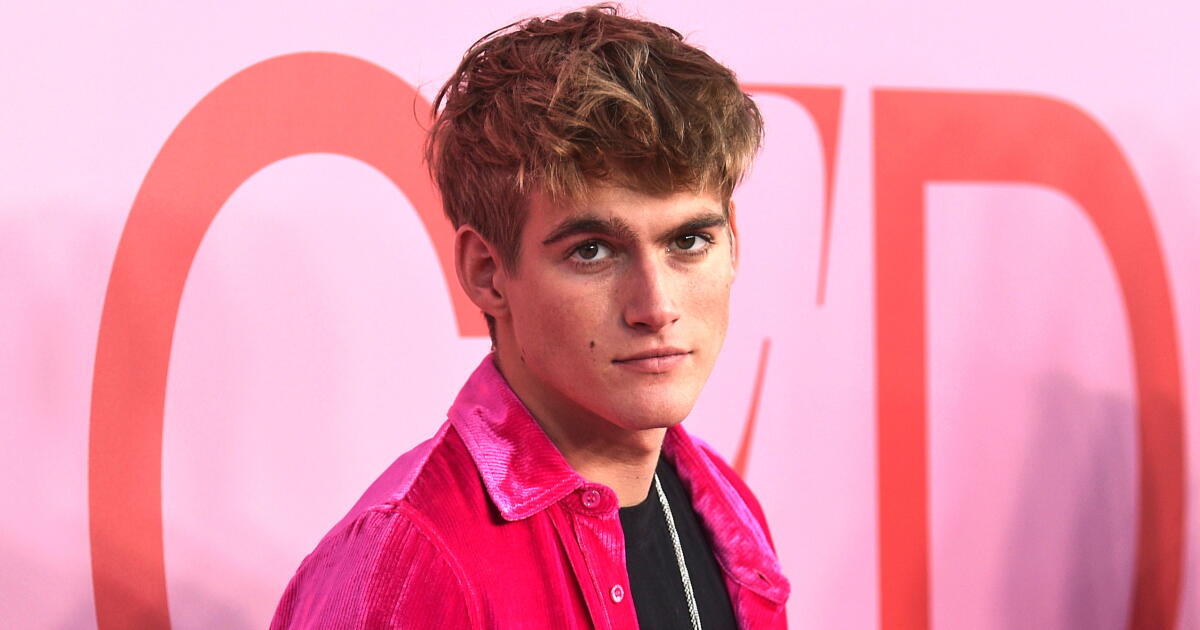
Dispatch calls reveal supermodel Cindy Crawford’s son, Presley Gerber, who died Sunday, suffered an apparent overdose while staying at a luxury outpatient rehab facility.
After Santa Monica police received a call reporting a cardiac arrest and another call for an overdose, officers responded to Resolutions Living, a $7.7-million, seven-bedroom mansion that operates as a rehabilitation home, at about 9:35 a.m., a law enforcement source told The Times.
Paramedics pronounced Gerber dead at 9:45 a.m. Sunday. The onetime Calvin Klein model had checked into the facility just hours before, around 10 p.m. Saturday.
On Monday, the L.A. County medical examiner’s office said that it was in the early stages of investigating the 27-year-old model’s death and that limited information was available.
An autopsy was performed Monday, but the cause and manner of death have been deferred, “which means additional testing and/or studies were requested in order to make a determination.” Due to the ongoing investigation into Gerber’s death, the medical examiner’s office cannot disclose what testing and/or studies were requested.
It could take a few months for a cause of death to be determined, the statement continued.
Police say that, at this time, there is no indication of foul play, but they are also investigating Gerber’s apparent overdose. According to the law enforcement source, police are attempting to track where and whom the drugs came from.
According to Resolution Living’s website, it operates as a partial hospitalization and intensive outpatient program for the treatment of myriad mental health issues, including depression, trauma and addiction, and offers dual diagnosis treatment for co-occurring disorders.
Gerber had been candid about his mental health struggles for years through various podcast appearances and his social media, and revealed that he’d sought treatment through various rehab facilities from the time he was a teenager.
In 2023, he told “Studio 22” podcast that he wanted to use his own experience to help others battling the same issues.
“Having struggled with mental health, depression and some other things that come along with that,” he said, “I think that whether I help one person or 100 people get out of that place that I was in at one point in my life, that’s all I need to do.”
PARIS: Investigators suspect that a train derailment in northwest France which injured 44, one gravely, was the result of sabotage, a police source told AFP on Saturday.
A fragment of rail was found on the track, with the possibility of a malicious act being treated as the main line of inquiry as a result, the source said.
Carrying 186 passengers, the train was running between the Normandy cities of Rouen and Caen when it derailed around 7:45 pm (1745 GMT) Friday.
Authorities activated a mass-casualty response plan, with 130 firefighters, five medical teams and 80 vehicles drafted in.
Rouen prosecutor Sebastien Gallois said 44 people were injured including an 18-year-old woman evacuated “in a critical condition”, while tests for drugs and alcohol on the train driver had come back negative.
SNCF Reseau, which controls the French rail network, told AFP that traffic on the line has been suspended and power to the tracks cut to allow emergency services to operate.