sorsby

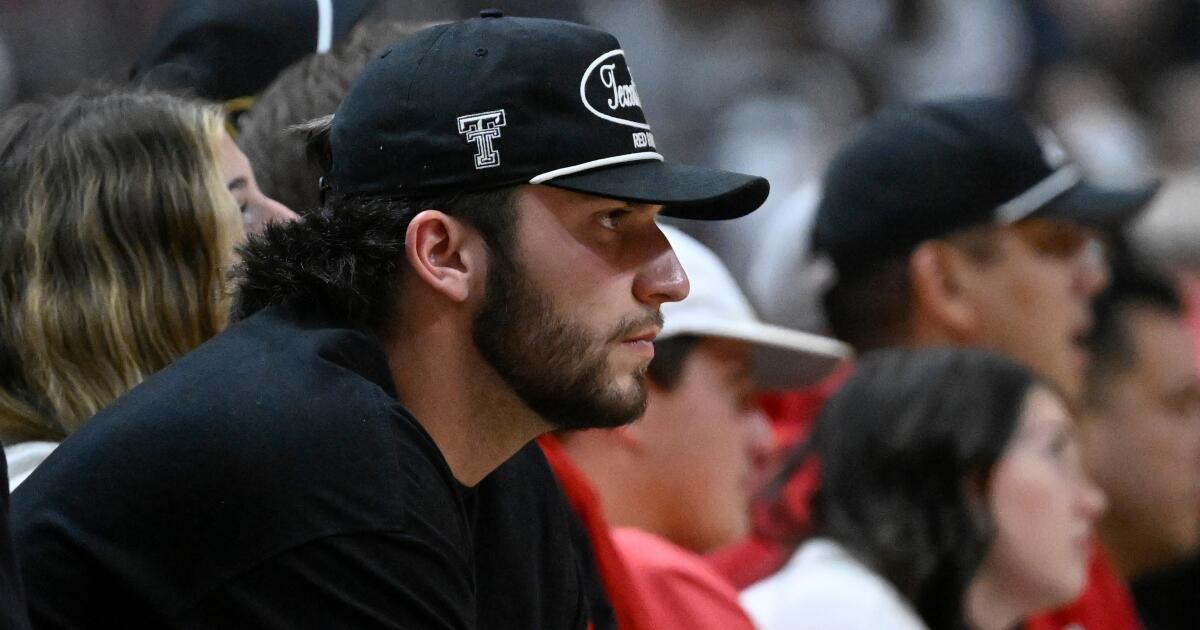
Brendan Sorsby won’t play for Texas Tech amid eligibility controversy

Brendan Sorsby won’t be playing football for Texas Tech this fall after all.

It’s not because the transfer quarterback has been permanently banned by the NCAA for wagering on college sports — an injunction issued by a Texas judge last week appeared to clear the way for Sorsby to play for the Red Raiders in 2026.

That ruling, however, was being challenged through separate court filings by the NCAA and the Big 12 Conference. Facing that uncertainty over his final season, and with the deadline to enter the NFL supplemental draft quickly approaching, Sorsby opted to leave the Red Raiders without playing a down.

Sorsby’s decision was announced Monday night in an open letter by Cody Campbell, chairman of the Texas Tech board of regents.

“This decision was made with Brendan and his family and is purely an output of practical analysis of the situation,” Campbell wrote. “Brendan and Texas Tech stand on very solid and legitimate legal ground, but he faces a June 22nd deadline to be eligible to enter the NFL’s supplemental draft, and there is no practical way to resolve all the various pending legal disputes and ensure his eligibility prior to this date. This is the only viable and fair path for Brendan and his future, as well as for his teammates, and our university.”

Sorsby posted a statement Monday night on Instagram.

“I am grateful for the support from my family, my Tech coaching staff, teammates, the community, and so many others who have encouraged me to address and learn more about this important issue,” Sorsby wrote. “As my journey continues, I remain fully committed to and focused on being the best I can be, both on and off the field.”

Sorsby transferred to Texas Tech this offseason, after two years each at Indiana and Cincinnati, for a reported multimillion-dollar deal. In late April, he and Texas Tech jointly announced that he had entered a residential treatment program for gambling addiction. Sorsby completed the 35-day program in May.

Court records show that Sorsby has admitted to wagering at least $90,000 during his time as an NCAA student athlete, including 40 bets on Indiana football games he was not participating in while a freshman backup with the Hoosiers in 2022.

“Texas Tech will continue to provide the support and recovery resources Brendan requires on this journey,” Campbell wrote. “Furthermore, Texas Tech will not seek return of any amounts already paid to Brendan through his NIL agreements.”

In May, Sorsby filed a lawsuit in Lubbock County District Court asking to have his eligibility restored because the NCAA “failed to comply with its contractual commitments” to him as a student athlete and therefore “is precluded from enforcing its gambling bylaws against Mr. Sorsby to deny or withhold his reinstatement.”

Last week, judge Ken Curry granted a temporary injunction that would have allowed Sorsby to play for the Red Raiders in 2026. He would have had to miss the first two games of the season as one of the conditions of the ruling.

Without the injunction, Curry wrote in his ruling, Sorsby would “suffer a probable, imminent and irreparable injury” by missing out on the “elite coaching, training resources, camaraderie, and regimen that only being a member of a Division I college football team can provide.”

The final hearing had been scheduled to begin Feb. 8, nearly two weeks after college football’s national championship game.

Following the ruling, several teams and conferences discussed a ban on playing Texas Tech in any sport. After appealing the decision last week, the NCAA filed an emergency motion on Monday to stay the injunction and asked for the case to be resolved before the start of the Red Raiders season.

Also on Monday, the Big 12 filed for a judgment from a U.S. District Court in Dallas protecting the conference’s ability under its bylaws to sanction Texas Tech, a member school, if Sorsby played this season.

“An athlete with an extensive, documented history of wagering on intercollegiate athletic contests — especially his own team’s games — presents a reputational and integrity risk to the conference and its championship competition that the conference has both the right and the responsibility to address,” attorneys for the Big 12 wrote in the filing.

Soon after Campbell announced Sorsby’s decision, Texas Tech president Lawrence Schovanec and athletic director Kirby Hocutt issued a joint statement on the matter.

“When Brendan’s lawsuit resulted in the granting of a temporary injunction, we found ourselves in a difficult situation,” they wrote. “With his health and wellness as our top priority, we supported him in spite of very different perspectives and opinions. Our position was challenged by many but our support for him never changed.

“We will continue to extend all available resources that Brendan had as a student and athlete to ensure his transition is as successful as possible.”

The Associated Press contributed to this report.


Source link

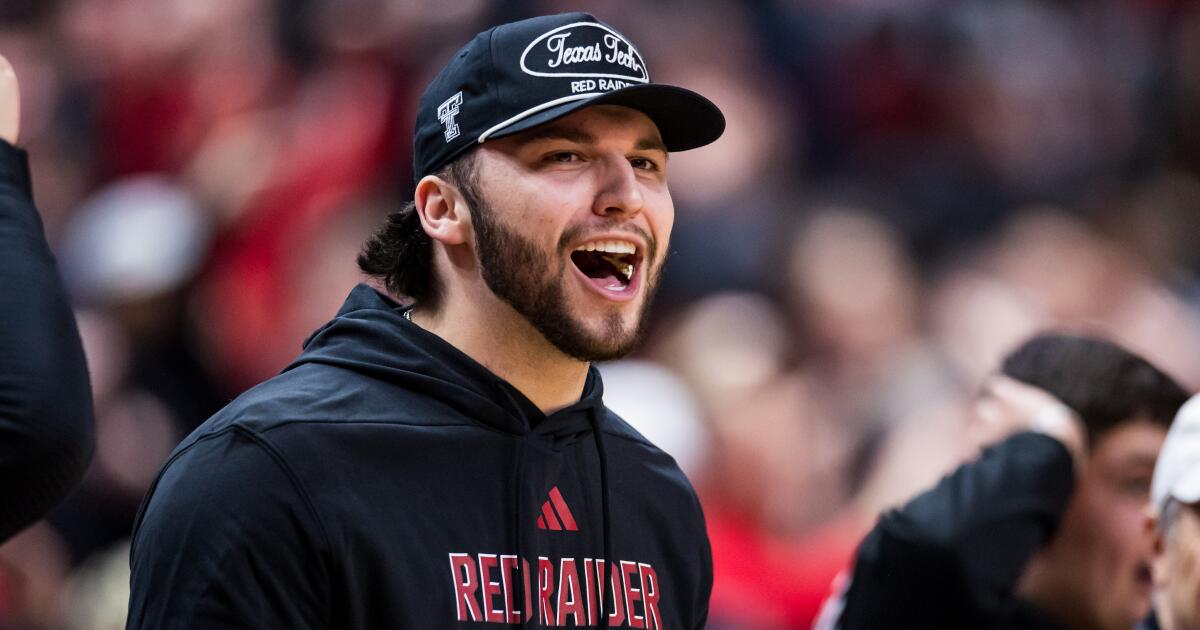
Texas Tech QB Brendan Sorsby is granted injunction to play in 2026

Texas Tech quarterback Brendan Sorsby has been granted a temporary injunction that allows him to practice and play with the Red Raiders in 2026 despite having been permanently banned by the NCAA for wagering on college sports.

Texas judge Ken Curry ruled Monday that the NCAA cannot block Sorsby’s final year of eligibililty. The Cincinnati transfer will have to miss the first two games of the season as one of the conditions of the ruling.

In his ruling, Curry stated that Sorsby would “suffer a probable, imminent and irreparable injury” without the injunction by missing out on the “elite coaching, training resources, camaraderie, and regimen that only being a member of a Division I college football team can provide.”

“I’m very grateful for the endless support I have received throughout this entire process. I am also grateful for the chance to rejoin my teammates,” Sorsby wrote in a statement posted Monday on Instagram. “This opportunity comes with the responsibility to remain focused on my personal growth, the ability to learn from this experience, and to be able to use my situation to help others going forward.”

The NCAA can appeal the injunction but did not immediately indicate its next steps in the matter. It is unclear how long such a process would take. Texas Tech’s season starts Sept. 5, with Sorsby first eligible to play when the Red Raiders host Houston on Sept. 18.

“The NCAA strongly disagrees with the court’s ruling in Sorsby’s case and is deeply concerned about the damaging, far-reaching and broadly destabilizing ramifications of this outcome — which undermines and corrupts the integrity of sports,” the association said in a statement.

“The NCAA is committed to supporting student-athlete mental health but must continue to aggressively defend against actions that defraud college athletics and threaten competitive integrity, such as betting on one’s own sport.”

Last month, Sorsby’s attorneys filed a lawsuit in Lubbock County District Court requesting that he be declared eligible for all team activities because the NCAA “failed to comply with its contractual commitments” to him as a student athlete and therefore “is precluded from enforcing its gambling bylaws against Mr. Sorsby to deny or withhold his reinstatement.”

Sorsby spent two years at Indiana and two at Cincinnati before transferring to Texas Tech this offseason for a reported multimillion-dollar deal. In late April, he and Texas Tech jointly announced that he had entered a residential treatment program for gambling addiction and would be away from the team for an indefinite period of time.

According to court records, Sorsby has admitted to betting at least $90,000 during his time as an NCAA student athlete, including 40 bets on Indiana football games he was not participating in as a freshman backup with the Hoosiers in 2022.

NCAA guidelines state that student athletes who bet on their own games or on other sports at their school could “potentially face permanent loss of collegiate eligibility.” Texas Tech was informed of an NCAA investigation into Sorsby’s gambling activity in March, according to court records, and declared him ineligible according to the association’s bylaws.

The NCAA has since denied two petitions from Texas Tech to have Sorsby’s eligibility reinstated.

“As we have said before, we do not believe that the circumstances of Brendan’s case warranted permanent ineligibility,” Texas Tech athletic director Kirby Hocutt said Monday in a statement. “As he returns to our football program, we remain committed to supporting Brendan’s recovery and ensuring his compliance with the court’s order. A comprehensive support structure, including clinical care, monitoring, and compliance checks, will remain fully in place for the duration of Brendan’s time as a student at Texas Tech.”

Georgia athletic director Josh Brooks, a member of the NCAA Football Oversight Committee, told Yahoo Sports that there should “be serious conversations about not playing Texas Tech in any sports” as a result of Monday’s decision.

“This is not about Texas Tech. It’s about protecting our own locker room,” Brooks said. “We cannot in good conscience put our student-athletes on a field where the competitive integrity of the contest is compromised and overridden by the courts.

“All [Football Bowl Subdivision] schools should only take the field against programs operating under a uniform, trustworthy standard of fairness. We’ve officially reached the point of no return.”

The Associated Press contributed to this report.


Source link

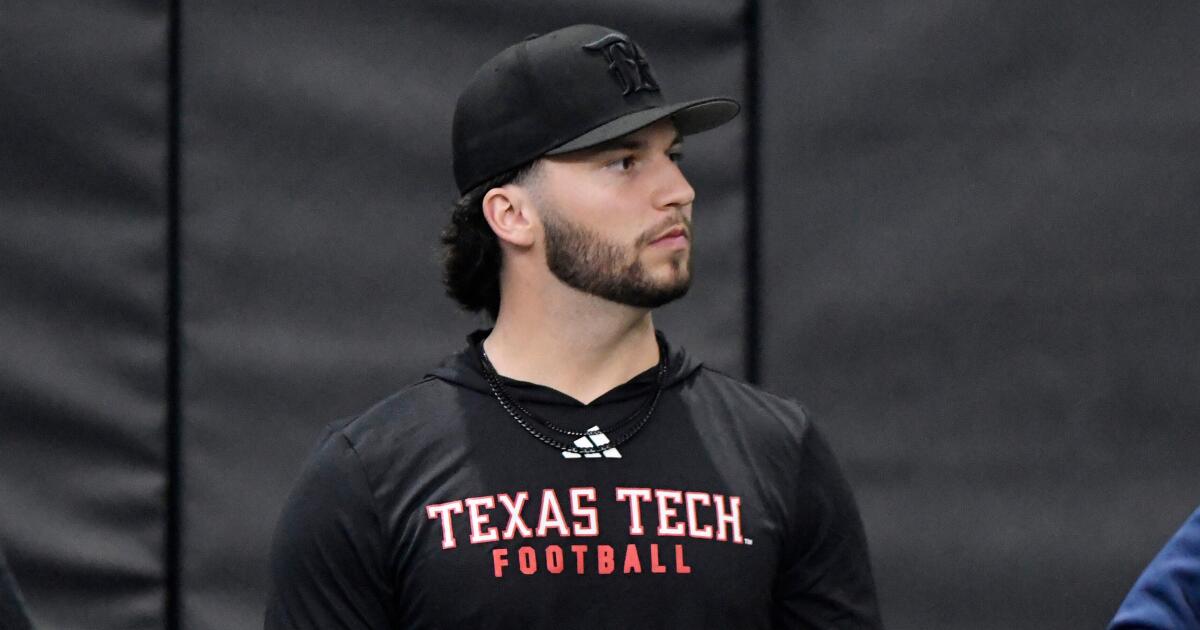
Texas Tech QB sues NCAA to play in 2026 despite gambling infractions

Texas Tech quarterback Brendan Sorsby has sued the NCAA in an attempt to be allowed to practice and play with the Red Raiders in 2026, his final season of college eligibility.

Late last month, Sorsby and the Red Raiders announced that the fifth-year player had entered a residential treatment program for gambling addiction and would be away from the team for an indefinite period of time.

A lawsuit filed Monday in Texas’ Lubbock County District Court requests that Sorsby be declared eligible for all team activities because the NCAA “failed to comply with its contractual commitments” to him as a student-athlete and therefore “is precluded from enforcing its gambling bylaws against Mr. Sorsby to deny or withhold his reinstatement.”

The filing also asks for “temporary and permanent injunctive relief enjoining the NCAA from interfering with his ability to practice, play, and participate fully as a member of the Texas Tech football team for the 2026 season.”

If he remains ineligible for college football, Sorsby intends to declare for this summer’s NFL supplemental draft. Athletes who enter that draft forfeit all remaining college eligibility.

“The relief is narrow: one student-athlete and one senior season,” the filing states. “The NCAA will suffer no cognizable harm from letting Mr. Sorsby play football while this case proceeds. But if this Court does not act, no future judgment can give Mr. Sorsby what the NCAA will have taken from him.”

As a freshman at Indiana and a low-ranked quarterback on the Hoosiers’ depth chart, the lawsuit states, Sorsby “placed small bets — typically between $5 and $50 — on the Indiana football team to win or for teammates to exceed expectations. He was not traveling with the team, and not privy to game plans; betting was his way of feeling connected to a team he could only watch from the sidelines.”

The most recent NCAA guidelines about sports wagering state that student-athletes who bet on their own games or on other sports at their school could “potentially face permanent loss of collegiate eligibility.”

Sorsby stopped betting on Indiana football once he became the backup quarterback, according to the filing, and since then hasn’t bet on any of his teams (he transferred to Cincinnati in 2024 and to Texas Tech this offseason). However, the lawsuit states, “his gambling escalated into a compulsion he could not control.”

According to the filing, Sorsby and Texas Tech were notified by the NCAA in mid-April that it had opened an investigation into the quarterback’s gambling.

“Mr. Sorsby did not deny, deflect, or delay in response,” the lawsuit states. “He immediately admitted to Texas Tech that he had placed bets in violation of NCAA rules, but he also emphasized that he never bet on a game he played in and never took any action to influence the outcome of any game because of a bet. He recognized he had a gambling addiction.

“In response, Texas Tech determined that it would declare Mr. Sorsby ineligible, as required by the Bylaws. But unlike the NCAA, Texas Tech decided to support him in seeking treatment for his addiction and to seek reinstatement of his eligibility in light of the undisputed evidence that Mr. Sorsby had not committed any integrity violation; his gambling was the product of a mental health disorder.”

The lawsuit states that Texas Tech has made multiple attempts to initiate Sorsby’s reinstatement with the NCAA. “Throughout the process, the NCAA has arbitrarily stalled at every turn,” the filing states, “despite the fact that it knows that the clock is ticking for Mr. Sorsby.”

The NCAA said in a statement to media outlets Monday that it “has not received a reinstatement request for this case.”

“The NCAA generally doesn’t comment on pending reinstatement requests, but the Association’s sports betting rules are clear, as are the reinstatement conditions,” the NCAA said. “When it comes to betting on one’s own team, these rules must be enforced in every case for the simple reason that the integrity of the game is at risk. Every sports league has these protections in place, and the NCAA will continue to apply them equally because every student-athlete competing deserves to know they’re playing a fair game.”

Texas Tech said in a statement emailed to The Times: “After finalizing an agreed-upon stipulation of facts between Texas Tech University, the NCAA and Brendan Sorsby, the University has declared Sorsby ineligible for competition. Texas Tech intends to quickly initiate the reinstatement process.

“Texas Tech’s primary focus remains supporting Sorsby’s health and well-being.”

Source link

Texas Tech QB Brendan Sorsby enters treatment for gambling addiction

Texas Tech quarterback Brendan Sorsby is entering a residential treatment program for a gambling addiction and will be away from the team indefinitely, he and the Red Raiders announced Monday in a joint statement.

According to ESPN, Sorsby decided to seek treatment after it was discovered he made “thousands of online bets on a variety of sports via a gambling app.”

Multiple media outlets are reporting that Sorsby placed bets on Indiana football to win games during the 2022 season, when he was a redshirt freshman for the Hoosiers. He reportedly did not place bets on the one game in which he participated that season.

“We love Brendan and support his decision to seek professional help,” Texas Tech coach Joey McGuire said in a statement. “Taking this step requires courage, and our primary focus is on him as a person. Our program is behind Brendan as he prioritizes his health.”

The team said it would have no further statement on Sorsby’s status or treatment progress at this time.

The NCAA is investigating Sorsby’s gambling, according to multiple media reports.

“Due to confidentiality rules put in place by NCAA member schools, the NCAA will not comment on current, pending or potential investigations,” the NCAA said Monday in a statement released to news organizations.

“However, the NCAA takes sports betting very seriously and is committed to the protection of student-athlete well-being and the integrity of competition. The Assn. works with integrity monitoring services, state regulators and other stakeholders to conduct appropriate due diligence whenever reports are received.”

The most recent NCAA guidelines about sports wagering state that student-athletes who bet on their own games or on other sports at their school could “potentially face permanent loss of collegiate eligibility.” Betting on their sport in games not involving their school could result in “the loss of 50% of one season of eligibility will be considered.”

Other violations could also result in loss of eligibility with the amount of time missed based on the amount of money wagered.

Sorsby spent two seasons at Indiana and two at Cincinnati before transferring to Texas Tech this offseason for his final year of eligibility. He has completed 61.4% of his passes for 7,208 yards with 60 touchdowns and 18 interceptions, and rushed for 1,295 yards and 22 touchdowns.

Cincinnati has filed a lawsuit in U.S. District Court for the Southern District of Ohio against Sorsby for allegedly breaching the name, image and likeness contract he signed in July that stated a $1-million buyout would be required within 30 days if he transferred.

On Monday, Sorsby’s attorneys filed a motion to dismiss, stating that “the parties’ contractual intent to pay Mr. Sorsby for playing football was fully realized, and UC’s attempt to now unlawfully penalize Mr. Sorsby for exercising his transfer right under the NCAA’s rules and UC’s efforts to discourage and threaten other players from doing the same thing is invalid as a matter of law.”

The Associated Press contributed to this report.

Source link