soda

Judge rules government can’t stop SNAP dollars from buying candy and sugary drinks

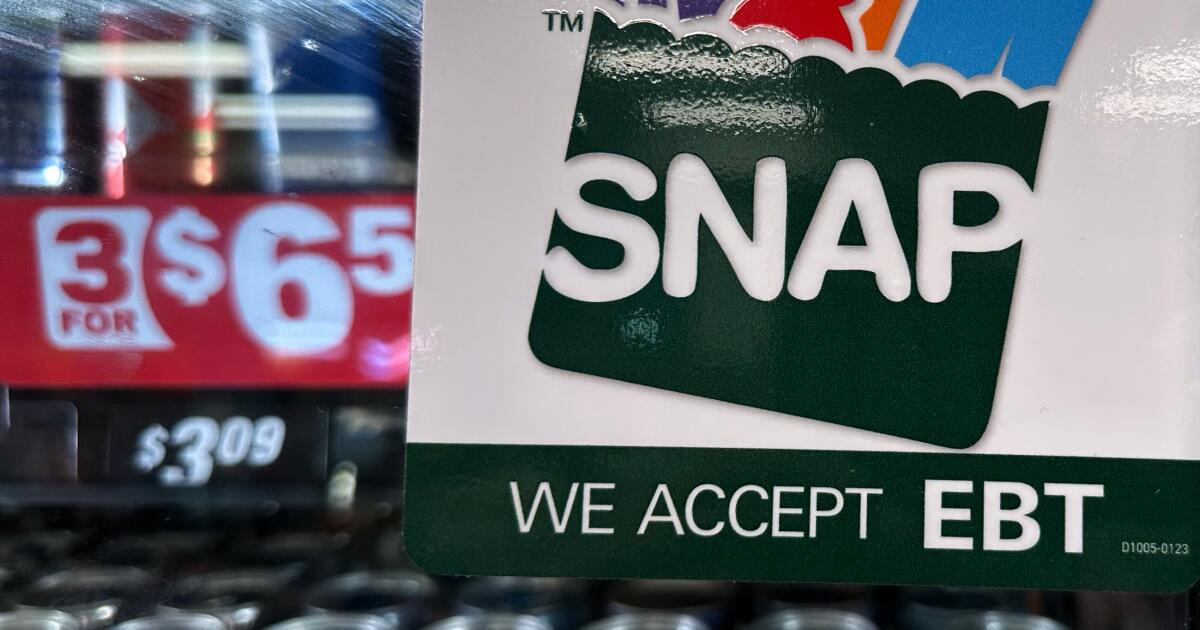
The federal government can’t block benefits from the nation’s largest food aid program from being used to buy candy, soda and other sugary drinks, a judge ruled.

Monday’s ruling scuttles restrictions now in place or planned for the federally funded and state-run Supplemental Nutrition Assistance Program in 23 states. President Trump’s administration has not said whether it will appeal to a higher court.

U.S. District Judge Amy Berman Jackson, who sits in Washington and was nominated to the bench by former President Obama, said in her opinion that the ruling was because the federal government did not follow its own definition of “food.” She said it wasn’t a comment on whether the restrictions are a good idea.

“The federal defendants and the states may have a genuine desire to improve the health of SNAP households by encouraging healthy choices at the store, and they can take lawful steps to meet those goals,” she wrote. “But what they cannot do is violate the law and their own regulations along the way.”

The restrictions are part of the Make America Healthy Again campaign

Agriculture Secretary Brooke Rollins and Health and Human Services Secretary Robert F. Kennedy Jr. have encouraged states to limit what the food aid can be used to buy as part of the “Make America Healthy Again” campaign.

They reason that soda and candy fuel obesity, diabetes and chronic disease epidemics — and taking them off the menu would encourage healthier food choices.

The Agriculture Department has given 23 states so far permission to implement restrictions. Some have been implemented already, while others are queued to take effect in the coming months and years.

At least one state that was set to limit soda and candy purchases changed course earlier this year. Colorado’s human services board voted against implementing the ban after a March hearing in which SNAP beneficiaries and advocates said people would face stigmas if they mistakenly tried to use the benefits on prohibited items. They also said the rules were confusing because they would have allowed buying drinks with at least 50% fruit or vegetable juice, but not those with less.

While the goals are similar, the exact rules vary by state. Some wanted to ban both sugary drinks and candy, while others only sought to ban sugary beverages.

A legal challenge to the candy and soda ban — which includes items such as sports drinks in some states — was filed by SNAP beneficiaries in Colorado, Iowa, Nebraska, Tennessee and West Virginia.

Judge says government ignored a definition of food

Jackson said the main legal misstep in restricting what SNAP benefits could buy came because it ran contrary to Congress’s definition of “food.”

Under the law, SNAP benefits — formerly known as food stamps — can be used for “any food or food product for home consumption except alcoholic beverages, tobacco, hot foods or hot food products ready for immediate consumption.”

The government can waive requirements, but limiting use of the benefits to improve nutrition isn’t listed as a reason to do so. Yet when states asked the Agriculture Department to let them restrict purchases, their requests included using alternate definitions of “food.”

This may not be the final word

The Agriculture Department has not said whether it intends to appeal the ruling.

The case is among scores of challenges to Trump administration policies that hinge on whether the administration has the authority to change policies without congressional approval.

While it’s a big program helping nearly 39 million Americans — about 1 in 9 — buy groceries, SNAP is normally relatively low-profile. That’s been different since Trump returned to office last year.

Under his big tax and policy law signed last year, more recipients are subject to work requirements and states are being required to pay a larger share of administrative costs — and could be on the hook for benefit costs if their error rates are too high.

During a government shutdown last year, courts blocked the administration from cutting off benefits. Meanwhile, Rollins has said that there’s rampant fraud in the program.

Mulvihill writes for the Associated Press.

Source link

California bans local soda taxes

California cities and counties won’t be allowed to tax soda for the next 12 years after Gov. Jerry Brown signed fast-moving legislation Thursday.

The bill, which was first unveiled Saturday evening, prohibits local governments from imposing new taxes on soda until 2031. It comes after a deal was struck between legislators and business and labor interests who agreed to remove an initiative from the Nov. 6 statewide ballot that would have restricted cities and counties from raising any taxes without a supermajority vote of local citizens.

In a signing statement, Brown said soda taxes “combat the dangerous and ill effects of too much sugar in the diets of children.” But he added that mayors across the state called him to support the deal because they were alarmed by the tax initiative.

Brown also reacted strongly to another part of the initiative, which would have restricted the state’s ability to raise certain fees without a two-thirds vote of the Legislature.

“This would be an abomination,” Brown wrote.

Many lawmakers shared Brown’s mixed emotions toward the soda tax ban.

During debate on the legislation, Assembly Bill 1838, legislators said they reluctantly voted to impose the moratorium because the ballot measure, for which signatures were gathered by a political campaign financed by more than $7 million from the beverage industry, would have been worse for state and local government coffers.

Assemblyman Kevin McCarty (D-Sacramento) said he was against both the soda tax ban and how the beverage industry used the threat of an initiative to force the Legislature’s hand, but ultimately supported it.

“I think this is a terrible decision that we’re making,” McCarty said during a state Capitol hearing on the bill Thursday morning.

Sen. Scott Wiener (D-San Francisco) voted against the deal, but said he understood the choice his colleagues were making.

The beverage “industry is aiming basically a nuclear weapon at governing in California and saying if you don’t do what we want, we’re going to pull the trigger and you are not going to be able to fund basic government services,” Wiener said. “This is a pick-your-poison kind of situation, a Sophie’s choice. What the Legislature is doing is perfectly reasonable.”

Coverage of California politics »

Minutes after Brown signed the soda tax ban, proponents formally withdrew their initiative from the statewide ballot. The deadline to do so was Thursday.

The initiative wouldn’t have banned local soda or other tax increases. But it would have made them much harder to pass. It would have required all local tax hikes to pass by a two-thirds supermajority vote, making it significantly more difficult for cities and counties to raise revenue for a variety of projects.

Currently, any local sales, hotel-room or other tax increase needs a simple majority of local ballots that are cast — provided that the money goes to a city’s day-to-day operating budget. Roughly half of the local tax measures approved by voters since 2012 — raising hundreds of millions of dollars annually — did not receive supermajority approval, according to the state’s nonpartisan Legislative Analyst’s Office.

Public health advocates have been pushing for soda taxes across the United States for years, saying that higher prices would reduce consumption amid growing rates of obesity and diabetes while also generating more revenue for local governments. By contrast, the beverage industry has argued such taxes make it harder for low-income residents to buy groceries and unfairly single out soda as the cause of health problems.

Thirty cities and states attempted to pass soda taxes before Berkeley became the first to succeed in November 2014, charging a penny-per-ounce tax. Since then, three other Bay Area cities — San Francisco, Oakland and Albany — have passed soda taxes. The soda tax ban leaves those measures intact, but prohibits others that would have taken effect this year. Earlier this week, Santa Cruz city officials voted to put a 1.5-cent-per-ounce soda tax on the November ballot, an effort that will be blocked under the new state legislation.

California Legislature nears deal to temporarily ban soda taxes »

Activists were stunned by the quick action on the soda tax ban. Carter Headrick, director of state and local obesity policy initiatives at the American Heart Assn., said using a ballot initiative to leverage lawmakers to prohibit soda taxes in communities across California was “blackmail.”

“I don’t think the [beverage industry] ought to be forcing legislators to be taking away the rights of people to vote,” Headrick said.

Some lawmakers attacked the deal because they supported the initiative. Sen. Jeff Stone (R-Temecula) said that Thursday’s decision subverted the will of Californians who wanted to keep their taxes low.

“This bill tells 1 million people that signed this petition to make it harder to raise their taxes that their voices don’t matter,” Stone said.

The American Beverage Assn., which represents soda companies and other nonalcoholic drink manufacturers, contributed 85% of the initial $8.3 million raised by backers of the ballot measure.

A spokesman for the association said that the legislation would keep grocery prices lower and that the industry was working to find alternatives to reduce sugar consumption.

“We believe the legislation approved today will allow us to work toward these goals,” association spokesman William M. Dermody Jr. said in a statement.

Labor interests added momentum to the eleventh-hour soda tax ban legislation, saying the initiative would be far more damaging to the state.

“A temporary pause on further local soda taxes gives California the opportunity to work on a statewide approach to the public health crisis of diabetes,” Alma Hernandez, executive director of SEIU California, said in a statement.

liam.dillon@latimes.com

Twitter: @dillonliam


UPDATES:

6:30 p.m.: This article was updated with comments from a beverage industry spokesman.

3:55 p.m.: This article was updated with Gov. Jerry Brown approving the soda tax ban and details about the withdrawal of a local tax ballot initiative.

This article was originally published at 12:45 p.m.


Source link