Soccer

Cathedral’s unusual arrangement: President, principal are head coaches

If you run cross-country or play soccer at Cathedral High, you‘d better be extra polite and respectful around the head coaches. They also happen to be the school president and principal, respectively.

Martin Farfan and Arturo Lopez continue to hold dual roles, which probably makes Cathedral the only school in the state with such an arrangement.

Despite all the time and responsibilities required to coach and help run Cathedral, they seem to make it work. This past week, while school was closed for the holidays, both held practices Monday. Farfan took his usual jog around the neighborhood after practice and ended up on the field while Lopez held a soccer practice.

Both believe in the importance of academics and the lessons learned in sports to help prepare students for the future.

Their players, however, know with the school’s two big wigs also wearing coaching hats, they always need to be on their best behavior.

This is a daily look at the positive happenings in high school sports. To submit any news, please email [email protected].

Source link

Former British commando pleads guilty to driving into a crowd of soccer fans

Paul Doyle pleaded guilty Wednesday to 31 counts that he intentionally drove into a crowd of people celebrating the Liverpool FC soccer club winning the Premier League in May, injuring more than 130 people, including two babies. File Photo by Adam Vaughan/EPA

Nov. 26 (UPI) — A former British Royal Marine pleaded guilty to injuring dozens of people, including children and babies, after driving his car into a crowd of people at a soccer victory parade.

Paul Doyle, 54, on the first day of his trial, changed his initial pleas in 31 charges linked to driving his Ford Galaxy Titanium into a crowd of people celebrating the Liverpool FC soccer club’s Premier League title in May.

More than 130 injuries were reported after Doyle accelerated into the parade crowd, sending bodies flying off his car — two of whom were babies aged six and seven months — according to The Guardian.

On Wednesday, shocking the court, Doyle reversed his not guilty pleas entered the day before, answering guilty to all 31 charges, the BBC reported.

The charges include dangerous driving, causing grievous bodily harm with intent, wounding with intent and attempting to cause grievous bodily harm, prosecutors said.

“By entering guilty pleas, Doyle has finally accepted that he intentionally drove into crowds of innocent people during Liverpool FC’s victory parade,” Sarah Hammond, chief prosecutor on the case for the Crown Prosecution Service, during the court proceedings. “Driving a vehicle into a crowd is an act of calculated violence.”

“This was not a momentary lapse by Paul Doyle — it was a choice he made that day and it turned celebration into mayhem,” she said, noting that dashcam footage from his car showed that he had become “increasingly agitated by the crowds.”

Doyle, on May 26, drove down the street where the celebration was happening, and which had been closed to non-emergency vehicles, on the way to pick up friends, but lost his patience with the crowd, accelerating rapidly into it.

Although people in the celebration tried to pull him out of the car before he actually hit people — he initially claimed he was scared for his safety and pleaded innocent to intentionally ramming parade-goers — police said 134 people were injured in the melee and more than 50 people required hospitalization.

Doyle was initially charged with seven counts related to six people, prosecutors added another 24 charges in August based on some victims he had hit that were aged between six months and 77 years old after he intentionally drove his car into the crowd of soccer fans.

With the guilty pleas, Judge Andrew Menary KC will now consider Doyle’s sentence based on harm caused, the defendant himself and the effects of the crime on the community, which prosecutors have portrayed as significant.

The maximum sentence for the charges, according to the BBC, is life in prison.

“It is inevitable there will be a custodial sentence of some length and you should prepare yourself for that inevitability,” Menary told Doyle.

Sentencing in the case is scheduled for Dec. 15 and 16.

Liverpool FC fans react after the game against Manchester City at the Guinness International Champions Cup at Yankee Stadium in New York City on July 30, 2014. The Guinness International Champions Cup is a unique tournament featuring eight of the world’s best and most recognizable soccer clubs including Real Madrid CF, Manchester United, Manchester City, Liverpool FC, AS Roma, Inter Milan, AC Milan and Olympiacos. The Final score was Manchester City 2 Liverpool 2 and Liverpool won 3-1 on penalties. UPI/John Angelillo | License Photo

Source link

Meet Meila Brewer, the 16-year-old UCLA women’s soccer star

She doesn’t have a driver’s license. Often doesn’t get movie references. Reminds many of their little sisters.

There’s always some story or tidbit involving Meila Brewer that will make her teammates laugh or gush about playing alongside the freshman center back who’s believed to be the youngest athlete in UCLA history.

Why, it wasn’t so long ago that Brewer floored everybody else on the women’s soccer team when each player shared how old they were when the pandemic hit. As almost everybody ticked off one year or another in high school, all eyes turned to Brewer.

“Oh,” she announced, “I was in fifth grade.”

Meila Brewer extends her arms, smiles and runs to embrace her UCLA teammates during a match against Stanford.

Meila Brewer extends her arms, smiles and runs to embrace her UCLA teammates during a match against Stanford.

(UCLA Athletics)

That doesn’t mean that she’s easily identifiable. Coach Margueritte Aozasa has made an informal game of asking anyone who inquires about having a 16-year-old on her roster to pick her out when scanning the players on the field.

No one has gotten it right on the first handful of attempts.

“They’ll point out three or four players,” Aozasa said, “and I’ll be like, ‘No, it’s probably the one you would least expect.’ ”

Being one of the tallest players on the team at 5-foot-8 provides some cover, but it’s also her precocious nature and the skills she developed while training with a professional team and playing for the U.S. youth national team that give her a veteran presence.

There’s been no underage shrinking, Brewer living up to every moment as fourth-seeded UCLA (11-5-3) prepares to open the NCAA tournament at 6 p.m. Saturday at home against Pepperdine (11-6-2).

Meila Brewer dribbles the ball while playing for UCLA during the 2025 season.

Meila Brewer dribbles the ball while playing for UCLA during the 2025 season. Brewer, 16, is the youngest athlete to ever compete in a sport at UCLA.

(UCLA Athletics)

OK, maybe a hint of her youth emerged when she was asked how she felt about playing on college soccer’s biggest stage.

“Freaking out,” Brewer said. “Like, when you think about it, I’m soooo excited, that’s like the only way you can put it.”

This will be just her eighth game with the Bruins as a result of her recent participation in the FIFA under-17 Women’s World Cup in Morocco, where the Americans won their group before losing to the Netherlands on penalty kicks in the Round of 16.

Her UCLA teammates followed the action from afar, one posting a picture of herself shedding celebratory tears in a group chat after Brewer scored in the opening game. After the competition ended, Brewer boarded one flight for Atlanta before getting on another one bound for Los Angeles, only to hop back on a third plane a little more than 12 hours later to accompany her Bruins teammates to West Lafayette, Ind., for the Big Ten tournament.

“Coming back from Morocco, I had missed a decent amount of games,” Brewer said, “but I feel like the girls have been so supportive of helping me get reintegrated and getting right back into the flow just because we’re in tournament time and we want to succeed.”

Aozasa said she’s reminded her players that there’s a 16-year-old on the team and to behave appropriately. Brewer’s roommate, Payten Cooper, is two years older than her even though she’s also a freshman. Lexi Wright, a redshirt senior forward, is seven years older.

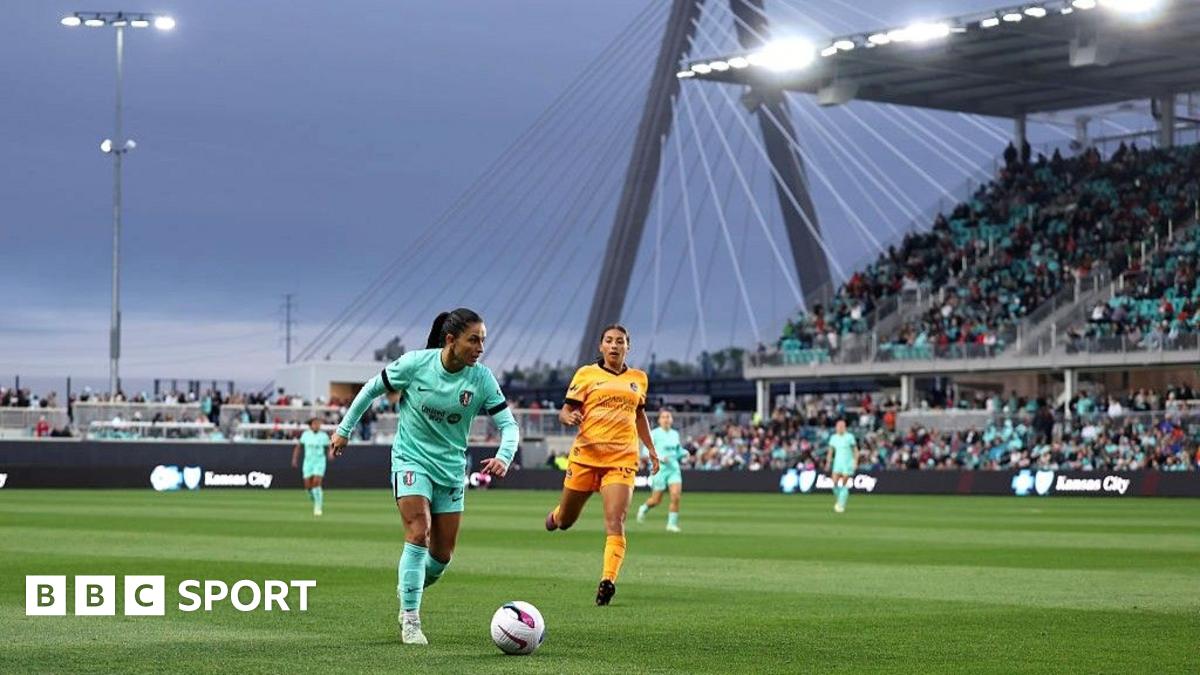
But those age gaps aren’t a big deal to Brewer considering she’s already spent a year and a half training with players in their 30s on the Kansas City Current, a team in the National Women’s Soccer League.

“It’s no surprise that she’s gonna be able to fit in right away and be successful at that level at UCLA,” said Vasil Ristov, the coach of the Current’s second team who was also Brewer’s youth club coach, “because she’s seen some of the top talent in the world and she’s participated in training sessions with them.”

Just reaching UCLA at such a young age was a major triumph.

Having taken a heavy class load in middle school and her first two years of high school to lessen the academic burden on her later, Brewer had reclassified once by the time she visited UCLA last spring. That’s when her love for a place she had long considered her dream school truly took hold, Brewer feeling the pull to play immediately even though she had more than a year of high school remaining.

“She was like, ‘What if I just come in this fall?’ ” said her father, Austin Brewer, who was also on the trip. “And I’m like, ‘Well, I don’t think it works that way.’ ”

After checking it out, the family realized it was a possibility. Meila (pronounced MEE-luh) worked nonstop from April through the end of July. She didn’t get to participate in high school graduation ceremonies but was rewarded with something greater — a chance to play for the Bruins.

UCLA freshman Meila Brewer controls the ball while playing Tennessee during the 2025 season.

UCLA freshman Meila Brewer controls the ball while playing Tennessee during the 2025 season.

(UCLA Athletics)

Her schedule includes nearly as many parent check-ins as classes. Austin and Shelly Brewer routinely call in the morning, midday and evening, sometimes adding oldest daughter Sasha, a freshman defender for the University of Miami women’s soccer team, to FaceTime chats.

Classes haven’t been as hard as Brewer imagined, though she’s still trying to pick a major.

“Coming into college,” she said, “I was prepping myself for the worst, so I feel like I was ready for it.”

On the field, Brewer is known for a physical style that allows her to impede opposing forwards in her role as a defender and smart playmaking while on the attack. They’re all traits that could help her fulfill her goal of playing for the U.S. national team.

Having always played up one or more levels on club teams, sometimes alongside boys, Brewer developed a strong sense of self.

“I asked her once who her favorite player was, who did she want to be like,” Shelly Brewer said, “and I’ll never forget this — we laugh about it all the time — she said, ‘I don’t want to be like anyone; I want to be like me.’ ”

In a nod to her age and the fact that she’s still growing, Brewer sometimes gets tendinitis in her knees. She wants to be just one of the girls, her youth a novelty but not a defining characteristic.

“I want to be seen as an equal on the field or a leader on the field in what I can do besides my age,” she said. “I just want to be able to stand out for how I play and not on the age side of it.”

That’s not to say that someone who won’t turn 17 until March isn’t having as much fun as everybody else whenever the subject comes up.

“It’s like, ‘Oh my gosh, you’re a baby,’ ” Brewer said, “and I’m like, ‘Yep, I am.’ ”

Source link

A stylish soccer venue opens at Americana at Brand

As the sun begins to set over the San Gabriel Mountains, a group of people runs across a vibrant turf soccer field, passing a ball through the air. They’re surrounded by the glow of the downtown Glendale cityscape — in view are tree-lined streets, handsome civic architecture and an Eiffel Tower-esque structure.

It’s easy to forget you’re atop a parking structure at a mall.

Skyline Pitch is a 25,000-square-foot open-air sports facility that’s taken over the top level of the Americana at Brand, turning what was once a block of concrete into a playground for soccer lovers of all ages and skill levels.

Pickup games start at $15 at the open-air venue.

Pickup games start at $15 at the open-air venue.

(Jason Armond / Los Angeles Times)

Created by Chicago-based marketing agency Elemento L2, the complex opened its L.A. location this fall with two rooftop soccer fields, a panna cage (basically a small enclosed area for 1-on-1 or 2-on-2 speed-focused games), a fut tennis court (a small rectangular court with a net dividing it), a soccer golf section and other interactive play zones — offering players 15 ways to engage with the sport. The venue also boasts sleek lounge areas where patrons can hang out, order food, sip on mocktails, watch games on flat-screen TVs and dance to music spun by live DJs on special nights.

Skyline Pitch follows a trend of athletic clubs moving into shopping centers as retail leaders try to tap into customers’ desire for communal experiences and new activities. In the past couple years, indoor pickleball venue Pickle Pop debuted in Santa Monica, in part to try to revive the ailing Third Street Promenade, and Padel Up (dedicated to the sport of padel) entered Westfield Century City. Also this past summer, a social club for racquet sports announced that it would be taking over the defunct Macy’s building at The Bloc in Downtown L.A.

In the world of recreational soccer, converting a portion of a parking structure to create Skyline Pitch is a welcomed move, helping alleviate one of the constant barriers for players in L.A.: a shortage of fields.

A view from the soccer field to downtown LA from Skyline Pitch a soccer venue.

A view from the soccer field to downtown L.A.

(Jason Armond / Los Angeles Times)

“Finding somewhere to play is the hardest thing,” says Matthew Bambrick, founder of SoCal Youth Sports, one of the local organizations that’s partnered with Skyline Pitch to host youth training camps and other programming. “So finding underutilized spaces or space that can be revitalized in different ways is really, really clever. This should be the blueprint.”

For Ivan Lopez, co-founder of elemento L2, it made sense to open the second Skyline Pitch location in L.A. — the first was in Chicago — not only because it’s home to three professional teams and will host the FIFA World Cup next summer but also because of the city’s rich soccer culture.

People enjoy an evening playing soccer.

People enjoy an evening playing soccer.

(Jason Armond / Los Angeles Times)

“The stadiums are jam-packed whether it’s [the] Gold Cup, World Cup, [UEFA] Nations League, and we celebrate the game in so many ways,” says Lopez, who’s been traveling to L.A. for years to build soccer activations for brands like Target and Coca Cola. “This is where the game is alive and well.”

Anyone wanting to play at Skyline Pitch can sign up for pickup games starting at $15, rent an entire field starting at $150 or buy a $20 activity pass, which grants you access for two hours. The venue is also available for private events and birthday parties. Along with SoCal Youth Sports, other local partners include Cal South Soccer and Soccer Stars Los Angeles.

Jimmy Conrad, who played for the national soccer team for five years and 12 years for Major League Soccer, became a brand ambassador for Skyline Pitch and says he would’ve loved to have a space like Skyline Pitch when he was growing up in L.A., a place where people are “encouraged to play soccer.”

“It just didn’t exist in my generation,” he says. Although the street and local parks [offer] more than enough room to play, he says, having a dedicated venue with the proper goals and lines “just raises the cool factor.”

Source link

Why the 2026 World Cup may not help American soccer leagues surge

Remember when soccer was being touted as the next big sport in the U.S.? Well, it looks like that moment has finally arrived.

Or not. It all depends on who you ask and how you interpret what they tell you.

On one hand, there’s the recent Harris Poll that found 72% of Americans profess an interest in soccer, a 17% increase from 2020. A quarter of those are “dedicated” fans and 1 in 5 say they are “obsessed” with the sport.

On the other hand, there’s the stark decline in attendance and TV viewership for the country’s top two domestic leagues, MLS and the NWSL, and the underwhelming crowds that showed up last summer for the FIFA Club World Cup and the CONCACAF Gold Cup.

LAFC fans lift up a banner honoring Carlos Vela during a ceremony to honor him before a match against Real Salt Lake.

LAFC fans lift up a banner honoring Carlos Vela during a ceremony to honor him before a match against Real Salt Lake at BMO Stadium on Sept. 21.

(Kevork Djansezian / Getty Images)

These contrary findings — a growing fanbase at the same time attendance and viewership numbers are falling off a cliff — come at an important inflection point for soccer in the U.S., with the largest, most ambitious World Cup kicking off at SoFi Stadium in fewer than 200 days.

“The short answer is yes, the World Cup will be a watershed moment for soccer in America. However, it’s unlikely to immediately lead to a significant increase in ticket sales for MLS and NWSL. Soccer fandom in America develops differently from that of other sports,” said Darin W. White, executive director of the Sports Industry Program and the Center for Sports Analytics at Samford University, which next year will launch a major five-year study to explore how soccer can become mainstream in the U.S.

“The World Cup will bring millions of new Americans into the pipeline. Over the next few years we expect these new fans to progress through the pipeline, giving soccer a substantial enough fan base to tip the scales and help make soccer part of the ongoing mainstream sports conversation. I am confident that the World Cup will enable soccer to reach that critical mass.”

Steven A. Bank, a professor of business law at UCLA who has written and lectured extensively on the economics of soccer, isn’t as optimistic.

“The risk isn’t that U.S. soccer will be in the same place in 10 years, but that it will have regressed,” he said.

“For the World Cup to benefit domestic leagues’ attendance, ratings, and revenue, as well as youth and adult participation rates in playing soccer, it will have to be the catalyst for more domestic investment in the game. The question isn’t whether the World Cup will convince enough people to become fans or to move from casual to dedicated or obsessive fans. It’s whether it will convince enough wealthy people and companies to risk the kind of money necessary to compete with the top leagues for the top talent.”

U.S. captain Christian Pulisic drives the ball during an international friendly against Ecuador at Q2 Stadium on Oct. 10

U.S. captain Christian Pulisic drives the ball during an international friendly against Ecuador at Q2 Stadium on Oct. 10 in Austin, Texas.

(Omar Vega / Getty Images)

That investment could be a boost to both first-tier domestic leagues, which saw their attendance and TV rating fall dramatically this year. After setting records in both 2023 and ‘24, MLS watched its average attendance fall 5.4% — to 21,988 fans per match — this season. According to Soccer America, 19 of the 29 teams that played in 2024 saw their attendance drop; more than half saw declines of 10% or more.

The TV audience also appears to be relatively small, although the fact Apple TV, the league’s main broadcast partner, rarely releases viewer data has hampered efforts to draw any firm conclusions. MLS said last month that its games attracted 3.7 million global aggregate viewers a week on all its streaming and linear platforms, an average of about 246,000 a game on a full weekend. While that’s up nearly 29% from last year, the average viewership figure is about 100,000 smaller than what the league drew for single games on ESPN alone in 2022, the last season before Apple’s 10-year $2.5-billion took effect.

NWSL also saw overall league attendance fall more than 5%, with eight of the 13 teams that played in 2024 experiencing declines. And TV viewership in the second year of the league’s four-season $240 million broadcast deal was down 8% before the midseason July break, according to the Sports Business Journal.

That follows a summer in which both the expanded Club World Cup and the Gold Cup struggled to find an audience. Although the 63-match Club World Cup drew an average of 39,547 fans per game, 14 matches had crowds of fewer than 20,000. The Gold Cup averaged 25,129 for its 31 games — a drop of more than 7,000 from 2023. And five matches drew less than 7,800 people.

“There’s a danger of taking this year’s decline out of context,” said Stefan Szymanski, a professor of sports management at the University of Michigan and author of several books on soccer including “Money and Soccer” and “Soccernomics” (with Simon Kuper). “Last year was a record year. It’s really about the diminishment of the Messi effect.

“I wouldn’t say it’s a moment of crisis. And the way MLS is looking at this strikes me that they’re entirely focused on a post-World Cup [bump], which they think they’re going to get. I’d be skeptical myself about that. I don’t think it will do that much for them.”

Szymanski said the World Cup could hurt the league by underscoring the huge difference in the quality of play between elite international soccer and MLS.

“Americans are not dumb,” he said. “They know what’s good quality sport [and] not good quality sport. And they know that MLS is low level. The only way, in a global marketplace, you can get the top talent to have a truly competitive league is to pay the salaries.”

Which brings us back to Bank’s conclusion that fixing soccer in the U.S. isn’t about the soccer, it’s about the money being spent on the sport. For next summer’s World Cup to have a lasting impact, the “bump” will have to come not just from an increase in attendance and TV viewership but in investment as well. And, as Szymanski argues, that means additional investment in players as well.

“If all it does is attract eyeballs for this competition,” Bank said “I’m not sure it does more than the Olympics does every four years when it temporarily raises the profile of a few sports for some people who were not casual fans before.”

Source link