19 SoCal garden tours to inspire your L.A.-area yard
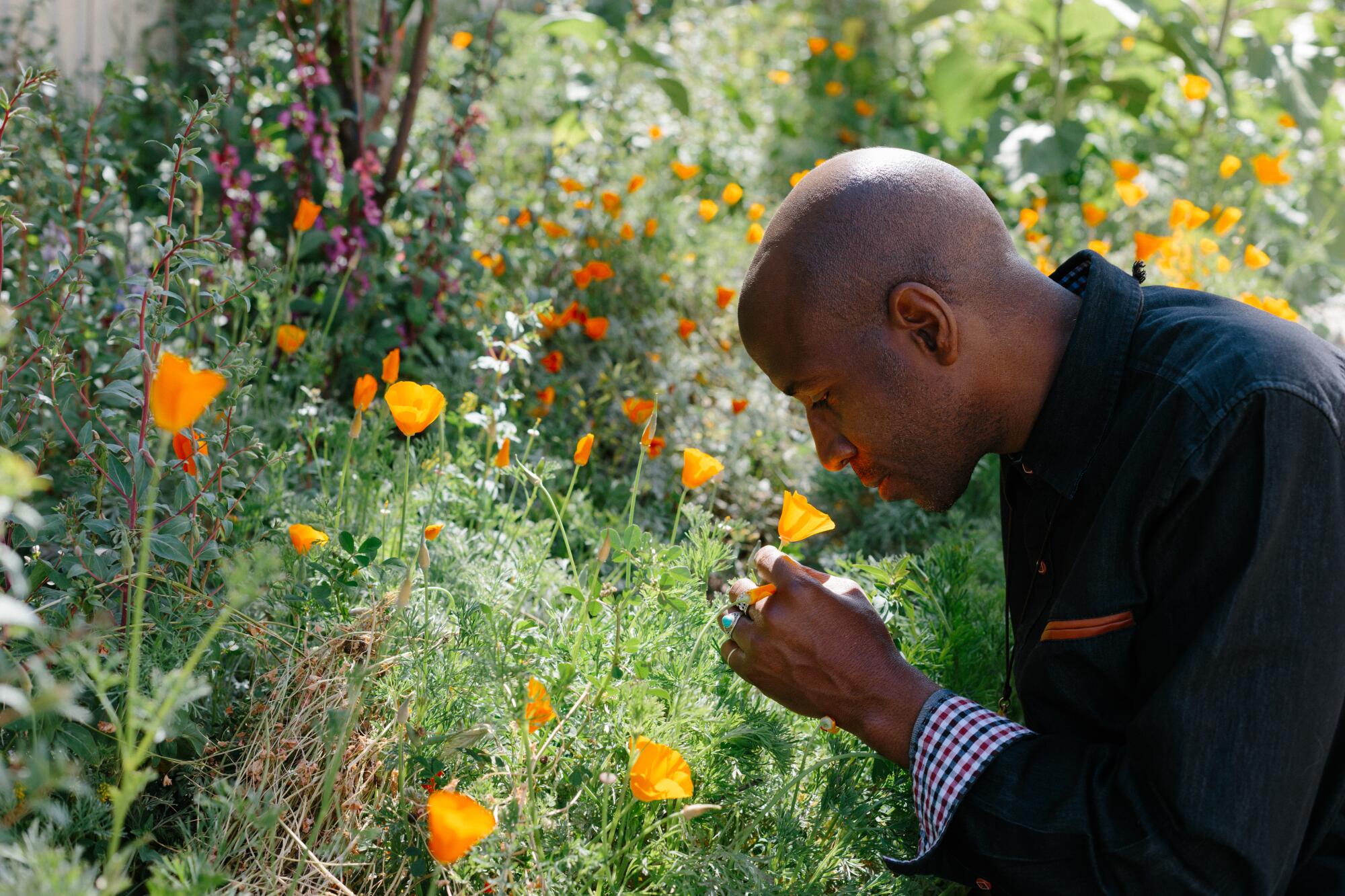
Scattered orange California poppies, California Lilac with bright blue blooms, and hummingbird sage with dark rose-lilac-colored flowers spontaneously tell us what we already know: Spring has arrived.
Southern California, especially Los Angeles, has many breathtaking botanical gardens and wildflower-lined hiking trails. But it’s also exciting to visit private home gardens that are rarely open to the public and find inspiration even if you don’t have space for a garden at home.
This year’s spring garden tours include a visit to a historic Midcentury Modern home designed by Buff, Straub and Hensman, complete with a river running through the property as part of the Garden Conservancy’s Open Days Tour. You can also check out a native garden at a Long Beach elementary school that is usually closed to visitors, or see how a young couple used a $5,000 turf rebate from the Los Angeles Department of Water and Power to transform their Inglewood yard during the Theodore Payne Foundation’s two-day Native Plant Garden Tour.
Whether you love gardening or simply enjoy beautiful landscapes and meeting other plant lovers, these tours offer plenty of ideas you can use long after your visit. From native plants to rose gardens, here are this spring’s local garden tours.

Blooming California poppies remind us that spring is here.
(Stella Kalinina / For The Times)
March 29
The Poppy Day Garden Tour raises money for the South Coast chapter of the California Native Plant Society. Visit 10 native plant gardens across the South Bay that support wildlife and help save water. The tour runs from 10 a.m. to 4 p.m. Tickets cost $15 in advance or $20 at the door, if available. Children and teens under age 18 get in free. For tickets and more information, visit cnps-south-coast.square.site.
The Creative Arts Group’s Art of the Garden Tour features self-guided visits to five gardens in Pasadena, Altadena and La Cañada Flintridge from 10:30 a.m. to 4 p.m. Tickets cost $45 in advance or $50 on the day of the event. This tour is the nonprofit’s biggest fundraiser of the year, supporting arts programs, exhibitions and classes for children and adults. Please note that photography, pets and children under age 12 are not allowed on the tours. You can also stop by the Creative Arts Group Gallery at 108 N. Baldwin Ave. in Sierra Madre to buy tickets in person and see artwork from more than 25 local artists. For more information, visit creativeartsgroup.org.

(Mariah Tauger / Los Angeles Times)
April 11-12
Theodore Payne Foundation’s Native Plant Garden Tour: Habitats That Heal is a showcase for 42 gardens across Los Angeles, each with at least half native plants. The self-guided tour runs from 10 a.m. to 5 p.m. on both days. On April 11, you can visit 20 gardens in neighborhoods in Sherman Oaks, Van Nuys, North Hollywood, Shadow Hills, Tujunga, Montrose, Burbank, Glendale, Eagle Rock, Highland Park, South Pasadena, Pasadena and Altadena. On April 12, the tour covers gardens in Santa Monica, Venice, West L.A., Del Rey, Baldwin Hills, Mid-City, Inglewood, South L.A., Beverly Hills, West Hollywood, Hollywood, Los Feliz, Glassell Park, Highland Park, Mt. Washington, El Sereno and Alhambra. Tickets cost $55, or $50 for members, and children under age 16 are free. If you buy a ticket, you’ll receive a guidebook in the mail, which also serves as your ticket. Starting March 26, tickets and maps are only available for purchase in person at the foundation office in Sun Valley from 8:30 a.m. to 4:30 p.m. Tuesday through Saturday. The office is closed on Sunday and Monday. For more information, visit nativeplantgardentour.org.
California Native Plant Society’s San Diego Native Garden Tour is a showcase of 31 private gardens across the city, including the CNPS San Diego Native Plant Teaching Garden, Southwestern College Botanical Garden, Paradise Hills and Native West Nursery. Each garden in the self-guided tour uses at least 60% California native plants, demonstrating how these gardens protect local biodiversity. The tour is from 9 a.m. to 4 p.m. Tickets are $45; children age 17 and under are free. Will call locations and instructions will be emailed after ticket purchase at eventbrite.com.

A “Welcome to California” sign is seen at Prisk Native Plant Garden in Long Beach.
(Dania Maxwell / Los Angeles Times)
April 12 and 19
The Prisk Native Plant Garden Open House is celebrating its 30th year with an annual tour of the garden, which is usually closed to the public. You can visit from 1 to 4 p.m. both days at William F. Prisk Elementary School, 2375 Fanwood Ave. in Long Beach. The garden is located behind the school at East Los Arcos Street and Albury Avenue. Admission is free, but donations are welcome. For more information, visit facebook.com/prisknativegarden.
April 19
The Garden Conservancy Pasadena Open Days Tour welcomes you to visit four private gardens at historic homes. You can see Buff, Straub and Hensman’s Midcentury Modern Norton House, the 1916 Spanish Revival-style home called Mi Sueño del Sur, a Southern California Arts and Crafts garden, and the rose gardens of a historic Pasadena estate from the 1900s. The tour runs from 10 a.m. to 4 p.m. Tickets cost $10 per garden and are available online only. Children ages 12 and under can join the tour for free with an adult. For more information, visit gardenconservancy.org.

Desert gardens with native plants at the Mojave Land Trust in Joshua Tree.
(Gina Ferazzi / Los Angeles Times)
The Morongo Basin Conservation Assn. is hosting its 15th Annual Desert-Wise Landscape Tour. This self-guided event runs from 9 a.m. to 4 p.m. and features four private gardens in Pioneertown and Yucca Valley, along with three demonstration gardens in Joshua Tree. Tickets cost $25, or $20 for members. You can find tickets and more information on the MBCA website, mbconservation.org. On the day of the tour, registration will only be available at the Mojave Desert Land Trust in Joshua Tree.
April 25
Habitat Garden Tours at Caroline Park and Ryan Bonaminio Park, the Riverside-San Bernardino Chapter of the California Native Plant Society is offering free tours of two large native plant gardens within city parks in Redlands and Riverside. Morning tours of the 16-acre Caroline Park in Redlands, which is dedicated to California native plants, will be held at 9 a.m., 10 a.m. and 11 a.m. Park near the corner of Mariposa Drive and Poppy Road, then enter the park using the trail to the left of the Caroline Park sign. Meet at the kiosk upon arrival. Afternoon tours at Ryan Bonaminio Park in Riverside, which features restored native plants from local floodplains and upland areas that support pollinators, will be held at 1 p.m. and 2 p.m. Park on the west end of the parking lot to access the decomposed granite path leading to the 1.17-acre habitat garden. The tours are free, and you are welcome to join at any scheduled time. For more information, visit: chapters.cnps.org/riversidesanbernardino.
April 25-26
The Floral Park Home & Garden Tour in North Santa Ana invites you to explore historic homes and gardens from the 1920s to the 1950s from 10 a.m. to 4 p.m. on both days. Along with the tours, you can enjoy the Street of Treasures Market, sample food from local restaurants and check out a car show. All proceeds help fund community scholarships and support nonprofit organizations. Tickets cost $45 if you buy them by April 20, or $50 at the door. For more details, visit floralparkhometour.com.
The Riverside Community Flower Show & Garden Tour: Garden Party features self-guided tours of six local gardens, with master gardeners on hand to answer your questions. Tours are open from 10 a.m. to 5 p.m. both days. You can also visit a free flower show at the Riverside Elks Lodge, 6166 Brockton Ave., from 9 a.m. to 5 p.m. Admission to the garden tour is $10, and children under 16 get in free. For more information, visit riversideflowershow.com.

(Juliana Yamada / Los Angeles Times)
April 26
The 35th Annual Bungalow Heaven Home Tour features self-guided walks through eight homes, with volunteer docents ready to share each home’s history and architecture. Although the focus is on architecture, many of the homes in the landmark district have lovely landscaped backyards that guests are welcome to visit and admire. McDonald Park will be lively all day with music, a silent auction of unique items, homemade cookies and local food trucks for lunch. It’s from 10 a.m. to 4 p.m. Advance tickets are $25 at bungalowheaven.org and available until April 25 at 8 p.m. Tickets on the day of the tour are $30 and can be bought at McDonald Park, 1000 E. Mountain St., starting at 9:40 a.m. Part of the proceeds will go to San Gabriel Valley Habitat for Humanity to help those affected by the Eaton fire.
May 2
The Laguna Beach Garden Club’s 20th Gate & Garden Tour starts at the Bruce Scherer Waterwise and Fire-Safe Gardens, located at 306 3rd St. in Laguna Beach. Special buses will take ticket holders to visit several local gardens. You can buy Mexican food and artisanal margaritas and enjoy free homemade baked goods. Artists will be painting in some of the gardens, and if you wear a festive garden party hat, you’ll be entered in the club’s hat contest. Proceeds help fund school gardens, local scholarships and community projects. The tours run from 10 a.m. to 4 p.m. Please note that children are not allowed. Timed-entry tickets are $65.87 online, which includes entry between 10 a.m. and 2 p.m., plus one food item and one drink. Find tickets at eventbrite.com.

A welcome sign at one of the garden’s in last year’s Mary Lou Heard Memorial Garden Tour.
(Juliana Yamada / Los Angeles Times)
May 2-3
The Mary Lou Heard Memorial Garden Tour: Real Gardens by Real People features self-guided tours of 34 gardens spanning Long Beach to San Clemente from 10 a.m. to 5 p.m. both days. The tour is free, but donation jars will be set out at the gardens to support the Sheepfold, a crisis center for women and children that has long been the foundation’s annual tour beneficiary. For more information, visit heardsgardentour.com.
May 3
Inspired Garden Artistry invites you to the Blooms with a View Garden Tour, featuring 10 private home gardens in View Park, Windsor Hills, Ladera Heights and Baldwin Hills. The tour runs from 10 a.m. to 5 p.m. You can also enjoy the free Garden & Community Resource Expo at Ladera Park’s south entrance, 4750 W. 62nd St. during the same hours. The expo offers artisans, landscape architects, nurseries, local community services, food trucks, giveaways, a plant swap and fun activities for families. Tickets are $30 online until April 15 and $35 from April 16 through May 3. Kids ages 12 and under enter free. To learn more, visit inspiredgardenartistry.com.
Join the 28th Livingston Memorial Visiting Nurse Assn. & Hospice Camarillo Garden Tour and explore four beautiful Camarillo gardens from noon to 4 p.m. Artists from the Pastel Society of the Gold Coast will be giving demonstrations in at least two of the gardens. Tickets are $30 online, and all proceeds support the association’s hospice program in Camarillo. For more information, visit lmvna.org/gardentour.
May 9
The West Floral Park and Jack Fisher Park neighborhoods are hosting the 19th annual Open Garden Day, featuring tours of two tree-lined areas with vintage homes in North Santa Ana. Enjoy live music, art displays, garden talks and demonstrations, a classic car display, and free bottled water at the gardens. In the morning, you can buy coffee and doughnuts, and vendors will offer food and garden products from 9 a.m. to 4 p.m. Tours run from 9:30 a.m. to 3:30 p.m., with a shuttle service between the two tour loops to help reduce wait times. Tickets go on sale online starting March 20 for $20, or you can buy them for $25 on the day of the event at West Santa Clara and North Westwood avenues in Santa Ana. For more information, visit opengardenday.com.

(Silke Gathmann)
May 14
The 29th Newport Harbor Home & Garden Tour, hosted by Barclay Butera Interior Design, invites guests to explore six locally designed homes and gardens near Newport Harbor High School from 10 a.m. to 3 p.m. The day begins with a morning reception at 9 a.m., followed by a luncheon from 11 a.m. to 2 p.m., and ends with a reception at Barclay Butera from 2 to 5 p.m. This event raises funds for the Newport Harbor Educational Foundation to help support academic programs and faculty at Newport Harbor High School. Tickets are available online for $125 until April 24 at newportharborhometour.com.
May 16
The San Clemente Garden Club’s 2026 Garden Tour offers self-guided tours and live entertainment at several local gardens from 10 a.m. to 4 p.m. You can buy tickets online ahead of time for $40 each, or $35 each if you buy four or more. Tickets on the day of the event are $50. All proceeds help fund the club’s college scholarships, junior gardeners programs, local conservation groups and civic beautification projects in San Clemente. For more information, visit sanclementegardenclub.com.

A Matilija poppy grows in West Hills.
(Myung J. Chun / Los Angeles Times)
May 17
The Rossmoor Woman’s Club is hosting its 22nd Garden Tour, offering self-guided visits to five or six private gardens in the Rossmoor-Los Alamitos area of Orange County, just north of Seal Beach. The tour runs from 10 a.m. to 4 p.m. There will also be a marketplace with vendors and refreshments. Tickets cost $20 and will be available online in April or at the club’s outdoor marketplace at the Farmers & Merchants Bank, 12535 Seal Beach Blvd., on the day of the tour. All proceeds go to local charities and college scholarships for Los Alamitos High School students. For more information, visit rossmoorwomansclub.org.