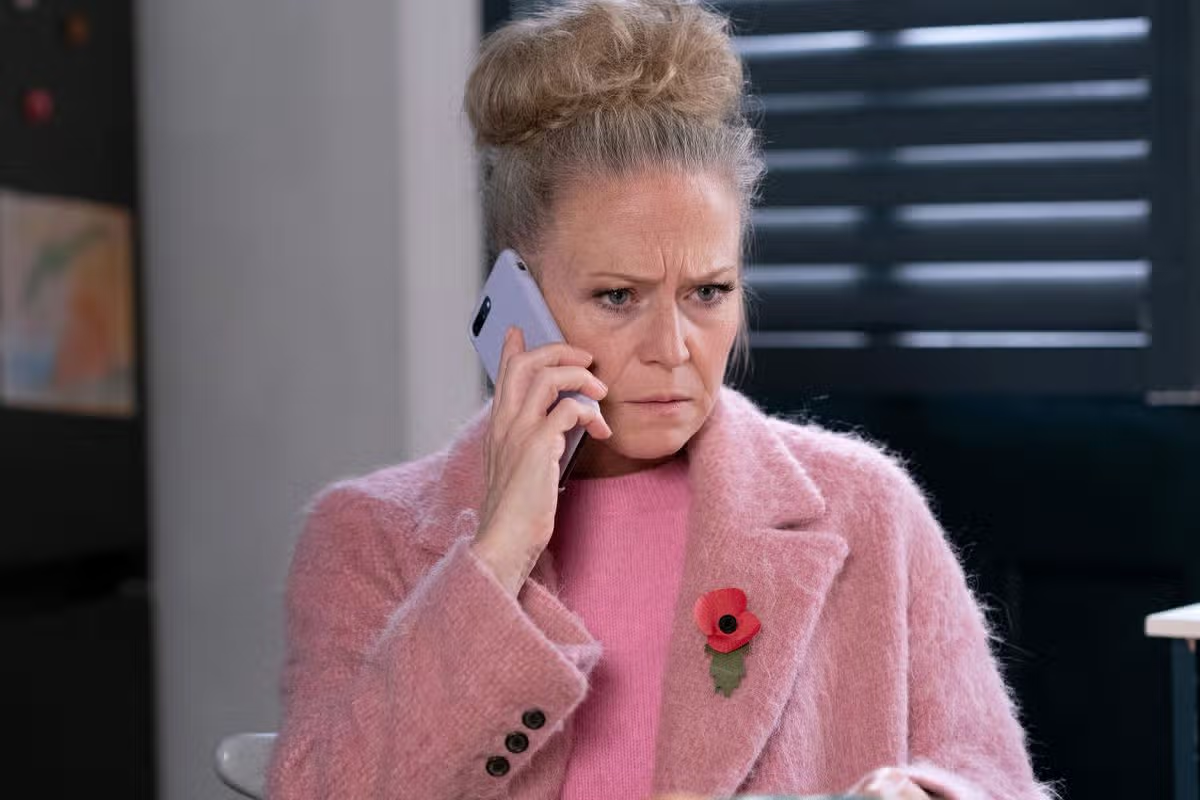
soap

Hollyoaks star shares fear for soap future after major cast, crew, and episode culls

Hollyoaks has been on the air since 1995 – but former cast member Rory Douglas-Speed has shared a concern that the future looks bleak for soaps amid major cutbacks

Hollyoaks star Rory Douglas-Speed has shared his fears for the future of soaps after his former show cut cast and airtime. The 34-year-old actor played Joel Dexter in the Channel 4 soap from 2016 until 2025.

In recent years, Hollyoaks has been brutally trimmed as the large cast has been cut back, and airtime has been slashed from five 30 minute episodes per week to just three 20 minute episodes. Furthermore, the long-running show – which has been on air since 1995 – has been booted from Channel 4’s main broadcast, instead being relegated to E4, Channel 4’s streaming service, and YouTube.

The combination of reduced cast, crew, funding and hours on air has left Rory concerned for what will happen to the series in the future. And it may even cost the love of his life work – as his fiancé, 33-year-old Cleo McQueen actress Nadine Mulkerrin, currently still appears on the show.

Opening up to The Sun, Rory explained: “It’s so tough for soaps because you’ve got all these beautiful characters and all these mad storylines. You need people in it and you need arcs and time to tell the stories, but when you’re cutting it down to three episodes and you don’t have have the same amount of cast – the continuity of the stories, the quality of the stories, can sometimes have an impact.”

He continued: “What made a soap a soap and so easy to watch, all these characters you watch, it’s the one time in somebody’s day where they can sit down and switch off and go ‘I remember that person’ or ‘they’ve come back’, it’s a really nice thing. People watch soaps for a reason.

“So when you start taking all of the mechanisms that supports that, it makes it a bit empty for people and they’ve lost that feeling of vibrancy and crazy normality. Then you revert back to going to Netflix, Prime, I can’t find anything to watch these days because there’s too much.”

Sharing his fear for the art form, he added: “Soaps are integral, they just need extra support. It’s just a change in the tide and it’s a shame.”

The Oaks is not the only soap to cut back on contact as traditional broadcasting networks struggle to make money amid dwindling advertising reserves – and against competition from booming streamer services that offer content that the public are willing to pay for.

At the beginning of the year, ITV reduced episodes of Coronation Street from six per week to five – and after major stars were axed and contracts were not renewed. While Emmerdale faced a similar cut back – dropping from six to five episodes per week.

Over on the BBC, long-running Scottish soap River City was axed after 24 years – with the final episode airing in August this year. And even international soaps have suffered – with Neighbours being cancelled twice in the past four years.

The beloved Australian soap first aired a last ever episode in 2022, only to be revived by Amazon. However, the revival was cancelled after less than two years – with new episodes streaming from September 2023 until December 2025.

The future of soaps has been of high concern to those that love the art form in recent years – with An ITV source telling the Daily Mail in 2023: “Soaps don’t make as much advertising money as they used to.

“There are some chiefs looking enviously at all the consumer-themed documentaries Channel 5 makes and thinking that there could be better commercial opportunities in that kind of programming and using the slots allocated to the soaps for those.

“Corrie and Emmerdale are losing viewers at a drop of around ten per cent on last year. Budgets have already been cut on both shows and it is hard to see how they can sustain so many episodes.”

Like this story? For more of the latest showbiz news and gossip, follow Mirror Celebs on TikTok, Snapchat, Instagram, Twitter, Facebook, YouTube and Threads.


Source link

Emmerdale, EastEnders and Coronation Street spoilers: Two soap villains return

Emmerdale, EastEnders and Coronation Street spoilers see big moments for all three soaps next week, as villains return, bombshells are dropped and new questions are asked

There’s some huge moments ahead on the soaps according to new Emmerdale, Coronation Street and EastEnders spoilers.

EastEnders welcomes back a familiar face, a past villain, and what they have to say will shock some residents. It’s set to be an unmissable week on the show as secrets are revealed, and big twists occur.

On Emmerdale, two returns are teased before one is sadly ruled out. As for the other, a villain’s confirmed comeback finally begins, and it could leave one family at war.

On Coronation Street, there’s a special episode on the way centred around Debbie Webster, as her health continues to deteriorate after her dementia diagnosis. But it seems more than one discovery will be made.

EastEnders

Linda is shocked to discover Lee has spent the night on Sean‘s floor after getting drunk. Linda turns to Elaine and Sharon for support but she’s rocked by what she uncovers when she answers a phone call on Lee’s mobile.

Linda heads off to seek the truth, needing answers and it’s Janine she chooses to confront. Soon she makes a bombshell discovery from Janine but what has Janine told her?

As Linda refuses to believe what she’s been told, she heads back to the Square and has a heart-to-heart with Max. But Linda is not done and she plans to see Janine once more, while Max makes a decision he might regret.

Later, Linda knows something and she has to tell Lee, Nancy and Johnny what she’s been told. It leads to the trio disappearing and Linda and Max are desperately searching for them.

Linda finds Nancy and they soon reflect on things, but shortly after Nancy’s waters break. Meanwhile, Lee shares his concerns with Linda about becoming a dad, and Nancy’s rushed to hospital, but what have they found out? And what does Janine tell them?

Coronation Street

There’s a special episode next week that focuses on Debbie Webster, as her friends rally round her amid her dementia battle. But soon, accusations fly and emotions run high with secrets to be revealed.

The episode focuses on Debbie‘s Angels Abby, Bernie, Christina, Sally and Glenda, who are helping Debbie surprise her son Carl for his birthday. But what’s meant to be a fun experience soon turns into chaos. As tensions between the women rise and confrontations take place, history and trauma rise to the surface.

As the group struggles to keep things going for Debbie, characters confide in one another and decisions are made about futures. As the evening comes to an end, the women unite to move forward whilst some of them are keeping some life-altering choices private, so what will be revealed?

Emmerdale

Tom King is finally back on Emmerdale next week. Meanwhile there’s another return teased for Samson Dingle, but things come to a halt when it’s revealed Tom has been beaten up in prison.

He’s in a critical condition in hospital and soon Belle finds out that Cain organised the attack and that Samson was the one who carried it out. Things get tense as Sam realises what Cain has done.

As the family come to blows, Samson reveals to his family that his new charges mean he could have a longer stretch in prison. As Belle feels paranoid about how Tom will react to this, Kammy tries to calm her down.

Soon Sam and Cain are clashing again but at breaking point, Belle makes a decision. As she calls out her brothers Cain and Sam she announce her she will talk to Tom at the hospital.

Tom is being held there while he recovers. Belle decides to visit him alone, but will she go in and will Tom have his say?

EastEnders airs Mondays to Thursdays at 7:30pm on BBC One and BBC iPlayer. Emmerdale airs weeknights at 8pm on ITV1 and ITVX.

Coronation Street airs weeknights at 8:30pm on ITV1 and ITV X. * Follow Mirror Celebs and TV on TikTok , Snapchat , Instagram , Twitter , Facebook , YouTube and Threads .


Source link

The Turkish Soap Opera of Venezuela Business Dealings

Turhan Mildon appears to have leveraged is White House connections to retain his Venezuela ventures. (Venezuelanalysis)

In Venezuela, reality feels more and more like a puzzle. We have to look at what officials choose to say and not say, what is leaked, what remains behind the curtain, and try to weave a plausible narrative out of that.

The government’s opacity has become the norm. There are key decisions about the country’s future with little to no public explanation, contradictory statements, figures that are hard to believe or put into context. Affairs that should be debated and familiar to everyone are shrouded in uncertainty.

For years, the justification was that the US blockade forced everything to be kept secret, so that the enemy would not use that information to its advantage. Then, when corruption scandals broke out, we were told it was the price to pay for doing business under sanctions.

Fast forward to the present, and the blockade has given way to US neocolonial tutelage. But opacity has only gotten worse. Sometimes Trump officials are the ones explaining what happens in our country. The greatest example is the recent oil deal, but there is another sector plagued by these dark interests: the cement industry, which is especially important now amid the post-earthquake reconstruction needs.

A few days after the June 24 double earthquake, Acting President Delcy Rodríguez ordered an audit of Vencement, a company belonging to the Miller Holding conglomerate, whose CEO is Turkish businessman Turhan Mildon. In March 2025, the young entrepreneur reportedly received a concession to operate 10 cement plants owned by the Venezuelan state. The factories belong to the Socialist Cement Corporation, created by Chávez in 2009 after nationalizing the industry.

The concession to Mildon was greenlit by former Minister of Industry Alex Saab, who was surrendered to US agencies in May to face money laundering charges. In that case, we likewise did not have the privilege of an official explanation[a] for why a naturalized Venezuelan-Colombian dual citizen could be “deported” to the US, contrary to the constitution.

With the announced review of cement contracts, and in line with Washington’s directive of cutting out the insiders who had privileged treatment during the Maduro government, Rodríguez unilaterally canceled the concession, alleging non-fulfilment of investment targets.

This sector has been mired in controversy due to the shortages of cement and speculation with its prices. Though production costs for a 42-kilo cement bag are around $8, scarcity or hoarding often led to prices above $35. With the official investigation, there was an order to surveil the plants, block any removal of material, and restrict Vencement personnel from doing inventory or fulfilling existing orders.

But Vencement was not Mildon’s only venture in Venezuela. In November 2025, Saab intervened in the Lamar Group, a company from Zulia State that produced and exported shrimp, which was awarded to the Turkish businessman. The official explanation was that Lamar’s former owner, José Enrique Rincón, was involved in financing an alleged coup attempt against Maduro. In parallel, the government handed Café Madrid and Fama de América, two coffee producers nationalized around 15 years ago, to Mildon as well.

According to Forbes Turkey, Miller Holding and its affiliates, particularly in Venezuela and the Democratic Republic of the Congo, where Mildon also became extremely influential overnight, had $2.6 billion in profit in 2025. Nevertheless, because the companies are not publicly traded, it is hard to assess their true value. The business sector in Turkey is hardly a paragon of transparency either.

Mildon stated in the same interview that he felt “very sad” when US forces kidnapped Maduro in January, but added that he was not concerned about his businesses. “In my grandfather’s time, professional experience was key. Nowadays, it’s who you know,” the businessman said.

This prompts  multiple questions. How did Mildon get a concession for a sector as strategic as cement, not to mention his other endeavors? His representatives claimed that there were four other competitors, but government sources told the New York Times that the private businesses that receive state assets to operate under “strategic alliances” are handpicked.

Furthermore, Mildon claims Vencement is currently producing 4.5 million tons of cement per year, whereas the NYT reported that, according to data shared by government insiders, output is actually around a third of that. Maybe authorities would like to clarify?

Another obvious question is, why Mildon? Some mention his family’s ties to the Turkish government and President Recep Tayyip Erdoğan, with Mildon’s conglomerate receiving over a dozen important contracts in recent years. Amid US sanctions against Venezuela, risk-taking Turkish businessmen secured juicy opportunities in Venezuela. Others add that a separate advantage was Mildon getting access to inner circles thanks to his relationship with María Eugenia Ceballos, daughter of Chief Admiral and former Interior Minister Remigio Ceballos. Surely love cannot trump a fair bidding process, or can it?

It looks like it, because Mildon’s Turkish soap opera was not canceled with Maduro’s kidnapping and Saab’s handover. Mildon reportedly managed to preserve his assets in Venezuela after getting engaged and married to Alina Habba, a lawyer with close ties to Trump who worked in the Justice Department.

Habba, who also possesses quite the dubious CV for all the influence she wields, got the US president to pardon Venezuelan banker Julio Herrera Velutini, who had been charged with bribery and fraud before being convicted of a campaign finance violation misdemeanor. Habba received a $50 million contract, while still working in the Justice Department, from Concord Partners, a company created by the Herrera Velutini family in Florida. This honestly looks like Olympic-level competition for lack of transparency and shady deals.

But returning to Mildon and Habba, their lavish wedding at the Waldorf Astoria Hotel in New York featured senior Trump officials such as US Attorney General Todd Blanche, FBI Director Kash Patel, and White House attorney Will Scharf.

Apparently, Mildon’s new romance led Rodríguez to change course, declaring that the cancelation of the cement contracts had been a clerical error. On October 13, the Miller conglomerate issued a press statement clarifying that none of its agreements had been canceled.

Beyond the Turkish soap opera that has taken hold in Venezuela, we go back to the fundamental question: what conditions do private businesses need to clear before getting hold of strategic Venezuelan state companies? Who is following up on the investment, production, and fiscal commitments? What mechanisms ensure that these concessions will lead to any economic benefits apart from corporate profits? It seems like all these questions get trumped by contractors’ White House connections .

One of the characteristics of the Venezuelan political shift in recent months has been the sanctification  of private investment. Amid legislative reforms and commissions charged with determining which “non-strategic” assets should be privatized, key sectors such as electricity or the basic industries might soon be in the hands of multinational corporations.

I’m not a big believer in trickle-down economics, in this case that Venezuelans’ well-being will come once corporate profits are assured. But if on top of that, business is the outcome of the most vulgar influence trafficking, we are truly doomed. This soap opera needs a plot twist.

Jessica Dos Santos is a Venezuelan university professor, journalist and writer whose work has appeared in outlets such as RT, Épale CCS magazine and Investig’Action. She is the author of the book “Caracas en Alpargatas” (2018). She’s won the Aníbal Nazoa Journalism Prize in 2014 and received honorable mentions in the Simón Bolívar National Journalism prize in 2016 and 2018.

The views expressed in this article are the author’s own and do not necessarily reflect those of the Venezuelanalysis editorial staff.
Source link