snow

I found a weird European ski resort where you can ski at midnight in the sunshine

The ski resort of Riksgränsen is the most northerly in the world, sitting way into the Arctic Circle. It is treated to regularly displays of the Northern Lights and delivers midnight skiing at middsummer

‘I found an odd European ski resort where you can ski at midnight in the sunshine’

If you think that you’ve missed your chance to go skiing in Europe this year, then you’d be wrong.

There is a resort where the slopes remain open not just through April and into May, but in the high summer days of June.

Riksgränsen, a small ski resort in Arctic Sweden, is the most northerly in the world. It’s 94 miles further up the road from the famous ICEHOTEL, which has melted away into the river by this time of the year.

By June 21, the snow farmers of Riksgränsen have been hard at work for weeks, making sure there’s enough coverage on the 909m tall mountain for the Midsommar downhill jamboree. They’ve dug, they’ve blanketed and they’ve cornered off sections of the mountain.

The reward is three hours of skiing, unlike anything you’ll find elsewhere in the world. From 10pm to 1am, T-shirt-clad skiers whizz down Riksgränsen’s 21km of pistes, basking in the strange phenomenon of bright sun and blue skies throughout the night. At 68.4266°N, the sun won’t disappear again for another month.

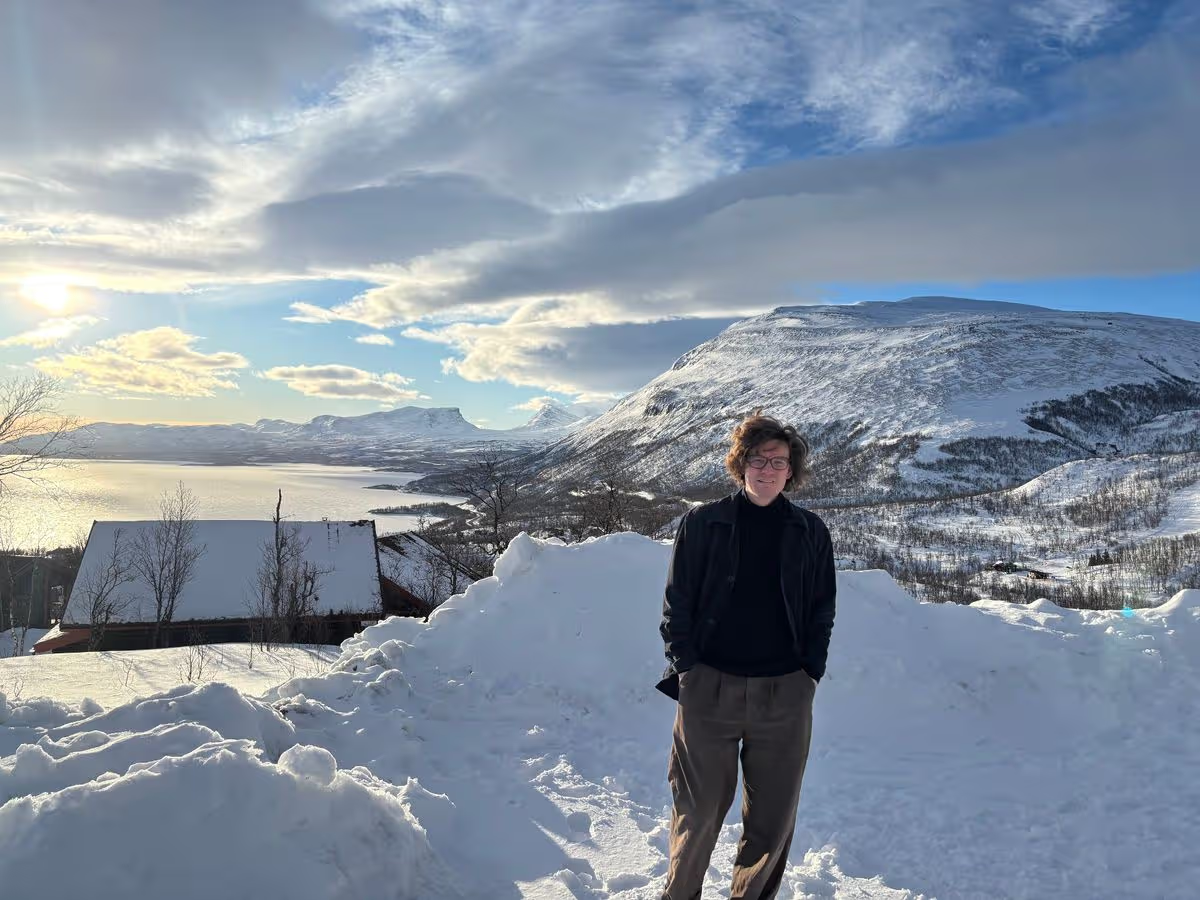
When I visited the Swedish resort, it wasn’t nighttime and the sun was nowhere to be seen. Instead, a heavy cloud hung over the mountain, the wind whipping my face as I sat shivering on the ski lift. Skiing in Sweden in March hits a little differently.

READ MORE: Beautiful pub island that’s ‘frozen in time’ with secret nightclub run by OAPsREAD MORE: I stayed in the new ice hotel – it’s not the cold that some guests can’t handle

Unlike the Alpine ski season, where the temperature hangs around the 0 °C mark and there’s a 10 euro hot chocolate to warm your cockles at the bottom of every piste, Sweden’s resorts get really, really cold. -20C cold. Cold enough that after a few trips down Riksgränsen’s jump-littered slopes, you need to retreat to one of two food huts for a finger-thawing plate of meatballs or a veggie hot dog loaded with crispy onions.

The resort also stands out from others I’ve been to in terms of vibe. Gone are the Dior all-in-one après-skiers of the French Alps, replaced with gnarly 20-something youth hostellers who all seem to know how to backflip.

Riksgränsen is known as a paradise of off-piste skiing, and it does not disappoint. Either side of every piste is acres of mazy terrain, perfect for exploring and throwing yourself down. The resort also specialises in heli-skiing and snowmobile tours. You can even book yourself a caving tour at the nearby Kåppasjåkkagrottan, the largest cave in Sweden.

Riksgränsen translates as national border. Its area extends into Norway, meaning when you ski down the “Gränsleden” (border run), you swing into a different country at every corner.

This boundary-hopping continues with the Arctic ski pass required to access Riksgränsen’s slopes. Starting from about £140, it also gets you onto the lifts of Björkliden, Fjällby and Narvikfjellet.

The two other resorts offer very different skiing experiences.

Björkliden is perfect for families, with a gentle mountain criss-crossed with runs through the pine trees ideally suited to beginners. Hotell Fjället sits metres from its bottom ski lift and is an excellent place to stay. Comfy, staffed by friendly ski enthusiasts from across Sweden, and boasting a dramatic view of Lapporten from its breakfast room. The U-shaped valley is known as ‘the gateway of Lapland’ and for providing a framing of the Northern Lights, which I was lucky enough to witness twice during a three-day trip. The 11-year solar cycle recently peaked, meaning the Arctic was doused in glorious streaks of green on a near-nightly basis.

A little further north is Narvik, where the mountains are higher and the slopes more intense. The resort is currently undergoing a major upgrade ahead of the FIS Alpine World Ski Championship arriving in 2029.

The warming effect of the Gulf Stream means the port does not freeze. The view along the deep blue Ofotfjorden that treats skiers as they descend down the biggest drop in northern Europe is simply breathtaking.

Book it

The Arctic ski pass costs from £140

Chalets at Björkliden’s Hotell Fjället cost from £166 a night.

Flights to Kiruna (a short train ride away from Björkliden, Fjällby and Narvikfjellet) cost from £96 in June.
Source link

Beautiful European train journey that’s half the price of a plane ticket

A scenic train journey from London to Geneva via Paris offers some of Europe’s best views – and can cost half the price of a plane ticket at around £135 return

A rail journey linking three capital cities boasts some of Europe’s most breathtaking scenery—and could set you back half the price of a flight.

The Eurostar and France’s TGV whisk passengers from London to Geneva, making the very most of a trip that spans three nations. The train departs from St Pancras with a change in Paris before heading onwards to the Swiss capital.

It’s a nearly six-hour journey in total, passing through Montbard, Dijon and Bourg-en-Bresse, offering stunning vistas of national parks and rolling countryside. Passengers can hop off in Paris to discover the city—with landmarks including the Eiffel Tower, Notre-Dame, the Champs-Élysées, Sacré-Cœur and the Louvre.

Once the train pulls into Geneva, visitors can take in Lake Geneva, Cathédrale de Saint-Pierre, the Palais des Nations, the botanical gardens and the Brunswick Monument.

From there, it’s also a brief trip to the nearby Alps, with day excursions available from the city to ski or snowboard on the slopes and savour the local restaurants. The train can be half the price of a plane ticket. According to Skyscanner, return flights this month cost up to £394.

During the same period, return train tickets cost around £135, half the price of a flight, according to Trainline.

Families can also cut costs by purchasing Interrail passes—£482 for a family of four to travel on four days within one month, plus seat reservation charges. And expense isn’t the sole advantage.

According to the Times, four passengers journeying from London to Geneva and back by rail produce approximately 44kg of carbon emissions, compared with 108kg by car and 1,608kg by plane. The Intergovernmental Panel on Climate Change states that, to maintain climate change within sustainable limits, each person has a carbon “budget” of 1,500kg of carbon emissions per year.

Although there are a number of factors that determine how polluting different forms of travel are, such as the type of electricity production used to power trains, riding the rails is typically greener than flying.

Back in 2023, carbon calculations made by the Rail Delivery Group found that travelling by rail from London to Edinburgh creates 10 times fewer carbon emissions than by car and 13 times fewer than by plane.

One of the tricky considerations for passengers is generally cost, with budget airlines such as Ryanair, easyJet and Wizz Air typically offering cheaper plane tickets than the equivalent train tickets.

The route from London to Geneva shows that it is not always the case. The price gap between the two forms of transport may also be getting smaller.

Travellers are facing rising airfare costs and reductions in flight schedules as the conflict in the Middle East causes oil prices to soar, with concerns that ticket prices could remain elevated for months even if the war de-escalates. Cathay Pacific, AirAsia and Thai Airways are among a growing number of airlines increasing fares to offset the hikes.

While train services are also impacted by rising oil prices, fuel tends to be a much smaller proportion of their operating margins than with airlines.

Source link

Storm Dave set to approach UK bringing Easter weekend wind, rain and snow

There is a risk of significant travel disruption during what is predicted to be the busiest Easter weekend in four years for drivers.

Bridges could close and ferry services may be cancelled, with possible delays to planes, trains and buses.

Rough seas and large waves will bring dangerous conditions around the coasts.

Parts of north-west Scotland are also covered by a Met Office yellow warning for rain and snow.

At low levels, especially in the Western Isles and Skye, up to 50mm (2in) of rain could fall with the potential for flooding.

Meanwhile hills and mountains above 200m (650ft) are likely to see snow, with 5-10cm (2-4in) expected to accumulate, and a small chance of 20cm (8in) in a few places.

Coupled with the strong winds this could give blizzards, snowdrifts and very poor visibility on the roads.

Source link

I stayed in the new ice hotel – it’s not the cold that some guests can’t handle

For the past 36 years, architects, engineers and all sorts of artists have descended on the tiny Swedish town on the outskirts of Kiruna to construct the latest iteration of the ice hotel

It’s not the cold that gets you first. It’s the quiet.

For some of the guests to the ICEHOTEL in the Arctic town of Jukkasjärvi, it isn’t the -10C bedroom temperature that causes them to abandon their £600 ice bed in the middle of the night and make for the hard wooden slats of the mercifully heated changing rooms, but the oppressive, complete silence that comes with being in a room constructed entirely snow packed onto ice foundations.

“If you didn’t know you had tinnitus before, you certainly will once you spend a night in here,” explained guide Glen as he gestured into our icy room for the night.

Poking out from around the doorway was another unnerving element: an adult-sized ice baby.

For the past 36 years, architects, engineers and all sorts of artists have descended on the tiny Swedish town on the outskirts of Kiruna to construct the latest iteration of the ice hotel. The building process begins when massive blocks of ice are harvested from the Torne River. Each block weighs up to two tonnes and is stored cold during the summer, ready for the winter and the construction of the ICEHOTEL in October. They are not there to build uniform, utilitarian ice rooms, however. Instead, they construct something between the fictional ice palace in James Bond’s Die Another Day and a fairground house of fun.

Author avatarMilo Boyd

READ MORE: ‘We booked a £99 mystery holiday and ended up outside Malta near a corner shop’

My wife and I were to sleep in one of 12 art suites, ours titled ‘There is no one here’ and created by Turkish artists Ayla Turan and Kemal Tufan. Five round-faced, jellybaby-like figures were in there with us, one standing guard at the door, another popping its head over the bedstead. A third seemed stuck in the wall, as if splinched by a Harry Potter apparition gone wrong.

Before bedding down for the night, guests have a chance to visit the other 11 art suites—that is, before they are shuttered up in April and left to quietly melt into the river beyond. A particularly striking creation is ‘Arctic Archive’, the work of Kristina Möckel and Sebastian Scheller. Each wall is made of rows of shelves filled with hundreds of snow books.

Carl and Malena Wellander’s ‘Survival of the Fittest’ lets guests sleep alongside some of the toughest creatures on the planet: tardigrades. These unusual little “moss piglets” can survive in any habitat on Earth, in space and, it seems, the ICEHOTEL.

What’s less certain is whether Robin Lind and Charlie Hammarlund’s Crystal Souls are evil or benevolent figures. The two blurry, Dr Who-like characters are trapped behind an ice block, seemingly desperate to get through.

There are several ice hotels in the world, but the ICEHOTEL is the first and biggest. Its life began in 1989 when Yngve Bergqvist, who had built an art gallery from ice and snow in his garden, opened its frozen door to Swedish soldiers who needed a place to stay. He woke in the morning in a panic. The temperature had plummeted deep into the -20Cs overnight, and Yngve was convinced he’d killed the troops. He rushed out to the gallery to find them happily making breakfast, having survived the night in their thick Arctic sleeping bags.

Since then, the ICEHOTEL has let thousands of guests do the same. In truth, when tucked up inside a winter duvet-thick sleeping bag, atop reindeer furs, the only real difficulty I had was keeping my snorkel-like nose warm as it peeked out of the bedding folds.

There are several reasons why the hotel is where it is: the proximity of the river and the climate, of course, but also Kiruna, where the vast iron ore mine has delivered untold wealth, an international airport and engineering expertise. Yngve himself spent five years down the mines before turning his skills to hospitality.

It is truly a marvel, both creatively and technically. Using 1,000 tonnes of ice and 30,000 tonnes of snow-ice mixture, the structure is built using steel moulds, snow cannons and huge, perfectly clear blocks.

On the other side of the courtyard from the art suites is the year-round 365 Hotel, which uses cooling techniques to keep the ice from melting even in the height of Arctic summer, which, in fairness, did once reach 24C.

The less transient nature of this part of the hotel has given its creators licence to go bigger. Guests first walk into the bar, where a spiral staircase (made of ice) leads up to an elevated seating area (also made of ice), where you can enjoy a cocktail in a glass (also, ice). Once used, these are tossed into the river from whence they came.

Having donned an extra pair of socks after a foot-numbing tour, I shared a drink with a couple from Leicester who’d spent three days husky sledging, ice fishing and reindeer spotting on a blowout 50th birthday anniversary trip. And blowout it was.

The one hesitation I have about this undeniably magical place is the price point. The cost for an ice room for the night is 4000 SEK (£320) for two, with breakfast included. In itself, not a bad price at all. But once the flight to Kiruna via Stockholm, or the 16-hour night train, is factored in, along with the frankly eye-watering £150pp cost of a fairly average dinner at the ICEHOTEL restaurant, there might not be much left over for excursions. And there has to be given the £400 cost of a private sauna ritual and £800 private transfer to the airport via husky sledge.

But really, no one was in the mood for griping about a few krona or öre once ensconced in this ice palace. I suspected it’d be a magnificent place before I arrived, but I wat I didn’t realise is that it’d be so funny. From my creepy ice baby guard and lounging otter statue to the ice slide that directs tipsy guests back to their room, the ICEHOTEL is packed with witty and unexpected surprises.

Book it

The cost of staying at ICEHOTEL varies depending on the type of room, time of year, and package selected. To sleep in a room made of ice and snow costs from 4000 SEK per night (2 people, B&B). Go to www.icehotel.com

Source link

Holidaymakers ‘cancelling Tenerife breaks’ amid wild weather and ‘airport chaos’

Storm Therese is battering the Canary Islands with heavy rain, 100km/h winds and snow at high altitudes, causing flight cancellations and travel disruption, with some holidaymakers even cancelling their breaks

Many people book a holiday to Spain for some much-needed sunshine, however some are now choosing to cancel their trips as Storm Therese is currently causing chaos across the Canary Islands, particularly Tenerife and La Palma.

The storm is currently delivering an unusual combination of heavy rain, 100 km/h (62 mph) winds, and substantial snow at high altitudes. Authorities have declared a full-scale emergency in Tenerife, describing it as one of the most severe storms to hit the archipelago in over a decade. Spain’s meteorological agency, AEMET, has issued several alerts that will stay active throughout the weekend. Orange (high risk) warnings have been dispatched for northern Tenerife and parts of La Palma due to wind gusts reaching 90–100 km/h and heavy rainfall.

Meanwhile, yellow warnings are in effect across all seven islands for rain, thunderstorms, and choppy seas with waves reaching up to 6 metres (20 feet).

Content cannot be displayed without consent

Unusually for this time of year, significant snowfall has also covered Mount Teide and surrounding peaks above 1,800–2,000 metres.

The weather drama has caused many Tenerife tourists to admit they ‘can’t wait’ to get home.

One Tenerife resident, known as @theknightstrider1 on TikTok, took to his account on Saturday (March 21) to discuss the ‘wild’ weather in the area.

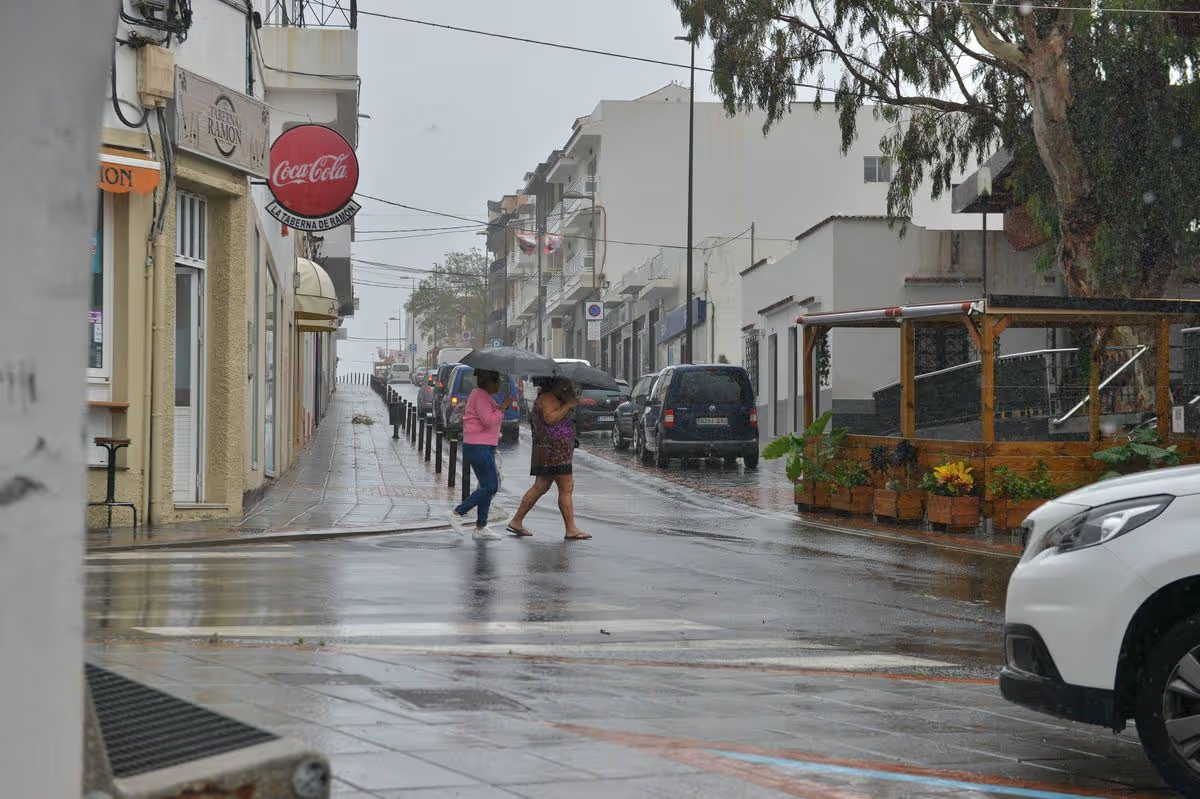
The car hire and bar owner filmed himself as he said: “The Tenerife weather is just wild at the moment. It’s on for another at least four days this crazy weather. He explained the Santa Cruz de Tenerife area had just experienced a “torrential downpour”, but then he turned the other way to reveal “blue skies with the sun shining”. However, he noted, within the next minute, the rain is “bouncing down” again.

The Tenerife resident also mentioned the drains “just can’t handle” the rainfall and they end up “bursting up” fairly regularly.

He continued: “The good news is, it is mixed. I suppose that’s kind of good news, you can get a bit of sunshine, but it was absolutely hammering it down a minute ago.

“So there you go, another four days or so of this. If you’re here, expect a mixed bag – heavy rain, a bit of sunshine now… towards Las Americas looks alright. But you’re going to want to do your indoor activities.”

He stated when the sun is out, it’s “about 22 degrees”, but it’s “around 18 degrees” in the shade, the rain and the wind.

Numerous followers amongst his 115,000-strong audience who were heading on Tenerife holidays confessed they were concerned about their break.

One person commented: “When will it be finished? We come Friday.”

Content cannot be displayed without consent

Whilst another added: “Praying it passes by Tuesday.”

A third chimed in: “I’m coming Monday, really hope it picks up!”

Nevertheless, others admitted they were calling off their breaks as the Tenerife resident posted another clip of the rainfall, with one person writing: “We cancelled our week away at the last minute.”

Another replied: “Snap – we’ve rebooked for April 12 onwards.” The storm has resulted in widespread cancellations and safety shutdowns across the islands. Over 40 flights were cancelled or diverted by Friday, 20 March, mainly at Tenerife North and South airports. Travellers are urged to verify their flight status via Flightradar24 or their airline.

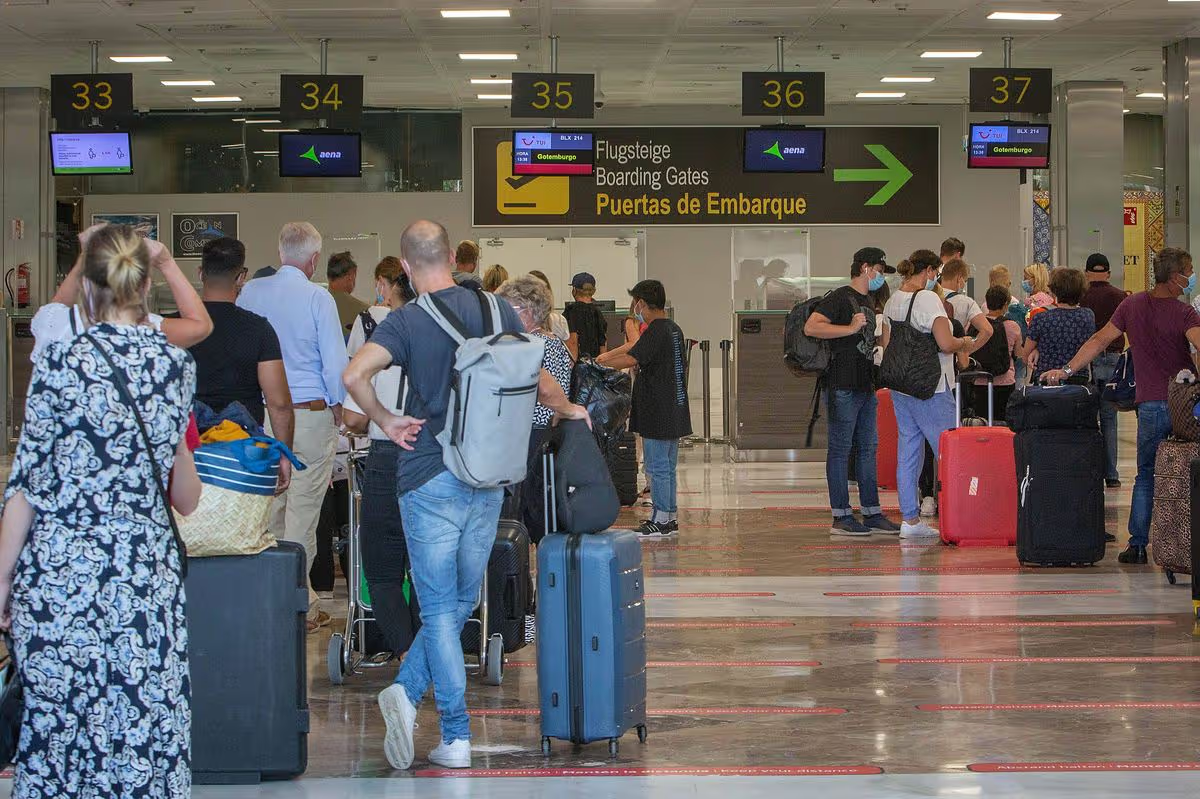
Numerous individuals on TikTok and Facebook have branded Tenerife South Airport as ‘chaos’, claiming that the luggage queue is taking hours and some people are missing their flights.

Others have also alleged that the E-gates aren’t functioning and hundreds of people have been queuing “to see one passport officer who was having to re-scan face/finger prints”.

Sharing another video from Tenerife South Airport, @theknightstrider1 described it as “rammed” in the caption and said arrivals was particularly crowded so holidaymakers should “be prepared”.

He added in the clip: “If you’re wondering if Tenerife is busy, it certainly is. This is the arrivals area and it’s absolutely rammed. People are still pouring in.

“If you come to the airport, I do recommend you get here nice and early if you’re leaving, there’s bound to be queues when you’ve got this many people around.”

Aena said in a comment: “In Spain border control is the responsibility of the National Police, not the airport. The airport has provided the necessary infrastructure for the implementation of the Entry Exit System but its availability depends primarily on the number and performance of police officers at the border post.”

When will Storm Therese be over?

Storm Therese is expected to subside across most of its affected areas by Monday, 23 March 2026. While the worst of the weather occurred between Thursday and Saturday, some impacts and weather warnings will persist through early next week.

Storm effects are currently continuing today (Sunday March 22) with rain and strong winds. Orange wind warnings (up to 100 km/h) remain in place for Tenerife, La Gomera, El Hierro, and western La Palma.

Weather is forecast to “ease off” on Monday (March 23) with wind speeds dropping and rainfall decreasing significantly. However, yellow and orange warnings remain active for several islands, and some schools in El Hierro, La Gomera, and parts of Tenerife will stay closed as a precaution. Conditions are expected to improve throughout the week.


Source link

Holidaymakers in Tenerife ‘can’t wait to go home’ as Storm Therese hits Canary Islands

Storm Therese is battering the Canary Islands with heavy rain, 100km/h winds and significant snowfall, with over 40 flights cancelled and schools closed across the islands

Storm Therese is currently wreaking havoc on the Canary Islands, particularly Tenerife and La Palma, with an unusual mix of heavy rain, 100 km/h (62 mph) winds, and significant snowfall at high altitudes. Authorities have declared a full-scale emergency in Tenerife, labelling it as one of the most severe storms to batter the archipelago in over a decade.

Spain‘s meteorological agency, AEMET, has issued several alerts that will remain active throughout the weekend. Orange (high risk) warnings have been dispatched for northern Tenerife and parts of La Palma due to wind gusts reaching 90–100 km/h and heavy rainfall. Concurrently, yellow warnings are in place across all seven islands for rain, thunderstorms, and choppy seas with waves reaching up to 6 metres (20 feet).

Unusually for this time of year, significant snowfall has also blanketed Mount Teide and surrounding peaks above 1,800–2,000 metres.

Content cannot be displayed without consent

The storm has led to widespread cancellations and safety closures across the islands. Over 40 flights were cancelled or rerouted by Friday, March 20, primarily at Tenerife North and South airports. Travellers are advised to check their flight status via Flightradar24 or their airline.

Schools and universities in Tenerife, Gran Canaria, and several other islands were shut on Thursday and Friday, whilst key roads, including access to Teide National Park and the TF-445 to Punta de Teno, are closed due to ice and snow.

Major international events such as the Tenerife Bluetrail 2026 race have been cancelled or postponed.

Providing an update on the weather situation on Friday (March 20), one Tenerife resident known as @theknightstrider1 on TikTok took to the platform to share details with his 115,000 followers.

The car hire and bar owner, who is based in Playa de las Américas, was heard saying: “A little weather update for you then, it’s raining… it’s pretty grim and it’s gone really overcast as well.

“The rain showers are on and off, we haven’t really had any rain until now. It was okay this morning, but yeah it is raining. The current temperature’s around 18 degrees, not too cold but the umbrella’s are out, people are sheltering and it’s really not that nice.”

Content cannot be displayed without consent

He added: “Bear in mind, you might get caught in the rain, have a brolly with you. Maybe some of the rain macs as well if you’ve got any, if not buy some because it’s on and off.”

One person wrote: “Weather’s been awful the last three days, can’t wait to go home.”

Whilst another added: “Arrive tomorrow, packed a brolly.”

A third chimed in: “This makes me so happy as someone who was going to go this week and changed to last week! Phew.”

Whilst a fourth asked: “Why is it every time it’s sunny in the UK it rains in Tenerife?”

Another resident of the Canary Islands also posted a weather update on TikTok from Santa Cruz de Tenerife, captioning the clip, ‘Rain, wind and choppy ocean. Flights cancelled and diverted. Flooding in El Médano and roads closed. The storms Theresa and Samuel are hitting Canary Islands.’

He then said in the video: “Here if your weather update from Tenerife South on Friday March 20th, 2026. The two storms – Theresa and Samuel – are hitting the Canary Islands with force.

“As you can see here, we have quite a lot of waves here in the Troya area of Las Americas. The storms have caused quite a few incidents on the island, we have had 11 flights cancelled yesterday, 10 flights have been cancelled during the day today.

“We have had quite a few flights deviated to other airports as well and we have had ferries that have been cancelled because of the conditions out on the see.”

He explained the temperature was currently hovering around 19 degrees and there had been some rain which was “coming and going” along with overcast skies.

Are flights from the UK to Tenerife being cancelled?

Yes, flights from the UK to Tenerife are currently experiencing cancellations and significant disruptions due to severe weather from Storm Therese.

As of Saturday, 21 March 2026, authorities in Tenerife have declared an island-wide emergency due to extreme conditions including heavy rain, strong winds, and rare snowfall over high ground.

Over 36 flights were cancelled earlier this week, with further disruptions reported today. While many cancellations involve inter-island services, several international flights have been diverted or cancelled due to poor visibility and high winds.

Currently, the most affected airport is Tenerife North (TFN), which has seen the greatest impact, though Tenerife South (TFS) – where most UK flights land –is also experiencing delays and some rerouted services.

Conditions are expected to remain hazardous through Saturday, with a gradual improvement predicted for Sunday, 22 March.

Major airlines serving the UK to Tenerife route, such as Ryanair, easyJet, Jet2, and TUI, are urging passengers to check their flight status before heading to the airport

If your flight is cancelled, contact your airline immediately to discuss rebooking or refund options.


Source link

Can I cancel my holiday to Spain? Latest travel advice as Canary Islands hit by snow and cancelled flights

THE CANARY Islands are facing huge storms and rain this week, which has even meant snow in places like Tenerife and La Palma.

Here’s what you need to know if you have a holiday booked there.

Here is everything you need to know about a trip to the Canaries right nowCredit: Alamy
The storm is continuing the affect the Canaries
It has even brought snow to La Palma and TenerifeCredit: Tenerife Island Council

What is happening in the Canary Islands?

Storm Therese has left the Canary Islands in turmoil as weather warnings have remained in place for several days.

More snow is expected in Tenerife after the mountains in the Teide National Park were blanketed in white on Thursday.

As a result, more than 40 flights have been cancelled this week across the Canaries.

Orange and yellow alerts are in place across the islands, warning of heavy rain, storms, flooding and high waves.

SPRING SUN

Escape to Spain with last minute deals at four-star hotels from £249pp


SI YA

Spain’s most affordable coastlines have 150 miles of beaches & Florida-like lagoons

Can I cancel my holiday?

If you want to cancel your upcoming holiday to the Canary Islands, you will be left out of pocket.

This is because the UK government still deems it safe to travel to Spain, so airlines and tour operators are under no obligation to refund you.

It is only when travel is warned against that it is likely your holiday will be cancelled and refunded.

Bad weather does not affect this.

And the weather warnings are expected to be lifted by the end of the week – so won’t affect the Easter holidays.

What if my flights are affected?

Compensation doesn’t apply here either – weather is seen as “out of the airline’s control”.

This means they do not have to offer any compensation if your flight is delayed by the weather.

They do, however, have a duty of care towards you, which includes hotels if the flight is delayed overnight, as well as food and drink vouchers.

The airline must put you on an alternative flight if yours is cancelled as well.

The UK Civil Aviation Authority (CAA) states: “If your flight is cancelled, many airlines will provide vouchers for you to buy food and drink.

“If you require accommodation, they may book a hotel and arrange transportation for you.

“If you end up paying for things yourself, keep every receipt and do not spend more than is reasonable.”

If you accept a refund, their duty of care ends towards you and you will have to pay for your own hotels and return flight home.

You will be left out of pocket if you cancel your holidayCredit: Alamy

Source link

Tourists devastated after jetting off to Tenerife after saving up for holiday

Storm Therese has battered the Canary Islands with severe weather warnings for storms, flooding, heavy rain, and strong winds – and the chaos is set to continue for several more days

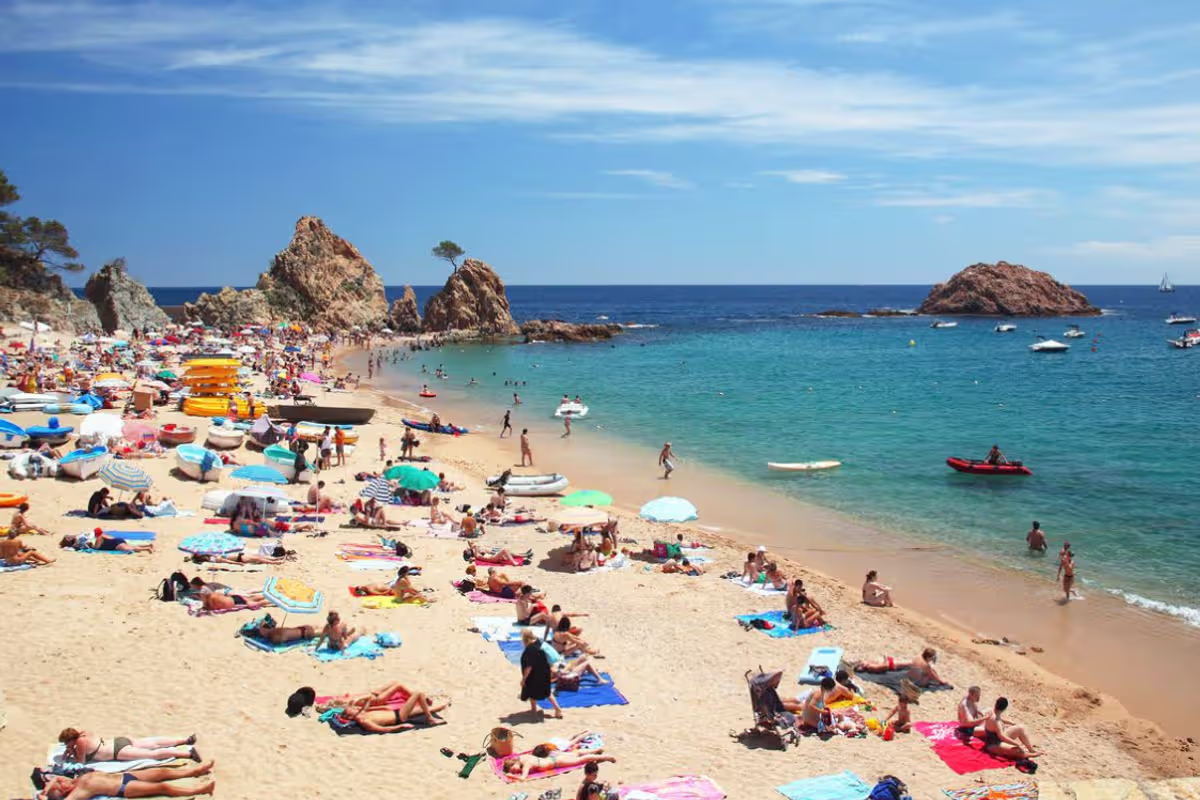
Holidaymakers in Tenerife have been left furious after spending the entire year saving for a week of sunshine – only to arrive and find dreary weather greeting them. During March, Tenerife usually basks in temperatures ranging from 16 to 22 degrees, as Spain starts welcoming visitors back before its hectic summer period.

Yet the island has been battered by Storm Therese, delivering unexpectedly cold temperatures, gloomy conditions, flight cancellations, and even snow alerts in certain regions. Discussing the weather this week, TikTok user @seb_tenerife, who is presently residing on the island, remarked: “This might be the first or second of four bad days of weather.

“A storm – what is going on? It’s meant to have the best climate, I’d say, in Europe, and now we’re four days into a storm. You know we’re in a crisis – I’m in a full tracksuit. What has happened?”

He continued by explaining that visitors have been contacting him regarding the conditions, enquiring whether the weather is expected to improve. Nevertheless, he confessed the forecast keeps shifting every time he examines it, leaving him uncertain whether conditions will brighten up anytime soon.

Responding to his video, one user said: “Same in January. Was great at Christmas. Climate change.”

Another commented: “The last year has been a bit mad weather-wise there. I went in April and then December, and both weeks were overcast and a good few degrees colder than previous years. My friend said it was the coldest December she’s ever had in 10 years of spending Christmas and New Year there.”

A third user said: “Try going in August. I’ve been in April, August, and December for the last three years, and August wins every time – around 28 to 32 degrees last year.”

Content cannot be displayed without consent

The forecast

The Canary Islands have been battered by severe weather – and the chaos is far from over. An orange weather alert was issued after days of heavy rain and strong winds, with forecasters warning the miserable conditions could drag on for at least another five days – potentially ruining holiday plans for Brits abroad.

Shocking scenes in Tenerife showed the usually sun-soaked hotspot covered in snow, with icicles forming in some areas. Stunned tourists filmed the whiteout conditions in Teide National Park, where several roads were forced to close.

Snow is expected to continue falling in higher above 1,800 to 2,000 metres, as Storm Therese continues to lash the islands. Torrential rain has already triggered flash flooding and landslides in some areas.

Warnings have been issued for multiple types of extreme weather, including storms, flooding, strong winds, heavy rainfall and dangerous waves. Wind gusts have exceeded a staggering 74mph in places – with the sunshine holidaymakers expect nowhere to be seen. The wild weather has also caused travel chaos, with at least seven flights cancelled or diverted on Thursday alone, following 36 cancellations the day before.

Conditions are expected to worsen on Friday, which could mark the peak of Storm Therese. Orange rain alerts are in place for Tenerife, El Hierro, La Palma, and La Gomera. Forecasters warn up to 111mm of rain could fall within 12 hours in some areas, while Gran Canaria is under an amber alert, with up to 80mm expected.

Sea conditions are also turning dangerous, particularly between Tenerife and Gran Canaria, where waves could reach up to six metres alongside force eight winds. While the storm may ease slightly on Saturday, disruption is still expected. Orange alerts remain in place for Tenerife and La Palma, with winds of up to 55mph set to continue.

Tourists and locals have been urged to avoid unnecessary travel, stay away from coastal and mountainous areas, and follow official guidance. Schools across the islands have also been forced to close until conditions improve.

Source link

Preserved Tudor village used for movie set is like a real-life time machine

Lavenham in Suffolk is home to over 300 preserved Tudor houses and charming timber-framed buildings – and was used as the filming location for Godric’s Hollow in Harry Potter and the Deathly Hallows

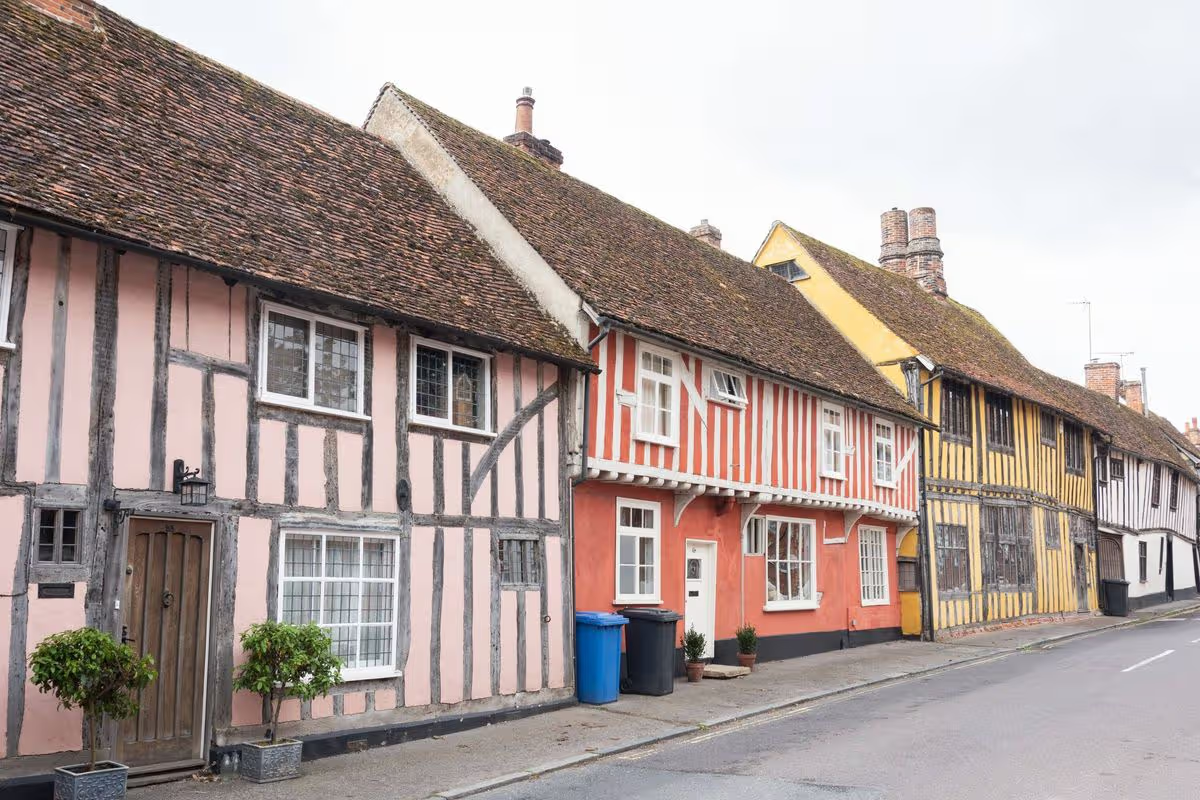
Tucked away in Suffolk lies a remarkably well-preserved village, famed for its collection of over 300 Tudor houses, instantly recognisable by their timber-framed design.

During England’s Tudor period, this very village was among the country’s most affluent areas, but today it serves as a living museum for history enthusiasts and tourists seeking a glimpse into the past.

Lavenham is the quintessential ‘higgledy-piggledy village’, boasting a variety of architectural styles, but it’s the Tudor buildings that truly set it apart.

So much so, that hundreds of its structures are listed and thus protected to maintain their original appearance, whilst the National Trust owns some of its most significant sites, renowned for their historical importance within the village.

Best UK holiday cottage deals

This article contains affiliate links, we will receive a commission on any sales we generate from it. Learn more
Sykes Cottages

From £27 per night

Sykes Cottages

See the deals

Sykes Cottages offers a wide range of handpicked holiday homes across the UK and Ireland, from cosy countryside retreats to stunning coastal escapes. Prices start from £27 per night

The area’s grandiose atmosphere is rooted in the village’s wool trade history, as it gained fame for producing high-quality lavender blue broadcloth.

However, when the trade declined in the 17th century, there were no attempts to rebuild; instead, efforts were focused on preserving what already existed.

Historic Buildings

Among these stunning structures stands a 15th-century Tudor building located on Main Street, known as the Crooked House.

This particular spot inspired the well-known nursery rhyme There Was A Crooked Man, and much like the Leaning Tower of Pisa, its upper section exhibits a noticeable tilt.

Dating back to 1395, this stunning edifice, now adorned in a vibrant orange hue, is owned by two ‘crooked men’, husbands Alex and Oli.

Visitors are invited to explore the interior and receive a warm greeting from its owners, complete with a guided tour of its captivating rooms.

In addition, the village is home to the Lavenham Guildhall, currently under the stewardship of the National Trust, and serves as a showcase for local history.

This bewitching structure sits at the very heart of the village and has functioned as a community hub throughout its 500-year existence, assuming new roles and changing hands over time.

A recent guest shared on TripAdvisor: “Was very impressed with our visit to this NT property. Instead of being stuffed with display cases full of historic relics, the approach here is to set up the Guildhall how it would have been used through its history and have minimal information boards and artefacts that support and demonstrate that approach.

“But the real stars here are the volunteer guides, and all three who were working the different rooms at the time we visited had fantastic knowledge that could bring the building to life.”

Harry Potter

Already famous in its own right, Lavenham elevated its status when it featured on the silver screen as the filming location for Godric’s Hollow in Harry Potter and the Deathly Hallows Part 1.

The idyllic setting portrayed the location of Harry’s parents’ graves in the film. In a poignant and memorable scene in the movie, he and Hermione visit the village on Christmas Eve.

De Vere House served as the exterior of the Potters’ ruined home, which was later modified for the screen using computer-generated imagery. The Guildhall was also utilised, depicted as the abandoned house sitting in the backdrop of the village.

The already serene village gained an added sense of tranquillity when it was blanketed by a thin layer of snow as the two characters strolled down its Main Street.

However, it is widely understood that the Hollywood actors themselves did not actually set foot in Lavenham and were instead superimposed onto the village’s backdrop after filming in a studio.

Source link