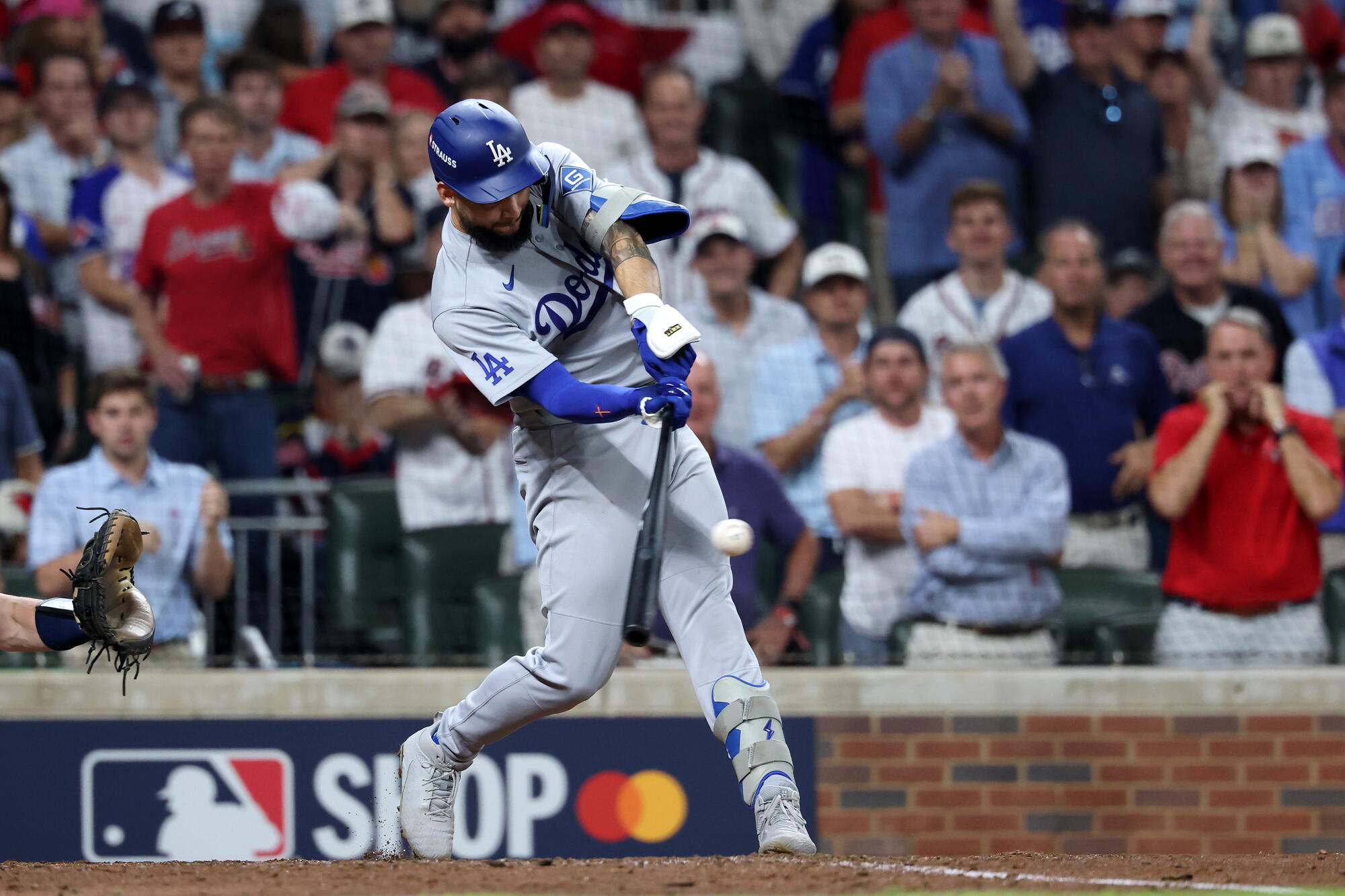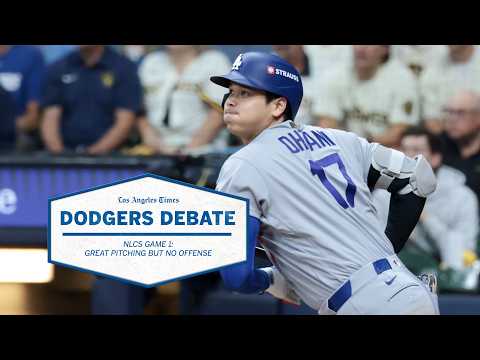
Looking into Shohei Ohtani’s mysterious slump
Hi, and welcome to another edition of Dodgers Dugout. My name is Houston Mitchell, and I guess Shohei Ohtani is human after all.
I’m writing this on Tuesday evening because my youngest daughter, Hannah, whom I’ve mentioned numerous times in this newsletter, is getting married this weekend. I won’t be able to do a newsletter for next Monday, and I didn’t want everyone to wait a week and a half for the next newsletter.
So, hopefully nothing huge happened on Wednesday. But if it did, and it’s not mentioned here, now you know why.
Heading into Wednesday’s game, Shohei Ohtani was hitless since April 27. That’s a long time without a hit. So what happened?
Our Dodgers beat reporter, Maddie Lee, wrote about this after Monday’s game. Some takeaways from that story, which you can read here:
—At one point, Ohtani was going to hit and pitch Tuesday, but the Dodgers changed their mind Monday and had him only pitch.
—“Definitely not results,” Dave Roberts said of how he made that decision. “It’s a little bit more body language and just watching the player. … We’ve certainly enjoyed the fruits of him doing [both], which he will continue to, at times. But I think for me, it’s a start by start kind of read-and-react situation.”
—Ohtani: “I do feel like over the course of my career it’s just a reality that I’m not exactly hitting at the best of my ability at this time of year,” Ohtani said last week through interpreter Will Ireton. “At the same time, as a player, I do want to be better and get to that position where I’m feeling really good. It’s a balancing act of the two.”
—Ohtani has become pull-happy. He was hitting the ball to the right side 53.4% of the time entering Monday, compared to 43.2% last season, according to Statcast.
—“It’s more about timing and feel for him, backing up the baseball,” hitting coach Aaron Bates said. “When he gathers correctly and hits through the baseball, obviously we’ve seen what he’s capable of doing. But just kind of managing his at-bats right now, trying to get to the big part of the park.”
As of right now, this is Ohtani’s worst offensive season since 2020, when he hit .197. Let’s take a look at his OPS+ numbers since he began playing:
2018: 151
2019: 121
2020: 79
2021: 157
2022: 144
2023: 185
2024: 181
2025: 187
2026: 131
Even in the midst of this slump, Ohtani is 31% better than league average this season. Pretty amazing.
Does Ohtani slump early in the season? Let’s look at his numbers per month in his career:
March/April: .293/.369/.559
May: .261/.355/.541
June: .316/.413/.721
July: .248/.361/.543
August: .272/.365/.537
Sept/Oct.: .294/.391/.582
He usually hits fine this time of year. Of course, this season he is also trying to pitch full time. But he hit fine when he was a full-time pitcher with the Angels. Sometimes, players just go through slumps. There’s no reason to believe Ohtani won’t break out of this slump. And if Ohtani went four for four with three homers Wednesday, then I reverse jinxed him.
Stats explained
Every year I get emails from readers who only follow the Dodgers and not baseball in general. They want to know how to calculate various stats and wondered if I could put together a glossary of terms. This seems as good a time as any to do so. Some of you, maybe most of you, probably already know these things, but there are different levels of baseball knowledge among the subscribers, so let’s put us all on the same page. And if you want, you can save this newsletter to refer back to. These definitions come from mlb.com.
Pitching
GF: Games Finished. The number of times the pitcher was on the mound during the final out.
ERA: Earned Run Average. The number of earned runs times nine then divided by the number of Innings Pitched.
CG: Complete Games. When the pitcher throws the entire game without any relief.
SHO: Shutouts. A complete game thrown by the pitcher where the losing team did not score.
Saves. Earned by a pitcher when a. He is the finishing pitcher in a game won by his team. b. he is not the pitcher who earned the win (W). c. he meets one of the following criteria: 1. He came to the mound with a lead of three runs or fewer and pitches at least one inning. 2. He came to the mound with the tying run on base, at bat, or on deck. 3. He pitches effectively for at least three innings.
IP: Innings Pitched. A pitcher with 4.2 innings pitched had four full innings then retired two batters in his fifth inning of work.
ER: Earned Runs. Earned runs are those which scored without the aid of an error, a catcher’s interference call, or a passed ball.
R: Runs Allowed. A total number of runs, earned or not earned, that scored.
K: A strikeout by the pitcher.
Balks. A call against the pitcher for making an illegal motion that the umpire views as an attempt to deceive a baserunner.
Hold. Awarded to a relief pitcher who enters with the lead, retires at least one batter, and does not relinquish the lead.
K/BB: Strikeouts to Base on Balls Ratio. Strikeouts divided by base on balls.
K/9: Strikeouts per nine innings. The number of strikeouts averaged during every nine innings of work. Strikeouts times nine divided by innings pitched.
BB/9: Walks per nine innings. The number of walks averaged during every nine innings of work. Calculated as walks times nine divided by innings pitched.
ERA+: A pitcher’s ERA adjusted to reflect home ballpark and league average. A pitcher with an ERA+ of 100 is a league average pitcher. An ERA+ of 110 means the pitcher’s ERA is 10% better than the league average. An ERA+ of 90 means that the pitcher’s ERA is 10% worse than the league mean.
FIP: Fielding Independent Pitching. FIP is similar to ERA, but it focuses solely on the events a pitcher has the most control over: Strikeouts, walks, hit-by-pitches and home runs.
For example: If a pitcher has surrendered a high average on balls in play, his FIP will likely be lower than his ERA. Balls in play are not part of the FIP equation because a pitcher is believed to have limited control over their outcome.
The formula: The “FIP constant” puts FIP onto the same scale as the entire league’s ERA: ((HR x 13) + (3 x (BB + HBP)) – (2 x K)) / IP + FIP constant.
Hitting
AB: At-bats. Number of times a player batted, excluding walks, sacrifices, catcher interference, or being hit by a pitch.
Plate appearances: The number of times a player batted.
Runs Batted In. Given to a a batter when a runner scores due to a base hit, a sacrifice, being hit by a pitch, during an infield out (but not during a double play), or a fielder’s choice.
Sacrifice Fly. A fly ball hit with less than two outs, fair or foul, that is caught but allows one or more baserunners to tag up and score.
Batting Average. The player’s total number of hits divided by their total number of at-bats.
OB%: On Base Percentage. Determines what percentage of a player’s plate appearances resulted in him reaching base safely. Calculated by adding hits, walks and hit by pitch then dividing that by the player’s at-bats, walks, sacrifice flies and hit by pitch.
SLG%: Slugging Percentage. Calculated by taking the total bases (singles + 2 x doubles + 3 x triples + 4 x home runs) then dividing it by the number of at-bats.
AB/HR: At-Bats per Home Runs. Calculated by dividing the number of at-bats by home runs.
AB/K: At-Bats per Strikeouts. Calculated by dividing the number of at-bats by strikeouts.
OPS: On-Base Plus Slugging. On-base percentage added to slugging percentage.
OPS+: OPS adjusted to reflect league and ballpark conditions, like ERA+ for pitchers. OPS+ is scaled so that 100 is a league average player. Formula: 100 x (OBP/lgOBP + SLG/lgSLG – 1)
BABIP: Batting Average on Balls in Play. BABIP measures a player’s batting average exclusively on balls hit into the field of play, removing outcomes not affected by the opposing defense (namely home runs and strikeouts).
For example, a hitter who goes two for five with a home run and a strikeout would have a .333 BABIP. He’s one for three on the balls he put in play.
The formula: (H – HR)/(AB – K – HR + SF)
BABIP can be used to provide some context when evaluating both pitchers and hitters. The league average BABIP is typically around .300. Pitchers who have allowed a high BABIP is considered to be pitching with “bad luck.” Over time, they’ll see fewer balls in play fall for hits, and therefore experience better results in terms of run prevention. The same applies for batters who have seen a high or low percentage of their balls in play drop in for hits.
Up next
Friday: Atlanta (*-Chris Sale, 6-1, 2.14 ERA) at Dodgers (Emmet Sheehan, 2-1, 5.23 ERA), 7:10 p.m., Sportsnet LA, AM 570, KTNQ 1020
Saturday: Atlanta (Spencer Strider, 0-0, 8.10 ERA) at Dodgers (Roki Sasaki, 1-3, 5.97), 6:10 p.m., Sportsnet LA, AM 570, KTNQ 1020
Sunday: Atlanta (JR Ritchie, 1-0, 3.63 ERA) at Dodgers (*-Justin Wrobleski, 5-0, 1.25 ERA), 1:10 p.m., Sportsnet LA, AM 570, KTNQ 1020
All times Pacific
*-left-handed
In case you missed it
Shohei Ohtani is mired in a hitless streak. Here’s what the Dodgers are doing to fix it
How a onetime top Dodgers prospect became an advisor to four U.S. presidents
And finally
Vin Scully tells a story about a childhood prank. Watch and listen here.
Until next time…
Have a comment or something you’d like to see in a future Dodgers newsletter? Email me at houston.mitchell@latimes.com. To get this newsletter in your inbox, click here.