The Married At First Sight Australia bride has found love outside of the show
Gia Fleur is dating a fellow reality TV star(Image: Channel 4)
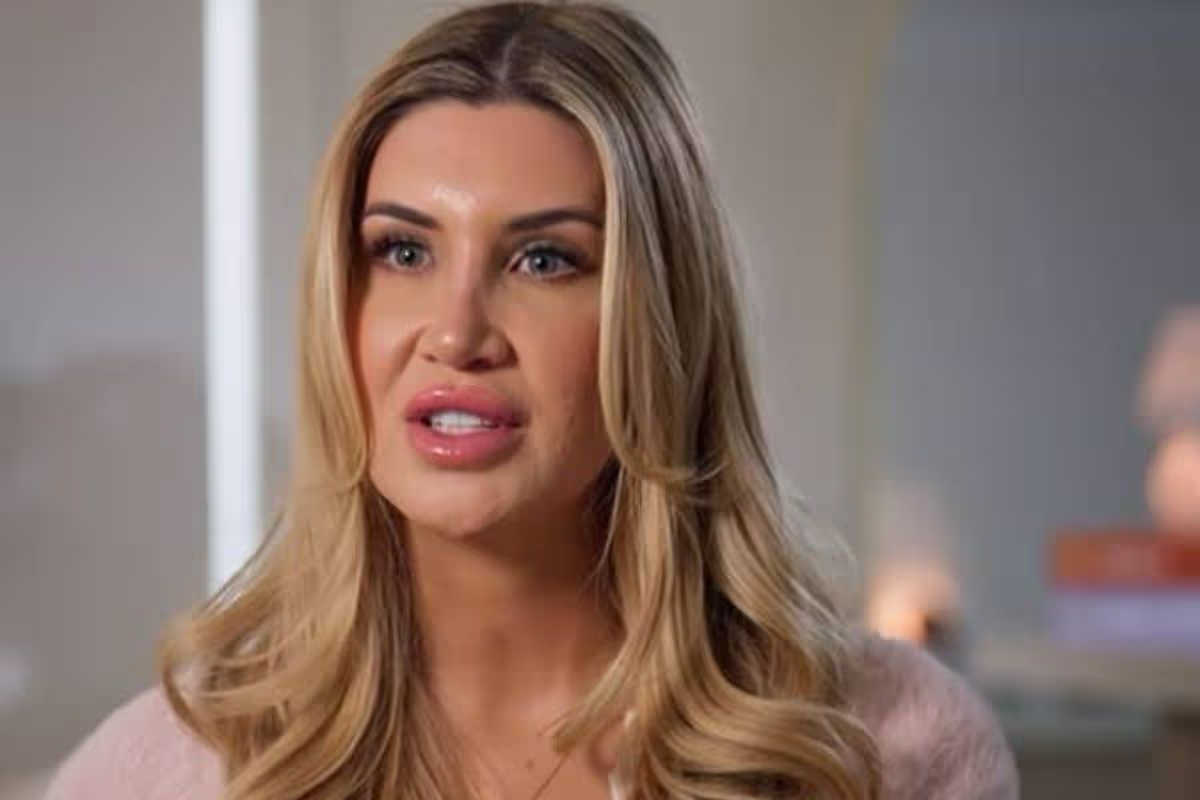
Gia Fleur from Married at First Sight Australia has ‘hard launched’ her new boyfriend as fans are watching her TV marriage unfold.
The Australian star features in Season 13, where she is paired up with Scott McCristal.
The duo appeared to be on the same page when they met at the altar, and even got matching tattoos just weeks into the experiment.
Gia has now stunned fans by flaunting a fresh new relationship online, confirming she is no longer with Scott.
She first shared clips of new beau Alan Wallace on TikTok, alongside the brutal caption: “No revenge. I got the love story of my dreams.”
Content cannot be displayed without consent
Since that post, on March 30, Gia has consistently shared new images of her partner across social media.
The 35-year-old officially ‘hard launched’ him on Instagram this week, posting a collection of loved-up pictures. “3 months in secret, and forever in public to go,” she wrote in the caption.
She has previously gushed about the budding romance, claiming Alan is exactly the man she was hoping experts would pair her up with.
“He’s what I asked for,” Gia told Australian publication WHO. “I said smart, tradie who will drink a beer and be manly.”
“Scott got Botox, didn’t drink and worked in an office,” she added.
Content cannot be displayed without consent
Alan is no stranger to the spotlight, having featured on Australian dating show Love Triangle in 2023. The new couple met while Gia was still with Scott but their romance blossomed after the MAFS couple split up.
Although Gia and Scott’s relationship started off strong, they haven’t been seeing eye-to-eye in recent episodes. UK viewers will watch why they eventually decided to call it quits in coming episodes.
Gia isn’t the only 2026 star who has shared spoilers about their relationship online. Model Brook Crompton also flaunted her new fiancé while fans were still watching her marriage unfold on TV.
Meanwhile, groom Luke Luke Fourniotis ‘burned’ his wedding ring in a scathing TikTok seemingly targeted at his television spouse Mel Akbay.
Married At First Sight Australia can be streamed on Channel 4 online
US president meets NATO chief, expresses disappointment over member states failing to back war on Iran.
By AJ Staff, AFP and Reuters
Published On 9 Apr 20269 Apr 2026
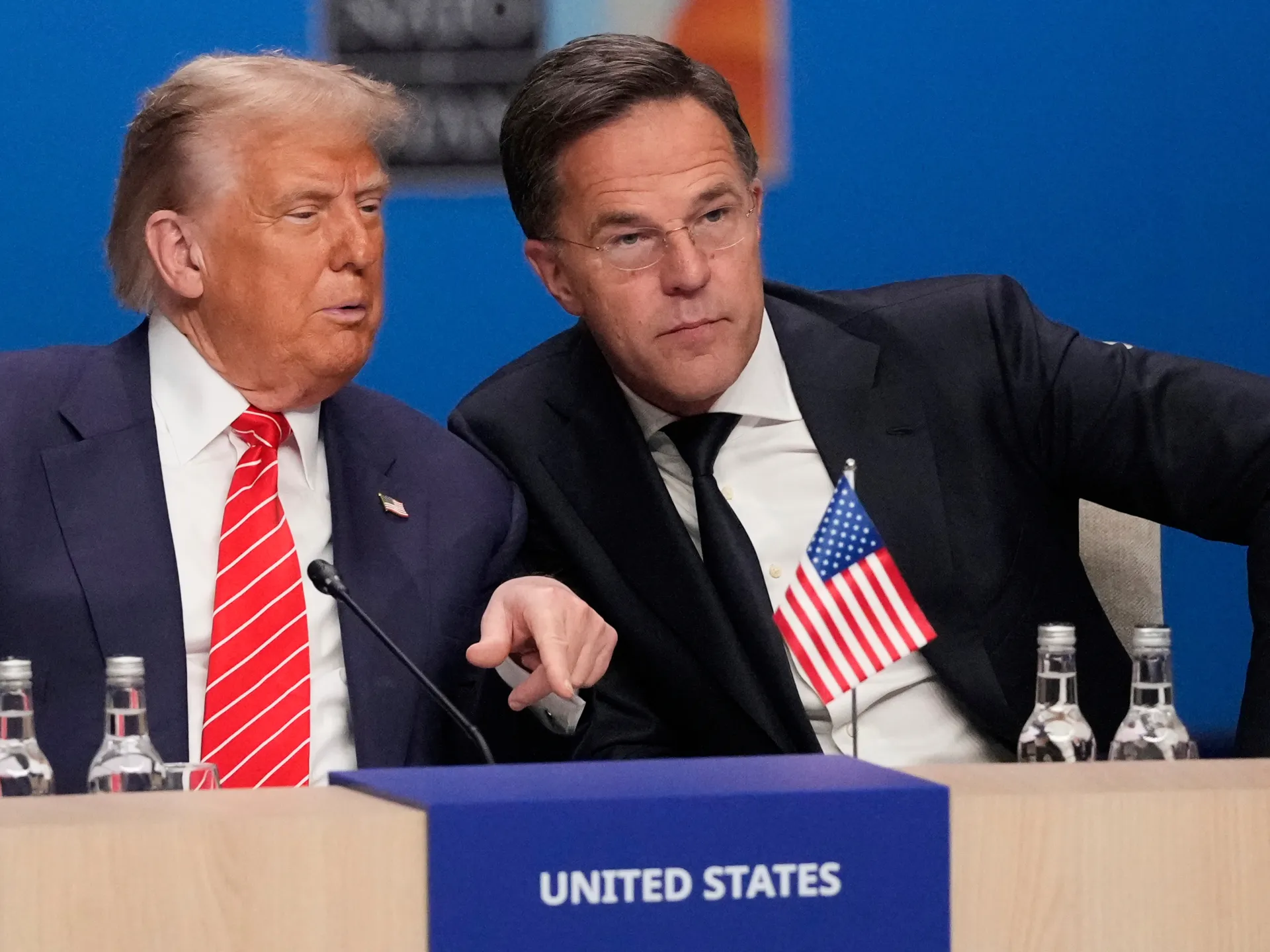
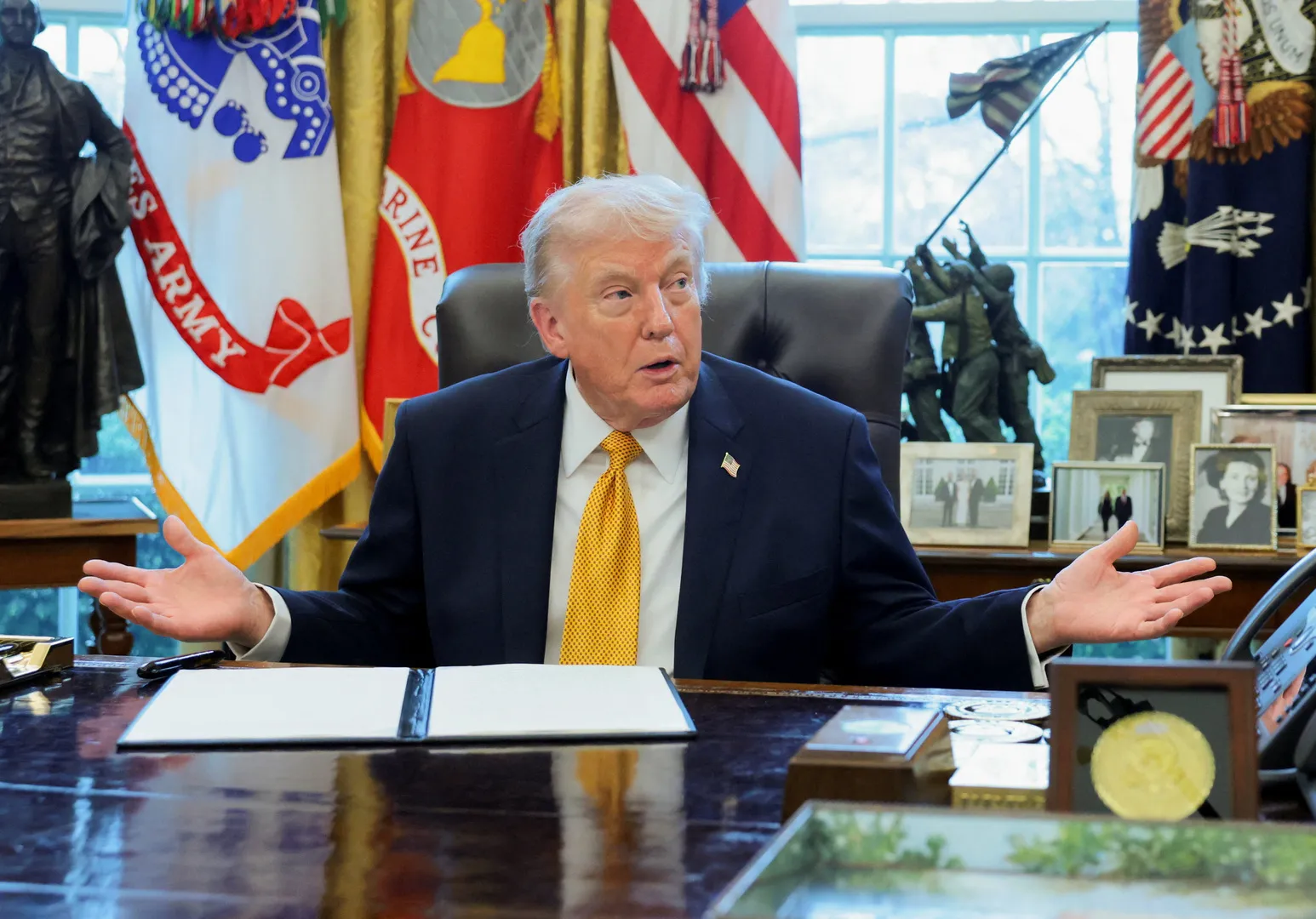
United States President Donald Trump has lashed out at NATO over its reluctance to join Washington’s war on Iran, and appeared to revive threats over Greenland, following a meeting with the alliance’s secretary-general.
Writing on his TruthSocial platform on Wednesday, Trump said in capitalised letters that “NATO wasn’t there when we needed them, and they won’t be there if we need them again”.
Recommended Stories
list of 4 itemsend of list
The remarks came after a two hour meeting with NATO’s Mark Rutte at the White House, a day after the US and Iran agreed to a ceasefire.
Ahead of the meeting, White House spokesperson Karoline Leavitt said that member states had “turned their backs on the American people”, who fund their nations’ defence. She said Trump would have a “very frank and candid conversation” with the NATO chief and quoted the US president as saying: “They were tested, and they failed.”
The rhetoric has raised seats in the West that Trump could move to withdraw the US from the transatlantic alliance, which he has repeatedly called a “paper tiger”. Several NATO members refused to open their airspace to US military aircraft or send naval forces to help reopen the Strait of Hormuz, a vital energy route that Iran has effectively closed.
Trump – following his meeting with Rutte – also appeared to revive his threat to seize Greenland from NATO member Denmark – a move had roiled the alliance before he launched his war on Iran
“Remember Greenland, that big, poorly run, piece of ice!!!”, he wrote.
Rutte, known in Europe as the “Trump whisperer” for his skill in maintaining a productive relationship with the US president, told the CNN broadcaster that Trump was “clearly disappointed with many NATO allies”.
Rutte said he had “very frank” and “very open” discussions with Trump during the meeting, and that while he understood the US president’s frustrations, he had pushed back against some of the broader criticism.
“I was also able to point to the fact that the large majority of European nations have been helpful, with basing, with logistics, with overflights, with making sure that they live up to the commitments,” Rutte said.
“What the US did with Iran, they could do because so many European countries lived up to those commitments. Not all of them, and I totally understand his disappointment about that, but it is, therefore, a nuanced picture,” he added.
Rutte also rejected the notion that NATO members considered the war on Iran “illegal”, arguing that there was widespread support in Europe for degrading Iran’s nuclear and ballistic missile capabilities. He also said that prolonged diplomacy risked a “North Korean moment” – where talks drag on until a country acquires nuclear capacity and it becomes too late to act.
The NATO chief declined to answer directly when asked multiple times if Trump had said he would leave the alliance.
NATO, which includes European countries, the US and Canada, was formed in 1949 to counter the Soviet Union and has been the cornerstone of the West’s security ever since.
The alliance has only activated its mutual defence clause on one occasion, following the September 2001 attacks on the World Trade Center in the US.
It was not clear what role Trump had expected it to play in the Middle East.
The Wall Street Journal, meanwhile, reported that Trump was looking at punishing some NATO members he believed were unhelpful during the conflict by moving US troops out of their countries.
The plan, reported by the Wall Street Journal, would fall short of Trump’s hinted threats to pull the US out of NATO entirely – a move for which he would need the approval of the US Congress.
Rutte did not answer directly when asked about that report.
“The large majority, including France, of European nations, has been doing what they committed before they will do in a case like this,” he said instead.
“So Europe, as a platform of power projection for the United States, was in full play over the last six weeks.”
US vice president in Hungary calls Ukrainian leader’s ‘threatening’ remarks ‘completely scandalous’.
Published On 8 Apr 20268 Apr 2026
US Vice President JD Vance has said Ukraine’s prime minister made “scandalous” comments about Hungarian Prime Minister Viktor Orban, as he echoed Budapest’s accusations that Kyiv is trying to influence the upcoming elections there.
Vance’s remarks on Wednesday came during a visit to Budapest days before the far-right Orban, a Trump ally, faces the toughest challenge of his 16-year rule in an election on April 12.
Recommended Stories
list of 4 itemsend of list
Hungary’s strained relations with Ukraine have taken centre stage in the election campaign, with Budapest’s government accusing Kyiv of deliberately stopping flows of Russian oil through the Druzhba pipeline in an effort to sway the ballot.
Kyiv says the pipeline was damaged by a Russian drone attack in late January, and it is fixing it as quickly as it can.
Hungary responded by blocking a 90-billion-euro ($105bn) EU loan for Ukraine, prompting Ukrainian President Volodymyr Zelenskyy to say he could give the address of whoever was responsible to the Ukrainian army, who could “speak with him in their own language”.
‘Completely scandalous’
Speaking at a Hungarian university, Vance said Orban had told him about Zelenskyy’s remarks.
“It’s completely scandalous,” Vance said. “You should never have a foreign head of government … threatening the head of government of an allied nation.”
Vance then accused the media of double standards in their coverage of alleged foreign interference in the 2016 US presidential election and in the Hungarian vote.
“You saw this back in 2016 where a lot of the American media said that it was a true scandal that the Russian government bought like $500,000 of Facebook advertisements … That’s foreign influence,” he said.
“But what’s not foreign influence is when the European Union threatens billions of dollars withheld from Hungary because you guys protect your borders… What’s not foreign influence is when the Ukrainians shut down pipelines, causing suffering among the Hungarian people in an effort to influence an election.”
Budapest has been embroiled in a long‑running dispute with the European Union over issues ranging from judicial independence to the treatment of migrants.
Vance had already lambasted what he said was EU meddling in the Hungarian vote at a news conference on Tuesday.
A European Commission spokesperson said on Wednesday Brussels would use diplomatic channels “to convey our concerns to our US counterparts” following those comments, according to the Reuters news agency.
Authorities in New Iberia, Louisiana, have said the incident does not appear to be an intentional car-ramming.
Published On 4 Apr 20264 Apr 2026
An estimated 15 people have been injured in Louisiana’s Iberia Parish, after a car struck participants at a Lao New Year parade in the United States.
According to a statement from the Iberia Parish Sheriff’s Office on Saturday, some attendees were seriously injured.
Recommended Stories
list of 3 itemsend of list
“Based on the preliminary investigation, this does not appear to be an intentional act,” said Rebecca Melancon, a sheriff’s office spokesperson.
The Acadian Ambulance company confirmed on social media that it had taken 11 people to the hospital using ground transport, and another two victims were airlifted to seek urgent care. Ten ambulances and two medical helicopters were deployed to the scene.
The incident took place in New Iberia, a city of more than 28,000 in Iberia Parish, some 34km (21 miles) south of Lafayette, Louisiana. It is situated roughly 214km (130 miles) west of New Orleans.
The Louisiana Lao New Year Festival parade is an annual tradition on Easter weekend in the parish, and the celebration features live music, food vendors and a beauty pageant.
In the aftermath of the car crash, the festival issued a statement on social media, saying that all of its security resources had been surged to the scene.
“We are profoundly saddened by the news of the incident near the festival grounds,” festival organisers wrote. “We are awaiting additional details from authorities as they become available.”
They added that Saturday’s musical events were cancelled, though vendors were permitted to stay open until 9pm local time (2:00am GMT, Sunday).
“We are praying for the victims and for their families during this difficult time,” the organisers wrote. “As of now, and if security resources are restored for tomorrow (Sunday) we will reopen only the religious services of the festival, and vendors will stay open.”
The Lao New Year is a tradition typically associated with Buddhism, and it takes place each year in April, as the dry heat in Laos gives way to the wet monsoon season.
Louisiana is home to a small but vibrant Lao community. In New Iberia, one neighbourhood is called Lanexang Village — roughly translated to the “million elephants” village — and it is reportedly home to hundreds of Lao people.
Many arrived as a result of the Vietnam War, which bled into Laos, with communist and US-backed forces clashing over the course of nearly 16 years.
The Pathet Lao, a communist movement, ultimately took over the country in 1975, ending Laos’s monarchy. Hundreds of thousands of people fled in the aftermath, with many resettling in countries like Thailand and the US.
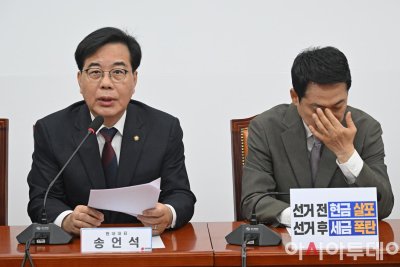
Song Eon-seok, floor leader of the People Power Party, speaks at a party Supreme Council meeting at the National Assembly in Seoul on Wednesday. At right is party leader Jang Dong-hyuk. Photo by Asia Today
April 3 (Asia Today) — Song Eon-seok, floor leader of the People Power Party, on Thursday criticized the government’s proposed 26.2 trillion won (about $19.6 billion) supplementary budget, calling it a “misguided plan” that relies on cash handouts instead of addressing the impact of high oil prices.
Speaking at a party strategy meeting at the National Assembly, Song said the proposal “diagnoses high oil prices but prescribes cash handouts,” arguing that it fails to support those most affected by rising fuel costs.
He said the government has become overly focused on distributing cash while neglecting vulnerable groups, adding that one-time payments of 100,000 won (about $75) would not meaningfully help people facing mounting living costs.
Song also criticized the exclusion of workers directly impacted by fuel prices, including truck drivers, delivery workers and taxi drivers, from key support measures.
“We will transform this supplementary budget from a war-related or election-driven budget into a ‘people’s survival budget,'” he said, pledging to shift from broad cash payments to targeted assistance.
He said the party would seek to cut spending items deemed unrelated to high oil prices during the review process, including renewable energy projects, independent film production support and regional development programs in Changwon. Savings from those cuts, he added, would be redirected to groups most affected by fuel price increases.
Song proposed expanding the fuel tax reduction from 15% to 30% and providing fuel subsidies of 600,000 won (about $450) to roughly 700,000 workers in transportation and delivery sectors.
He also suggested additional support measures, including subsidies for delivery and takeout packaging costs for about 670,000 self-employed business owners, as well as a 50% discount on the K-Pass public transportation program for six months.
Regarding the government’s plan to implement an odd-even license plate driving system, Song said the policy should be reconsidered. If implemented, he said, it should be accompanied by adequate compensation for affected citizens.
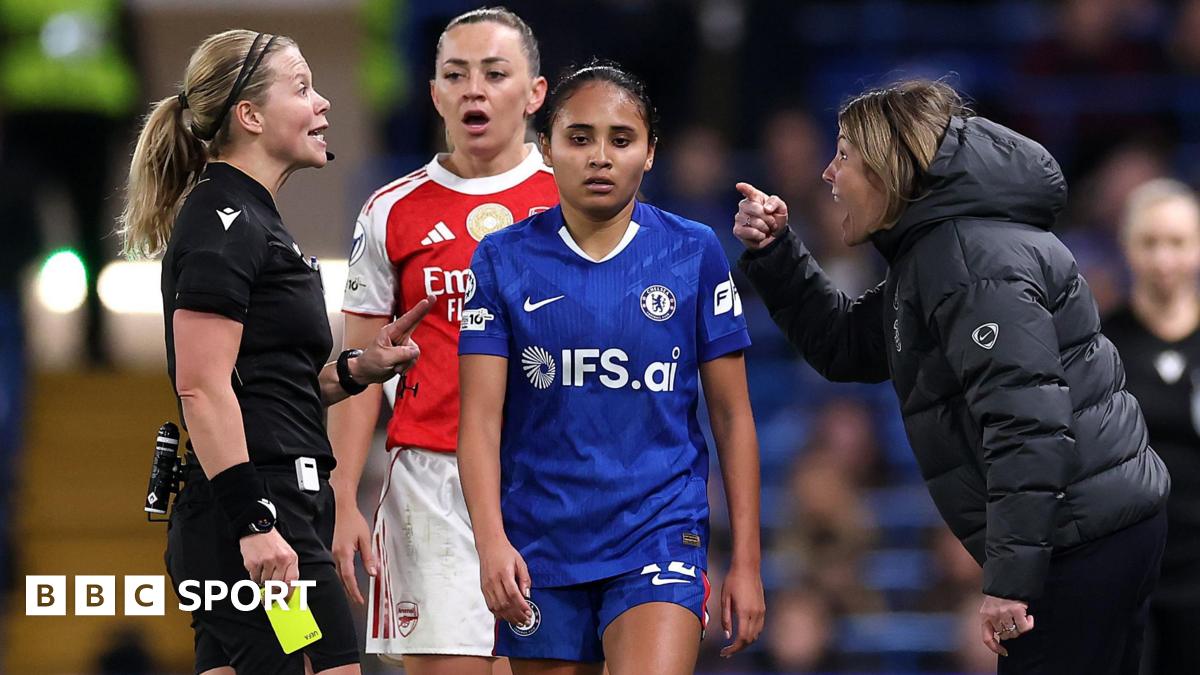
Chelsea boss Sonia Bompastor said her players “do not deserve that level of refereeing” after Arsenal’s Katie McCabe avoided a red card for pulling Alyssa Thompson’s hair during their Champions League quarter-final exit.
The Blues were chasing a late leveller after scoring a stoppage-time goal to make it 3-2 on aggregate when McCabe reached out and tugged Thompson’s hair.
The American winger was breaking forward, but McCabe escaped a yellow card and the video assistant referee (VAR) did not advise referee Frida Mia Klarlundto review the incident.
Bompastor was shown a yellow card for angrily protesting against the decision and then sent off for her continued outburst – although she refused to leave the touchline as Arsenal held on to reach the semi-finals.
The Frenchwoman arrived prepared with her mobile phone so she could show a replay of the incident as she gave a furious interview to BBC Two.
“For me, it is clearly a red card for the Arsenal player. She’s pulling Alyssa Thompson’s hair,” Bompastor said.
“If the VAR is not able to check that situation, I don’t know why we have the VAR.
“I’m the one getting a red card when I think the Arsenal player should be the one getting a red card.”
IT’S being billed as a huge tribute concert to Gary ‘Mani’ Mounfield, who died in November.
But I’m told the “Manichester” event in honour of the Stone Roses bassist, organised by his brother Greg, has caused a rift in the family.
Sign up for the Showbiz newsletter
Thank you!
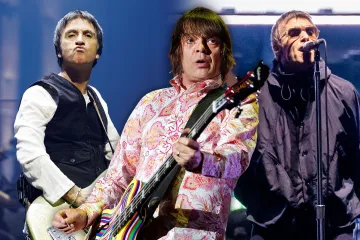
A gig honouring Stone Roses bassist Mani is causing a rift among his family membersCredit: GettyThe Stone Roses in July 1990 L-R Reni, Mani (top) Ian Brown (bottom) John SquireCredit: Getty
The concert will see musicians including Zak Starkey, Baz Fratelli from The Fratellis, John Mcclure from Reverend And The Makers and Simone Butler from Primal Scream come together at Manchester’s Diecast in May.
Cast are also lined up to perform, along with Mick Rossi from Slaughter & The Dogs and Stone Roses guitarist Aziz Ibrahim.
But while the concert was believed to have the full support of Mani’s family, which includes his twin sons Gene and George, insiders say not everyone is in agreement.
A source said: “Mani’s legacy and celebrating that is so important to so many people.
“But not everyone related to him is happy about this concert.
“Even his young son Gene has voiced his concerns on social media.
“It is all very messy and is spilling over into the public domain.
“This is not what Mani would have wanted. His twin boys were everything to him.”
Mani died at home in Manchester in November aged 63Credit: GettyMani was best known for his work with Stone Roses and Primal ScreamCredit: Getty
Greg confirmed earlier this month that he was organising the tribute concert, and said there were hopes of snaring Noel and Liam Gallagher to perform, as well as Johnny Marr.
He said: “I think it will be brilliant.
“With the names already in the hat, and the names we’re yet to announce, it’s a worthy thing, a tribute to our kid, a Mancunian legend, and I know he’d love it.
“He would be absolutely buzzing about it.”
Mani, who was best known for his work with Stone Roses and Primal Scream, died at home in Manchester aged 63.
Noel and Liam made an on-stage dedication to him during their Oasis ’25 Live reunion tour, while rock icons including Stone Roses singer Ian Brown turned out to pay their respects at his funeral.
As a fan of Mani, I hope this can be resolved quickly and without further upset.
LITTLE BRIT OF FAMILY TIME
BRITNEY SPEARS is being supported by her sons following her arrest for driving under the influence – and it’s about time too.
For years, the Circus singer was deserted by her boys – who she has with ex-husband Kevin Federline.
Britney Spears has been spending time with her two sons, Sean Preston and JaydenCredit: Instagram
But it seems they are back in her life and bringing a smile to her face.
She shared a video on Instagram on a boat with Sean and Jayden, during a getaway, including a shot of them smiling together.
Britney wrote: “Thank you guys for all your support… Spending time with family and friends is such a blessing!”
AITCH FIZZES MUSIC
HE was flying high after his stint in I’m A Celebrity last year.
But now Aitch is facing another trial, and it could be just as gruesome.
Aitch is embroiled in a legal row over his Syps drinks brand with two former directors of the companyCredit: Splash
I’m told the Strike Me A Pose rapper is embroiled in a legal row over his Syps drinks brand with two former directors of the company.
Aitch, real name Harrison Armstrong, created Syps back in 2023 with businessmen David Olusegun and Alexander El-Nemer – with the trio proudly showing off their fizzy, flavoured water at events across the UK.
But I’m told that partnership is now well and truly over, with David and Alexander resigning as directors.
A source said: “Harrison has fallen out with David and Alexander and it seems there is no going back.
“They’re in a full-blown legal dispute and it’s all in the hands of their lawyers.
“The three created the brand together so it could get messy.
“Harrison is still working on the brand and is running things with his manager.
“How quickly this is going to get resolved is the question. One thing is for sure though, Harrison wants it dealt with so he can move on.”
TAMER ROLE FOR HARDMAN ACTOR
TAMER HASSAN is swapping punch-ups for pull-ons after landing a major new deal with sportswear giant Reebok.
The hardman actor has filmed an advert for a bold campaign inspired by Robin Hood, of all people.
Tamer Hassan has landed a major new deal with sportswear giant ReebokCredit: Splash
It sees Tamer playing a cheeky “friendly villain” who nicks sports kits before handing them out to kids.
He is joined by UK rapper K-Trap, and starry cameos from Gary Oldman, Laila Morse and Lisa Maffia.
An insider said: “Tamer is genuinely thrilled to be part of something revitalised and forward-thinking.
“Reebok is part of the culture, and seeing it evolve with fresh energy in 2026 makes this really exciting.”
The retro-style campaign is also a nod to 2005 British crime flick The Business, which starred Tamer alongside Danny Dyer.
Filmed at a secret North London location, the advert is set to drop later this month and marks the start of a huge year for the actor.
He’s gearing up for the premiere of Rise Of The Footsoldier: Retribution at Cannes in May, ahead of its UK cinema release this summer.
From the big screen to the high street, it sounds like Tamer has a lot going for him right now.
TEARY NIGHT FOR ELLIE’S WOLF PACK
WOLF ALICE had an emotional night headlining the final evening of the Teenage Cancer Trust’s concert series – with frontwoman Ellie Rowsell breaking down in tears.
The group debuted two new songs, Hit The Sky and Gospel Oak, and towards the end of the latter, her voice broke and she became teary.
She asked the band to restart the track from the beginning of the final verse and was then hugged by guitarist Joff Oddie and bassist Theo Ellis.
Later, Theo admitted that performing in London’s Royal Albert Hall for the charity concert was making him emotional, too.
He said: “These are my best friends. It’s unbearable how much I want to cry all the time in this gaff.”
They deservedly picked up the British Group gong at the Brit Awards last month following the success of their fourth studio album, The Clearing – one of the best British albums of 2025.
If you’re yet to see them, make sure you make it to one of the festivals they’re playing across the UK this summer.
BENSON SWOON
BENSON BOONE got his fans hot under the collar while cooking up this tour announcement.
He whipped off his top, cracked eggs with his biceps and showed off his rippling muscles as he added ingredients to a bowl while baking a cake.
Benson Boone stripped off for his new tour announcementCredit: instagram/bensonbooneIn the video Benson cracked eggs with his bicepsCredit: instagram/bensonbooneBenson made a cake in the videoCredit: instagram/bensonboone
It was eventually topped with the poster for his new Wanted Man tour.
I have to applaud him for the sexy and hilarious snippet posted on Instagram, but it’s a sea change from 12 months ago when he told Rolling Stone magazine that he didn’t want to rely on his body to sell shows.
He told the mag: “I definitely remember there was a time where I would take my shirt off because I didn’t know what else to do.
“I don’t want to rely on my physical form to be the primary driver of my shows.”
It’s a good job he’s had a fair few hits.
Benson previously told Rolling Stone magazine that he didn’t want to rely on his body to sell showsCredit: instagram/bensonbooneBenson’s new tour is called Wanted ManCredit: instagram/bensonboone
YOU BOOTY, KATYA
STRICTLY’S Katya Jones looked the part – and had the footwear to match – when she strutted in to watch the opening night of musical Kinky Boots.
And she was in for a real treat.
Katya Jones at the opening night of musical Kinky BootsCredit: GettyJohannes Radebe stars in the musicalCredit: Getty
With glitter, tinsel, red leather and high heels, this latest production of the hit show is a dazzling spectacle, the likes of which the West End has rarely seen.
Fellow Strictly star Johannes Radebe is mind-blowing as drag queen Lola, above, proving his singing voice and stage charisma are almost as brilliant as his dancing.
But playing the perfect straight man is X Factor winner Matt Cardle as Charlie Price, who inherits his father’s ailing shoe factory in Northampton and comes up with a plan to save it by making footwear for Lola and her fellow artistes.
Fun, feel-good and unforgettable, everyone should try these Kinky Boots for size.
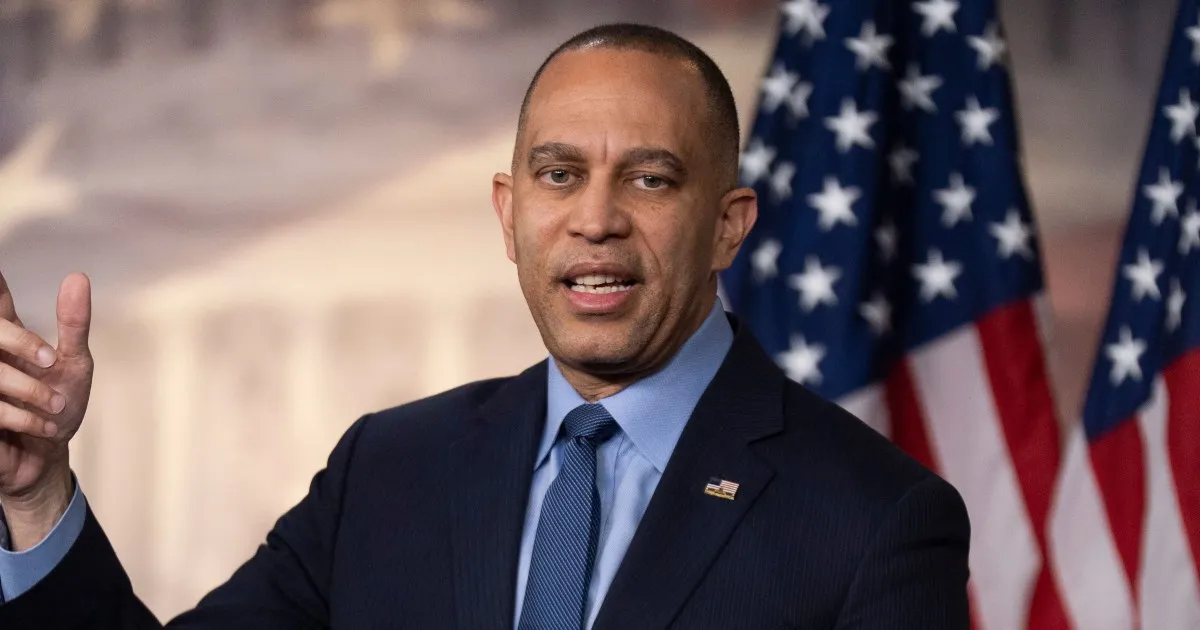
“Reckless war of choice.” US House of Representatives Democratic leader Hakeem Jeffries criticised Donald Trump for what he called a failure to adequately prepare for the consequences of launching a war on Iran.
Speaking at the Oval office, US President Donald Trump stated that Somalia is a “fourth world nation” while repeating claims without evidence that Congresswoman Ilhan Omar had illegally entered the country by marrying her brother. Omar has consistently denied the “sick” allegations.
CCTV shows the moment a car hits a Muslim woman in broad daylight in southeast London before the driver speeds away. The woman survived, and an investigation is ongoing, but no suspects have been arrested yet.