Customers are being sent emails that explain everything they need to be aware of
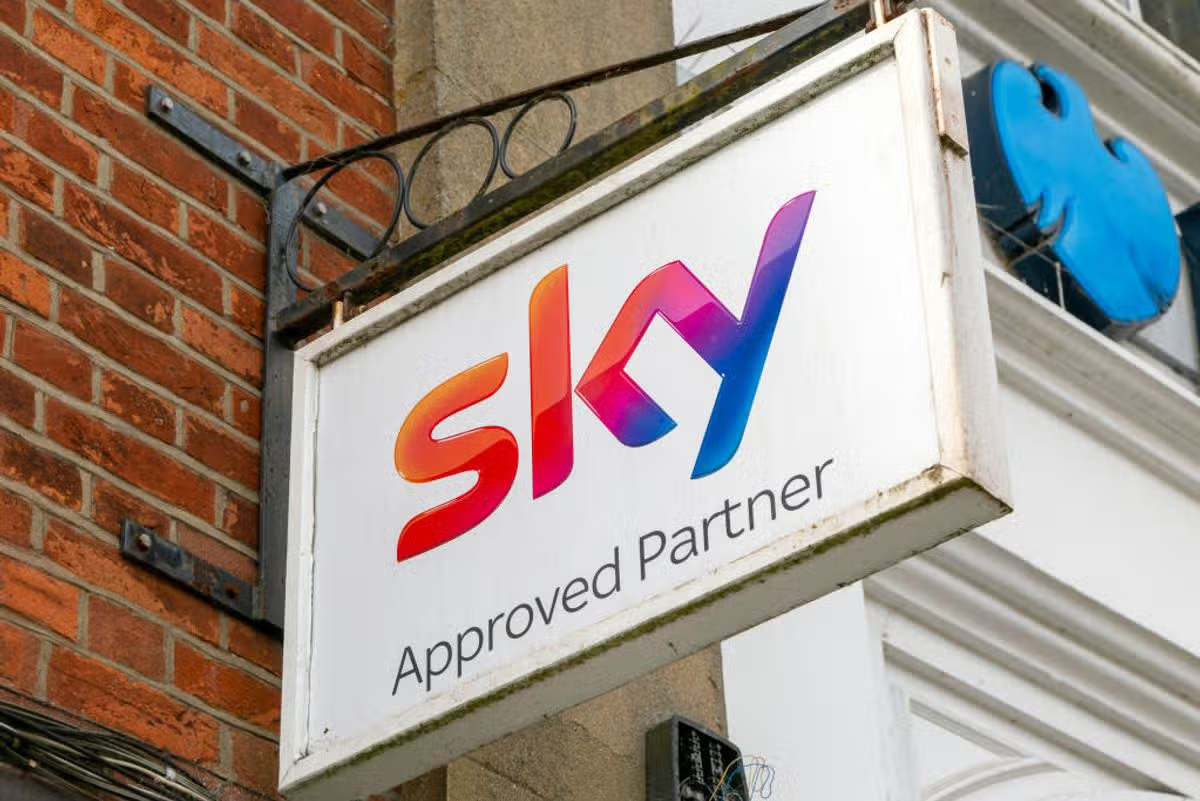
Keep your Sky account safe from scammers (stock image)(Image: Getty)
Sky is sending emails out to customers with a message about ‘security’. In the UK, Sky serves more than 25 million people, about 36% of all households. Sky Broadband boasts nearly 5.8 million active users and employs around 20,000 people across the UK.
In a new email delivered to its customers, the connectivity company reminded people about the importance of watching out for scammers. It said: “At Sky, we’re committed to helping you keep your account secure. So, we wanted to give you some tips on how to stay vigilant.”
Urging customers to stay safe and explaining what steps to take, Sky added: “Sometimes, scammers pretend to be trusted brands so that they can try to trick you into sharing your personal information or even placing an order they may ask you to send on to them when it arrives.
“If you’re unsure about a call, text or any other message, end the conversation. Head to the My Sky app or sky.com to see if anything looks wrong — be sure to check your account details and your recent orders.”
For customers who receive calls, texts and WhatsApp messages, Sky advises “stay vigilant”. It says: “Fraudsters can sound convincing, especially if they rush you, pressure you, or offer a deal that seems too good to be true.”
Remembering the following information “will help you stay in control”
Sky will never ask for the password you use to sign into the My Sky app or sky.com
Ask you to place an order on our website while on the phone with you.
Tell you to share your screen on any device.
Ask you to read out your full payment card details (unless you contacted us first).
Pressure you into making decisions.
Sky says it always sends texts “from Sky”, adding: “Be cautious of other senders claiming to be us.” The company also says it will always give you the option to hang up and contact the customer service team if you’re unsure.
It added: “Use our verified Sky UK WhatsApp Business account — look for the blue tick. Remember, if anyone contacts you unexpectedly, sounds urgent, or asks for details, stop and take a moment.”
In terms of deliveries, Sky urges customers to be aware that if someone asks to return items they weren’t expecting to receive, or pressures them to return something using a QR code or courier. It says: “If you ever need to return Sky equipment, always use Sky’s official returns process.”
If you believe you’ve fallen victim to a scam, reach out to your bank right away if you shared any money or personal information. After that, make sure to report the incident to Action Fraud, the UK’s national reporting centre. You can do this by calling 0300 123 2040 or by visiting the Action Fraud website. It’s important to act quickly to protect yourself.
Jackson didn’t get a chance for revenge after tearing an anterior cruciate ligament in May, making the Sparks’ 102-87 win at Crypto.com Arena not a true litmus test. Veteran guard Ariel Atkins, who was shipped out of Chicago in the Jackson deal, had her best game with the Sparks, finishing with a season-high 17 points.
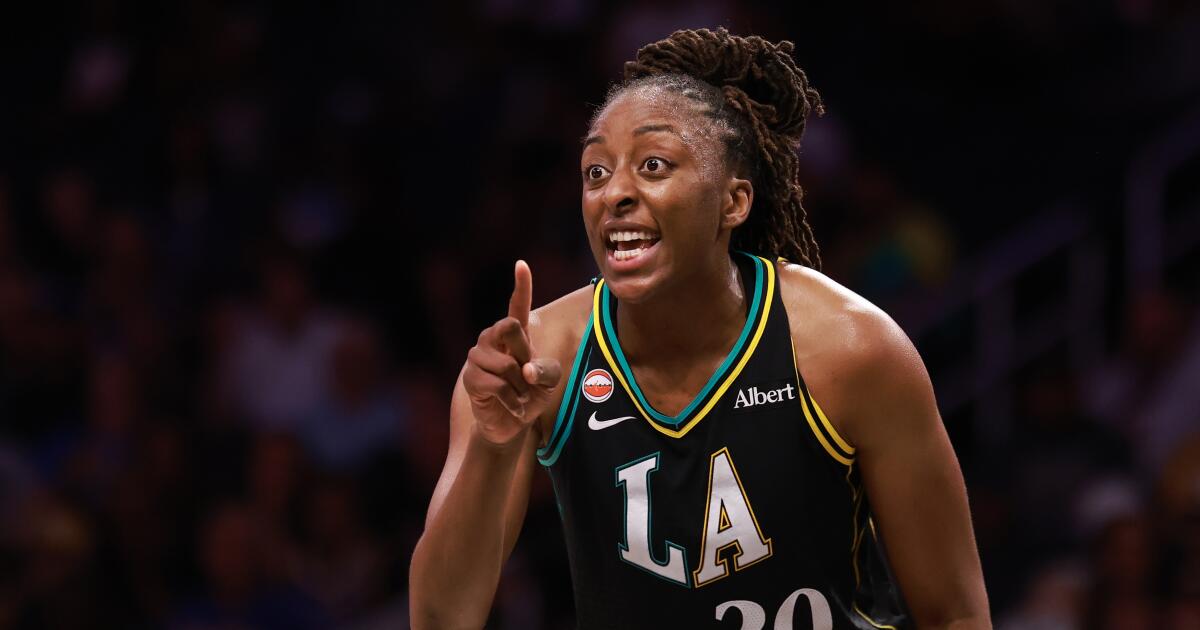
The Sparks showcased their potential en route to their second straight win, even with All-Star Kelsey Plum (lower left leg) and Cameron Brink (left ankle) out. Nneka Ogwumike, the Sparks’ other All-Star, posted 25 points and 12 rebounds, Dearica Hamby and Rae Burrell both scored 17, and Erica Wheeler had 15 points and eight assists.
“The ball’s got to move,” Sparks coach Lynne Roberts said. “It can’t be a lot of one on one. And that’s what happens when you have 32 assists, the ball’s moving. So it’s just the continued emphasis of ball movement, player movement, getting those high-quality shots, and we’ve got players that are going to make them for percentage.”
Still a game under .500, the Sparks (10-11) have a long way to go to be considered serious postseason contenders. Chicago also has struggled mightily outside of a win against Phoenix this week and has been engulfed in drama around veteran guard Skylar Diggins, who sat out because of a knee injury.
“After the game on Monday, I think there was just kind of like an ‘enough’ mentality, and we all felt it,” Roberts said. “We all kind of just said, ‘enough.’ That doesn’t mean that we’re going to go undefeated the rest of the way, but we play like that. We give ourselves a chance in every game.”
For the second straight game, all five starters scored in double digits. Hamby had a late backhanded layup over 6-foot-7 Kamilla Cardoso to help close out the win.
Brought in to be Plum’s partner in the backcourt, Atkins has had an inconsistent offensive season, with career-low scoring and shooting numbers. Against her former squad, she showed why the Sparks wanted her, and why they need her to produce with Plum out of the lineup for the foreseeable future.
“It feels good to see shots go in,” Atkins said. “My biggest thing is that it feels good when we all feel good too. When they lead to wins, it makes it even better.”
After the Sparks opened up a 16-8 lead, Chicago (7-15) stormed back to keep it tight throughout the second quarter. The Sparks led 73-70 after three quarters before pulling away late.
Ogwumike made three three-pointers in the fourth to carry the Sparks across the finish line.
“Just to have that poise, like we haven’t shown that in a very long time,” Wheeler said. “So for us to display that tonight, like that should be the standard, and it felt good to have that poise.”
The Sparks scored 25 points off 15 Sky turnovers. They shot 51% from the field.
Ball movement has been emphasized all season, “so it’s good that we’re starting to figure it out,” Roberts said. “When you look at the assists, it wasn’t like one person had 16 or something, right? So it’s balanced. The ball’s moving. There’s [the thought of] ‘we need to get the win,’ not ‘I need to get the bucket.’ And I think that’s the mentality of great teams.”
Veteran forward Emma Cannon played 12 minutes and scored nine points as a key post presence late when Cardoso was in foul trouble.
Ogwumike moved into fifth on the Sparks’ all-time assists list with her third helper in the first quarter, passing Mwadi Mabika.
The Sparks are half a game outside the final playoff spot, not bad given how poor some of their performances have been. They head to Atlanta (13-9) to face a slumping Dream squad on Monday as they try to win three consecutive games for the third time this season.
“It took us a bit with KP out to figure out kind of how we can still flow,” Roberts said. “I think we’ve figured it out.”
A MULTI-MILLION pound karting attraction is set to come to a major seaside city.
Thrill-seekers will be able to experience the ride in just two years time.
Sign up for the Travel newsletter
Thank you!
The new attraction is set to come to the Welsh city in 2028Credit: Skyline Swansea ProjectThree luge tracks will be open to visitors to rideCredit: Skyline Swansea Project
The brand-new attraction – known as Skyline Swansea – is set to bring Europe’s first ever skyline luge to the Welsh city.
The £49million experience will see visitors taking a cable car up the mile-long stretch from the Copper Quarter to Kilvey Hill.
Once there, thrill-seekers will be able to ride a three-wheeled luge cart – a type of reclining sled – down a 1,012-meter snaking track, propelling visitors downwards using gravity.
Three luge tracks will be available to ride upon opening, along with a children’s adventure park, a 50mph sky swing, and a 150-seat restaurant with a separate bar area.
A separate bar and restaurant area is set to be constructed alongside the new ridesCredit: Skyline Swansea ProjectWalking and cycling trails will be maintained and upgradedCredit: Skyline Swansea Project
The mountain biking trails that are currently available on the hill will also be maintained and improved, with additional trails to be added.
New Zealand-based Skyline Enterprises, the firm behind the project, revealed that construction is currently underway, with an estimated completion date of mid-2028.
The leisure company said their mission was to “open up Kilvey Hill for everyone to enjoy, bringing accessible tourism to the heart of Swansea” and “where the sweeping views of Swansea Bay, Gower, and Bannau Brycheiniog can be enjoyed by all”.
This marks the firm’s first project in the UK, having built similar style sites across New Zealand, Canada, Singapore and South Korea.
The 193-metre hill also remains a popular site for hikers, cyclists and trail runners, with an estimated 140,000 visitors each year.
However, the new attraction is projected to bring in upwards of 450,000 visitors annually, with more than half coming from outside of Wales.
A NEW multi-million attraction with a karting experiences is planned for the UK.
A new £10.2million attraction for Kilvey Hill in Swansea, Wales, is currently being discussed by Swansea Council.
Sign up for the Travel newsletter
Thank you!
A new £10million attraction could soon open in Swansea, WalesCredit: Skyline Enterprises
Called the Swansea Skyline project, the attraction would have a gondola-style lift stretching over one-mile long from the Hafod-Morfa Copperworks to the top of the hill.
There would also be a downhill karting experience from the top of the hill via three winding tracks.
A promotional video for the new attraction also showed that the tracks could be used at night too, lit with neon lights.
There would then also be a sky swing and a number of walking and cycling trails.
For when you get hungry, there would also be a restaurant onsite with a separate bar overlooking the bay.
And for kids needing to let off some steam, a children’s playground is planned for outside as well.
In an update this week, work has started on the base station for the gondola as well as on Kilvey Hill, where the groundworks for the ‘luge’ tracks has started.
The company behind the project is based in New Zealand and Swansea Skyline would be their first site in the UK, as well as Europe.
According to the projects website, the company said: “We are here because we believe Kilvey Hill is an extraordinary place, and we’re committed to benefiting the Swansea community for the long term.”
Kilvey Hill sits just outside the city of Swansea and is known for being a 193 metre hill with panoramic views of the city centre, Swansea Bay and the coastline.
Currently, the spot is popular for woodland walks and mountain biking.
BROOKS Nader almost suffered an awkward wardrobe malfunction in her latest sizzling snaps.
The Baywatch beauty nearly spilled out of a plunging top in photos shared on her Instagram stories this week.
Sign up for the Showbiz newsletter
Thank you!
Brooks Nader has stunned in a sexy plunging topCredit: InstagramThe gaping garment looked amazing as the blonde bombshell posed on a boatCredit: Instagram
The stunning actress, who will be taking on the role of Selene in the upcoming Baywatch reboot, looked beautiful as she rocked a black plunging halter-neck style top.
The top had gaping arm holes and it appeared that Brooks ditched her bra for the occasion.
She could have suffered a wardrobe blunder due to the daring nature of the garment.
She later rocked a strapless red bathing suit, which again could have risked a major malfunction because it was held up by luck alone.
The red garment was very renunciant of what she’ll be donning when starring in Baywatch.
She has already been hailed as the ‘next Pamela Anderson‘ as she prepares to slip into the iconic red bathing suit on the small screen.
Brooks’ sizzling snaps come just mere weeks after it was revealed that a Brit broadcasting company has bought the reboot of Baywatch to air in the UK.
The show stars Brooks and several TikTok stars, as well as returning Baywatch icons such as Erika Eleniak.
She held her top together while posingCredit: InstagramShe ditched a bra to wear the sexy garmentCredit: InstagramBrooks then rocked a strapless red bathing suitCredit: TikTokShe channelled Pamela Anderson for the sizzling lookCredit: TikTok
The all-new Baywatch series is co-produced by Fremantle and Fox and is due for release later this year in the US, with it now set to grace UK screens via Sky.
The broadcasting giant has taken exclusive UK and Ireland rights to the upcoming series.
Lucy Criddle at Sky has spoken of the move, saying: “Baywatch is one of the most iconic television franchises of all time, and this bold new reimagining will deliver the sun, sea and high-stakes drama audiences know and love, while introducing a dynamic new cast for a new generation of fans.
“We’re thrilled to partner with Fremantle and couldn’t be more excited to bring the series exclusively to Sky audiences across the UK and Ireland.”
12 brand new episodes will soon air, with viewers likely to be glued to the screen as the lifeguards go about their duties in their iconic red swimsuits.
The all‑new cast of lifeguards will see Stephen Amell in the lead role of Hobie Buchannon, alongside Jessica Belkin as Charlie Vale, Shay Mitchell as Trina, and Hassie Harrison as Nat.
Thaddeus LaGrone will play Brad and Noah Beck will be at the helm of Luke.
In recurring roles, David Chokachi reprises his original role as Cody Madison, while Livvy Dunne portrays Grace.
Erika Eleniak will also reprise her original role as Shauni McClain as a guest star.
KATIE Price has said that nobody knew just how bad things were for her when she experienced some very ‘dark moments’ in her life.
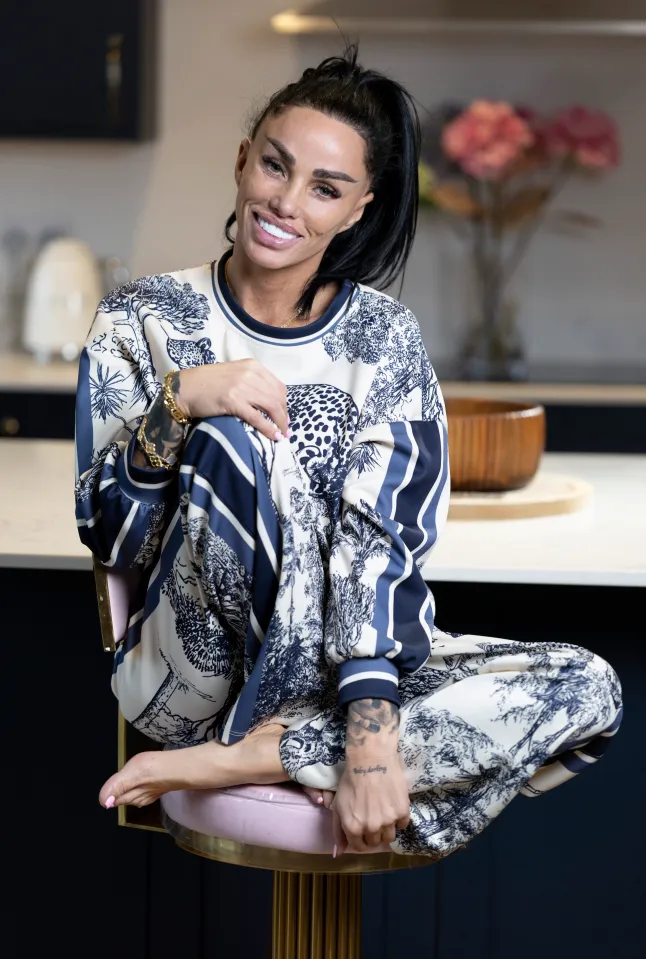
The TV star, 48, is gearing up for the release of her upcoming tell-all docuseries,Katie Price: Nothing to Hide – in which she will recount her 2018 and 2021 breakdowns.
Sign up for the Showbiz newsletter
Thank you!
Katie Price is gearing up for her new tell-all docuseries to drop next monthCredit: Dan CharityKatie has opened up about her 2018 breakdown ahead of her new docuseriesCredit: YouTube/@WeNeedToTalk-Podcast
Her candid and unfiltered account of three decades in the spotlight is coming to Sky and NOW on July 8.
This week, Katie attended the Sheffield DocFest where she revealed that during her darkest moments and confessed ‘no-one knew how bad it was’, with this set to play out in her new series.
Katie suffered a major mental breakdown in around 2018 following a build-up of traumatic events in her life, she then suffered another in 2021.
Speaking about this at the DocFest event ahead of her Sky show dropping next month, Katie got candid and confessed: “When I had my breakdown, I don’t think people really knew how bad it was, and how it affected people in my life.
“To hear that my loved ones cried and how much they loved me is like a wake-up call for me.
“There are some really dark moments [in the series] but at the same time, uplifting.
“People have to remember that it’s actually my life, so if you’re exhausted just watching it, imagine how exhausting it is for my little pea brain.
“But I really enjoyed doing it.
“I said they should do 10 parts and they wanted to, but we were lucky to push it to four [episodes].
“There’s still so much you could put in it. Even from what you’re reading today.”
Elsewhere at the event, Katie said: “I’m an open book.
“When [the team] came to me about the documentary, I got excited because something about me and my life is perfect.
“The media narrative is so different to what I’m really like but as you say, every day, even now, there’s always something.
“My life could actually be a soap story – it just doesn’t stop. I’m normal but it’s a weird world I live in. I can’t explain it.”
She also touched on being authentic.
“I have nothing to hide, and when they asked me, ‘are there any areas you don’t want us to go?’, I said, no! You can talk to absolutely anyone you want and you can talk to me about anything you want,” she confessed.
“Luckily the duty of care was amazing. Sometimes after two hours [of interviews], I couldn’t do any more.
“There are moments where I’ve had therapy to get over some of the things in my life, and I had to relive them.
“But I think this is what makes a good show, and I love watching documentaries.
“So many people are so manufactured and they’re in on the edits, so they look like a polished turd, basically. I am not that!
“Even I’m cringing at some of the stuff in the first episode! I haven’t had time to reflect on anything in my life because there’s always the next thing, and the next thing.”
A NEW airline has revealed plans to launch flights to some dream holiday hotspots.
Global Airlines – which is the UK’s newest airline – is planning on adding flights from the UK to the Maldives before Christmas.
Sign up for the Travel newsletter
Thank you!
Global Airlines has revealed that it plans to launch flights to the Maldives from the UK before the end of the yearCredit: Getty
Speaking with Metro, the airline’s founder, James Asquith, said: “Ask anyone in the UK, do you want to go to the Maldives? I think everyone would say: ‘I’d love to, it’s my dream holiday, or I want to go there on honeymoon.’
“And it’s so underserved from the UK.”
The Maldives is known for being a popular destination for British tourists, with flights taking around 11 hours to reach the islands which feature pretty white sand beaches and famous bungalows hanging over crystal clear waters.
There are currently direct flights already from the UK to the Maldives, including from London Heathrow with British Airways.
Asquith also shared that the Maldives is just one of a number of long-haul destinations being considered and that the airline is looking to launch flights from a number of UK regional airports such as Manchester and Birmingham.
In addition to the latest flight route news, the airline is currently buying another plane.
The UK airline currently only has one plane and is in the process of getting anotherCredit: Alamy
The airline’s only plane at the moment, is an A380 – the world’s largest passenger plane.
The airline’s founder revealed that Global isn’t focusing on short-haul routes but instead, on flights to America and transatlantic destinations.
Though he also joked that they might give “a crack or two” at flying to Honolulu in Hawaii, which usually takes between 15 and 16 hours.
The airline already previously launched a route last year; however, only two flights took off and since then, there have been no other flights.
After initially launching in 2022, Global Airlines wanted to start flying from London Gatwick by 2023 and have around 100 planes flying across Europe by 2025.
However, due to several delays, only two commercial flights have flown to date, which were between Glasgow and New York in May 2025.
Since then, Global Airlines’ only plane has remained at Tarbes Airport in France, in a storage hangar.
Asquith mainly blames the delays on maintenance check wait times, but he remains confident that the Maldives route will be up and running before 2027.
A swarm of drones lit up the evening sky near Taiwan’s Taipei 101 skyscraper in a dazzling display depicting a giant robot, a sports car, and Earth. The light show was part of Computex Taipei, one of Asia’s largest technology exhibitions.
Dua Lipa and Callum Turner are writing a new chapter in their romance, tying the knot two years after a meeting that would make most bookworms swoon.
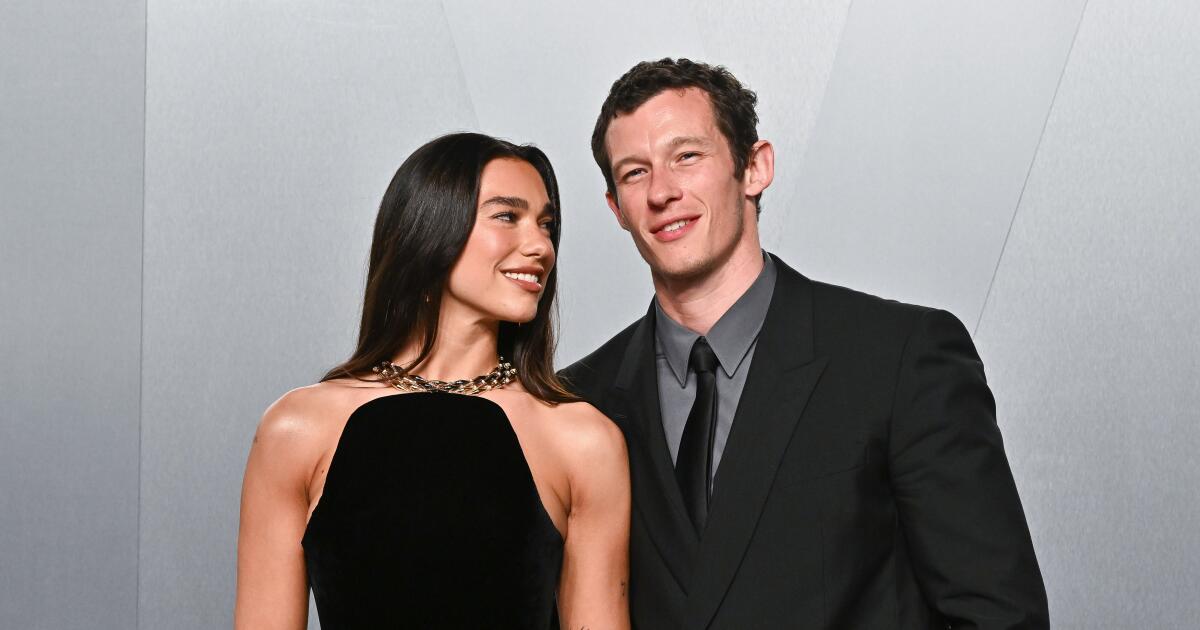
The Grammy-winning “Levitating” pop diva, 30, and “Eternity” actor, 36, exchanged their vows Sunday morning at the historic Old Marylebone Town Hall in Westminster, London, officials confirmed to the Associated Press. The Daily Mail published photos of the newlyweds all smiles and hand-in-hand descending town hall steps. Callum was spotted wearing a navy suit as his bride donned a custom Schiaparelli skirt suit, white gloves and a wide-brimmed hat, according to the Daily Mail. The singer also wore white Louboutin heels and a serpentine necklace by Bulgari.
Lipa and “Masters of the Sky” star Turner began dating in January 2024, after numerous missed opportunities. Turner told the Times of London in October 2025 that he and his now-wife (“I just thought she was the most beautiful woman in the world”) first met in Los Angeles before a mutual friend’s birthday and struck up an instant connection. “We sat next to each other and realized we were reading the same book, which is crazy,” Turner said.
Lipa runs her own book club and blog, titled Service95, and announces the selected reads on Instagram. When they met, the bookworms-turned-lovebirds were each making their way through Hernán Díaz’s “Trust.”The novel won the Pulitzer Prize for fiction in 2023.
“I had just finished the first chapter and I told her and she looked at me and said, ‘I just finished the first chapter too.’ I said, ‘So we’re on the same page,’” he told the Times. “In the movie version of it I look up to the sky and I’m like, ‘I hear you. I understand. The signs are loud, don’t worry.’ And that was really the first [moment].”
Lipa hard-launched her romance with Turner on Instagram in July 2024, sharing photos from Glastonbury. Over the following years, the singer continued sharing photos of sweet moments between herself and Turner, who does not have an Instagram account, and the pair were spotted together at numerous public events including the 2025 Met Gala. In December 2024, Lipa posted photos featuring a diamond ring on her left ring finger, spurring engagement chatter. After months of flaunting the ring on social media posts, Lipa confirmed the engagement to British Vogue in June 2025.
“It’s very exciting … This decision to grow old together, to see a life and just, I don’t know, be best friends for ever — it’s a really special feeling,” she told the outlet at the time.
Videos show Indonesia’s Mount Merapi spewing a column of ash around 2 kilometres high in West Sumatra’s Tanh Datar District. Authorities have enforced an “exclusion zone” within a 3-kilometre radius around Mount Merapi since an eruption in 2023.
Termed-out Gov. Gavin Newsom and the Democratic-controlled Legislature have dug the state into a deep financial hole, and it faces severe deficit spending through the next governor’s first term.
The only honest solution is an unpopular mix of program cuts and tax increases, plus a focused, earnest and unlikely effort at making government more cost-effective and efficient.
The worst option would be the easy one that got Sacramento into its current mess: gimmicky budgeting that includes excessive borrowing, program delays rather than outright eliminations and fudged numbers.
Nonpartisan Legislative Analyst Gabriel Petek recently estimated “the state faces structural deficits running from $20 billion to $35 billion annually.”
He warned the state’s financial commitments funded by its revenue “[are] not sustainable” and added that mopping up the red ink “will likely require at least some — if not significant — spending reductions.”
The analyst pointed out that since 2019, under Newsom, state general fund spending has risen by $100 billion to $248 billion in the governor’s latest budget proposal in January. About 70% of the growth went to maintaining existing services and 30% was for expanding or creating new programs.
“In retrospect,” Petek continued, “the state could not afford to sustain its existing services while funding … expansions and new programs.”
Last week, the analyst reported some good news coupled with bad. He estimated a $25-billion boost in unanticipated revenue, driven by artificial intelligence enthusiasm and “the related stock market boom.” But, he added, “these surging revenues likely are not sustainable.”
You’re reading the L.A. Times Politics newsletter
George Skelton and Michael Wilner cover the insights, legislation, players and politics you need to know. In your inbox Monday and Thursday mornings.
By continuing, you agree to our Terms of Service, which include arbitration and a class action waiver. You agree that we and our third-party vendors may collect and use your information, including through cookies, pixels and similar technologies, for the purposes set forth in our Privacy Policy such as personalizing your experience and ads.
The analyst said the stock market appears to be “in a speculative bubble, rivaled only by the dot-com boom” (that led to the Great Recession) “and the Roaring ‘20s” (that ushered in the Great Depression).
“The state should be prepared for revenues to be tens of billions lower within one or two years.”
Newsom will get another crack at legitimately balancing a budget on Thursday when he revises his spending proposal for the next fiscal year.
You can’t really blame the governor’s wannabe Democratic successors for dodging this fiscal thicket. Program cuts and higher taxes don’t attract voters. Moreover, the subject is weedy and boring. For that reason, I suspect, moderators didn’t even delve into it during three recent televised gubernatorial debates.
Regardless, budget-crafting is a governor’s most sacred duty and the source of much of their power. It would help voters to know where the candidates stand. Right now, they’re in hiding.
Former state Senate leader Don Perata, a Democrat, posted this last week about the chronic deficits:
“Apparently, candidates find this untroubling or maybe someone else’s worry. None … even mentioned it during those juvenile television ‘debates’ and the hundreds of millions spent on campaign commercials.”
Instead, various contenders have been promising voters a Santa’s sleigh of goodies: state-run single-payer healthcare, free childcare, partial no-tuition college, suspension of the gas tax, no state income tax for people earning under $100,000 and generous subsidies for Hollywood filmmaking.
But this concept seems far beyond the state’s financial reach and operational capability. Its cost could exceed twice the current state budget. And I shudder to think of our state bureaucracy trying to handle healthcare for 39 million people. First, get the DMV working right and the botched bullet train rolling.
Centrist San José Mayor Matt Mahan chimed in, asserting: “The candidates who are fighting for single-payer don’t know how to pay for it, and they’re not being honest about it.”
Practically everyone jumped on new Democratic frontrunner Xavier Becerra — former state attorney general and U.S. health secretary — for seemingly being unable to specify whether he’s for or against single-payer.
“I’ve been consistent for over 30 years,” he said, trying to explain that he favors Medicare-for-all as “the most efficient way that we can do healthcare.”
It was a silly waste of debate time. They were arguing over oranges and lemons — both citrus, but different. Becerra should have just made clear that he’s opposed to single-payer and supports a separate version of universal healthcare: Medicare-type coverage with a supplemental private insurance option for all Californians. If that’s indeed what he favors.
Mahan bragged that he’s “the only candidate in this race who is calling for a suspension of the gas tax.” It’s a highlighted Republican talking point. But no other Democratic candidate advocates suspending the tax because it’s a screwy idea.
The roughly 60-cent-per-gallon state gas tax pays for filling potholes and more serious road repairs and improvements. Moreover, the next governor won’t take office until January. Suspending the tax then — even if the Legislature approved — wouldn’t reduce today’s soaring pump prices.
My take on the debates:
Becerra survived. He’s refreshingly calm but needs to be more crisp.
Steyer was articulate and may have attracted Bernie Sanders fans.
Porter is a talented debater, but seemed overly defensive about her past hot temper.
Mahan was fine, but he just got off the bench and it’s late in the game.
Villaraigosa was straightforward as usual, and finally had a broad audience.
All should bone up on budget-balancing and tell us their thinking.
The Mayon Volcano has erupted, spewing a cloud of ash and debris across Bicol, in the Philippines. Emergency services have issued alerts to nearby towns. The 2,462-metre (8,007-foot) volcano is the country’s most active.
Here comes Bob Chesney’s rebuild. And Iamaleava’s redemption. An exceptional head coach and an exciting quarterback, with the wind at their backs, racing toward a relatively breezy schedule?
USC defensive tackle Carlon Jones grabs UCLA quarterback Nico Iamaleava during a game on Nov. 29.
(Kyusung Gong / Associated Press)
Sky’s the limit, man.
Watch them dip and dance and make defenders miss all the way to New York. Watch the cautionary tale about the perils of the transfer portal turn into a fairy-tale comeback.
No, that’s not me building castles in the sky.
Consider the unprecedented heights to which Chesney took tiny James Madison, and think of the places he can go with a junior QB whose trajectory had him headed toward Heisman Trophy hopefuldom before turbulence hit.
Iamaleava arrived in Knoxville, Tenn., with more hype than any quarterback since Peyton Manning. The 6-foot-6 Long Beach native, with an outside hitter’s rocket arm and the gazelle-like gait, was considered the nation’s No. 2 overall recruit out of Warren High in Downey. As a redshirt freshman in 2024, he won 10 games and led the Volunteers to the College Football Playoff.
Heisman buzz was building. Until it wasn’t, deadened last spring by the contract dispute that was debated ‘round the college football world. There was disagreement between Iamaleava’s camp and Tennessee — which was reportedly paying him more than $2 million per season, less than the going rate for some comparable quarterbacks and more than the Bruins reportedly offered.
UCLA — 3-9 last season and with only two bowl appearances in eight years — isn’t anyone’s idea of a shortcut back to glory. But there is this: The Bruins seem really to have Ted Lasso’d a certain energy these days. A can-do frequency. Joy and positivity are in.
UCLA coach Bob Chesney leads the Bruins through their first spring football practice at Spaulding Field on April 2.
(Robert Gauthier/Los Angeles Times)
Alysa Liu, the figure-skating psychology-student Olympic champion? She said there’s a new golden rule: Am I having a good time?
And mercy, the No. 6-ranked softball team — whose silly postgame interviews have gone viral — is having a record-smashing season.
Now we also have Chesney extra-cheesing out here, showing up with free pizzas at fraternities, outreach to get the bros out to the Bruins’ spring game Saturday at the Rose Bowl.
But how does Iamaleava fit into this bright motif?
Perfectly, actually. When I asked him last year what he was telling his teammates after head coach DeShaun Foster was fired three weeks into the season, sky falling, wheels falling off, Iamaleava smiled his easy smile: “Man, just keep the belief.”
If that reads like a cliché, imagine the coolest guy in school saying it, and meaning it.
Iamaleava has a Long Beach lean, laid back and comfortable in his skin. He’s super-tight with his seven siblings, and super-proud of their Samoan heritage. And even though he and his younger brother Madden, a backup UCLA quarterback, were always “the toughest dudes on the field,” former Warren coach Kevin Pearson said, “they are the nicest, sweetest off of it.”
But wasn’t Nico the villain? The bad guy? That disloyal, greedy kid at the center of college football’s first apparent holdout?
The criticism was so loud — and so wrong, Pearson said — it had the man stressing. “It made my stomach hurt,” he said, “what people were saying about Nico.”
Pan out and Nico is a face in a crowd. For example, of the top 600 football prospects in the class of 2021, more than 60% of them transferred at least once, and 42 of the top 50 quarterbacks changed schools, according to the Athletic.
And he was about the only thing that was good about last season’s Bruins.
UCLA quarterback Nico Iamaleava passes the ball during an upset of Penn State at the Rose Bowl on Oct. 4.
(Gina Ferazzi/Los Angeles Times)
He was their leading passer and rusher. Of UCLA’s 24 touchdowns, he accounted for 17, including five in the Bruins’ 42-37 victory over No. 7 Penn State, which earned him a slew of national weekly honors, including Big Ten Offensive Player of the Week.
But the Bruins won only three games. The whole season was a hot mess, though you wouldn’t have known it, talking to Nico.
He seemed to get it. Not like he understood the assignment of rehabilitating his image, but with the sincerity of someone who appreciates what’s actually hard.
You might remember, his mom, Leinna, was diagnosed with breast cancer when he was 14.
“She definitely opened my eyes, just as a young kid growing up,” said Iamaleava, noting that she is OK now, busy traveling all over the country with his younger volleyball-playing sisters.
“She got diagnosed my freshman year and it was just kind of time to grow up and take care of the little ones. That changed my mindset and my perspective on life. Life’s short, you know? And we’re very blessed to be here and wake up every day.”
Nico could have been defensive in the face of criticism and failure, but he never was. Could have disappeared after defeats as some quarterbacks have, but he didn’t.
His mantra: “That’s on me, man.” Even when it wasn’t.
Despite everything, he was overly accountable, gracious under pressure, upbeat.
“Think about what he had to go through last year,” Chesney said. “He got the preseason, had a couple weeks with the guys, then he got into season, had a couple weeks with the guys, and then all hell broke loose, right?
UCLA offensive linemen Garrett Digiorgio, left, and Sam Yoon, right, help quarterback Nico Iamaleava up after he ran for extra yards against Penn State at the Rose Bowl on Oct. 4.
(Gina Ferazzi/Los Angeles Times)
“To be able to stick with it and stay through that, you’re just probably trying to keep your head above water. And a lot of our conversations are about that, ‘Hey, this is different this time around.’”
Way different. Chesney has revamped UCLA’s roster with 40-plus transfers, including several key contributors from the JMU team that made the College Football Playoff.
And then there’s Nico, looking like everybody’s big brother at spring practices, smack-talking and celebrating the guys, as engaged as Chesney but easier to spot because his golden helmet glistens above everyone else’s.
“We did a leadership vote,” Chesney said, “and it was undeniable, [Nico] was the No. 1 vote on this entire team to be the leader. And I wanted to just share that with him and make sure he didn’t have to wonder, ‘Do these guys respect me?’ They do. And not only by the position you play, but by the way you play it. By the way you handle it off the field.”
By smiling through it all, even in the immediate aftermath of the Bruins’ loss to New Mexico, their third loss in as many weeks, when it looked like UCLA might not win all season.
“This is a game that as a little kid you loved to play,” Nico said that night. “A lot of [us] are treating this like a job. We gotta get back to having fun.”
And now that Nico and the new-look Bruins have that kite in the air, watch them run with it.
GAIL Porter has slammed Katie Price online for all to see, claiming she cruelly mocked her hair loss.
The 90s pin-up, 55, lost her hair as a result of alopecia, which she developed in 2005.
Sign up for the Showbiz newsletter
Thank you!
Gail Porter has slammed Katie Price over on InstagramCredit: GettyShe claimed that Katie made a remark about her being prettier when she had hair before alopeciaCredit: Rex
Now Gail has claimed that Katie made a horrible remark about her in the past when introducing her to one of her boyfriends.
Taking to the comments section of an Instagram post by Sky TV showing the trailer for Katie’s upcoming tell-all documentary, Katie: Nothing to Hide, Gail made a direct comment about the star.
Referring to Katie, Gail claimed: “The person who introduced me to one of her boyfriends and said ‘this is Gail. She used to be pretty when she had hair… Google her. Thanks.’”
The comment has amassed nearly 100 likes to date as well as a flood of replies from other Instagram users.
Gail made the comment on the trailer of Katie’s upcoming documentary, posted by Sky on InstagramCredit: AlamyIt’s set to come out as a four-part series during the summerCredit: Instagram/@skytv
One response said: “Whhhhhat?!,” in clear shock.
A second reads: “That must have been awful for you. I hope you’re okay x.”
A third person added: “So sorry she said that! You are beautiful.”
Gail was a model in the late 90s, most known for her pin-up content in “lad-mags” such as FHM.
This was the same decade when Katie launched her glamour modelling career under the pseudonym of Jordan.
She regularly starred in the pages of magazines and newspapers including The Sun, The Daily Star, FHM, Loaded, and Playboy.
The four-part docu-series promises it will have “intimate access” to the model and theminiseries will go “beyond the headlines”, with Sky already promising that it will be absolutely “jaw-dropping”.
Speaking about the production Arron Fellows, co-founder and creative director at Mindhouse, said: “Katie’s 30 years in the spotlight have been truly extraordinary.
“This series doesn’t shy away from – in Katie’s own words – ’the good, the bad and the ugly’; and this is an unexpected re-appraisal of a woman many people feel they have already figured out.
“The team have spoken to a range of contributors who have crossed paths with Katie at different junctures of her life – through the ups, the downs and everything in between.
“In doing so have crafted a series that is as jaw-dropping and unpredictable as it is tender and surprising. I can’t wait for people to see it.”
The series is set to air on Sky and streaming service NOW sometime this summer.