skepticism

Cuba’s sweeping economic reforms met with skepticism

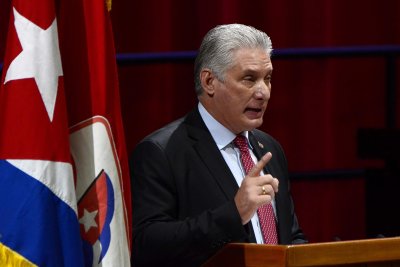
President Miguel Díaz-Canel’s package of 174 economic reforms were approved by Cuba’s parliament in just one week. File Photo by Ariel Ley Royero/EPA

June 19 (UPI) — Cuba’s parliament approved a package of 174 economic reforms in just one week, marking the most significant shift in government policy in at least 15 years. Driven by President Miguel Díaz-Canel in response to the country’s deepening economic crisis and mounting pressure from the United States, the plan approved Thursday opens the door to private capital and reshapes the rules governing the island’s economy.

Economists and analysts, however, warned that the real impact of the measures will depend on their implementation and on broader institutional changes that remain absent from the government’s plans.

Cuban economist Alfie Ulloa, a professor at the University of Chile’s Law School, told UPI the reforms represent a significant change in official rhetoric but questioned whether they will translate into meaningful change.

“They are a profound adjustment in discourse and, if implemented, would represent an important adjustment to the model. But for now they are nothing more than another declaration like many made in the past. I do not believe they will be implemented, nor that they will truly free the private sector,” Ulloa said.

The package includes 23 areas of transformation and more than 170 measures aimed at loosening state control over the economy. Among the most significant are allowing direct foreign investment in small and medium-sized private businesses, reviewing activities currently prohibited to the private sector, authorizing direct imports and exports by both state and non-state actors, granting greater autonomy to enterprises and gradually replacing broad subsidies with targeted assistance for vulnerable populations.

The reforms also eliminate broad price controls, a policy Díaz-Canel acknowledged had failed after years of inflation, shortages and expansion of the informal market.

While presenting the plan, the president admitted that part of the country’s current crisis stems from longstanding internal problems.

“There are obstacles that do not come from abroad or from the embargo. There is bureaucracy, delays, regulations that prevent people from producing and decisions that we have postponed,” Díaz-Canel said.

The proposal amounts to an implicit acknowledgment of economic policy failures that Cuban authorities had largely attributed to the U.S. embargo for decades. Analysts noted that several of the measures had been debated previously and rejected by the country’s communist leadership.

Many of the initiatives mirror reforms introduced decades ago in China and Vietnam, although they arrive as Cuba faces one of its worst economic crises since the collapse of the Soviet Union.

Cuban economist Mauricio de Miranda, a professor at the Pontifical Xavierian University in Cali, Colombia, argued in social media posts that the program points toward a transition from bureaucratic socialism to a form of capitalism controlled by political elites.

“It will become the fast track for relatives and close associates of those in power to become shareholders without anyone knowing where their capital came from,” he warned.

De Miranda said Cuba will inevitably need to privatize part of its state-owned assets to attract investment and rebuild its struggling economy. However, he argued that the process lacks the institutional safeguards needed to prevent wealth from being concentrated among groups close to the government.

“Something like this would require a capital market with clear rules, transparency and equal opportunity,” he said.

Questions about legal protections for investors have also emerged as a central criticism.

“None. Cuba is not a state governed by the rule of law. Citizens are completely defenseless before the state,” Ulloa said when asked about protections for potential investors.

He added that investing in Cuba remains highly risky because government power faces few constraints and judicial institutions lack independence.

Cuban economist Pedro Monreal also criticized the process, questioning the secrecy surrounding the package in a lengthy post on X.

“It should not be surprising that the first act of the ‘transformation proposals’ show has reaffirmed public frustration over the secrecy of those proposals,” Monreal wrote.

Monreal also pointed to the failure of the so-called “Monetary Reorganization Task,” a 2021 reform that eliminated the country’s dual-currency system but became associated with surging inflation and declining purchasing power. He argued that experience severely undermines the credibility of the new package.

Despite the skepticism, several specialists acknowledged that some measures could help address urgent problems if fully implemented.

Ulloa said a genuine opening to private investment, particularly from Cubans living abroad, could help revive agriculture, services and food production. He cautioned, however, that critical sectors such as energy, infrastructure, transportation and banking require investment levels that are unlikely to materialize in the near term.

The Cuban government said Thursday that former President Raúl Castro explicitly endorsed the reforms and expressed full support for the package, describing it as what “best serves the Revolution today.”

For critics, that endorsement highlights one of the process’ central contradictions.

The measures acknowledge problems that independent economists have identified for years, yet leave intact the political structure that many blame for creating the crisis.

“The most important point from my perspective is that we are not talking about deep reforms within a new globalized economy. We are simply talking about removing obstacles,” Manuel Cuesta Morúa, vice president of the Council for Democratic Transition in Cuba, told Radio Martí.

He said the reforms arrive too late because Cuba’s economy now operates under extensive U.S. sanctions.

According to Cuesta Morúa, progress will require political and diplomatic negotiations to make the measures viable. He argued that the package merely liberalizes some restrictions but does not yet constitute a genuine economic reform program.

He added that authorities must first address citizens’ immediate needs, create confidence through legal certainty and open Cuban society in broader ways.

Analysts agree that the central question is whether this latest reform effort will produce tangible change or join a long list of initiatives that were announced and later postponed.

Regarding the matter, Vice President JD Vance said, “Right now, we are talking with the Cuban government about how they might change their behavior to achieve that. We’ll see what they do and, obviously, if they do one thing, we’ll do another. If they make smart decisions, we’re going to have a much better relationship with that island.”

Just hours later, details of the measures emerged. For now, however, the White House has remained silent.

Source link

Peru to elect ninth president in a decade amid tensions, skepticism

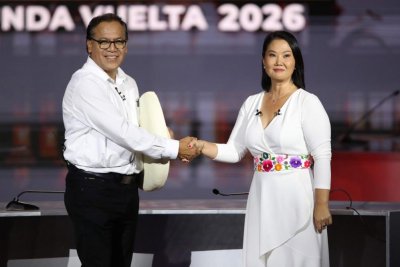
Lleft-wing candidate Roberto Sanchez and right-wing candidate Keiko Fujimori pose during a presidential debate in Lima, Peru, last weekend. This was the only debate between Fujimori and Sanchez before the decisive election scheduled for Sunday. Photo by Paolo Aguilar/EPA

June 6 (UPI) — Peru will choose its next president Sunday in a runoff election between Keiko Fujimori, leader of the right-wing Popular Force party, and Roberto Sánchez, candidate of the leftist coalition Together for Peru.

Nearly 28 million Peruvians are eligible to vote for what will be the country’s ninth president in just 10 years, a figure that reflects Peru’s deep institutional crisis and political fragmentation.

Recent polls show Sánchez and Fujimori in a statistical tie, meaning the final outcome could depend on undecided voters and the share of blank ballots.

For many observers, the central question is not only who will win the presidency, but whether Peru can break the cycle of political instability that has defined the past decade.

Fujimori’s candidacy once again places Fujimorismo at the center of Peruvian politics. The daughter of former President Alberto Fujimori remains one of the country’s most influential and polarizing political figures. Sunday’s vote marks her fourth consecutive attempt to win the presidency in a runoff election.

Sánchez, meanwhile, is a far less familiar figure outside Peru. His campaign has evolved throughout the race and has sought to appeal to supporters of former President Pedro Castillo, who was removed from office in 2022 after attempting to dissolve Congress.

Fujimori maintains a strong advantage in Lima, while Sánchez dominates much of the country’s interior, particularly in the Andean regions.

The election is taking place amid growing public frustration with Peru’s political system.

Beyond the traditional divide between Fujimorismo and anti-Fujimorismo that has shaped much of Peru’s politics over the past two decades, several analysts argue that the country’s deeper problem is a broader crisis of political representation.

Luis Lira, a researcher at the International Affairs Observatory at Finis Terrae University in Chile, said Peru has become one of the clearest examples of a “democracy without parties,” where political organizations have lost their ability to channel voter demands and have been replaced by highly personalized leadership.

“The presence of two candidates viewed as strongmen demonstrates the deterioration of political parties,” Lira told UPI.

Raúl La Torre, a Peruvian academic and professor at the University of the Andes in Chile, offered a similar assessment.

According to La Torre, Peru enters the runoff burdened by a representation crisis that has deepened over the past decade. Political parties remain weak, Congress continues to suffer from low public trust and the gap between citizens and political elites continues to widen.

Carlos Escaffi, founder of consulting firm Relaxiona Internacional, said the Fujimorismo versus anti-Fujimorismo divide remains relevant, but is no longer sufficient to explain voting behavior.

Issues such as public security, informal employment, economic opportunity and growing rejection of the traditional political class now play a larger role in shaping voter preferences, he said.

“The demand for order, security and concrete solutions to everyday problems appears to be playing an increasingly important role in voters’ decisions,” Escaffi told UPI.

Analysts also point to Peru’s political structure as a factor behind its persistent instability.

Juan Jiménez, a former prime minister under President Ollanta Humala, said the country has long experienced a contentious relationship between the executive branch and Congress, marked by frequent confrontations and repeated efforts to remove presidents from office.

“In the last 10 years we have had eight presidents. On Sunday we will have the ninth,” Jiménez told UPI.

He attributed part of the crisis to the repeated use of constitutional mechanisms that allow Congress to remove presidents from office, as well as to the country’s fragmented political landscape.

Questions over whether the eventual winner will be widely accepted have become another source of concern.

Polls released in recent days suggest an extremely close race, increasing the likelihood of legal challenges or accusations from the losing side.

Jiménez said the country’s first challenge after Sunday’s vote will be ensuring that all political actors accept the result.

“It is highly foreseeable that there will be a conflict over the outcome,” he said, noting that narrow margins in previous elections have repeatedly fueled allegations of fraud.

The former prime minister also argued that problems during the first round undermined confidence in electoral authorities and could contribute to renewed disputes once the final results are announced.

Escaffi, however, urged caution regarding claims of fraud. He said there is no evidence to support allegations of a systematic effort to alter the popular vote.

“What we have seen is that the fraud narrative has become a political tool used by different sectors to mobilize their supporters or preemptively challenge the results,” he said.

Political analyst and commentator Jorge “Coco” Salazar expressed a similar view, saying either candidate could challenge the outcome if the margin is extremely narrow.

Salazar told UPI that the climate of mistrust generated during the first round has created conditions for electoral disputes to once again dominate the political debate.

Regardless of who wins, analysts agree the next president will face structural challenges that extend far beyond the campaign.

The most pressing task will be restoring governability in a country where political confrontation has become routine.

According to La Torre, that will require building minimum agreements with a fragmented Congress, strengthening weakened institutions and rebuilding public confidence.

Corruption and public security also rank among voters’ top concerns.

Lira said Peruvians increasingly demand greater transparency and accountability from the political class, while rising crime has become one of the country’s most pressing social issues.

Escaffi warned that Peru’s ability to maintain economic stability despite years of political turmoil should not be taken for granted.

Institutions such as the Central Reserve Bank of Peru and the country’s fiscal discipline have helped cushion the effects of repeated political crises, he said, but prolonged uncertainty could eventually affect investment, economic growth and job creation.

Several analysts also believe the restoration of a bicameral legislature could help counter the institutional drift behind the recent instability.

Jiménez said the return of the Senate may make it more difficult to carry out rapid presidential removals and could create greater opportunities for political deliberation.

Even so, few experts are optimistic about a quick resolution to Peru’s political troubles.

“The election offers an opportunity to begin a more stable period, but by itself it does not guarantee that outcome,” La Torre said.

For many observers, the question that will remain after Sunday’s vote is not simply who wins the presidency but whether Peru’s political system can regain the legitimacy and stability it has steadily lost over the past decade.

Source link

Rubio is optimistic on eventual Iran nuclear talks despite congressional skepticism

Secretary of State Marco Rubio said Tuesday that he is optimistic about the potential for a resumption in nuclear talks with Iran despite a shaky ceasefire in the war that is looking increasingly in doubt.

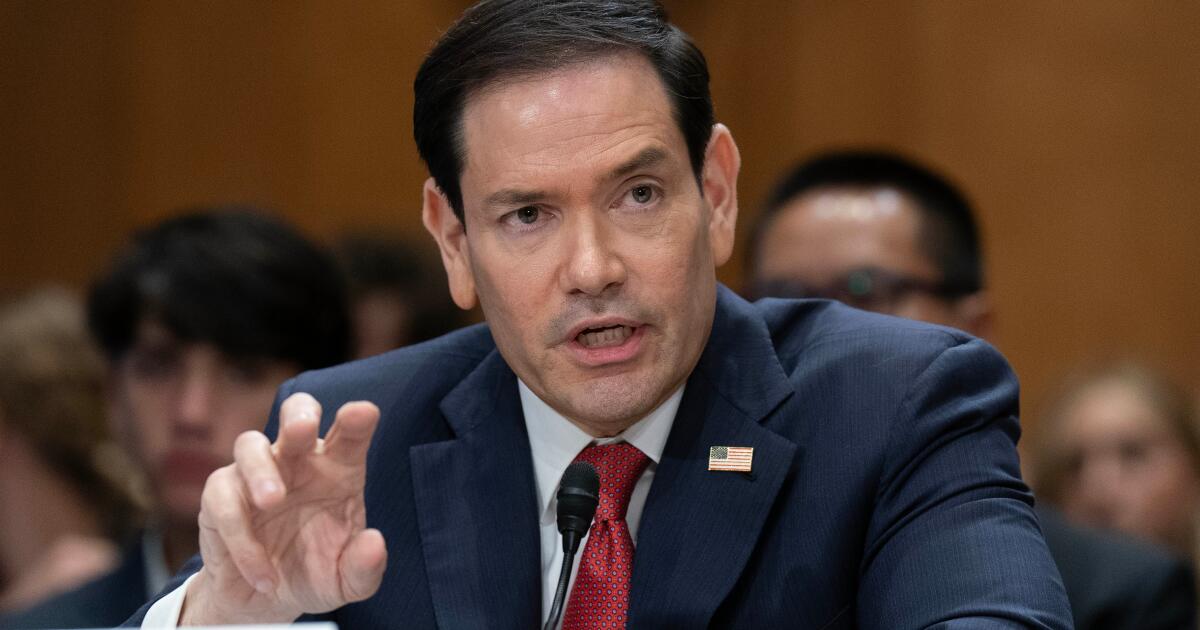
Rubio defended the Trump administration’s approach to Iran and other global hot spots in back-to-back hearings before the Senate Foreign Relations Committee and a House Appropriations subcommittee. He was briefly disrupted by protesters at each session.

In his first public testimony since the Iran war began at the end of February, Rubio said the Iranians have agreed to negotiate on nuclear points that they had not been willing to address in the past but would not offer an assessment on what those talks might produce.

“They have agreed to negotiate aspects of their nuclear program that just a month ago, just a year ago, they were refusing to even mention,” Rubio told the Senate. He noted, however, that there was no guarantee “it will lead to a deal that’s acceptable” and that negotiations have been made difficult by the instability of Iran’s leadership.

Rubio’s optimism ran counter to pessimistic reports from two semiofficial Iranian news agencies that Iran has stopped communicating with mediators after Israel threatened to bomb Beirut as it fights the Hezbollah militant group. President Trump disputed that Iran has cut off communication with mediators, calling Iranian reports of a cessation in talks “false and erroneous.”

Democrats criticize Trump administration’s approach to Iran, and Rubio defends it

Rubio’s wide-ranging testimony was met with fierce objections from Democrats, including tough questions about the status of U.S. foreign assistance to respond to diseases such as the Ebola outbreak in Africa. Rubio insisted that the dismantlement of the U.S. Agency for International Development had not affected Washington’s ability to assist with global humanitarian responses.

Sen. Chris Van Hollen (D-Md.) blasted Rubio and Trump for foreign aid cuts and overseas intervention. Van Hollen specifically took aim at the U.S. and Israeli decision to strike Iran, accusing the Republican president of entering the war on behalf of Israel.

Israeli Prime Minister Benjamin Netanyahu “said he’s been waiting 40 years to do this,” Van Hollen said. “It turns out he finally found a president who was both stupid and reckless enough to join him. Let’s face it, Mr. Secretary, the Trump foreign policy has become a dumpster fire.”

Rubio’s testimony, which was taking place as Israel and Lebanon began a new round of political talks at the State Department with the situation between Israel and Hezbollah still uncertain, did not provide definitive answers on any of the main questions of the day.

He said Iran is not guaranteed a massive payout for reopening the Strait of Hormuz, the crucial waterway for global oil shipments, and would have to commit to further concessions on its nuclear program to get significant sanctions relief.

“The more they give, the more they would get,” he said, later adding, “They’re not going to get it as a signing bonus.”

Rubio also said there are indications that Iran’s new supreme leader, Mojtaba Khamenei, is taking a bigger part in the discussions despite not being seen publicly since the war began.

“I think there are indications out there that he is increasingly engaging at some level, although all of his communications have been in writing and through intermediaries,” he said.

Democratic senator says drugs being on boats isn’t a targeting criterion for U.S. strikes

On other issues, Rubio dismissed questions about the legality of Pentagon strikes against dozens of alleged drug-smuggling vessels in the Caribbean Sea and the eastern Pacific Ocean, which have killed more than 200 people since early September.

Sen. Tim Kaine (D-Va.) said the military’s targeting criteria for those strikes does not include drugs being present on the boat. He called it “odd” but said he could not share much more because the criteria are classified.

Rubio pushed back, saying every strike has a legal officer who makes a determination on whether a strike is legal. He also said the U.S. military has “walked away from strikes” multiple times because they did not meet the targeting criteria.

The Trump administration says the U.S. is at war with drug cartels, while many Democrats have questioned the legality and effectiveness of the strikes.

The Republican former senator faces a second congressional hearing Tuesday and a pair of others Wednesday about the State Department’s annual budget request, though questions have mostly focused on top foreign policy issues.

Rubio wades into Taiwan arms sales opposed by China

Rubio acknowledged that the Trump administration is holding up a new potential $14-billion arms sale to Taiwan but said it remained under consideration and would not be canceled. He noted that the U.S. recently sold arms to Taiwan in December worth $11 billion.

He said the deal is not under review because of pressure from China, although he said the Chinese bring up the issue in discussions with the United States. Trump also has described it as a great negotiating chip.

“They are constantly talking about Taiwan arms sales, but that in no way is what is holding up our decision-making or the White House’s decision-making,” Rubio said. “It is something the president will have to decide on the timing of when and how that is executed on.”

Protesters chant at Rubio about Cuba

Rubio, the son of Cuban immigrants, also was questioned about the Trump administration’s escalatory behavior toward Cuba, as Trump has hinted that the small island country could be the next U.S. target after operations in Iran are wrapped up.

He faced chants from protesters who urged him to “stop killing Cubans” when he entered the Senate briefing room. The protesters were quickly pulled from the room. Their chants also included “Let Cuba live!”

Rubio defended the administration’s approach to Cuba and said it would remain focused on changing the Cuban government’s policies.

“I really don’t believe this system is capable of reform unless new people take over or a new mindset takes hold,” he said.

Despite a series of meetings between U.S. and Cuban officials, Trump and Rubio have renewed threats against the island’s government, which take on greater weight following the administration’s announcement of criminal charges against former President Raúl Castro.

Over his congressional career and now as America’s top diplomat, Rubio has maintained that Cuba is a national security threat due to its ties to U.S. adversaries, and that Trump is intent on addressing it.

Amiri, Lee and Finley write for the Associated Press. Amiri reported from New York.

Source link