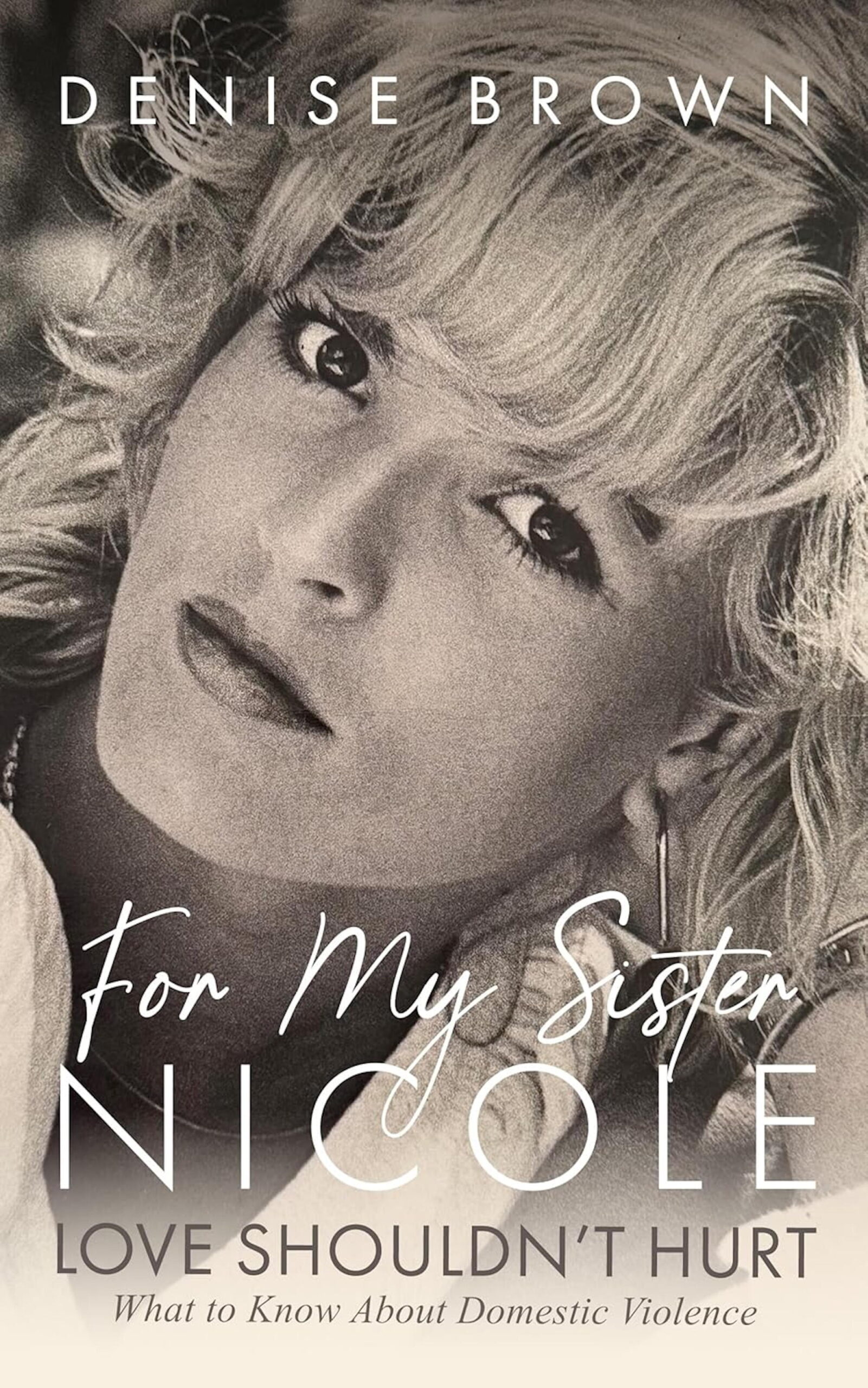
For My Sister Nicole: Love Shouldn’t Hurt — What to Know About Domestic Violence
By Denise Brown Blackstone Publishing: 240 pages, $30
If you buy books linked on our site, The Times may earn a commission from Bookshop.org, whose fees support independent bookstores.
Nicole Brown Simpson wore a long-sleeved cover-up by the beach, despite the warm weather. “We kept telling her, ‘C’mon, get in the water.’ She wouldn’t,” Denise Brown recalls of a Hawaiian vacation with her sister, Nicole, and the rest of her family, including her brother-in-law, O.J. Simpson. “We didn’t know it then, but he’d beaten the [hell] out of her the night before in the hotel room. We found out later, after she was killed, when we were reading her diaries.”
The incident is one of many chronicled in Brown’s new memoir, “For My Sister Nicole: Love Shouldn’t Hurt.” The book chronicles who Nicole was — from her happy SoCal childhood to meeting beloved celebrity and football star Simpson at the age of 18 (he was 30) to the physical and mental abuse she suffered over seven years of marriage. Brown also reveals the troubling incidents she witnessed behind the scenes, and pairs them with the knowledge she has now of what could have been done to help her sister.
(Blackstone Publishing, Inc.)
Nicole and her friend Ronald L. Goldman were murdered outside her Los Angeles home in Brentwood in June 1994. The brutal homicides set off a media frenzy, and overnight, Brown became the voice for her slain sister.
Images of an angry and sobbing Brown became the media’s hallmark of grief during the criminal trial, particularly when Simpson was acquitted in 1995. He was found guilty in a subsequent civil trial, yet still awarded custody of the divorced couple’s two children.
Now, 69, with sleek silver hair and a voice raspy from the many speaking engagements tied to her advocacy work, Brown has devoted her life to raising awareness about domestic violence. “It’s too late for Nicole,” says the former model who moved from her native Southern California to Florida decades ago. “I want this book to help others avoid what happened to her.”
This interview has been edited for length and clarity.
We’re meeting today in downtown L.A., very close to the courtroom where the trial happened, and to the former LAPD headquarters Parker Center where Simpson was booked after Nicole’s death. Is it difficult being here? Should we have done this somewhere else?
No. This is where it all happened, so it’s OK for me to be here to talk about [the book]. It should start here. And I’m glad it’s with the L.A. Times because Nicole was here in Los Angeles, as was all the chaos. Everything started here.
Denise Brown.
(Ronaldo Bolaños / Los Angeles Times)
It’s been 32 years since your sister’s murder, yet this is the first book you’ve written about what happened.
I had a [previous] book deal, but I wasn’t ready.
It was really hard going back because you think about all the things that should have been, that could have been, that she missed out on, especially with her kids. And everything was so public. It was so out in the open, with everybody looking at you. If you were too happy and laughing, it was, “Oh God, she doesn’t even know how to grieve.” If you’re crying, it’s, “My God, can’t she just get over it?”
I understand why people make these kinds of comments now, because if you’ve never been through something so horrific, you don’t know how to act. You don’t know how you’d respond.
Aside from raising awareness about domestic abuse issues, you haven’t spoken much about your sister’s life or murder until the 2024 Lifetime docuseries, “The Life & Murder of Nicole Brown Simpson.” It was the first production that included interviews and involvement from you and your sisters, which is stunning because there have been so many docs and dramas about the case.
I know. And without asking Nicole’s family, can you really make a good documentary?
A girlfriend of mine who is a producer wanted to [make a documentary] at the 10-year mark, and I just wasn’t ready. Then she asked me at the 20-year mark. I said, “No, this doesn’t feel right yet.” Then on the 30th, I asked my sisters [Tanya, Dominique and Wendy], “Do you guys want to do this?” And it was “Yes, let’s humanize Nicole. Let’s bring her back because she was lost in all of this.” Ron and Nicole were both lost. The trial has been done and saturated. Let’s humanize her, get videos of when we were kids. Stuff like that. So that’s what we did.
In the book you write that the docuseries provided new revelations about Simpson.
What I found out all these decades later shocked me. I learned after Simpson moved down to Florida with the kids, there were 17 calls to 911. There was an FBI raid. I don’t know what it was for, but the police came to the house 17 times?! I was friggin’ livid when I heard that. Where were the advocates? Where were the people protecting those children out there? They would have been protected by my mother and father, by all of us. Coming off that, I thought that it’s time to write a book.
We know so much more about recognizing the signs of domestic violence now than we did in the 1990s. The progress is of course welcome, but it also has to be hard applying that knowledge in hindsight to your sister’s case.
Back then I saw. I was privy to. I was there. I was involved. But I didn’t know it was domestic violence, and that’s what I want people to understand. Don’t read this book like it’s something that I knew about all along because I didn’t. I thought [the fights] were isolated incidents because they didn’t happen every single time I saw Nicole. They were years apart. I learned about domestic violence patterns after the murder.
Can you talk about what was in the diary you found in her home after she was gone?
A couple of months after her murder, my dad was reading her diaries, and I saw him lying on the bed, just broken. He said take a look at these, and it was Nicole’s writing and about the things that were happening. And I sat there like, “Oh my God. We were there.” We were there when this happened, like on a vacation in Hawaii. But we were not in the room with them.
Nicole wrote in her journal of that trip that once they were in their hotel room alone, he beat her and threatened to hang her off the balcony. But the diarywasn’t admissible in court. And maybe it wouldn’t have even made a difference given the lack of awareness about domestic abuse patterns.
Domestic violence, the jurors didn’t really understand it. They thought if you’re not dead after he’s finished strangling you, it’s not domestic violence. Jurors even said, “This is not a domestic violence trial. This is a murder trial.” Well, lo and behold, the ultimate form of domestic violence is murder.
Your passionate statement to a reporter during pretrial hearings marked the first time a member of your family publicly expressed doubt regarding Simpson’s innocence. From then on the press made a point of painting you as the furious, avenging sister.
Why wouldn’t I be angry? My sister was slaughtered, for God’s sake. I became the spokesperson for our family after I went upstairs to the press room [during the hearing] and said to a reporter: “If O.J. so innocent, why is he trying to suppress all the evidence?!” I couldn’t sit there and watch the so-called Dream Team [Simpson’s defense] constantly berating Nicole and belittling her and turning her into something that she wasn’t.
Before testifying in criminal court, you testified before Congress in 1994, urging lawmakers to fully fund programs and shelters supported by the Violence Against Women Act.
It was a bipartisan act from Orrin Hatch and Joe Biden, who were both senators at the time. Bill Clinton signed it into law after Nicole’s murder. I went to Washington and spoke before Congress because the funding was all [tied up ] in state appropriations. I was the first one to speak. I thought I was going to die. But it all worked out [laughs].
How did you deal with such an immense loss in private?
I ran every day for like an hour and a half until I collapsed because there was so much anger in me. My mom said, “Denise, I’m really worried about you because you’re just so angry,” and I said, “Why wouldn’t I be?!” She said, “I know, but you need to be able to deal with it.” So she invited our pastor over to the house who was a friend of the family. He said to me, “Denise, this is not God’s doing. This is the evil of man.” And as soon as he said that, there was something that just came off my shoulders. I could breathe again. You’re right. This is the evil of man. So I was the one who kept saying from the very beginning that I knew who did it: Simpson.
Nicole emerges as a whole person in this book, which after all these years feels long overdue.
Nicole was a wonderful person. Even when he gave her a Ferrari for her birthday, she didn’t give a s— if there was French fries in the gear shelf. Her kids, her friends, her people meant everything to her, and that was taken away from her by a f—ing monster. She was the best wife. All she wanted was her two kids, a white picket fence. The American family. So for her to put up with everything that she went through, it just breaks my heart because she was such a good person. Stubborn as all hell, but that’s OK. You don’t get murdered because you’re stubborn.
And people ask, “Why didn’t you just grab her by the hair and take her out [of that marriage]?” Well, because she was an 18-year-old girl who knew what she wanted, and she wanted him. She was totally in love with him, and she was not going to listen to her sister.
Your sister did eventually leave. She had been divorced for two years before she was killed. During that time, she wrote in her diaries that Simpson stalked her at the gas station, the supermarket, when she ate out, and your family witnessed it.
She did get away — for two years, and he couldn’t handle it. His ego could not handle it. His narcissistic behavior couldn’t handle it.
He was there for every move she made. She’s with a boyfriend having dinner, and he’s there, plopping his ass down at the table and having dinner with them. And at the supermarket?! C’mon, he doesn’t shop.
People [like him], they’re just so obsessed with control. And they’re narcissists. I don’t believe she could have ever gotten out of her situation because [of all the support he had]. He was so loved.
Why do you think she kept the abuse from you?
I asked [a family friend] why they think she hid the abuse. They said she was trying to protect her family and her friends, and to me that made all the sense in the world because that’s exactly what a victim does. The abuser will threaten the family. That’s their MO. I’m going to kill you. Your family. The dog. Our kids. Something you love will get hurt, and you’re the only one that knows about it. You’re the only one who knows how bad and how mean he can actually be.
I don’t have to look over my shoulder. Actually, the funny thing is, I was never afraid. There was never a fear of running into him. But is there a relief that he’s gone? I didn’t even know he was sick, and I hope he suffered the way Nicole did. I wish it would have been longer. You can quote me on that.
Is there ever any closure for you?
You try to move on. You never forget. It’s always there. So to go back, it just ripped my heart out. In 32 years I’ve not told my sister I love her, like we did every single phone call, every single time we left each other. It was always, “I love you. I’ll see you later.” But it was never goodbye. We never said goodbye to each other because that’s so final. It was always, “I’ll see you later.”
What impact do you hope this book has on readers?
I just really want your readers to know, if it can happen to Nicole, it can happen to you. It can happen to anybody: rich, poor, Black, white, gay, Democrat or Republican.
At the end of the book, I say that I think Nicole was put on this earth to be the person that shines the light on domestic violence. The 24-hour national domestic violence hotline didn’t exist before Nicole. The Violence Against Women Act didn’t exist before Nicole. There weren’t a lot of shelters. There wasn’t a lot of education. There weren’t PSAs. She changed that.
THE actress sister of a Hollywood star looked super stylish as she stepped out at Paris Fashion Week – but can you guess her famous relative?
This New York-born actress, 34, played the lead in HBO Max comedy-drama The Sex Lives of College Girls.
This actress looked very stylish at Paris Fashion Week – but can you guess her famous sibling?Credit: Shutterstock EditorialThe star attended the Zimmermann Womenswear Spring/Summer 2027 showCredit: Shutterstock Editorial
She has appeared in films including The King of Staten Island and The Devil Wears Prada 2 – but does she look familiar?
It’s Pauline Chalamet, whose younger brother is Golden Globe-winning actor Timothée Chalamet.
Sign up for the Showbiz newsletter
Thank you!
Pauline attended the Zimmermann Womenswear Spring/Summer 2027 show, held in the French capital.
Pauline’s younger brother is Golden Globe winner Timothee ChalametCredit: GettyTimothee has been dating Kylie Jenner since 2023Credit: Getty
Pauline had seemingly taken not-so subtle social media digs at Kylie in the past, slamming billionaires, extreme wealth and private jets.
Two well-placed insiders close to the siblings told The U.S. Sun that their relationship was at an “all-time low” due to Pauline’s disapproval of Kylie.
The first source said “something is broken” between the pair, claiming Pauline believed Kylie “doesn’t share the same values and morals as he does,” and that she will “leave him when she gets fed up.”
“Pauline thinks that Kylie is with her brother because it looks cool and it’s nice to be in a relationship with one of Hollywood’s most exciting young stars,” said the first source. “She thinks she’s with him to keep the spotlight on her.”
Different sources told The U.S. Sun there were serious family concerns about the relationship, suggesting it would be “a terrible mistake” for the couple to get married.
A family member, speaking anonymously, questioned how “two complete opposites” could make a marriage work.
Meanwhile, superstars Timothée and Kylie first began their relationship back in 2023.
Kylie, 29, has two children with her ex-boyfriend, rapper and record producer Travis Scott.
THE NIECE of Hollywood star Rob Lowe has penned a heartbreaking tribute to her sister following the teenager’s tragic death.
Fiona Lowe, 13, the daughter of director Chad Lowe, 58, and his wife Kim Painter, 52, died by suicide in Los Angeles on Tuesday.
Mabel Lowe shared a series of childhood pictures of herself and sister Fiona, 13, who died on TuesdayCredit: Instagram/mabellowe_Fiona died by suicide just weeks before her 14th birthday, a medical examiner confirmedCredit: Instagram/mabellowe_Kim Painter and Chad Lowe share three daughters, Mabel 17, Fiona, 13, and Nixie, 10Credit: AlamyMabel vowed to honor her sister and keep her memory alive in a heartbreaking tributeCredit: Instagram/mabellowe_
Her family confirmed the tragedy in a social media post with her grief-stricken parents paying tribute to “the light of our lives.”
Now, Fiona’s elder sister Mabel, 17, has penned her own heartbreaking tribute and made a touching vow to her.
Sign up for the Showbiz newsletter
Thank you!
Taking to Instagram, Mabel shared a series of childhood photographs of the pair of them, including playing on the beach, dancing together at home, and happy family picnics and outings.
“I love you so much Fiona,” she wrote in the caption.
“I wish your short time here was easier and I hope your mind is at ease now.
“I will honor you forever and keep your memory alive. I love you, I hope you knew just how much.”
Her mother Kim commented below saying, “Oh Mabel. I love you so much.”
Meanwhile, fellow celebrities sent their love and well wishes to the family that has been shattered by Fiona’s loss just weeks before her 14th birthday.
Most read in Entertainment
“Bless you dear Mabel. My deepest condolences to you and the family,” actor Jeremy Renner wrote.
Meanwhile, Grey’s Anatomy’s Jessica Capshaw said, “What a beautiful tribute to your sister.
“I have had you and your family in my thoughts and prayers and I’m sending you all so much love.”
Pretty Little Liars actress Ashley Benson, who starred in the show alongside Mabel’s father Chad, simply commented with dove and prayer emojis.
Meanwhile, her Emmy-nominated uncle is said to have “dropped everything” to race to his brother’s side as the family was plunged into grief and shock.
A source told journalist Rob Shuter that “Chad is his little brother, and the second he heard, Hollywood stopped mattering.”
‘I wish your short time here was easier and I hope your mind is at ease now,’ Mabel wroteCredit: Instagram/mabellowe_Kim and Chad paid tribute to their beloved Fiona calling her the ‘light of our lives’Credit: Getty
“There was nowhere else Rob was going to be except Chad’s side.
“Rob knows there are no words that can fix this,” another source said.
“He can’t take away Chad’s grief. What he can do is be present, protect his brother and make absolutely certain he never has to face this alone.”
Chad and Kim also share their youngest daughter, ten-year-old Nixie.
“We are deeply heartbroken by theloss of our beloved Fiona,” the Lowe family wrote in a statement on September 29.
“She was a loving young girl who was smart, creative, and loved to dance.
“She was adored by her sisters, and she was deeply loved by her parents.
“In fact, she was the light of our lives. Her passing is devastating for our entire family and we ask for prayers and privacy at this time.”
The family ended the statement with the 988 Suicide and Crisis Lifeline and her cause of death was confirmed by a medical examiner on Thursday.
If you or someone you know is affected by any of the issues raised in this story, call or text the 988 Suicide & Crisis Lifeline at 988, chat on 988lifeline.org, or text Crisis Text Line at 741741.
THE heartbroken sister of Gypsy Rose Blanchard’s ex has slammed her over what she claims are lies about their relationship and his sudden death, The U.S. Sun can reveal.
Autumn Urker, 31, alleges her brother Ken had split from Gypsy weeks before he died and claims she WASN’T the one who raised the alarm before his body was discovered.
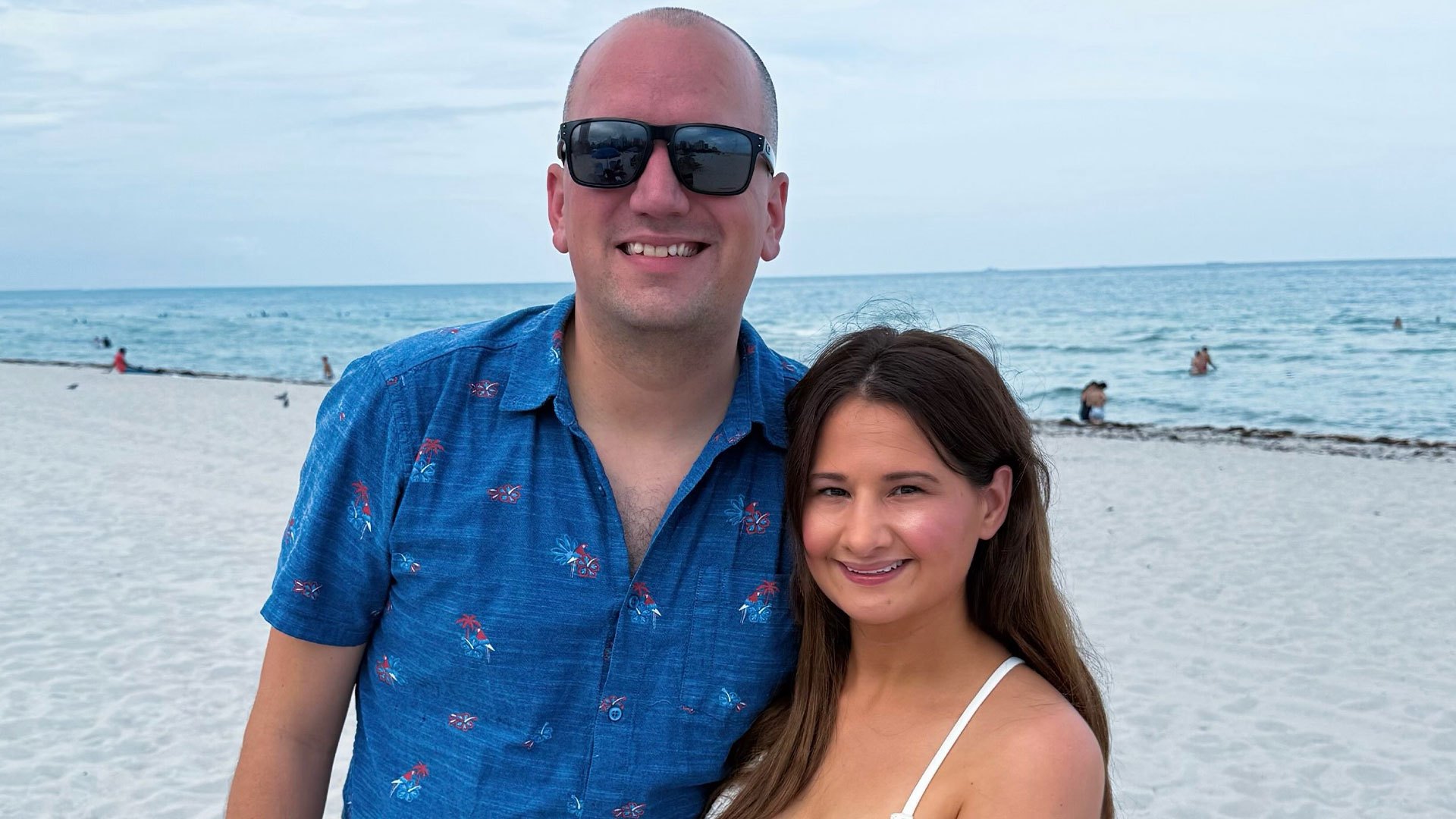
Ken Urker’s sister has hit out at Gypsy Rose Blanchard after her brother’s deathCredit: TikTok/shortykinssGypsy Rose Blanchard and Ken Urker in a happier social media photoCredit: Instagram/gypsyrose.insta
Ken, who shared one-year-old daughter Aurora with Gypsy, was found dead in his bed at his Louisiana home on Thursday, his 34th birthday.
Gypsy said her final message to Ken was a “Happy Birthday” text and claimed she became concerned when he failed to respond.
Sign up for the Showbiz newsletter
Thank you!
But speaking exclusively to The U.S. Sun, Ken’s sister Autumn blasted what she described as “lies” surrounding his death and relationship with Gypsy.
She said, “Gypsy had no right to lie and say that it was because of some text that she sent to him.”
A police report obtained by The U.S. Sun shows other family members contacted authorities.
Autumn claimed Gypsy had been telling people “they were engaged and planning a baby number two,” but “none of that was true.”
“They were not together,” Autumn said.
Asked when they split, Autumn said it was “over a month ago” and claimed Ken was the one who ended the relationship.
Most read in Entertainment
She said, “When he was like, ‘I’m done,’ she’d do a thing, and so it was a fight whenever they split.”
Following Ken’s sudden death, Gypsy shared an emotional tribute describing him as her “greatest love story” and saying he would “forever be my soulmate and my red string.”
But Autumn hit back, saying, “It’s a slap in the face. You don’t have to lie and make it seem like something.”
The U.S. Sun has reached out to Gypsy for comment.
Gypsy Rose Blanchard posting this photograph of her ex as she paid tribute to himCredit: Instagram/Gypsy Rose BlanchardAutumn Urker claims her brother was distressed about his his relationship with GypsyCredit: TikTok/shortykinss
Gypsy has also said she believes Ken died of an overdose, although she said she did not know whether it was intentional.
Police records obtained by The U.S. Sun list the incident as an “overdose,” but an official cause and manner of death have not yet been released.
A handgun was also found in a holster beside his bed.
Asked whether she believed her brother’s death was intentional, Autumn said, “Accident. So I have more details, so we’re just keeping [them] private.”
The report says Gypsy’s half-brother Dylan Blanchard and his wife Anita decided to check on Ken and contacted the Lafourche Parish Sheriff’s Office after becoming concerned about his behavior the night before and learning from his boss, Justin Daigle, that he had not shown up for work.
Dylan reached an unlocked bedroom window and spotted Ken unconscious on his bed.
Dylan and Justin then moved the blinds and climbed through the window, where Justin touched Ken and discovered he was cold and not breathing, the report reads.
The records do not state that Gypsy was at the home when Ken was discovered or that she was the person who contacted authorities.
Deputies reported finding syringes and a spoon next to a “brown powdery substance” in the bathroom.
Another syringe was found on the nightstand beside Ken’s bed, along with a handgun, according to the report.
Autumn revealed she had spoken to Ken just hours earlier, with their conversation continuing past midnight.
She said, “He said he just had to work, he was going home, he was tired, so he was going to go to sleep, and then he had work in the morning.”
Their final conversation ended as their calls normally did.
Autumn recalled, “‘I love you’ — it just… That’s how we hang up the phone, you know, we say that we love each other. He didn’t say anything weird.”
Autumn also revealed Ken had been deeply troubled by the reaction to an old prison phone call between him and Gypsy that resurfaced online shortly before his death.
She said, “He asked me what I thought about the phone call that everybody’s been playing this past week, calling him the most sick things, and I told him he wasn’t that guy.”
Autumn said the cyberbullying Ken faced had taken a toll.
She recalled Ken asking her, “Is this call weird?” before she reassured him, “No, it was not weird.”
Autumn said they had plans to meet for dinner or “something” on his birthday before he was found unresponsive.
Paying tribute to her brother, Autumn said, “My brother was a great man. He was the kind of man that tried to love the broken. He was the kind of man that believed without demanding proof.”
She described Ken as a loving father, brother, son and friend who made people feel heard, adding that their mother was “devastated.”
Ken first contacted Gypsy in 2017 after watching Mommy Dead and Dearest while she was serving prison time for her role in the murder of her mother, Dee Dee Blanchard.
The pair later rekindled their romance and welcomed Aurora in December 2024.
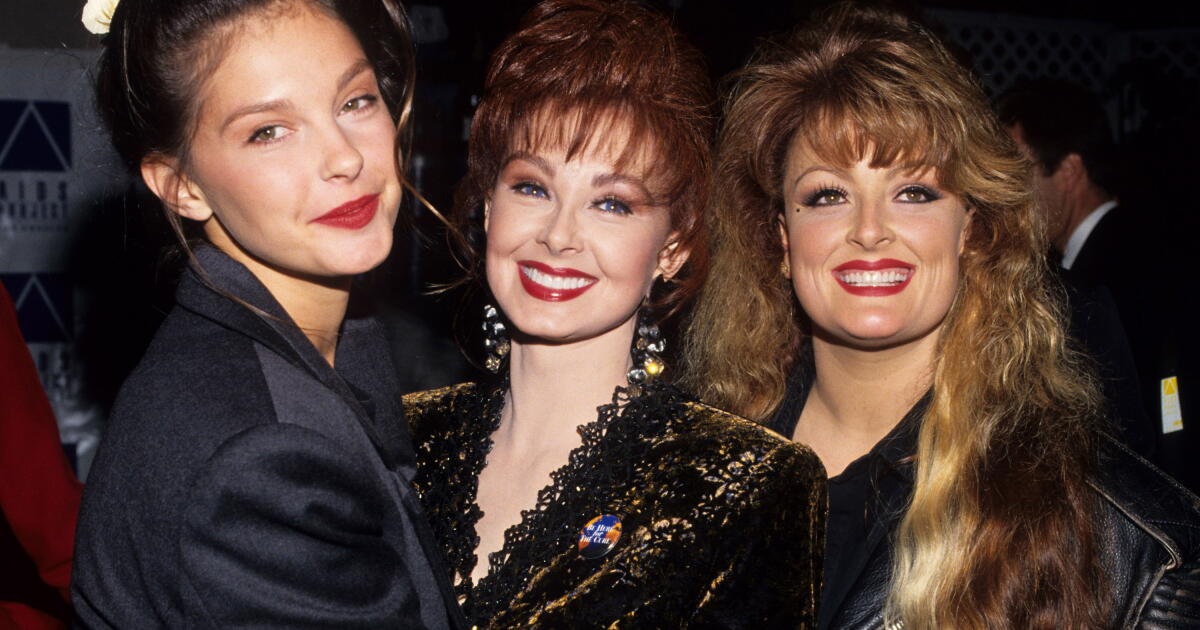
Country western star Wynonna Judd is confirming that she and her sister, Emmy Award-nominated actor Ashley Judd, do not have a relationship.
She spoke with People ahead of the release of her 10th solo studio album, “The Hard Truth,” which drops Friday, and revealed that the rift between the sisters is still there after years of on and off disharmony.
Wynonna told the outlet that Ashley hadn’t heard the album, as the sisters are not “connected.”
“We’re taking a break, which all families can relate to,” she said. “She’s doing her thing, and I’m doing mine.”
In April 2022, Wynonna and Ashley’s mother, Naomi Judd, died by suicide at 76 after a lifelong battle with depression. Naomi and Wynonna made up the Grammy-winning duo the Judds.
At the time, the sisters released a statement together, writing, “Today we sisters experienced a tragedy. We lost our beautiful mother to the disease of mental illness. … We are shattered. We are navigating profound grief and know that as we loved her, she was loved by her public. We are in unknown territory.”
The following month, the two appeared at the annual Medallion Ceremony, where the Judds were inducted into the Country Music Hall of Fame, and the sisters spoke on behalf of their mother.
“While this is so much about the Judds as a duo, I want to take a moment to recognize my sister, a GOAT,” Ashley said at the ceremony. “Do you know what that means? I don’t think she knows I’m calling her the greatest of all time. She lives on a farm. She’s being a little literal.”
Ashley told the crowd that growing up as the younger sister of Wynonna, she got to “bask in this voice that was around the house, and I’ve always been so proud of the music and so proud of you. … So I know that we’re talking a lot about Mom tonight, as we should be. Our beautiful mother, and I want you to know that you also are being inducted to the Hall of Fame tonight. And newspapers don’t get much right these days, but when the Los Angeles Times said you were Elvis-like, they got it right. And I love you, and I’m proud of you. And Mom is proud of you, and she always was.”
By October 2022, rumors were flying that the sisters were fighting over their mother’s will, a claim that Wynonna shot down while speaking with People.
“Someone told me while I was at Ashley’s house, ‘Hey, did you know that they’re saying this about you?’ I went, ‘Huh? I’m fighting with Ashley?’” Wynonna said. “Fighting over what? I have such a great life. Ashley has a great life. Why would we be fighting over the will?”
This wasn’t the first time a feud was reported between the two. Back in January 2015, Wynonna gave a teary-eyed account of the disconnect during an appearance on AXS TV’s “The Big Interview With Dan Rather.”
“The only thing I have in common with my sister is a father missing and a mother that’s both of ours. She and I are very different. We don’t communicate, nor do we spend time together, and that’s a long history of being apart,” Wynonna told Rather.
Wynonna said that she and Ashley were dysfunctional, didn’t agree on anything and developed separate lives, but she cared for her younger sister growing up.
“I raised Ashley, so I think there’s a lot of work we still have to do about where do we find the ‘sister’ in all of this,” she said. “She called me sister mommy, and I really had a hard time with that, because I was like, I don’t want to be your mommy. I want to be your sister.”
BIANCA Censori’s sister Angelina soaked up the sun in a tiny string thong during a Greece getaway.
The Aussie native channeled her sister’s usually super sexy attire and stripped down into skimpy lingerie in new photos.
Bianca Censori’s sister Angelina soaked up the sun in a G-string thong in new photosCredit: Instagram/angelinacensoriAngelina shared photos of her skimpy outfit, including a bra that featured a vertical chain-link connecting the strapsCredit: Instagram/angelinacensori
Angelina, 22, took to Instagram on Thursday to share multiple pictures from her Mediterranean vacation.
Some of those pics captured the model sitting on the pavement, hugging her knees into her chest while sporting a G-string thong.
Sign up for the Showbiz newsletter
Thank you!
She paired the bottoms with a black string bra with a vertical chain link connecting the straps.
Angelina kept her back facing the camera, showcasing her thin figure and bare butt as she sat on the ground.
Angelina often uses the platform to share sultry photos of herself in revealing attire.
Earlier this month, the brunette posted a series of snapshots of herself wearing a skintight white corset bodysuit.
Most read in Entertainment
She also shared a pic of herself in July, flaunting her pin-thin physique in a tiny gold bikini while lounging by the pool in Madrid, Spain.
Angelina blew fans away last November when she shared several photos of herself in a heavily cut-out lace dress.
She modeled the outfit, which showed her underboob with its massive opening at her midsection, in the mirror.
The ensemble also exposed her backside and legs with its sheer fabric, which she showcased in an overhead shot of her lying on a bed.
Angelina regularly channels Bianca with her skimpy wardrobeCredit: Instagram/angelinacensoriBianca has often drawn attention to her revealing wardrobe since she married Kanye West in December 2022Credit: Getty
Bianca, 31, has often drawn attention with her revealing wardrobe after completely switching up her style when she married Kanye West, 49, in December 2022.
The Yeezy architect is usually seen sporting skintight bodysuits that display her curves, and other sexy looks.
She most recently posted several photos of herself in a gold string bikini top and skirt that barely covered her breasts or butt cheeks.
Bianca also underwent a dramatic hair transformation, swapping out her usual brown hairstyle for a platinum blonde wig.
The designer has been accused of “public indecency” numerous times over the years while repeatedly stepping out in public in barely-there attire.
Many have also blamed Kanye for pulling the strings on her fashion choices, after doing the same with his ex-wife Kim Kardashian’s style.
Angelina shut down rumors last year that her family didn’t approve of Bianca and Kanye’s marriage, telling The Herald Sunthat they supported the Donda rapper.
Growing up, Alejandra Villarreal was accustomed to the dry Mexican heat, trapped inside the small historic venues where she and her sisters would perform as kids. But as temperatures hit 103 degrees outside the Fonda Theatre in Hollywood, she couldn’t help but shout.
“¡Ay, qué calor!” she said, swinging her bass guitar.
Inside the nearly 100-year-old theater, Alejandra was onstage for a sound check. She ran through distorted, metal-influenced riffs as her sisters — drummer Paulina Villarreal and lead vocalist-guitarist Daniela Villarreal — prepared for the second of three sold-out shows at the Fonda, as the rapidly rising rock band the Warning.
The Warning has been shaking the walls of L.A. theaters since the group first landed in the city eight years ago — but this year feels especially monumental for the sisters.
Released in August, the band’s most recent album, “Everything’s Falling,” is a snarling, noisy and melodic rock joyride that rarely, if ever, slows down.
Written between L.A. and their hometown of Monterrey, the straight-to-the point lyricism documents the Villarreal sisters’ frustrations, anger and failures — most fiercely on “Kerosene,” which lambasts a jealous critic who “falls asleep with me on your screen,” so sings Daniela.
“Kerosene” recently shot up to the No.1 spot on the Billboard Mainstream Rock Airplay chart, which made the Warning the first Mexican and first all-female band to make the spot. Another single, their Spanish-language anthem “Ego,” was nominated for rock song at the 2026 Latin Grammys.
Members of the Warning hold up Billboard No. 1 awards after performing at the Fonda Theatre.
(Kayla Bartkowski / Los Angeles Times)
The legend of the Warning began in 2014, when Alejandra was just 9 years old and Paulina and Daniela were 12 and 14, respectively. The sisters came home from a Sunday carne asada with their family — and recorded a righteous cover of Metallica’s “Enter Sandman.”
Dressed in floral blouses and white capris, the girls thundered through the song with a focus and technical ability that sparked the interest of audiences worldwide — earning them a current total of 27 million views, not to mention praise from Metallica guitarist Kirk Hammett.
“We were wearing our sandalias, our church clothes,” Paulina said. “It’s just pretty crazy to think that one random Sunday afternoon we recorded that and it jump-started our whole career.”
The idea for the group came from playing the video game “Rock Band,” which led the sisters to performing at local “Battle of the Bands” competitions and posting cover songs to YouTube.
But the success of the “Enter Sandman” cover changed the course of their lives, taking them from local venues like Cafe Iguana — or, as Paulina calls it, “Monterrey’s Whisky a Go Go” — to appearing on the Ellen DeGeneres Show and various international music festivals.
“We started having adult responsibilities way early in our lives,” Paulina said. “We didn’t have that [average] teenage experience at all.”
“We didn’t go to normal school, we didn’t go and hang out with other teenagers,” she continued. “We were mostly hanging out with adults like our parents, [or] on tour and working. So there was this huge disparity between what our friends were living through and what we were going through.”
Over the course of its 13-year career, the Warning has opened for acts ranging from the Foo Fighters to Yungblud, writing and recording tirelessly in between. Now that the bandmates are all in their 20s, they say they “wouldn’t change it for anything.”
“When I was 10, I was like, ‘This is what I’m going to do for the rest of my life,’” Alejandra said. “I guess I did miss out on high school and ‘the norm.’ But honestly, I’m very grateful that we did this.”
In “Everything’s Falling,” the Warning contends with self-imposed songwriting limits that boxed them in as children — and tear down old personas to reveal their continuous, however imperfect, process of growth.
“All of our lives, we felt like we needed to sound a certain way,” said Alejandra. “English is not our first language, so we always found ourselves using really complex words — so that people would say, ‘They know the language.’ The lyrics of this album are very straightforward. We don’t have anything to prove anymore. It was a very liberating album to make.”
1/4
(Kayla Bartkowski / Los Angeles Times)
2/4
(Kayla Bartkowski / Los Angeles Times)
3/4
(Kayla Bartkowski / Los Angeles Times)
4/4
(Kayla Bartkowski / Los Angeles Times)
The group’s highly technical progressive rock style, influenced early on by bands like Muse, Metallica and Paramore, brought it a legion of Gen X fans who admired the sisters’ dedication to shredding, mathematical guitar solos and classical training base.
On their latest album, the sisters introduce new levels of fuzz and overdrive that blur their usually crisp instrumentals, plus verses that “lean into femininity” and take inspiration from a source that may surprise some: K-pop.
The rising global genre, known for its catchy harmonies and bouncing performance style, inspired the sisters to bring pop elements to their recording sessions.
“We love getting inspired outside of our genre,” Paulina said. “I think what happens a lot in rock is that, it’s very purista [purist]. Especially as women, whatever you do is very scrutinized. So if you ever step out of those confines it’s like, ‘Well [if] you’re not rock, you shouldn’t even be participating.’”
The sisters’ desire to defy expectations is most apparent in their jam-packed touring schedule.
(Kayla Bartkowski / Los Angeles Times)
“I fainted onstage [in July], and it was very dramatic,” recalled Paulina. “More than it being scary, I think people for the first time realized how hard we work. People were like, ‘Oh, your team is pushing you too hard.’”
“Nobody’s forcing us to be here,” she added, resolutely. “We’re grown women. We know what we’re doing and we know how much we can take.”
Daniela, the lead vocalist, had come down with a cold during the group’s L.A. shows, which required her to step back from interviews to rest her voice. The first night, she sang through the entire setlist, screaming and all — but by the third, she could only perform a few songs. Rather than cancel the concert, the Warning insisted that the show go on.
A la Karen Carpenter, Paulina sang lead vocals from behind the drum kit, calling on the crowd to clap and sing along to the music. They also brought out fans and collaborators to help them perform, including songwriter Annie Schindel, as well as rock acts Holy Wars and Dead Poet Society.
“We push forward through a lot of bad experiences,” Alejandra said. “One time I felt like I was dying — and that was the one of the few times we canceled a show. We only do it in extreme measures, because we know how much planning a show takes.”
One could blame it on the “Mexican work ethic,” they said.
Before taking on Hollywood, the sisters joined regional Mexican artist Carín León on the first night of his sold-out weekend at the Sphere in Las Vegas: the first time a Latin artist had ever headlined the venue. The band released the bluesy rock single “Love to be Loved” earlier this year with the Sonora native, recalling the first time they played it together “a highlight of our lives.”
“[Even if] we do our own thing in a different genre, we still shared that pride because of where we come from,” Paulina said. “Everything about that show was so Mexican … The unity, the community that we have outside of our country. Hopefully the people that went there felt how special it was.”
“I cried,” Alejandra added. “[Watching Carín perform], it was emotional.”
(Kayla Bartkowski / Los Angeles Times)
A week later, at the Fonda, they smiled as fans launched into chants like “Olé, Olé, Olé” and “Viva Mexico.” The line had been forming since 3 p.m., and once the show had begun, the Warning transformed from jovial 20-somethings to well-seasoned professionals.
“I feel like there will be a very clear change in what we do, ‘Everything’s Falling’-forward,” Paulina said. “I feel like we really allowed ourselves to be more emotional in the music and these shows, and that feels really powerful.”
On Thursday’s episode, the show hears from Jake, 36, who lives in Australia but was born and grew up in the UK in a single parent family. Jake always knew that he was the result of an extra marital affair. His mother had been a nurse and had met his married father when he was a doctor at the same hospital.
Jake recalled that when he was a newborn, his father occasionally visited, bringing his two children Katie and Tom, who were aged five and three at the time. One of Jake’s most precious keepsakes are two photographs of his brother and sister holding him as a baby.
However, sadly, his mother’s relationship with their father did not last, and Jake never saw his siblings again. When he was 14, Jake and his mum emigrated to Australia.
Despite not seeing his siblings since he was a child, Jake has been desperate to find them and contacted Long Lost Family for help, emotionally saying: “I feel like I always missed out. I missed out on something, that, you know, was really a connection that I craved really. I’ve always somewhat felt a little bit alone. And I just need that connection.”
Sadly, Jake was unable to successfully meet his father after attempting to track him down and therefore unable to learn any more about his siblings. Jake had also tried multiple other avenues to find his siblings, but Katie and Tom appeared to have vanished off the face of the earth.
Even Long Lost Family struggled locating the siblings through their conventional searches. However, the team soon discovered in the series’ files something surprising after receiving thousands of applications.
Months before Jake had applied to the show, Long Lost Family received an application from a woman in Canada called Katie, who was looking for a birth father – with the same surname as Jake’s father. Following a DNA test, it confirmed that Katie was Jake’s half-sister, in an incredible discovery.
Katie is a lawyer who now lives in Toronto and she had no idea that she even had a younger brother. The duo’s brother, Tom, supports Katie’s decision but has chosen not to be involved in any filming at this time.
In an exclusive clip obtained by the Mirror of Thursday’s episode, it sees host Davina share the news with Jake, who breaks down in tears over the discovery.
Asking where his siblings live, Davina explains: “So… Katie, her mum met her stepdad. They moved to… Australia!” Jake is left floored by this discovery as he too moved from the UK to Australia. The guest exclaims: “No way, you’re kidding! No way!” before wiping away tears.
Jake adds: “So they weren’t even that far away. I can’t believe it!” Davina then adds that Katie is a lawyer and she has since moved to Toronto.
The guest then asks: “Did they enjoy Australia? Were they happy?” with Davina responding: “They’ve had good lives, I think the family situation, it’s been difficult for all of you, I think, in different ways.
“I think it’ll be really nice for you to be able to speak together about it. Weirdly, we found her because… she applied to Long Lost Family to find your dad.” This piece of information leaves Jake in tears as he exclaims: “Wow!”
Viewers will have to tune into Thursday’s episode to see the two siblings have an emotional reunion.
Long Lost Family continues on Thursday 17th September at 9pm on ITV and ITVX