Low-income patients at UCLA Health scramble to find new doctors as contract ends
Thousands of low-income patients, some seriously ill, are scrambling to find new doctors as they lose access to UCLA Health physicians after a longtime Medi-Cal contract was not renewed.
Under the contract that expired June 30, UCLA had been providing specialty care to 9,000 medically frail patients from Health Care LA, an association of nonprofit clinics that serve patients covered by Medi-Cal, the state program for the poor.
“Many of these patients have been waiting for months to be seen by UCLA specialty medicine providers and are now being told they cannot receive the care they desperately need,” Health Care LA said in a Thursday news release.
The patients had gone to UCLA for cancer and infectious-disease treatments, high-risk women’s services, major organ transplants and other specialty medicine care, the association said.
A Friday news conference that Health Care LA had scheduled to detail the problems patients faced in getting care was abruptly canceled when the two sides said they had reached a tentative agreement on how to transition the patients to other doctors over the next year.
“To help ensure a smooth transition for patients, both organizations have agreed that established UCLA Health patients, individuals with existing appointments, and patients requiring other agreed-upon services will continue to be cared for at UCLA Health facilities,” Phil Hampton, a university spokesman, said in a statement.
Although some patients will continue to be seen by UCLA doctors, he said, “accepting an unlimited number of new referrals presents challenges given existing capacity constraints and the need to preserve timely access for existing patients.”
Sabra Matovsky, chief executive of Health Care LA, said in an interview on Thursday that UCLA had declined to renegotiate the contract.
“They never even asked us for a raise,” she said, “They just want us out.”
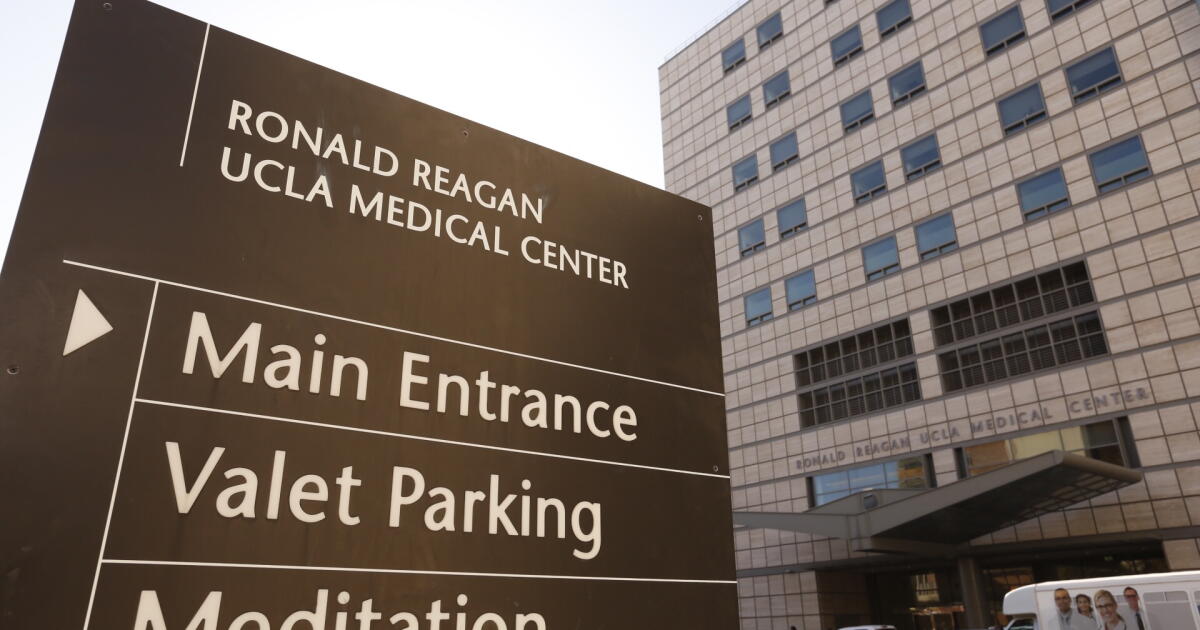
She said that university officials had pointed to “capacity issues” at Ronald Reagan UCLA Medical Center in Westwood, including in the emergency room and dozens of specialty clinics.
“To solve this by pushing out Medi-Cal patients while you continue to expand and market and take on other patients is not a solution,” Matovsky said.
Hampton said UCLA had offered to extend the contract, but Health Care LA rejected the offer.
The end of the Medi-Cal contract disappointed some UCLA medical professionals who have been urging the public university to provide care to more of L.A. County’s low-income residents.
“It feels like this is profits over patients,” said Dr. Patrick Samones, a fellow at UCLA Health, who trained at the university in family medicine.
“UCLA is one of L.A.’s most important healthcare institutions,” said Samones, who represents members of the Committee of Interns and Residents, which is part of Service Employees International Union. “We feel it has a duty to serve all Californians.”
In recent years, UCLA Health has been expanding fast and now has almost 300 locations throughout Southern California, including in wealthier places such as Montecito, Malibu and Westlake Village.
At the same time, it provides less care to Medi-Cal patients than its sister university health systems: UC Irvine, UC San Diego, UC San Francisco and UC Davis, according to university statistics.
Last year, about 15% of UCLA Health’s net patient service revenue came from Medi-Cal, according to the university health systems’ annual report. The four other UC health systems each received about 22% of that revenue from Medi-Cal.
About 40% of L.A. County residents are insured by Medi-Cal, according to a recent report by the California Health Care Foundation.
Hampton said the net patient service revenue data from the annual report doesn’t capture UCLA’s “extensive contributions to caring for Medi-Cal patients” and isn’t “a fair basis for comparing academic health systems.”
He added that with the university’s expansion of clinics, “we are providing substantial specialty care to Medi-Cal and Medicare patients” throughout L.A. County.
“Unlike county-owned hospitals, UCLA Health relies almost exclusively on patient care revenue to fund operations, expand access, recruit clinicians and invest in facilities and technology,” he said.
Hampton said UCLA has other contracts to serve Medi-Cal patients, which will continue. The health system also provides more than $270 million in unreimbursed care for low-income patients each year, he said, as well as primary and urgent care for people experiencing homelessness.
In addition, UCLA is spending $500 million to create a new neuropsychiatric hospital in Los Angeles’ Mid-Wilshire neighborhood, he said.
“We continue to fortify our region’s safety net despite growing access demands and challenges,” Hampton said.
In the most recent fiscal year, he said, Medi-Cal patients comprised 26% of 336,600 inpatient days and 34% of 156,000 emergency department visits.
“UCLA Health’s long-standing commitment to serving vulnerable populations in Southern California is well-established,” he said.
Hampton said the net patient service revenue data doesn’t reflect the complexity of care delivered by UCLA and is affected by Medi-Cal reimbursement rates and payment policies, which vary by region and health plan.
“Over time, Medi-Cal reimbursement has not kept pace with the cost of providing care, and UCLA Health has experienced increasing payment denials and delays,” he said.
UCLA specialists had been caring for Health Care LA’s seriously ill patients under the contract since 2009.
“They were the provider that did all the complicated care,” Matovsky said. “UCLA was our go-to.”