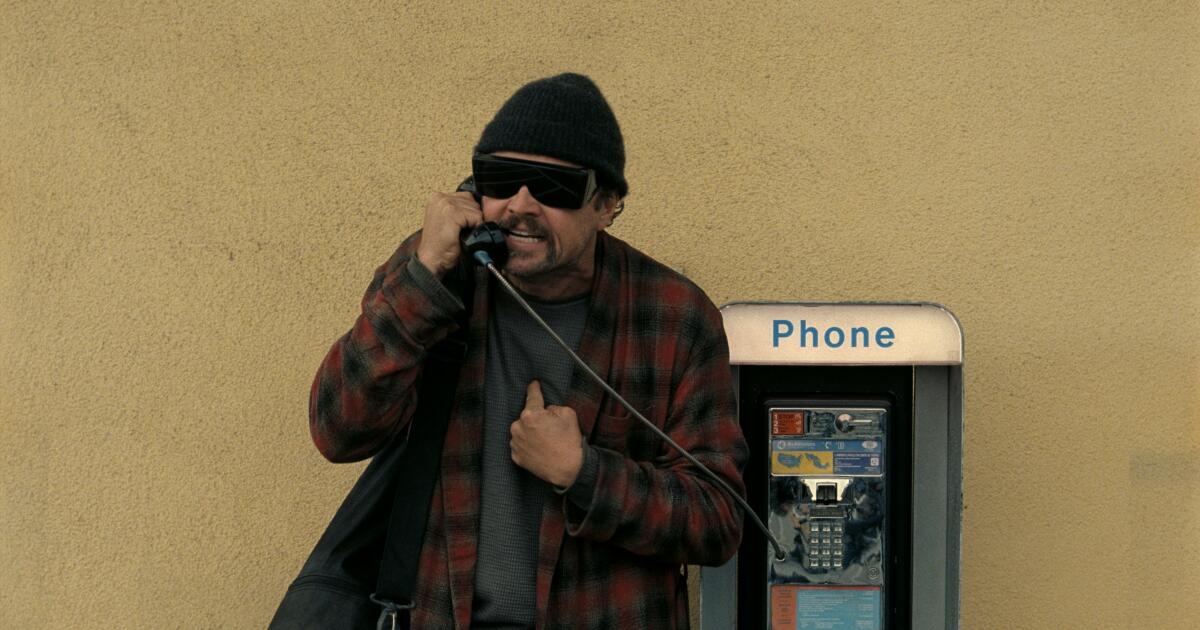
sinner

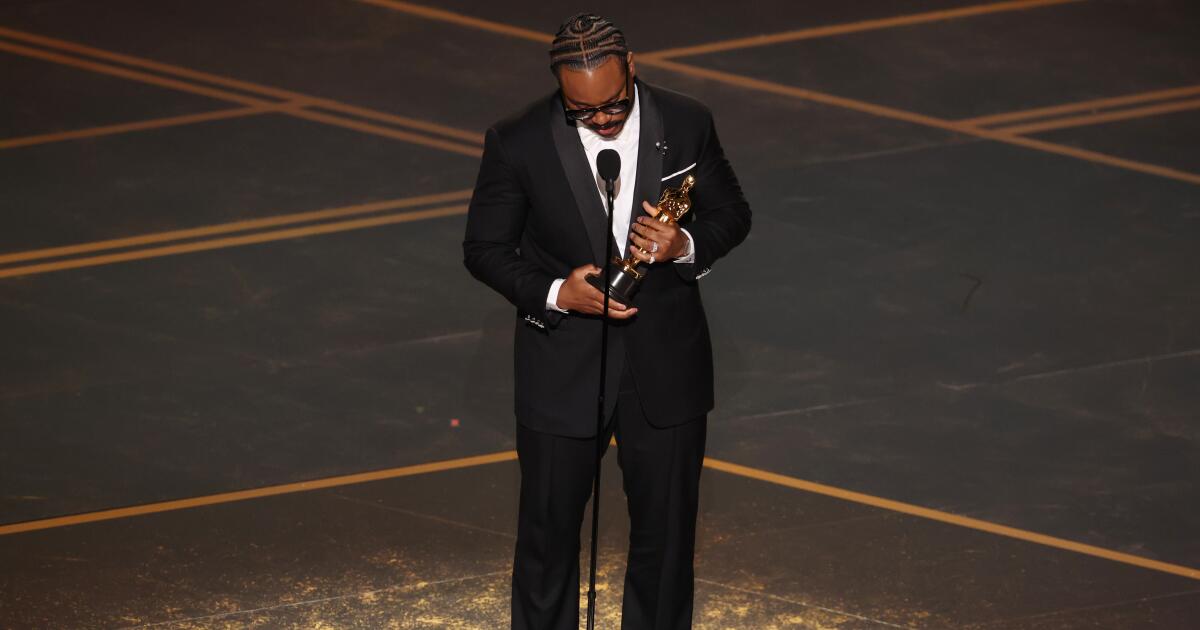
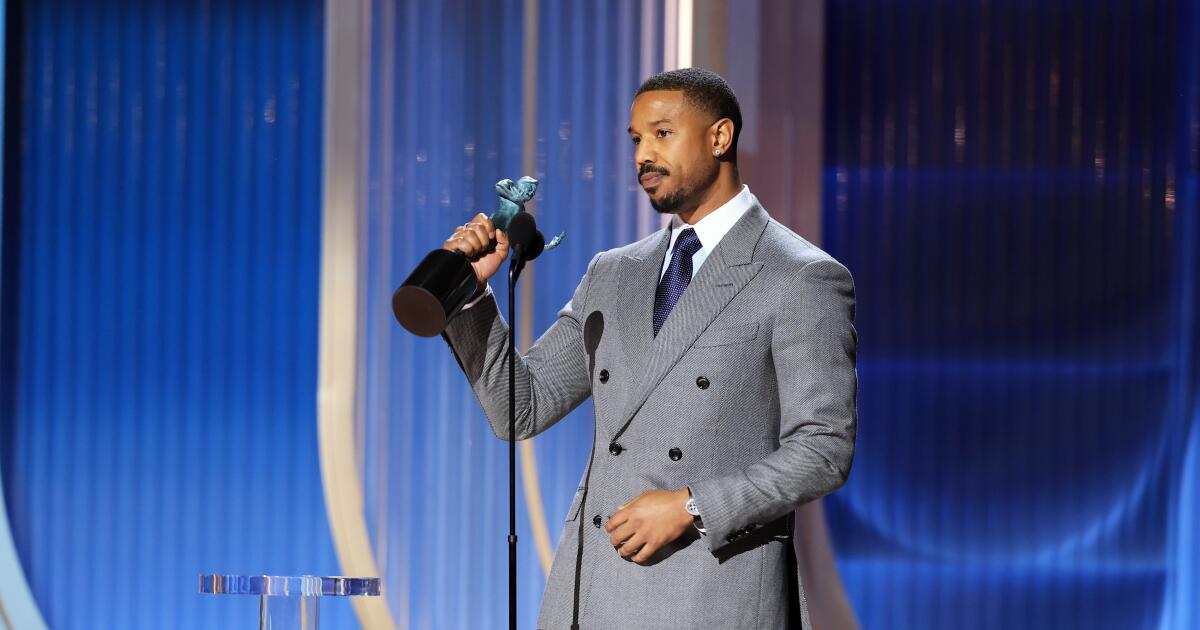
Michael B. Jordan wins lead Actor Award for ‘Sinners’

Michael B. Jordan’s awards are stacking up.

The “Sinners” star won the Actor Award for lead actor for portraying the film’s twin ex-mob enforcers turned juke joint owners, Smoke and Stack.

“I wasn’t expecting this at all,” Jordan said as he accepted his award Sunday evening. “I’m so honored and privileged to be nominated in categories with people and actors and humans that I love.”

“I love their work and what you contribute to to our craft, and this ride has been unbelievable,” he said. “So thank you for welcoming me in and making me feel seen.”

Jordan went on to reminisce about his time as an entry-level SAG-AFTRA member, aspiring toward truly belonging to “this club that I wanted to be in so bad.”

“Those guys that were talking on stage with the awards and nice suits, talking, being in fancy places like that,” the actor said. “That’s what I always wanted and that kid from Newark, New Jersey’s standing here right now.”

The “Creed” alum went on to thank his mother for driving him to his earliest auditions and director Ryan Coogler for “giving me the opportunity to show what I can do and to be fearless and to create a safe space for us to find the truth.”

Finally, Jordan extended gratitude to his fellow actors and his fans, “who’ve seen me grow up in front of the camera and in these rooms.”

Jordan’s triumph over his fellow nominees, particularly “Marty Supreme” star Timothée Chalamet, is a positive sign as the actor looks toward the Academy Awards later this month.

“Sinners” received a record 16 nominations, many of which are sure to turn into wins at the March 15 ceremony.

Source link

PGA Awards: ‘One Battle After Another’ wins best film

Paul Thomas Anderson’s darkly comedic action-thriller “One Battle After Another” won the top prize at the Producers Guild Awards on Saturday, continuing its dominating run through awards season.

The PGA honor, presented at a ceremony in Beverly Hills, cements Anderson’s celebrated film as the front-runner for the best picture Oscar. Since 2009, when both the Producers Guild and the motion picture academy expanded their best picture nominee slates from five to 10 and adopted a preferential ballot, the PGA winner has gone on to win best picture all but three times.

The last time the groups diverged came six years ago when PGA winner “1917” lost the Oscar to Bong Joon Ho’s “Parasite,” a film that surged in momentum in the weeks leading up to the 2020 Oscars.

No other movie this season has shown that kind of strength other than Ryan Coogler’s “Sinners,” which scored a record-breaking 16 Oscar nominations in January. However, “One Battle” has prevailed at the major ceremonies since then, winning best picture at the British Academy Film Awards last week and Anderson taking the top honor with the Directors Guild earlier this month.

“Sinners” has one more chance to reverse the tide. It will compete against “One Battle After Another” for the cast award at the Actor Awards on Sunday. That ensemble honor, the most prestigious prize handed out by SAG-AFTRA voters, isn’t as strong a precursor as the PGA’s best film. But “Parasite” did win it right before the 2020 Oscars.

Hope springs eternal. Oscar voting ends on Thursday.

Read the full list of 2026 Producers Guild Award winners below.

Darryl F. Zanuck Award (outstanding theatrical motion picture): “One Battle After Another”

Outstanding animated theatrical motion picture: “KPop Demon Hunters”

Norman Felton Award (outstanding episodic television — drama): “The Pitt”

Danny Thomas Award (outstanding episodic television — comedy): “The Studio”

David L. Wolper Award (outstanding limited or anthology series): “Adolescence”

Outstanding televised or streamed motion picture: “John Candy: I Like Me”

Outstanding nonfiction television: “Pee-wee as Himself”

Outstanding live entertainment, variety, sketch, standup and talk series: “The Late Show with Stephen Colbert”

Outstanding game and competition television: “The Traitors”

Outstanding documentary film: “My Mom Jayne”

Outstanding children’s program: “Sesame Street”

Outstanding sports program: “Formula 1: Drive to Survive”

Outstanding short form program: ” Adolescence: The Making of Adolescence”

PGA Innovation Award: “The Wizard of Oz at Sphere”

David O. Selznick Award: Amy Pascal

Milestone Award: Jason Blum

Norman Lear Award: Mara Brock Akil
Source link

Oscars: Menswear takes center stage in costume design race

A one-size-fits-all sartorial approach is out of the question for the showmen of “Sinners,” “Hamnet,” “Frankenstein” and “Marty Supreme.” But whether the arena is theater, music, science or sports, all wear garments that accentuate their emotional states and prodigious talents — and leave an enduring mark. Here, Oscar-nominated costume designers Ruth E. Carter (“Sinners”), Malgosia Turzanska (“Hamnet”), Kate Hawley (“Frankenstein”) and Miyako Bellizzi (“Marty Supreme”) discuss defining menswear statements with The Envelope.

In Carter’s third collaboration with Ryan Coogler, Michael B. Jordan’s sharply dressed twins Smoke and Stack return to the Mississippi Delta in 1932 to open a juke joint, tapping their gifted blues musician cousin, Sammie (Miles Caton), to perform. “You see this style that [old blues players] embodied, whether it’s two-tone shoes, the hat, vest, shirts; all of that was laced into the storytelling,” says Carter. He might be a preacher’s son, but Sammie wears his passion on his blues-infused clothing in the record-breaking “Sinners.” “The vest is patched to show the wear from the guitar strap.”

Before the night goes to vampire hell, all eyes are on Sammie in earthy and gold tones as he sings “I Lied to You.” Artists spanning centuries and continents (including an electric-guitar-playing rocker and a Zaouli dancer) add to the mesmerizing sequence before returning to Sammie. “When we come back to him, we’re coming back to his own force and look,” Carter says.

A sketch of Sammie's bluesman-inspired costume in "Sinners."

A sketch of Sammie’s bluesman-inspired costume in “Sinners.”

(Ruth E. Carter)

A final scene set in 1992 shows Sammie (played by musician Buddy Guy) still beguiling audiences. Carter incorporates Guy’s real-life signature polka dots to highlight “this is a real story of the blues, and this is a real bluesman.” Stack’s authentic Coogi sweater (a nod to Biggie Smalls) contrasts with Sammie’s classic tailoring, which doubles as a memorial to his other cousin: “The color blue was an homage to Smoke and the flat cap.”

Clothing is also for remembrance in Chloé Zhao’s “Hamnet,” in which a grieving William Shakespeare (Paul Mescal) turns to a meaningful shade in paying tribute to his son during the inaugural run of “Hamlet” at the Globe Theatre in London. “Will, in my head, was imagining, remembering and holding on to the memory of Hamnet,” Turzanska says. “And in a super crude, simplified way, putting the paint and the colors that he remembered onto Hamlet’s character with those brushstrokes.”

Turzanska constructed the players’ costumes from raw linen, using slightly enlarged, period-accurate shapes combined with contemporary latex paint. Using this stage language, Hamlet’s (Noah Jupe) jerkin is “quilted and painted flat,” to conjure Hamnet (Jacobi Jupe): “It was a memory of the vertical stripes.”

Costume sketch for William Shakespeare by costume designer Malgosia Turzanska HAMNET.

There are echoes among the costumes for William Shakespeare, Hamlet and Hamnet in Malgosia Turzanska’s costumes for “Hamnet.”

(Malgosia Turzanska)

Offstage, growing slashes in Will’s leather doublets depict “emotional turmoil.” Still, his turn as Hamlet’s murdered father (the Ghost) is the most overt example. The off-white cloak caked in clay is deliberately drained of all color. Turzanska tested the symbolic shroud (“You put this little harness on”) to ensure Mescal could move freely. Catharsis comes after Will exits the play: “The clay is cracking and falling off. Finally, when he washes it off, we see him break down for the first time and actually cry.”

Not every stage has a paying audience. In Guillermo del Toro’s “Frankenstein,” Victor Frankenstein (Oscar Isaac) reanimates a corpse during a disciplinary hearing demonstration. Clad in red, white and black, the renegade scientist’s sartorial inspiration is not bound to a single era.

“That was the first note from Guillermo [about Victor]. He goes, ‘Dandy, rock star. Look at David Bowie. Look at Prince,” says Hawley. “When we started talking with Oscar, he came in with his Prince stuff. When you look at his performance, you see all those subtleties, the physicality, the swagger.” Piping on the waistcoat is “a kick” to stand out against judges in black.

Hawley embraces “wonderful peacock” 1850s menswear shapes: Victor’s puffed-out chest accentuates the “wasp waist” likening him to a matador. An exaggerated period heel adds flair. “Shoes are what root the actor to the ground and their character,” Hawley says. “It elevates every gesture from there.”

Victor Frankenstein's costumes in "Frankenstein" were inspired by musicians like David Bowie.

Victor Frankenstein’s costumes in “Frankenstein” were inspired by musicians like David Bowie.

(Kate Hawley)

“Marty Supreme’s” Bellizzi is equally mindful of footwear. Bellizzi “worked with Keds to find the shape” resembling a narrow 1950s sneaker for Timothée Chalamet to wear as ambitious table tennis player Marty Mauser. “When he was training, I would give him a few different sneakers to see what looked good but also what felt good,” says Bellizzi. “Because he had to wear them all day and play in them.”

Marty switches from a sedate black polo shirt and high-waisted wool pants while playing at Wembley in London to an eye-catching pink satin set on tour with the Harlem Globetrotters during a lighthearted interlude in Josh Safdie’s propulsive comedy-drama. “We overexaggerated the pants and the sleeves in the body so it is big and flowy,” says Bellizzi.

By the time Marty arrives in Japan, his everyday suit “has been through the wringer.” Luckily, a rigged ping-pong exhibition match allows Marty to embrace his theatrical talents. “It was an opportunity to show him as someone else. He’s undercover,” says Bellizzi. “He has the cap and the jumper.” Ever the showman, Marty relishes ditching the pretense and his wardrobe onstage, embracing his competitive streak. “He turns it into a bigger situation than it should have been, and maybe part of the surprise is that he’s derobing,” Bellizzi says. “It shows how much passion comes out.” Across venues and centuries, each man’s attire is ovation-worthy.

Source link

Highlights from our Feb. 12 issue

With yesterday’s Oscar nominees luncheon in the books, the marathon that is awards season is now entering the home stretch. But that doesn’t mean there’s no grist left for the mill, especially when it comes to those — like this week’s cover subject, 73-year-old first-time nominee Delroy Lindo — whose names weren’t necessarily on pundits’ nominations predictions lists.

Through Feb. 26 we’ll be more sharing stories like his, and many others, before Oscar voters cast their final ballots for the March 15 awards. I’ll let my friend Glenn Whipp regale you with tales from his interview with “Sinners” star Lindo when he sends his next newsletter on Friday. In the meantime, read on for more highlights from this week’s issue.

Digital cover story: Wagner Moura

Digital cover for The Envelope featuring Wagner Moura

(Jason Armond / Los Angeles Times)

Basking in the sun outside The Times newsroom ahead of his digital cover shoot last month, Wagner Moura seemed exceptionally relaxed about spending his Tuesday afternoon in El Segundo with a bunch of journalists. But don’t let “The Secret Agent” star’s easygoing personality fool you into thinking he’s aloof in any way.

As contributor Lisa Rosen writes in her profile of the actor, he’s unafraid to draw pointed comparison’s between Kleber Mendonça Filho’s acclaimed political thriller — nominated for four Oscars, including lead actor — and contemporary politics, from disgraced Brazilian President Jair Bolsonaro to federal agents in American streets.

“This is also a film about infamy, because he’s being persecuted so unfairly,” he tells Rosen, comparing his character’s fate to that of Minneapolis residents Renee Good and Alex Pretti. After their deaths, he continues, “lies were spread about them online. It’s so cruel, and so it’s killing the person twice.”

The many charms of Ethan Hawke

Ethan Hawke, left, and screenwriter Robert Kaplow for 'Blue Moon'

(David Urbanke / For The Times)

I had the pleasure of speaking with Hawke and his wife and producing partner Ryan Hawke at Sundance the day after the actor earned an Oscar nomination for “Blue Moon,” so by the time I read contributor Margy Rochlin’s delightful interview with him and the film’s nominated screenwriter, Robert Kaplow, I could practically hear it in Hawke’s voice: boyishly enthusiastic, slyly funny, politically and creatively engaged.

But I don’t think you need to be intimately acquainted with Hawke, who also appeared on an Envelope digital cover last fall, to find him and Kaplow high-caliber raconteurs of the joys, and occasional indignities, of making independent films. “Sometimes you get to set and it’s easy to shape the text to make it more your own. The process here was for me to get rid of Ethan,” says Hawke. “It was to try and match the screenplay. I don’t ever remember working as hard — or [director] Rick [Linklater] being as mean to me.”

As far as hooking the listener to a story goes, Lorenz Hart, the loquacious lyricist that Hawke and Kaplow pay homage to in “Blue Moon,” would be proud.

Inside the race for best editing

an illustration of various silhouettes

(Illustration by Vartika Sharma / For The Times)

Oscar voters have occasionally been accused of making this award about the most editing instead of the best editing, but from the descriptions of this year’s five nominees, I think we can safely say that whomever the winner ends up being, their achievement will have been genuinely outstanding.

As contributor Bill Desowitz discovered from his outreach to the editors of “F1,” “One Battle After Another,” “Marty Supreme,” “Sentimental Value” and “Sinners,” coping with trauma is the surprising through line among the disparate scenes the nominees themselves chose as most pivotal to their films. (Given the volume of the footage some of them waded through, they might be suffering it too.)

Read more from our Feb. 12 issue

Source link

Delroy Lindo on saving his ‘Sinners’ monologue and his first Oscar nod

Six months and 16 Oscar nominations ago, Delroy Lindo hopped on a Zoom call with the awards consultants running the campaign for Ryan Coogler’s genre-defying American horror story, “Sinners.” Actors don’t often participate in these meetings. But Lindo had received so much love for his turn as bluesman Delta Slim since “Sinners” premiered in April, he figured, “Why not sit in?” Mostly, he just wanted to ask one simple question: How can we make the most of this moment?

“I don’t know what their answer was, but it seems to have worked,” I tell him over lunch recently.

Lindo starts rapping on the wood table separating us and doesn’t stop until I ask if he’s a man given to superstition.

“Can I tell you where I think it comes from?” he asks. “I’m acutely aware absolutely nothing is promised. There’s no such thing as a sure thing. Anything can happen. So in knocking wood, one is trying to increase one’s chances that the outcome will be what one wants.”

So you’ve been knocking on wood for the last six months?

“Hell, yes!” Lindo answers, laughing. “Hell, yes!”

Now I’m the one who’s laughing, which Lindo appreciates. But he has more to say on the subject.

“You have to understand something,” he continues. “When an actor does a piece of work and it really touches people and has an impact like it did with Delta Slim and ‘Sinners,’ you can’t help but think how it might be broadened. I try to maintain an emotional distance because I have no control over much of it. Awards season.” He shakes his head. “So …” Lindo pounds on the table again. “Knock … on … wood.”

You want an illustration of the unpredictable nature of the acting profession? Lindo and I wouldn’t be at this table talking and rapping and toasting the first Oscar nomination of his long career if one particular cut of “Sinners,” the version Coogler showed him at the Imax headquarters in Playa Vista more than a year ago, had gone out into the world.

Caption: (L to r) DELROY LINDO, MICHAEL B. JORDAN and director RYAN COOGLER

Lindo, left, on the set of “Sinners” with co-star Michael B. Jordan and writer-director Ryan Coogler.

(Eli Ade / Warner Bros. Pictures)

If you’ve seen the film, you’ll no doubt remember Delta Slim delivering a monologue in the car riding to the juke joint with Stack (Michael B. Jordan) and Preacher Boy (Miles Caton) where he recalls the lynching of a fellow musician. The scene ends with Lindo breaking into a guttural humming and drumming, expressing pain that transcends words.

When Lindo saw the movie that first time, the monologue had been truncated, and the scene preceding it, where their car passes a chain gang and Delta Slim stands and exhorts the prisoners to “hold your heads,” was gone too.

After the credits finished rolling and the lights came up, Coogler asked Lindo what he thought of the film. Lindo looked at him. “Can we talk, man?” They went outside, and Lindo laid out in his steady, resonant baritone why he thought Coogler needed to reinstate the chain-gang scene, which reveals Delta Slim’s origin story — and surely, since the chain-gang scene is intertwined with the monologue in the car, that should go back into the movie too.

“What Ryan did so brilliantly is he took the time to introduce all of the main characters in their native environments so the audience gets invested in them and what they mean to the community,” Lindo says. “For Delta Slim, those scenes were the fundamental building blocks.”

It should be noted that there were many different cuts of “Sinners”: one as short as 90 minutes, one that opened with the vampire Remmick being chased by the Choctaw, one without the celebrated surreal musical sequence that became the centerpiece of the film.

“The Delta Slim monologue had a lot of ‘Is it in, is it out?’ debate,” “Sinners” film editor Michael P. Shawver says. “But I knew in my heart and soul I was never going let the movie out without that being in it.”

Coogler, it turns out, saw it that way too.

Delroy Lindo.

Delroy Lindo.

(Bexx Francois / For The Times)

“I couldn’t imagine making a movie about the blues without giving some deeper context on what that music really signifies,” Coogler writes in an email. “It’s easy to get lost in the rhythm and the artistry of it all, but the blues was born from a lot of pain and adversity in a particular time and place. When I wrote the script, I felt like I needed a living, breathing embodiment of that, and Delroy nailed it.”

“We could have filmed that monologue a thousand different times and it would have taken on new life with each take,” Coogler continues. “The gut-punch way he ends it, going from telling the story of a lynching to drumming along and humming … it’s macabre, sorrowful and beautiful all at the same time. It shows you exactly why Delroy’s such a masterful actor. If you ever needed to give someone the world’s fastest lesson in what the blues is about, he gives it to you right there.”

“God bless him,” Lindo says.

“Working for the camera, we’re at the mercy of the editing process,” Lindo notes. He speaks slowly, deliberately, always choosing his words carefully because language is important to him. It’s his currency.

How does he feel about that loss of control?

“It’s scary,” Lindo says. “One had better make one’s peace with that very quickly. If you don’t, you will get your feelings hurt. It’ll be a problem.”

Asked to pinpoint when he came to terms with that, Lindo remembers “Clockers,” the 1995 Spike Lee crime drama in which he played the intimidating drug kingpin Rodney Little. It was his third collaboration with Lee, following “Malcolm X” and “Crooklyn,” and the two enjoyed a mutual respect and rapport. But Lee still cut three of Lindo’s scenes, which Lindo understood — “kind of, sort of.” Lee was looking at the larger story. Those scenes weren’t essential.

“Making one’s peace with it is not the same as accepting it and being happy with it,” Lindo says, raising an index finger, a gesture he often makes when telling you something he considers important. “It’s just the way it is. It’s a fact of life.”

When talking about his career, Lindo, 73, tells me more than once that “it’s not where you start, it’s where you finish.”

The first time he tells me this we are talking about one of his early lead acting turns, starring in the 1983 Yale Repertory Theatre production of “A Raisin in the Sun,” the story of a struggling Black family dealing with discrimination in 1950s South Chicago. Lindo played the frustrated patriarch, Walter Lee, and won some strong reviews. But he felt like he was the “weak link” in the production. In a GQ profile, it was written that Lindo, born in London, couldn’t convince himself that the African American experience was his to interpret.

“Nope,” Lindo says. “I did not say that.” Again, the index finger. “You’re giving me the opportunity to set the record straight.” He pauses and closes his eyes. “Doing that play, I had an inner monologue playing in my head that cast doubt on my ability to play the part successfully. And it continued and it grew. It became a tape and then an album and then a series of albums. It eroded my confidence.”

“You know what it was?” he continues. “It was a self-esteem issue. It was an issue of me saying to myself, ‘You’re not good enough. You want to do one of the great parts in the theater? No. You don’t have it.’ Now, what’s the root of all that?” Lindo laughs, clasps his hands together and raises them. “The roots of that are food for myself and a therapist.”

But there is a happy ending to the story. Lindo was cast once more as Walter Lee, for a production of “A Raisin in the Sun” mounted at the Kennedy Center in 1986. Lloyd Richards again was directing, indicating to Lindo that maybe he wasn’t as bad as he thought he had been. Richards did tell Lindo that he needed to jettison some of the neurotic choices he was making as an actor.

“Those are the words he used, ‘neurotic choices,’” Lindo says, shaking his head. He pauses. “Man, I’m giving you a lot here. But it’s OK. You know why it’s OK?”

Because you’re enjoying our conversation? I venture.

Delroy Lindo.

Delroy Lindo.

(Bexx Francois / For The Times)

“No,” Lindo says. “I’m not particularly enjoying telling you about my failures. But this was an absolute period of growth for me as an actor all because I learned the most important thing: preparation, preparation, preparation.”

For his reprise of “A Raisin in the Sun,” Lindo called musical multihyphenate Oscar Brown Jr. and asked if he could fly to Chicago and pick his brain about life on the city’s South Side in the 1950s. Lindo walked the streets where “Raisin” playwright Lorraine Hansberry lived, steeping himself in what it meant to exist in that place and time. After that, the tape was no longer playing in his head, even when co-star Esther Rolle’s face fell after she realized that Lindo had been cast as Walter Lee. She thought she’d be headlining with Glynn Turman, but Turman had dropped out.

“Eight days, maybe nine into rehearsals, Esther turned to me — and this is when I knew it was going to be all right — and she said, ‘You’re a nice actor,’” Lindo remembers, smiling.

Preparation, preparation, preparation. For Delta Slim, Lindo read books on the blues, listened to Son House, Muddy Waters and Howlin’ Wolf and immersed himself in the culture of the Mississippi Delta. When it came time to shoot that monologue in the car, he was ready. On the next-to-last take, Lindo improvised, letting music take the place of words. Jordan went with it, turning to Caton in character, saying, “You got that guitar in your hand, don’t you, boy?” Caton begins playing.

“Man, we were all in the work,” Lindo says.

Where did that improvisation come from? I ask.

“It’s the musical manifestation of the pain I’m feeling,” Lindo says. “It’s the only thing I know how to do in that moment.”

It’s the blues.

“It’s the blues, man,” Lindo says. “I’ve heard it said numerous times: That’s where the blues comes from. And as an actor who participated in that moment, communicating that is extraordinary and profoundly gratifying.”

The Envelope February 12, 2026 cover featuring Delroy Lindo

(Bexx Francois / For The Times)

Source link

Inside the production company behind ‘Sinners,’ new ‘X-Files’

To say the mood at Ryan Coogler’s production company Proximity Media has been euphoric would be an understatement.

You too would be more than euphoric if your film landed in the year’s box office top 10 and set the all-time record for most Oscar nominations.

But “Sinners” wasn’t built in a day. It’s been a slow and steady ascent — call it, well, one success after another — since Coogler founded the company in 2018 with his wife Zinzi (they married in 2016) and USC film school buddy Sev Ohanian. And the director is unstinting in his praise for his partners.

“Zinzi is meticulous and detail-oriented and the one that keeps it all together,” Coogler wrote in an email to The Envelope. “She is humble and observant but is the smartest person I know and knows me extremely well. Sev is exceptional at strategy, and the most experienced producer of the three of us, which is invaluable. … Together, they act as a bridge between the creative and the business, which allows me to stay focused on the film.”

The three have been working together since Coogler’s 2013 feature debut, “Fruitvale Station,” based on the true story of Oscar Grant, a young Black man shot to death by a transit police officer in an Oakland BART station.

Bringing audiences in close proximity to stories and subject matter often overlooked forged the name of the company, which now includes feature film, television, nonfiction, music and podcasting departments.

Past film projects include the Oscar-winning “Judas and the Black Messiah,” “Space Jam” and “Creed III.”

“They are on a fast rocket with an upward trajectory for almost any project they bring to the marketplace,” said Andrew Goldman, adjunct professor of film and television at New York University’s Tisch School of the Arts. ”Every company in town will want a Proximity/Ryan Coogler project. They have cracked a formula of both critical acclaim and box-office successes.”

A recent installment of the podcast “In Proximity” featured Michael B. Jordan and Ryan Coogler getting in the weeds about the production of “Sinners,” including how Jordan distinctly portrayed twins Smoke and Stack.

Moving forward, it looks like Proximity’s sights are set on stories based on another duo: “The X-Files’” Mulder and Scully, the iconic opposites-attract FBI agents who forged a deep personal partnership while investigating strange and paranormal cases over 11 seasons on Fox, beginning in 1993 and stretching until 2018.

Warmly displaying their camaraderie and creative interdependence, Zinzi Coogler and Ohanian spilled more about their company over Zoom, including their early days, people who inspired them and how they’re adapting to the shifting media landscape.

This interview has been edited for length and clarity.

Two men hug each other, alarmed.

Michael B. Jordan, left, and Miles Caton in “Sinners.”

(Warner Bros. Pictures)

What is the origin story of how Proximity Media formed?

Ohanian: It officially became a company on April 6, 2018, over lunch in San Francisco, but the roots go back to 2008 at USC film school, where I first met Ryan Coogler. We became friends working on student films and reconnected when Ryan and Zinzi were finishing “Black Panther.” Around that time, I had just produced “Searching,” and we started talking seriously about forming a company together.

Zinzi, what made you want to partner with Sev and Ryan formally?

Coogler: After years of working with Ryan unofficially, especially on “Fruitvale Station,” we knew we wanted to make it official. Sev had always impressed me with his creativity and relentless work ethic. When Ryan and I discussed founding a company, Sev was the only person we wanted to approach. Luckily, he said yes — and that’s how Proximity really began.

Did you ever imagine Proximity would grow as it has?

Ohanian: Honestly, no. Back when we were making “Fruitvale Station,” we were just trying to get the movie finished. But looking back, it feels inevitable because we’ve put in years of steady work and built strong relationships in the industry.

Coogler: We couldn’t have foreseen this success. But the foundation of our collaboration — our shared belief in storytelling and craftsmanship — has never changed since those early days.

What projects are you most excited about now?

Ohanian: Last year was a landmark one. We released “Sinners,” had streaming hits like “Ironheart” and “Eyes of Wakanda,” and launched Season 3 of our “In Proximity” podcast. We also have several documentaries and new TV shows in development, plus a long-rumored “X-Files” project that’s close to launching.

Tell us about the atmosphere within the company.

Coogler: There’s a lot of laughter between the three of us — Ryan, Sev, and me. In our early days, someone once asked, “Can I get the real name of your company?” We cracked up at that and recorded the moment. It keeps us humble and reminds us how far we’ve come.

How did you approach producing “Sinners?”

Coogler: It was our first time being sole producers on something Ryan wrote and directed. We saw it as a big moment for Proximity — a chance to support Ryan’s creative vision from start to finish.

Do you have defined roles within Proximity?

Ohanian: Roles shift depending on the project. We each bring different strengths — Ryan as director, me from the indie film side, and Zinzi with her broad experience and steady leadership. We’ve built a team of about 20 people who’ve grown with us, including some who started as assistants and are now producers.

Did other production companies serve as an inspiration?

Coogler: We’ve leaned on amazing mentors — Jim Morris at Pixar, Kevin Feige and Lou D’Esposito at Marvel, and Charles King at Macro. Their guidance shaped how we lead and structure our company.

Looking ahead, how is Proximity adapting to the changing media landscape?

Ohanian: Change has been constant since day one — recessions, strikes, streaming shifts. We stay adaptable through yearly retreats, often at Pixar, to reassess our strategy and think creatively about the future.

How do relationships like the one with Michael B. Jordan influence your work?

Coogler: Michael’s family to us. We’ve been through so much together — from “Fruitvale Station” to “Creed III” and “Sinners.” That trust and history make the work special every single time.

Source link