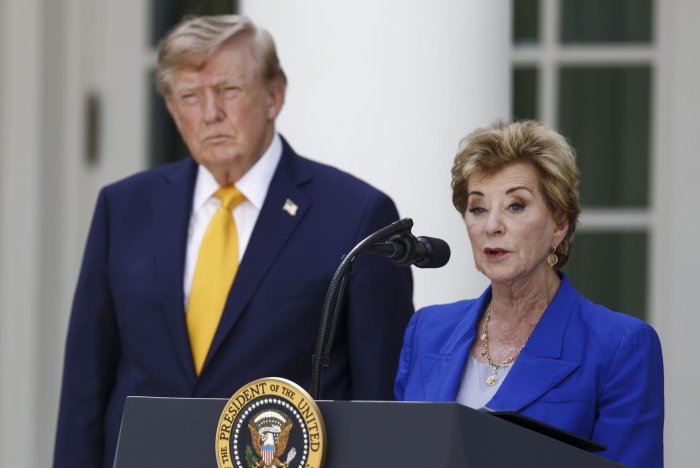
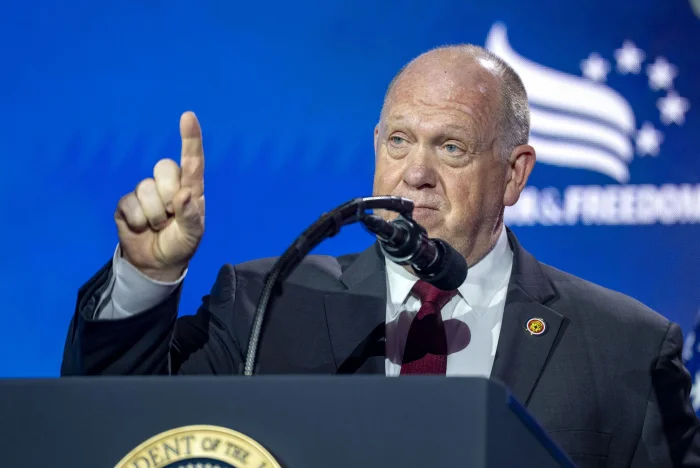
In a speech to the nation Thursday evening, President Trump said Americans deserve secure elections, and he claimed to be using federal authority to prevent them from being “stolen.”
In fact, one of the strongest security features of U.S. elections is the fact that they aren’t conducted at the federal level. America votes in more than 10,000 different election jurisdictions, each with different rules set by state and sometimes local governments.
That structure makes the nation’s elections extraordinarily complicated — and also safe from widespread fraud. And when misconduct does happen — rarely — security protocols frequently catch it.
Decentralized elections date back to the nation’s founding
America’s highly decentralized system of voting exists because the nation’s Founding Fathers gave authority over elections to the states, rather than the federal government. While Congress has the power to regulate elections — and has used that authority to pass such laws as the Voting Rights Act — the Constitution makes clear that states have primary authority to set the “times, places and manner” for elections.
There also is no national election agency that administers the presidential contest, something that’s different from many other countries. And when it comes to doing the day-to-day work of running an election, the responsibility falls to officials at the local level — usually a clerk or election supervisor — with help from staff and volunteers.
While differences in election laws can get confusing, election security experts say this structure is a strength. That’s because to pull off stealing a presidential election — as Trump falsely claims was done to him in 2020 — it would require large numbers of election workers in the most competitive counties across the country who are willing to risk prosecution, prison time and fines while working with officials from both parties willing to look the other way. And everyone somehow would have to keep quiet — a highly unlikely scenario.
There are also shared practices and security measures in place across the country that together work to ensure that only eligible voters can cast a ballot and only one ballot is counted for each.
Voter fraud can happen, but it’s rare and there are safeguards to catch it
Most Americans by now have probably heard stories about someone casting multiple ballots, or voting in the name of dead relatives, or stealing mail ballots from mailboxes.
When these incidents happen, they are often caught and prosecuted.
Voting more than once, tampering with ballots, lying about your residence to vote somewhere else or casting someone else’s ballot are crimes that can be punished with hefty fines and prison time. Non-U.S. citizens who break election laws can be deported.
For anyone still motivated to cheat, election systems in the United States are designed with multiple layers of protection and transparency intended to stand in the way.
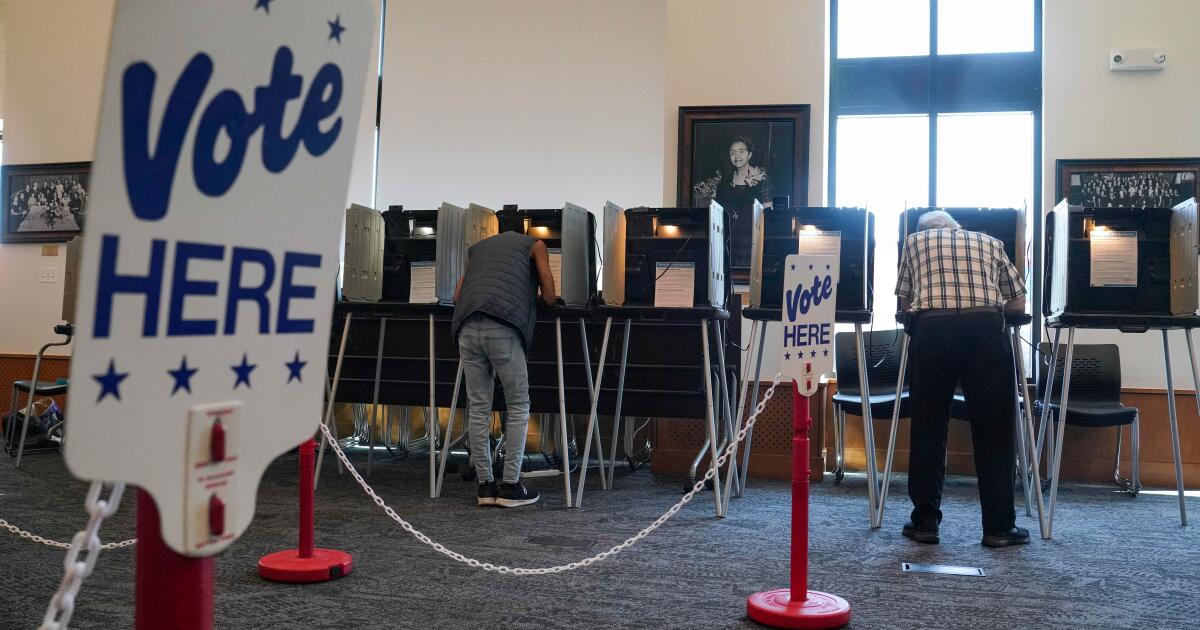
For example, for in-person voting, most states either require or request voters provide some sort of identification at the polls. Others require voters to verify who they are in another way, such as stating their name and address, signing a poll book or signing an affidavit.
For absentee voting, all states require a voter’s signature, and many states have further precautions, such as having bipartisan teams compare the signature with other signatures on file, requiring the signature to be notarized or requiring a witness to sign.
That means even if a ballot is erroneously sent to someone’s past address and the current resident mails it in, there are checks to alert election workers to the foul play.
AP review found there was too little voter fraud to tip the 2020 election
Trump has spent six years insisting he won the 2020 election, a campaign he lost to former President Joe Biden.
An Associated Press review in 2021 dug into every potential case of voter fraud in the six battleground states that Trump disputed. It found fewer than 475 cases — a number that would have made no difference in that race.
Allegations from Trump of massive voting fraud have been refuted by a variety of judges, state election officials and an arm of his own administration’s Homeland Security Department. In 2020, then-Attorney General William Barr, a Trump appointee, told the AP that no proof of widespread voter fraud had been uncovered. “To date, we have not seen fraud on a scale that could have effected a different outcome in the election,” he said at the time.
Swenson writes for the Associated Press.