Sides

U.S. appeals court sides with Trump administration on detaining immigrants without bond

The U.S. can continue to detain immigrants without bond, an appeals court ruled on Wednesday, handing a victory to the Trump administration’s crackdown on immigration.

The opinion from a panel of the 8th Circuit Court of Appeals in St. Louis overturned a lower court ruling that required that a native of Mexico arrested for lacking legal documents be given a bond hearing before an immigration judge.

It’s the second appeals court to rule in favor of the administration on this issue. The 5th Circuit in New Orleans ruled last month that the Department of Homeland Security’s decision to deny bond hearings to immigrants arrested across the country was consistent with the Constitution and federal immigration law.

Both appeals court opinions counter recent lower court decisions across the country that argued the practice is illegal.

In November, a district court decision in California granted detained immigrants with no criminal history the opportunity to request a bond hearing and had implications for noncitizens held in detention nationwide.

Under past administrations, most noncitizens with no criminal record who were arrested away from the border had an opportunity to request a bond hearing while their cases wound through immigration court. Historically, bond was often granted to those without criminal convictions who were not flight risks, and mandatory detention was limited to recent border crossers.

In the case before the 8th Circuit, Joaquin Herrera Avila of Mexico was apprehended in Minneapolis in August 2025 for lacking legal documents authorizing his admission into the United States. The Department of Homeland Security detained Avila without bond and began deportation proceedings.

He filed a petition seeking immediate release or a bond hearing. A federal judge in Minnesota granted the petition, saying the law authorized detention without bond when a person seeking admission is not clearly and beyond a doubt entitled to being admitted. The judge found this was not the case for Avila because he had lived in the country for years without seeking naturalization, asylum or refugee status and thus wasn’t “seeking admission.”

Circuit Court Judge Bobby E. Shepherd wrote for the majority in a 2-1 opinion that the law was “clear that an ‘applicant for admission’ is also an alien who is ‘seeking admission,’” and so Avila couldn’t petition on these grounds.

Circuit Court Judge Ralph R. Erickson dissented, saying that Avila would have been entitled to a bond hearing during his deportation hearings if he had been arrested during the past 29 years. Now, he wrote, the Circuit Court has ruled that Avila and millions of others would be subject to mandatory detention under a novel interpretation of “alien seeking admission” that hasn’t been used by the courts or five previous presidential administrations.

The American Civil Liberties Union, which is representing Avila, didn’t immediately return an email message seeking comment.

Atty. Gen. Pam Bondi hailed the ruling, writing in a social media post: “MASSIVE COURT VICTORY against activist judges and for President Trump’s law and order agenda!”

At question is the issue of whether the government is required to ask a neutral judge to to determine whether it is legal to imprison someone.

It’s based on the habeas corpus, which is a Latin legal term referring to the constitutional right for people to legally challenge their detention by the government.

Immigrants have filed more than 30,000 habeas corpus petitions in federal court alleging illegal detention since Trump took office, according to a tally by the Associated Press. Many have succeeded.

McAvoy writes for the Associated Press.
Source link

Parsi: No deal ‘’without both sides giving something to the other’ | US-Israel war on Iran

NewsFeed

Trita Parsi, Vice President of the Quincy Institute, argues that Iran is unlikely to agree to end the war without sanctions relief, while there is little sign Donald Trump is willing to offer meaningful concessions, adding that a deal remains unlikely until then.

Source link

US judge sides with New York Times against Pentagon journalism policies | Donald Trump News

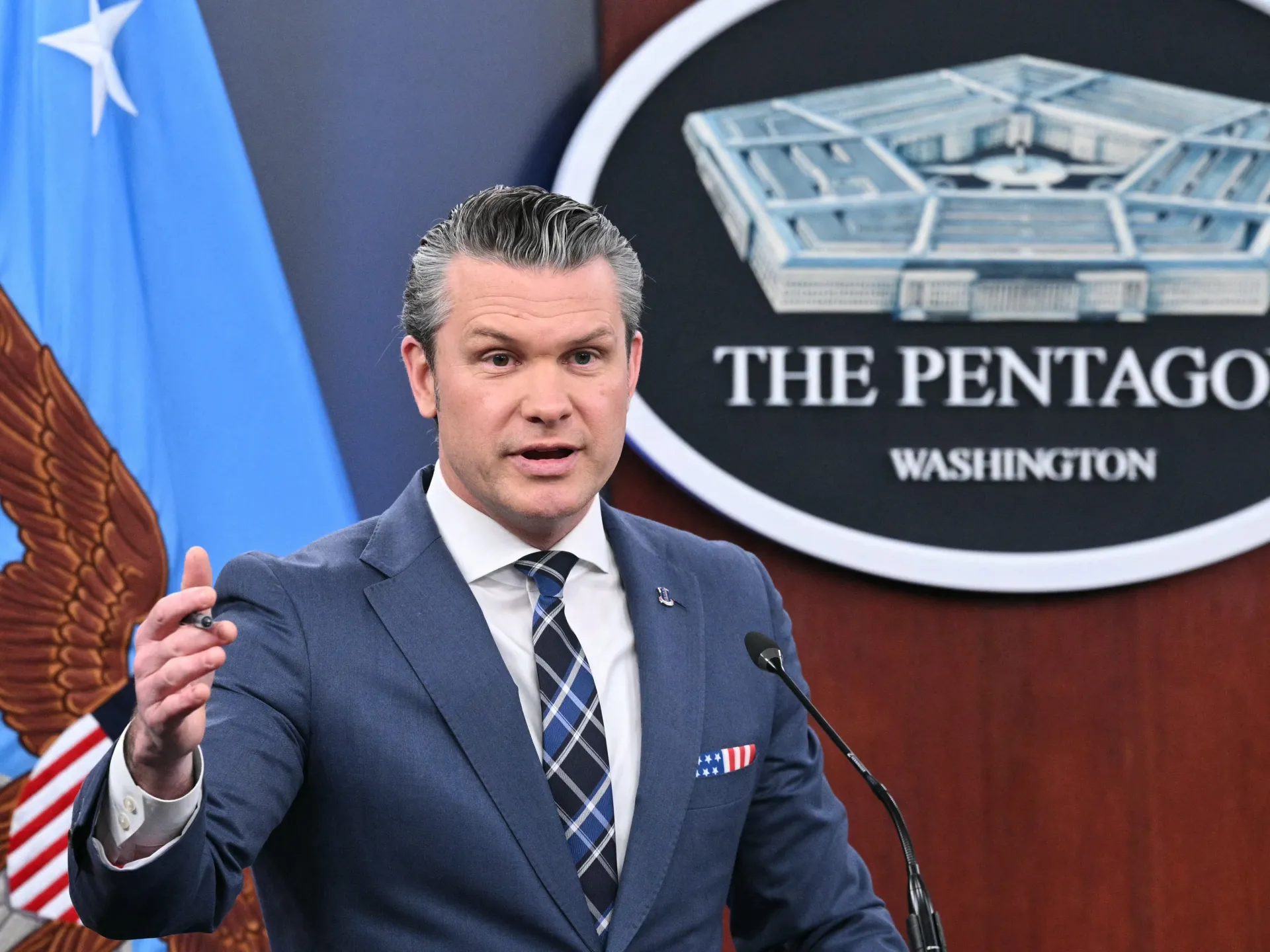
A federal judge in the United States has agreed to block the administration of President Donald Trump from enforcing a policy limiting news reporters’ access to the Pentagon.

Friday’s ruling sides with The New York Times in its argument that key portions of the new rules are unlawful.

Recommended Stories

list of 3 itemsend of list

US District Judge Paul Friedman in Washington, DC, ruled that the Pentagon policy illegally restricts the press credentials of reporters who walked out of the building rather than agree to the new rules.

The Times sued the Pentagon and Defense Secretary Pete Hegseth in December, claiming the credentialing policy violates the journalists’ constitutional rights to free speech and due process.

The current Pentagon press corps is comprised mostly of conservative outlets that agreed to the policy. Reporters from outlets that refused to consent to the new rules, including those from The Associated Press, have continued reporting on the military.

Friedman, who was nominated to the bench by Democratic President Bill Clinton, said the policy “fails to provide fair notice of what routine, lawful journalistic practices will result in the denial, suspension, or revocation” of Pentagon press credentials.

He ruled that the Pentagon policy ultimately violates the First and Fifth Amendment rights to free speech and due process.

“Those who drafted the First Amendment believed that the nation’s security requires a free press and an informed people and that such security is endangered by governmental suppression of political speech. That principle has preserved the nation’s security for almost 250 years. It must not be abandoned now,” the judge wrote.

Times lauds ruling

New York Times spokesperson Charlie Stadtlander said the newspaper believes the ruling “enforces the constitutionally protected rights for the free press in this country”.

“Americans deserve visibility into how their government is being run, and the actions the military is taking in their name and with their tax dollars,” Stadtlander said in a statement. “Today’s ruling reaffirms the right of The Times and other independent media to continue to ask questions on the public’s behalf.”

Theodore Boutrous, a lawyer who represented the Times at a hearing earlier this month, said in a statement that the court ruling is “a powerful rejection of the Pentagon’s effort to impede freedom of the press and the reporting of vital information to the American people during a time of war”.

The Pentagon did not immediately respond to a request for comment on the ruling.

It has argued that the policy imposes “common sense” rules that protect the military from the disclosure of national security information.

“The goal of that process is to prevent those who pose a security risk from having broad access to American military headquarters,” government lawyers wrote.

The Times’ legal team, meanwhile, claimed the policy is designed to silence unfavourable press coverage of President Trump’s administration.

“The First Amendment flatly prohibits the government from granting itself the unbridled power to restrict speech because the mere existence of such arbitrary authority can lead to self-censorship,” they wrote.

Weeding out ‘disfavoured’ journalists

The judge said he recognises that “national security must be protected, the security of our troops must be protected, and war plans must be protected”.

“But especially in light of the country’s recent incursion into Venezuela and its ongoing war with Iran, it is more important than ever that the public have access to information from a variety of perspectives about what its government is doing,” Friedman wrote.

Friedman said the “undisputed evidence” shows that the policy is designed to weed out “disfavored journalists” and replace them with those who are “on board and willing to serve” the government, a clear instance of illegal viewpoint discrimination.

“In sum, the Policy on its face makes any newsgathering and reporting not blessed by the Department a potential basis for the denial, suspension, or revocation of a journalist’s [credentials],” he wrote. “It provides no way for journalists to know how they may do their jobs without losing their credentials.”

The Pentagon had asked the judge to suspend his ruling for a week for an appeal. Friedman refused.

The judge ordered the Pentagon to reinstate the press credentials of seven Times journalists. But he said his decision to vacate the challenged policy terms applies to “all regulated parties”.

Friedman gave the Pentagon a week to file a written report on its compliance with the order.

The Times argued that the Pentagon has applied its own rules inconsistently. The newspaper noted that Trump ally Laura Loomer, a right-wing personality who agreed to the Pentagon policy, appeared to violate the Pentagon’s prohibition on soliciting unauthorised information by promoting her “tip line”.

The government didn’t object to Loomer’s tip line but concluded that a Washington Post tip line does violate its policy because it purportedly “targets” military personnel and department employees.

The judge said he does not see any meaningful difference between the two tip lines.

“But the problem is that nothing in the Policy explicitly prevents the Department from treating these two nearly identical tip lines differently,” Friedman added.

Source link

Judge sides with New York Times in challenge to policy limiting reporters’ access to Pentagon

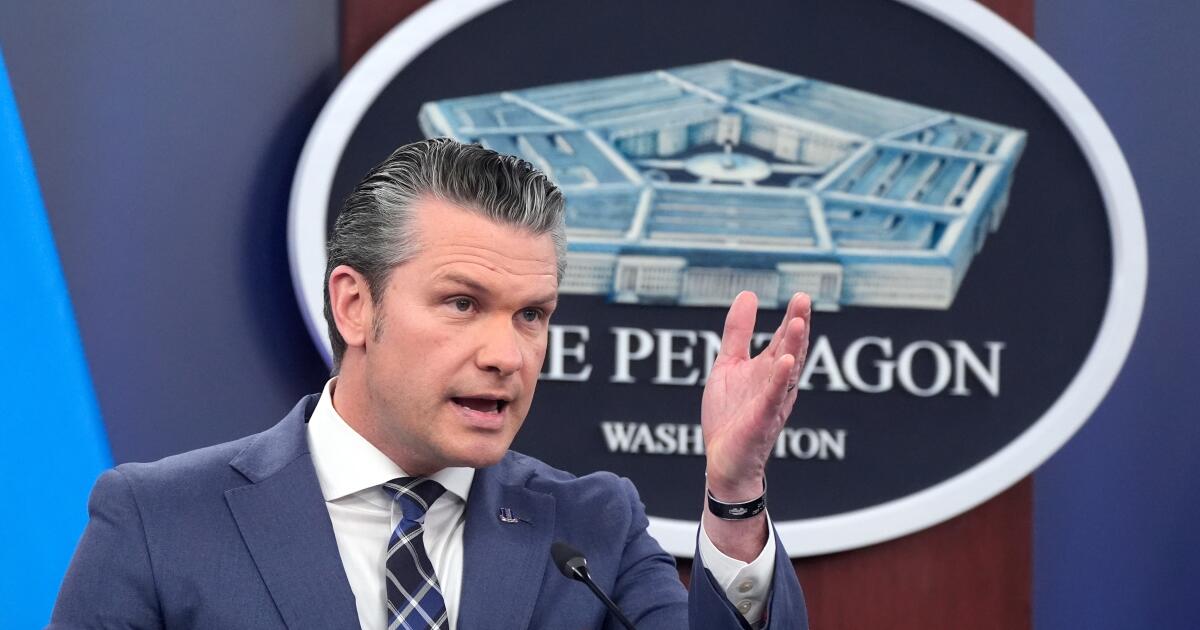
A federal judge agreed Friday to block the Trump administration from enforcing a policy limiting news reporters’ access to the Pentagon, agreeing with The New York Times that key portions of the new rules are unlawful.

U.S. District Judge Paul Friedman in Washington sided with the newspaper and ruled that the Pentagon policy illegally restricts the press credentials of reporters who walked out of the building rather than agree to the new rules.

The Times sued the Pentagon and Defense Secretary Pete Hegseth in December, claiming the credentialing policy violates the journalists’ constitutional rights to free speech and due process.

The current Pentagon press corps is comprised mostly of conservative outlets that agreed to the policy. Reporters from outlets that refused to consent to the new rules, including from the Associated Press, have continued reporting on the military.

Friedman, who was nominated to the bench by Democratic President Bill Clinton, said the policy “fails to provide fair notice of what routine, lawful journalistic practices will result in the denial, suspension, or revocation” of Pentagon press credentials. He ruled that it violates the First and Fifth amendment rights to free speech and due process.

“In sum, the Policy on its face makes any newsgathering and reporting not blessed by the Department a potential basis for the denial, suspension, or revocation of a journalist’s (credential),” he wrote. “It provides no way for journalists to know how they may do their jobs without losing their credentials.”

The Pentagon did not immediately respond to a request for comment on the ruling.

It has argued that the policy imposes “common sense” rules that protect the military from the disclosure of national security information.

“The goal of that process is to prevent those who pose a security risk from having broad access to American military headquarters,” government attorneys wrote.

Times attorneys claim the policy is designed to silence unfavorable press coverage of President Trump’s administration.

“The First Amendment flatly prohibits the government from granting itself the unbridled power to restrict speech because the mere existence of such arbitrary authority can lead to self-censorship,” they wrote.

Kunzelman writes for the Associated Press. AP writer Konstantin Toropin contributed to this report.

Source link

Supreme Court sides with street preacher free speech lawsuit

March 20 (UPI) — The U.S. Supreme Court on Friday ruled in favor of allowing a so-called street preacher in Mississippi to challenge a law prohibiting where he can protest.

The high court said Gabriel Olivier can file a civil suit in response to a law in Brandon, Miss., that prevents public protests outside of designated areas. He said the law violates the 1st Amendment’s free speech protection.

Police in Brandon, Miss., arrested Olivier in 2021 as he and a group of protesters shouted slurs and insults at concertgoers as they entered an amphitheater. Some members of the group also held up graphic signs showing aborted fetuses.

He was convicted of violating the city’s laws banning protesters from coming within about 265 feet away of the amphitheater and from using loudspeakers that can be heard from more than 100 feet away, CNN reported.

Olivier pleaded no contest to the charges and was ordered to pay a fine and serve a year of unsupervised probation. Following his sentence, he sued the city, saying its law violated his free speech rights.

A 1994 Supreme Court ruling — Heck v. Humphrey — though says that a defendant convicted of a crime can’t then sue over the legality of their conviction. Otherwise, he and other defendants could be cleared of their convictions outside of the normal criminal appeals process, The Washington Post reported.

Olivier’s lawyers said his case should be allowed to proceed because success wouldn’t affect the result of his conviction, for which he wasn’t imprisoned. The Supreme Court agreed with a unanimous vote.

The ruling did not pass judgment on the constitutionality of the city of Brandon’s laws, only that Olivier is allowed to challenge them.

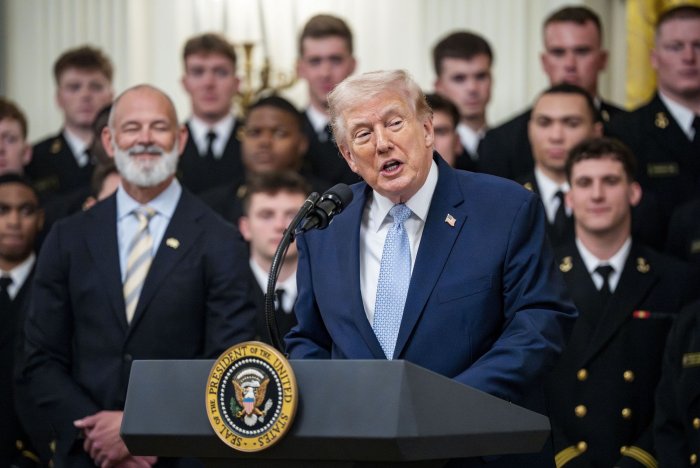
President Donald Trump presents the Commander in Chief’s Trophy to the Navy Midshipmen football team during a ceremony in the East Room of the White House on Friday. The award is presented annually to the winner of the football competition between the Navy, Air Force and Army. Navy has won the trophy back to back years and 13 times over the last 23 years. Photo by Bonnie Cash/UPI | License Photo

Source link

Four English sides out – is fifth Champions League spot still on?

ENGLAND

Even though four teams have been knocked out this week, it is all but certain that the Premier League will get an extra place.

England (23.847) already have a coefficient score pretty much the same as last season’s second-placed country (Spain, 23.892).

Nothing should be completely taken for granted, as England seemed destined to get an EPS slot in 2023-24 only to suffer a terrible set of results in the quarter-finals.

But it is going to take another very bad night on Thursday for there to be any real jeopardy.

It also helps that Bayern Munich will face Real Madrid in the quarter-finals, meaning one of England’s closest rivals will lose a team. And Barcelona must play Atletico Madrid, too.

As a picture of how far England are ahead, German and Spanish sides are effectively 18 victories behind. And Serie A can no longer catch the Premier League.

SPAIN

The Spanish league is in second place and now has more teams left in Europe (six) than any other league.

It will be a close battle as each win is worth less to the coefficient than for Germany.

The Champions League meeting between Bayern and Real Madrid could prove crucial in the race.

Spain will also be hit by their teams meeting each other.

Atletico and Barcelona will meet in the Champions League quarter-finals.

In the Europa League, Celta Vigo and Real Betis are on a collision course in the semi-finals.

GERMANY

The Bundesliga has only Bayern left active in the Champions League, and it will need a strong turnaround of results on Thursday.

Of the three German teams in action in the Europa League and Conference League, not one goes into their second leg with a lead. They all need positive results to be able to challenge Spain.

PORTUGAL

It seemed like Portugal’s chances of making the top two were effectively over when Santa Clara were knocked out of the Conference League in the qualifying rounds.

But three of their remaining four teams are still active.

However, to be in contention for second all are going to have to go very deep.

ITALY

Serie A has lost four of its seven teams and now only has a slim chance of making second place.

Bologna and Roma face each other in the Europa League last 16, so another team will go out.

At least Fiorentina won in the Conference League.

FRANCE

It has been a disappointing season for Ligue 1 teams, starting with Nice’s failure to make it through Champions League qualifying.

It did not get much better from there for Nice, as they were then eliminated from the Europa League.

France do have four teams still active but seem unlikely to bridge the gap.

POLAND

It will come as a surprise to many to find Poland so high up in the table, and they were in the top two for a while. But Poland no longer have a realistic chance.

All four of the country’s teams have been playing in the Conference League, while more than a third of their coefficient points were picked up in the qualifying rounds.

It would need both of their teams to win every remaining game.

No other country has a mathematical chance of the top two.

Source link

Chinese GP: The conflict which shows up F1’s best and worst sides

F1’s bosses are caught in the middle of this debate, recognising the superficial appeal of the back-and-forth racing, but concerned about what the new cars are doing to the sport they grew up loving because they were attracted by its essence as the ultimate test of driver and machine.

Andrea Stella, team principal of world champions McLaren, said: “In qualifying, there’s some aspects of driving that could be counterintuitive.

“Like, occasionally there are comments from our drivers that once they make a mistake, actually save some energy, you go faster overall in a sector, because the energy you saved with the delay on the throttle because you had a problem is going to reward you at the end of the straight.”

Mercedes F1 team principal Toto Wolff said: “From an entertainment perspective, I believe that what we’ve seen today between Ferrari and McLaren was good racing. Many overtakes.

“We were all part of Formula 1 where there was no overtake, literally. Sometimes we’re too nostalgic about the good old years.

“But I think the product is good in itself. We saw quite some racing in the midfield also. And that is, I think, the positive.

“Now, from a driver’s standpoint, when it comes to the qualifying lap, that is different. Clearly, lift and coast in the qualifying, I’m sure for someone like Max, who is a full-attack guy, it’s difficult to cope and digest.

“Qualifying flat-out would be nice. But when you look at the fans and the excitement that is there, live, the cheering when there’s overtakes and also on social media, the younger fans, the vast majority, through all the demographics, like the sport at the moment.

“So, yes, we can always look at how we’re improving it. But at the moment, all the indicators and all the data say people love it. And I spoke with Stefano (Domenicali, the F1 president). He says that, too.”

The cancellation of the Bahrain and Saudi Arabia Grands Prix gives the sport a little more breathing space to consider all this.

There is a meeting of team bosses with F1 and governing body the FIA this week, and another race in Japan in two weeks’ time before a five-week break before the next Grand Prix in Miami at the beginning of May.

A number of ideas to reduce the degree to which the purity of the driving experience has been polluted are already in the mix, such as removing a lower limit for energy recovery currently in force in a certain phase of the straights. And others may yet emerge.

Stella says: “Do we want to be faithful to the DNA of racing in a traditional sense? Do we accept that this counterintuitive situation belongs to the business or not? This is a high-level philosophical question.”

Source link

Russian attack kills four in Ukraine’s Sloviansk as both sides claim gains | Russia-Ukraine war News

Ukrainian and Russian officials have claimed battlefield successes in the more than four-year war, as Russian air attacks on Ukraine continue.

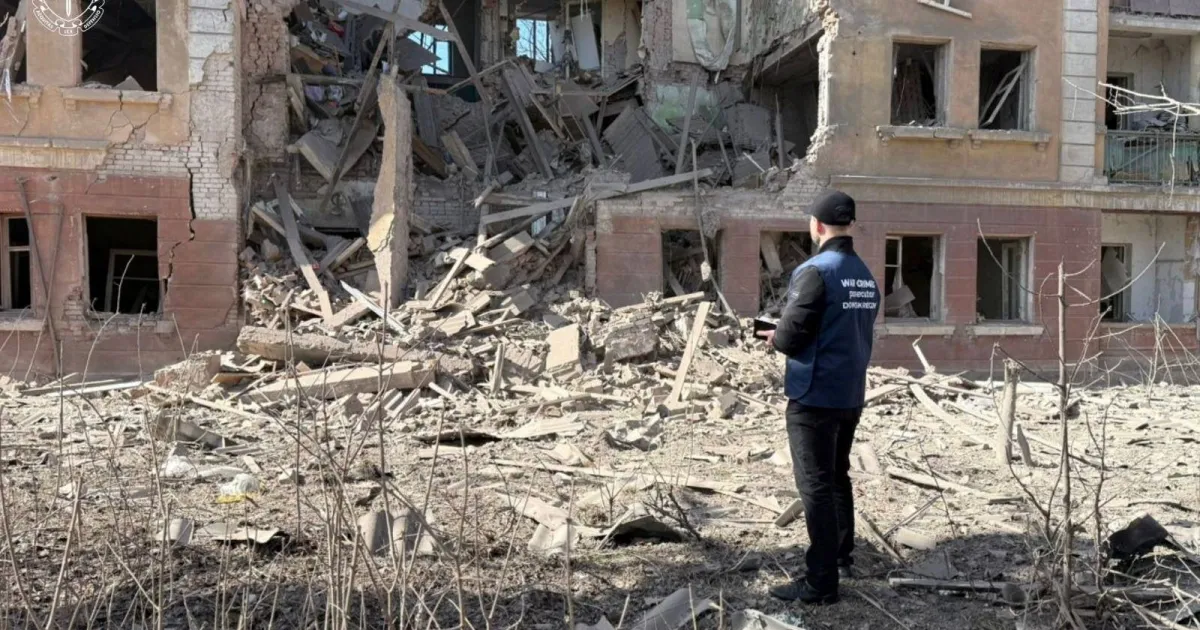
At least four people were killed in Russian attacks on the Ukrainian town of Sloviansk, regional authorities said on Tuesday.

Recommended Stories

list of 3 itemsend of list

The governor of Sloviansk, Vadym Filashkin, confirmed the death toll on Tuesday and said 16 others were wounded, including a 14-year-old girl. He said Russian forces dropped three guided bombs on the city.

There was no immediate comment from Moscow on the attack.

Overnight drone strikes on three other Ukrainian cities wounded at least 17 people, including two children, emergency services said.

Ukraine’s air force said that it shot down 122 out of 137 drones that Russia launched during the night.

Warring parties claim advances

Ukrainian forces have recently retaken nearly all the territory of the southeastern Dnipropetrovsk industrial region during a counteroffensive, driving Russian troops out of more than 400 square kilometres (150sq miles), Major-General Oleksandr Komarenko said in an interview published Tuesday by local media outlet RBC-Ukraine.

He described the overall situation on the front line as difficult but under control, with the heaviest fighting continuing near Pokrovsk in eastern Ukraine and Oleksandrivka in the south, where he said Russian forces have concentrated their main effort.

There was no independent verification of his description of the military situation.

The Institute for the Study of War, a Washington-based think tank, said late Monday that recent Ukrainian counterattacks “are generating tactical, operational and strategic effects that may disrupt Russia’s spring-summer 2026 offensive campaign plan”.

Meanwhile, Russian President Vladimir Putin claimed that Russian forces have extended their gains in Ukraine’s eastern Donbas region, whose capture Moscow has made one of the goals of its invasion. Ukraine controlled about 25 percent of the Donbas six months ago, but it now holds just 15-17 percent, Putin said.

In Russia, the governor of the border region Bryansk, said a Ukrainian missile strike on Bryansk city had killed at least six people and wounded 37 others.

Alexander Bogomaz said those killed were civilians and that the wounded were admitted to the Bryansk Regional Hospital.

Ukrainian President Volodymyr Zelenskyy said the attack hit a Russian missile plant.

At the same time, a United Nations investigation found that the deportation and transfer of Ukrainian children since Russia invaded Ukraine in 2022 had amounted to “crimes against humanity”.

The International Criminal Court issued arrest warrants for President Vladimir Putin and five other Russian officials in 2023 over the alleged illegal deportation of children, which Moscow denies and said it has been evacuating people voluntarily from a warzone.

Trilateral talks ‘next week’

United States special envoy Steve Witkoff told the CNBC news outlet on Tuesday that the next round of trilateral talks between Ukraine, Russia and the US would likely be “sometime next week”.

Trilateral talks were first held in January in the United Arab Emirates; a second meeting was held in February in Geneva, Switzerland. Last year, Russia and Ukraine also held three rounds of talks in Turkiye, yet so far the two countries remain no closer to a deal as key issues, including Russia’s control of Ukrainian territory, are yet to be resolved.

Moscow has repeatedly said it would only agree to a deal that allows it to retain the territories it has seized, while Ukraine has said its territory must be returned in any deal.

Ukrainian President Volodymyr Zelenskyy said Turkiye was prepared to host the next round of trilateral talks after speaking with his Turkish counterpart, President Tayyip Erdogan, on Tuesday.

Source link

Markets Bet on Quick End to Iran War Despite Threats from Both Sides

Investors placed strong bets on Tuesday that Donald Trump could bring the war in Iran to a rapid conclusion, even as both sides escalated threats. The Islamic Revolutionary Guards Corps of Iran declared that no oil would leave the Middle East until U.S. and Israeli attacks cease, prompting Trump to threaten that any attempt to block tanker traffic would be met with strikes “twenty times harder.”

Despite the rhetoric, markets quickly reversed the historic surge in crude prices seen on Monday. Brent crude briefly surged to nearly $120 a barrel, a level not seen since mid‑2022, but fell back to around $92 by Tuesday morning. Futures volumes were low, reflecting both caution and the fact that traders were recalibrating risk based on Trump’s comments that the U.S. was “very far ahead” of his initial four- to five-week timeframe for the conflict. Asian and European share prices staged a recovery from earlier steep falls, signaling that markets were treating Trump’s statements as a de-escalation signal, even if the on-the-ground situation remained dire.

Analysts noted that while the market’s reaction reflects optimism about a short conflict, underlying risks remain. Suvro Sarkar of DBS Bank observed that benchmark Middle Eastern grades like Murban and Dubai crude remain above $100 per barrel, meaning the fundamental pressures on supply have not dissipated.

On the Ground: Intensified Conflict

Meanwhile, the human and strategic realities on the ground remain stark. Tehran residents described the heaviest bombardment of the conflict yet, with strikes across the city leaving civilians fearful and homes damaged. One resident said, “It was like hell. They were bombing everywhere, every part of Tehran… my children are afraid to sleep now. We have nowhere to go.”

Israel is simultaneously operating under the assumption that Trump could end the war at any moment, sources familiar with its military plans told Reuters. This has encouraged Israeli forces to maximize damage on Iranian targets before any potential ceasefire, highlighting the tension between the short-term operational calculus and long-term strategic objectives.

Iran’s appointment of hardliner Mojtaba Khamenei as Supreme Leader signals defiance against U.S. pressure to influence Iranian leadership, underscoring Tehran’s unwillingness to yield to external demands despite the military pressure.

Strategic Implications: Oil, Leadership, and Geopolitics

The war has effectively halted shipments through the Strait of Hormuz policy measures such as easing sanctions on Russia and releasing strategic oil reserves, are interpreted by markets as mitigating factors that could prevent a prolonged energy crisis.

However, the underlying political and military dynamics suggest that a rapid resolution may not meet all stated U.S. objectives. Ending the conflict quickly to restore oil flows would likely leave Iran’s leadership intact, which contrasts with Trump’s previous maximalist demands for influence over Iran’s succession. Israel’s objectives diverge further, as it continues to seek regime change and to weaken Tehran’s ability to strike beyond its borders, while U.S. officials emphasize missile and nuclear containment.

Human and Regional Costs

The war has already inflicted significant human costs. Iran’s U.N. ambassador reported at least 1,332 civilian deaths and thousands wounded since the airstrikes began. Iranian missile and drone strikes targeting Gulf states have damaged infrastructure, closed airports, and disrupted hotels, while retaliatory Israeli strikes in Lebanon have killed scores amid ongoing efforts to neutralize Hezbollah.

Domestically, Iran has suppressed dissent and anti-government protests following the death of Ali Khamenei, further complicating the social dynamics that external military action interacts with. Large-scale rallies in support of Mojtaba Khamenei demonstrate public mobilization in favor of the hardline leadership, which may limit the U.S. and Israel’s capacity to influence internal political outcomes even after the war concludes.

Analysis: Financial, Strategic, and Geopolitical Interplay

Markets are betting on a short conflict because of political signaling, but the broader picture is far more complex. Oil prices remain sensitive to supply disruptions, and the potential for renewed escalations persists. The market response highlights how sentiment can temporarily override fundamental risks, yet volatility is likely to continue as long as strategic objectives, military operations, and leadership decisions remain unresolved.

From a geopolitical perspective, the conflict illustrates the tension between military objectives and economic consequences. A rapid end to the war would stabilize energy markets and global growth expectations but may leave U.S. and Israeli goals partially unmet. Conversely, prolonging the conflict to pursue maximalist aims risks a sustained oil shock, regional instability, and wider economic fallout, echoing lessons from past Middle East crises in the 1970s.

Analysts emphasize that energy markets, geopolitical strategy, and human costs are tightly intertwined: traders respond quickly to political statements, but the underlying realities strikes, leadership decisions, and supply chain vulnerabilities ensure that uncertainty will remain high. The delicate balance between military pressure, diplomacy, and market psychology will determine whether the Iran conflict resolves quickly or evolves into a more protracted crisis.

With information from Reuters.

Source link