David Beckham shrugs off Brooklyn’s birthday snub for second time as he reveals he’s ‘blessed’ and ‘spoiled’ by family
DAVID Beckham has shrugged off estranged son Brooklyn’s snub once again after celebrating his birthday with family.
The former footballer, who has turned 51, enjoyed his day being ‘blessed’ and ‘spoiled’ by loved ones, despite being dealt another blow from Brooklyn and his daughter-in-law Nicola Peltz.
Taking to his Instagram, David shared two sweet snaps of him as a child and him present day smiling as he blew out his birthday candles.
He added the caption: “I feel very lucky & blessed to have had a very special day today being spoilt by my wife, kids , family and friends from the moment I opened my eyes till now.
“And I just want to say thank you and I love you all so much @victoriabeckham & my beautiful family thank you (heart emoji).”
On the star’s birthday, David was met with a barrage of birthday shoutouts from the Beckham clan.
READ MORE ON THE BECKHAMS


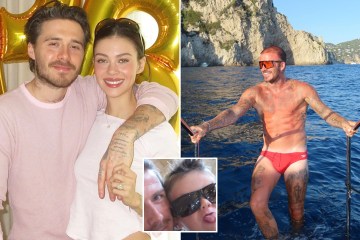
Former Spice Girl Victoria led the birthday shoutouts for her husband and gushed over him by sharing a series of unseen private snaps including David on a boat in only a pair of tiny red shorts.
In the caption, the fashion designer penned: “You are our world, our everything. We love you so much!!!
“Happy birthday to the best husband, daddy, son, brother, and friend.”
Brooklyn’s brothers, Romeo and Cruz, also praised their dad by sharing photos of their younger selves with David.
Cruz wished his father a happy birthday with Romeo penning the message: “Happy birthday dad love u so much. Thank u for everything you do.”
Eldest son Brooklyn chose to remain silent for the second year in a row, which comes as no surprise considering he and wife Nicola’s major fallout with the rest of his family.
Earlier this year Brooklyn had launched a nuclear attack on his family stating that he did “not want to reconcile” with his them, and accused his parents of “controlling” the narrative.
Last month Victoria broke her silence on her long-running feud with Brooklyn.
Speaking to The Wall Street Journal magazine, Victoria did not refer to Brooklyn by name when asked about the rift but discussed how she had only ever tried to “protect and love our children”.
The Spice Girls star said: “I think that we’ve always—we love our children so much.
“We’ve always tried to be the best parents that we can be. And you know, we’ve been in the public eye for more than 30 years right now, and all we’ve ever tried to do is protect our children and love our children.
“And you know, that’s all I really want to say about it.”