shooter

Father who killed Oregon school shooter describes anguish over children he couldn’t save

A father who shot dead a gunman at his two daughters’ school in the US state of Oregon has described “hearing children pleading for their lives” and his anguish over those he could not save.

Three students and a teacher were killed by a 16-year-old former student at Silver Rail Elementary School earlier this month. The attacker was then killed by parent Kaylub Giamanco.

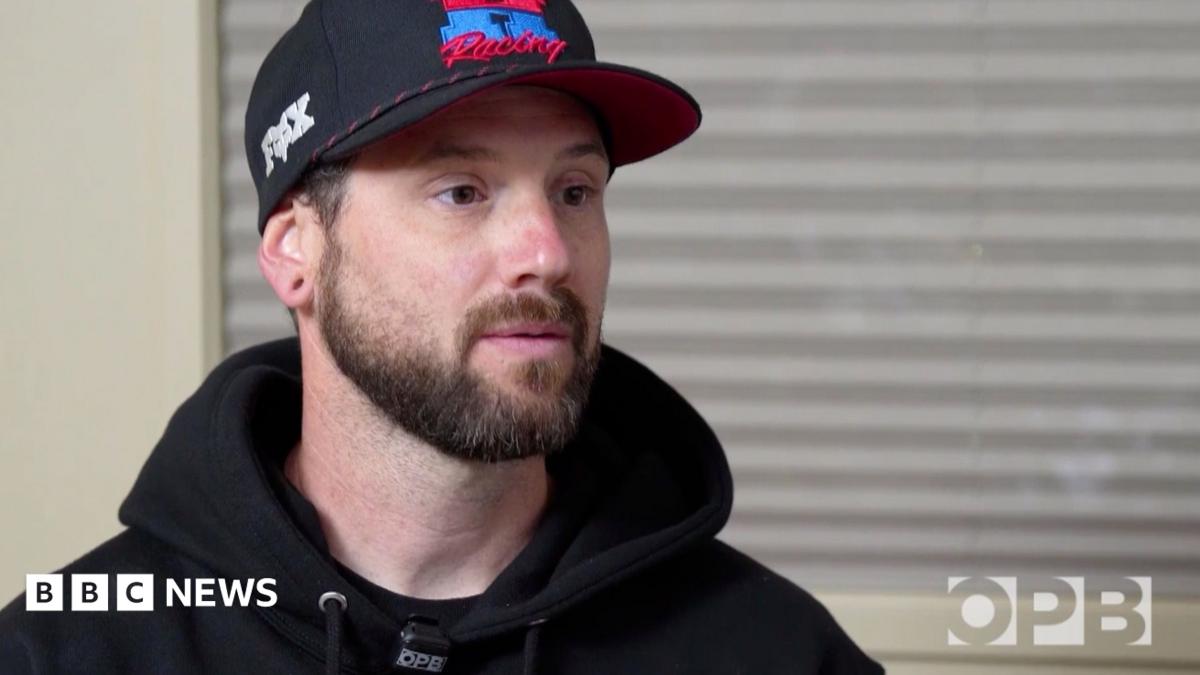
“I want to apologise for not saving their babies,” Giamanco, who has been hailed as a hero, said of his thoughts for the parents of the children killed in an interview with Oregon Public Broadcasting (OPB) that aired on Friday.

“The gratitude for saving people’s children is awesome, but there were ones that I didn’t save.”

Giamanco, 36, said he wanted to meet the victims’ families and “cry with them and hold them”.

He credited a teacher who fought the attacker with giving him the chance to intervene without losing his own life.

“I would love to give her a hug because that’s a real true hero,” he said.

The students who were killed were all boys, aged five, eight and 11. They were among six people in total who were shot in a classroom at the school, police said. Alongside the teacher who was also killed, another child and a teacher were wounded.

Giamanco told OPB the day of the attack began with breakfast and packed lunches. He and his wife spent extra time getting their daughters ready because it was school picture day.

The carpenter had taken lunch to work but decided to go home to eat with his wife instead. That decision brought him past the school as the attack began.

He initially wondered whether someone carrying a long gun was playing a prank. Then he saw him fire at a pickup truck and head towards the school.

Giamanco retrieved a handgun from his vehicle and called emergency services.

“I said, ‘I’m sorry, I have to go in. People are going to die,'” he told the broadcaster.

He followed the attacker, who shot through the school’s locked glass doors. Hearing children pleading for their lives and more gunfire, Giamanco crawled towards the building.

“I told myself this is probably the last thing that I’m ever going to do,” he said.

Source link

Oregon school shooter was former special needs student, police say | Gun Violence News

A teacher fought the teenage shooter and a parent shot him dead, police say on Friday, a day after four people were killed.

The 16-year-old who killed three children and a teacher at an elementary school in the US state of Oregon was a former special-needs student at the school, police and school officials have said.

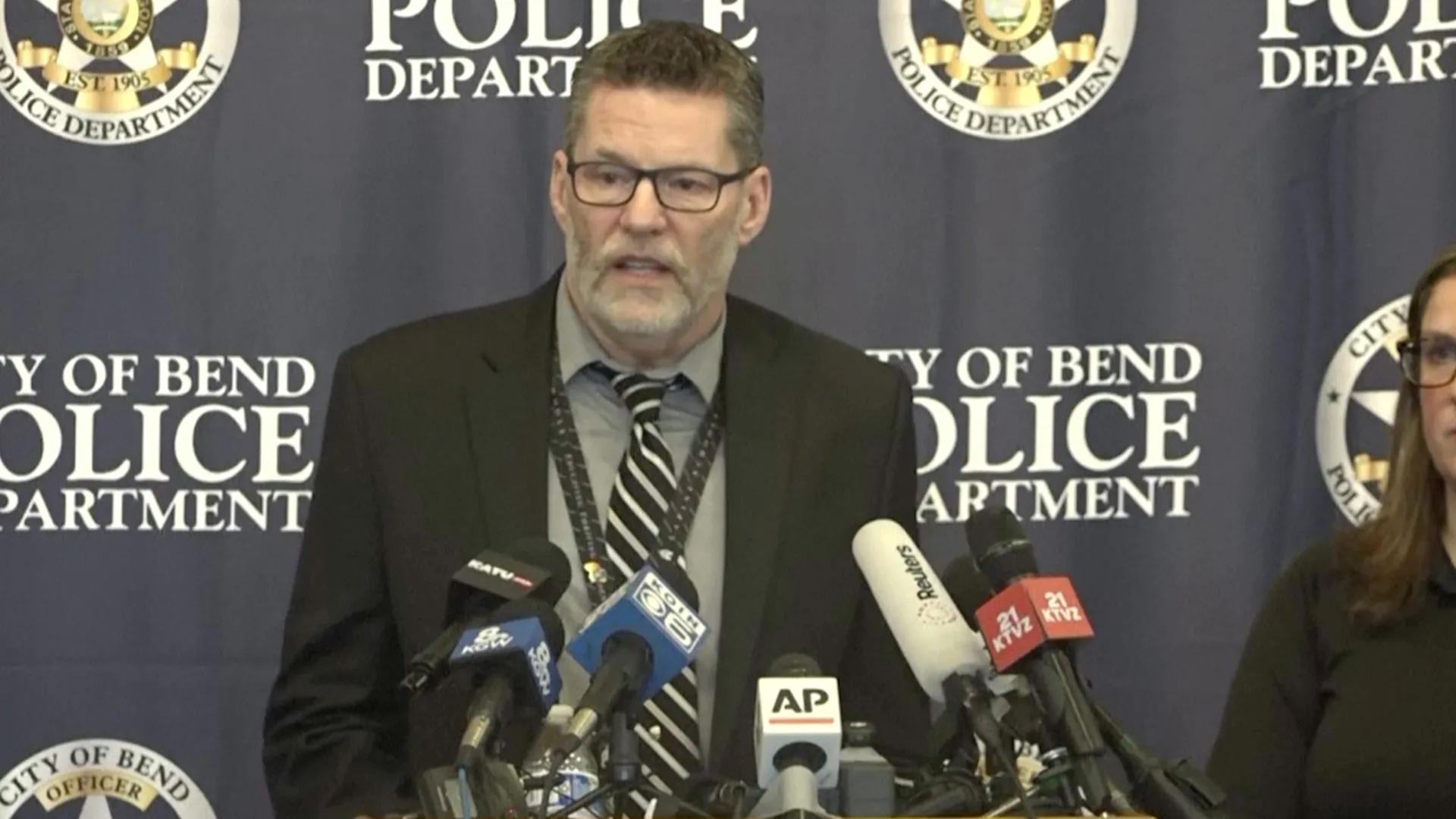
Bend Police Chief Mike Krantz identified the attacker on Friday, a day after the shooting at Silver Rail Elementary School, as Griffin J. John II.

Recommended Stories

list of 3 itemsend of list

He said the teenager attacked a classroom of special-needs students, where all the victims were shot.

Steven Cook, superintendent of Bend-La Pine Schools, said John was not enrolled in the local public school system at the time.

“That classroom was a special needs classroom, and the suspect was a special needs student in that school,” Cook told a news conference.

Krantz said John shot his way through locked doors with a 12-gauge shotgun, firing as many as 15 shots, and had about 44 rounds left when he was killed. Police are still trying to determine how he obtained the gun.

Under Oregon law, a minor may possess a shotgun if provided by a parent or with a parent’s consent.

The shooter’s mother, Shauntai Nickerson, separately told reporters outside her apartment: “I’m so sorry, I wish I could have done something.”

A teacher threw her phone at the gunman, then tackled and fought him, likely saving lives, Krantz said, calling her actions “heroic”. She was not injured.

A 36-year-old father, Kaylub Giamanco, who has two children at the school, then followed the gunman inside and shot him dead minutes after the first 911 call.

US President Donald Trump called Giamanco a “great hero”. “It’s a terrible thing, but thank goodness for a man that had a gun and knew how to use it,” Trump said.

People mourn next to a cordoned-off area at Silver Rail Elementary School in Bend, Oregon, on October 16, 2026, the day after a shooting
People mourn next to a cordoned-off area at Silver Rail Elementary School in Bend, Oregon, on October 16, 2026, the day after a shooting [David Ryder/Reuters]

The children killed were aged five, eight and 11, and the teacher was Meghan Lambert, 25, police said.

A seven-year-old child and a 54-year-old teacher were taken to hospital in critical condition.

The shooting is the 28th mass killing in the US this year, according to a database by The Associated Press, USA Today and Northeastern University.

The Gun Violence Archive in the US has documented 369 mass shootings in 2026, defined as incidents in which four or more people are shot.

The Everytown for Gun Safety group has counted at least 100 incidents of gunfire on school grounds this year, with 34 deaths.

Source link

Trump, after bipartisan backlash, says Pentagon won’t livestream execution of Fort Hood shooter

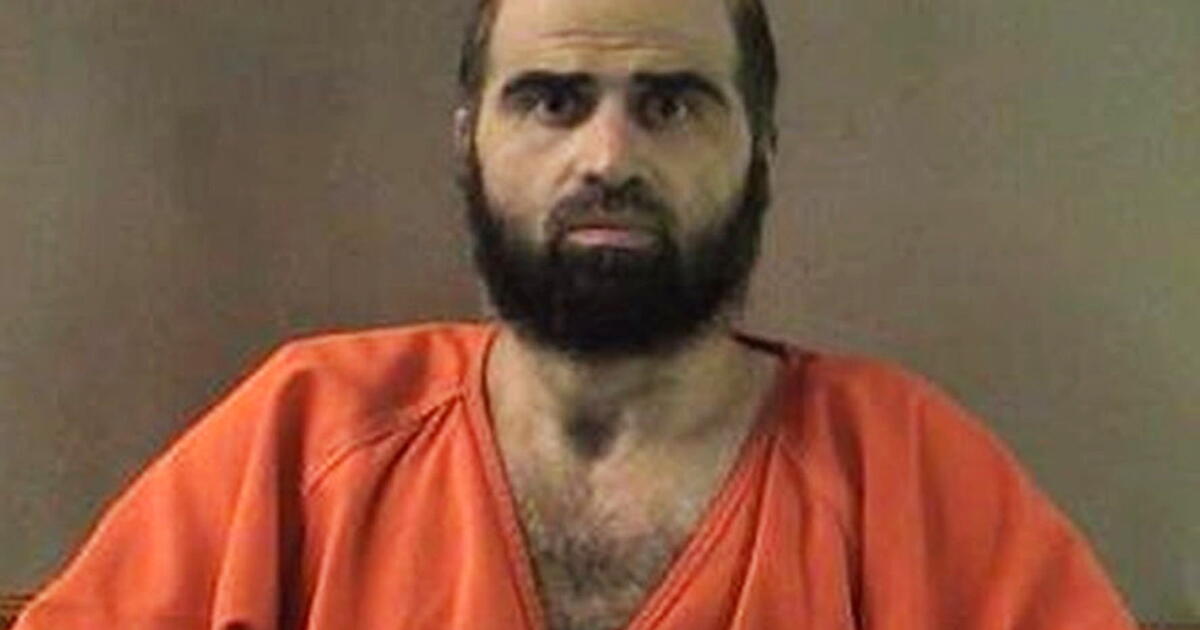
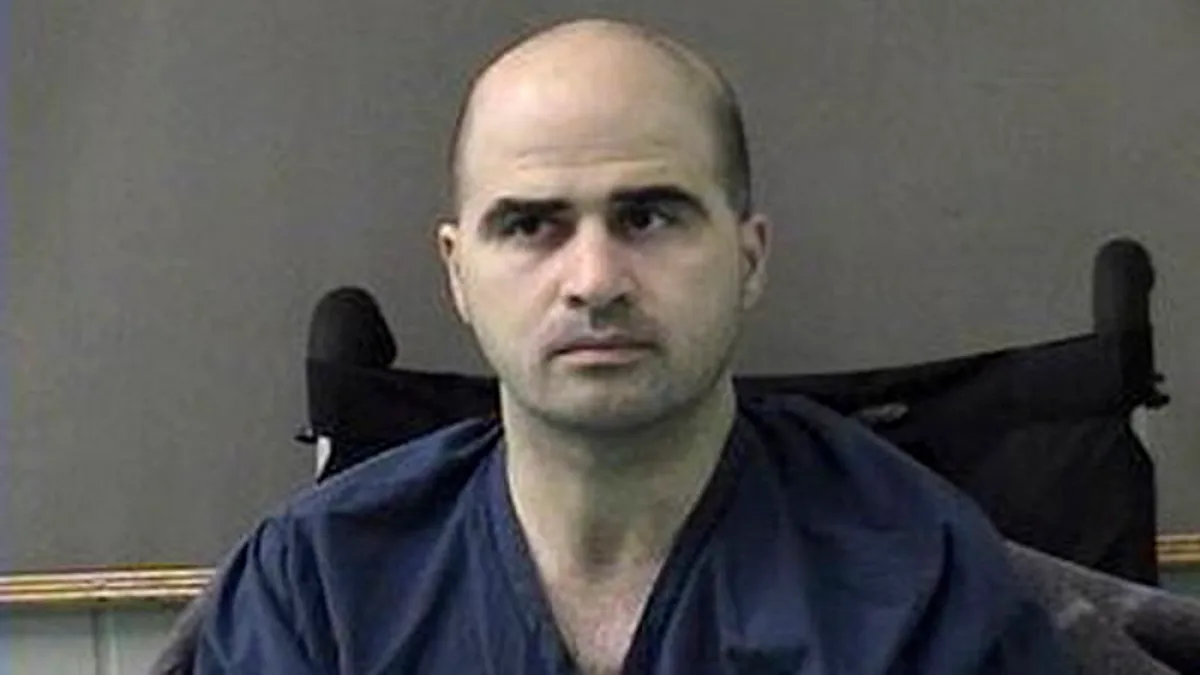
President Trump said Thursday that the Pentagon will not livestream the firing squad execution of Fort Hood shooter Nidal Malik Hasan, after the announcement faced bipartisan criticism and Vice President JD Vance said he wouldn’t watch it.

Trump said on social media that publicly airing the execution “might have been a strong deterrent for the World to witness how America deals with Terrorists and SCUM like Hasan.”

But, he continued, “any very good and well meaning people would rather not watch him die, through streaming, or through any other visual device.”

The Pentagon has said Hasan’s execution is scheduled for Dec. 3. Trump said the execution can be viewed in person by immediate families of the victims, “if they so choose.”

The announcement earlier this month from Defense Secretary Pete Hegseth that Hasan’s execution would be public — and subsequent confirmation from the Pentagon that it would be livestreamed — prompted significant blowback from both Republicans and Democrats, with many pointing out that the images could be used to fuel radicalization.

When asked how the public execution comported with his Christian faith earlier this month, Vance said “I don’t know that that’s actually going to happen.”

“So whatever the controversy is about the method of the execution, I hope that people don’t forget that this is a guy who brutally murdered a lot of innocent people,” Vance said.

But he continued: “Now, that said, I mean, look, if it’s ultimately livestreamed, I’m not going to be watching it.”

Hasan, an Army psychiatrist who held the rank of major, walked into a medical building on Nov. 5, 2009, where soldiers were waiting in long lines to receive immunizations and medical clearance for deployment. He shouted “Allahu akbar” — Arabic for “God is great!” — and opened fire with a laser-sighted handgun. He also shot at the backs of soldiers fleeing toward the parking lot.

Hasan said it was an effort to stop them from going to Afghanistan and killing his fellow Muslims. A military judge barred him from presenting that as a defense during his 2013 trial. Hasan was left paralyzed from the waist down after being shot in the back by law enforcement, and he now uses a wheelchair.

Hasan could seek a lengthy delay of his execution, though given his behavior at trial, he may not want to.

Source link

Pentagon says the firing squad execution of Fort Hood shooter Nidal Malik Hasan will be livestreamed

The Pentagon says the firing squad execution of Fort Hood shooter Nidal Malik Hasan will be livestreamed after Defense Secretary Pete Hegseth said the execution would be “public.”

Hegseth, speaking to the conservative TV outlet Real America’s Voice News on Wednesday, said the execution of Hasan will take place at Fort Hood on Dec. 3. Hasan was convicted of killing 13 people and injuring 32 others in a shooting at the military base in 2009.

“We’ll make sure that people are able to watch it, that it’s public,” Hegseth said.

Hegseth spoke to the outlet aboard the USS Abraham Lincoln aircraft carrier while visiting the long-deployed crew, who supported the Iran war, before their arrival at their home port in San Diego.

When asked if Hasan had made any final requests or reached out to the Trump administration, Hegseth simply replied: “Don’t care. We’ll see him on December 3rd.”

Officials in the Pentagon clarified Thursday that the execution will be livestreamed and that more details would follow.

Pentagon spokesperson Sean Parnell had said Monday that President Trump had approved the execution of Hasan.

Trump has previously been critical of public executions in Iran, at times using the possibility of protesters being killed by the Iranian government as a possible rationale for military action. Those warnings preceded his ultimate choice to attack Iran at the end of February over its ballistic missiles and the risk of it developing nuclear weapons.

“We’ve been told that the killing in Iran is stopping,” Trump told reporters on Jan. 14 of this year. “It’s stopping and there’s no plan for executions.”

He repeated that claim on Jan. 20 at a White House press briefing, saying: “We let them know that if that happens, that will be a very bad day for them. And they decided not to do it. They didn’t hang the people.”

Slightly more than a month later in his State of the Union address, Trump said, “We stopped them from hanging a lot of them with the threat of serious violence.”

The White House on Thursday immediately referred questions about the plans for the livestreamed execution to the Pentagon.

However, experts on military law said Hasan could choose to resist execution and file a habeas petition in civilian court, which could significantly delay the execution.

“It frankly might outlast the current administration, and who knows if the next one will have the same penchant for executions,” said Eugene R. Fidell, a visiting lecturer at Yale Law School specializing in military law.

Hasan, an Army psychiatrist who held the rank of major, walked into a medical building where soldiers were waiting in long lines to receive immunizations and medical clearance for deployment. He shouted “Allahu akbar” — Arabic for “God is great!” — and opened fire with a laser-sighted handgun.

During the trial it was revealed that Hasan spent weeks planning the deadly attack, and his preparation included videotaping a sales clerk showing him how to change the magazine on the pistol that he purchased. He would later go to a gun range outside Austin and ask for advice on how to reload with speed and precision from an instructor.

Soldiers later testified that Hasan’s rapid reloading made it all but impossible to stop the shooting. Investigators recovered 146 shell casings inside the building and dozens more outside, where Hasan shot at the backs of soldiers fleeing toward the parking lot.

Hasan said it was an effort to stop them from going to Afghanistan and killing his fellow Muslims. A military judge barred him from presenting that as a defense during his trial. Hasan made almost no effort to defend himself in court, telling jurors when he acted as his own counsel that evidence would show he was the shooter and describing himself as a soldier who had “switched sides.”

Hegseth said the military hasn’t executed a servicemember by firing squad since World War II. The last military execution took place on April 13, 1961, when Army Pvt. John Bennett was executed by hanging.

Toropin writes for the Associated Press.

Source link

Fort Hood shooter to be executed by firing squad: All to know | Crime News

United States President Donald Trump has approved the death by firing squad of Nidal Malik Hasan, a former army officer convicted of carrying out a 2009 mass shooting at Fort Hood, an army base in Texas.

The move, if it proceeds, will revive executions in the army, which has not carried one out since 1961.

Recommended Stories

list of 4 itemsend of list

Death sentences, as well as executions in the US military, are rare and require presidential approval.

Under the army’s code of military justice, premeditated murder does carry the death penalty, but the process is often strict and prolonged.

However, the Trump administration has shown more willingness to seek death penalties for serious crimes, including against civilians.

Here’s what we know about the case:

What is the presidential order?

Defense Secretary Pete Hegseth had initially recommended an execution order for Hasan, and Trump has now approved it, according to an X statement posted by Pentagon spokesperson Sean Parnell.

Parnell said the time and date of the execution will be set by Army Secretary Adam Telle, who is serving in an acting capacity.

“Judgement day for Hasan has finally come,” he wrote.

What happened at Fort Hood?

On November 5, 2009, the US-born army major, Hasan, a psychiatrist in the force, walked into an army processing centre in Fort Hood, shouted “Allahu Akbar” (God is great) and opened fire on fellow staff members waiting to get medical attention.

Thirteen people were killed, including a pregnant soldier, and 32 others were wounded during 10 minutes of shooting. Analysts have called it the worst shooting at a US military base targeting members of armed forces.

Hasan was shot several times after two officers engaged him and remains paralysed from the waist down.

What happened during the trial?

Hasan was immediately court-martialled, and military prosecutors, from the start, sought the death penalty against him.

However, the process would play out over the course of several years even after his conviction – largely because the US military is averse to capital punishment.

During the trial, Hasan represented himself and admitted to the attacks, saying he was trying to stop deployments to Afghanistan and the killing of his fellow Muslims. He was due to be deployed weeks later.

Investigations revealed Hasan had exchanged emails with Yemeni-American scholar Anwar al-Awlaki, accused of ties to al-Qaeda, before the shooting. He had also repeatedly voiced opposition to the US wars in Iraq and Afghanistan to colleagues and the treatment of Muslims in the army.

Hasan made little effort to defend himself, and his assigned lawyers claimed his testimony aided the opposing side.

He was charged and convicted on 13 counts of premeditated murder in 2013, and jurors recommended the maximum sentence of death. Controversially, Hasan was charged with “workplace violence” because the military justice code does not address the crime of “terrorism”.

The judgement was further delayed by appeals mandated by the military, not because Hasan sought them.

In 2020, the US Army Court of Criminal Appeals upheld the death penalty for Hasan, and in 2023, the US Court of Appeals for the Armed Forces did the same. In March 2025, the US Supreme Court denied a mandatory petition for a judicial review.

In September 2025, Hegseth announced he was seeking presidential approval for Hasan’s execution.

At the time, there was no report of Hegseth specifically seeking death by firing squad.

The president holds the ultimate authority to specify the designated method of execution.

Other forms of execution could have been lethal injection or hanging, which the US military has used in the past.

What next?

While Trump’s approval will begin a series of steps towards preparing for the execution, Hasan can still put the process on hold for years with an appeal in the civilian federal court system.

However, that might be unlikely as Hasan made no effort to defend himself during the trial.

He has been remanded to the US Disciplinary Barracks at Fort Leavenworth in Kansas, where three other men have also been on the military death row for years.

Among them is Hasan Akbar, convicted of two counts of murder after attacking fellow army members on a Kuwait base in 2003, during the invasion of Iraq.

Another is the convicted serial killer and rapist Ronald Gray, who was found guilty of four counts of murder and eight counts of rape in 2008. He was approved for execution in the same year under President George W Bush, but the process was put on hold by a judge.

Timothy Hennis, a former sergeant, was convicted in 2010 of a triple murder and is also on death row.

The last military execution took place in 1961, when former soldier John Bennett was hanged for the rape of an 11-year-old girl.
Source link