Three years after the October 7 attacks, the politics of Israeli society has shifted further right, sidelining voices calling for a political settlement with Palestinians. But as Al Jazeera’s Nour Odeh explains, the shift began years before October 7.
Colombian President Abelardo De La Espriella has emerged as close ally the of Trump administration in South America.
Published On 26 Sep 202626 Sep 2026
The Colombian government has extradited an alleged drug trafficking leader to the United States, part of a shift in the country’s security policy into greater alignment with Washington.
President Abelardo de la Espriella announced on Friday the extradition of Geovany Andres Rojas, who is accused of leading an organisation formed by previous members of the FARC rebel group.
Recommended Stories
list of 3 itemsend of list
“You don’t build peace by protecting narco-terrorists like this bandit,” de la Espriella said after he personally oversaw Rojas’s transfer to the US. “I ask US authorities … that he cannot negotiate deals that will leave his crimes unpunished.”
De la Espriella’s left-wing predecessor, Gustavo Petro, shielded Rojas from extradition in order to use him as a mediator in talks between the government and armed and criminal groups, which Petro sought to rein in through negotiations rather than military confrontation.
The far-right president has tossed out that approach, promising to crack down on groups that split off from the former FARC rebel group following a peace deal with the government in 2016. Many of those groups have jostled for control over lucrative drug routes and illicit industries.
Rojas, also known as “the Spider”, was flown to California and placed in the custody of federal agents. He allegedly served as the commander and spokesperson of Comandos de la Frontera, a group associated with cocaine trafficking in the Colombian province of Putumayo that borders Ecuador and Peru.
He will face drug trafficking and terrorism charges in the US, which has sought to expand military operations across Latin America under the pretext of combating crime and drug trafficking during President Donald Trump’s second term in office.
Colombia’s new president has aligned himself closely with those efforts, scrapping peace talks and launching military operations against armed groups since taking office in August.
The New York Times reported that de la Espriella, a former defence lawyer, was previously investigated by US authorities over his ties to powerful drug traffickers, but never charged, and defended politicians linked to right-wing paramilitaries.
Rights groups have warned that a return to militarised confrontation could lead to rights abuses by government forces and an escalation in violence, but many Colombians have expressed support for a harder hand against criminal groups whose operations have often led to violence and mass displacement of civilians.
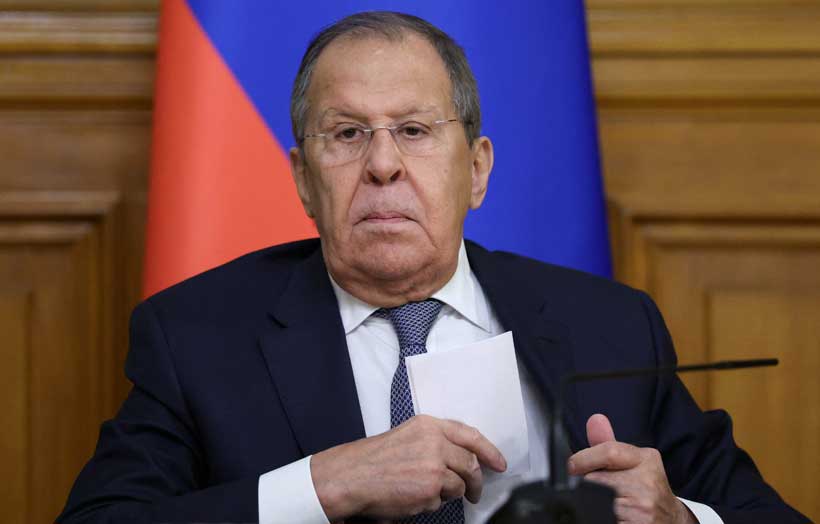
The Kremlin has signalled that Russia’s position on potential peace talks with Ukraine remains unchanged, despite a planned meeting between US Secretary of State Marco Rubio and Russian Foreign Minister Sergey Lavrov in New York.
Kremlin spokesman Dmitry Peskov said there were still no conditions for formal Ukraine peace talks to begin, while insisting that Moscow remained open to negotiations.
His comments came ahead of the Rubio Lavrov meeting, which is expected to provide an opportunity for Washington and Moscow to discuss the prospects for ending the war.
However, Peskov said there were no concrete plans for further high level meetings involving either the United States or Ukraine to discuss a potential peace agreement.
Stay ahead of the geopolitical week.
MD Briefing delivers expert analysis across five global fronts — the Indo-Pacific, energy, geoeconomics, European security, and the Middle East — every Monday morning. Free.
Moscow Maintains Its Position
The Kremlin also said there had been no change in its position regarding a possible direct meeting between Russian President Vladimir Putin and Ukrainian President Volodymyr Zelenskiy.
Peskov reiterated that Zelenskiy could travel to Moscow for such a meeting and said Russia would provide the necessary security guarantees.
He also said the Ukrainian president was aware of the decisions that Moscow believes would be necessary before meaningful progress could be made.
The comments underline the continuing gap between the two sides over the conditions for direct negotiations.
Ukraine has repeatedly rejected the possibility of holding talks in Moscow and has instead proposed a neutral location for any direct meeting between the two presidents.
US Diplomacy Faces a Difficult Path
The Rubio Lavrov meeting comes as Washington continues to engage both Moscow and Kyiv over the possibility of a diplomatic settlement.
The meeting itself does not necessarily indicate that formal peace negotiations are imminent. Russia continues to say that the conditions for talks have not been established, while Ukraine has maintained its own requirements for any negotiations with Moscow.
That leaves the United States attempting to maintain communication with both sides while the basic framework for potential negotiations remains unresolved.
The disagreement over the location of a Putin Zelenskiy meeting is also significant because it reflects broader differences over the political conditions surrounding any future negotiations.
For Moscow, the latest statements reinforce its existing position that Ukraine must address Russian demands before a presidential meeting can produce meaningful progress. Kyiv, meanwhile, has rejected Moscow’s proposed setting and continues to favour a neutral venue.
What Comes Next
The Rubio Lavrov meeting could provide an indication of whether Washington and Moscow can narrow some of their differences, but the Kremlin’s latest statements suggest that Russia is not currently changing its stated position on the conditions for peace talks.
The immediate diplomatic focus will therefore be on whether the US Russian dialogue can establish enough common ground for further discussions involving Ukraine.
Until the disagreement over the conditions and format of negotiations is addressed, the prospect of a direct Putin Zelenskiy meeting remains uncertain. The New York meeting may keep diplomatic channels open, but it does not by itself resolve the fundamental differences separating Moscow and Kyiv.
SALT LAKE CITY — A U.S. Postal Service letter carrier in Utah threw out more than 300 mail ballots that were being sent to voters for the state’s June primary, the Justice Department said Tuesday.
Acting Deputy Atty. Gen. Trent McCotter said during a news conference that Damon Matai Seei was arrested Tuesday and appeared in federal court in Salt Lake City to be arraigned.
The 34-year-old from Payson, Utah, pleaded not guilty to a felony charge of destruction or delay of mail. If convicted, he could face up to five years in federal prison. A message seeking comment was sent to his attorney.
Seei was delivering mail in Eagle Mountain, a conservative suburb of Provo, when he threw the ballots and other mail into a dumpster in a church parking lot not long after his shift started, McCotter said.
Melissa Holyoak, the U.S. attorney for Utah, said Seei indicated to authorities that he had no political agenda and did not intend to discard the ballots. He told investigators in an interview that he acted out of “laziness,” throwing away mail to “lighten his workload,” according to court documents.
In a written statement quoted in court filings, Seei said he felt overwhelmed that day by the quantity of mail, and he decided to toss out advertisements so he could focus on other deliveries.
He told law enforcement he had set aside the ballots at the beginning of his shift, prosecutors said, arguing it was implausible that Seei didn’t know they were in the discard pile.
Most voters in Utah cast ballots by mail or deposit them in drop boxes. Nationwide, nearly a third of voters use mail-in ballots.
All active registered voters in Utah are automatically sent ballots by mail, though that system is set to end in 2029 under a new state law requiring voters to opt in.
Several Eagle Mountain residents complained to Utah County Clerk Aaron Davidson that they never received their ballots, leading him to investigate. He determined that the rate of voter participation in the community was unusually low and learned through outreach that the number of voters who did not receive ballots was in the hundreds, according to court documents.
Seei is no longer employed by the Postal Service. The investigation remains ongoing, officials said.
Earlier this month, the U.S. Supreme Court rejected President Trump’s attempts to impose new Postal Service rules that would have restricted mail voting for the midterm elections.
Catalini and Schoenbaum write for the Associated Press.
Woodward (WWD) said Monday it plans to shut a production facility in Santa Clarita, California, and move production of military fixed-wing and rotorcraft flight control actuation to its campus in Spartanburg, South Carolina, as part of its
Currency reforms, liquidity pressures, and new payment rails are forcing African CFOs to rethink corporate strategy.
This article appears in the September 2026 issue of Global Finance Magazine.
When Nigeria liberalized the naira in June 2023, something of a chain reaction began across Africa. Egypt sharply devalued the pound in March 2024 under a reform program supported by the International Monetary Fund, and Ethiopia dismantled decades of foreign-exchange controls four months later. Headlines focused on inflation, exchange-rate volatility, and political fallout.
Inside multinational boardrooms, however, another conversation was quietly taking shape.
Where should liquidity be held? CFOs and corporate treasurers asked. Can capital still be repatriated efficiently? Is local-currency borrowing now preferable to offshore funding? And should Africa continue to be managed as dozens of fragmented financial markets, or, increasingly, as one integrated treasury landscape?
The answers are reshaping one of the least visible—but most strategically important—functions within multinational companies.
“Treasury efficiency has shifted from a secondary consideration to a first-order determinant: often the binding constraint, even when infrastructure and trade fundamentals appear sound,” said Phumlani Majozi, executive director of the African Markets Institute (AMI). “The logic is straightforward; multinationals prefer an environment where it’s easy to extract their capital when they need it.”
His observation reflects a profound shift in corporate thinking.
For decades, multinational companies evaluated Africa through a familiar lens: market size, consumer demand, infrastructure, labor costs, and political stability. More often nowadays, the decisive consideration is whether capital itself can move efficiently across the continent.
Treasury as Investment Influencer
Phumlani Majozi, African Markets Institute
The timing is significant.
Lending to Africa by China’s two principal policy banks has fallen dramatically, from US$28.8 billion in 2016 to US$2.1 billion in 2024, according to the Boston University Global Development Policy Center. As governments rely more on commercial finance and private capital to fund development, multinational companies have assumed greater responsibility for financing projects and managing liquidity across multiple jurisdictions.
The African Development Bank estimates that the continent requires some US$170 billion annually to finance infrastructure, but currently attracts only US$80 billion to US$90 billion, leaving a financing gap approaching US$80 billion each year. Against that backdrop, treasury has moved from supporting investment decisions to influencing them.
“The biggest change is that the treasurer is now expected to do far more than manage cash, funding, banking, and risk,” said Mike Richards, founder and CEO of The Treasury Recruitment Company. “Those things remain essential, but today’s treasurer is expected to help the CFO and the board understand what is happening, what the risks are, and what decisions need to be made.”
That evolution is especially evident across Africa.
Unlike Europe or North America, treasury teams operating on the continent must simultaneously navigate 54 sovereign jurisdictions, more than 40 actively used currencies, multiple exchange-rate regimes, and a complex web of banking regulations and capital controls. A finance executive overseeing operations stretching from Lagos to Nairobi and Johannesburg to Cairo may confront four entirely different monetary environments before the workday begins.
One subsidiary may hold surplus cash that cannot easily be repatriated because of foreign-exchange restrictions. Another may require emergency liquidity but operates in a market where access to hard currency remains constrained. Exchange-rate swings can rapidly inflate import costs or reduce earnings when profits are translated into dollars or euros.
“A company may appear to have plenty of cash across the group,” Richards said, “but that does not mean the cash is in the right place, in the right currency, or can be moved when the business needs it.”
That vexatious reality has become one of the defining operational challenges facing multinational companies in Africa. Because more companies are operating across the continent, treasury departments increasingly see fragmented pools of capital, each governed by different regulations, currency regimes, and banking systems.
These inefficiencies impose what amounts to a hidden investment tax, Majozi argues.
“When currency convertibility is uncertain,” he said, “intra-African capital movement is fragmented across more than 40 regulatory regimes, and hedging instruments for smaller African currencies are thin or nonexistent. Treasurers price in a liquidity-trapped capital discount before operational returns even enter the model. That discount frequently outweighs what improvements in infrastructure or regulation can offset.”
Mike Richards, Treasury Recruitment
Technology is helping treasury teams respond.
“We have seen treasury teams become more data-driven in their analysis and execution of currency risk-management programs,” said Bob Stark, global head of market strategy at Kyriba. Greater visibility into balance-sheet and cash-flow exposures, he added, has enabled companies to strengthen natural hedging while making more efficient use of forward contracts and options.
AI is the logical next step.
“There is no AI strategy without a data strategy,” Stark said, noting that multinational companies are investing more in API-enabled treasury platforms that provide real-time tracking of liquidity, foreign-exchange exposure, and banking relationships across multiple African markets.
“The primary benefit of treasury management systems for African treasury teams remains improved visibility and forecasting that unlock and mobilize trapped cash,” he said.
Toward Regional Financial Integration
Regional treasury hubs are also becoming more important. Rather than allowing every subsidiary to manage liquidity independently, multinational companies are consolidating treasury oversight in centers such as Johannesburg, Dubai, and Casablanca, where funding, foreign-exchange management, and banking relationships can be coordinated across multiple jurisdictions while maintaining local execution teams.
Richards recently recruited a senior treasury executive who helped establish a regional treasury center covering 16 African countries, centralizing foreign-exchange management, implementing cash-pooling arrangements, and negotiating local funding facilities across markets including Nigeria and Zambia.
“It is no longer enough to understand treasury technically,” he said. “You also need to understand the markets, the business, and the people operating locally.”
The next stage of evolution may be driven by regional financial integration.
“PAPSS solves a concrete, costly problem,” said Majozi. “Settling directly in local currencies cuts both cost and delay.”
Implementation remains uneven, he cautioned: “Multinationals will likely treat Africa-as-one-market as an aspiration for another five to 10 years, not a current operating reality.”
The direction of travel, however, is unmistakable. Africa’s abundant natural resources, favorable demographics, and expanding consumer markets will continue attracting global investors. Still, sustaining those investments will increasingly depend on modern financial infrastructure.
“Natural resources and favorable demographics may attract initial boardroom attention,” said Majozi. “But sustained, large-scale operational commitments depend on institutionalized monetary predictability, transparent capital flows, and efficient regional financial infrastructure.”
In Africa’s next chapter of economic integration, the competitive advantage may belong not simply to companies that understand the continent’s consumers, but to those that master the sophisticated movement of capital across its markets.
Charles Wachira is a contributing writer based in Kenya.
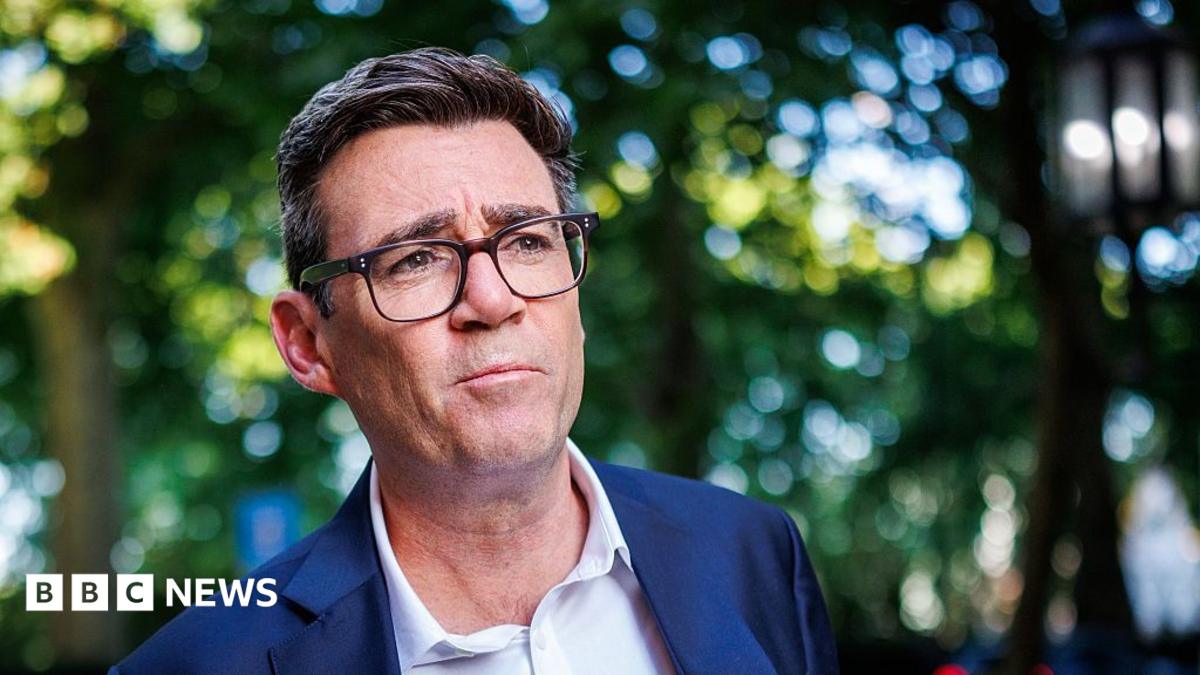
The UK needs a “culture shift” in how it does business, Andy Burnham has said ahead of a meeting with some of Britain’s biggest bosses.
The prime minister said those who take risks in business should be backed by government and local leaders should have the power to work with companies.
The Labour government has been criticised for increasing costs for firms, such as with the employer national insurance and minimum wage changes under Burnham’s predecessor Sir Keir Starmer.
The meeting comes as Chancellor John Healey prepares for his first Budget next month, with rising borrowing costs in recent weeks adding to the pressure on government finances.
Downing Street said Burnham will meet the chief executives of BP, Shell, HSBC, Morrisons, Sainsbury’s, BT, Vodafone, Rolls-Royce and several others at Number 10.
Ahead of the meeting, Burnham said he would give people “the confidence that if they have a great idea, they’ll get all the support they need to bring it to life”.
“When local leaders have the tools to get things done and government works in partnership with business, you can pull in investment, create jobs and transform communities,” he said.
He added the government would be “a partner for growth to make every part of Britain better off”.
Burnham will host a reception for the business community where local leaders are invited before a private engagement with senior chief executives at Downing Street on Monday evening.
The meeting comes as higher borrowing costs in the UK and other countries present problems for governments looking to spend money on business support or investment.
Separately, hundreds of hospitality businesses have written to the prime minister, calling on him to cut VAT for the sector.
More than 800 pub, restaurant and hotel bosses – include celebrity chefs Heston Blumenthal and Tom Kerridge – signed the letter asking for the hospitality VAT rate to be reduced from 20% to 10%.
When he was still Mayor of Greater Manchester, Burnham said he would argue for the tax to be in line with the lower rates seen in other European countries.
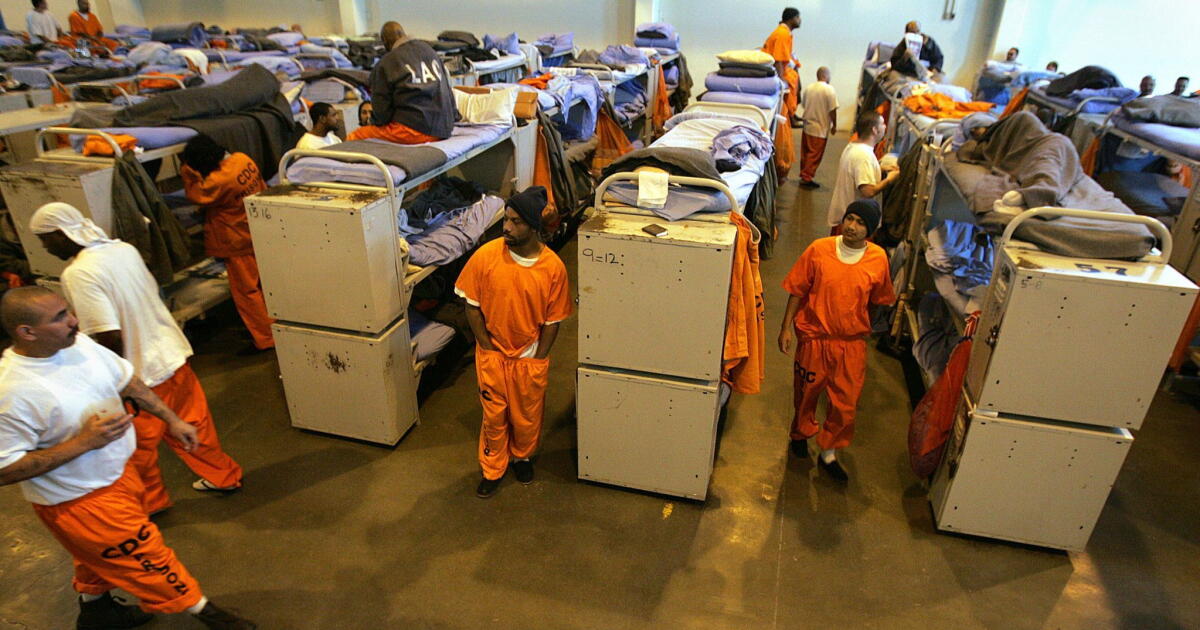
For an issue that received so much publicity at its peak — images of prisoners in triple bunk beds and overflowing into multipurpose rooms — the end of California’s prison crisis came quietly last week, when the state brought home the last of its inmates held in a private lockup northwest of Tucson.
Making good on a pledge by Gov. Gavin Newsom to finish the process begun in 2012, state prison officials have wrapped up the contracts with all out-of-state prisons. California’s prison overcrowding problems are now a thing of the past.
“At one point, at the height of our overcrowding, we had nearly 10,400 inmates out of state,” said Ralph Diaz, secretary of the California Department of Corrections and Rehabilitation. “To me, that meant 10,400 inmates away from their families, away from California. It was just a place we didn’t want to be.”
The use of private prisons — six facilities in states as far away as Mississippi — began in 2006. Inmates were shuttled away at various intervals over the 13 years that followed, a cost that was unavoidable to help resolve a problem that was years in the making.
Prison spending in the state’s new fiscal year will total some $15.7 billion — a $2.6-billion increase in the last four years and only slightly lower, by percentage, than what the budget earmarks for colleges and universities.
How the inmate population came down, though, is a story of criminal justice programs that sought to limit prison time to those convicted of the most serious and violent felonies. In the year before a major realignment of criminal justice services to California’s counties, 58% of new prison sentences were for property or drug crimes.
But the changes that shifted many of those crimes away from prison — keeping more offenders in local jails, reducing penalties for property crimes and a sweeping expansion of parole — have not come without controversy. Critics have said too many lower-level offenders have been responsible for new crimes. And a vocal coalition of victim advocates drafted a plan for voters to change those parole rules through a measure that has qualified for the November 2020 ballot.
State prison officials said last week the total population across 34 facilities now stands at just under 126,000 inmates — below the maximum number allowed by the courts. But the room for growth is not sizable enough to return to the era of long prison sentences, a shift that would require the state to do something almost unheard of in recent years: build more prisons.
Nor will it be as cheap to house those inmates in California. Corrections officials said it cost an average of $31,106 per inmate sent out of state last year — but those in state cost an average of $82,910 a year.
Still, the end of the out-of-state transfers marks an important moment. Diaz, who was appointed by the governor in March to run the prison system, said it sends an important message about accountability.
“It feels a lot better when I’m able to pick up the phone and send someone directly within a day to a prison under my care,” he said.
A massive explosion tore through the strategic Ali Al-Taher ridge overlooking Nabatiyeh on Thursday night after the Israeli military detonated what it said was a Hezbollah underground complex extending for more than 2 kilometers beneath the heights.
Lebanon’s National News Agency said the blast was felt across Nabatiyeh and surrounding areas. Israel said it had destroyed command centers, weapons stores, living quarters, rockets, missiles, drones and other military infrastructure and had achieved “operational control” of the ridge both above and below ground.
Prime Minister Benjamin Netanyahu and Defense Minister Israel Katz said the operation completed the consolidation of Israel’s self-declared security zone inside southern Lebanon.
For residents of Nabatiyeh below, the destruction gave dramatic new urgency to a political argument that has been building for weeks: Who can actually protect the south?
When Lebanese Army vehicles appeared in greater numbers on the streets of Nabatiyeh, residents welcomed the soldiers with flowers and handfuls of rice.
Lebanese children give flags to a Lebanese soldier at the entrance of the village Adaiseh, in south Lebanon. REUTERS/File
The army had not been absent from the southern Lebanese city, as a security source later stressed. But the enhanced deployment — and its unusual public reception — carried unmistakable political weight.
For decades, Nabatiyeh has been synonymous with the influence of Hezbollah and the Amal Movement. Yet the soldiers arrived a day after more than 400 people signed an appeal demanding that the Lebanese state assume responsibility for the city’s security, deploy the army in and around it, and restore decisions of war and peace exclusively to legitimate institutions.
Known as “Nabatiyeh 2,” as the second of such petitions, the appeal may not prove that Hezbollah’s southern heartland is turning decisively against the organization. Its significance lies somewhere subtler; it suggests that some southerners — long-cast as steadfast Hezbollah loyalists — are beginning to question not their hostility toward Israel, but whom they trust to protect them from it.
Bahjat Mirza, a signatory whose family has been rooted in Nabatiyeh for generations, rejected accusations the initiative was politically motivated.
“These appeals are coming from people of the land — people who are not politically inclined in any particular direction,” he told Arab News.
“This appeal is not politically motivated. It is simply a civil appeal by Lebanese citizens to their government to deploy the army and official security forces on the ground. In my opinion, they should have been there since 1948, since 1969, since 1975.”
Dr. Ali Hassan Wehbe, another supporter of the appeal, is a Lebanese dentist, political and social analyst and former parliamentary candidate who ran in the 2022 elections. His dental clinic in Nabatiyeh has been destroyed three times during successive conflicts — in the 2006 war, again in 2024 and most recently in 2026.
He said the campaign was fundamentally about preventing Nabatiyeh from suffering still greater destruction.
“The appeal is, first and foremost, about removing Israel’s pretext and saving Nabatiyeh,” Wehbe told Arab News, stressing that “Israel bears the primary responsibility for this destruction and this barbarity.”
But he rejected suggestions that calling for state security forces amounted to betrayal.
Smoke billows during Israeli airstrikes in the southern Lebanese city of Nabatiyeh on Oct. 16, 2024. AFP/File
“Has bringing the Lebanese Army and the Lebanese state into Nabatiyeh suddenly become forbidden? Has this become an act of treason against the country?” he said.
“Which is preferable — for the Lebanese Army to enter, or, God forbid, for the Israeli army to enter? Of course, the Lebanese Army should enter. They are our sons.”
The appeal explicitly holds Israel responsible for occupation, killing and destruction. But it also demands accountability from those who controlled security decisions and promised that their weapons could protect southern Lebanon.
Without repeatedly naming Hezbollah, the target of that criticism is clear.
Its most politically charged declaration is that Nabatiyeh must not become “a barricade for any axis” — a challenge to the city’s place in a regional confrontation closely linked to Iran. The appeal also rejects what it describes as the “duality of decision-making” inside Lebanon.
This is not merely a request for more soldiers or better policing. It explicitly demands for the state to become the sole authority responsible for security, and for no armed party outside its institutions to determine when Lebanon goes to war.
“Hezbollah’s position on this is irrelevant,” Mirza said. “Anybody’s position is irrelevant — even if the president of the country disagreed with us. We are asking the Lebanese state to protect its citizens.”
Wehbe put it more starkly.
“We are not a bargaining chip and we are not a negotiating card,” he said. “Nabatiyeh is the artery of the south. It is the heart of Jabal Amel.”
For him, the conclusion is straightforward: “We have no alternative to the state.”
The struggle over Ali Al-Taher
The immediate trigger for the second appeal was the clear and devastating fate of Ali Al-Taher, the strategic heights described as the “gateway to Nabatiyeh.”
The petition argues that an opportunity existed to place the area under Lebanese Army control before Israel claimed operational control of it. For critics, the episode has produced a simple argument: Territory that was not handed to the Lebanese state ultimately fell under Israeli control.
That argument acquired added force on Thursday when Israel detonated the underground complex beneath the ridge, after weeks of bombardment and ground operations. The blast was powerful enough to register as a magnitude-4.1 seismic event about 13 kilometers west-southwest of Nabatiyeh.
The aftermath of an Israeli demolition on the Ali Al-Taher ridge in the southern Lebanese area of Marjayoun, which triggered a magnitude-4.1 tremor (L), and the moment of the explosion (R). AFP/File
The Israeli military said the network contained a central command complex belonging to Hezbollah’s Badr unit as well as weapons storage rooms and facilities that allowed fighters to remain underground for prolonged periods. Israel said its troops would remain in the area to prevent Hezbollah from rebuilding its presence there.
Political writer Sateh Noureddine, who comes from the southern town of Arabsalim, said the loss of the heights was not as recent as Israel’s announcement suggested.
“The Ali Al-Taher hills fell some time ago,” he told Arab News. “The information indicated that Hezbollah’s members had evacuated them weeks ago, not now.”
Noureddine said he did not believe a deal had been responsible for the area falling into Israeli hands. He did, however, question the timing of Israel’s announcement.
“What I find strange, and what raises more than one question, is why Israel announced the fall of Ali Al-Taher now,” he said.
“I believe this indicates that Israel will undertake a military operation more significant than Ali Al-Taher, through which Benjamin Netanyahu will seek to make electoral gains in the Oct. 27 election.”
The second appeal is markedly more urgent than the first. Mirza said it was issued after continued Israeli bombardment of Nabatiyeh and its surrounding villages created a growing fear that the city itself was gradually disappearing.
“It became very clear, with Israel’s dominance and the continued bombing of cultural and historical sites in Nabatiyeh and the surrounding villages, that we felt the city was gradually being destroyed,” he said.
For Wehbe, that fear is intensely personal.
“Since I was 10 years old, I have lived through displacement and wars,” he said. “We do not want to keep mourning our children. We do not want to keep living on memories. We want to live in the present and build the future.”
Residents are no longer debating only a theoretical future danger. They have watched destruction reach the approaches to the city and are contemplating what another escalation could mean for their homes, families and livelihoods.
Hezbollah’s supporters gather around the coffins of militants killed in Israeli attacks during their funeral in the southern city of Nabatiyeh on November 2, 2025. AFP/File
For years, Hezbollah and Iran were associated among their supporters with power, protection and deterrence. Residents are now confronting destroyed villages, lost territory and the possibility of still greater devastation.
That does not necessarily amount to a complete political realignment. But it has shaken some of the assumptions on which Hezbollah’s relationship with its popular base was built.
The political debate was once largely about who represented the south. For some residents, the more urgent question is now whether there will be a south left to represent.
‘Nothing but words and threats’
Ali Al-Amin, editor-in-chief of Janoubia, a news website opposed to Hezbollah, said the party was becoming increasingly defiant as the pressure surrounding it intensified.
“Hezbollah has no options other than to continue attacking the authorities in general, while the circle of protest against the party is expanding in the south amid fears of further Israeli incursions and of the entire south falling under occupation,” he told Arab News.
“Even Hezbollah’s supporters have begun to voice their unease over what the wars in support of Gaza and Iran have produced. Voices are rising even from within Hezbollah’s own constituency because the equation on the ground has become exposed.
“All the evidence has shown that the party says one thing and does another. It has become clear that it possesses nothing but words and threats.”
Al-Amin said Hezbollah’s failure to confront Israeli forces at Ali Al-Taher was particularly damaging because of the importance the organization had previously attached to the area.
“Hezbollah did not resist the Israelis when they advanced toward Ali Al-Taher, even though it had described it as the ‘mother of all battles,’” he said.
He warned that Hezbollah’s response to its growing isolation could eventually transform the purpose of its weapons.
“The danger today is that Hezbollah’s defiance could change the function of its weapons, turning them from weapons intended to resist Israel into weapons used to confront the Lebanese state,” Al-Amin said.
“Hezbollah is trying to find pretexts for not handing over its weapons. But if we observe the trajectory, we find that the party’s argument is weakening and being depleted over time. This is what Israel has done through the escalation of its military operations.
“Today, the testing ground has shifted north of the Litani River, rather than remaining south of it.”
Wehbe, however, framed his challenge to Hezbollah differently. He stressed that many of those behind the appeal had themselves supported or participated in the resistance — Hezbollah’s preferred euphemism — in previous decades.
“My message to Hezbollah’s leadership is this: Deal with this opposition rationally and calmly, because this opposition was itself a stronghold of the resistance,” he said.
He also urged Hezbollah to rein in supporters who had accused the signatories of treason or incited against them.
“Are we no longer allowed to express our pain?” he asked. “Are we no longer allowed to say: Enough displacement?”
Dissent is not new — but its focus may be
Public opposition to Hezbollah and Amal inside Nabatiyeh is not unprecedented.
During Lebanon’s 2019 uprising, protesters in the predominantly Shiite city openly challenged both movements. Those demonstrations broke longstanding taboos and exposed anger over corruption, patronage, economic mismanagement and Lebanon’s sectarian political system.
An Israeli flag flies over the medieval Beaufort Castle, known locally as Qalaat al-Shaqif or Shaqif Arnoun, in southern Lebanon on May 31, 2026. AFP/File
Some of the people supporting the latest appeal may belong to that established opposition constituency. More than 400 signatures, while notable, cannot be treated as representative of hundreds of thousands of people across southern Lebanon. Nabatiyeh has not suddenly ceased to be a major center of Hezbollah and Amal support.
What may be changing is the nature of the criticism.
In 2019, much of the anger focused on governance and economic failure. “Nabatiyeh 2” strikes much closer to Hezbollah’s foundational claim to legitimacy: that its independent arsenal is necessary because it can defend the south more effectively than the Lebanese state.
The appeal asks whether that claim still holds after the scale of destruction inflicted on southern communities and the loss of territory Hezbollah’s weapons were supposed to protect.
Noureddine argued that the growth of public opposition was evidence that the party’s political structure was beginning to disintegrate.
“Hezbollah is on its way to disappearing — its leadership and political bureau alike,” he said. “It is living through its final phase. The party’s political body has begun to disintegrate, and nothing will remain except scattered cells that carry on its path and may disappear underground.”
“The number of people signing the Nabatiyeh appeal is doubling every day,” he added. “This is an indication of growing opposition to a party that is fading away.”
His assessment is among the most categorical offered by Hezbollah’s critics and remains fiercely disputed by its supporters. There is no evidence that the organization has lost its dominant position within its traditional constituency.
Nevertheless, the willingness to make such arguments openly is itself significant in a region where public criticism of Hezbollah’s security role has historically carried a high political and social cost.
Joelle Abboud, a member of the Lebanese Kataeb Party’s political bureau, said the demand for state sovereignty over southern villages had never belonged to one community or political faction.
People stand on the rubble of a destroyed house after returning to the southern Lebanese city of Nabatieh on Apr. 20, 2026. AFP/File
“The voices that have recently risen to demand state sovereignty through the army in southern villages reflect what has always been a national demand across all sects,” she told Arab News.
“The emergence of Shiite voices making that demand today is evidence that Hezbollah’s weapons did not deter Israel, and that the war continued to an Iranian rhythm, with Lebanese youth used as fuel for an Iranian project.”
Abboud said the reception given to the army in Nabatiyeh showed that southerners wanted the state to assume the role long claimed by Hezbollah.
“The welcome received by the Lebanese Army in Nabatiyeh is evidence that southerners are eager to see the state become the alternative to militia weapons,” she said.
“Diplomacy is a difficult path, but it is effective in achieving stability. What is required today is the implementation of the Lebanese government’s decisions to confine weapons to the state.”
For now, “Nabatiyeh 2” — with signatories including doctors, engineers, lawyers, bankers, journalists, academics, writers, activists and MP Firas Hamdan — is not proof that southern Lebanon has turned against Hezbollah. It is evidence that a question once difficult to voice publicly is becoming harder to suppress.
After decades in which Hezbollah presented itself as the indispensable defender of the south, some people within its traditional environment are looking toward the Lebanese Army and asking whether only the state can protect them.
Whether this is simply the cry of a frightened city facing another battle, or the beginning of a deeper transformation in Hezbollah’s relationship with the society from which it draws much of its power, remains unanswered.
But after the explosion beneath Ali Al-Taher shook Nabatiyeh on Thursday night, that question is no longer abstract.
European CFOs must adjust as the region’s biggest pension buyer of long-dated debt cuts back.
This article appears in the September 2026 issue of Global Finance Magazine.
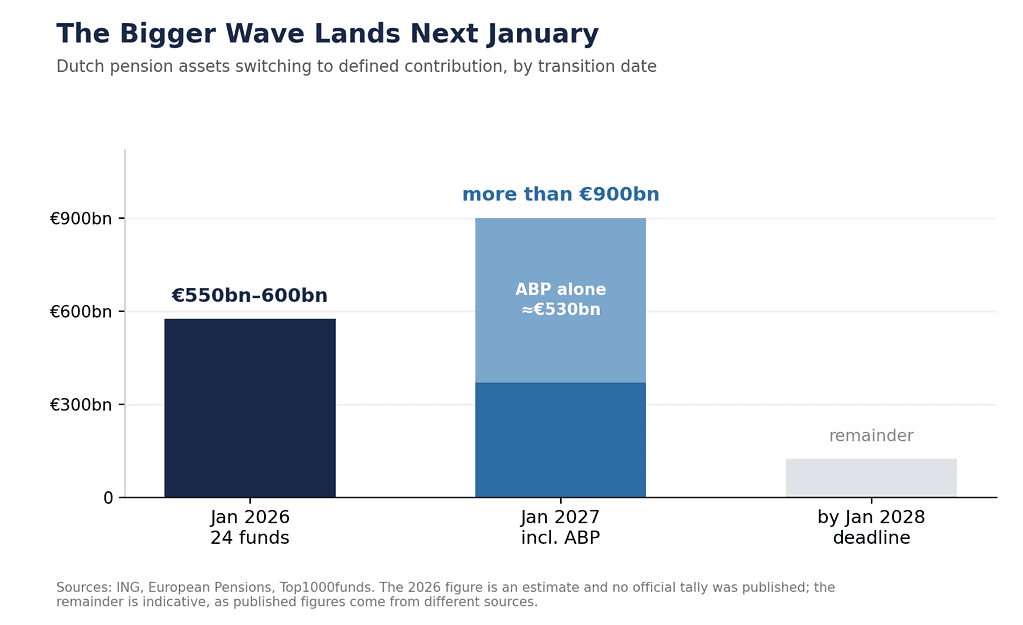
The Netherlands pension system is beginning to reduce one of Europe’s most reliable sources of demand for long-dated debt as a broad regulatory shift changes how Dutch pension funds manage their assets and liabilities. ING Groep NV estimates that nearly €600 billion ($699 billion) of assets have already been affected by the change, with more than €900 billion expected to follow early next year.
Under the old defined-benefit pension system, Dutch funds were required to hedge the interest-rate sensitivity of long-term pension liabilities by using long-dated bonds and swaps to match assets with payments extending decades into the future. Under the new defined-contribution model, which became law in 2023, that liability matching requirement has been significantly reduced, allowing funds to carry less duration and scale back their long-term hedges, resulting in less structural demand for the longest-dated debt and swaps.
For European CFOs, this could mean a higher premium for 20-, 30- and 50-year borrowing as companies and governments compete for a smaller pool of long-duration investors.
The change “should reduce structural demand for long-end duration assets and support curve steepeners over the long-term horizon,” wrote Sara Adjir, senior vice president and portfolio manager, and Jeroen van Bezooijen, account manager, at Pacific Investment Management Co., in a research note. They expect the impact will be mostly concentrated in 50-year swaps, but will also be felt in the demand for 20- and 30-year euro swaps and government bonds, including German and Dutch debt.
Deadlines
The Netherlands runs Europe’s largest pension system, with roughly €1.6 trillion in assets, and every fund must complete the switch by January 2028. Dutch pensions have long dominated the market for European long-dated debt, holding around €88 billion of interest-rate swaps maturing beyond 25 years at the end of last year, roughly a quarter of the total.
The first major wave of the transition came on Jan. 1, when 24 funds converted, among them the healthcare scheme PFZW and the metals scheme PMT, with an estimated €550 billion to €600 billion of pension assets between them. Analysis by the Netherlands central bank shows that Dutch pensions bought almost €34 billion net of swaps maturing inside 25 years while selling more than €12 billion of longer-dated ones.
The bigger test, however, comes when more than €900 billion of pension assets is scheduled to convert on Jan. 1, with the Dutch civil service scheme ABP accounting for about €530 billion of that.
The shift does not mean long-dated Dutch debt is suddenly becoming illiquid or even hard to sell: “Overall, we still see strong demand for our 30-year bond. Remember, we are AAA,” said Saskia van Dun, director of the Dutch State Treasury Agency.
Sovereign Issuers Adjust
Data indicates that sovereign borrowers are already adjusting to the change.
The share of Netherlands government bonds sold at maturities beyond 10 years fell from 42% at the start of 2025 to 31% by the third quarter, according to the Organization for Economic Co-operation and Development (OECD), which calls the constraint on long tenors structural. The OECD expects eurozone debt agencies to sell a record €1.35 trillion of medium- and long-term bonds this year into that thinner pool of demand.
For European finance chiefs, however, times are changing. For two decades, long-dated bond demand was unusually deep and predictable. As it recedes, the shifting cost of locking in 20 or 30 years of funding could become a live question.
Thomas Monteiro is a contributing writer based in Spain.