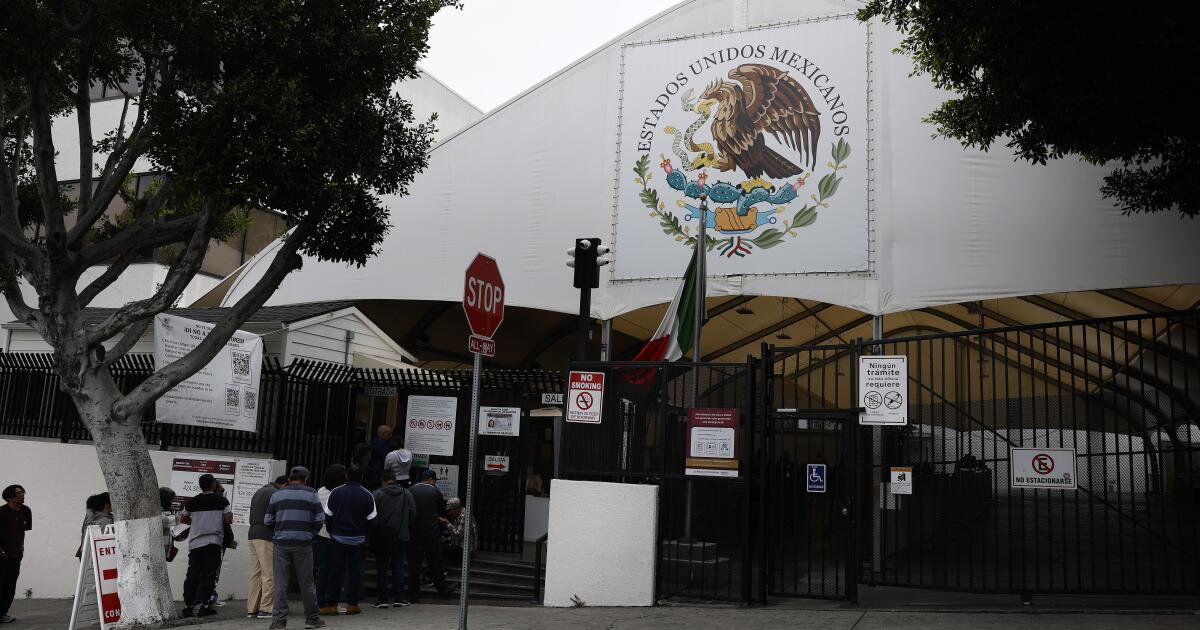
Mexico’s consulate in Los Angeles helps thousands of citizens each week, assisting them with registering births, obtaining passports and, increasingly since President Trump’s second term began, accessing legal help for loved ones who have fallen afoul of his administration’s immigration policies.
Although it serves the country’s biggest Mexican community, all 53 Mexican consulates in the U.S. provide services that make Mexican people’s lives easier — just like the nine U.S. consulates in Mexico improve the lives of Americans south of the border.
The U.S. State Department has launched a review that might lead to the closure of an unknown number of Mexican consulates. Although it hasn’t said why, the review is happening against the backdrop of the immigration crackdown, some thorny bilateral issues and far-right theories that the consulates have been interfering in U.S. politics and encouraging Mexicans to migrate northward.
Azucena Aviles, a 33-year-old mother who drove more than an hour to the L.A. consulate this month to renew her Mexican passport and get one for her daughter, said consular services are invaluable — especially in California, which is home to nearly 13 million people of Mexican descent, including an estimated 1.7 million who are in the U.S. illegally.
“It wouldn’t be fair if they messed with the Mexican people, especially with our support systems, which come from the Mexican consulate and which, in some way, help or protect our fellow Mexicans,” she said.
Trump has been exerting growing pressure on Mexico, with questions looming over issues including human rights, national sovereignty and regional diplomacy.
His administration has given only the broadest of explanations for launching its review.
“Department of State is constantly reviewing all aspects of American foreign relations to ensure they are in line with the President’s America First foreign policy agenda and advance American interests,” Dylan Johnson, assistant secretary of State for global public affairs, wrote in an email.
Among the possible reasons for the review is that it could somehow fit into the Trump administration’s immigration efforts to deport people in the U.S. illegally. The largest contingent of such people — an estimated 4.3 million, according to the Pew Research Center — are Mexican.
Relations between the two countries could also play a role, with Trump increasing pressure on Mexico in the run-up to free trade negotiations important to both nations’ economies, taking a more aggressive approach toward the U.S.’ southern neighbor and even threatening to take military action against Mexican cartels.
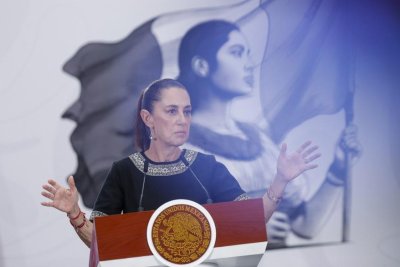
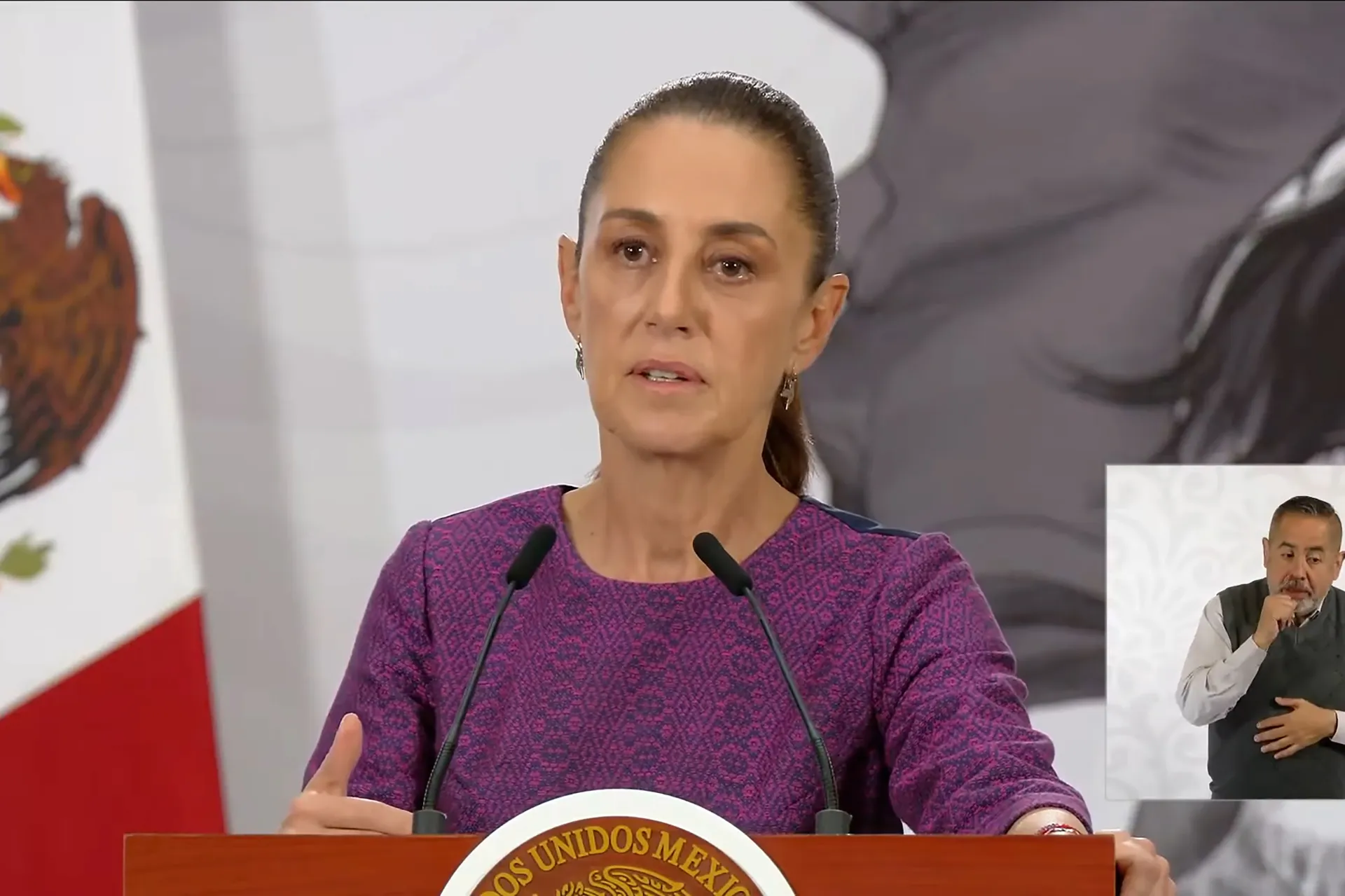
Mexican President Claudia Sheinbaum has avoided head-on conflicts with Trump and instead relied on diplomacy, including sending top officials to Washington and seeking to maintain a strong relationship with the Trump administration by cracking down on Mexican cartels. Sheinbaum and her predecessor have also been key allies in slowing migration to the U.S. and speeding up the deportation of other Latin American migrants.
But Sheinbaum has taken a firmer stance in regards to the deaths of Mexicans in U.S. immigration detention centers, calling them unacceptable and saying the conditions in such lockups were “incompatible with human rights standards and the protection of life.” She instructed Mexican consulates to visit detention centers daily to help ensure detained citizens are being held in safe conditions.
Relations rapidly deteriorated in recent weeks after the U.S. indicted several Mexican officials on drug trafficking charges, and two CIA officers died following an anti-narcotics operation in northern Mexico — American involvement that Sheinbaum said her government had not authorized. That drug raid raised uncomfortable questions in Mexico about the extent of U.S. involvement in domestic security operations.
Years of tit-for-tat tariffs between the two countries have also added strain.
A review of foreign consulates is “usually a sign that a bilateral relationship is in a very, very rocky moment,” said Arturo Sarukhan, a former Mexican ambassador to the U.S. In Mexico’s case, it comes at “the worst moment of the U.S.-Mexico relations” in decades, given all the current points of contention, he said.
Further straining relations is a theory being amplified by Peter Schweizer, a writer with a following among Trump loyalist who has claimed that Mexican consulates interfere in U.S. politics and encourage migration to the U.S. Experts say that although a few Mexican consulate officials may have sought to influence politics back home, there is no evidence of them interfering in U.S. elections.
In response to the State Department review, Sheinbaum said the idea that Mexican consulates are “playing politics in the United States is completely false.” She said the job of consulates anywhere is to “always protect” citizens.
Sarukhan too said that although consulates defend the rights of Mexican citizens, there is no evidence that they are interfering in U.S. elections.
Whatever the reasons for the consulate review, it has stoked worries.
During a weekly public forum at the L.A. consulate, a woman who didn’t give her name and whose husband had been in U.S. immigration detention asked for help finding him a lawyer, highlighting one crucial service consulates provide for their citizens.
An older man said he had heard about the review and asked about possible closures.
Carlos González Gutiérrez, Mexico’s top diplomat in Los Angeles, responded that, as Sheinbaum said, there would be “no reason whatsoever” for the U.S. to close a Mexican consulate.
Indeed, consulates would have significant, devastating effects for Mexican immigrants,” especially in isolated areas, said Ariel Ruiz Soto, a senior policy analyst for the Migration Policy Institute.
Every day, consular officials go to the Immigration and Customs Enforcement holding center in downtown Los Angeles to identify and interview as many detained Mexican nationals as they can.
González Gutiérrez, 62, begins every weekly public forum by noting how many detained Mexicans consular officials have interviewed since the immigration crackdown began in Los Angeles last June.
At that May 11 meeting, the figure stood at 1,940. Nearly half had deep roots in the U.S., he said. About 46% have been deported, 35% have children born in the U.S., 69% entered the country through a port of entry, 6% overstayed a visa and 2.5% requested asylum. Most were men, and many worked in construction, agriculture, gardening and the service industry.
He also disputed the claim that Mexican consulates are interfering in U.S. politics.
“We are guests of this country’s government, just as U.S. consuls are guests of the Mexican government. In that sense, we are neither activists nor spies,” said González Gutiérrez. “We carry out our work openly, within a pluralistic and democratic society.”
Pineda and Janetsky write for the Associated Press. Janetsky reported from Mexico City.