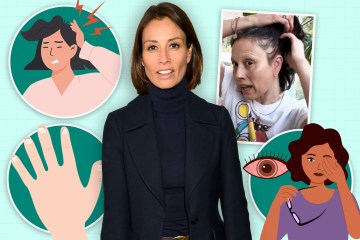
Melanie Sykes, 55, stuns in first fashion shoot since shaving her head amid alopecia battle
MELANIE Sykes looked stunning in her first fashion shoot since shaving her head, amid her ongoing alopecia battle
The beautiful TV star, 55, has been keeping fans up-to-date with her hair loss journey, after previously being left “two thirds bald”.
Melanie, who shot to fame in the 90s in the Boddington’s beer ads, looked radiant as she went back to her modelling roots for the first time since losing her hair.
The much-loved TV presenter showed off her beautiful new look for sunglasses brand Cubitts.
In the photoshoot, Melanie looked glowing while posing in a stylish white suit.
The stunning star also used the opportunity to embrace her new shaven head.


Throughout Mel’s alopecia battle, which she first talked about last year, she has been open and honest about the impact it has had on her.
She previously explained how her autoimmune condition had progressed over time and had left her with noticeable bald patches across her head.
Mel told how she was in “so much pain” after spending much of it unwell.
The star said at the time: “I’ve got an autoimmune condition, I am losing my hair, I keep having crazy inflammation all over and I am working on healing.
“In the last three months, I’ve done a meditation teacher training course.
“I was too ill to finish it like. The last two days of it I couldn’t do.
“It’s meditation teacher training, I don’t necessarily want to teach, but I can do…
“Mostly I’ve been living a very, very very spiritual existence.
“I’m two-thirds bald, really. Every time I say I’m bald I laugh, I don’t know why… Thank god I can laugh.”
In May, Melanie revealed that her hair had been coming out “really quickly”, after losing two thirds of her locks for more than a year.
She explained to fans how she has been trying on wigs, with her now ditching head scarves because she is keen to “get some hair”.
What is alopecia and what causes it?
About two per cent of the population will experience alopecia at some point in their lifetime, with around one in every 4,000 developing the condition each year.
It can start at any age but is most common in early adulthood and can lead to a lack of all hair including eyelashes and eyebrows, nasal hair and public hair.
Alopecia areata causes patches of baldness about the size of a large coin.
“Alopecia” is the medical term for hair loss and “areata” means that it occurs in small, random areas. There are various classifications, including:
- Alopecia areata totalis: Total hair loss on the scalp
- Alopecia areata universalis: Total hair loss on your scalp and all body hair
The causes of alopecia areata are not fully understood but the loss of hair is because of inflammation around the hair follicles.
The cause of the inflammation is unknown but it is believed that the immune system, which normally protects the body from infections and other diseases, misfires and attacks the hair follicles.
Therefore, it is understood to be an autoimmune condition, says Alopecia UK.
Genetics may be behind the condition, but there are other things thought to trigger it, including a virus, iron deficiency or stress. Studies are not conclusive.
For women, sometimes birth can trigger postpartum alopecia.
In most cases of alopecia areata, hair will grow back in a few months to a year. At first, hair may grow back fine and white, but over time it should thicken and regain its normal colour.
There is no cure for the condition, only treatments that are not guaranteed to work.
People with alopecia may need to take extra precautions, including protecting their skin and eyes when outside and preventing stress.