
shake

Deaths and debts: Missiles in Gulf shake millions of South Asian families | US-Israel war on Iran

A week into the United States-Israeli war on Iran, and Iran’s attacks on its Gulf neighbours, Jaya Khuntia spoke – as he often did – to his Doha-based son Kuna on the phone.

It was March 6, about 10pm, and Khuntia and the family were worried. “He told me, ‘I am safe here, don’t worry,’” the father recalled from the conversation with Kuna.

It was the last time they spoke.

The next day, the family in Naikanipalli village of India’s eastern Odisha state received a phone call from Kuna’s roommate telling them that the son had suffered a heart attack after hearing the sound of missiles and debris from interceptions falling near their residence. He collapsed and was later declared dead. Kuna’s body reached home days later.

Al Jazeera cannot independently confirm the cause of Kuna’s death, but the family of the 25-year-old, who worked as a pipe fitter in Qatar’s capital, is among millions across South Asia directly affected by the war in the Middle East.

Of the eight people killed in the United Arab Emirates in Iranian attacks, two were Emirati military personnel, a third a Palestinian civilian, and the remaining five were from South Asia: Three from Pakistan, and one each from Bangladesh and Nepal. All three people killed in Oman were from India. An Indian national and a Bangladeshi national are the only deaths in Saudi Arabia.

Migrant workers from South Asia total nearly 21 million people in the Gulf nations, a third of the total population of the region. At stake, for their families back home, is the safety of their loved ones and the future of their dreams.

The Khuntia family had taken on a 300,000-rupee ($3200) debt in 2025 for the marriages of their two daughters. Kuna’s income in Doha – where he had moved only in late 2025 – of 35,000 rupees ($372) was helping them collect what they needed to pay back the loan. Kuna had been sending back about 15,000 rupees ($164) every month.

“We thought our suffering was finally ending,” Jaya said, his voice trembling. “My only son would say, ‘Baba, don’t worry, I am here.’ He was our only hope… our everything.”

That hope is now extinguished. “That one call finished us,” Jaya cried. “He promised to return after clearing our debts … but he came back in a coffin. We have nothing left now. Losing our only son is the biggest debt we have to live with.”

Kuna Khuntia, a 25-year-old pipe fitter from India's Odisha, who died of a heart attack in Doha Qatar [Photo courtesy the Khuntia family]
Kuna Khuntia, a 25-year-old pipe fitter from India’s Odisha, who died of a heart attack in Doha, Qatar [Photo courtesy the Khuntia family]

‘I thought we would be next’

In all, Bahrain, Kuwait, Oman, Qatar, Saudi Arabia and the UAE – the six Arab countries in the Gulf – host 35 million foreign nationals, who form a majority of their total population, 62 million.

They include 9 million people from India, 5 million each from Pakistan and Bangladesh, 1.2 million from Nepal, and 650,000 from Sri Lanka. Most of them are engaged in blue-collar work, building or supporting the industries and services that are at the heart of the Gulf’s success and prosperity.

But since the US and Israel launched their war on Iran, these migrant workers have often been among the most vulnerable. That vulnerability extends beyond deaths and injuries to the very nature of their work: Oil refineries, construction areas, airports and docks, where many work, have been targeted in Iranian attacks.

The suspension of work at many of these facilities, coupled with fears of a major economic downturn in the region, has also left many workers and their families worried about the future of their jobs.

Hamza*, a Pakistani migrant labourer working at an oil storage facility in the UAE, recalled a recent attack that he witnessed. “A drone struck a storage unit right in front of us. We were completely shaken. Most of us there are from India, Pakistan and Bangladesh.

“We couldn’t sleep for nights after that. The drone was so close that it could have killed us, too,” Hamza added. “For a moment, I thought we would be next.”

Despite these dangers, he said, leaving is not an option.

“We want to go back, but we can’t,” Hamza said. “Our families depend on us. It’s dangerous here, but if we stop working, they will have nothing to eat. We have no choice.”

Experts say Hamza’s sentiment is common across South Asian blue-collar workers in the Gulf, because of poverty and limited employment opportunities back home.

Imran Khan, a faculty member at the New Delhi Institute of Management working on migration economics, said migrant labourers from South Asia are often driven by desperation to take up jobs in the Middle East. He said Western countries have, in recent years, dramatically raised entry barriers for less-educated blue-collar foreign workers.

“These workers are the worst affected during crises – whether war or natural disasters,” he says. “I have been speaking to several migrant labourers, particularly Indians in the Middle East, and many are living in distress since the conflict began.”

But, like Hamza, most cannot afford to leave, Khan said.

“They cannot simply quit. Their income would stop immediately, and there are very limited opportunities back home,” he explained. “They have families to support, and without these jobs, survival becomes difficult.”

Indian labourers work at the construction site of a building in Riyadh November 16, 2014. India is pressing rich countries in the Gulf to raise the wages of millions of Indians working there, in a drive that could secure it billions of dollars in fresh income but risks pricing some of its citizens out of the market. Picture taken November 16. To match story INDIA-MIDEAST/WORKERS REUTERS/Faisal Al Nasser (SAUDI ARABIA - Tags: BUSINESS CONSTRUCTION EMPLOYMENT)
Indian labourers work at the construction site of a building in Riyadh, November 16, 2014 [Faisal Al Nasser/Reuters]

Families – and societies – that depend on remittances

Middle Eastern countries remain a key source of remittances for South Asian nations such as India, Pakistan, Bangladesh, Sri Lanka and Nepal. The remittances these five countries receive from the region, $103bn, are comparable to Oman’s total gross domestic product (GDP).

Just the remittances that India receives from the Gulf, $50bn, are more than Bahrain’s entire GDP. Pakistan receives $38.3bn in remittances, Bangladesh $13.5bn, Sri Lanka $8bn, and Nepal $5bn.

With the recent escalation of conflict in the Middle East, experts warn these flows could be significantly affected, especially if Gulf economies contract and layoffs follow.

Faisal Abbas, an expert in international economics and director at the Centre of Excellence on Population and Wellbeing Studies, a Pakistan-based research institute, said remittances from the Middle East form a crucial economic backbone for South Asian nations, not just families.

“Remittances are a critical pillar for Pakistan and other South Asian economies, and a large share comes from Middle Eastern countries,” he explained. “If the situation worsens, it will not be a positive development for the region.”

Pakistan’s remittances from the Gulf constitute nearly 10 percent of its GDP, about $400bn.

Abbas added that the effect may extend beyond remittance flows. “Migration patterns could also be disrupted. Many workers may return home, while those planning to migrate might reconsider,” he said. “This could further increase unemployment in a region already facing job shortages.”

Unlike Hamza, a number of South Asian workers are planning to return home.

Noor*, a migrant worker from Bangladesh employed at an oil facility in Saudi Arabia, said he no longer feels safe and plans to return home once his contract ends.

“I will never come back here again,” he said. “It’s too dangerous. We can’t even sleep at night. The fear never leaves us.”

Noor said drone attacks had occurred close to his workplace. “We saw it happen in front of us,” he said. “That fear stays with you… It doesn’t go away.”

His family, too, is deeply affected. “My children cry every time they call me. They are scared for my life,” he added.

He said he knows that returning to Bangladesh would mean more economic hardship for his family. But Noor said he had made up his mind.

“I would rather go back and struggle to survive with my family than live here in constant fear,” he said. “At least there, I will be with them.”

*Some names have been changed at the request of workers who fear retribution from contractors for speaking to the media.

Source link

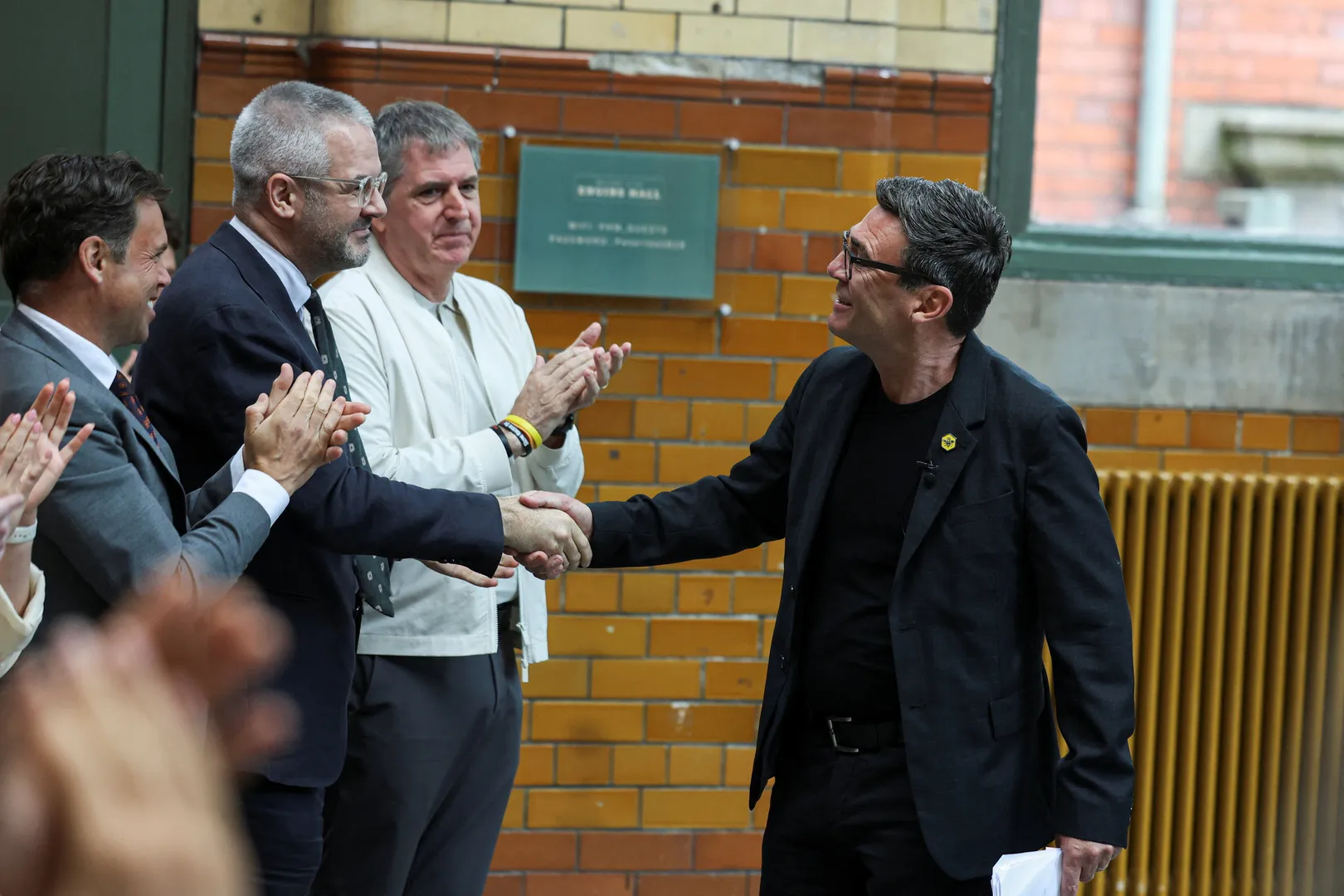
Cheltenham Festival 2026: Nico de Boinville and Irish jockey Declan Queally shake hands after accusations of racial abuse

After first accusing De Boinville of being “abusive”, Queally told The Racing Post, external on Wednesday he had received “repeated racist abuse” from his rival.

The Irishman, riding I’ll Sort That, and De Boinville on Act Of Innocence could be seen exchanging words at the start line, but the Englishman denies any wrongdoing.

De Boinville told BBC Radio 5 Sports Extra on Thursday: “It is an ongoing investigation.

“The stewards are gathering all the evidence they can from all the video footage.

“From my point of view, I deny all the allegations against me.

“I can categorically say there weren’t any racial slurs or anything like that. Let’s let it play out.”

Queally, 37, appeared to topple off his horse before Wednesday’s race started and had to be checked over by a doctor. He was given the all-clear to race, along with Ballyfad, who was kicked pre-race and assessed by a vet in a chaotic few minutes.

A number of false starts to the planned rolling start meant the horses were moved to a standing start at the tape – leaving jockeys jostling for position.

After the race, Queally, who finished fifth, was interviewed by ITV Racing before entering the weight room.

He said: “Being abused by an English rider, Nico de Boinville, not very nice.

“I am an amateur, coming over here and riding in front of my kids. Horrific.”

When informed of Queally’s comments about a difficult start to the race, De Boinville responded: “Maybe he should look in the mirror.”

Legendary jockey AP McCoy said Queally has “as much right to be there as anyone”, while Ruby Walsh said the start system “hasn’t worked for 20 years”.

Walsh told ITV: “It’s 2026. How has nobody devised a tape that rolls in front of the horses?

“The tape should have been in front of them when they went on to the track and it should be moved in front of the horses.

“We can send missiles after fighter planes in the Gulf, but nobody can design a rolling flyaway tape. That’s the joke.”

Source link

Why QatarEnergy’s LNG production halt could shake up global gas markets | Explainer News

QatarEnergy has suspended liquefied natural gas (LNG) production following a drone attack, straining the global LNG market.

On Monday, Iranian drones struck two sites, according to Qatar’s Ministry of Defence: a water tank at a power plant in Mesaieed Industrial City and an energy facility in Ras Laffan belonging to QatarEnergy, the world’s largest LNG producer.

Recommended Stories

list of 4 itemsend of list

While no casualties were reported, QatarEnergy suspended the production of LNG and other products at the impacted sites for security reasons.

Why did QatarEnergy suspend operations?

The drone attacks hit the Ras Laffan complex, which is home to processing units for liquefied natural gas set to be exported.

The state-owned energy company was forced to declare what is known as force majeure, when a company is freed from contractual obligations in the event of extraordinary circumstances, such as a drone attack, according to Reuters and Bloomberg News, citing people familiar with the matter.

This comes at a time when intensifying sea battles between Iran and the United States, coupled with missiles flying over the region, have effectively choked the Strait of Hormuz, a strategic trade route. At least 150 vessels have dropped anchor, including those carrying LNG, in the strait and surrounding areas, according to Reuters.

Traffic in the strait for both LNG and oil has declined by 86 percent, with roughly 700 ships sitting idle on either side of the passage, according to the Anadolu news agency.

How will this impact the broader global LNG market?

Qatar’s LNG exports represent 20 percent of the global market. With fewer products reaching the market, LNG supply is down, causing prices to surge.

“Definitely an escalation overnight with pressure on energy infra in the Gulf,” said Rachel Ziemba, a senior fellow at the Center for a New American Security, a think tank.

The countries hit the most directly are Asian markets, particularly Bangladesh, India, and Pakistan.

China is the world’s largest importer of natural gas, but it gets the majority of its imports from Australia, accounting for 34 percent of its imports, according to the US Energy Information Administration.

Maksim Sonin, an energy expert at Stanford University’s Center for Fuels of the Future, however, said that while QatarEnergy’s decision would bring “volatility” to energy markets, he wouldn’t describe the situation as a “crisis” just yet.

“We will see near-term volatility in the LNG market, especially if infrastructure in Qatar and other hubs is damaged,” Sonin told Al Jazeera. However, he added, “I do not expect the 2022 gas crisis to repeat in Europe,” referring to the period following Russia’s full-fledged invasion of Ukraine, when many European nations tried to dramatically scale back their dependence on Russian oil and gas.

Which are the world’s largest LNG exporters?

Until 2022, Russia was the world’s biggest exporter of LNG, but its sales have plummeted since its war on Ukraine began.

Now, the US is the world’s largest exporter of LNG, followed by Qatar and Australia.

Will this add pressure on Europe?

While 82 percent of QatarEnergy’s sales are to Asian countries, the halt puts increased pressure on other markets across the globe, too, particularly in Europe.

In effect, a smaller supply of gas will need to meet the same global demand. As a result, gas prices have already started soaring: Benchmark Dutch and British wholesale gas prices soared by almost 50 percent, while benchmark Asian LNG prices jumped almost 39 percent, on Monday after the QatarEnergy announcement.

“Not good if Qatar stays offline for long, of course,” said Ziemba. The only silver lining for Europe: “At least the worst of the winter in Europe may be behind,” Ziemba pointed out.

The European Union’s gas coordination group will meet on Wednesday to assess the impact of the widening conflict in the Middle East, a European Commission spokesperson told Reuters on Monday. The group includes representatives from member state governments. It monitors gas storage and security of supply in the EU, and coordinates response measures during crises.

Source link

Blasts shake Qatar, UAE, Kuwait as Iran’s retaliatory strikes continue | News

Tehran’s retaliatory attacks on US assets in the Gulf region continue for a third day as fears of a prolonged conflict rise.

Loud explosions were heard in Dubai in the United Arab Emirates and the Qatari capital ‌of Doha for a third consecutive day of ⁠Iranian retaliatory strikes on neighbouring Gulf states in response to ongoing attacks by the United States and ⁠Israel on Iran.

Loud bangs and sirens were also heard in Kuwait early on Monday morning, with a witness quoted by Reuters news agency saying smoke was seen rising from near the US embassy.

Recommended Stories

list of 4 itemsend of list

Kuwaiti air defences intercepted the majority of the ⁠drones near Rumaithiya and ⁠Salwa neighbourhoods, the state-run Kuwait News Agency reported, quoting the director general of civil defence.

Tehran said it ⁠would target US military assets in the region after the ⁠US-Israeli ⁠strikes on Iran continued for the third day on Monday.

Iran has hit a range of civilian and commercial areas across ‌Gulf cities, widening the conflict’s impact on key regional aviation and trade hubs.

Meanwhile, Bahrain’s Ministry of Interior said it activated air raid alerts and urged residents to head to the nearest safe place.

It said the Shaikh Khalifa bin Salman Bridge linking the capital, Manama, to nearby towns was closed and urged “residents to use main roads only when necessary”.

At least one person has been killed in Kuwait, three have been killed in the UAE, and 16 people have been injured in Qatar.

Meanwhile, at least 201 people have been killed in Iran in US-Israeli attacks, with 747 wounded, while at least nine have been killed and 121 wounded in Israel.

Iran ‘attacking American targets’

The US, Bahrain, Jordan, Kuwait, Qatar, Saudi Arabia and the UAE issued a joint statement on Sunday condemning Iranian attacks across the region and affirming their right to self-defence.

Gulf countries “will take all necessary measures to defend their security and stability and to protect their territories, citizens, and residents, including the option of responding to the aggression”, the statement released after a meeting said.

However, Iranian Foreign Minister Abbas Araghchi on Sunday stressed that Tehran is not seeking confrontation with its Gulf neighbours, telling Al Jazeera that Tehran has “no problem with the countries on the other side of the Persian Gulf”, referring to the Gulf, which is also known as the Arabian Gulf.

Iran maintains “friendly and good neighbourly relations with all of them”, which it is determined to continue, he added.

“What we are doing is in fact an act of self-defence and retaliation to the American aggression against us,” Araghchi said.

“We are not attacking our brothers in the Persian Gulf, we are not attacking our neighbours, but we are attacking American targets,” he added.

Source link